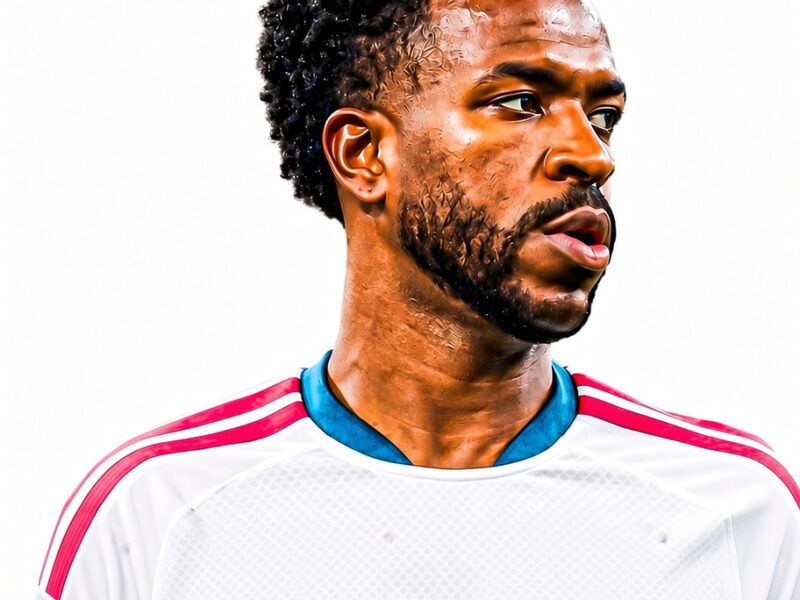
THE END OF VINÍCIUS JÚNIOR? | REAL MADRID NO LONGER NEEDS HIM
It is rare for a team to win the biggest game of the season and, within hours, find itself at the center of a debate about the player who was not on the pitch. Yet that is exactly what happened after Real Madrid’s 2-1 victory over Barcelona. The match was supposed to settle a few arguments about form, tactics and momentum. Instead, it opened a much bigger one about Vinícius Júnior, his status in the squad and whether the club he has served for years has begun to move on without him.
The question was put with unusual bluntness by Carlos Reinoso, the host of the football channel Caso Fútbol, in a video recorded straight after the match. His thesis is deliberately provocative, and his headline is even more so. He argues that the Clásico showed Real Madrid can win its most important fixture of the season without needing Vinícius, and that the winger’s biggest challenge is no longer a matter of talent but of attitude. It is a view that will delight some supporters and infuriate others, and this report sets out both the case and the objections.
Reinoso opened the video in a mischievous mood. The first minutes were a comic sketch in which he played several characters at once: a gloating Madrid fan celebrating the result, a sulking Vinícius insisting that Madrid would have won by even more had he played, and a handful of other voices that poked fun at the build-up to the game. The jokes touched on Barcelona’s loss, on the winger’s contract and on a rival video-maker who had publicly bet that Barcelona would beat both Paris Saint-Germain and Madrid in the same week, and who therefore had to hand over a Barcelona shirt. The sketch was played entirely for laughs, and nobody should read it as anything other than satire.
Then the tone changed. Reinoso congratulated Madrid supporters, adding with a smile that they were welcome, because he had admitted in a previous analysis that he might have jinxed Barcelona. But, he said, it would be absurd to believe that a single person on the planet was responsible for jinxing a club of that size. It was time to talk about real things, he said, and about the question that the Clásico had answered, an answer that Vinícius had hoped would not be answered that Sunday.
He promised to explain how the situation had developed, and to argue that it is largely Vinícius’s own doing. He invited viewers to add their own analysis in the comments, announced that Manchester United would be the subject on Wednesday and Chelsea probably the week after, and said the video was about what could be the end of the “Eufarey,” his nickname for the era of the winger’s dominance.
The commentator began, as is his habit, with Barcelona. He recalled that in an earlier video he had described the Catalan side as the best team in the world at that moment. Even though the club had fallen twice in the same week, first to Paris Saint-Germain and then to Real Madrid, he said that the vast majority of his arguments remained valid, both the positive points and the criticism of how the team had been hurt once again.
He had even predicted the outcome in one way or another, though he had believed that Barcelona’s attacking power would be enough to beat Madrid. That belief proved wrong. In his judgment, the display from the visitors was Real Madrid’s best game of the season, and the best of the José Mourinho era so far, played against a Barcelona side that finished with 62 percent of the possession.
The figures tell a story that will be familiar to anyone who has watched Mourinho’s teams. With only 38 percent of the ball, Madrid took very few shots, two according to the commentator, but exerted constant pressure and attacked the spaces that Barcelona left behind. The damage was done, in his reading, down the flank where Gerard Martín was stretched, a defender whom he does not consider to be at the level demanded by Barcelona, and where even Cancelo, nicknamed “Joanco” in the video, struggled a great deal.
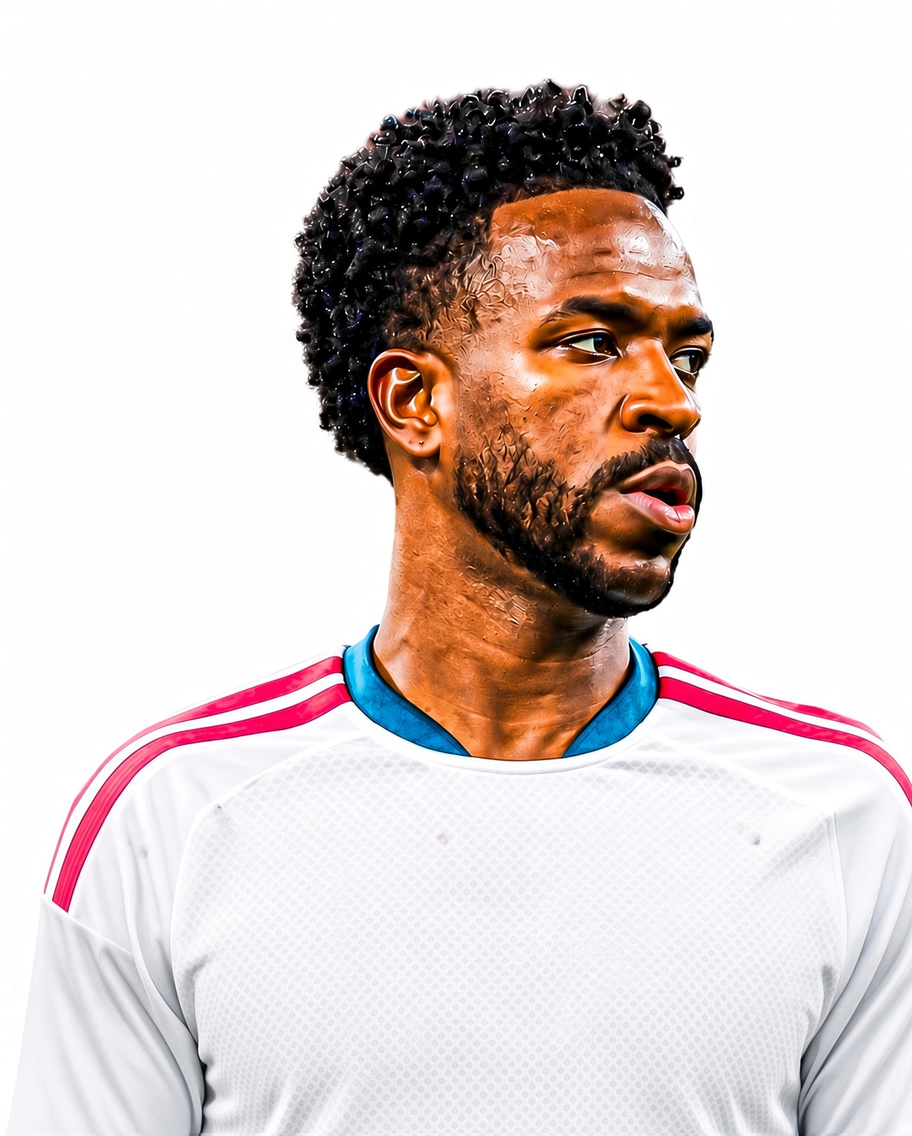
The Barcelona-leaning counter-argument is easy to anticipate. A team that holds nearly two thirds of the ball and loses by one goal has not necessarily been outplayed, and supporters of the Catalan club would say that fine margins decide Clásicos and that a single result does not erase a season of strong performances. They would also point out that possession is only one measure and that the home side created chances of its own. The commentator did not deny any of that. He simply argued that Madrid’s plan worked and that Barcelona had no convincing answer to it.
The praise that followed was generous and specific. First came Aurélien Tchouaméni, whom the commentator described as brutal, and who, he said, deserved great credit alongside the coach for the way he had been used. For ninety minutes, the midfielder established control of the central zone in a midfield that contained players such as Fermín, Pedri and Rodri. In the commentator’s words, it was insane.
Next was Jude Bellingham, whom he praised for his work rate and for a roulette turn that started the move leading to the second goal. Arda Güler also earned warm words, with five shots, two key passes and an effort that forced a great save from Joan García after the equalizer, offering what the commentator called offensive clarity. Fede Valverde, deployed as a fullback, was singled out for his positioning and his reading of the game.
And then there was Kylian Mbappé, who scored twice. The commentator said the Frenchman scores goals “like an animal,” and he noted that the brace carried Mbappé to a century of goals for the club during the match, a milestone he found crazy given how short a time it had taken. He acknowledged that there will be plenty to criticize about the forward in the days ahead, and mentioned that the Ballon d’Or, the subject of an upcoming introduction on his social media, would give people plenty to laugh about. But if Mbappé were to win it, he said, few would argue that he is not one of the best players on the planet.
Those who disagree with that assessment have their reasons. Supporters of other contenders argue that the individual prize should reward a full year of work, not a single night, and that a Clásico brace, however impressive, does not settle the debate. The commentator did not claim it did. His point was narrower: the match underlined how much of the load Madrid’s attack currently carries without the player at the center of this video.
It is at this point that the argument pivots. In the commentator’s telling, the real story of the evening was not a famous name but a new one. Jan Diomande, the club’s record signing of the summer, started the match on the left wing. He completed four dribbles, more than any other player on the pitch, in a game in which his team was mostly defending. It was his cross that set off the move for the opening goal.
He also had a very interesting one-on-one chance which, although he wasted it, impressed the commentator. In his view, the young winger looks very good and complements Madrid’s attack. To that, he added the remark attributed to Mourinho, who said that the only untouchable thing is the badge. In other words, nobody’s place in the team is guaranteed.
That sentence, repeated in the video, is the hinge of the whole argument. If the only untouchable element is the club’s crest, then even the most celebrated players must earn their place week after week. And, the commentator suggests, Vinícius has not earned his recently. In the last game in which he featured, he said, the winger did not contribute very much, and things appear to be getting worse rather than better.
It is fair to note that Vinícius did not play in the Clásico, and that a single match tells us nothing about what the coach thinks of his long-term role. Mourinho’s remark can be read in several ways, as a warning to one player, as a message to the whole squad or as the sort of line coaches use to keep everyone sharp. The commentator reads it as a signal. A different observer might read it as nothing more than routine motivational talk.
To explain why he sees the situation as serious, Reinoso goes back to the 2024 Ballon d’Or ceremony. On that occasion, he recalled, Vinícius said that he would come back better than ever, that he would play better than ever and that he would win the Ballon d’Or one way or another. That has not happened, he said, and the prize seems to be getting further and further away.
He was careful not to exaggerate. If we look at the numbers, he said, Vinícius is hardly a terrible player. He quoted a run of figures across recent seasons: 24 goals and nine assists in one campaign, 20 goals and 14 assists in another, and 22 goals and 10 assists in a third. For many other players, he said, those would be the statistics of an excellent footballer.
This season, by contrast, the picture is very different. According to the commentator, Vinícius has scored just one goal in 11 matches and provided three assists. That is a steep drop, and it is the context in which the rest of his argument is framed. The question he poses is whether the Brazilian is still the best player in the world, whether he is still a differential player for Real Madrid and whether the current version of him is necessary for the team that is being built, apparently in spite of him.
Those figures cut both ways. Defenders of the winger will say that a slow start to a campaign is not a verdict on a career, that he has produced strong numbers over several seasons and that the team’s change of coach and tactical approach would affect any attacker. Critics will say that eleven matches is a decent sample and that the decline in output coincides with a visible change in the way he is regarded inside the squad. Both statements can be true at the same time.
The commentator’s central claim, however, is not about goals and assists. In his view, the problem is not so much football as mentality and status. He pointed to several episodes that he says he has already discussed in other videos, and he listed them in sequence.
The first was the angry scene with Xabi Alonso during a Clásico. Reinoso said it is basically known that Vinícius was the one who caused the coach’s dismissal. The second came with Mourinho, when the winger reacted with the same kind of tantrum after being substituted. And there was a further display of temper on the pitch, which he described in a passing reference to pulling hair, a detail he laughed about in the introduction to the video.
To these he added what he called the off-pitch attitudes and the negotiation over the contract, the idea that Vinícius had to be the best player, the highest paid and the most important member of the squad. Even when his statistics had not collapsed, the commentator said, the winger carried an attitude that no matter what happened and regardless of his form, he had to be the star and the face of the team.
These are serious charges, and they need to be handled with care. The claim that a player was responsible for a coach’s dismissal is the commentator’s interpretation, and it is far from universally shared. Club insiders and supporters have offered a range of explanations for the changes on the bench over the past year, including results, the relationship with the dressing room and decisions taken at board level. Vinícius’s defenders would add that he has often been the target of intense criticism, that his reactions to being substituted are those of a fiercely competitive player and that many great forwards have shown frustration when taken off. Others would reply that a pattern of such incidents is hard to dismiss as coincidence.
Reinoso himself acknowledged part of this. He said he did not want to be misunderstood, and that for him Vinícius is still very good. Even if he is going at a slower pace this season, in a team packed with stars, the player has not become worse. He also reminded viewers of the winger’s achievements: 128 goals for Real Madrid, 14 titles and the Best FIFA award in 2024, which he described as theoretically more valuable than the Ballon d’Or. Talent, he said, is not what has disappeared.
What has not changed, in his opinion, is everything else. Since that peak, he argued, Vinícius has not evolved either as a footballer or as a personality. The second part, he said, is what he has been saying again and again, and it appears to weigh more and more.
He also lamented the nature of the conversation around the player. With all the talk about whether he is a clone, about his private life or about whether he has gone back to an ex-partner, everything is discussed except the thing that should matter most: how he is developing on the pitch. Meanwhile, with Diomande, Mourinho and company, Madrid appears to be evolving without him. The commentator’s message to the winger was short and direct: you are being forgotten.
Many fans would say the criticism of the player’s private life is a fair target for complaint in its own right. Discussion of a footballer’s relationships has little to do with football, and a sporting debate is better served by sticking to what happens between the lines. The commentator appears to share that view, since he mentions the gossip precisely to say that it crowds out the discussion of his playing.
Having made his diagnosis, Reinoso turned to what happens next. What should people watch for? He set out three scenarios, and the way he framed them is the most useful part of the video for anyone who wants to follow the story over the coming weeks.
The first and most obvious question is how Vinícius returns. Can he adapt both in footballing and in mental terms? Can he accept sharing, and accept a new role, which the commentator was careful not to describe as that of a benchwarmer? Can he accept that he is not the star, that he will never be a Cristiano Ronaldo for this Real Madrid, but that he can be a team player who, with all the legend he has built, knows how to evolve and adapt?
If he can, the commentator believes Real Madrid has one of the best pieces in the world with which to build a deep and very dangerous team, with different alternatives and different profiles. For Mourinho, that would be what Reinoso called a good problem. A coach with several high-class options on the flank is, after all, a coach with plenty of tactical solutions.
The second scenario is bleaker. In it, Vinícius does not learn, does not evolve and does not adapt. He becomes just another player, a footballer whom people suddenly forget plays for Real Madrid, all while earning what the commentator described as an absolutely crazy salary. He reminded viewers that the winger has only just renewed his contract, together with all the requests that came with that renewal.
The third scenario is the one nobody wants to see. From the second road, he said, one can slip onto the third, where everything blows up and the player looks for the exit. At that point, a completely new problem would be uncovered, because, as the commentator put it with a nod to the video game, this is not a career mode with Leicester City. It is not that simple.
With a contract like his and a salary like his, Reinoso said, the Brazilian can practically not go to any team in Europe. The exceptions would be Manchester City, Chelsea or, if it went crazy, Manchester United. The only likely or realistic route in such a bad scenario, he suggested, would be Saudi Arabia, and even then the question of the transfer fee would be open. He named Al-Nassr, Al-Hilal and Al-Ettifaq as possible destinations.
It is worth stressing that this part of the video is pure speculation, and it is presented as such. Nothing in the commentator’s remarks suggests that the player or the club is considering a departure, and the contract renewal he mentions points in the opposite direction. Supporters who believe the winger will rediscover his best form would argue that it is premature to discuss exits when the season is barely underway. Those who share the commentator’s pessimism would say that it is precisely at this stage, before a crisis develops, that these questions should be asked.
The commentator’s conclusion is worded with care, and it contains three separate ideas. The first is that the Clásico proved Vinícius is not bad. The second is that it showed Real Madrid is not as bad as it had been painted. The third, and in his opinion the most worrying for the winger, is that Real Madrid can win its most important match of the season without needing Vinícius Júnior.
He went one step further. Some, he said, might even argue that it is better for Vinícius not to play in the next important match. He did not endorse that view outright, but he did not reject it either, and he left the question open for his audience. What do you think, he asked viewers, and said that is what the comment section is for.
It is a conclusion that invites strong reactions in both directions. For those who believe the club has outgrown the winger, the evidence is there in the shape of a 2-1 win secured by a different cast of attackers and a midfield that functioned without him. For those who still believe in him, one result in one match does not make a trend, and the club’s history is full of players who were written off and then returned to dominate. Football has a short memory and a long list of redemption stories.
The broader point is that Mourinho’s team seems to be developing an identity that does not depend on any single individual. The Clásico performance, as described by the commentator, was built on a midfielder who controlled the center, a young winger who attacked space, a forward who scored twice and a collective capacity to suffer without the ball. That is a different philosophy from one in which a team waits for its biggest star to produce a moment of magic.
Whether that philosophy has room for Vinícius is the question on which the rest of his season will turn. If he adapts, he could become the most dangerous weapon of a deep squad. If he does not, he will become what the commentator warned against, a name on a very long payroll.
The final minutes of the video were given over to the usual business of a growing channel. Reinoso thanked viewers for watching, invited them to leave a like and share the video, and said he would read all the comments. He mentioned his live streams on several platforms and a new English-language project in which, he noted, one of the owners is Mourinho himself, and he said he plans to create a single link to gather all of his networks.
He also told viewers to leave a particular word in the comments if they had reached the end of the video, a small trick to see who stayed to the finish, and signed off with a reminder to eat fruit and vegetables, because health is everything. It was a light ending to a video whose central argument was anything but light.
As for the substance, the verdict is open. Reinoso’s case is that Real Madrid has taken a step forward without Vinícius Júnior, that the winger’s biggest obstacle is himself and that the next few weeks will show whether he can adapt. His critics, and the player’s many admirers, will want to see more evidence before drawing such a firm conclusion. In the meantime, the Clásico has given everyone plenty to talk about, and the next time Vinícius steps onto the pitch, all eyes will be on him.









