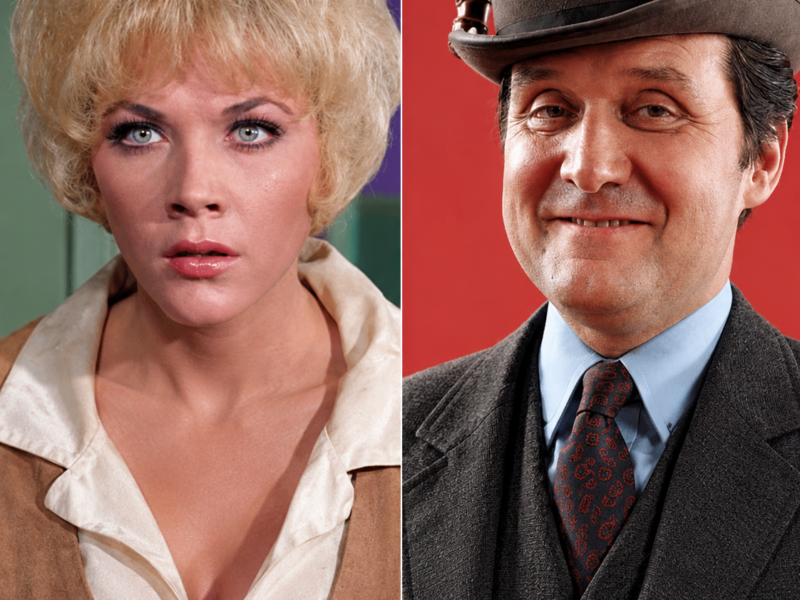
The Avengers Cast Then and Now in 2026: The Shocking Fate of Steed, Emma Peel, Cathy Gale, and the Stars Who Made 1960s Spy TV Unforgettable
the-avengers-cast-then-and-now-2026
A bowler hat. A polished umbrella. And danger hiding behind the most elegant smiles on television.
That was the secret of The Avengers.
It took espionage, the most serious business in the world, and turned it into something stylish, surreal, and strangely playful.
More than 60 years later, most of the faces who built that world are gone.
Some became international icons. Others slipped into quieter careers. And a few remarkable survivors are still with us in 2026.
So what really happened to Steed, Emma Peel, Tara King, and the unforgettable people who stepped into their strange world of spies and killers?
Some of the answers will thrill you. Some will break your heart.
And one performer inside a silent metal suit may surprise you more than any villain in the series.
Fold your umbrella and follow us in.
The Series That Made Danger Look Fashionable
The Avengers did not begin as the show most people remember.
In the early days, it was darker, grittier, and rooted in crime and revenge. Over time it grew into something wonderfully strange, full of eccentric masterminds, killer machines, and heroes who treated death with a raised eyebrow.
It became a 1960s phenomenon because it never took itself too seriously and never stopped taking its characters seriously.
Behind the style was a cast of performers who knew exactly how to balance menace and wit.
Let’s meet them, one by one.
Mother: The Spymaster in the Wheelchair
He could issue deadly serious orders from a wheelchair while sitting in surroundings so bizarre they seemed completely normal by Avengers standards.
Patrick Newell, born on March 27, 1932, in Hadley, Shropshire, was 33 when he first took on the role of Mother in 1965.
Mother worked because he embodied the series’ refusal to separate danger from absurdity.
He was powerful, informed, and capable of sending Steed toward threats that could endanger the entire country. Yet the circumstances around those briefings were often almost comically theatrical.
Newell understood that contradiction perfectly.
He gave Mother clipped authority without removing the mischievous edge, allowing a supposedly senior government figure to feel just as eccentric as the villains Steed was chasing.
The wheelchair could have become a limitation. Instead it became part of the character’s visual command.
Mother never needed to move through a room for everyone else to understand who controlled it.
Patrick Newell continued appearing across British film and television after The Avengers, often bringing personality and comic detail to supporting roles.
He passed away in 1988, at only 56, from a heart attack.
Mother remains memorable because Newell made command feel eccentric rather than imposing.
In the world of The Avengers, even the man giving the orders had to be stranger than ordinary television would allow.
Eric Van Doren: The Villain Who Never Raised His Voice
The Avengers needed adversaries intelligent enough to make danger feel deliberate rather than merely physical.
Eric Van Doren was exactly that kind of enemy.
Philip Madoc, born on July 5, 1934, in Merthyr Tydfil, Wales, was 28 when he appeared in the role in 1962.
Van Doren fit the early series perfectly, because the world had not yet become as brightly surreal as it would be during the Emma Peel years. Suspense still leaned toward crime, espionage, secrets, and men whose calm made them more disturbing than obvious villains.
Madoc brought exactly that quality.
His deep voice and controlled gaze suggested a man who was always thinking ahead and never revealing everything at once.
He did not need explosive behavior to create tension. The threat came from restraint.
That quality would become a defining feature of Madoc’s wider career, in which he repeatedly played soldiers, officials, villains, and men whose intelligence made them dangerous long before they raised their voices.
Philip Madoc later became one of British television’s most recognizable character actors, with major appearances in Doctor Who, The Last of the Mohicans, A Mind to Kill, and many other productions.
He passed away in 2012, at the age of 77, after cancer.
Van Doren remains a smaller part of that long career, but Madoc gave him unusual weight.
He demonstrated one of the show’s recurring truths. The most unsettling opponent is often the one who appears completely calm, because he already believes the game is under control.
Emma Peel: The Woman Who Changed Everything
She transformed The Avengers from an inventive British spy series into an international symbol of 1960s cool.
Diana Rigg, born on July 20, 1938, in Doncaster, England, was 27 when she entered the series in 1965.
Emma worked because she was never treated as Steed’s assistant.
She was his equal in intelligence, courage, humor, and danger. She could solve the puzzle, fight the attacker, mock the villain, and then walk away with the same effortless composure Steed brought to his bowler hat.
Rigg gave Emma sophistication without making her distant, and physical confidence without turning her into an exaggerated action figure.
The iconic fashion, especially the catsuits, became part of the image. But it was the performance that made that image last.
Emma enjoyed the absurdity of the world around her. She and Steed often seemed amused by danger rather than overwhelmed by it, creating a chemistry built less on overt romance than on a shared understanding that each could trust the other completely.
That partnership felt remarkably modern for mid-1960s television.
Emma could be glamorous without existing for male approval, and independent without being portrayed as lonely or difficult.
Diana Rigg went on to one of Britain’s great acting careers across theater, film, and television, eventually reaching a new generation through Game of Thrones.
She passed away in 2020, at the age of 82, after cancer.
Emma Peel endures because Rigg made intelligence look exciting.
She did not simply enter Steed’s world. She changed what that world could be.
Cathy Gale: The Woman Who Refused to Be Rescued
Before Emma, there was Cathy.
And she taught The Avengers that its female leads did not need rescuing.
Honor Blackman, born on August 22, 1925, in Plaistow, Essex, was 37 when she joined the series in 1962.
Cathy was crucial because she arrived before the show had fully developed the colorful spy-fi identity audiences now associate with it. Her confidence helped push the transformation forward.
As an anthropologist, adventurer, and accomplished fighter, she brought intellectual and physical authority into Steed’s world at a time when television women were rarely allowed both.
Blackman played her with cool assurance.
Cathy did not need constant approval from Steed, because she already knew what she could do. Their exchanges carried dry wit and mutual respect, but she kept a clear independence that made the partnership feel unusually balanced for the early 1960s.
Her judo skills became part of the image.
Yet the real innovation lay in how naturally the show treated her capability. She was not extraordinary because a woman could fight. She was extraordinary because Cathy Gale happened to be very good at almost everything she chose to do.
After leaving The Avengers, Honor Blackman became internationally famous as Pussy Galore in Goldfinger, cementing her place as an icon of strength and sophistication.
Her career continued across stage, television, and film for decades.
She passed away in 2020, at the age of 94, from natural causes.
Cathy Gale endures because Blackman helped make Emma’s appeal possible before the catsuits and the international fame.
She had already shown that the woman standing beside Steed could stand as his equal.
Dr. David Keel: The Grief Behind the Glamour
Before the bowler hats and surreal villains, The Avengers began with a grieving doctor.
Ian Hendry, born on January 13, 1931, in Ipswich, Suffolk, was 30 when the program began in 1961.
Keel mattered because the original Avengers was a darker series than the version many viewers remember.
His fiancée was murdered, pulling an ordinary doctor into a world of crime, revenge, and covert investigation alongside John Steed.
Hendry gave Keel an urgency that felt personal rather than professional.
He was not interested in espionage as an exciting career. He had been wounded by violence and was trying to understand the world that created it.
That gave the earliest episodes a grittier foundation.
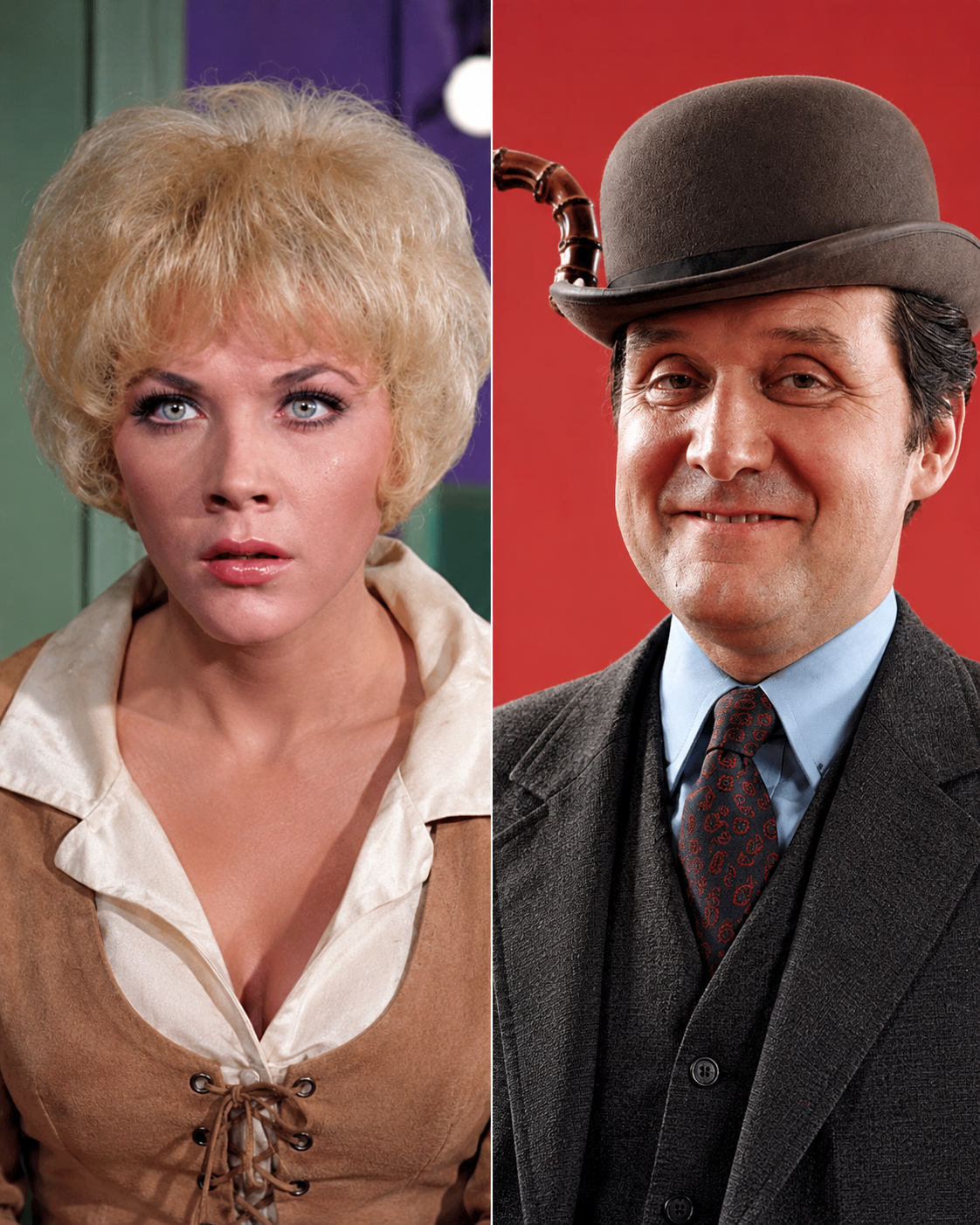
Steed was already mysterious and connected to secret intelligence. But Keel was the viewer’s human way in, a man learning just how dangerous that hidden world could be.
Hendry’s intensity kept the character emotionally grounded, ensuring the series began with genuine loss before it evolved into something more playful and stylized.
He left after the first season and continued a substantial career across British film and television, appearing in dramas and character roles that drew on the same intensity he brought to Keel.
Ian Hendry passed away in 1984, at only 53, from a gastrointestinal hemorrhage.
Dr. David Keel endures because he reminds viewers that The Avengers did not begin with fantasy.
It began with grief, anger, and one man discovering that justice sometimes requires stepping outside the ordinary world he understood.
Alex: The Man Who Seemed to Know Everything
Some actors can walk into a scene already looking as though they know more about the conspiracy than anyone else in the room.
Edwin Richfield could do exactly that.
Born on September 11, 1921, in London, Richfield was 40 when he appeared as Alex.
Alex worked because Richfield had the kind of voice and screen authority that made mystery almost automatic. He could stand quietly, speak with measured confidence, and suggest an entire unseen layer of motive behind the dialogue.
That suited The Avengers perfectly.
The series depended not only on memorable leads, but on guest performers who could immediately belong in a world where almost everyone might be hiding something.
Richfield’s presence gave Alex a polished danger without any need for exaggerated villainy.
The character seemed composed enough that viewers had to pay closer attention. And in a program built around deception, composure is rarely innocent for long.
Beyond The Avengers, Edwin Richfield worked extensively across British television and film, appearing in productions including Quatermass 2 and The Troubleshooters. He often played professionals, adversaries, and authority figures, roles that benefited from his commanding presence and distinctive delivery.
He passed away in 1990, at the age of 68.
Alex remains a smaller piece of Avengers history, but Richfield shows why the series’ guest casting mattered so much.
Steed’s world could only feel sophisticated if the people opposing or surrounding him seemed sophisticated, too. Richfield made even a supporting character look as though he had entered the scene with a private plan already in motion.
Andre Vogel: Danger in Good Manners
The most dangerous villains sometimes arrive wearing a smile.
Andre Vogel showed how easily sophistication could conceal menace.
Julian Glover, born on March 27, 1935, in Hampstead, London, was 30 when he appeared in 1965.
Vogel worked because Glover understood how to let menace sit beneath good manners.
The character did not need to look physically threatening in every moment. A careful tone, a controlled look, or a smile that lasted slightly too long could create enough uncertainty to unsettle everyone.
That made him perfectly suited to Steed’s world, where enemies often shared the hero’s intelligence, elegance, and talent for playing social games.
Glover’s presence gave the character weight beyond the size of the role, because viewers sensed calculation in almost everything he did.
It was a quality Glover would use again and again throughout an extraordinary career. He could play a villain without reducing him to obvious evil, often giving ambitious or dangerous men enough authority that other characters might reasonably trust them before realizing the mistake.
In 2026, Julian Glover is 91 years old.
His career went on to span generations through Doctor Who, Star Wars: The Empire Strikes Back, Indiana Jones and the Last Crusade, Game of Thrones, and an enormous body of stage work.
Andre Vogel now feels like an early glimpse of the commanding screen presence audiences would meet for decades.
The character endures because Glover makes danger look civilized.
In The Avengers, that is often the most dangerous disguise of all.
Brenda Patterson: A Future Star in an Early Guest Role
Before the series fully embraced its later fantasy style, it was filled with women who brought intelligence and ambiguity to crime-driven mysteries.
Brenda Patterson was one of them.
Judy Parfitt, born on November 7, 1935, in Sheffield, England, was 27 when she appeared in 1962.
Brenda fit the early period because the mysteries were still closer to crime drama, with tension carried through conversation, suspicion, and hidden motivation rather than killer robots or extravagant masterminds.
Parfitt gave the character poise and watchfulness, suggesting that what Brenda said and what she knew might not always be the same.
Even in an early guest role, the qualities that would define Parfitt’s later career were visible. Refinement with steel underneath. Emotional control that never meant emotional emptiness. And an ability to suggest an inner life beyond the dialogue.
That kind of performance was especially valuable in The Avengers, where guest characters often had limited time to establish themselves before the plot began twisting expectations.
As of October 2026, Judy Parfitt is 90 years old, and she turns 91 on November 7.
Her remarkable career continued through theater, film, and television, including acclaimed work in Girl with a Pearl Earring, Little Dorrit, and Call the Midwife.
Brenda Patterson remains an early chapter in that story, capturing Parfitt long before later generations came to know her from very different roles.
The character endures because she illustrates one of the quiet pleasures of revisiting old television.
Sometimes a seemingly modest guest appearance holds the unmistakable beginnings of a performer audiences will still be watching more than 60 years later.
Venus Smith: The Singer Who Wandered Into Espionage
Venus Smith was a nightclub singer who kept discovering that performing for an audience could somehow lead straight into John Steed’s world of espionage.
Julie Stevens, born on August 24, 1936, in London, was 26 when she first appeared.
Venus is fascinating because she belongs to an evolutionary stage of The Avengers, somewhere between Dr. Keel’s darker crime stories and the fully formed female partnerships that would arrive with Cathy Gale and Emma Peel.
She was not a trained agent.
That difference gave her adventures an unpredictability the later partners did not have. Danger entered dressing rooms, clubs, songs, and entertainment spaces she understood professionally, but not tactically.
Stevens gave Venus enough energy and charm to keep her from feeling dragged through Steed’s cases.
Her musical performances also added texture to an era of the show that was still experimenting with what kind of program it wanted to become.
Through Venus, glamour entered The Avengers before glamour became one of its defining visual languages.
Julie Stevens continued working across television, stage, radio, and voice performance after her time with the series.
She passed away in 2024, at the age of 87, after Parkinson’s disease.
Venus Smith remains an affectionate part of early Avengers history because Stevens gave her a humanity different from the later, super-capable partners.
She was talented, curious, and sometimes understandably uncertain about the danger around her.
In a world slowly growing stranger, Venus reminds viewers what that strangeness looks like to someone who originally expected only to sing the next song.
One-Ten: The Boss From a Straighter Era
Long before eccentric briefing rooms, the intelligence world behind Steed was run by someone far more conventional.
One-Ten belonged to an Avengers still much closer to ordinary espionage than to the surreal playground it would become.
Douglas Muir, born on November 5, 1904, in Greenwich, London, was 57 when he first appeared in 1961.
One-Ten worked because he gave the early series institutional structure.
Steed might operate mysteriously, but someone still stood behind him, issuing assignments, providing information, and representing the larger machinery of British intelligence.
Muir played the role with restraint and official authority.
There was little need for the eccentric locations associated with later figures like Mother. One-Ten belonged to a darker, straighter era where secrecy itself was enough to create atmosphere.
His presence reminds viewers how dramatically The Avengers evolved.
The same series that would eventually feature killer machines and surreal masterminds once depended much more heavily on shadowy offices, coded instructions, and professional intelligence work.
Douglas Muir had a steady British film and television career outside the series, frequently playing dignified professionals or authority figures.
He passed away in 1966, at the age of 62.
One-Ten remains significant because Muir represents the framework The Avengers later learned to bend.
Before Steed’s intelligence chiefs became eccentric characters in their own right, One-Ten established the idea that another unseen world existed behind every investigation.
The series would grow more playful, but that early sense of secret authority never completely disappeared.
The Executioner: Danger Without a Speech
Beneath all the wit and elegance, physical danger in The Avengers could still be brutally direct.
The executioner was a reminder of that.
Terence Plummer, born in 1936 in London, was 29 when he appeared in the role.
The character worked because he required no elaborate psychology. His function was presence.
In a program where villains often spoke beautifully and conspiracies could become fantastically complex, a character who created fear through movement and physical threat added another texture.
Plummer had the build and performance style for that kind of menace.
He could communicate danger without speeches, letting posture, stillness, and sudden action do the work.
That physical credibility became especially valuable across a career in which he often portrayed tough men, heavies, and threatening figures.
The Avengers thrived on contrast, and characters like the executioner provided the hard edge against which Steed’s civilized humor seemed even more remarkable.
Terence Plummer continued working across British television and film, appearing in productions including Z-Cars and Doctor Who, and building a reputation as a reliable performer for hardened or menacing roles.
He passed away in 2011, at the age of 75, from natural causes.
The executioner remains a small but effective reminder that not every danger in Steed’s world needed an ingenious speech.
Sometimes the threat was simply a man entering the room whose body language said negotiation had already ended.
Fleming: The Scene-Tilting Eccentric
Some supporting actors can tilt a scene slightly sideways just by arriving with the right expression.
Norman Chappell was one of them.
Born on December 31, 1925, in Lucknow, British India, Chappell was 36 when he appeared as Fleming.
Fleming mattered because the show’s identity was built from more than espionage plots. It depended on odd personalities, dry exchanges, comic interruptions, and people whose eccentricity made the world feel different from a straightforward thriller.
Chappell had exactly that lightly off-center quality.
He could make a reaction funny without turning the whole scene into broad comedy, and his presence added the peculiar British flavor that helped The Avengers become so distinctive.
Characters like Fleming lived in the space between menace and humor.
Viewers were never quite sure whether someone was dangerous, ridiculous, or both. That uncertainty suited a series where appearances were almost never reliable.
Norman Chappell later became a familiar face across British television, appearing in The Saint, Are You Being Served?, Carry On Laughing, and numerous other productions that used his comic precision and versatility.
Fleming remains only one part of that career, but Chappell demonstrates how supporting performers helped establish the show’s tone.
The Avengers could move from suspense to absurdity without warning, because actors like him understood how to stand in both worlds at once.
Fleming did not need to be a great villain or partner to belong unmistakably to Steed’s strange Britain.
The Cybernaut: The Nightmare That Never Spoke
Here is the one that surprises people.
The Cybernaut was a nightmare that did not need to speak. It simply kept coming.
Terry Richards, born on November 2, 1932, in London, was 33 when he first appeared as the Cybernaut in 1965.
The character captured the moment The Avengers fully embraced the strange territory between espionage and science fiction.
Unlike the elegant human villains who traded clever dialogue with Steed and Emma, the Cybernaut offered no personality to negotiate with.
It was machinery shaped like a man. Silent, powerful, and indifferent to fear.
Richards made that silence work through physical precision. Every movement had to suggest weight, mechanical purpose, and the absence of ordinary human hesitation.
That became more disturbing than a conventional performance, because viewers could not read emotion on the figure.
No anger. No pleasure. No doubt.
It simply followed its programming.
Against Steed and Emma’s wit, individuality, and improvisation, the Cybernaut represented the exact opposite. Power without personality.
Its visual design and unstoppable movement became so memorable that the character outgrew the individual story and became one of the series’ signature monsters.
Terry Richards built an impressive career as a stunt performer and actor, later contributing to major films including Raiders of the Lost Ark and Star Wars.
He passed away in 2014, at the age of 81.
The Cybernaut endures because Richards showed that a performer can create character even when the character barely behaves like a person.
No witty line was necessary. The mechanical footsteps were enough.
In a series famous for elegant villains, sometimes the most frightening enemy was the one with no smile at all.
John Steed: The Spy in the Tailored Suit
He could walk into danger wearing a tailored suit and carrying an umbrella, and somehow make violence look like a minor interruption to good manners.
Patrick Macnee, born on February 6, 1922, in London, was 39 when The Avengers began in 1961.
Steed worked because he rejected the idea that toughness must look brutal.
His confidence came from composure. He could smile at an enemy, trade dry remarks during a crisis, and turn apparent politeness into its own form of control.
Macnee gave him enough danger beneath the charm that the elegance never felt empty.
Steed was playful, but he was not foolish. He saw more than he said, and he often seemed to know exactly when another person had underestimated him.
His partnerships became the heart of the series, because he never needed to diminish the women beside him.
Cathy Gale, Emma Peel, Tara King, and others brought different energies, but Steed’s chemistry with each of them depended on mutual respect.
With Emma especially, flirtation and friendship sat beside professional equality in a way that helped define the show’s modern identity.
The bowler hat and umbrella became iconic, but Macnee’s greatest achievement was making those objects feel like extensions of character rather than costume.
Patrick Macnee continued a long career across film and television after the series.
He passed away in 2015, at the age of 93, from natural causes.
John Steed endures because Macnee created a hero whose greatest weapon was not violence.
It was the certainty that whatever madness waited behind the next door, he would still walk in looking perfectly dressed for it.
Tara King: The Hardest Act to Follow
Tara King arrived with perhaps the most difficult assignment any new Avengers character could face.
Follow Emma Peel without pretending Emma Peel had never existed.
Linda Thorson, born on June 18, 1947, in Toronto, Canada, was only 21 when she joined the series in 1968.
Tara worked because Thorson did not try to reproduce Diana Rigg’s cool detachment.
Tara was younger, more openly enthusiastic, emotionally expressive, and still learning how to navigate Steed’s extraordinary world. That gave the partnership a different rhythm.
Emma often seemed completely prepared for whatever surreal threat appeared. Tara could be surprised, uncertain, or eager to prove herself, which made her courage feel different rather than lesser.
Thorson gave the character charm and vulnerability while still letting her be resourceful when danger became real.
Her relationship with Steed carried more visible affection and, at times, a sense of mentorship. Yet Tara was never simply a student waiting for him to solve the case.
She grew into the work through experience, and the late series episodes benefited from that sense of someone finding confidence inside an already legendary partnership.
In 2026, Linda Thorson is 79 years old.
After The Avengers, she continued a long career across British and North American television, film, and theater.
Tara King remains important because Thorson accepted comparison with one of television’s most iconic women and still found another path.
Tara did not need to become Emma Peel.
Her strength came from showing that courage can look younger, less polished, and more openly emotional while remaining courage all the same.
The Umbrella Is Folded
The bowler hat has been put away.
The umbrella is folded, and most of the people who made The Avengers extraordinary are now gone.
Patrick Macnee, Diana Rigg, Honor Blackman, Ian Hendry, Patrick Newell, Philip Madoc, Julie Stevens, and many other unforgettable faces left behind a television world where danger could be sophisticated, absurd, frightening, and funny all at once.
Their names belong to another age, but their work keeps finding new audiences.
And the story is not only about loss.
Linda Thorson, Julian Glover, Judy Parfitt, and a handful of surviving performers remain living links to that extraordinary era.
Why The Avengers Still Feels Modern
The reason The Avengers still feels modern is not simply the clothes or the surreal plots.
It is Steed treating his partners as equals.
It is Cathy Gale and Emma Peel redefining what female heroes could be.
And it is a series confident enough to fight a killer machine one week and laugh at espionage conventions the next.
That kind of nerve never really goes out of fashion.
So now we want to hear from you.
Which Avengers character stayed with you the most? Steed, Emma Peel, Cathy Gale, Tara King, or one of the unforgettable villains?
Tell us in the comments, and stay with us for more classic television stars, heartbreaking losses, surprising transformations, and the shows whose style never really went out of fashion.









