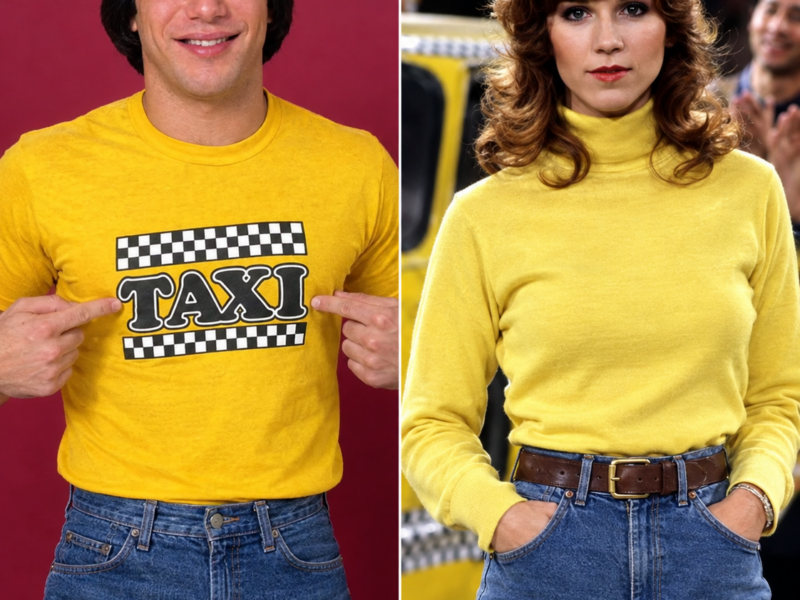
Taxi (1978–1983) Cast Then and Now 2026 | Who Is Still Alive in 2026?
What if the laughter you remember was hiding a room full of broken dreams
That is the secret of Taxi
The Sunshine Cab Company was never just a garage
It was a waiting room for people who kept insisting they were only passing through
Bobby was waiting for his acting break
Tony was waiting for the fight that would finally change everything
Elaine wanted a better life
Jim was trying to remember where his had gone
And Alex had almost stopped believing another life was coming at all
That was the secret of Taxi
Beneath the laughter were people whose dreams kept running even when the meter said time was passing
Decades later, some of those actors became legends, while others faced addiction, illness, loss, and lives far more complicated than any sitcom ending could show
This is Taxi then and now in 2026
Alex Rieger was the cab driver who seemed to have accepted disappointment without ever allowing it to make him cruel
Played by Judd Hirsch, born on March 15th, 1935, he was 43 when Taxi began in 1978
Alex works because he is surrounded by people still loudly chasing something while he behaves like a man who has already discovered how often dreams fail
Bobby wants to become an actor
Tony believes the next fight might finally matter
Elaine is trying to build a life beyond the garage
Alex mostly drives, listens, sighs, and offers advice he has probably learned through mistakes he does not enjoy remembering
Hirsch makes that weariness warm rather than defeated
Alex can be sarcastic, frustrated, stubborn, and emotionally guarded
Yet he is usually the first person others approach when life becomes serious
That is what makes him the emotional center of the Sunshine Cab Company
He may have stopped expecting the world to reward him, but he has not stopped caring what happens to the people around him
His family relationships, especially the wounds connected to his past marriage and father, reveal that the wisdom everyone depends on was purchased through disappointment
Hirsch never needs to announce any of that
It sits in the pauses, the tired smile, and the look of someone who has heard another impossible plan and already knows why his friend needs to believe in it anyway
In 2026, Judd Hirsch is 91
Taxi earned him Emmy awards and became one foundation of a remarkable career that later included Dear John, Numbers, Ordinary People, and an Academy Award nomination decades later for The Fabelmans
Alex Rieger remains one of Hirsch’s defining performances because he made resignation feel compassionate
Alex had reasons to stop hoping for himself
What made him special was that he never used those reasons to stop hoping for everyone else
Louie De Palma was the dispatcher who treated a tiny cage inside a taxi garage like his personal kingdom
Played by Danny DeVito, born on November 17th, 1944, he was 33 when Taxi began in 1978
Louie works because almost everything about him should make the audience despise him
He is petty, greedy, manipulative, insulting, sexually aggressive, and delighted whenever the small amount of authority he possesses allows him to humiliate someone
Yet DeVito understood that pure cruelty would eventually become exhausting
Beneath Louie’s aggression is a man painfully aware of how little power he possesses outside the garage
He attacks before anyone can expose the loneliness and insecurity underneath
That does not excuse him, but it gives the performance dimension
DeVito can make Louie monstrous in one scene and unexpectedly vulnerable in the next without pretending he has suddenly become a good person
His relationships with the drivers work because they know exactly what he is and still occasionally discover something recognizably human beneath the dispatcher’s cage
Zena especially reveals how uncomfortable Louie becomes when affection cannot be controlled through insults or manipulation
DeVito also gives the character extraordinary physical comedy
The way Louie climbs from the cage, leans into an argument, or uses his entire body to express wounded authority makes every confrontation larger than the office itself
In 2026, Danny DeVito is 81 and turns 82 in November
Taxi launched him into national fame and brought him major awards before an enormous career through Romancing the Stone, Twins, Batman Returns, Get Shorty, Matilda, and later It’s Always Sunny in Philadelphia as Frank Reynolds
Louie De Palma endures because DeVito made ugliness entertaining without pretending it was beautiful
Louie wanted control because he feared being insignificant
The joke was that his worst qualities made him impossible to overlook
Latka Gravas was the mechanic who seemed to have arrived from another country, another language, and occasionally another version of reality entirely
Played by Andy Kaufman, born on January 17th, 1949, he was 29 when Taxi began in 1978
Latka works because Kaufman never approaches him like an ordinary sitcom character
His accent, innocence, customs, emotional shifts, and strange logic make him funny
But the performance also creates uncertainty
Viewers are never completely sure whether they are laughing at Latka with him or at the larger joke Kaufman may be playing on the idea of television itself
That instability is part of the magic
Latka can seem childlike one moment and surprisingly perceptive the next
His romantic relationship with Simka expands the character because she understands the emotional and cultural language that leaves everyone else in the garage confused
With her, Latka no longer seems like the only visitor from an unexplained world
Their relationship becomes passionate, bizarre, tender, and completely sincere on its own terms
Kaufman’s larger career makes the role even stranger in retrospect
He was fascinated by performance that blurred fiction and reality, and Latka became the most mainstream expression of an artist who often seemed uncomfortable with ordinary entertainment
Andy Kaufman died on May 16th, 1984 at only 35 from lung cancer
Beyond Taxi, he became famous for experimental comedy, wrestling women, the Tony Clifton persona, and performances that deliberately left audiences uncertain about what was real
His death at such a young age transformed that unpredictability into legend
Latka Gravas endures because Kaufman made innocence feel almost extraterrestrial
The garage understood less about him than it pretended to
And perhaps viewers did too
The mystery was never a flaw in the performance
It was the performance
Reverend Jim Ignatowski was the man who appeared permanently disconnected from reality and yet somehow kept stumbling into truths everyone else had missed
Played by Christopher Lloyd, born on October 22nd, 1938, he was 40 when he first appeared on Taxi
Initially in a guest role that became something much larger
Jim works because Lloyd never treats confusion as emptiness
Beneath the wild hair, delayed reactions, and wandering speech is the suggestion of a mind that once moved very differently
The character’s history gives the comedy sadness
Jim was not born lost
Somewhere along the way, his life drifted into another shape, and the person he might have become still occasionally flickers through the haze
Lloyd uses silence brilliantly
Jim can take several seconds to understand a question, and those seconds become funnier because every other character has to wait with him
Yet when the answer finally arrives, it can be absurd, strangely profound, or both
That unpredictability gives Jim a nearly poetic quality
The garage protects him because they recognize vulnerability beneath the eccentricity, but he also gives something back
His inability to follow ordinary social logic sometimes allows him to see people without the defenses everyone else accepts
He may be confused about practical life, but he is often surprisingly clear about loneliness, friendship, and kindness
In 2026, Christopher Lloyd is 87 and turns 88 in October
He won Emmy awards for Taxi before becoming internationally beloved as Doc Brown in Back to the Future with further memorable work in The Addams Family, Who Framed Roger Rabbit, Clue, Star Trek III, and many other screen and voice roles
Reverend Jim endures because Lloyd made brokenness imaginative rather than empty
Jim did not know where he was going
Somehow that made him one of the people most capable of understanding everyone else who felt lost
Bobby Wheeler was the actor who kept insisting the taxi job was temporary, even as every passing year made that sentence more painful
Played by Jeff Conaway, born on October 5th, 1950, he was 27 when Taxi began in 1978
Bobby works because his dream is painfully recognizable
He has the looks, confidence, talent, and determination to believe success should be coming
Yet show business keeps refusing to cooperate
Every audition carries the possibility that this might finally be the one, and every disappointment returns him to the garage where his friends already know the pattern
Conaway gives Bobby enough charm that the dream never feels ridiculous
The danger is not that he lacks ambition
It is that ambition can become its own trap
When a person organizes an entire identity around the future finally validating him, every present moment becomes a waiting room
Bobby wants acting success because he loves performance, but he also needs it to prove the years of waiting were not wasted
That pressure gives his lighter scenes a melancholy undertone
The garage is supposed to be temporary
The longer he stays, the more it begins to resemble his actual life
Conaway knew something about the seductive promise of stardom himself, which gives Bobby’s hunger an uncomfortable resonance in retrospect
Jeff Conaway died on May 27th, 2011 at the age of 60 after complications from pneumonia and sepsis following years of substance abuse struggles
Before Taxi, he had already become famous as Kenickie in Grease, and his later public battles gave his career a tragic final chapter
Bobby Wheeler now carries some of that sadness
He remains the dreamer who believed the big break was just ahead
Conaway made that hope handsome and funny, but he also made it fragile
Sometimes the hardest dream to abandon is the one that has already taken most of your life
Simka Dahblitz-Gravas was the woman who entered Latka’s strange world and proved he was not the only person capable of turning the Sunshine Cab Company upside down
Played by Carol Kane, born on June 18th, 1952, she was 28 when she joined Taxi in 1980
Simka works because Kane refuses to make her merely a female version of Latka
She has her own emotional force, temper, customs, voice, and logic, and their relationship becomes funny precisely because two people who confuse everyone else understand each other completely
Simka brings passion into Latka’s innocence
She can be fiercely loving, jealous, argumentative, and tender in the same scene, which gives their romance an intensity unlike anything else in the garage
Kane’s high voice and explosive timing make the character instantly recognizable, but the performance is never only about sound
She understands how quickly eccentricity becomes exhausting if there is no genuine feeling underneath it
Simka cares deeply
Her rituals may seem strange to the other drivers, but her emotions are familiar
Fear of losing someone, frustration with marriage, pride, affection, and the desire to be understood without having to become less herself
In 2026, Carol Kane is 74
She won Emmy awards for Simka, had already received an Academy Award nomination for Hester Street, and continued through The Princess Bride, Scrooged, Annie Hall, Unbreakable Kimmy Schmidt, Wicked, and extensive stage and screen work
Simka endures because Kane made eccentricity emotionally complete
The character was not funny because she was strange
She was funny because her strange world contained love, jealousy, marriage, and heartbreak as intensely as anyone else’s
She and Latka were outsiders to the garage
Together, they were completely at home
John Burns was the gentle cabbie who belonged to Taxi’s first version of itself before the ensemble had fully discovered which voices would define the series
Played by Randall Carver, born on May 25th, 1946, he was 32 when Taxi began in 1978
John works because his innocence provides an early contrast to the stronger personalities around him
Louie is aggressive
Alex already appears emotionally exhausted, and the garage operates by social rules that John often seems slightly too wholesome to understand
Carver gives him an earnest, polite quality that makes his confusion believable rather than foolish
He feels like someone who expects ordinary decency and repeatedly discovers that the Sunshine Cab Company has developed its own ecosystem
That innocence helps the first season establish its range
The comedy does not come only from loud personalities colliding
Sometimes it comes from watching a gentle person realize he has entered a room where almost everyone else is carrying more damage, ambition, or cynicism than he expected
John’s departure after the first season also makes him part of the show’s evolutionary history
Taxi became more defined as characters such as Jim grew in importance and some early pieces disappeared as the writers discovered a stronger balance
In 2026, Randall Carver is 80
He continued working across film, television, and character roles after Taxi
Even though he did not become as closely identified with pop culture as several of his castmates, John Burns remains valuable precisely because he represents the beginning
Long running ensembles often look inevitable in retrospect, but they rarely start fully formed
John was there while Taxi was still learning what kind of garage it wanted to be
Zena Sherman was the woman who somehow looked at Louie De Palma and saw enough humanity to stay interested after everyone else had already noticed the obvious reasons to run
Played by Rhea Perlman, born on March 31st, 1948, she was around 30 when she first appeared on Taxi
Zena matters because she creates one of the few situations where Louie cannot rely completely on intimidation
Affection makes him nervous
A woman who sees through the insults and remains capable of challenging him exposes the insecure man behind the dispatcher’s cage more effectively than any confrontation at work
Perlman gives Zena enough sharpness that the relationship never feels like a naive woman trying to rescue a monster
She understands Louie’s ugliness
She simply refuses to let him control every emotional rule
That allows DeVito to reveal vulnerability without requiring Louie to become suddenly likable
Zena can provoke tenderness, jealousy, fear, and genuine need from a character who usually converts all those feelings into cruelty before anyone notices
Perlman’s comic timing is already unmistakable
Her reactions are quick, grounded, and unsentimental, which keeps Zena from disappearing beneath Louie’s enormous personality
In 2026, Rhea Perlman is 78
She later became iconic as Carla Tortelli on Cheers, winning multiple Emmy awards and continued through projects including Matilda, The Mindy Project, and Barbie
Zena remains a smaller role inside that major comedy career, but an important one because Perlman made affection strong rather than soft
Louie could bully an entire garage
Zena’s power came from the fact that she was not impressed by any of it
Phyllis Bornstein Consuelos was the woman from Alex Rieger’s past who proved that becoming the garage’s wisest man did not mean he had successfully resolved the life he lived before it
Played by Louise Lasser, born on April 11th, 1939, she was 41 when she appeared on Taxi
Phyllis matters because she interrupts the audience’s comfortable understanding of Alex at Sunshine Cab
He is the listener, the adviser, and the person others trust when their lives become complicated
An ex wife sees a different man
The one who participated in a failed marriage, made choices that hurt, and accumulated regrets before the garage became his emotional home
Lasser brings nervous, layered energy to the role, making Phyllis feel like someone who knows Alex too well to be impressed by his current position as resident sage
Their history gives every conversation extra weight because familiarity can be more uncomfortable than hostility
Two people may stop being married without losing the ability to expose old wounds in each other
Phyllis allows Taxi to explore that residue without turning the relationship into easy reconciliation or pure bitterness
The past does not disappear simply because both people have learned to tell better jokes about it
In 2026, Louise Lasser is 87
Her distinctive career extended far beyond Taxi, most famously through Mary Hartman, Mary Hartman, along with film work connected to Woody Allen, independent cinema, and later character roles
Phyllis endures because Lasser makes history feel present
Alex can drive away from one address after another every night, but some emotional destinations remain with him
Phyllis is the reminder that wisdom often comes from the relationships a person could not save
Greta Gravas was one of the figures who expanded Latka’s fictional old country universe until the Sunshine Cab Company seemed briefly connected to an entirely different civilization
Played by Susan Kellerman, born on July 4th, 1944, she was 35 when she appeared on Taxi
Greta works because Taxi allows eccentric guest characters to arrive with their own rhythm rather than forcing them to adapt immediately to the garage
Latka has already trained the drivers to expect customs and emotional rules they do not understand, and Greta pushes that strangeness further
Kellerman brings a commanding physical and comic presence to the part, making Greta feel capable of taking over a scene even when she does not occupy the center of the episode
That boldness is useful because cultural misunderstanding in Taxi works best when the supposedly strange character behaves with absolute confidence while everyone else becomes confused
The humor comes from incompatible expectations rather than from one person knowing the correct way to behave
Greta therefore contributes to the larger idea that the Sunshine Cab Company is a crossroads for outsiders
Everyone there is displaced in some way from another country, another career, another dream, or simply another version of the life they expected to have
In 2026, Susan Kellerman is 82
She built a long career across stage, film, and television, later appearing in productions including Beetlejuice, Elvira Mistress of the Dark, and Last Holiday
Greta Gravas remains a smaller role, but Kellerman makes small roles difficult to ignore
Her height, voice, and expressive presence give the character immediate scale
In a garage already full of misfits, Greta manages the impressive achievement of making Latka’s world seem almost normal to Latka himself
Jason was the child whose presence briefly forced Taxi’s adults to measure themselves against somebody too young to understand all the excuses they had built around their lives
Played by David Mendenhall, born on June 13th, 1971, he was around 11 when he appeared on the series
Jason matters because children change the emotional scale of a sitcom like Taxi
The garage is filled with adults accustomed to turning disappointment into jokes
A child does not always understand the protective humor, which means characters are sometimes forced to respond more directly
The failures, ambitions, and strange habits that seem funny among adults can suddenly look different when someone younger is watching
Mendenhall brings straightforward sincerity to that function
His character does not need the complicated psychology of Alex or Bobby because the value lies partly in contrast
Taxi often asks what happens when people who feel stuck encounter someone whose life is still almost entirely ahead of him
That can create tenderness, responsibility, or discomfort depending on which driver is involved
The child becomes a reminder that adulthood once looked full of possibility to these people too
In 2026, David Mendenhall is 55
He became especially recognizable through Over the Top with Sylvester Stallone, along with voice work and appearances across television and film before eventually stepping away from constant acting and pursuing broader professional interests
Jason remains a brief part of Taxi, but the character belongs to one of the series recurring emotional ideas
People understand their own lives differently when somebody else looks at them without the same accumulated disappointments
The drivers spend their nights carrying strangers through New York
Sometimes the passenger changes them too
Emily was the woman whose presence brought a quieter adult intimacy into a garage where romance was often treated as either fantasy, disaster, or material for a joke
Played by Andrea Marcovicci, born on November 18th, 1948, she was in her early 30s when she appeared on Taxi
Emily works because relationships in Taxi rarely exist separately from the characters’ disappointments
Everyone at Sunshine Cab is carrying some unfinished version of life, which means falling for someone can feel less like escape and more like a question
Are you actually ready to become the person this relationship requires
Marcovicci gives Emily an elegant, thoughtful presence that slows the emotional rhythm around her
She does not need to become eccentric to belong in the series
Her value comes from creating contrast with the louder comic personalities and reminding the audience that loneliness does not always announce itself dramatically
Sometimes it appears in adults trying to decide whether connection is worth reopening the possibility of disappointment
Emily therefore belongs naturally in Taxi’s deeper emotional world where hope and fear are usually traveling together
In 2026, Andrea Marcovicci is 77 and turns 78 in November
Her career moved through film, television, and theater before she became especially celebrated as a cabaret singer known for intimate performance, classic songs, and storytelling through music
That later path gives Emily an interesting echo
Marcovicci built much of her career around emotional interpretation rather than spectacle, and the same quality gives this guest role its grace
Emily endures because she brings another kind of possibility into the garage
The idea that not every second chance has to arrive loudly to matter
Joe Rieger was the father whose appearance revealed that Alex’s calm wisdom had roots in a family history that remained far less settled than he usually allowed anyone to see
Played by Jack Gilford, born on July 25th, 1908, he was in his 70s when he appeared as Joe
Joe matters because family can reduce even the most emotionally competent adult back into older roles
At the garage, Alex is the man everybody asks for advice
Around his father, he becomes a son again, carrying affection, frustration, expectations, and history that cannot be solved by giving somebody else a thoughtful speech
Gilford brings warmth and gentle comedy to that tension
His expressive face allows Joe to feel vulnerable without becoming weak, and the relationship works because neither man is reduced to being entirely right
Taxi is especially strong when it allows family conflict to remain unresolved enough to feel real
Parents and adult children can love one another while still carrying disappointments
Neither side knows how to discuss them cleanly
Joe’s presence helps explain why Alex has become so good at understanding emotional compromise
He has been living inside it for years
Jack Gilford died on June 4th, 1990 at the age of 81 after stomach cancer
His distinguished career included theater, Tony nominations, and films such as Save the Tiger and Cocoon, where his expressive warmth made him memorable across generations
Joe Rieger remains a fitting example of that gift
Gilford could make a father’s affection visible, even when the words came out wrong
Joe endures because he reminds us that the person everyone else depends on may still become uncertain when standing in front of the people who first taught him what love and disappointment felt like
Vicki D’Phano was the woman who allowed Tony Banta to become more than the sweet boxer everyone liked protecting
Played by Anne DeSalvo, born on June 3rd, 1949, she was 33 when she appeared on Taxi
Vicki matters because Tony’s emotional world can sometimes become defined by innocence
He loses fights, misunderstands situations, and retains a hopefulness that makes other characters treat him almost like a younger brother
A more mature romantic relationship changes that dynamic
DeSalvo brings Vicki grounded confidence, giving Tony someone capable of caring about him without simply admiring his sweetness
That creates room for challenge
Romance means Tony cannot always hide inside the lovable loser identity everyone else accepts
He has to communicate, make decisions, and confront what he wants when another person’s feelings are involved
DeSalvo’s directness helps the relationship feel adult without losing the warmth that defines Tony’s storyline
She does not overpower Danza’s gentleness
She gives it something firmer to respond to
That balance reveals how much character development can happen when a recurring sitcom figure is placed beside someone who refuses to treat his usual limitations as permanent
In 2026, Anne DeSalvo is 77
Her career crossed television, film, theater, writing, and directing with appearances including Arthur, My Favorite Year, Cheers, and many character roles
Vicki D’Phano remains a relatively small part of that career, but she serves an important purpose in Tony’s story
DeSalvo allows viewers to see that his kindness could belong inside an adult relationship, not merely inside the garage where everyone already knows how to forgive him
Tony wants to be taken seriously
Vicki gives him one of the opportunities to prove he can be
Kathy Consuelos was a younger face connected to Alex Rieger’s past, reminding viewers that the calm man at the center of the garage belonged to relationships and consequences that existed long before the Sunshine Cab Company
Played by Talia Balsam, born on March 5th, 1959, she was 19 when she appeared on Taxi
Kathy matters because the series repeatedly finds depth by allowing someone’s private history to enter the workplace
The garage creates the illusion that these drivers can begin every shift as the people their friends currently know
Family members complicate that
They remember earlier versions, unresolved conflicts, and decisions the audience may only be beginning to understand
Balsam gives Kathy a natural understated quality that fits the emotional realism surrounding Alex
She does not need to become a large comic personality because the importance comes from what her presence reveals about him
Alex’s weary compassion did not appear from nowhere
It developed through relationships that succeeded, failed, changed, and left marks behind
Kathy becomes another piece of that history, allowing the audience to see that wisdom is often simply experience after the pain has had enough time to become quieter
In 2026, Talia Balsam is 67
She went on to build a steady and respected career through Mad Men as Mona Sterling, Divorce, LA Law, Homeland, and many other productions
As the daughter of Martin Balsam and Joyce Van Patten, she also belongs to a deep acting lineage
Kathy Consuelos remains an early part of that journey
Balsam’s understated performance suits Taxi because the series does not always need a dramatic speech to reveal history
Sometimes one familiar person walking through the garage door is enough to remind Alex exactly who he used to be
Ernie was the kind of brief New York character who looked as though he had lived an entire story before the camera happened to find him
Played by Dick Miller, born on December 25th, 1928, he was around 50 when he appeared on Taxi
Ernie works because Miller had one of those faces that arrived carrying history
He could seem street wise, irritated, amused, suspicious, or exhausted before delivering a full line, making him ideal for a series where New York itself is almost another character
The Sunshine Cab drivers encounter people constantly, and those passing figures help make their city feel larger than the garage
Ernie belongs to that tradition
He does not need a season long arc because Miller’s presence suggests that whatever brought this man into the episode started long before the audience met him and will continue after he leaves
That is the special value of great character actors
They make the edges of a fictional world feel populated by lives rather than extras
Miller’s rough humor and unmistakable face also fit Taxi’s working class environment naturally
He looks like someone who could have walked into the garage from almost any street nearby and immediately known how to survive the conversation
Dick Miller died on January 30th, 2019 at the age of 90
His extraordinary career included more than 180 credits and famous collaborations with Roger Corman and Joe Dante with appearances in Gremlins, The Howling, Piranha, A Bucket of Blood, and many other films
Ernie is only a tiny fragment of that legacy, but Miller specialized in making fragments memorable
He endures because some actors do not need the whole story
Their face tells you one already exists
Tony Banta was the boxer who could lose another fight, return to the garage bruised, and somehow still believe the next one might be different
Played by Tony Danza, born on April 21st, 1951, he was 27 when Taxi began in 1978
Tony works because his failures never make him cynical
He is not the smartest driver in the garage
And his boxing career produces far more disappointment than glory
But Danza gives him a sincerity that makes those losses difficult to laugh at without also caring about him
Tony wants to prove he is more than a cab driver
Yet he rarely has the ruthless ambition that success might require
He likes people too much
He trusts too easily
He continues hoping even after experience has supplied him with plenty of reasons not to
That gives the character a different emotional function from Alex
Alex has learned to expect disappointment
Tony keeps stepping into it as though it might finally change its mind
Danza’s natural warmth prevents the character from feeling foolish
Tony’s limited sophistication becomes part of his honesty
When he loves someone, he loves without strategy
When he believes in a fight, he believes because he needs the possibility of winning to remain real
Even his physicality helps
He looks like a boxer, but the softness in Danza’s performance makes Tony feel safer than stronger
In 2026, Tony Danza is 75
Taxi launched a career that later made him a household name again through Who’s the Boss, followed by talk shows, Broadway, teaching, and live performance
Tony Banta remains important because Danza made losing feel different from failure
Tony could lose the bout, the opportunity, or the relationship and still come back believing life had not finished with him
His courage was rarely about winning
It was about climbing into the ring one more time when everyone else already knew the odds
Elaine Nardo was the woman who drove a cab because she had bills to pay, not because she had confused the garage with the life she actually wanted
Played by Marilu Henner, born on April 6th, 1952, she was 26 when Taxi began in 1978
Elaine works because her ambition is grounded in responsibility
She is a mother
She needs income and she has aspirations connected to the art world that exist beyond the Sunshine Cab Company
Unlike some of the men whose dreams can become fantasies protecting them from reality, Elaine has very little room to stop dealing with reality
She has children depending on her
Henner gives the character intelligence and quick wit without making her emotionally invulnerable
Elaine can be tired, frustrated, romantic, hopeful, and angry
Especially when Louie’s harassment forces her to defend boundaries everyone else should already understand
That tension gives her presence real importance
She is not simply the woman among the drivers
She is somebody whose competence repeatedly exposes how immature the men around her can become
At the same time, Henner allows Elaine to remain warm enough that she never feels isolated from the ensemble
She loves these people even when the garage is clearly not where she wants her life to end
In 2026, Marilu Henner is 74
Her post Taxi career remained unusually varied across acting, stage work, books, talk shows, game shows, and public interest in her highly superior autobiographical memory
Elaine Nardo endures because Henner made independence practical rather than glamorous
Elaine did not wait for life to become easier before trying to improve it
She worked the shift, raised her children, held on to her ambition, and refused to let a temporary job decide how large her future was allowed to be
The garage lights eventually dimmed
The cabs rolled out for the last time and the meter stopped
But Taxi was never really about driving through New York
It was about people waiting for life to become what they had once imagined
Alex carried the wisdom of dreams he had already lost
Bobby kept waiting for the call
Tony kept climbing back into the ring
Elaine kept building towards something better
Jim wandered through the wreckage and occasionally found the clearest truth of all
Andy Kaufman, Jeff Conaway, Jack Gilford, and Dick Miller are sadly gone, while Judd Hirsch, Danny DeVito, Tony Danza, Christopher Lloyd, Carol Kane, Marilu Henner, Rhea Perlman, and others remain living links to the Sunshine Cab Company
Which Taxi character stayed with you most
And whose real life story surprised you the most
Tell us in the comments and stay with Rewind 1960s for more classic television stars, heartbreaking losses, surprising transformations, and the shows that made laughter feel a little more human









