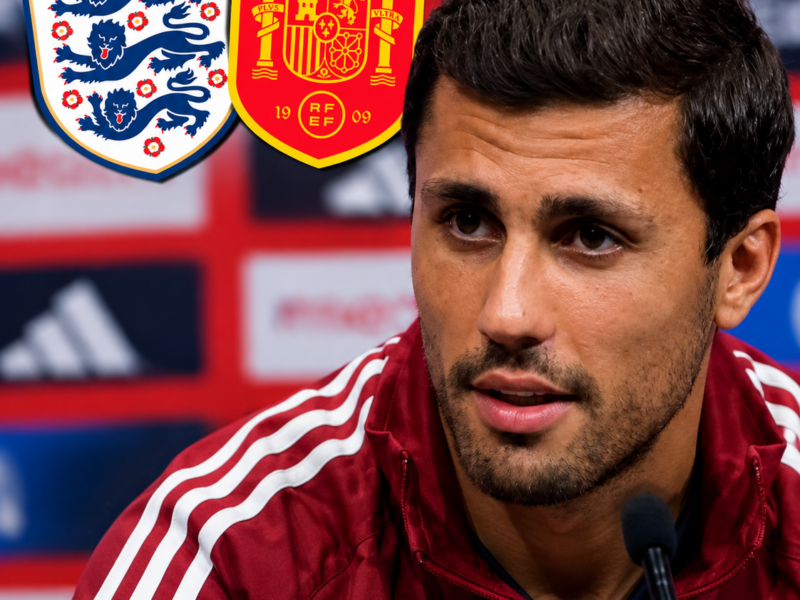
Spain Braces For “Almost A Final” At Wembley As Luis de la Fuente Warns His World Champions “The Best Is Yet To Come” While Rodri Opens Up On City’s Looming Punishment, Ballon d’Or Snub Talk, And His Emotional Return To England
There is a specific kind of silence that falls over a locker room the night before a team walks back into the building where it once broke someone else’s heart.
Wembley does not forget easily, and neither does Spain.
Ten weeks after lifting the World Cup, the reigning champions were back in England, and the man who built them into champions was sitting in front of a room full of reporters trying to explain something that sounds almost impossible.
How do you convince a team that just won everything that they still have something left to prove.
Luis de la Fuente had an answer ready, and it was not the answer most people expected from a coach who had just delivered his country’s crowning achievement.
He did not sound like a man basking in a trophy.
He sounded like a man already worried about the next one.
That tension, between glory already won and hunger still burning, is exactly where this story begins.
Because tomorrow, Spain would face England, the third-ranked team in the world, a two-time reigning Euro finalist, and a squad that had just spent a week publicly wondering out loud whether anyone could actually play like Spain does.
The stage was set for something that felt bigger than a Nations League fixture had any right to feel.
And two men sat at the center of it, a coach carrying the weight of a golden era, and a rebuilt, remade Rodri, walking back into the stadium he once called home.
Let’s start where the drama actually started, in a room full of Spanish and English journalists asking the same underlying question in a dozen different ways.
Is this still the same Spain.
The schedule itself had already become a subplot before a ball was kicked.
Four matches inside ten days, with the travel that comes attached to fixtures spread across countries, had left even Pep Guardiola publicly uneasy about the physical toll on his players.
De la Fuente was asked directly about that complaint, the one that had been echoed by managers up and down the football pyramid in the days before the trip.
He did not deny the burden.
Instead, he offered something close to resignation dressed up as duty.
He said that the demands were real, that the travel made it harder, but that ultimately there was no alternative, and the team simply had to get on with it.
It was a small moment, but it told you something important about how this Spain squad operates under him.
There is no theater of complaint.
There is only the next task.
That mentality became the backbone of everything he said for the rest of the press conference, and it explains why, when a Spanish radio reporter raised the specter of history repeating itself, the head coach reacted with something firmer than mere reassurance.
The comparison being drawn was brutal in its precision.
Back in 2010, when Spain lifted its first World Cup, the team that returned to competitive action afterward stumbled immediately, most memorably in a four-nil defeat away to Argentina, a scoreline that shocked a nation still celebrating.
The question hanging in the air was obvious.
Would complacency creep into this Spain squad the same way it once did.
Would every rival suddenly play like it was the biggest match of their season, simply because they were lining up against the world champions, while Spain coasted on the fumes of their own legend.
De la Fuente rejected the premise entirely, and he did it with a level of certainty that bordered on a promise.
He said he knew the character of these players, that this group was not the type to settle for what had already been achieved, and he guaranteed that history would not repeat itself, not tomorrow, not in the matches that followed.
One era had ended, he said, and a new one, one he claimed the squad was already hungry to build, was only just beginning.
He wanted to keep climbing, keep chasing records, keep producing the kind of historic nights that had defined the last several years of Spanish football.
That word, historic, kept surfacing throughout his answers, almost like a compass he kept returning to.
It was not just about winning matches anymore.
It was about building a legacy that could stand alongside anything the sport had ever produced.
And then, almost as an aside, he pivoted to the specific danger sitting directly in front of them.
Tomorrow’s opponent was not some minor Nations League filler.
It was England, a squad stacked with talent he openly admitted he respected, players the room full of journalists already knew as well as he did.
He warned that absolutely anything could happen in a match like that, but he was careful to draw a line between one unpredictable result and any deeper erosion of standards.
Even if Spain lost tomorrow, he insisted, it would never be because of comfort, laziness, or complacency.
Never for those reasons, he repeated, as if saying it twice would make it truer.
The ambition in the room was almost physical, a coach practically daring the sport itself to try and slow his team down.
He said the group still had enormous hunger to keep competing, blind faith in this current era, and blind faith in the appetite of these specific players.
The best, he said, is still coming.
It is one thing for a manager to say that after a mediocre tournament, a line every underachieving coach reaches for out of necessity.
It is another thing entirely to say it after winning the World Cup, and mean it as a genuine warning to the rest of the football world.
From there, the questions shifted, the way press conferences do, moving from tactics and psychology into something more personal.
A young reporter, only nineteen years old and celebrating his own fifth anniversary in journalism, stood up to ask something that had nothing to do with tactics at all.
He explained, almost nervously, that this was the first trip abroad he had ever taken entirely alone, without any accompaniment, and he wanted to know how the head coach valued the support that families provide to players and staff during long trips like this one, including the extended stretch of the World Cup itself.
It was a small, human moment buried inside an otherwise tactical news cycle, and de la Fuente clearly appreciated it.
He explained that the concept of family had become something the group coined for itself back during the European Championship run, and that the spirit had never really left them since.
Some of it, he said, was about the players and staff treating each other like an extended family unit.
But some of it was much more literal.
Actual relatives, wives, parents, children, were being flown in and welcomed into the environment around matches, arriving the night before, staying through the morning, embedded in a way that most professional setups would never tolerate.
He said there was no resistance to that at all internally.
If anything, those visits strengthened morale, reinforced spirit, and validated just how central the idea of family had become to how this Spanish generation operates.
It sounds sentimental on paper.
It reads differently once you understand the roster it was applied to, a squad that had just conquered the planet and still wanted grandparents in the stands.
The most pointed question of the entire session, though, came from an English reporter, and it forced de la Fuente to defend something almost intangible, the very identity of Spanish football itself.
The question referenced comments made earlier in the week by members of the England camp, including Anthony Gordon and Thomas Tuchel, both of whom had reportedly questioned whether England, or frankly anyone, could actually control a match the way Spain does.
Was there something uniquely Spanish about that style, the reporter wanted to know, something baked so deeply into the culture of the sport there that it simply could not be replicated elsewhere.
De la Fuente answered like a man defending a family recipe.
He said Spain remained loyal to an idea, a model that had been under construction for many, many years, refined and evolved but never abandoned.
No model like that can be built overnight, he explained. It requires a foundation, and that foundation takes real time to lay.
He described a long-running effort to instill this footballing identity across every age category of the national program, a continuity stretching from youth teams all the way up to the senior side, with nuances shifting by individual player but the philosophical core remaining constant.
He was careful to say he could not speak to the internal workings of the English federation, framing his answer strictly around what Spain itself had built.
But the implication in the room was unmistakable.
You cannot copy decades of institutional patience in a single training camp.
You cannot manufacture a footballing culture the way you manufacture a tactical setup for one specific opponent.
The subject then turned, inevitably, toward the burden of being the team everyone now circles on their calendar.
A reporter asked whether de la Fuente sensed a heightened responsibility that comes with being world champions, along with the increased level of scrutiny that follows.
He acknowledged the weight instantly.
He said this team, the one he now openly refers to by an affectionate nickname of his own, has no intention of stopping here.
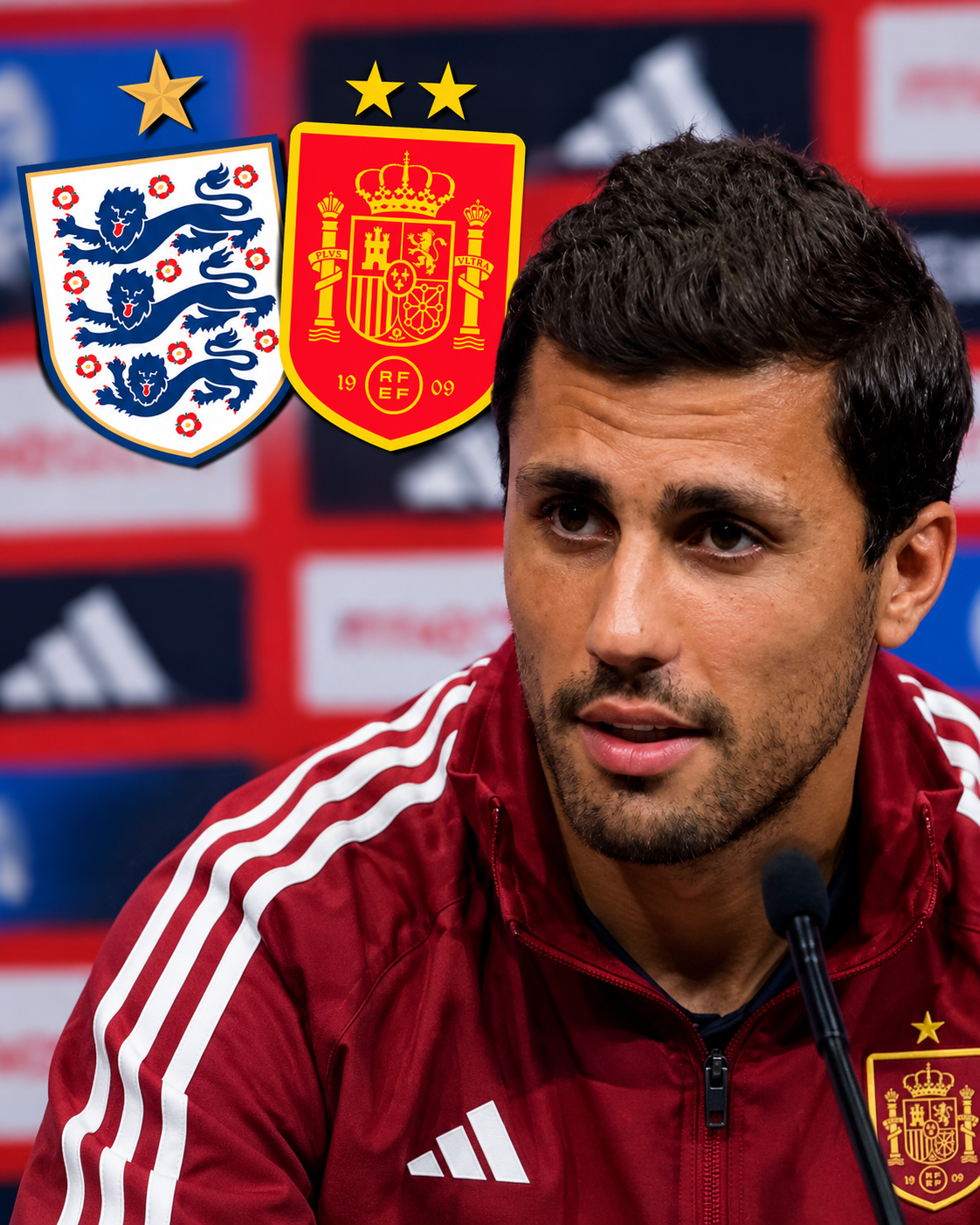
There was more hunger left in the group, he explained, and an understanding of exactly what it means to now carry two stars on the crest, along with the respect that instills in every opponent lining up across from them.
The only way forward, he said, is improvement. Nothing about the past is going to satisfy this group.
That mindset, he continued, was exactly why the Nations League campaign in front of them mattered, a competition the squad genuinely wanted to win again, and there was no better proving ground for everything he had just described than a match against a genuinely elite opponent the very next day.
He framed it almost as an opportunity rather than a burden, a chance to put every word of his own rhetoric immediately to the test.
Then, almost on cue, the tone of the room shifted entirely, away from football and toward something with far more institutional gravity.
A reporter from a major Spanish sports outlet raised the subject dominating headlines that same week, the news involving Manchester City and a potential sanction connected to the club’s former glory years, the very years that produced several members of this current Spain squad, including a certain deep-lying midfielder who would take his own turn at the podium shortly after.
The question was blunt.
Did de la Fuente worry that a legal ruling might tarnish everything those players had achieved together at City.
Did he fear that titles could eventually be stripped.
De la Fuente answered carefully, choosing his words with the caution of someone who understood exactly how sensitive the topic had become.
He drew a direct parallel to a nearly identical process the club had faced back in 2020, a case with a different accuser but a strikingly similar structure, one where the club had ultimately been cleared despite an initial unfavorable ruling.
He said the club had always projected calm confidence that it had done nothing wrong, and that outcome had proven correct once the process concluded.
His own trust, he explained, stemmed from that history and from his personal familiarity with the institution.
He said he hoped for justice, whatever the outcome, while making clear where his faith currently sat.
It was a diplomatic answer, threading a needle between institutional loyalty and public accountability, and it set the tone perfectly for the next chapter of this entire saga, the one that unfolded a short while later when the very player at the center of that City history walked in to face the press himself.
Rodri arrived to speak with the kind of presence that only comes from having spent the summer collecting both a World Cup medal and an individual crown to go with it.
But he did not arrive acting like a man who had already peaked.
The first real spark of his session came from a subject he clearly did not enjoy dodging but also clearly did not want to chase.
A reporter brought up the sport’s most prestigious individual award, noting that names like Lamine Yamal, Kylian Mbappé, and Harry Kane had already been publicly discussed in the buildup to that year’s ceremony, and pointedly asked why Rodri himself seemed almost absent from that conversation.
Was it that he did not want it.
Was it that the campaigning other players engage in on their own behalf simply was not something that excited him.
Rodri pushed back on the framing immediately, correcting the idea that indifference was somehow driving his silence.
He explained that the award does not hinge on anything a player might say publicly, but rather on what has actually been produced on the field, decided by a specific panel of roughly one hundred journalists.
Nothing he could say, he argued, would meaningfully sway that decision one way or another.
He returned, as he often does, to a familiar philosophical anchor, one that has followed him since his own Ballon d’Or triumph the year before.
Individual trophies, he said, are ultimately a reflection of collective labor, a reward built on the back of an inherently team-based sport, and nothing he personally had achieved could be separated from the players who stood alongside him.
He allowed himself one small admission of preference, saying he would be delighted to see the award go to a Spanish player again, while immediately clarifying that his own desire to win it had nothing to do with why he was not out there publicly lobbying for it.
It was a rare moment of a modern footballer refusing to play the promotional game everyone now expects, and it landed with real weight given who was saying it.
From individual accolades, the conversation shifted into something far more personal, a question about the sheer scale of transformation packed into the space of just a couple of months.
The reporter reminded him that on July nineteenth, he had been neither a World Cup champion nor a Barcelona player.
How had he processed a total reversal of his own life in such a short window of time.
Rodri described the stretch as thrilling, a period defined by genuine euphoria tied not only to the World Cup itself but also to the individual recognition that followed it during the tournament.
He connected all of it back to the years of recovery and uncertainty that had preceded this moment, describing a personal sense of vindication in proving he could return to the very top level and lead a national team like Spain to the summit of the sport.
He spoke about entering a new, exciting chapter, expressing deep gratitude toward Barcelona for the way the club pursued him, for the genuine interest they showed, and for landing at an institution with real ambition still in front of it.
He admitted the summer had been intense, chaotic even, but said the waters had calmed, and he was now simply happy representing his country on this particular stage.
That happiness, though, existed alongside a far heavier subject waiting just beneath the surface, one that connected directly back to the questions his own national team coach had already fielded earlier that same day.
A reporter pressed him specifically about his emotional relationship to the looming Manchester City sanction, asking if it hurt to watch years of collective achievement possibly get reduced to an asterisk.
Rodri’s answer carried more weight than almost anything else said that entire day.
He explained that from a player’s perspective, the situation felt different than how outside observers experienced it.
He acknowledged he understood why opinions varied so widely, but insisted that inside the daily life of that club, the memory carried by everyone involved, from ownership down to staff working behind the scenes every single day, could not simply be erased by an external ruling.
Whatever happens, he said, no verdict can take away what they actually built together.
He described that success as something earned through effort and partnership rather than something purchased, framing years of shoulder-to-shoulder work as the true currency behind the trophies.
He said he believed everything achieved was fully deserved, and that he felt fortunate to have played a central role in one of English football’s most successful eras.
When pressed further, asked whether he would feel betrayed if the club’s public assurances of innocence ultimately proved false, Rodri did not flinch.
He said the club had always projected calm confidence, that he had personally witnessed the same posture during the earlier 2020 case, which ultimately resolved in the club’s favor, and that the squad itself had never internally displayed nerves about the legal process hanging over them.
He said plainly that he trusted the institution until proven otherwise, based on years of firsthand experience inside it.
It was as close to a definitive personal statement as anyone had managed to extract from a current or former City player on the entire subject that week, delivered not with defiance, but with the calm certainty of someone who had simply decided where his loyalty currently rested.
From there, the tone softened again, moving toward something closer to nostalgia, as reporters turned their attention to the strange emotional experience of walking back into a stadium that had shaped seven years of his professional life.
A British journalist asked directly what it felt like returning to England, noting all the obvious differences waiting for him again, the weather, the food, an entirely different football culture surrounding him.
Rodri did not pretend the transition had been effortless.
He admitted it had not been easy at all, describing England as a place that still felt like home in many ways, a country where he had spent seven meaningful years and built countless memories tied to the league, the culture, and the people around him.
He said he missed pieces of that life, even as he embraced the pull of returning to his own country and reconnecting with familiar surroundings.
He noted, almost wryly, that the weather back home was undeniably an upgrade.
But he was quick to add that stepping back onto this specific stage, in this specific stadium, to play his first match here since his own transformation, carried genuine significance for him.
He pointed to the new emblem now sitting on his national team jersey, the second star representing Spain’s second World Cup title, and said defending that symbol against England, inside this building, felt like something uniquely special.
He expressed hope that the match would live up to the occasion, and that it would give the crowd a proper glimpse of exactly what this team had become.
That sense of physical transformation, of a body and a career completely rebuilt, became the focus of the next major exchange, one rooted in a specific prediction made almost a full year earlier.
A Spanish reporter recalled that back in October of 2025, Pep Guardiola had publicly stated that the world would see the best version of Rodri at the World Cup, and that this current season would reveal an even better one still.
Was Guardiola simply gifted with some kind of foresight, the reporter asked, or was Rodri genuinely feeling that prophecy come true in real time following his long recovery from injury.
Rodri approached the question with the seriousness of someone who had lived every single day of that recovery process.
He explained that understanding the true timeline of a significant injury recovery requires patience that modern football culture rarely tolerates.
He noted that Guardiola himself had once played in a similar position and likely understood these physical rhythms on a personal level.
He said that in an era obsessed with immediacy, people often forget that the human body follows its own biological schedule, one that cannot simply be rushed by willpower or urgency.
He said he had accepted, early in his recovery, that the process would likely span somewhere between one and two years, and that his personal target throughout that stretch had always been arriving at the World Cup in the best possible physical condition.
The reward for all that invisible, unglamorous labor, the work nobody outside the training ground ever actually witnesses, came together in the specific tournament performance everyone had just watched.
He credited Guardiola directly for a careful, deliberate reintegration process, one built around measured minutes rather than forced urgency, appearing in certain matches and deliberately sitting out others as his body slowly reached full readiness.
He said that gradual buildup ultimately shaped everything the world eventually saw during the tournament held across the United States, Mexico, and Canada.
He thanked both Manchester City and Guardiola personally for protecting that process instead of exploiting it for short-term gain.
He closed that particular answer by drawing a stark contrast between his current physical and mental state and where he had been roughly eighteen months earlier, describing the difference as almost unrecognizable in every possible sense.
It was, in its own quiet way, one of the most compelling injury-recovery testimonials any modern footballer has offered in a press conference setting, delivered without self-pity and without theatrical inspiration-speak, just a clear, methodical account of patience actually paying off.
The conversation then drifted somewhere even more unexpected, into the subject of faith itself.
A reporter referenced comments Rodri had made after the World Cup, when he suggested that something beyond himself had guided him through the darkest stretches of his recovery, and asked how that personal belief system helped him manage the constant external pressure surrounding a team that always finds itself being chased by every rival on the calendar.
Rodri’s answer carried an unusually reflective tone for a football press conference.
He described his faith as something deeply personal, unique to him, shaped by everything he had lived through during his recovery.
He said he genuinely believed something greater had walked alongside him through that difficult stretch, because the scale of what he endured, and what he ultimately overcame, felt too significant to attribute purely to effort alone.
He said his core belief, instilled in him since childhood by his grandparents and parents, was simple, that doing things the right way eventually produces its own reward.
He said that belief had taught him to feel gratitude for everything life had given him, a lesson he said becomes especially vivid once you have actually lived through genuinely difficult circumstances yourself.
It was a small, sincere window into the emotional infrastructure supporting one of the sport’s most disciplined competitors, offered without any obvious prompting toward introspection, and it added an unexpected layer of humanity to a session otherwise dominated by legal drama and tactical analysis.
That emotional openness carried directly into the very next question, which returned once more to the subject of Manchester City, this time framed less around legal outcomes and more around personal dignity.
A reporter asked whether it hurt, as a player who had achieved so much at that specific stadium and within that specific era, to have those achievements now publicly questioned.
Rodri answered with quiet conviction rather than defensiveness.
He acknowledged that outside observers were entitled to whatever opinion they held, but said that inside the daily life of the club, among the people who lived through the grind required to produce that success, the perspective looked entirely different.
He credited not just the players, but the entire structural apparatus of the club, from ownership down through every staff member working behind the scenes, for building something that could not simply be dismantled by outside judgment.
No ruling, he said, can take away what was actually built.
He reiterated that the success had been earned through effort and partnership, describing years of standing shoulder to shoulder with teammates as the real payment behind every trophy, a currency no accusation could retroactively devalue.
He said he felt genuinely fortunate to have played a central role during one of the most successful periods in the history of English football.
Pressed once more on whether he would feel personally deceived should the appeal eventually go against the club, Rodri repeated the same steady answer he had offered earlier that day, describing an institution that had always projected calm certainty, an almost identical case from 2020 that resolved favorably, and a dressing room that had never displayed visible nerves about the entire process.
He said, again, that he would trust the club until circumstances proved otherwise, closing the loop on what had quietly become the most consequential storyline of his entire press conference, more consequential in some ways than the actual match still waiting for him the following evening.
By the time both press conferences wrapped, a clear picture had emerged of exactly what Spain was walking into, and exactly what stood behind them heading into it.
This was a team that had already conquered the world, and somehow still sounded hungrier than teams chasing their very first trophy.
This was a coach willing to publicly guarantee that complacency would never define his group, even while acknowledging the brutal physical toll of the calendar in front of them.
This was a rebuilt superstar walking back into the stadium that once housed years of his career, carrying a second star on his chest and an entirely new set of questions about what comes next for both his club and his country.
And this was a football culture, English football specifically, openly wondering aloud whether it could ever replicate the very identity Spain had spent decades quietly constructing.
None of that guarantees anything about what actually happens on the pitch. De la Fuente himself admitted as much, acknowledging that any team can lose to a rival like England, even while playing at its very best.
But the psychological framing heading into that Wembley night mattered enormously, because it revealed a champion that refused to treat its own crown as a finish line.
It revealed players still processing personal transformation in real time, still carrying institutional uncertainty on their shoulders, and still choosing, in nearly every single answer offered that day, to talk about growth rather than comfort.
Spain arrived at Wembley not as a team defending a trophy.
They arrived as a team already looking past it, toward whatever comes next, guaranteeing along the way that nobody should mistake their satisfaction for their ceiling.
Whatever the scoreline said by the final whistle, that mentality alone told you everything you needed to know about why this specific Spanish generation had become nearly impossible to write off, even on the road, even inside a stadium that has swallowed plenty of confident visitors before them.









