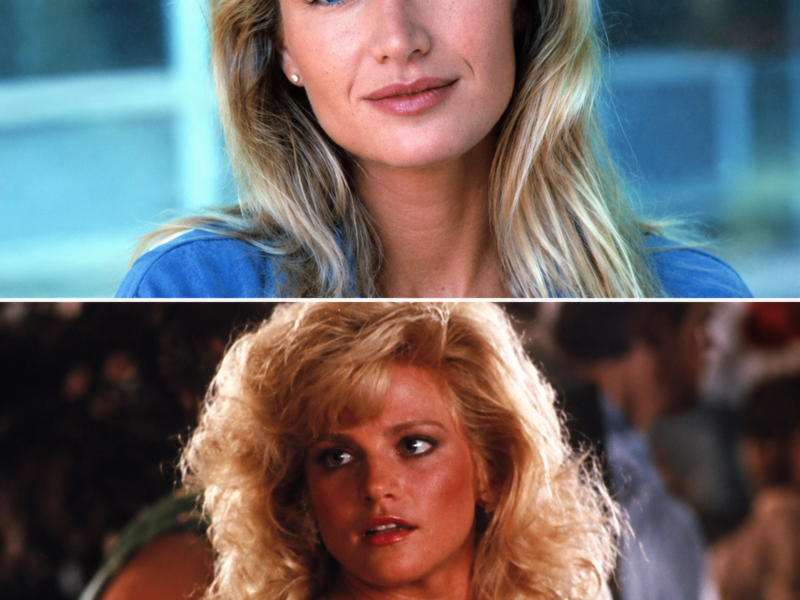
Road House Cast Then and Now in 2026: The Stars Who Survived, the Legends We Lost, and the Surprising Paths They Took After the Double Deuce
Picture the Double Deuce at midnight.
Neon buzzing over the door, bottles shattering somewhere in the dark, a guitar tearing through the smoke while a man in a black vest walks in like nothing on earth could rattle him.
That image has stayed burned into pop culture for more than thirty years.
But the story behind the faces in that bar is far heavier than the movie ever let on.
Some of these actors went on to build long, respected careers.
Some fought terrible illnesses.
And several of the familiar faces from Road House are no longer with us.
So who is still standing in 2026, who did we lose, and which cast journey will genuinely surprise you?
Let’s walk back through the doors of the Double Deuce one more time.
Patrick Swayze as Dalton
Dalton is the controlled, watchful center of Road House.
He is a professional cooler who understands violence but refuses to be ruled by it.
Patrick Swayze gave him something far more interesting than ordinary action movie toughness.
Born on August 18, 1952, Swayze was 36 when the film arrived in 1989.
His physical confidence made Dalton’s restraint believable.
The fighting matters, but the character lasts because you always sense that Dalton knows exactly what violence can cost.
Swayze could play strength without making it hollow.
He blended athletic grace with a quieter vulnerability that had already become one of his signatures.
Road House landed during a remarkable stretch of his career.
Dirty Dancing had turned him into an international star.
Ghost would soon reveal an even more emotional side of his screen presence.
Point Break later proved he could make physically imposing characters feel charismatic and complicated.
Over the years he earned three Golden Globe nominations.
He also built a reputation beyond acting through dance and songwriting.
That mix made him unusual among leading men of his generation.
He could move through romance, drama, action, and music without ever looking trapped inside a single image.
Patrick Swayze died on September 14, 2009, at the age of 57, after a widely followed battle with pancreatic cancer.
His death made revisiting Dalton especially poignant.
The character remains one of his defining cult roles because Swayze made toughness feel disciplined rather than reckless.
Here was a man capable of violence who spends most of the story trying not to let violence become the only thing left inside him.
Sam Elliott as Wade Garrett
Wade Garrett feels less like Dalton’s sidekick and more like a glimpse of the road waiting ahead if Dalton never finds a way out.
Sam Elliott, born on August 9, 1944, was 44 when Road House arrived in 1989.
His naturally weathered presence gave Wade instant authority.
The character understands the job, the violence, and the strange brotherhood of men who spend their lives controlling dangerous rooms.
Elliott doesn’t need long explanations to make that history believable.
His voice, his posture, and his calm delivery suggest someone who has already survived more than he intends to describe.
That restraint became a defining quality of his wider career.
After Road House, he kept building one of the most recognizable screen identities in American film and television.
He often played men whose strength came from stillness rather than noise.
By 2026, Elliott is 82, and he is framed as one of the most instantly recognizable presences in American acting.
Wade fits perfectly inside that legacy.
His importance to the film comes from emotional weight more than plot mechanics.
Dalton sees someone he respects, but the audience sees a possible future shaped by years of the same dangerous work.
That gives Wade a melancholy edge beneath the humor and toughness.
Wade Garrett endures because Elliott made experience visible.
He never played the older fighter as a relic or a mentor dispensing wisdom on command.
He played a man who had simply lived long enough to understand the cost.
Every quiet moment around Dalton feels like a warning.
Ben Gazzara as Brad Wesley
Brad Wesley is not frightening because he loses control.
He is frightening because he rarely needs to.
Ben Gazzara, born on August 28, 1930, was 58 when Road House opened in 1989.
His maturity gave Wesley the smooth confidence of a man who had been getting his way for far too long.
Instead of playing a loud, obvious villain, Gazzara made him relaxed, amused, and completely comfortable with the power he had built around Jasper.
That calm is what gives the character his weight.
Wesley doesn’t simply threaten people.
He behaves as though intimidation is part of normal business.
Gazzara had already spent decades earning a reputation for psychologically rich performances in American film and television.
That background helps explain why Wesley feels more textured than a typical action antagonist.
There is intelligence behind the cruelty.
His confidence comes from long experience, not empty swagger.
Ben Gazzara died in 2012 at the age of 81.
He left behind a career far broader than this cult role.
Yet Wesley remains one of his most recognizable appearances for action audiences, precisely because the performance is so controlled.
He never needs to look physically stronger than Dalton.
His power comes from ownership, influence, and the belief that everyone around him has already accepted the rules he created.
Brad Wesley endures because Gazzara made corruption feel civilized.
He showed how dangerous power becomes once it no longer feels the need to prove itself.
Cruelty can arrive with a smile, good manners, and the quiet certainty that nobody will dare say no.
Marshall R. Teague as Jimmy
Jimmy is the physical threat who makes Wesley’s control feel immediate.
Marshall R. Teague gave him exactly the cold confidence the role demanded.
Born in 1953, Teague was 36 when Road House arrived in 1989.
Jimmy needs very little backstory because the performance communicates what matters fast.
This is a man who enjoys intimidation and has been rewarded for violence for so long that he no longer expects serious resistance.
Teague plays him with a controlled physicality that makes every encounter feel more dangerous.
The character works because he is not the mastermind.
He is the person who turns someone else’s power into something that can physically reach you.
That distinction gives Wesley’s world greater credibility.
Outside Road House, Teague kept working in action-heavy film and television.
He became one of those supporting actors whose presence can instantly raise the tension of a scene.
That career suited everything visible in Jimmy: confidence, physical authority, and the ability to suggest danger before a single punch is thrown.
By the end of 2026, Marshall R. Teague is 73.
His later work kept him active far beyond this film, but Jimmy remains one of the roles most closely tied to his cult action image.
The character endures because Teague understood that menace doesn’t require constant shouting.
Jimmy can smile, wait, and still make the room feel less safe.
He represents something brutally simple: a man who has spent too long believing violence always works.
Until Dalton arrives, it usually has.
Red West as Red Webster
Red Webster gives Road House an emotional stake beyond Dalton’s pride.
Red West made that decency feel completely natural.
Born in 1936, West was 53 when the film premiered in 1989.
Red isn’t a fighter, a nightclub legend, or someone trying to prove himself.
He is an ordinary businessman trying to live in a town where ordinary life has become vulnerable to Wesley’s control.
That simplicity is exactly why the character matters.
Through Red, the audience understands that the conflict isn’t only about cleaning up one bar.
It’s about whether regular people can work, live, and make their own choices without fear.
West plays the role with a lived-in warmth that makes Red feel less like a plot device and more like someone who was part of Jasper long before Dalton showed up.
His own life was unusually varied.
West was known not only as an actor but also for his earlier years as a bodyguard and associate of Elvis Presley, before later building a career in film and television.
That history gave him a grounded, unmistakably real screen presence.
Red West died in 2017 at the age of 81.
His career covered much more than Road House, but Red Webster remains especially memorable because he humanizes the stakes.
West never had to make the character heroic in a conventional sense.
His dignity was enough.
Red endures because the performance reminds viewers what all the fighting is supposed to protect: decent people who just want to live without someone more powerful deciding what fear should cost them.
Sunshine Parker as Emmett
Emmett brings a rare stillness into Road House.
Sunshine Parker makes that stillness feel like something Dalton might actually want.
Born in 1927, Parker was in his early 60s when the film arrived.
Emmett is the landlord and quiet country presence who lives far from the noise of the Double Deuce.
He gives the film moments that feel almost like another life entirely.
His importance is less about what he does and more about what he represents: open space, routine, ordinary conversation, and the possibility of peace.
Parker plays him without trying to compete with the film’s larger personalities.
That understatement is exactly what works.
Emmett feels like someone who belongs to the land rather than to the movie’s mythology, and that authenticity gives Dalton’s temporary refuge real emotional value.
Parker was a character actor who spent decades playing plain-spoken men who seem to come from real life rather than Hollywood construction.
That profile fits Emmett perfectly.
He wasn’t a performer built around glamour or leading-man attention.
His strength was familiarity.
Sunshine Parker died in 1999 at the age of 71.
Looking back, Emmett is one of those smaller characters who explains why the movie needs somewhere quiet enough for the violence to feel disruptive.
Parker provides that contrast.
Emmett endures because he gives Dalton, and the audience, a brief image of the kind of life violence is supposed to protect rather than consume.
Jeff Healey as Cody
Cody gives the Double Deuce its musical identity.
Jeff Healey’s presence works because none of that talent had to be invented for the camera.
Born on March 25, 1966, Healey was only 23 when Road House was released in 1989.
Cody is the blind musician performing inside a dangerous bar, but the character never feels reduced to disability.
What defines him is sound, confidence, and the way his music gives the room a pulse beyond the fighting.
Healey’s distinctive technique, playing guitar flat across his lap, was already part of his real musical identity.
That authenticity gives every performance scene an energy no actor could easily imitate.
Healey went on to become internationally respected as a blues and rock guitarist, singer, and bandleader.
He built a legacy that reached far beyond one movie appearance.
That makes Cody especially interesting in retrospect.
Road House captured a real artist at a young age and allowed the film to borrow something genuine from his musical world.
Jeff Healey died in 2008 at the age of 41 after battling cancer.
The loss feels even more painful because he was so young.
His music, however, continued to define his public legacy.
Cody remains memorable because Healey brought more than atmosphere.
He gave the Double Deuce a soul.
In a story where men constantly prove themselves through physical force, his presence offers another kind of strength entirely: talent, confidence, and the power to command a room without throwing a single punch.
Kevin Tighe as Frank Tilghman
Frank Tilghman owns the Double Deuce, but he has clearly lost control of what it has become.
Kevin Tighe, born on August 13, 1944, was 45 when Road House arrived in 1989.
He plays Tilghman with the nervous practicality of a man who knows his business is profitable and still dangerously broken.
Hiring Dalton becomes less a bold strategy than a final attempt to reclaim something that has slipped past ordinary management.
Tighe gives the character enough pressure and fatigue to make that desperation believable.
Tilghman may technically be the owner, but the film keeps suggesting that ownership means very little when fear controls the environment.
Outside Road House, Tighe was already familiar to television audiences through Emergency!, a role that had made him recognizable years earlier.
Road House let him play something quieter and more anxious, using restraint instead of straightforward authority.
That contrast helped expand his screen identity beyond the work many viewers knew first.
By the end of 2026, Kevin Tighe is 82.
His long career across film and television gave him a durability many supporting actors never achieve, and Tilghman remains a memorable piece of that history.
The character endures because Tighe makes fragile authority convincing.
Frank looks like the person in charge, but most of the time he is just trying to survive inside a system stronger than his title.
That tension gives the film one of its most believable adult perspectives: owning a place doesn’t necessarily mean being free inside it.
John Doe as Pat McGurn
Pat McGurn is one of the first characters to show Dalton that the Double Deuce can’t be fixed with cosmetic changes.
John Doe was born in 1953 or 1954, depending on the source, which put him in his mid-30s when Road House premiered.
Pat isn’t simply a bad employee.
His presence reflects the deeper corruption already embedded in the bar, where dishonesty and intimidation have become part of normal operations.
That makes Dalton’s decision to remove him more significant than a routine firing.
It signals that the cleanup will begin from the inside.
Doe plays Pat with a casual smirk and petty confidence, the attitude of a man who assumes the existing system will always protect him.
What makes the actor’s story so much more interesting is how different his real legacy became.
John Doe is the co-founder of the punk band X, which makes him a major figure in American music as well as a working film and television actor.
That parallel career gives his Road House appearance an unusual place in the cast.
He was never just another supporting performer.
He had already built a creative identity in a completely different corner of American culture.
By 2026, he is in his early 70s.
Pat McGurn remains a small character, but Doe makes him useful because he embodies everyday corruption.
Wesley may be the powerful figure at the top, yet people like Pat are what allow that system to function.
The character endures because the film understands that rot usually survives through ordinary participation long before it becomes spectacular.
Kathleen Wilhoite as Carrie
Carrie helps make the Double Deuce feel like a real workplace rather than merely the setting for a series of fights.
Kathleen Wilhoite, born on June 29, 1964, was 25 when Road House arrived in 1989.
She gives Carrie a mix of toughness, humor, and fatigue that suggests someone who has spent a long time adapting to a difficult environment.
The role matters because the staff feel the consequences of the bar’s culture every single night.
Carrie represents the people whose working conditions actually improve when Dalton starts changing the rules.
Wilhoite plays her with enough personality to make that shift visible without turning her into a dramatic centerpiece.
Beyond Road House, she built a strong career across film and television.
She often played women with rough edges, emotional intelligence, and a grounded quality.
She also worked in music, adding another creative dimension to her professional life.
That versatility fits the natural energy she brings to Carrie.
By the end of 2026, Kathleen Wilhoite is 62.
Her later career shows how supporting performers can build long, substantial bodies of work without being tied to one blockbuster image.
Carrie remains part of Road House’s appeal because she gives the bar community a perspective.
The movie may be remembered for bouncers and broken bottles, but the workplace is full of people who simply want to do their jobs without being threatened.
Wilhoite makes that reality visible, and it gives Dalton’s cleanup something more meaningful to accomplish than proving who can win a fight.
Travis McKenna as Jack
Jack is one of the background figures who helps the Double Deuce feel populated by workers instead of extras waiting for the next brawl.
Travis McKenna, born in 1960, was 29 when Road House premiered.
The role is modest, but its function matters.
Jack belongs to the everyday life of the bar, part of the staff who keep the place moving while violence, bad management, and intimidation have become normal.
McKenna gives him an easygoing presence that balances the movie’s larger personalities.
Characters like Jack matter because they make Dalton’s changes feel practical rather than symbolic.
Cleaning up the Double Deuce means creating a safer place for employees as much as it means removing dangerous customers and corrupt staff.
McKenna never became one of the film’s headline names, but that doesn’t diminish his contribution.
Many cult films depend on performers who make the environment feel lived in without demanding the center of attention.
By the end of 2026, Travis McKenna is 66.
His appearance in Road House remains part of that wider texture rather than a career-defining star turn.
Jack endures because he reminds viewers that every chaotic establishment is also someone’s workplace.
The bar matters not only as a stage for Dalton’s battles but as a place where ordinary people spend their days.
McKenna’s low-key presence helps preserve that sense of community beneath the movie’s louder mythology.
Gary Hudson as Steve
Steve represents the old culture of the Double Deuce in its most obvious form: aggression mistaken for security.
Gary Hudson, born on March 26, 1956, was 33 when Road House was released in 1989.
Steve is one of the first people Dalton removes, because the problem isn’t simply that the bar attracts violence.
Some of the people meant to control that violence have become part of it.
Hudson plays him with just enough arrogance to make the firing feel necessary rather than arbitrary.
That brief role establishes one of Dalton’s clearest principles: strength is useless without discipline.
Away from Road House, Hudson went on to a long career across television and film.
He did extensive work in action, drama, and science fiction projects, becoming one of those familiar supporting actors whose presence naturally suits authority figures and tough-guy roles.
By the end of 2026, Gary Hudson is 70.
His broader career places Steve as a small moment within decades of screen work rather than a singular identity.
Still, the character is important to the structure of the film because he is the first visible piece of the bar’s internal rot.
Dalton isn’t merely fighting enemies from the outside.
He has to rebuild the culture from within.
Steve endures because Hudson makes that corruption immediate: a man hired to create order who has become another reason the place feels unsafe.
Terry Funk as Morgan
Morgan carries a physical credibility few ordinary movie heavies could match.
That’s largely because Terry Funk had spent years making violence believable in another arena entirely.
Born on June 30, 1944, Funk was 44 when Road House premiered in 1989.
Morgan is one of Wesley’s blunt instruments, and the role benefits enormously from Funk’s background in professional wrestling.
He understood timing, movement, impact, and how to communicate danger before contact was even made.
That experience gives Morgan a harder edge because the physicality never feels purely decorative.
The character shows how Wesley’s authority is enforced through men willing to make pain routine.
Outside the film, Funk’s real legacy became much larger than this supporting part.
He was an established wrestling legend who grew even more influential through his toughness, his reinvention, and his willingness to push physical storytelling to extraordinary limits.
His career made him a major figure within professional wrestling culture, admired by generations of performers who followed him.
Terry Funk died in 2023 at the age of 79.
His passing brought renewed appreciation for a career built on endurance and performance under extreme physical demands.
Morgan remains memorable because Funk brought something authentically dangerous to the screen.
He didn’t merely look like someone who could hurt another person.
His entire professional life had trained him to make impact, threat, and physical storytelling feel real, and Road House used that credibility exactly where it mattered.
Michael Rider as O’Connor
O’Connor is part of the machinery surrounding Wesley, and that is exactly why the character matters despite limited individual development.
Michael Rider plays him as one of the loyal figures who help turn one man’s influence into a larger system of intimidation.
Road House understands that fear is rarely maintained by a single villain acting alone.
It depends on people who enforce instructions, stand nearby, watch, and help make resistance feel dangerous.
O’Connor belongs to that network.
Public biographical information about Michael Rider is far thinner than it is for the film’s better-known cast members, so a detailed career retrospective isn’t possible here.
That limitation actually matches the role surprisingly well.
O’Connor is effective because he isn’t a celebrity inside the story.
He feels like one of the men who can cause real damage while staying largely anonymous within a larger structure.
His function is atmospheric as much as narrative.
By appearing in Wesley’s orbit, he helps Jasper feel controlled by more than one powerful personality.
The danger has depth and organization.
Rider’s contribution works because he doesn’t need to pull focus.
The character endures as part of the collective menace surrounding Wesley, a reminder that corrupt power becomes much harder to challenge once enough people are willing to carry out the everyday work of intimidation.
Anthony De Longis as Ketchum
Ketchum brings a more controlled kind of threat into Road House.
Anthony De Longis’s action background gives the character a precision that separates him from random barroom muscle.
Born in 1950, De Longis was 39 when the film arrived in 1989.
Ketchum moves with the confidence of someone who understands physical confrontation as technique rather than simple aggression.
That matters in a film where Dalton’s own approach to violence is built on control.
De Longis gives Ketchum the feel of professional danger: balanced, deliberate, and less likely to waste a single movement.
Outside the movie, he built a respected career both as a screen performer and in weapons training and stunt work.
That behind-the-scenes expertise makes his appearance especially fitting, because so much of what audiences respond to in action cinema comes from craft they may never consciously notice.
Movement, spacing, posture, and timing all decide whether a threat feels convincing.
De Longis understood those elements professionally.
By the end of 2026, he is 76.
His career stretches far beyond one villainous supporting role, extending into the practical art of designing and teaching physical performance.
Ketchum remains memorable because the character doesn’t need noise to signal danger.
De Longis makes stillness itself feel prepared.
In a movie full of explosive personalities, that quieter precision gives Wesley’s side another texture: not brute violence, but violence that looks trained, measured, and ready.
Joe Unger as Karpis
Karpis belongs to the rough outer edge of Road House, where Wesley’s influence begins to feel less like a series of isolated threats and more like an entire local culture.
Joe Unger, born on April 14, 1949, was 40 when the film reached theaters in 1989.
Karpis isn’t one of the movie’s headline characters, but performers like Unger help make Jasper feel dangerous beyond the scenes with its main villain.
His grounded toughness gives the impression that intimidation has become ordinary, carried out by familiar men who don’t need dramatic introductions.
That kind of texture is essential to a cult action film, because the world has to feel populated enough for the central conflict to matter.
Unger built a long career as a reliable character actor across film and television.
He often appeared in roles that depended on grit, realism, and an unpredictable edge.
That path makes Karpis representative of what supporting actors do best: entering briefly, establishing personality fast, and making the fictional world feel larger than the central cast.
By the end of 2026, Joe Unger is 77.
Karpis remains more a part of Road House’s atmosphere than its mythology, but that doesn’t make the role unimportant.
The movie’s danger works because Wesley’s influence seems to reach through ordinary-looking people as well as major enforcers.
Unger helps create that feeling.
Karpis endures as one more piece of the town’s rough texture, proof that corruption is most believable when it no longer looks exceptional.
Kelly Lynch as Elizabeth Clay
Elizabeth Clay gives Road House a quieter emotional counterweight.
Kelly Lynch plays her with enough intelligence and independence that she never feels like she exists only to admire Dalton.
Lynch was born on January 31, 1959, and was 30 when the film was released in 1989.
As a doctor, Elizabeth represents competence, calm, and a life removed from the swagger of the Double Deuce.
Her relationship with Dalton works because she sees past the myth surrounding him.
She recognizes the self-control, but also the exhaustion underneath it.
That gives the film a chance to slow down and reveal something more vulnerable behind the action.
Lynch’s restrained performance keeps those scenes grounded without turning them sentimental.
Outside Road House, she built a career around women who were often cooler, more complicated, and less predictable than conventional Hollywood supporting roles.
She earned Independent Spirit Award nominations for Drugstore Cowboy and The Beans of Egypt, Maine, both important examples of the critical respect she won beyond mainstream action cinema.
She later appeared in television projects including The L Word, Magic City, and Mr. Mercedes, continuing to work across drama with the same composed screen presence audiences first saw in Elizabeth.
In 2026, Kelly Lynch is 67.
More than three decades after Road House, her role remains memorable because she brought maturity into a film famous for fights, neon, and barroom chaos.
Elizabeth never needed to become louder than the movie around her.
Lynch made stillness useful, giving Dalton someone who could look at all that toughness and quietly ask what kind of life might exist once the fighting finally stopped.
Julie Michaels as Denise
Denise arrives with a different kind of danger from the film’s bouncers and enforcers.
Julie Michaels gives the character a sharp energy that makes her difficult to ignore.
Born in 1970, Michaels was only 19 when Road House premiered in 1989.
Denise belongs to Wesley’s social world, where attraction, humiliation, and performance can become tools of control just as easily as physical violence.
The role is small, but it widens the film’s view of corruption beyond money and intimidation.
Michaels brings enough confidence to make Denise feel active rather than decorative, which matters in a movie dominated by aggressive male personalities.
Her later career makes the appearance especially interesting in retrospect.
Michaels went on to build credibility not only as an actress but also as a stunt performer and coordinator.
That combination placed her deep inside the physical craft of action filmmaking, allowing her career to extend beyond what viewers saw on screen.
By the end of 2026, Julie Michaels is 56.
Her trajectory reflects a kind of Hollywood longevity that often stays invisible to audiences, moving between performance and the technical physical work that helps action scenes function safely and convincingly.
Denise remains memorable because Michaels gives a brief supporting role real presence.
She represents another side of Wesley’s world, one where power doesn’t always arrive through fists.
Sometimes it works through attraction, pressure, and the ability to make other people feel exposed.
Last Call at the Double Deuce
The music fades, the Double Deuce closes its doors, and Jasper goes quiet again.
But Road House never really disappeared.
Dalton, Wade, Wesley, Cody, Red, and the rest became part of a cult classic built on toughness, loyalty, and the cost of violence.
Some of the actors are still with us.
Others left behind performances that feel more emotional with every passing year.
So which cast journey surprised you most?
Was it John Doe’s leap from the Double Deuce to punk music history?
Terry Funk’s wrestling legend?
Or the heartbreaking loss of Jeff Healey, who gave the bar its soul at only 23?
Tell us in the comments below.









