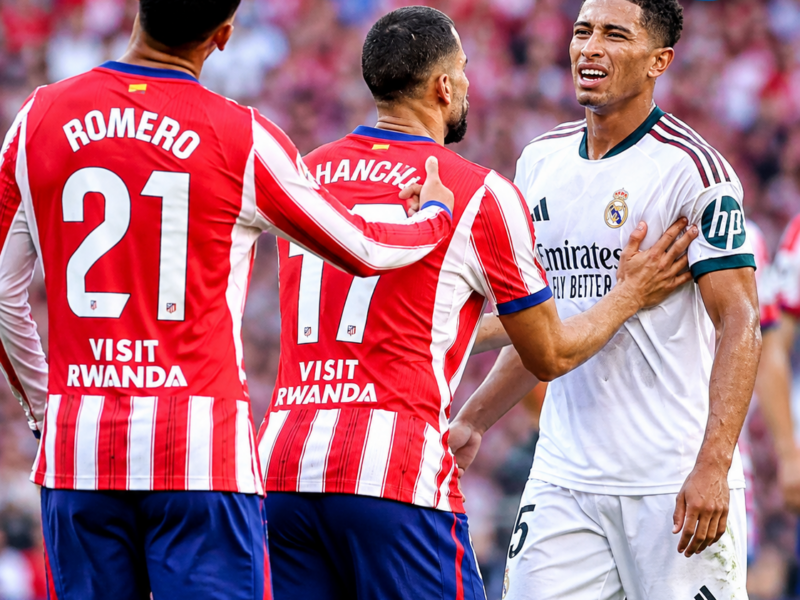
Red Card Robbery? The Bellingham and Cuti Romero Stamp That Split the Madrid Derby and Left Everyone Screaming
Watch the replay once and you think you know what you saw.
Watch it a second time and the whole stadium is arguing with you. That is exactly what happened in the Madrid derby, and by the end of the sequence, half of Spain wanted the referee’s head.
It began with a whistle that never came, and it ended with a yellow card that a room full of experts called impossible to defend.
A Chaotic Opening at the Metropolitano
The trouble started early, with Kylian Mbappé at the center of it.
Referee Ortiz Arias did not whistle the first foul on Mbappé, and it was Marc Pubill who paid for it with a yellow card. Real Madrid were already breaking on the counterattack.
Before that move even finished, the Atlético bench erupted. Players and staff were furious about an alleged swipe by Mbappé at the start of the play.
Diego Simeone could not protest as loudly as he would have liked, because he was already sitting on a yellow card himself. Koke, though, pleaded his case to the fourth official.
His complaint was that Mbappé had opened his hand wide and caught an Atlético player in the face.
The replay told a calmer story. Mbappé’s hand went to the chest, not the face, and the referee handled it with a clean, well-judged call. The yellow for Pubill stood, and it was exactly what Madrid had hoped for.
Then Came the Collision
Mbappé kept galloping with the ball and fed Cucurella, who played it to Jude Bellingham. Madrid had not had the ball in the middle of the pitch for a long time.
Bellingham lost it. Then he went down to recover it, and Cuti Romero arrived at the same moment.
Ortiz Arias first played advantage, and then both men were left lying on the grass. Bellingham received a yellow card for the challenge.
The pain on both faces looked severe. Romero seemed to have taken the worst of it, and he stayed down while Bellingham got up.
Bellingham was furious about something specific. As he saw it, after he went into the tackle, Romero left his boot down and stepped on him, and he pointed to the marks.
Then the referee got the call from the VAR room.
The Longest Minute in Madrid
Everyone on the pitch froze. Both benches watched the screen, waiting to see what the image would show.
The frame that mattered was the moment of impact. Romero went for the ball, then left his leg extended and pressed down with force.
That, the argument went, is the difference between a normal challenge and a red card. He did not pull the leg away. He kept it there.
Dumfries put his hands on his head. So did most of the Madrid bench. The crowd inside the stadium seemed to believe the same thing, that the red card belonged to Romero.
Romero appeared to know it too. Those watching noticed that he stayed on the ground, selling the moment, as if trying to convince the referee that he was the victim.
The referee did not buy it entirely. He walked over to Bellingham to tell him his yellow card was gone.
Then came the shock. Romero was shown a yellow card, and Bellingham’s was taken away.
The Fury That Followed
On the broadcast, the reaction was volcanic.
One commentator called it a textbook red card that every player on both teams understood. He said he had stopped watching the referee because he was so sure of the color that he never doubted it.
Instead, the referee produced yellow in what he called a shameful action for a derby of this size. There was blood involved, and the frustration boiled over.
What made it stranger was that two referees looked at the same footage and reached different conclusions. The VAR official, Trujillo, saw a red card and called the pitch-side referee over.
Ortiz Arias, having sat through the same meetings and the same training camps, saw only a yellow.
The Case for Yellow
Not everyone in the studio was outraged. Former referee Iturralde González made the case for the defense, and he made it calmly.
In his reading, Romero reached the ball first, then his momentum carried him into contact with Bellingham. The studs landing on the other player, he argued, were a consequence of that inertia.
To him, it was not a lunatic call, and certainly not the worst decision in the history of the VAR. He was willing to say yellow was defensible.
He was in the minority. Most of the panel asked to vote on it said red, and the count around the table was lopsided.
The counterargument was hard to shake. Romero touched the ball first, but he then left his leg straight, did not withdraw it when he saw Bellingham coming, and dragged his studs across him.
Anyone who has ever set foot on a field, one commentator said, even at youth level, knows what that means.
The Verdict Hanging Over the Derby
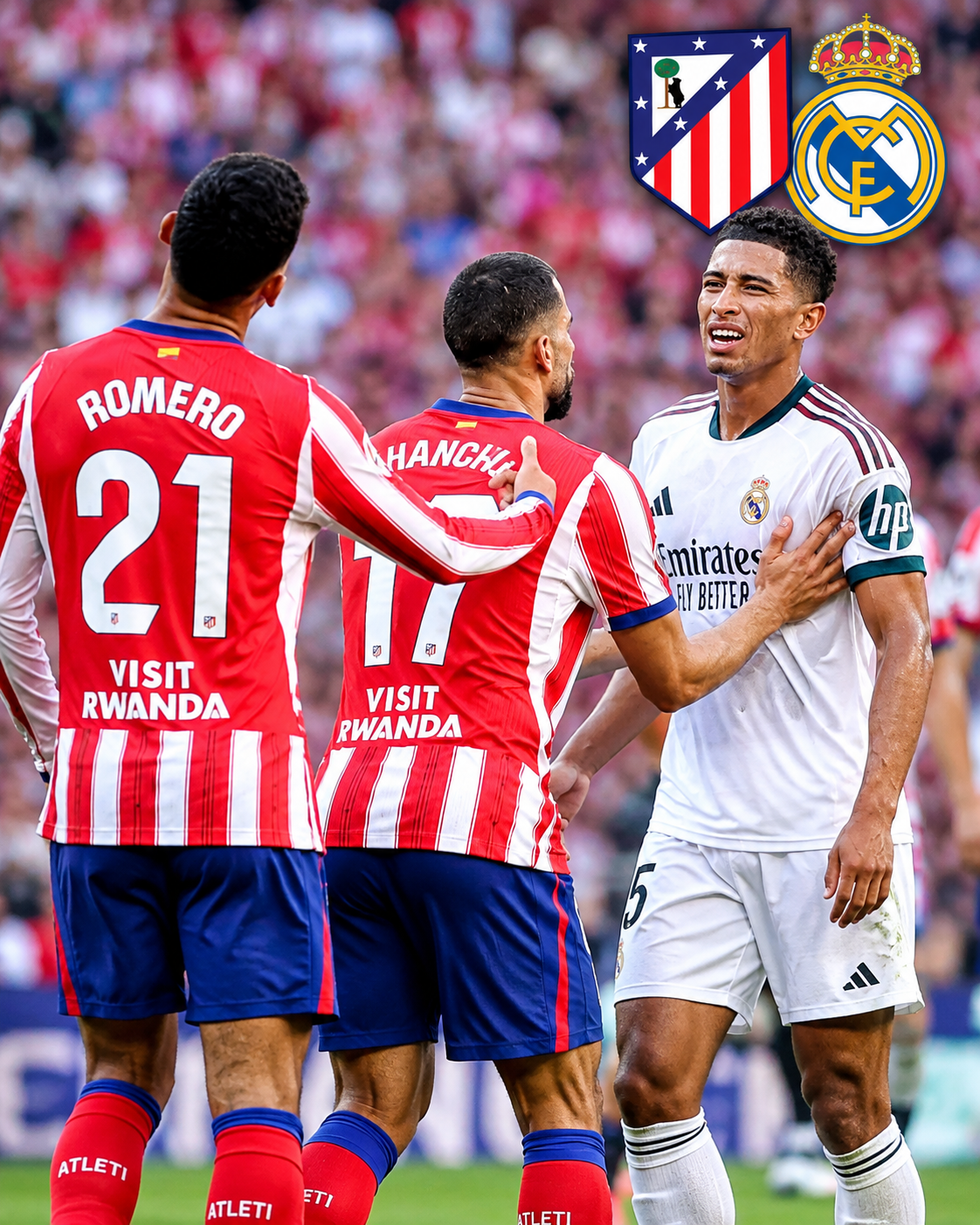
There is a rule of thumb in situations like this. Once the VAR calls the referee over, you rarely see him overrule the review.
That is why the yellow shocked people so much. Ortiz Arias went to the monitor, looked at the picture, and decided to stay with his original view.
Romero’s role in the moment was under scrutiny as well. Two signs, the analysts said, pointed toward intent: he did not lift his leg, and he stayed on the turf, apparently hoping to fool the referee.
The VAR was not fooled. The person holding the whistle chose differently.
What we know is this. Bellingham walked away with a clean card, Romero stayed on the pitch, and Simeone’s team kept eleven men.
Whether that turns out to be the moment that shaped the derby is a question for the next ninety minutes. But one thing was certain when play resumed with a ball to Cucurella: nobody in that stadium was going to forget it.









