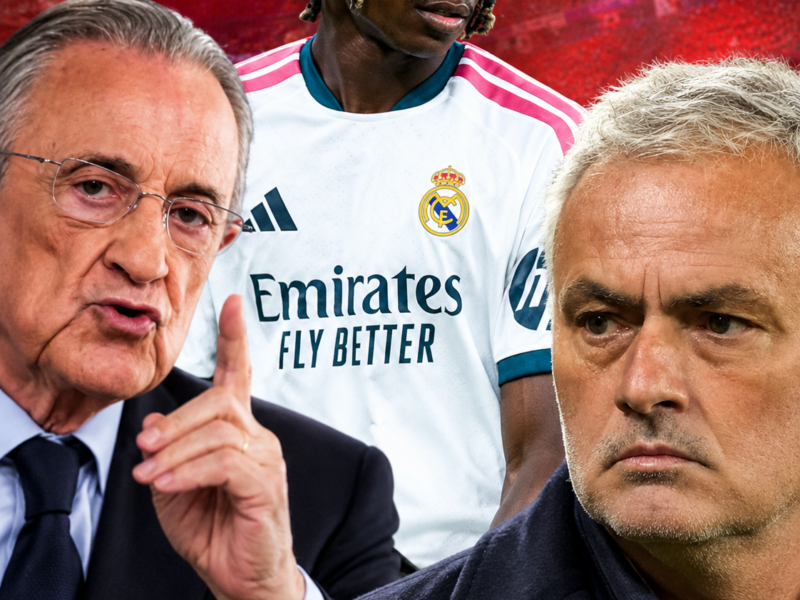
Real Madrid Told Mourinho to Play Diomandé More, And Now He Has to Bench Vinícius or Güler Before the Clásico
Nobody walks into a Clásico week wanting an order from upstairs.
But according to the latest whispers out of Madrid, that is exactly what José Mourinho just received.
The message is simple on paper: Diomandé needs more minutes.
The problem is what happens when you try to carry it out.
Because there is only one right wing, only one left wing, and a very short list of players the club has already promised the world to.
One of the voices in this discussion put it bluntly: there are no other options.
Either Vinícius sits, or Güler sits.
And if you think that sounds like a headache, wait until you hear how deep this rabbit hole goes.
The Message That Landed on Mourinho’s Desk
Let’s start with what is actually known, because the people discussing this were careful to admit how little they could confirm.
The information is thin, they said, and there is not much more to develop.
What reached them is that the club has conveyed to Mourinho that Diomandé should log more minutes.
Whether that instruction came before Diomandé’s recent uptick in playing time or in just the last few days, nobody could say for sure.
It reached the coach, at least in part, through the press, which is a detail worth pausing on.
When a message from the top of a club travels through newspapers on its way to the manager, it tells you something about how that club communicates.
Nobody here pretended it was a surprise either.
They had said for a while that something like this was coming.
The only question was whether it would surface in the press, through another channel, or directly to the coach.
Now it has, and the timing could hardly be worse.
A Slow Start That Still Haunts the Signing
To be fair to the club, there is context behind the urgency.
When Diomandé arrived, he barely played.
One of the speakers wondered aloud whether there was even a game where he did not come off the bench at all.
That slow beginning is, in their reading, where the pressure comes from.
A player who cost a fortune and watches from the sideline for weeks is a player the front office starts to worry about.
So a middle ground does not sound unreasonable.
He does not need to start every game.
Give him a chance, rotate him in, let him build rhythm.
That is the moderate version of the request.
The trouble is that Madrid rarely does moderate when the order comes from above.
We Have Seen This Movie Before
The hosts were quick to point out that this is not the first time a coach at Madrid has been handed a message about a specific player.
Roughly a year ago, around the Clásico where the Vinícius circus erupted, Xabi Alonso and his staff reportedly received a message of their own.
Show Vinícius more affection.
One of the speakers joked about how Alonso’s staff probably reacted, since they had won eleven of their last twelve.
What is this, a daycare?
It got a laugh, but the underlying point was serious.
A coach who is told whom to love and whom to play is a coach whose authority has a ceiling.
And the same dynamic is now repeating itself with a different name.
The Wild Hunch That Might Not Be So Wild
Here is where the story gets properly spicy.
In one of his recent appearances, Mario Cortegana floated what he called a wild hunch about the Clásico.
His picture of the lineup went like this.
Diomandé on the right, Pini on the left, Mbappé and Bellingham up front, and Tchouaméni and Valverde in midfield.
At the time it sounded like the kind of idea you toss out for fun.
Now, with the club apparently telling Mourinho to find room for Diomandé, it suddenly looks a lot less crazy.
One of the speakers made a point of saying that these hunches, whether from Cortegana or from themselves, should be treated for what they are.
They are things someone heard, was told, or read, not gospel.
Still, the logic is hard to escape.
If Diomandé must play, and if Mbappé, Bellingham and Vinícius are all considered untouchable, the math starts to squeeze someone out.
Güler or Vinícius.
Pick one.
What Would Mourinho Do? The Case for Going Down Swinging
This is the part of the conversation that turned into a full-blown manifesto.
One of the hosts laid out what he would do if he were in Mourinho’s shoes.
He would take the club’s orders, every single one of them, and carry them out to the letter.
You wanted to renew Vinícius?
Fine, Mr. President.
You wanted to sign Diomandé without getting me a center-back or a midfielder?
Fine, Mr. President.
You did not bring in the creative midfielder I asked for, the same one Alonso asked for, the same one Ancelotti asked for?
Fine, Mr. President.
Mbappé can do whatever he wants.
Then, in the Clásico, he would show up with the lineup the ownership clearly prefers.
A back four with whoever is fit, with the likes of Cucurella, Konaté and Hato in the mix.
Tchouaméni and Valverde in the middle.
And up top, a 4-2-4 that puts the club’s biggest investments on the pitch together.
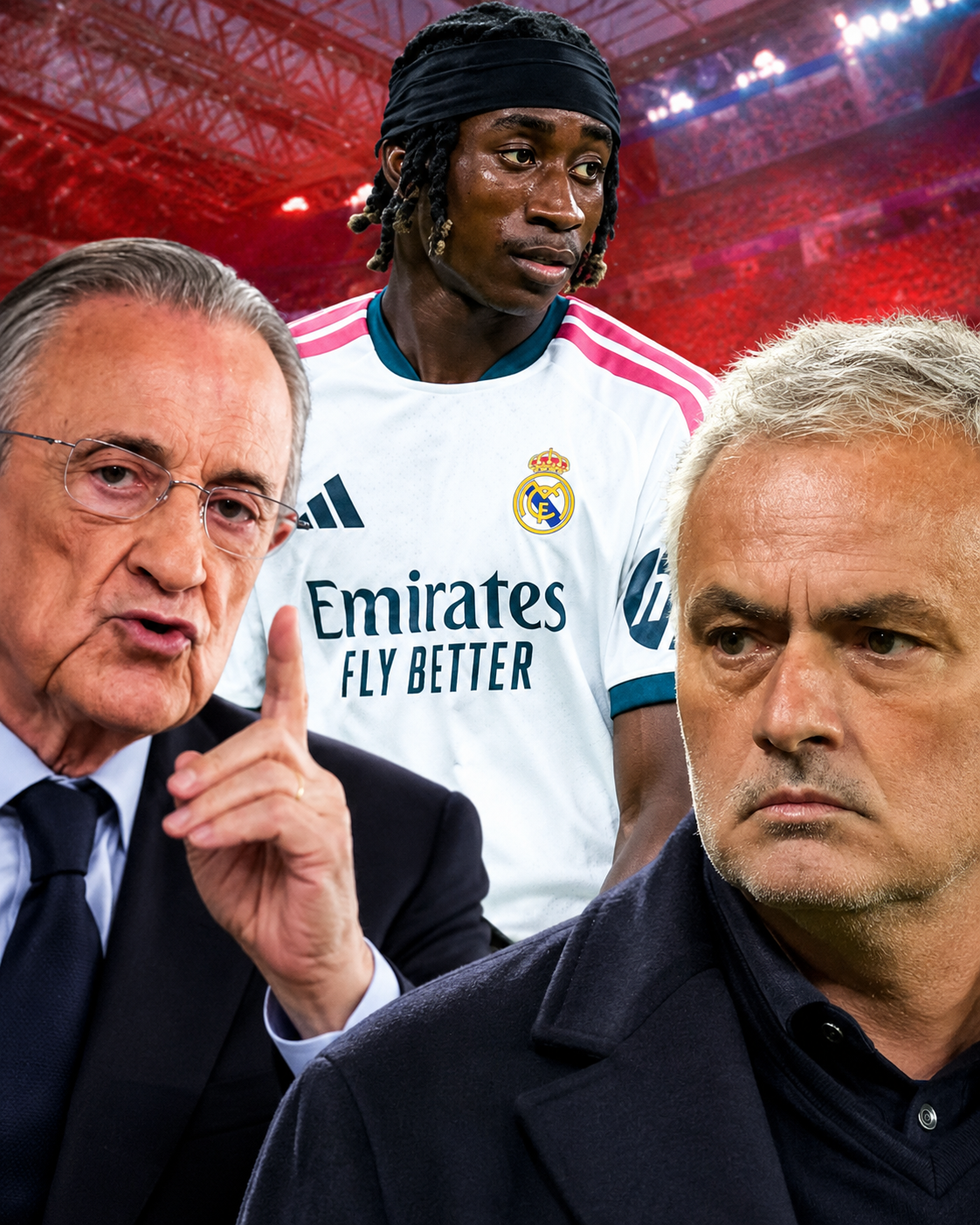
Mbappé and Bellingham in the middle of the attack.
Vinícius, the player the ownership just renewed, on one side.
Diomandé, the most expensive signing in Real Madrid history by raw numbers, on the other.
He was careful to add that he knows inflation adjustments change that ranking.
But the symbolism is what matters.
It would be the owner’s team, selected by the owner’s wishes.
The Catch: A 4-2-4 Against Barcelona Is a Gamble
Of course, there is a reason coaches rarely line up like this at the Camp Nou.
With only two midfielders and four forwards, Madrid would have a very hard time getting the ball back.
The host did not sugarcoat it.
We are not going to touch the ball, he said.
You would have to hope the opposition has an off day in front of goal, or that Courtois turns into something close to a deity.
That is why, in his view, the lineup only makes sense if Mourinho has a plan for the morning after.
A plan to say, in effect, I tried your way.
Like Alonso tried theirs.
Now let me try mine, or you can fire me.
He was quick to clarify that Mourinho should not say it out loud to the owner.
Nobody expects a press conference where the coach announces that Barcelona put six past him and Madrid is nine points back.
The message, he argued, should be delivered with actions rather than words.
And if the club wants to fire him afterward, it will do it anyway.
As Alonso’s exit already showed, a manager who loses the room does not get to decide the timeline.
But What If the 4-2-4 Actually Works?
Then came the optimistic scenario, delivered with a wink.
What if Mourinho has a final boss hidden up his sleeve?
What if the 4-2-4 clicks, Madrid puts on a show at the Camp Nou, and the whole thing moves forward like Barcelona did when the MSN trio found its rhythm?
It would be a story for the ages.
And then the sobering reminder.
These experiments have a way of working until they do not.
The speaker pointed to France in the World Cup semifinal as an example of what happens when an attack-heavy idea finally runs out of road.
If it does fall apart, you can at least say you gave the ownership everything it asked for.
That is the real purpose of the whole exercise.
It transfers the blame to where, in his view, it belongs.
The Vinícius and Diomandé Problem No One Wants to Name
The conversation kept circling one uncomfortable truth.
Madrid is trying to fit two very expensive wingers into the same spot.
One of the speakers described it as two tragic days, two classic days.
The Vinícius renewal on one side, the Diomandé signing on the other.
And in the middle, a coach who is expected to somehow make both work.
He used a joke from a classic Spanish sitcom to illustrate the absurdity.
It is like someone telling a character to catch the bird and then being surprised when it flies away.
Put Diomandé in, the club says.
How, the coach asks, when you just renewed Vinícius?
Should I dump Vinícius?
And then the next message comes down: give some love to Vinícius.
It is a loop with no exit.
One of the hosts argued that the cleanest solution would have been to move Vinícius out in the first place.
One fewer mouth to feed.
Things tend to work better, he said, when you have the same plate and fewer mouths.
He even used Spain as an example, a team with the same plate but far fewer players competing for it.
Instead, the club kept everyone, and the person who has to solve the puzzle is Mourinho.
Arda Güler and the Modric Project
Then the conversation pivoted to a different, and arguably more interesting, storyline.
Arda Güler.
One of the speakers wanted to bring up his contract renewal, which he said was announced recently.
He credited José Félix with saying it was done, and recalled that weeks earlier a rumor had surfaced.
Romano or Moretto, he suggested, might have been among those who reported it was close.
He admitted he did not know whether it had been formally closed when he first heard.
What he was told, though, was more revealing than the paperwork.
Besides a salary raise, which he called the most important part, the renewal is tied to a project.
Giving Güler weight.
Giving him power.
That is what he was promised.
And the other host could not resist a quip: the kid believed it, of course.
The first speaker answered that he assumed so, because otherwise Güler would not have signed.
The idea, as they described it, is to turn Güler into the midfield figure Madrid has been missing.
Something like what Modric really was.
They noted that different coaches have been trying to make that transition happen for some time.
Madrid’s Midfield Solution Might Already Be in the Building
If you step back, the logic behind the Güler plan becomes clear.
Madrid has not been buying another creative midfielder.
Instead, the apparent solution is to convert the one it already has.
Turn Arda into Modric before looking anywhere else.
One of the speakers said that is what the hosts have been suggesting too.
He added a caveat that he does not have hard intel, but the clues point in that direction.
The rhetoric from the club is that no central midfielder is convincing.
Too expensive, the argument goes, and the ones who are not expensive do not reach the level.
And besides, the club already has Arda in-house and likes what it sees.
The speakers did not buy it entirely.
Last year, according to people close to Xabi Alonso, Güler was not yet at the level to play in midfield.
Mourinho has said the same thing out loud.
Someday Güler could play as a central midfielder, but not yet.
One of the hosts recalled how he got criticized after posting a Twitter thread laying all of this out.
People went after him, but his point stood.
The club sees a path for Güler in that role, in the medium to long term.
In the short term, he is simply not there.
What Arda Actually Wants
The most human part of the story is what is driving Güler himself.
According to the speakers, his concern, which he has voiced often, is not knowing whether he will play.
Whether he will have a place.
Whether he will matter.
So the promise the club made is straightforward: you will be an important piece.
But importance on paper and importance on the pitch are two different things.
And one of the hosts pointed out the awkward detail hiding inside this renewal.
If the Clásico plan really involves Diomandé starting, there is a real chance Güler is the one who sits.
That is a rough way to honor a promise made days earlier.
The Graveyard of Career Plans
Here is where the discussion got sharper, and frankly a little brutal.
The speakers argued that the real issue is not a single player or a single lineup.
It is that Madrid keeps making promises about career plans that it does not appear able to keep.
Consider the numbers they threw out.
Between Diomandé, Endrick and Mastantuono, Madrid has invested on the order of 250 million euros.
Forty-something billion pesetas, one of them joked.
A little more or a little less, but roughly that.
Endrick was the first to arrive, and two years later he is arguably the most lost of the trio.
Last year he already went out on loan.
This year, one of the speakers said, he cannot picture a scenario where Endrick is still at the club in January.
He admitted he never saw a scenario in which he would stay in the first place.
There was a mention of the importance of Endrick’s wife being about to give birth, but the player, he said, was clear about wanting to leave.
He had a conversation with Mourinho, which this speaker reported first and Cortegana reported later.
He talked to the coach about the right wing.
And a few days later, from the very same agency, the club signed Diomandé.
The most expensive signing in the club’s history, a player the coach is now being told to use more.
Meanwhile, Endrick has played four minutes across the four games in which he was available.
Mourinho, the speakers said, prefers other players for certain roles, and the rest are considered irreplaceable.
They said they genuinely do not know what the plan for Endrick is supposed to be.
Mastantuono Makes It Two
Then there is Mastantuono.
Roughly 60 million, give or take five.
Endrick, they noted, cost around 60 million plus commissions, give or take twenty.
And a year later, Mastantuono is not at the club either, now at Fiorentina trying to salvage a career.
The question hanging over both players is the same.
What was the plan?
What was decided when Endrick arrived?
Since then, Mbappé has come to play as a nine, Vinícius has been renewed, and Diomandé and Mastantuono have both been brought in.
The main problem with both young players, the speakers argued, was not even their raw talent.
It was the absence of a plan.
And that is exactly the kind of plan Madrid is now promising Güler.
The Fear at the Top
The most pointed part of the argument concerned how the board seems to be reacting.
One speaker said he understands the fear.
The club has signed a kid for 130 million, or whatever the figure turns out to be.
And there is a real chance he ends up with a season like the other two, who cost roughly half as much.
So the board panics.
But in his view, the only thing the board and the current owners should be afraid of when it comes to decisions is themselves.
Because what have they actually done to help Diomandé?
Nothing.
He listed the obvious steps they could have taken.
Moving Vinícius out to open space.
Building a squad around a coherent structure.
Instead, they handed Mourinho a name and a deadline.
And then he said the line that landed hardest in the whole discussion.
If the club wants a career plan for Arda, it should hire someone who makes career plans.
Because, in his words, the ones who cannot make them are them.
Why Nico Paz Said No
One of the more striking side notes involved Nico Paz.
A colleague of the hosts had pointed out that Paz did not want to come back, because he did not believe in the club’s career plans.
The speakers were fair about it.
They acknowledged that it is harder to believe those plans from the outside than from the inside.
But they also noted that Endrick’s situation has been discussed as a sale, permanent or semi-permanent, for a while.
If it were up to the agency, they said, and the agency would be right to look for what is best for the player, a sale would have been pushed already.
In their view, that would have been best for everyone involved.
Or perhaps a sale with a buy-back option for a year or two, just in case Mbappé leaves soon.
It is a creative idea, but it also underlines how unsettled the whole situation is.
The Clásico as a Referendum
So where does that leave Mourinho?
One of the hosts said it plainly: the Clásico will be everything.
Maybe Mourinho does have a plan, much like Alonso once did.
The issue, he noted, is that Alonso never followed through on executing it.
That detail matters, because it suggests the pattern at Madrid is not just a lack of ideas but a lack of conviction when the pressure arrives.
Mourinho will be tested on exactly that.
Does he obey the orders from above and bet on the 4-2-4?
Does he protect the balance of his midfield and tell the board that Diomandé will have to wait?
Or does he find a compromise, a few minutes here, a rotation there, and hope no one asks questions?
Each option carries risk.
Each one will be dissected for weeks.
Who Is Actually in Control?
It is worth asking what the ownership really wants from the lineup.
Based on the picture the speakers painted, it wants a very specific group of players on the pitch.
Valverde, who they said is going to be renewed.
Tchouaméni, who has already been renewed.
The owner, they said, was less bothered by the idea that the two midfielders might have messed around than by the fact that it leaked to the press.
Up front, Mbappé.
One of the hosts said he needs to ask Picón more about this, but as far as the president is concerned, Mbappé is still the centerpiece he was always meant to be.
Bellingham will play, and he has been one of the best on the team.
On the left, Vinícius, the player the ownership renewed, the one who needs to be treated with affection.
On the right, the most expensive signing in the history of the club.
It is, as they described it, the ownership’s team.
And the speakers agreed with Picón that this is how the club works, with more of the money and the decisions showing up on the field.
Laughing So They Do Not Cry
As the conversation wound down, the tone shifted from sarcasm to something closer to worry.
One speaker said he laughs so he does not cry, because you have to take these things with humor.
But beneath the jokes, there was a real concern.
If the season ends tragically again, he said, and this time with internal turmoil even with Mbappé on the roster, the club may finally have to face itself.
He said he wants to believe that, without the smokescreen of elections or the Mourinho factor, the club will begin to be run differently.
At least on the football side.
But then he looked at what the club has actually done.
The squad.
The famous list of targets that went unfulfilled.
And it looks like things are being managed the same way as before.
He admitted he does not know how this ends.
Nobody in the room did.
The Bottom Line
Strip away the jokes and the references, and the story is deceptively simple.
Real Madrid reportedly told Mourinho to play Diomandé more.
To do that, he has to sacrifice either Vinícius or Güler.
Vinícius was just renewed.
Güler was just promised a major role.
Diomandé is the most expensive signing in the club’s history and cannot be allowed to follow Endrick and Mastantuono down the same road.
Every choice creates a new problem.
And through it all, the coach is the one who will answer for the results.
Maybe Mourinho will go all in on the 4-2-4 and silence every critic at the Camp Nou.
Maybe he will fall back on balance and fight the front office behind closed doors.
Or maybe the Clásico will deliver another lesson Madrid has refused to learn for years.
You cannot give everyone what they were promised.
Sooner or later, the pitch will collect on the debt.









