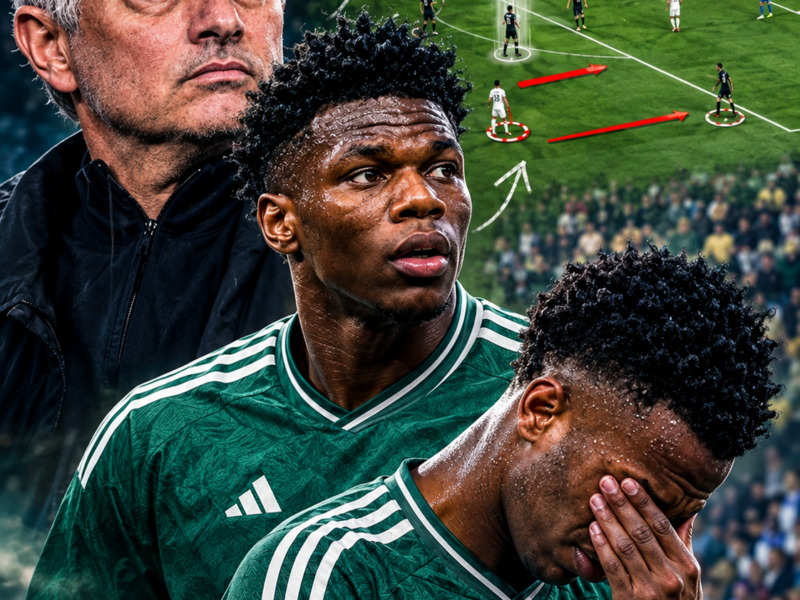
Real Madrid Survive Elche Scare in Wild 3-2 Thriller: Inside the Second-Half Collapse That Has Everyone Talking Before the Atlético Madrid Derby
Real Madrid are supposed to be running away with La Liga right now.
That’s what the table says. That’s what the transfer fees say. That’s what the name on the crest is supposed to guarantee every single week.
But if you actually watched what happened on the pitch against Elche, you saw something completely different from what the final scoreline suggests.
You saw a team that spent the entire second half hanging on for dear life against a side sitting rock bottom of the table.
You saw panic. You saw disorganization. You saw a defense that looked like it had never met before kickoff.
And if you’ve been paying close attention to Real Madrid over the last few weeks, you already know this wasn’t a one-off.
This is starting to look like a pattern. And patterns, in football, have a nasty habit of catching up with you at the worst possible moment.
With the Madrid derby against Atlético looming just around the corner, this 3-2 win over Elche should be sending alarm bells through the Santiago Bernabéu rather than being filed away as just another three points.
Let’s break down exactly what happened, why it happened, and why so many people inside and outside Spanish football are starting to worry about what comes next.
A Scoreline That Flatters Real Madrid More Than It Should
On paper, this looks like business as usual. Real Madrid go on the road to face a struggling Elche side and come away with all three points.
Move along, nothing to see here, right?
Except anyone who actually sat through ninety minutes of this game knows the story is far more complicated than a simple 3-2 final score.
Elche came into this match as one of the weakest teams in the entire division, sitting near the very bottom of the table with a defense that had already leaked a startling number of goals this season.
This was supposed to be the kind of fixture Real Madrid could handle comfortably, the sort of game a title-chasing juggernaut is expected to control from start to finish without much drama.
Instead, Los Blancos needed a stoppage-time moment of fortune, some individual moments of brilliance from their attacking players, and a heavy dose of good luck to escape with the win intact.
For a team with the ambitions Real Madrid carry every single season, that is not a performance. That is a warning sign flashing in bright red letters.
How It All Started: A Cagey, Uneven First Half
The opening 45 minutes told a story of a Real Madrid side that, while not dominant, at least looked capable of controlling the game when it needed to.
Real Madrid broke the deadlock through a well-struck free kick from Arda Güler, a goal that was made significantly easier by a mistake from Elche’s goalkeeper.
It wasn’t the cleanest goal in terms of buildup play, but a goal is a goal, and it gave Real Madrid the early cushion that so many title contenders crave on the road.
From there, the match settled into a rhythm that has become familiar to anyone watching Real Madrid this season: flashes of individual quality mixed with long stretches where the team simply couldn’t find any sustained control of the game.
There were moments where Real Madrid’s attacking talent created real problems for Elche’s back line, forcing saves and testing the home side’s discipline at the back.
But even in a first half where Real Madrid held a lead and generally looked the more threatening side, there wasn’t the kind of comprehensive, suffocating control you’d expect from a team with genuine title aspirations.
It was, in the words of anyone being brutally honest about it, a collection of good moments strung together rather than a fully cohesive team performance.
Kylian Mbappé added a second goal for Real Madrid, following a strong surge from a teammate and no shortage of help from a shaky Elche defense that seemed all too willing to give the ball away in dangerous areas.
At 2-0, with the away side seemingly in control, most neutral observers would have expected Real Madrid to cruise through the remainder of the match without much fuss.
That expectation would prove to be badly, badly mistaken.
The Second Half: Where Everything Fell Apart
If the first half was uneven but ultimately productive for Real Madrid, the second half was an entirely different animal, and not in a good way.
What followed after the break has become an uncomfortably familiar sight for Real Madrid supporters this season: a total collapse in control, composure, and defensive organization.
Elche came out for the second half with renewed energy and belief, sensing weakness in a Real Madrid side that had shown clear signs of fragility even while holding a two-goal cushion.
And weakness is exactly what they found.
By the numbers, Elche dominated possession in the second half, controlling roughly 60 percent of the ball during that period, a statistic that on its own might not mean much.
Possession numbers can be deceiving in football. Plenty of teams control the ball in areas that don’t threaten anyone, patting passes around at the back without ever seriously testing an opponent.
This was not that.
Elche’s second-half possession translated directly into dangerous territory, into genuine chances, into a home side that kept finding ways to get behind a Real Madrid defense that looked completely unprepared for the onslaught.
The visitors were pinned back for long stretches, unable to string together passes, unable to relieve pressure, unable to get out of their own half with any consistency whatsoever.
And when a team of Real Madrid’s caliber can’t win the ball back, can’t build any sustained possession of their own, and can’t create any meaningful attacking threat, you start to understand exactly how a two-goal cushion can evaporate in the blink of an eye.
The Goals That Almost Changed Everything
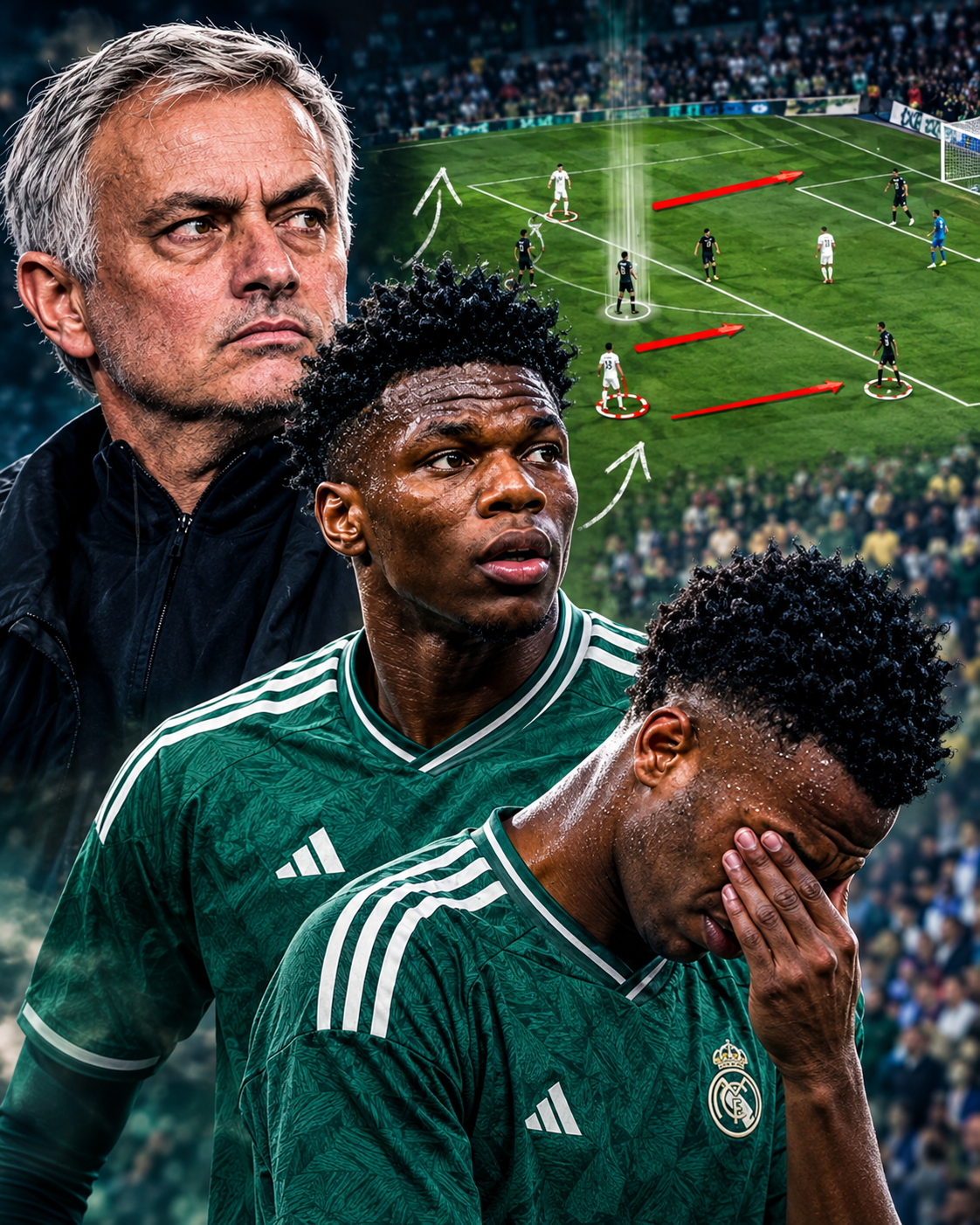
Elche pulled one goal back in the second half, capitalizing on a defensive lapse inside the penalty area that never should have happened against a team with Real Madrid’s resources and supposed quality.
The buildup involved exactly the kind of vulnerability that has plagued Real Madrid in recent weeks: a lack of awareness from a defender who appeared to lose track of his positioning at exactly the wrong moment.
That goal alone would have been concerning enough on its own. But Elche weren’t finished.
A second goal followed not long after, this time from a header inside the box off a poorly defended set piece, with multiple Real Madrid defenders seemingly unsure of their marking responsibilities as the ball sailed into the net.
Suddenly, a match that had looked comfortably in hand at 2-0 had become a genuine nail-biter, with Elche level and pushing for a shock winner against one of the most decorated clubs on the planet.
Think about that for a moment. A team sitting at the bottom of the table, with one of the worst defensive records in the entire league, had fought their way back to 2-2 against Real Madrid, on the back of pure momentum and a visiting side that had completely lost its shape.
This is the part of the match that should be dominating the headlines rather than getting buried under the final score. This is the part that tells you everything you need to know about where this Real Madrid team currently stands.
Salvation Arrives Late, and Somewhat Fortunately
Just when it looked like Elche might complete one of the more remarkable comebacks of the La Liga season, Real Madrid found a way to snatch the win back in the closing stages.
The winning goal came on the counterattack, born out of Elche committing bodies forward in search of a dramatic victory of their own, a gamble that ultimately backfired when Real Madrid broke with pace and numbers.
It was a moment that, in isolation, looked like a clinical finish from a top-tier team punishing an opponent for overcommitting.
But context matters here, and the context is impossible to ignore. Real Madrid didn’t win this game by dominating from start to finish. They won it because Elche, sensing a chance at a famous victory, threw caution to the wind and left space in behind for Madrid’s attackers to exploit.
Had Elche simply sat back, protected their point, and played for the draw once they’d leveled the score, there’s a very real chance this match ends 2-2, with Real Madrid dropping points to a side rooted at the bottom of the table.
That’s not a knock on the finishing quality of the winning goal itself. That’s simply an honest assessment of how the match actually played out, and why the final scoreline doesn’t tell anywhere near the full story.
A Troubling Pattern, Not an Isolated Incident
Here’s the part that should really worry anyone connected to Real Madrid: this wasn’t a one-off collapse born out of a bad day at the office.
This performance mirrors almost exactly what happened just days earlier at home against Rayo Vallecano, a match where Real Madrid similarly lost control in the second half and allowed a supposedly inferior opponent to push them to the brink.
In that match too, the away side found joy getting in behind Real Madrid’s defense, creating chances with a frequency that simply shouldn’t happen against a team of this quality and depth.
Two matches in a row now, Real Madrid have shown the same fundamental weaknesses: a defense that loses shape and awareness as games wear on, a midfield that can’t retain possession under pressure once the opposition raises its intensity, and a team identity built almost entirely around individual moments of attacking brilliance rather than collective structure.
When you see the same issues surface match after match, it stops being an anomaly and starts being a genuine trend, one that opposing coaches around Europe and across Spain will already be studying closely.
If Rayo Vallecano and Elche, two sides without anywhere near the talent level of Real Madrid’s squad, were able to consistently carve out chances against this defense, imagine what a genuinely elite attacking side is capable of doing.
That’s not a hypothetical question for very much longer. Real Madrid’s very next fixture takes them to the Metropolitano to face Atlético Madrid in one of the most fiercely contested derbies in world football.
Why the Atlético Derby Suddenly Looks Terrifying
Under normal circumstances, a Madrid derby carries enough weight and tension on its own. This year, given everything we’ve just seen over the last two matches, the stakes feel even higher.
Atlético Madrid, regardless of where they sit in the table on any given week, are never an easy opponent for Real Madrid. The rivalry brings out a different intensity, a different physicality, and a different tactical approach than almost any other fixture on the calendar.
If Real Madrid show up to the Metropolitano with the same defensive frailties, the same second-half lapses in concentration, and the same inability to control matches for a full ninety minutes that we’ve now seen in back-to-back games, the outcome could be genuinely painful.
Atlético’s approach under their current setup thrives on exactly the kind of chaos and transition moments that Real Madrid have been serving up on a weekly basis lately.
A team that struggles to retain possession, that gets caught out of position at the back, and that can’t sustain defensive concentration for full matches is walking directly into the kind of environment where Atlético Madrid have historically punished bigger, more talented opponents.
This isn’t fear-mongering for the sake of it. This is simply connecting the dots between what we’ve actually witnessed on the pitch and what’s coming up next on the schedule.
The Bigger Picture: A Squad Built on Talent, Not Structure
Stepping back from these two specific matches, there’s a broader story here about the identity of this current Real Madrid team.
There’s no debating the individual talent scattered throughout this squad. When you have attacking players capable of turning a match on its head with a single moment of brilliance, you’re always going to remain competitive in almost any game you play.
But talent alone has never been enough to win league titles over a full 38-game season, and Real Madrid’s own recent history proves that point better than almost any other club in world football.
The teams that have gone on to dominate La Liga and the Champions League in years past have typically combined individual quality with genuine defensive solidity and tactical discipline, the kind of foundation that allows a team to grind out results even on nights when the attacking talent isn’t clicking.
Right now, this current Real Madrid side looks like a team relying almost entirely on the first half of that equation, hoping that enough individual quality will paper over structural issues that keep resurfacing match after match.
Sometimes that approach works. A moment of magic here, a fortunate bounce there, and you scrape through matches you probably shouldn’t have won.
But football has a long memory, and eventually those cracks get exposed by an opponent with the quality to fully capitalize.
What the Statistics Actually Tell Us
Numbers alone rarely capture everything happening in a football match, but in this case, the statistical picture from the Elche game lines up disturbingly well with the eye test.
Elche’s second-half possession share, hovering around 60 percent, is a staggering number for a team sitting at the bottom of the table to generate against one of Europe’s traditional powerhouses.
Add to that the fact that Elche managed to work multiple genuine goal-scoring opportunities from inside the penalty area during that same period, and you start to see a clear picture of a Real Madrid team that simply could not cope once the opposition raised the tempo.
Compare this to how dominant, well-organized sides typically close out matches against inferior opposition. The gap between controlling a game and simply surviving it becomes painfully obvious.
There’s also the matter of Real Madrid’s away form more broadly this season, which has shown similar warning signs across multiple fixtures, suggesting this isn’t simply a case of one bad night on the road.
When a pattern shows up in the underlying numbers as clearly as it does in the highlight reel, it becomes very difficult to write off as coincidence or bad luck.
Individual Performances Worth Watching
Amid all the structural concerns, there were individual performances on both ends of the spectrum that deserve attention heading into the coming weeks.
On the more promising side, one of Real Madrid’s midfield performers delivered a genuinely impressive defensive shift, contributing multiple ball recoveries and winning a strong majority of his individual duels across the pitch.
That kind of two-way contribution, covering ground on both flanks and contributing defensively as well as offensively, is exactly the sort of profile Real Madrid could desperately use more of if they want to shore up the issues we’ve seen in recent weeks.
On the other end of the spectrum, there were clear defensive lapses from individual players that directly contributed to Elche’s goals, moments of lost concentration and poor positional awareness at exactly the wrong times.
These aren’t necessarily indictments of any single player’s overall quality or career, but rather specific in-game moments that speak to the larger issue of a team lacking defensive cohesion as a collective unit.
When individual errors compound with systemic structural weaknesses, you get exactly the kind of nervy, error-strewn second halves that Real Madrid have produced in consecutive matches now.
The Mentality Question
Beyond the tactics and the individual performances, there’s a mentality issue worth addressing here as well.
Championship-caliber teams, the kind capable of going the distance across a full league season and deep into European competition, typically show a certain resilience and composure once they’ve established a lead.
They know how to manage a game, how to slow the tempo when needed, how to see out matches without unnecessary drama once they’re ahead on the scoreboard.
What we’ve seen from Real Madrid in these last two matches is almost the complete opposite of that approach. Rather than managing leads, they’ve allowed opponents to dictate the terms of engagement once the initial goals went in.
Whether this stems from overconfidence against supposedly inferior opposition, a lack of tactical discipline from the coaching staff, or simply individual lapses in concentration from key players, the end result is the same: matches that should be comfortable turn into unnecessary struggles.
If this mentality issue persists into bigger, more demanding fixtures like the upcoming derby against Atlético Madrid, the consequences could be far more costly than a few nervy final minutes against a relegation-threatened side.
What Needs to Change Before the Derby
So where does Real Madrid go from here? What actually needs to change in the days leading up to this crucial derby fixture?
First and foremost, there needs to be a serious conversation about defensive organization and structure. The individual lapses we’ve seen across multiple matches point to a lack of communication and cohesion at the back that simply cannot continue if this team wants to compete at the highest level.
Second, there’s a clear need for better game management once leads are established. Rather than allowing opponents to dictate tempo and territory in the second half, Real Madrid need to find ways to control possession, slow the game down, and protect advantages rather than surrendering them.
Third, and perhaps most importantly, there needs to be genuine accountability within the squad. Papering over these issues with individual moments of brilliance might work against Elche and Rayo Vallecano, but it will not work against a fully motivated Atlético Madrid side at the Metropolitano.
The margin for error in a Madrid derby is razor thin. One defensive lapse, one moment of lost concentration, one collapse in structure like we’ve seen in these recent matches, and the consequences could be genuinely damaging both to the scoreline and to the broader trajectory of the season.
Historical Context: These Things Tend to Catch Up With You
Football history is littered with examples of talented teams that papered over structural cracks with individual brilliance for a stretch of matches, only to eventually pay the price when they ran into an opponent capable of fully exploiting those weaknesses.
Real Madrid themselves have experienced seasons in the past where exactly this kind of pattern emerged early on, only to develop into much larger problems as the campaign progressed and the fixtures became more demanding.
There’s a reason experienced football observers get nervous when they see a talented team consistently struggling to close out matches against inferior opposition. It’s rarely just about the specific opponent in front of them.
It’s about what those performances reveal about the underlying foundation of the team, and whether that foundation is strong enough to hold up when the competition intensifies.
With a Champions League campaign also on the horizon alongside the demands of a full La Liga season, Real Madrid simply cannot afford to keep producing these kinds of second-half performances against teams they should be beating comfortably.
The Bottom Line
Real Madrid escaped Elche with three points and, on the surface, another step toward maintaining their position in the La Liga table.
But anyone who actually watched this match knows the real story here has very little to do with the final scoreline and everything to do with the alarming pattern that’s now emerged across back-to-back fixtures.
A team with Real Madrid’s talent, resources, and ambitions should not be needing stoppage-time counterattacks to beat a side sitting at the bottom of the table with one of the worst defensive records in the league.
The warning signs are there for anyone willing to look past the results and examine the actual performances. Second-half collapses. Defensive disorganization. A worrying inability to manage and see out leads against inferior opposition.
With Atlético Madrid waiting at the Metropolitano in a matchup that promises to be intense, physical, and unforgiving of exactly these kinds of weaknesses, the coming days will tell us an enormous amount about where this Real Madrid team truly stands this season.
Will they use these narrow, uncomfortable wins as a wake-up call to tighten up defensively and rediscover the composure that championship-caliber teams need? Or will these patterns continue into the derby and beyond, turning what should be a title-contending season into something far more turbulent?
For now, all Real Madrid supporters can do is watch, hope, and wait to see which version of this team shows up when the stakes get even higher.
One thing is certain: after what we’ve witnessed over these last two matches, nobody connected to this club can afford to treat these narrow wins as business as usual any longer.









