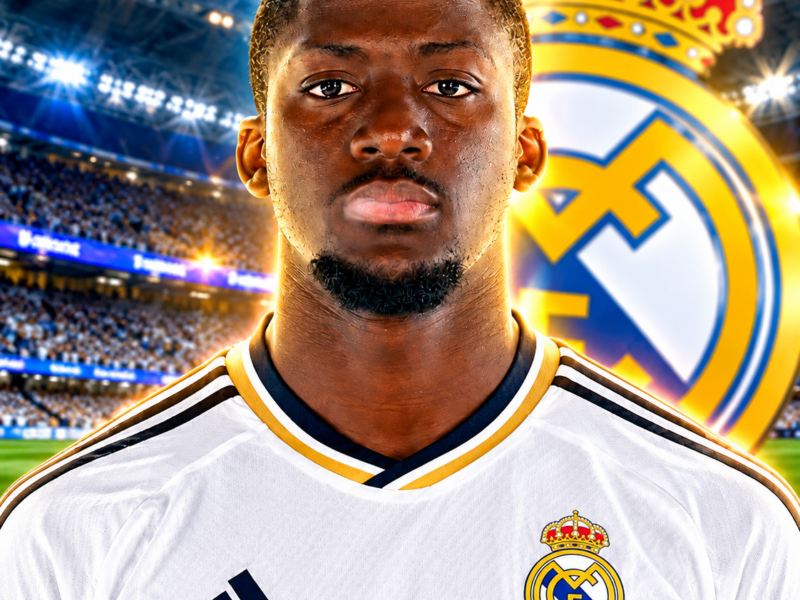
Real Madrid Injury Scare Exposed: The Konaté Truth, Locker Room Whispers, and the Secret Rule Mourinho Won’t Break Before Villarreal
For a few tense minutes, it looked like Real Madrid’s season had just taken its cruelest turn yet.
A headline flashed across phones, a name attached to it that no Madridista wanted to see, and the kind of vague medical language that makes fans assume the worst before anyone actually explains what happened.
Then the phone rang.
And what came out of that call changed the entire tone of the story, because the panic that had been building for a full news cycle turned out to be built on far less than anyone feared.
This is the real story behind Ibrahima Konaté’s fitness scare, the domino effect it triggered across Real Madrid’s battered defense, and the deeper, more uncomfortable conversation now swirling around Valdebebas about discipline, diet, recovery, and whether Mourinho’s grip on the dressing room is as firm as it looked three weeks ago.
Buckle in, because there is a lot to unpack here, and almost none of it is as simple as the first headline made it seem.
Let’s start with the man at the center of the panic.
Konaté had reportedly undergone medical tests in France, the kind of phrase that instantly sets off alarm bells for any club chasing results in September.
Injury scares involving center-backs always hit differently, because Real Madrid simply does not have the depth at that position to absorb another long-term absence.
So when word got out that something was being checked, that a Frenchman with international duty had come back with a question mark next to his name, the worst-case scenarios started writing themselves.
But here is where the story takes its first real turn.
According to information gathered directly from sources close to the club, the tests carried out in France did not reveal an injury.
No sprain, no tear, nothing structural, nothing that would sideline him for the kind of stretch that turns a rotation problem into a crisis.
What they did find was discomfort, a real issue, something worth monitoring, but categorically not the kind of diagnosis that ends a player’s involvement in the next fixture.
Konaté was already back in Madrid by the time this was being sorted out, with further tests scheduled for the same afternoon just to be thorough.
But the working consensus, the one relayed with real confidence, was that Real Madrid are banking on having him available for the visit of Villarreal.
That is a massive sigh of relief for a club that cannot afford to lose another central defender, even temporarily, given everything else piling up on the medical front.
And that “everything else” is not small.
Because while Konaté’s situation eased almost as quickly as it escalated, another absence at the same position is very much locked in, and it complicates matters far more than a single vague scare ever could.
Robin Le Normand, referred to in club circles by a nickname that has stuck since his arrival, is suspended for the next match after his sending-off at the Metropolitano.
That red card means Real Madrid head into the Villarreal fixture without one of their two most reliable senior center-backs regardless of how Konaté’s discomfort resolves itself.
Do the math and the picture becomes uncomfortable fast.
If Konaté had actually been ruled out on top of the suspension, Real Madrid would have been staring down a central defense built around exactly one recognized senior option, Antonio Rüdiger, with a converted or inexperienced alternative forced into the lineup out of necessity rather than choice.
That is precisely why the initial panic hit as hard as it did, because the margin for error at that position right now is close to zero.
With Konaté’s scare downgraded, the club at least avoids the nightmare scenario of fielding a defense held together by improvisation.
Which brings the conversation directly to Raúl Asencio, the name that keeps surfacing every time Real Madrid’s center-back options get thin.
Asencio has become one of the most quietly fascinating subplots of this Real Madrid season, a player whose long-term future at the club feels unresolved even as short-term necessity keeps dragging him back into the conversation.
The prevailing sentiment inside football circles covering the club is blunt: if Real Madrid need him, he plays, whether or not the coaching staff is fully convinced by what he offers.
There is a cold, pragmatic logic to that stance, the kind that treats a contracted defender as an asset that either gets used or gets wasted, and no functioning club willingly wastes assets it might need on short notice.
But “if they need him, he plays” is a very different statement from “he has a long-term future here,” and that distinction matters enormously for how this season and the next transfer window play out.
Multiple voices close to the situation have suggested Asencio was never guaranteed to continue at the club even through the end of this season, let alone beyond it.
That means every appearance he makes right now, every minute logged out of necessity rather than preference, could simply be buying time before a departure that many around the club already consider likely.
The January transfer window has even been floated as a realistic exit point, not just next summer, which tells you how unsettled his situation genuinely is behind the scenes.
There’s also a name gaining quiet traction as the alternative long before Asencio’s situation resolves itself one way or another.
Mario Rivas has reportedly been given real trust and real minutes of confidence under Mourinho, the kind of pattern that suggests the coaching staff sees more upside in developing a younger option than in continuing to lean on a defender whose long-term commitment to the club is already in doubt.
Whether that trust translates into a genuine breakthrough or simply reflects the reality of a threadbare position remains to be seen.
There is time before the situation forces anyone’s hand again, with a gap of more than two weeks before Real Madrid’s next competitive fixture, but two weeks in modern football rarely means calm, and this club in particular does not do quiet international breaks.
Which is the perfect moment to zoom out, because the Konaté scare and the center-back shuffle are really just the visible surface of a much bigger story bubbling under Real Madrid’s season right now.
And that story has a name attached to it that Madridistas were chanting with pure joy barely three weeks ago: José Mourinho.
Because as fast as the wave of goodwill rolled in when Mourinho arrived, an equally fast wave of scrutiny is now rolling in behind it, and some of what is surfacing is far more uncomfortable than a discomfort diagnosis in a defender’s leg.
Here is the uncomfortable premise gaining traction in football circles connected to the club: sources close to Valdebebas have suggested that not every player in that dressing room is currently in the physical condition the coaching staff would like.
Framed carefully, delicately, the suggestion is that certain habits have drifted, that discipline around conditioning has not been as airtight as it should be for a club fighting on every front.
That is an explosive claim for any elite club, let alone one that just changed coaches specifically to restore order and physical standards after a turbulent Xabi Alonso chapter.
Nobody directly involved is rushing to confirm the full extent of it publicly, and caution is warranted, but the fact that multiple sources within the club’s orbit are independently raising it is itself notable.
One detail that has been repeatedly floated in connection with this broader concern involves the atmosphere at the Bernabéu during a recent home match, specifically references to unusual heat inside the stadium on matchday.
It sounds like an odd detail to fixate on, almost trivial on its face, and it has historically been the kind of thing dismissed as fodder for supporters of the club’s biggest rivals looking for any excuse to explain a poor result.
But when it keeps resurfacing from sources with no obvious agenda to manufacture drama, it starts to look less like coincidence and more like a genuine, if minor, piece of a larger discomfort narrative building around this squad.
Nobody is claiming it explains results on its own, but it has become one more thread in a growing tapestry of small irritations being connected after the fact.
What is far more concrete, and far more revealing about how Mourinho actually operates behind the scenes, is the set of conditions he apparently set the moment he walked into the building.
Nutrition and recovery, according to sources with direct knowledge of the club’s internal operations, were two of his very first non-negotiables.
Under the previous regime, there had reportedly been a more individualized, à la carte approach to player nutrition, with players given more latitude to manage their own dietary choices in consultation with personal specialists of their choosing.
Mourinho apparently ended that immediately, installing a club nutritionist whose guidance now applies across the board, shifting the operating philosophy from what players personally preferred to eat toward what the coaching staff and medical department have determined they should eat.
That is a significant cultural shift for a group of elite, highly paid athletes accustomed to a certain level of personal control over their bodies and routines.
Players are now reportedly required, at minimum, to be physically present for meals at Valdebebas, a requirement that simply did not exist in the same form before Mourinho’s arrival.
The club has even discussed showing images of the squad eating breakfast or lunch together as a group, a symbolic gesture meant to reinforce unity and shared discipline rather than the more fragmented, individualized habits that had crept in previously.
It is a small thing on paper, but symbolically it says everything about the kind of environment Mourinho is trying to rebuild from the ground up.
The recovery rules go even further, and this is where the story gets genuinely interesting.
Sources indicate that Mourinho instituted a firm requirement early in the season that all player recovery work, treatment, and rehabilitation must take place under the club’s direct oversight at Valdebebas.
Players are still permitted to consult outside specialists if they choose, that has not been banned outright, but the actual recovery process itself is expected to happen within the club’s own facilities where the coaching and medical staff maintain visibility and control.
The days of a player quietly disappearing for ten or fifteen days to receive treatment from an outside specialist, completely detached from the team environment, were apparently brought to an abrupt end.
There is even a specific, fascinating precedent being cited by people close to the situation, one that connects this current chapter to Real Madrid’s history.
The comparison being drawn involves a previous era in which a veteran defender maintained a close relationship with a physiotherapist who had left the club, continuing treatment with that same specialist even after his formal departure from Real Madrid’s staff, eventually following him into international team environments as well.
That kind of arrangement, built on personal trust between a specific player and a specific specialist outside the club’s direct control, is exactly the pattern Mourinho appears determined to prevent from repeating under his watch.
Whether that rule has actually been broken by anyone currently in the squad is unconfirmed, but the existence of the rule itself is not in dispute among people close to the dressing room.
There is one more layer to this discipline overhaul worth understanding, because it connects directly to team psychology rather than pure physical conditioning.
Reportedly, injured players have been required to remain pitchside during warmups at the Bernabéu rather than disappearing into treatment rooms or staying away from the matchday environment entirely.
The logic behind that decision is straightforward: an injured player who feels detached from the squad’s rhythm and energy can become psychologically isolated from the group, and Mourinho apparently wanted to prevent that dynamic from taking hold this season.
It is a small structural choice, but it reflects a coach thinking carefully about group cohesion and shared experience, not just tactics and fitness numbers.
So why does any of this matter right now, in the context of a team that was being praised as a steamroller barely two weeks ago?
Because the timing of these revelations, arriving right as results have started to wobble and questions about locker room unity have begun circulating, creates an unavoidable temptation to connect every dot into one dramatic narrative of internal collapse.
And that temptation deserves real skepticism, because football media has been here before, many times, with many different coaches, and the pattern is depressingly familiar.
A team wins, the coach is a genius, the dressing room is united, the tactics are flawless, then a couple of results go badly and suddenly every minor detail gets reframed as evidence the whole project was doomed from the start.
There is a specific, instructive parallel being raised by people who lived through Real Madrid’s last coaching transition of this nature.
After Carlo Ancelotti’s Real Madrid lost a Madrid derby, brutal, unforgiving analysis flooded the Spanish football media landscape, framing the result as proof of deep structural problems within the squad and the coaching setup.
That same Real Madrid team went on to win the Champions League and the league title that same season, rendering the catastrophic post-derby analysis almost comically premature in hindsight.
The lesson embedded in that memory is simple and worth repeating loudly right now: results in September, even bad ones, rarely tell the full story of where a season is actually headed.
There is another instructive comparison being made, this one from outside club football entirely, involving Spain’s national team.
Reaction to Spain’s underwhelming opening match performance against Cape Verde in the buildup to a major tournament produced a wave of pessimistic analysis that, in retrospect, dramatically overstated the significance of one early, low-stakes result.
The broader point being made by people close to Real Madrid’s current situation is that football media, and by extension football fandom, has a persistent habit of overcorrecting in both directions, racing from premature triumphalism to premature doom without much patience for the messy middle ground where most seasons actually live.
Right now, Real Madrid sits firmly in that messy middle ground, and pretending otherwise in either direction does a disservice to what is actually happening on the pitch and behind the scenes.
Still, even accounting for that necessary skepticism, something specific has clearly changed inside that dressing room compared to last season, and it goes beyond nutrition schedules and recovery protocols.
One of the more pointed threads being pulled at right now involves comparisons to the previous coaching regime under Xabi Alonso, specifically reports from earlier in the season that some players had grown weary of extremely long tactical video sessions.
At the time, that fatigue was widely framed as a straightforward complaint about meeting length and preparation style, a fairly mundane workplace grievance dressed up in football language.
But there is a more pointed theory now circulating among people close to the situation, one that reframes those complaints entirely.
The theory goes like this: the video sessions themselves were never really the core problem.
What was actually missing, according to this interpretation, was genuine chemistry and empathy between Xabi Alonso and his squad from the very beginning of his tenure, a foundational disconnect that existed independent of any specific coaching method or meeting format.
The long video sessions, in this reading, simply became a convenient, easily articulated excuse for players to voice a deeper dissatisfaction that had much more to do with relationship and trust than with tactical preparation methodology.
If that theory holds any water, it suggests the underlying issues in that dressing room were never really about workload or meeting length at all, but about something far harder to fix with a simple change in coaching style.
That raises an obvious and pointed question about the current regime: how exactly is Mourinho handling video analysis and opponent preparation compared to his predecessor?
The honest answer, based on available information, is that this remains somewhat unclear, with speculation suggesting Mourinho may simply be less inclined toward extensive video sessions as a primary teaching tool compared to Xabi Alonso’s more academic, analytically dense approach.
If that speculation proves accurate, it would represent a meaningful stylistic contrast between the two coaches, one built more around direct instruction, man-management, and psychological reinforcement, the other more heavily invested in tactical theory delivered through extended film study.
Whether one approach is objectively superior to the other is beside the point; what matters is whether Mourinho’s specific style resonates with this particular group of players in a way his predecessor’s clearly did not.
Now let’s talk about the numbers being used as ammunition in this broader debate about Real Madrid’s physical and tactical identity under Mourinho.
A report circulated recently claiming Real Madrid ranks among the teams covering the least average distance per match in the entire league, a statistic that, if accurate, would represent a startling departure from the high-press, high-intensity identity the club has cultivated for years under previous coaching setups.
On its face, that statistic feeds neatly into the broader narrative of a team that has physically regressed, that runs less, presses less, and works less hard collectively than it used to, reinforcing every other thread about conditioning and discipline currently circulating.
It is exactly the kind of number that spreads fast on social media because it appears to confirm a story people already want to believe.
But there is a serious, credible reason to treat that specific statistic with real caution, and it comes directly from people who work in Spanish sports media and deal with this exact category of data professionally.
Unlike Champions League matches, where UEFA makes running distance and physical performance data publicly available almost immediately after the final whistle, La Liga does not release this kind of granular physical data to the public in any consistent, verifiable way.
That distinction matters enormously, because it means any domestic league running statistic currently circulating in the media landscape is coming from a source outside La Liga’s own official channels, raising immediate questions about methodology, context, and reliability.
Sports journalists directly involved in producing similar reports have openly acknowledged internal skepticism about whether such figures can actually be certified as accurate before being published as fact.
There is also a deeper statistical problem with reducing physical performance to a single “average distance covered” number, one that misses far more nuance than it captures.
Average distance covered treats every meter of movement identically, whether it is a leisurely jog back into position or an explosive, high-intensity sprint to close down an opponent, and those two things could not be more different in terms of actual defensive and tactical value.
A far more meaningful metric, according to people close to the situation, would separate medium-intensity running from genuinely high-intensity sprinting, since a team can theoretically cover less overall ground while still generating more decisive, high-value bursts of pace at critical moments.
Reducing an entire team’s work rate to one blended average number is, in this light, closer to statistical shorthand than genuine analysis, and treating it as gospel does a disservice to what is actually happening on the pitch.
This is where Vinicius Júnior’s individual numbers become genuinely important to the broader conversation, cutting directly against the narrative that the entire squad has physically regressed under Mourinho.
According to figures being cited from within the club’s own performance data, Vinicius is currently generating more high-intensity sprints than any other player in the Real Madrid squad, a statistic that flatly contradicts any blanket claim that this team, or this player specifically, has stopped working hard defensively and physically.
There is also a specific, striking individual statistic from a recent Champions League fixture against Inter Milan, publicly verified through official UEFA data since that competition does release this information: Vinicius recovered eight balls in that single match, reportedly the highest single-match figure for any Real Madrid player dating back to the Gonzalo Higuaín era.
That is not the statistical profile of a player who has checked out defensively or lost his competitive edge, regardless of how his broader form and body language have been publicly perceived and discussed in recent weeks.
Which brings us to Vinicius himself, and the emotional undercurrent running through his recent performances that goes well beyond any spreadsheet of running data.
Sources close to the squad have indicated that Vinicius left the pitch after the recent match against Atlético Madrid at the Metropolitano genuinely upset, carrying a real sense that his individual form had bottomed out and that a personal response was urgently needed.
That kind of raw self-awareness from a player of his caliber and profile is notable in itself, suggesting an internal accountability that contradicts any narrative painting him as disengaged or indifferent to the team’s struggles.
It also adds important context to a separate, uncomfortable clip that has been circulating showing both Vinicius and Kylian Mbappé failing to close down an opponent with any real urgency during a passage of play that some have connected to a goal conceded, or possibly a penalty awarded against Real Madrid in that same fixture.
That specific clip deserves the same statistical skepticism being applied to the broader running data conversation, and for good reason.
Ten days before that clip started circulating as supposed proof of collective defensive apathy, the prevailing media narrative around this same Real Madrid squad was almost uniformly positive, describing the team in terms bordering on unstoppable.
The uncomfortable truth about football media cycles is that isolated clips and moments get retroactively assigned outsized narrative importance purely based on the final result of the match they occurred in, regardless of whether that specific moment genuinely caused the outcome or was simply one unremarkable passage of play among hundreds.
If Real Madrid had won that match comfortably, that exact same clip likely would never have been extracted, circulated, or discussed at all, which says far more about the nature of results-driven media analysis than it does about Vinicius or Mbappé’s actual defensive commitment.
There is a broader philosophical point embedded in all of this that deserves real attention, because it applies to virtually every negative storyline currently swirling around this Real Madrid squad.
When a team is winning, uneven defensive shape gets described as tactical fluidity, and moments of individual brilliance get credited as the natural byproduct of a healthy, functioning system built around confident, expressive players.
When that same team starts losing, those exact same patterns of play get reframed as evidence of tactical dysfunction, individual selfishness, and a fundamentally broken locker room, even when the underlying on-field behavior has not meaningfully changed at all.
Recognizing that pattern does not mean dismissing every genuine concern currently being raised, some of which, particularly around nutrition, recovery culture, and locker room habits, appear to be based on real, substantiated reporting rather than pure reactionary narrative building.
But it does mean applying real journalistic caution before connecting every isolated data point and anecdote into one sweeping story of institutional collapse, especially this early in a long, grueling season.
So where does that leave Real Madrid heading into this international break, and what actually happens next once football resumes?
The concrete, immediate reality is this: Konaté’s fitness scare appears to have been successfully downgraded from potential disaster to manageable discomfort, clearing a path for him to be available against Villarreal barring any surprise development from the additional round of testing.
Le Normand’s suspension for that same fixture remains locked in regardless of Konaté’s status, meaning Mourinho will need to solve at least one central defensive puzzle piece using some combination of Rüdiger, Asencio, and potentially Mario Rivas depending on how training sessions unfold over the coming days.
That alone is a significant enough storyline heading into Villarreal, before even factoring in everything else currently swirling around the club.
Layered on top of that immediate defensive puzzle is the far murkier, far more consequential question of what is actually happening inside that dressing room on a cultural and psychological level.
Mourinho has clearly implemented a series of firm structural changes around nutrition, recovery protocols, and matchday behavior for injured players, changes explicitly designed to restore discipline and collective identity after a Xabi Alonso era that reportedly struggled with exactly those elements.
Whether those changes are already working, whether they represent an overreaction to isolated problems, or whether they are simply too new to have produced meaningful results either way, remains genuinely unclear even to people close to the situation.
What is clear is that this is a club actively wrestling with its own identity in real time, three months into a new coaching era that started with euphoric optimism and has already cycled through at least one wave of serious public scrutiny.
There is also the small matter of a two-week gap before Real Madrid’s next competitive fixture, a stretch of time that in any rational football environment would be described as simply “an international break.”
But this is Real Madrid, operating inside arguably the most intense media ecosystem in world football, and two weeks of silence rarely means two weeks of actual calm.
Expect every training session update, every player interview, every piece of body language captured on camera during international duty to be scrutinized, dissected, and potentially fed back into this exact same narrative debate about locker room unity and physical conditioning.
By the time Villarreal actually arrives at the Santiago Bernabéu, this story will likely have evolved several more times over, for better or worse, depending entirely on how the next round of information trickles out.
And then there is the story that, despite everything else happening around this club right now, might actually matter more to the neutral football world watching from outside Madrid: the Ballon d’Or.
Spanish football journalist José Félix Díaz, a recognized Spanish voter for this year’s award, confirmed he had not yet cast his official vote, with the window for doing so closing within days of this conversation taking place.
He was characteristically tight-lipped about his actual selection, declining to reveal any specifics even under repeated, increasingly playful pressure, insisting that not even close family members currently know how he intends to vote.
What he did offer, notably, was a pointed defense of the voting process itself, a reminder that Ballon d’Or selection is inherently subjective by design, built around which qualities and moments individual voters choose to weigh most heavily rather than any objective, universally agreed-upon statistical formula.
That subjectivity defense matters, especially given the specific context surrounding Mbappé’s candidacy this year.
There has been ongoing speculation, mentioned explicitly in the same conversation, about the possibility of Mbappé eventually being awarded the Ballon d’Or, a storyline that would add an almost poetic layer of irony to the current wave of criticism he has faced regarding defensive effort and overall form.
If that scenario were to actually play out, with Mbappé collecting football’s most prestigious individual honor within the same stretch of time he was being publicly scrutinized over a single lackluster defensive sequence, it would perfectly encapsulate just how quickly football narratives can flip from crisis to celebration and back again.
Results, awards, and public perception in this sport rarely move in straight lines, and Real Madrid’s current situation, sitting somewhere between genuine concern and premature panic, is proof of exactly that unpredictability.
Ultimately, what emerges from all of this is a portrait of a Real Madrid squad and coaching staff navigating real growing pains during an ambitious cultural reset, layered on top of the completely ordinary defensive depth problems that plague every top club at some point during a long season.
Konaté’s scare turned out to be less serious than the initial headline suggested, which is genuinely good news heading into Villarreal.
Le Normand’s suspension is a confirmed, unavoidable complication that Mourinho will simply have to solve using the options currently available to him.
The deeper questions about nutrition, recovery discipline, and dressing room unity are real, substantiated by multiple independent sources close to the club, but they remain works in progress rather than confirmed disasters, and treating them as settled conclusions this early would be premature at best.
The running distance controversy is almost certainly more complicated and less damning than the raw headline number suggests, undermined by the same domestic data transparency problems that plague most statistical debates in Spanish football.
Vinicius, despite public perception suggesting otherwise, is statistically among the hardest working and most defensively active players in the entire squad based on high-intensity sprint data and ball recovery numbers from verified Champions League sources.
And somewhere in the background, quietly, one of Spanish football’s most respected voices is preparing to help decide who takes home the sport’s biggest individual prize, holding his cards so close that not even his closest confidants know where his vote is headed.
Real Madrid’s season, three matches worth of drama deep and an international break away from its next real test, remains exactly what it has always been at this exact point in September: unfinished, unpredictable, and impossible to summarize with any single headline, no matter how alarming that headline might look at first glance.









