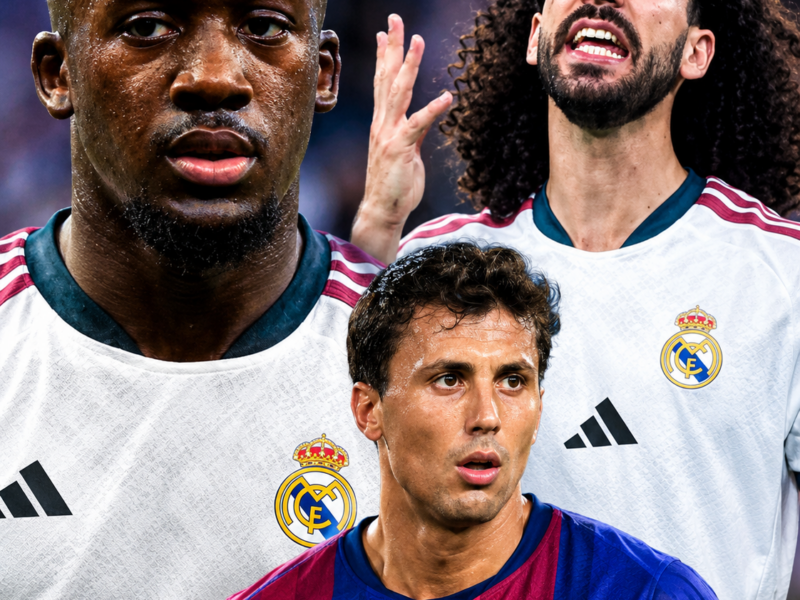
Real Madrid Injury Nightmare Begins: Konaté Confirmed Out, Cucurella’s Shocking Running Stats Claim, and Rodri’s Bombshell About Snubbing the Bernabéu
It has not even been a full week since the international break started, and Real Madrid is already paying the price.
A new injury has just been confirmed, one involving a player the club simply cannot afford to lose right now, and the timing could not be worse.
What follows is everything currently known about this fresh setback, plus two separate bombshells dropped by rival players this week that Real Madrid supporters are going to want to hear directly, word for word, before drawing their own conclusions.
Because between a confirmed injury, a viral statistic nobody saw coming, and a surprisingly candid confession from one of La Liga’s most talked-about midfielders, this has already become one of the more chaotic international breaks in recent memory for the club.
Let’s start with the injury itself, since that is the news actually breaking right now.
Ibrahima Konaté has been forced to leave the France national team camp and return early, with the injury now officially confirmed rather than merely suspected.
Reports describe it as a mild sprain in his right knee, language that suggests a minor issue rather than anything season-altering, but any absence involving a starting center-back sends an immediate jolt through the Real Madrid fanbase.
He is currently a first-choice defender for this club, which makes any fitness concern involving him instantly significant regardless of how the medical language gets softened around the edges.
If this really is a mild sprain, the realistic expectation is a absence measured in one or two weeks rather than months, meaning he could plausibly be back in circulation relatively quickly once he returns to Madrid.
Even so, there is an unavoidable adjustment period that comes with any injury, a stretch of recovery and rehabilitation that tends to cost a player some rhythm and sharpness even after he is technically cleared to play again.
It is a real blow, there is no way around that, but it is worth immediately placing this injury into proper context rather than treating it as some kind of catastrophic turning point for the season.
Konaté, for all his importance, is not irreplaceable in the way certain other names on this roster genuinely are.
Antonio Rüdiger remains fully available to step into that central defensive role, and the drop-off in quality, while real, is not the kind of gap that should send anyone into full panic mode.
Compare this specific situation to what could have happened instead, and the perspective becomes clearer almost immediately.
An injury to Kylian Mbappé, even Mbappé at less than his best, would represent a far more damaging loss given his consistent goal output regardless of overall form.
The same logic applies to a long-term issue involving Jude Bellingham or even a name like Eden Hazard from an earlier era of comparison, or a genuine blow to Thibaut Courtois between the posts, all of which would sting considerably more than a short-term knee complaint for a center-back with a capable, ready replacement already on the roster.
Arda Güler’s fitness would fall into that same more concerning category given his growing importance to the team’s creative structure, which only reinforces how manageable Konaté’s specific situation actually looks by comparison.
The silver lining, if there is one, is that this appears to be a short-term issue with a clear, established backup plan already built into the squad.
But the broader point still stands, and it stings regardless of how minor this particular case turns out to be.
Barely a week into this international window, and Real Madrid has already recorded its first fitness casualty, a grim reminder of exactly why club football fans dread these disruptive stretches on the calendar.
And this break is not even close to over yet, which is precisely what makes the timing so frustrating.
By this coming weekend, a full week will have passed since the international window opened, but the calendar shows this entire disruption running three full weeks in total, nearly an entire month away from regular domestic competition.
Three weeks of players away from their club environments, absorbing extra training loads, extra travel, extra physical and mental strain, all before returning to their actual employers who ultimately depend on their fitness and freshness for the season that matters most to them.
Nations League group matches specifically extend this disruption even further, adding real competitive fixtures on top of what many already consider an oversaturated international calendar.
There is a broader frustration here worth voicing plainly, one shared by countless supporters watching their key players scattered across different countries and continents during this window.
Between existing continental championships, regional tournaments, and the World Cup itself, adding yet another recurring competition in the Nations League has stretched player workloads to genuinely uncomfortable levels.
Between group stages, knockout rounds, and everything in between, players rarely get true rest during these windows, and by the time they return to their clubs, they often carry accumulated fatigue that manifests as exactly the kind of injury Konaté just suffered.
It is an uncomfortable truth that club football fans overwhelmingly care more about their own players staying healthy during these breaks than they do about how those same players perform for their national teams, and this week is a perfect, frustrating illustration of exactly why that priority exists.
For context on just how packed this specific stretch is, Spain’s group stage schedule alone tells the story on its own.
England faces Spain in the opening round this coming Saturday, a genuinely compelling early fixture worth watching regardless of club allegiances.
Three days later, Spain faces Croatia, followed by a match against the Czech Republic in early October, and then a rematch against Croatia shortly after that to close out this particular window.
And just when supporters think they can finally exhale, another international break looms in November, with additional Czech Republic and England fixtures already locked into the calendar barely a month after this current window wraps up.
That relentless scheduling reality sets the stage for everything else worth discussing this week, because it directly connects to a viral statistical claim that has been circulating and frustrating Real Madrid supporters in equal measure.
A specific data point has been making the rounds: across the first seven matchdays of this La Liga season, Real Madrid reportedly ranks dead last among every club in the entire league for average distance covered per match.
Elche apparently tops that particular ranking, with Barcelona sitting in second place, leaving Real Madrid trailing every single other team in the competition by this specific measure.
For a club with Real Madrid’s history, resources, and physical standards, ranking last in the entire league for a basic running metric is the kind of statistic practically engineered to spread across social media and dominate sports talk radio.
This exact data point was put directly to Marc Cucurella, the Chelsea and Spain defender, during a recent interview, and his response deserves real attention.
He openly admitted surprise at the statistic, explaining that from his own perspective as an opponent who regularly faces Real Madrid, the team simply does not look like a side that runs less than everyone else in the league.
He pushed back gently but firmly, offering a pointed theory about exactly why this narrative has gained so much traction at this specific moment in the season.
His argument was straightforward: this statistic is only being widely circulated and discussed right now because Real Madrid recently lost the Madrid derby and also dropped points against Real Betis.
Had Real Madrid won every single one of those recent matches instead, Cucurella argued, this exact same running data would likely never have become a talking point at all.
In that alternate scenario, he suggested, the same underlying numbers would simply have been reframed as evidence of remarkable tactical efficiency, a team so smart and well organized that it does not need to cover excessive ground to control matches and win games.
It is an argument built on a genuinely important truth about how football media and public perception actually function, one that applies far beyond this single statistical debate.
Ultimately, he concluded, results are what matter most, and improving results would likely make this entire running data conversation disappear on its own without requiring any dramatic tactical overhaul.
That response from Cucurella struck a real nerve, and not necessarily in a positive way, because of exactly how convenient the framing sounds.
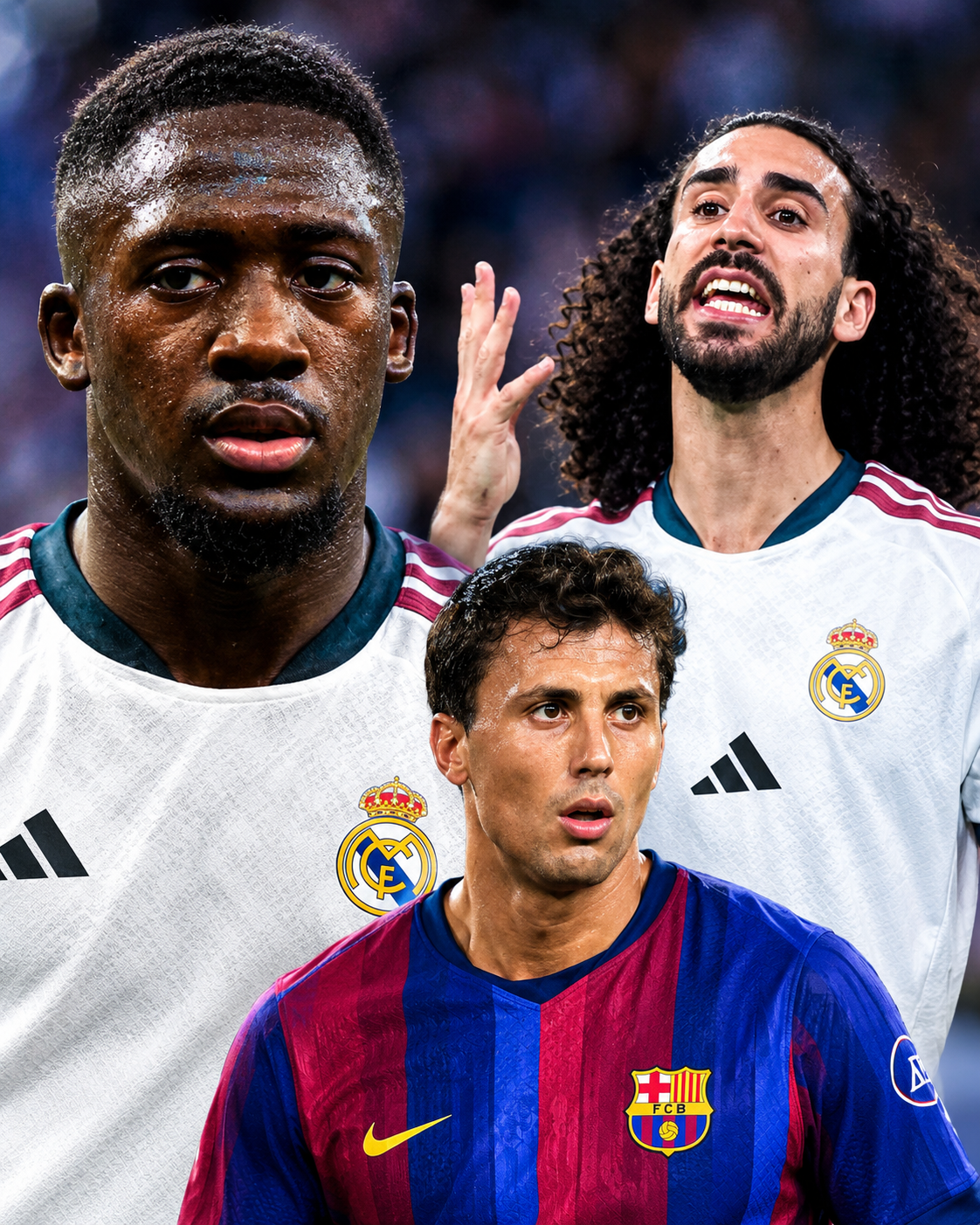
He is essentially suggesting that Real Madrid’s actual on-field running output would somehow be perceived completely differently depending purely on the scoreline, which raises an obvious and fair question about whether he is downplaying a legitimate structural concern.
There is something almost predictable, even a little too convenient, about how quickly uncomfortable data gets explained away the moment results start going poorly for a historically dominant club.
It genuinely is one of the most natural instincts in sports commentary to search for explanations and root causes the moment a team performs below its own established standards, and Real Madrid’s running numbers happen to be sitting right there as a conveniently available explanation once people start looking.
But that pattern absolutely cuts both ways, and it is worth being intellectually honest about that reality rather than only applying scrutiny in one direction.
When Real Madrid or Barcelona are winning everything in sight, different statistics get pulled out and celebrated with the exact same selective enthusiasm, whether that involves individual scoring numbers, possession percentages, or any other metric that happens to support the prevailing winning narrative at that moment.
Take Barcelona as the most obvious current example: when they are winning consistently, plenty of attention gets paid to individual output numbers like Raphinha’s scoring tally, Barcelona’s overall goal totals to start the season, or the number of goals they have conceded defensively.
The conversation around statistics rarely disappears entirely regardless of results, but it does shift in tone and emphasis depending on whether a team is winning or losing at that specific moment, which is exactly the broader phenomenon worth acknowledging honestly.
Still, there is something specifically uncomfortable about Real Madrid’s current situation that goes beyond simple statistical cherry picking either way.
This is a team that has already lost multiple matches this season, and even the two wins it has recorded came courtesy of individual moments of brilliance from players like Carlos rather than convincing, comprehensive collective performances.
The other two results, by contrast, looked more like mirages, results that flattered a team not actually performing to the level its reputation and roster would suggest.
Given that broader run of underwhelming performances, it makes complete sense that a statistic showing Real Madrid dead last in the entire league for distance covered would catch fire and dominate conversation, especially when Barcelona, by contrast, sits second in that exact same ranking while also winning consistently.
That juxtaposition, Barcelona thriving while also ranking near the top for physical output, and Real Madrid struggling while ranking dead last for that same metric, is precisely what makes this particular statistic so difficult to simply wave away as coincidence or convenient narrative building.
It creates an uncomfortable but not unreasonable suspicion that there may genuinely be something to investigate here regarding Real Madrid’s collective physical intensity and work rate under the current setup.
So no, Cucurella, this dismissal does not entirely hold up under real scrutiny, and the running numbers deserve a more honest reckoning than simply attributing them to bad luck or unfavorable timing tied to recent results.
If anything, this is exactly the kind of moment that calls for genuinely increased commitment and intensity from every single player in that squad, not a convenient statistical shrug.
There is also a more granular, individual layer to this running debate worth examining rather than treating the entire squad as one undifferentiated block.
It is entirely possible that certain individual players are genuinely putting in strong defensive and physical work rate, while others within that same lineup are quietly falling short and dragging the team average down as a result.
Vinicius Júnior may not be covering the ground he once did, Mbappé’s off-ball work has been a consistent point of discussion and criticism this season, and it stands to reason that not every single player in this squad is contributing equally to whatever collective average distance figure eventually gets reported.
Bellingham, by most reasonable assessments, still appears to be putting in genuine defensive and physical effort, and it is entirely possible that other names like Tchouaméni or Federico Valverde are also holding up their end of the bargain even as the overall team average suffers.
The uncomfortable truth about any team-wide average statistic is that it can mathematically mask serious individual variation, allowing hardworking players to be unfairly lumped in with teammates who may genuinely not be pulling their weight physically.
That distinction matters enormously, because painting this entire Real Madrid squad as a collection of players simply coasting through matches would be both unfair and inaccurate to whichever individuals are actually still putting in real defensive and physical effort night after night.
The real diagnostic question worth asking is not simply whether Real Madrid runs less than other teams as a collective, but specifically which individual players are contributing to that shortfall and which ones are not, a distinction that a single blended average number can never adequately capture on its own.
Until that more granular breakdown becomes available, both the dismissive explanation and the alarmist one deserve equal skepticism.
Now, shifting away from statistics entirely, there is a separate and genuinely fascinating storyline this week involving Rodri, the Manchester City and Spain midfielder, speaking candidly on a well-known Spanish radio program.
He was asked directly and pointedly whether Real Madrid had ever seriously pursued signing him, and whether the club’s interest had been genuine rather than superficial.
His answer was refreshingly direct: he confirmed that Real Madrid showed real interest in signing him from the very first moment, describing the club’s overall approach and behavior throughout that process as exemplary.
He went further, explicitly stating that concrete offers were made specifically to secure his signature, not merely vague expressions of admiration or informal scouting interest.
When pressed on whether that interest reached a full one hundred percent level of genuine commitment, Rodri offered a characteristically thoughtful, slightly hedged response rather than a simple yes or no.
He admitted he was not entirely sure what qualifies as literally one hundred percent interest in football terms, but he was unambiguous in confirming that Real Madrid pursued him seriously, going all in on their approach and clearly demonstrating genuine desire to bring him to the club.
He specifically credited that effort, revealing that he personally spoke with people connected to the club throughout that process, describing conversations that conveyed real enthusiasm and desire for him to join.
By his own account, those conversations made his eventual decision considerably more difficult than it might otherwise have been, a small but telling detail about just how close this specific transfer scenario may have actually come to happening.
When directly asked whether he had personally spoken with Real Madrid president Florentino Pérez during that process, Rodri chose discretion, declining to confirm or deny that specific detail and stating simply that he preferred to keep that particular piece of information to himself.
That kind of calculated privacy, especially from a player as consistently thoughtful and measured in interviews as Rodri, only adds to the intrigue surrounding exactly how far this pursuit actually progressed behind closed doors.
Reading between the lines, it is difficult not to interpret his overall tone as someone subtly, almost playfully, confirming that Real Madrid pursued him with real intensity, essentially without saying so in those exact words.
Whether that pursuit ever came genuinely close to fruition, or simply reflected one of many serious inquiries that ultimately went nowhere, remains something only the parties directly involved truly know.
But Rodri’s most pointed comments this week had nothing to do with his own transfer history, and everything to do with the ongoing Madrid derby fallout that has been dominating conversation around both clubs.
Asked directly for his assessment of that fixture from a purely footballing perspective, Rodri did not hesitate or hedge his answer in the slightest.
He described it as a genuinely close, evenly contested match, but stated plainly that in his own personal assessment, Atlético Madrid were the better side on the day, more present and more assertive throughout the contest.
He credited them with making sharper decisions in key moments, exerting greater control over the overall flow of the match, and ultimately earning their victory on merit rather than through fortune or refereeing assistance.
He did not stop there, addressing the controversial refereeing decisions from that match directly and with real nuance rather than simply dodging the topic entirely.
Regarding the specific incidents that generated the most controversy and debate afterward, he acknowledged plainly that reasonable people could look at those same replays and reach different conclusions about what should have happened.
But his broader, more pointed message centered on something he clearly feels strongly about: a pattern he sees repeatedly from certain clubs and their surrounding media ecosystems whenever refereeing controversy arises.
Specifically, he pushed back against any suggestion, whether from inside Barcelona’s own dressing room or from any other club’s environment, that referees are somehow deliberately orchestrating outcomes to favor one specific team over the course of an entire league season.
His reasoning here was thoughtful and genuinely worth taking seriously beyond just this one specific controversy.
He argued that this kind of conspiratorial framing actively damages the sport as a whole, and that football deserves better, more mature discourse than constant accusations of manipulated outcomes whenever a call does not go a particular club’s way.
Referees are human beings, he pointed out, and human beings inevitably make mistakes from time to time, but those individual, isolated errors rarely accumulate into any kind of meaningful, decisive pattern across an entire thirty-eight match league campaign.
Some days a team benefits from marginal calls, other days that same team suffers from them, and Rodri explicitly stated he prefers to view the sport through that more balanced, less paranoid lens rather than searching for hidden agendas behind every contested decision.
He did leave room for legitimate passion and advocacy within reasonable limits, acknowledging that he understands and even respects players and fans defending their own club and their own position on contentious incidents.
He admitted to having done exactly that himself on occasion, defending his own team’s position in the heat of a specific controversial moment.
But he drew a clear, firm line at the point where that natural, understandable defensiveness crosses into outright conspiracy theory territory, insisting that framing entire seasons as somehow rigged against a particular club goes too far and simply is not something he personally believes.
That is about as direct and public a rebuke as any current elite player is likely to offer regarding this specific, recurring type of complaint within Spanish football discourse.
This is where the conversation takes a genuinely pointed turn, because Rodri’s comments were framed by the interviewer specifically in contrast to Real Madrid’s own well-documented history of public complaints regarding refereeing decisions.
The implicit challenge being posed was simple and sharp: how would Rodri, or people generally, react if Barcelona engaged in the exact same pattern of public grievance that Real Madrid has been associated with in recent seasons, repeatedly suggesting that the league itself is somehow being manipulated to prevent them specifically from winning.
That framing lands with real weight given the broader context of numerous circulating videos and public statements from Real Madrid figures over recent seasons calling for greater refereeing neutrality and consistency.
Rodri’s message, delivered through the interviewer’s framing, was essentially urging Real Madrid specifically to recognize how damaging that persistent narrative of persecution actually is to the sport as a whole.
There is also a sharper, more pointed observation embedded within this exact criticism worth drawing out explicitly, because it cuts right to a familiar, recognizable pattern in football fandom generally.
The person voicing frustration about referees, this argument goes, is almost always the person or club that currently feels wronged by a specific outcome in that specific moment, rather than someone applying a consistent standard regardless of which way results happen to break.
When a club wins, even a genuinely close and controversial match, there is a notable, near-universal silence regarding refereeing performance, with virtually no public complaints emerging even when contested decisions clearly benefited that winning side.
No outraged statements get issued, no compilation videos of contentious calls get produced or circulated, no players step forward publicly demanding greater consistency or neutrality from officials when their own team has just walked away with all three points.
That selective outrage pattern, benefiting from close calls in silence while loudly protesting identical types of decisions only when they go the other way, represents exactly the kind of hypocrisy that legitimately damages the credibility of any complaint about refereeing standards more broadly.
Even a memorable, oft-repeated quote from Diego Simeone himself gets invoked here, the well-worn acknowledgment that sometimes decisions harm you and other times they benefit you, an admission of football’s inherent unpredictability that stands in sharp contrast to more one-sided public narratives from other clubs and their supporters.
The broader, tired complaint being voiced is genuine exhaustion with a specific recurring pattern: refereeing controversy conveniently surfacing only in the aftermath of defeat, with a corresponding public silence whenever that exact same team benefits from questionable officiating in a winning result.
The straightforward, honest position being advocated here is refreshingly simple: if referees are performing poorly as a whole, that criticism should apply consistently regardless of whether the outcome happened to favor or harm your own specific club on that particular day.
Stepping back from these individual storylines and looking at the broader picture, this week captures something genuinely revealing about where Real Madrid currently stands in the wider footballing conversation.
A confirmed injury to a key defender during an already oversaturated international window, a viral statistical controversy that opposing players are actively weighing in on and debating publicly, and a pointed, indirect rebuke from one of the league’s most respected midfielders regarding the club’s historical relationship with refereeing controversy.
None of these three storylines exist in complete isolation from one another, and together they paint a picture of a club currently under intense external scrutiny from seemingly every possible direction, on the pitch, in the data, and in the broader court of public and player opinion alike.
Whether any of it ultimately proves meaningful once actual competitive football resumes remains genuinely uncertain, but ignoring the accumulating narrative pressure building around this club right now would be its own kind of denial.
What happens next matters enormously for how this entire stretch of storylines gets remembered and framed once the dust eventually settles.
If Konaté’s recovery genuinely proceeds smoothly and he returns within the expected one to two week window, this injury scare will likely fade quickly from memory, treated as a minor, forgettable footnote rather than any kind of genuine turning point in the broader season narrative.
If Real Madrid’s results improve significantly once domestic competition resumes after this international break concludes, that viral running distance statistic will almost certainly lose its current cultural traction and media relevance, precisely as Cucurella predicted in his own interview response this week.
And if Rodri’s pointed comments about persecution narratives and referee conspiracy theories actually prompt any genuine introspection from within Real Madrid’s own institutional culture, that alone would represent a notable and meaningful shift in how the club chooses to publicly engage with contested refereeing decisions going forward.
But if results continue to disappoint once regular competition resumes, expect every single one of these threads, the injury concerns, the physical output data, and the refereeing controversy pattern, to resurface with even greater intensity and scrutiny than they are already receiving this week.
Football narratives rarely disappear entirely on their own; they simply lie dormant, waiting for the next unfavorable result to reactivate and amplify them all over again with renewed public interest.
For now, Real Madrid supporters are left anxiously counting down the days until this international break finally concludes, hoping Konaté returns fully healthy, hoping the running numbers begin trending back toward historical norms once real matches resume, and hoping the next controversial refereeing moment, whenever it inevitably arrives, gets handled with noticeably more perspective and restraint than recent history has generally suggested.
Three weeks is a long time to wait for real answers on any of these fronts, but in modern football, as this entire chaotic week has already demonstrated so clearly, the news simply never actually stops arriving, breaks in the calendar or not.









