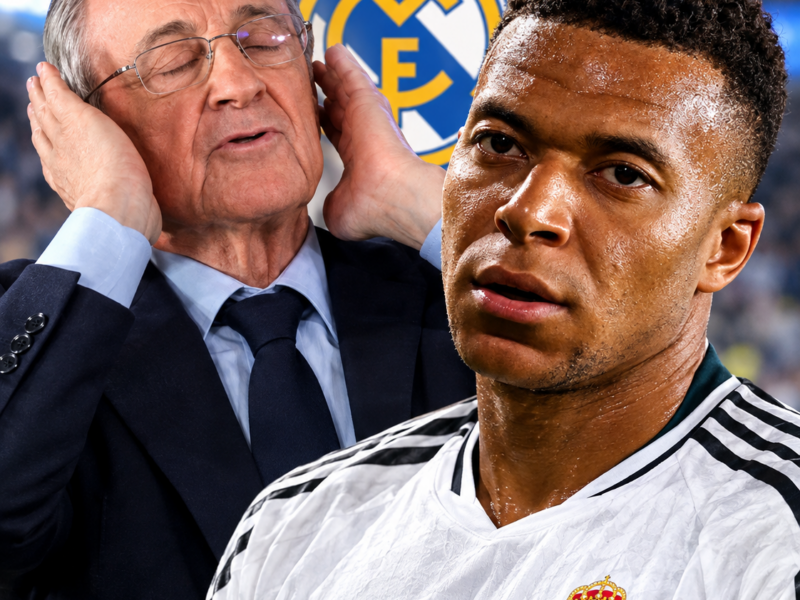
Real Madrid Has a Losing Problem Nobody Can Fix: The Brutal Case Against Florentino Pérez, Mbappé, Vinícius and the Mourinho Reboot
Imagine a club where losing costs you nothing.
Not a dollar, not a start, not a headline that sticks.
That’s the picture one of Spain’s loudest football commentators paints of Real Madrid right now, and he isn’t gentle about it.
His argument fits in a single sentence.
At Madrid, he says, actions have no consequences, and everything else follows from that.
This is his case, and it’s a brutal one.
He starts with a list of things he claims carry no penalty inside the building.
Hitting a teammate, he says, gets you nothing worse than a shrug, and he suggests it may even come with rewards.
Getting a coach fired, ducking matches, taking a midseason break, even picking up a yellow card on purpose to fly to Miami a week before Christmas, all of it passes without a mark, in his telling.
The result, in his view, is a dressing room that doesn’t hurt when it loses.
He points to a recent five-goal defeat and to the fact that Vinícius Júnior himself said the loss didn’t hurt.
For a man who wants to see fury in a white shirt, that was the moment the argument sealed itself.
Then he turns to the structure above the players.
Madrid, he says, is a club where half the people flatter the other half to protect their jobs.
Whoever Florentino Pérez appointed flatters Pérez, whoever another executive appointed flatters that executive, and everybody ends up answering to José Ángel Sánchez.
It runs through every department, he claims.
And lately he sees the same pattern reaching the coaching staff.
Which brings us to José Mourinho.
Before Mourinho arrived, the commentator says, he told his audience exactly what to expect.
With this owner, it would be yes sir, no sir, of course, president.
And the “no sir” wouldn’t be pushback, it would be agreement.
He offers a scene to make the point.
The president says, didn’t I tell you not to play that guy?
And Mourinho answers, of course not, you’re right, you’re the leader, you’re the smartest man in the room.
That’s the survival code, according to the commentator.
A coach who wants to finish the season at Madrid, he argues, learns that nothing matters more than keeping the president happy and never making a decision that makes the president look incompetent.
Winning is secondary, and losing has stopped being dangerous.
So where does he place the blame?
Right at the top, and he doesn’t hedge.
The main problem at Real Madrid, he says, is Florentino Pérez, simply and plainly.
He argues the club won’t recover with the same people in charge.
Least of all with those same people fully empowered after members handed Pérez 66 percent of the vote in the last election, from roughly half the membership who turned out.
In the commentator’s reading, that result told the leadership they were trusted, while the leadership, in his words, holds the members in contempt.
He also refuses to give Mourinho the savior role.
He says he never had big hopes that Mourinho could change this, for two reasons.
First, Mourinho knows what his boss wants, and what the boss wants, in his view, is for everyone else to look foolish except him.
Second, the problem is too big for any one person.
No single player, no coach, not even two players can rescue the club, he says.
The damage to the culture of effort, and to any system of reward and punishment, is too deep, and neither Mourinho today nor Mourinho fifteen years ago could repair it.
The commentator also questions how Mourinho got here in the first place.
He notes that Mourinho arrived with nothing to lose, having come to coach a young talent named Prestianni, only to be handed Kylian Mbappé.
Naturally he was dazzled, the commentator says, but he doubts any coach who has managed Mbappé would choose to do it again willingly.
The same goes for Vinícius, he adds.
He can’t imagine any coach in the world signing off on a renewal for the Brazilian, and he isn’t talking about having both of them in the same lineup.
That, he says, is what Mourinho inherited: a job where he carries everything and controls very little.
What did Mourinho get to choose?
Small things, the commentator concedes.
He made a couple of signings that could work out, like Dumfries and Bernardo Silva, though he describes Bernardo as being in the final stretch of his career.
A few small adjustments followed, and the club stayed exactly the same.
That’s the line he keeps repeating.
Change the coach, change the shirt numbers, keep the structure, and get the same results.
Now for the two names that dominate his argument.
He says Madrid can’t become a real football team again, or recover its culture, while Pérez, Mbappé and Vinícius are all still there.
Pérez is the most important, since every problem at the club flows from something he did, failed to do or delegated.
But he spends most of his energy on the two players.
He describes a paradox he calls the Garzón brothers effect.
Listen to one and you think he’s the dumbest of the pair, then you hear the other and change your mind, and it never ends.
That’s how he feels about Mbappé and Vinícius.
On a Tuesday he watches one and thinks, that’s the one who bothers me most, both on and off the pitch.
Then Wednesday or Saturday comes, he sees the other, notes the body language, and reaches the opposite conclusion.
After more than a hundred matches together and well into the third year of the Mbappé era, he says the little battles over which of them is worse have stopped being interesting.
His verdict is that both are bad and harmful.
The circle, in his view, has no exit.
Mbappé gets the harsher treatment.
The commentator calls him the biggest lie in the history of sport, and says he has never seen a case like it.
He repeats a line from a friend that Mbappé is like a boat, since the two best days are the day you buy it and the day you sell it.
He also quotes something he saw on social media that he calls one of the most brilliant summaries of the Mbappé experience.
Mbappé helps you win the games you would have won without him, the post said, but he doesn’t help you win the ones you wouldn’t win with him.
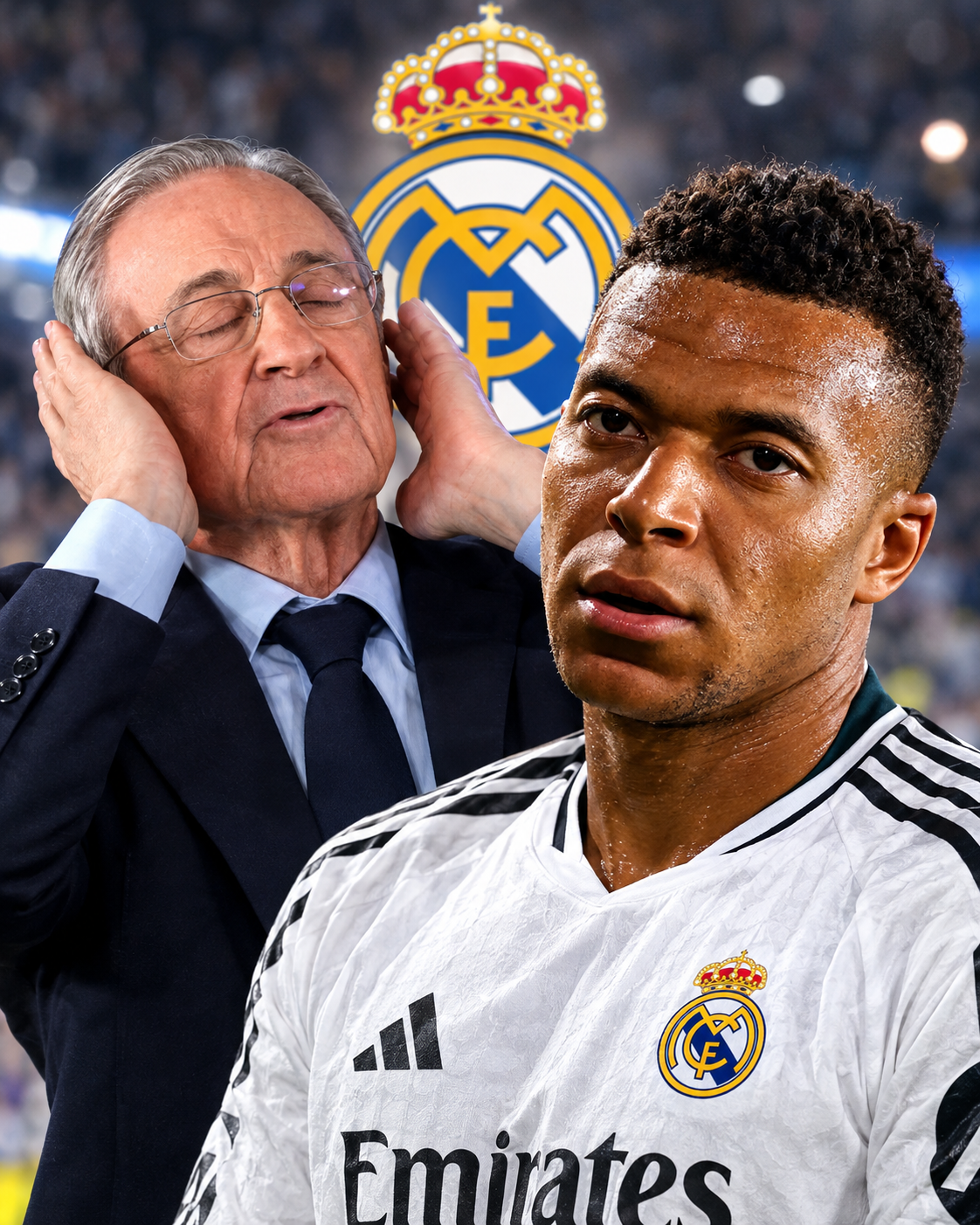
It’s a cutting line, and it’s the thesis of the whole segment.
Then come the numbers from the last match.
Zero goals, zero shots, zero dribbles, zero clear chances, zero assists.
He finds it astonishing that anyone watching could still rank Mbappé among the best players in the world.
He adds a stat he says should be repeated more often.
Mbappé is the highest-paid player in football, and yet, according to the commentator, he hasn’t won a major title in eight years.
Not with France as captain, not with Paris Saint-Germain as captain, and not with Real Madrid as captain.
The claim is that no team has won anything big while Mbappé was the person the whole economic and hierarchical show revolved around.
In the commentator’s view, it won’t happen at Madrid either.
Whether you buy the argument or not, that’s the sentence he wants the audience to carry home.
On Vinícius, his tone is different, and more resigned.
He says he wants to keep a small hope that Mourinho might start dropping one of them, and since Vinícius is now worse than Mbappé in his eyes, the Brazilian should be the one to go.
But he doesn’t really believe it will happen.
Vinícius’s last two and a half years, he says, have been thoroughly embarrassing.
He’s aware that this opinion is unpopular, and he only hinted at it on his show because time ran short.
Then he explains what worries him most about Mourinho’s position.
Mourinho, he says, knows he can’t bench Vinícius.
The manager can afford to lose matches, because he’ll get the propaganda cover he needs, as long as the story lines up with the owner’s message.
But the worst thing that could happen to Mourinho is winning without Vinícius.
That would expose, in the commentator’s words, that the people on top threw roughly 300 million euros at a player who is finished and harmful to the group.
So Mourinho will stick with the same lineup, he predicts, and hope the Polish-led rival somehow stumbles in the spring.
It won’t happen, he says flatly.
Next, he runs an exercise he asks the audience to try with him.
Take every position, and ask honestly whether any Madrid player over the last two seasons and eight games belongs in the world’s top five at his spot.
He excludes the goalkeeper, Thibaut Courtois, because he knows the answer there.
At right-back, he names Carvajal, Alexander-Arnold and Dumfries, and says none of them make the cut.
Among center-backs, he lists Militão, Rüdiger, Alaba and others, and he says the same.
Militão, he adds, missed about 70 percent of the matches in that stretch, including two straight months, so he’s out of the conversation.
In midfield, he considers Tchouaméni, Valverde and Bellingham.
Valverde, he says, might be among the best in his role.
Tchouaméni, no, and Bellingham, no, because this is about consistency and daily contribution, not just showing emotion.
In attack he goes one by one.
Vinícius isn’t a top-five winger, he says, and neither is Rodrygo.
Diomande just arrived and isn’t ready, Ibrahim isn’t ready, and Arda Güler isn’t in the top five either, at least today.
Mbappé, he says, isn’t ready either.
Not in the big games, and not when you weigh what he adds against what he takes away.
He admits he could put him on the list if he tried, but he won’t buy a ticket on that boat.
The obvious rebuttal is that the problem is the system, not the players.
The commentator anticipates it and doesn’t accept it.
Barcelona doesn’t lack individual quality, he insists, and people should stop pretending it does.
Fermín beats any Madrid midfielder, in his view.
Raphinha, over more than two seasons, does too, and Lamine Yamal still outclasses anyone Madrid has.
Madrid, he says, has neither a system nor the individual quality, and you can see it in how most of them performed at the last World Cup, Bellingham aside.
Then he moves to money.
He says it should be repeated more often that this is the most expensive squad in football.
Everyone at Madrid, by his estimate, earns 20 to 25 percent more than the market would pay.
And the bills keep going up.
He points to a series of renewals he can’t defend, including a young defender the club renewed while 60 to 100 million euros from Arsenal sat on the table, and Tchouaméni, whom he calls another dead man.
He jokes that Tchouaméni’s best contribution wasn’t on the pitch at all, but in putting Valverde in his place.
He returns to the magic number he keeps citing.
Madrid, he says, has already lost 25 percent of its matches this season with a fully fit squad.
That’s the part he thinks fans should be asking about.
He also predicts the script that follows every defeat.
The referees robbed us, the Negreira league, you can’t compete, and here comes Mourinho against the world.
He says the social media loop starts again and someone demands he be canceled.
What bothers him more than the circus around Mourinho’s touchline theatrics is what he hears in the press conferences.
Mourinho keeps thanking his players for their effort and telling them they played a wonderful first half.
The commentator asks whether these players really need more excuses, whether anyone thinks they need to be told the whole system is against them.
And a bigger question follows.
Do players who don’t care about losing care about any of that at all?
He suspects not.
To be fair to the other side, he brings up a counterpoint himself.
A colleague at DAZN, Alberto Yugo, has been pointing to data from a tracking provider that says this Madrid covers more distance than anyone.
The commentator’s answer is that the numbers don’t change what he sees on the pitch.
On tactics, he says, he can’t attack Mourinho very hard.
Nothing much has changed there, and he believes any coach in this position would do the same, given the roster, the small details and the mandatory starters imposed on him.
He compares it to Mauricio Pochettino’s problem at Paris Saint-Germain, when everyone in the stadium and on the couch could see that Messi or Neymar should come off and only the manager supposedly missed it.
It’s not Einstein-level analysis, he says.
Every coach who studies Madrid, he believes, knows that having Vinícius and Mbappé together is a complicated situation that neither moves forward nor back.
He’d love to hear what tactical coaches really see when they watch the tape.
He’s convinced that when a Real Sociedad, Alavés or Elche coach breaks Madrid down, the reaction is the same.
Gaps, weak spots, spaces that can or can’t be defended, they all show up.
Rayo, Real Sociedad, Inter and Elche all pushed Madrid back into its own box, he points out, so it’s fair to ask what anyone expected.
Even Pérez’s own words get pulled into the argument.
The commentator recalls the president’s remark that Madrid is like the Dallas Cowboys, a franchise built to turn a profit.
Nobody was fooled, he says.
His closing note is the most personal one.
A close friend told him the day before that he no longer cares what happens at Real Madrid.
The commentator says it takes a lot to reach that point, and most people get there late, because this is passion, feeling and belonging.
But he understands it.
It’s almost impossible, he says, to identify with anything this team or this club stands for right now.
He calls out the late Mourinho-ism that applauds every Mourinho move, and says it’s hard to identify with people when you watch them play and see that it doesn’t hurt them.
That’s his final diagnosis.
The core issue isn’t a formation or a lineup, it’s the decay of Madrid’s culture, where losing carries no consequence and defeat doesn’t sting.
And he ends on the man he holds most responsible, calling Florentino Pérez the most finished figure at the whole club.
Whether you agree with him or think he’s swinging too hard, the question he leaves behind is hard to shake.
When a club stops feeling pain, what’s left to fix?
We’ll find out in the spring.









