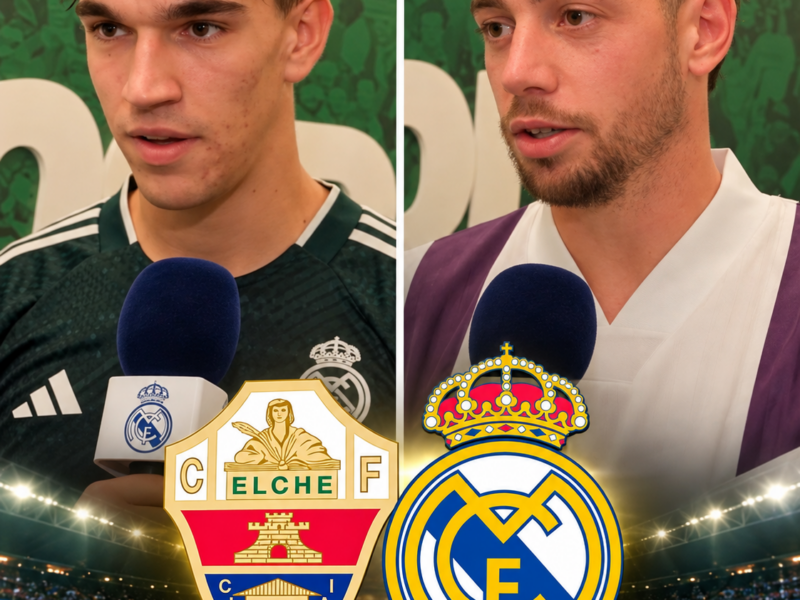
Real Madrid Do It Again in Stoppage Time: Inside the Wild Comeback, Mbappe’s Historic Streak, Valverde’s 250th Match, and the Locker Room Truth Nobody Expected Before the Derby
The clock had already turned red.
Ninety minutes gone, the board flashing extra time, and eighty thousand people in the stands had that specific kind of silence that only shows up when a team senses it might actually throw away three points it should have wrapped up an hour earlier.
Then, out of nowhere, the net moved.
That is the moment this story actually starts. Not at kickoff. Not even at halftime. It starts in the ninety-third minute, when a football match that had gone sideways for sixty straight minutes suddenly snapped back into focus, and one man’s finish turned a nervous night into another entry in a growing legend.
By full time, Real Madrid had won again. Late. Ugly in parts. Brilliant in others. And, as one player put it minutes after the final whistle, in a way that has started to feel almost scripted.
This is the story of how it happened, told through the people who lived it.
A HERO WHO KEEPS SHOWING UP AT THE WORST POSSIBLE TIME FOR EVERYONE ELSE
Carlos walked into the mixed zone still breathing hard, sweat soaking through his shirt, and a grin that gave away everything before he said a single word.
He had just scored the winning goal. Again.
For the second time this season, he had been the man standing in the right spot when the ball fell loose in the box, and for the second time, he made no mistake.
“I’m very happy, like you said, I’m the happiest man in the world again,” he said, catching his breath between sentences. “I try to help the team any way I can, and every time I go out there, I leave everything on the pitch, and I’m really happy right now.”
Two goals in the season so far.
Two goals that arrived exactly when his team needed them most.
And it is not just the league. Carlos had already been the top scorer for his side across preseason friendlies, a stretch of matches most fans forget by the time the real fixtures begin. He did not forget. He carried that form straight into competitive football, and now the numbers are starting to follow him around like a nickname.
Asked whether he could have imagined a start to life at Real Madrid quite like this one, he did not try to sound falsely modest.
“Honestly, no,” he admitted. “Starting like this has been a dream, but this doesn’t stop here. We’re going to keep going, and now we focus on Sunday.”
That word, “Sunday,” carried more weight than it looked like on paper. Sunday means the derby. More on that shortly.
But first, Carlos wanted to talk about something the manager had raised the day before, in a press conference that quietly set the tone for everything that followed on the pitch.
THE MANAGER’S WARNING THAT TURNED OUT TO BE A BLUEPRINT
A day earlier, the head coach had stood in front of the media and said something that, in hindsight, reads almost like a prophecy.
He talked about the team matter more than any individual. He talked about needing every single player switched on, ready, alert, because in a schedule this brutal, the starters cannot do it alone.
Nobody in that press room could have known just how literally that warning would play out less than twenty four hours later.
Carlos, for his part, seemed to have taken the message directly to heart.
“Clearly, when we all get the chance to play, we have to take advantage of it, give our maximum, and I’m very happy about that,” he said, when asked how important it is that everyone stays switched on regardless of who starts.
It is worth pausing on that sentence, because it explains almost everything about how this Real Madrid side has been winning matches that, on another night, under another coach, might have slipped away.
Five changes were made to the starting lineup compared to the previous match. Five. That is nearly half a team walking out with a different jersey number attached to a different role, a different rhythm, a different set of instincts to sync up in real time.
And still, Real Madrid won.

Still, a substitute-turned-starter found the net in the dying minutes.
Still, the machine kept running.
There is a phrase football people love to overuse, the idea of “squad depth,” but watching this unfold live gives that cliche an actual pulse. It is not a talking point. It is Carlos jogging off the pitch with his fist in the air because the team trusted him enough to put him there, and he delivered.
STRIKER TALKING ABOUT STRIKER: THE MBAPPE QUESTION
Every reporter in that mixed zone wanted to ask Carlos about his own goal. Only one question mattered more to him personally, and it came from the interviewer herself.
She asked about Kylian Mbappe.
Because on the same night Carlos scored the winner, Mbappe had scored his eighth goal in just seven matches played so far this season. Eight goals. Seven games. Read that again, because those numbers do not happen by accident, and they rarely happen at all, even to the best strikers on the planet.
Carlos did not hesitate.
“Honestly, it’s insane,” he said. “It’s crazy to watch him train, to watch him play, and in this case, he’s the one who gave me the goal. I’m really happy for him too, and yeah, just really happy.”
There is something almost touching about a teammate crediting his own moment of personal glory to somebody else’s vision. Mbappe had set him up. The assist, in other words, belonged to the man scoring eight goals in seven matches, a stat line most forwards would frame and hang on a wall, and he still found time to lay one off for a teammate in the dying minutes of a tense match.
That is the kind of detail that tells you more about a locker room than any tactical breakdown ever could.
Carlos was then asked to look five days down the road, to the derby against Atletico Madrid, the fixture every Real Madrid player circles on the calendar the moment the schedule drops each summer.
He started answering. The interview cut before he could finish the thought.
But somebody else in the building was about to answer that exact question in far more detail.
THE CAPTAIN, THE PASS, AND A NUMBER THAT SNUCK UP ON EVERYONE
Fede Valverde arrived at the cameras next, and the first thing anyone noticed was how loose his shoulders looked compared to Carlos, who still seemed to be riding the adrenaline of the finish.
Valverde is used to this. He has been here before, delivering in the biggest moments, carrying midfields on instinct alone, playing what feels like every single minute of every single competition his club enters.
“Thank you so much,” he began, when congratulated on the win and on scoring himself. “Happy, happy about the win. I think we rested a bit too much. We had a first half that I think was one of the best of the season so far. Happy with the result, and happy to go back to winning in this kind of way.”
Notice the phrasing there. He is happy about winning “in this kind of way,” which is a polite way of saying the second half was far from comfortable. More on that in a moment.
First, the pass.
Because before the late drama, before Carlos found the winner, Real Madrid had scored a second goal built around one of the most audacious passes you will see all season. Valverde slid a ball through that, by his own admission, should not have worked on paper, threading it to a teammate who cleared the entire play in one motion before setting up Mbappe for the finish.
Asked how he even saw that pass, let alone executed it, Valverde gave an answer that mixed humility with genuine belief in his teammates.
“In the end, we’re very fast players,” he said. “We’re always working on that connection in training, getting to know each other’s runs, and he’s a player who has all the qualities when he goes forward to take on defenders one against one. I trust him, we all trust him. I knew he was going to get the chance to either set up a goal or score one himself, and in the end it turned into a spectacular pass to Kylian, and well, Kylian always scores the goals.”
He paused there, almost like he was replaying the sequence in his own head one more time before continuing.
“Really happy, happy about the win. I’m happy for my teammates because I think they played a really good match, and above all, the goal scorers showed up exactly when they needed to.”
That last line deserves attention, because it echoes the exact same theme Carlos had raised minutes earlier, without either player hearing what the other had said. Showing up when it matters. Being ready when your number gets called. It is starting to sound less like a coincidence and more like a genuine team identity.
Which brought the conversation right back to the coach’s pregame comments about collective strength over individual talent.
“In the end, when we win, it’s always important to keep fighting in the league, to keep staying near the top, to keep building confidence,” Valverde said. “We needed to arrive in good shape for the derby at the end of the week, and I think this gives us a big boost, good energy, and now it’s about resting and preparing for the next match.”
And then, almost as an afterthought, the interviewer dropped a detail that visibly caught Valverde off guard.
He had just played his two hundred fiftieth match in the league for Real Madrid.
Two hundred and fifty appearances. In one competition. For one of the most demanding clubs on the planet, where squad rotation, transfer speculation, and constant pressure chew through careers faster than almost anywhere else in the sport.
Valverde’s reaction said it all before he even opened his mouth. A long exhale. A half laugh. The look of a man doing the math in real time and being genuinely surprised by the total.
“Difficult,” he finally said, when asked what he would tell the eighteen year old version of himself who first arrived at the club. “Well, that he should enjoy it, enjoy every moment. You never imagine you’ll be able to reach a number like this, and you never imagine you’ll accomplish so many things. I’ve achieved so much here. I want to keep achieving more titles, keep making history at this club, leaving a mark, leaving my name stamped in this great club, in the best club in the world. For me it’s an honor, a huge source of pride to keep accomplishing these things, to keep delivering for the team, and like I always say, as long as the team wins, I’m happy.”
There it is again. As long as the team wins.
Not as long as I score. Not as long as I start. As long as the team wins.
It is the same sentence, essentially, that Carlos had offered earlier, just dressed in different words, coming from a completely different kind of career arc. One player scoring his second ever goal for the club in a moment of pure emotional release. The other marking his two hundred fiftieth appearance with the same exact value system intact.
Asked, finally, about the derby five days away, Valverde’s tone shifted slightly, sharpening with focus.
“Well, like I said, excited, with a lot of motivation, a lot of energy,” he said. “It was important to win today to get there mentally in a good place for the next match. So, happy about the win, happy about how the team is doing, happy about how our teammates came off the pitch, the substitutes are really important for us and today they changed the match, so really happy about everything.”
The substitutes changed the match. That is not a throwaway compliment. That is, quite literally, the story of the entire night.
WHY THE SECOND HALF ALMOST BLEW UP IN EVERYONE’S FACE
Here is where the story needs a manager’s voice, because only one person in that stadium had the full tactical picture of exactly how close this game came to slipping away.
Jose Mourinho walked into his press conference with the win already banked, but his tone carried none of the easy satisfaction you might expect from a coach who just watched his team score a stoppage time winner.
“Three points and nothing more,” he said, almost curtly, when asked to explain the late drama. “It’s like that at Madrid, and nothing more.”
Then, unprompted, he started dissecting exactly what went wrong.
“Obviously after the first half, I think everyone’s feeling was that we would win three, four, five nil in the second half, but we dropped our intensity, we gave up too much space,” Mourinho explained. “The moment I brought on Jude Ibrahim, I tried to give more consistency there in midfield. He came in tired, he played every match, that’s a position that requires a lot of work, and he was tired too, and the moment I made the changes, thinking now we’d have more stability, they made it two one, and when you come to these stadiums, full, with a real atmosphere, when that kind of situation happens, a team that seemed dead a moment ago suddenly comes alive.”
He exhaled, clearly still replaying the sequence.
“After the second goal, but the bench was full of talent, different kinds of talent. Maximum risk, but the draw wasn’t going to work for us. Maximum risk, and we scored the goal with a very strong reaction there, players with that feeling of we cannot lose these points, and a really strong final stretch, and they couldn’t handle it.”
Translate that out of coach speak for a second, and here is what actually happened. Real Madrid dominated the first half so completely that everyone inside the stadium, players included, assumed the match was already decided. The second half brought fatigue, dropped intensity, and a conceded goal that turned a comfortable lead into a genuine contest. The opposition, who looked finished twenty minutes earlier, suddenly believed again.
And Real Madrid needed a stoppage time goal, from a substitute, to save themselves from dropping points they had no business dropping in the first place.
Mourinho was blunt about that risk.
“My only criticism, exactly, is that we can put matches away and we don’t put them away, and afterward we’ve conceded the possibility to an opponent that seemed dead, to complicate things and risk two points on us, because we took risks, and when I made the changes, the same way we ended up winning, we could have ended up losing, because we risked everything.”
That is about as honest as a winning manager gets in a mixed zone. He is not celebrating the three points as a clean performance. He is acknowledging, out loud, that his team gambled and got away with it.
THE SCHEDULE THAT WOULD BREAK LESSER SQUADS
Before wrapping up, Mourinho was asked about something that has been quietly grinding away at every top club in Europe this season: fixture congestion.
This was Real Madrid’s third win in the last seven days.
Three matches. Seven days. Full intensity required in every single one.
“It’s more difficult for other teams that have fewer players and less quality in the squad,” Mourinho said, when pressed on how hard it is to manage that kind of stretch. “You ask me that question, I tell you it’s difficult. Afterward we go to face a team that also has to play Saturday. Surely their squad has more difficulties than ours. We try to manage things in some way. We changed a lot of players for today, and only one player played the full ninety minutes across recent matches and tonight.”
That one player was named directly.
Only two players, in fact, had played every single minute across the recent stretch of matches, including tonight’s game.
“Fortunately now we have a small window until the weekend match,” Mourinho added, with something close to relief in his voice.
It is a small detail, easy to skim past, but it explains everything about why five changes were made to the starting lineup for this match. It was not tinkering for the sake of tinkering. It was survival, plain and simple, in a stretch of the calendar that has already worn some rivals down to nothing.
And it explains why Carlos, a player who might have been an afterthought in a less demanding week, ended up standing in the mixed zone as the hero of the night.
THE SAME MESSAGE, FROM THREE DIFFERENT MOUTHS
Step back for a second and look at what actually happened across these three separate conversations, held minutes apart, with three men who had just lived through the exact same ninety plus minutes from three completely different vantage points.
A rotated striker talked about seizing his opportunity when the team needed him.
A captain with two hundred fifty appearances talked about trusting his teammates blindly, even under pressure, even when a pass looked impossible on paper.
A manager, sitting above both of them, spoke with total honesty about the tactical gamble his substitutions represented, and admitted the same decisions that won the match could just as easily have lost it.
None of them tried to spin the story into something cleaner than it actually was.
Nobody pretended the second half performance was good. Nobody pretended the match was ever fully under control after that opposition equalizer crept the scoreline back into range.
And yet the outcome was the same one this club has produced over and over again this season: a stoppage time goal, a set of exhausted legs finding one more gear, and three points that, on the log, will simply read as a win, with no mention of how loudly the ending screamed.
That gap between the calm final scoreline and the chaos that produced it is, honestly, the whole story here.
WHAT THIS ACTUALLY MEANS HEADING INTO THE DERBY
Every single person interviewed after this match, independently, brought the conversation back to the same five words.
The derby against Atletico Madrid.
Carlos mentioned it before his interview was cut short. Valverde spoke about it with real intent, calling it a chance to arrive “mentally in a good place.” Mourinho, even mid answer about the current match, was already gesturing forward to Saturday’s fixture and the tight turnaround his squad now faces.
There is a reason for that shared focus, and it goes beyond simple rivalry.
This win, messy as it was, buys Real Madrid something valuable heading into one of the biggest fixtures on the calendar: confidence, without the burden of a bad result hanging over the locker room.
Imagine, for a second, the alternate version of this night. Imagine that late equalizer from the opposition holding up, imagine the whistle blowing on a draw instead of a win, imagine Carlos never getting that chance in the ninety third minute.
The entire tone of this week would be different. Every question in every press conference between now and the derby would be about the collapse, about the missed opportunity to bury a beatable opponent in the first half, about whether fatigue is starting to catch up with a squad playing its third match in seven days.
Instead, the headline is simple. Real Madrid won again. Late, dramatic, imperfect, but a win.
And now, with a rare few days of rest before the next match, this group gets to walk into derby week with belief intact rather than doubt creeping in.
THE NUMBERS THAT WILL MATTER LONG AFTER THIS MATCH IS FORGOTTEN
It is worth cataloguing, one more time, just how many milestones and standout numbers piled up inside a single ninety plus minutes of football.
Two goals now for Carlos this season, both of them decisive, both of them scored in situations where the team needed exactly that kind of composure.
Eight goals in seven matches for Mbappe, a scoring rate that would look excessive in a video game, let alone real competitive football against professional defenders being paid to stop exactly this.
Two hundred fifty league appearances for Valverde, a number that quietly places him among a very short list of players who have given this club that kind of sustained service at this level of consistency.
Three wins in seven days for the team as a whole, a run that would push most squads in Europe past their breaking point physically, and yet somehow keeps producing winning results anyway.
Five changes to the starting lineup for this particular match, proof that the depth Mourinho keeps talking about in press conferences is not just talk.
Individually, any one of these numbers would make for a solid postmatch headline. Stacked together, inside one single match report, they start to paint the picture of a club operating on a level that is difficult for outside observers to fully appreciate until you actually sit down and add it all up.
THE HUMAN MOMENT THAT WILL GET LOST IN THE HIGHLIGHT REELS
Highlight packages will remember the goal. They will remember Mbappe’s assist, the late drama, maybe even a still frame of Carlos sprinting toward the corner flag with his arms out.
What they will not capture, not really, is the quieter human beat that happened when Valverde was told, almost as an aside, that he had just quietly crossed two hundred fifty league appearances.
The pause before he answered. The half laugh. The genuine difficulty he had putting the achievement into words on the spot.
“You never imagine you’ll be able to reach a number like this,” he said.
That is not a rehearsed soundbite. That is a professional athlete, mid career, being caught off guard by his own longevity in a sport that chews up and discards players constantly, and having to reckon with it live, on camera, seconds after playing ninety draining minutes of football.
It is the kind of moment that gets buried under bigger headlines on nights like this one. The stoppage time winner takes the front page. The eight goals in seven matches takes the stat sheet. But the two hundred fifty matches, and everything that number represents about loyalty, durability, and identity within one club, deserves its own space in the story too.
THE CLOCK, ONE LAST TIME
Back to where this story began.
The clock had turned red. Extra time flashing on the board. Eighty thousand people holding their breath, half expecting the worst, half hoping for exactly what eventually happened.
By the time the final whistle blew, that same clock told a completely different story than it had ten minutes earlier. It told the story of a team that survived its own mistakes, a substitute who delivered when his number got called, a captain who trusted a pass that should not have worked, and a manager willing to stand in front of cameras and admit exactly how close the whole thing came to falling apart.
Three points and nothing more, as Mourinho put it.
But football, especially at a club with this much history riding on every single match, rarely stays as simple as three points and nothing more.
Ask Carlos, standing in the mixed zone with sweat still dripping off him, calling himself the happiest man in the world for the second time this season.
Ask Valverde, absorbing the news of his own milestone in real time while somehow still finding room to talk about trust, and pride, and a derby five days away.
Ask Mourinho, already thinking about Saturday before the ink on tonight’s result had even dried.
The clock ran out on this match. It is already ticking on the next one.









