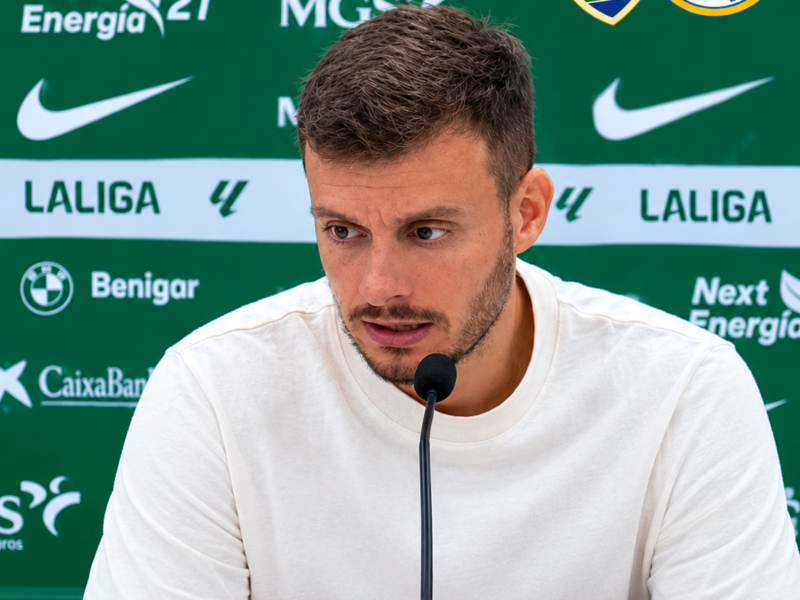
“Proud, Not Angry”: Elche Coach Martín Anselmi’s Stunning Reaction After Cruel Late Real Madrid Heartbreak
There is a particular kind of silence that follows a football match a team should have won.
It is not the silence of defeat, and it is not the silence of victory either.
It is something in between, heavier in some ways, because it carries the weight of what almost was.
That was the silence hanging over the press room at Estadio Martínez Valero when Martín Anselmi walked in to face the cameras and microphones after his Elche side had let a golden chance to beat Real Madrid slip through their fingers.
Twice up against one of the most talented squads in world football, twice pegged back, Elche had to settle for a 2-2 draw that felt, in the moment, like a loss.
And yet the Argentine coach walked in and said something nobody in that room expected to hear.
He was not angry.
He was proud.
What followed was one of the most revealing press conferences of Elche’s young season, a raw, unfiltered look inside the mind of a manager trying to turn heartbreak into fuel, and it is worth going through, question by question, word by word.
The sixth matchday of the 2026-27 La Liga campaign had promised very little for the home fans walking into the Martínez Valero that night.
Elche arrived without a single win in the league, a side still searching for its footing after a rough start to the season, while the visitors came into town on the back of a thumping 4-1 win over Rayo Vallecano and a statement victory in the Champions League against Inter Milan.
On paper, it looked like a mismatch, the kind of fixture that gets circled on a calendar as a probable landslide.
Instead, for long stretches of the match, it was Elche who looked like the team playing with belief, the team dictating terms against a squad with vastly superior individual talent and a manager under pressure to keep winning at all costs.
By full time, Real Madrid had escaped with a point, and only a point, after Elche fought back from adversity to level the score, only to see the result slip away from them right when victory seemed within reach.
It was the second time in a matter of weeks that Elche had lived through this exact kind of ending, a similarly gutting finish having played out against Real Sociedad, and the parallel was not lost on anyone in that room.
The first reporter to speak was Paco Gómez, a familiar face on Elche’s local football coverage, and he did not waste time getting to the point.
He asked the question that was on everyone’s mind.
Angry, right?
After all, this was a team that had clawed its way back into a match against Real Madrid, found itself in position to win, and once again watched the result slip through its hands in the closing stages, just as it had against Real Sociedad.
How else could you describe a finish that cruel.
Anselmi’s answer set the tone for everything that followed.
He explained that anger was not the emotion sitting with him in that moment.
If anything, he said, what he felt was something closer to pride.
Facing an opponent of that caliber, staying present in the game, going after it, getting the equalizer, and then failing to see out the finish, he admitted, is never easy.
He pointed to a specific gap in his team’s composure in that final stretch, a lack of togetherness, a failure to fully grasp what they had just achieved and to close ranks when it mattered most.
But rather than dwell on the sting of the ending, Anselmi returned again and again to a single word.
Maturity.
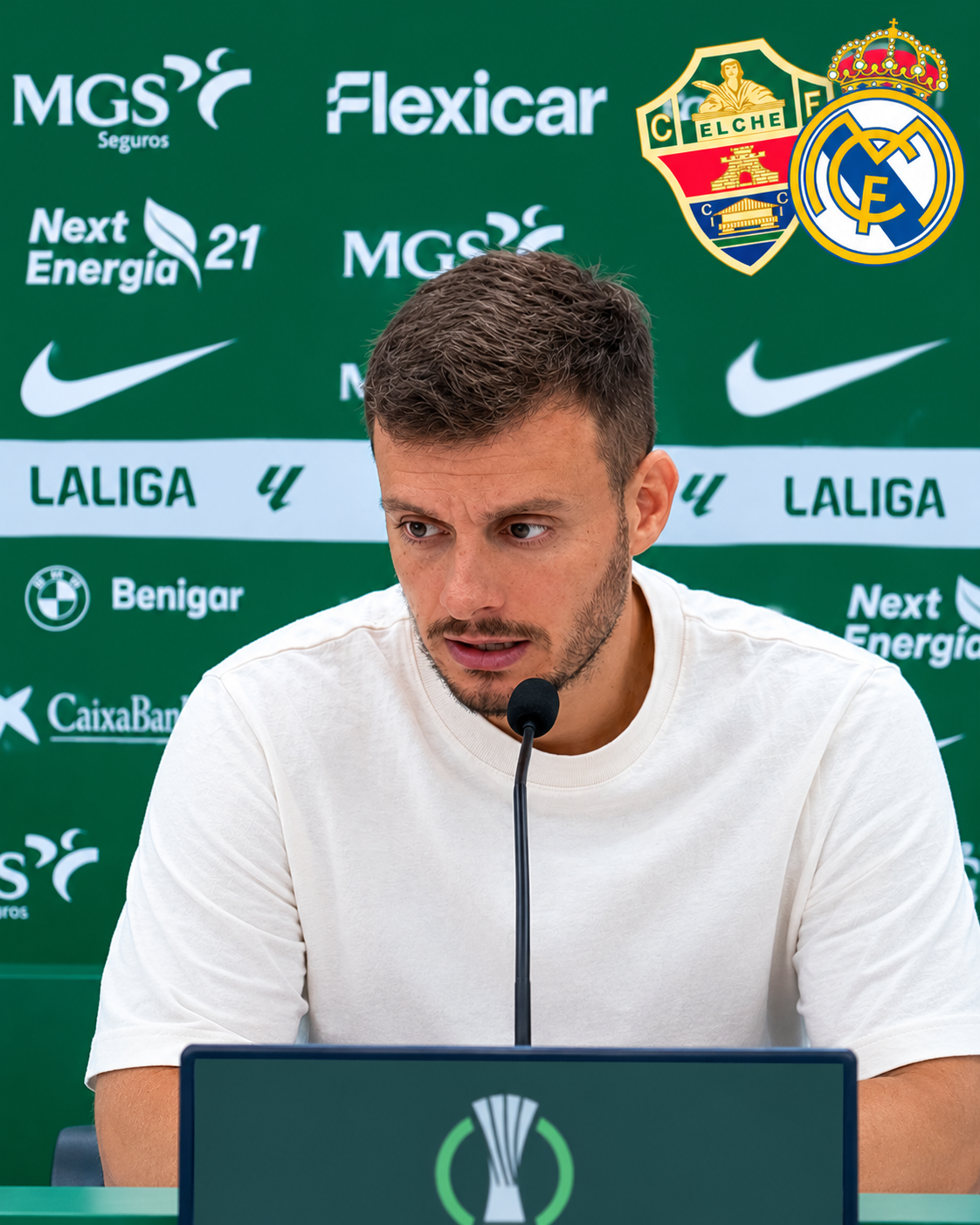
It was, he said, the same word he had given his players before kickoff, and in his eyes, Elche had lived up to it, not only in this match but across a run of matches that had tested their character against the very best sides in Spain.
He drew a direct line back to the Athletic Bilbao game at San Mamés, a fixture where his team had ground out a result through defensive discipline, contrasting it with an earlier meeting with Barcelona that had not ended nearly as well.
In Anselmi’s framing, Elche is not a side drowning at the bottom of the table.
It is a competitive team, one that knows how to compete, even against sides with a far deeper hierarchy of talent.
He made sure to credit his players directly, praising the fact that with everything they had at their disposal, a squad still being rebuilt and reshaped, they had managed to claw their way back into the game, generate real presence going forward, and finish the match with Real Madrid’s players forced to shield the ball in the corner just to run down the clock against a supposedly inferior opponent.
Say what you want about the final score, Anselmi seemed to be arguing, but look at who was chasing the game in the final minutes.
It was not Elche.
The next question came from Cristian, reporting live for Cadena Cope’s Tiempo de Juego, and he shifted the focus from emotion to atmosphere, asking about the state of the locker room and whether the team could emerge from this defeat, in a manner of speaking, stronger than before, given how strong the overall performance had looked despite the result.
Anselmi’s response widened the lens even further.
He reminded the room that Elche had now gone toe to toe with Real Sociedad, with Athletic Bilbao, with Real Madrid, and with Deportivo on the road, a string of fixtures against sides occupying very different parts of the table but all of them difficult, physical, demanding tests.
In his view, his team had competed in every single one.
What had gone against them, he suggested, was not effort or application but the fine margins, the small details that were not falling their way, made worse by a squad still absorbing new arrivals mid-season and a fixture list stacked tightly together, match after match with barely any rest in between.
He acknowledged that fatigue may well have played a role in the closing minutes, the legs growing heavy just as they had for the opposition, but he was careful to frame that observation as context rather than as an excuse.
If anything, he said, he read it the opposite way.
Everyone on that pitch had run until the very end, which told him something important about the character in that locker room, and now the job was simply to learn how to close out matches like this one, because getting to that position in the first place, against a team like Real Madrid, is not something that happens by accident.
As he put it himself, echoing his message from the win over Athletic at San Mamés, Elche is now a tough opponent, and a mature one, for anyone left on the schedule.
Felipe, reporting for a local radio outlet, pressed on a more delicate subject, one that goes beyond tactics and results and into psychology.
Could this kind of late collapse start to weigh on the group mentally, he asked, especially after a near identical scenario had played out against Real Sociedad, a strong second half undone by a cruel finish, players fighting all the way to the final whistle only to fall agonizingly short.
Was Anselmi worried about the psychological toll, or did he trust his team to shake it off and keep pushing forward.
The Elche coach did not dodge the question, nor did he pretend the pattern was a coincidence.
He said plainly that his group needed to learn from exactly this kind of situation, because with so many matchdays still to come, they were almost certainly going to find themselves in similar moments again before the season is through.
Rather than treating that prospect as a threat, he framed it as an opportunity, a chance for a team still finding its identity to bank the kind of hard lessons that eventually turn agonizing near misses into full points on the table.
It is a stance that says a great deal about how Anselmi is trying to build this team from the inside out, not by shielding his players from disappointment but by making sure that disappointment gets processed and used rather than left to fester.
Adrián Caro, broadcasting live for local radio and television coverage of the match, brought the conversation back to the pitch itself, focusing on a midfield reshuffle that had caught his eye.
He noted the return of key midfield pieces working alongside a double pivot, and he wanted to know whether Anselmi felt his side had shown more control in central areas as a result, and whether pairing two forwards up top in the closing stages, a switch that appeared to load the box with attacking bodies, might become a more permanent tool going forward.
Anselmi’s answer was a lesson in tactical nuance, the kind of detail that separates a coach reacting to a scoreline from one who is actually solving a puzzle in real time.
He explained that the situation in the match itself had called for two forwards at a specific moment, not as a fixed plan but as a response to what he was seeing unfold in front of him.
One player offered a strong left foot ideal for whipping in crosses.
Another brought his own quality delivering the ball into the box from wide areas.
Further back, one of his midfielders ended up effectively operating as a holding midfielder, a positional shift forced in part by the fact that keeping him further forward, already carrying a yellow card, would have been too great a risk to take.
He added that a substitute’s introduction late in the game had given his side a real surge in overall attacking volume, and true to the theme of the entire press conference, he refused to boil the outcome down to a single tactical switch or a single player.
Every decision, he said, carried its own nuance, and taken together, he felt his team had gotten the balance right on the night.
The final question of the evening came from Jorge Torres, representing a local Elche television outlet, and it steered the conversation away from tactics entirely and toward something more human, the bond between this team and the fans who show up to support it week after week, including at the final whistle of a match that ended in heartbreak.
He noted that supporters at Martínez Valero had stood as one with the players even after the disappointment of the finish, and he asked Anselmi what message he had for a fan base that keeps believing despite the run of results.
It was here that the coach’s guard seemed to drop just slightly, his tone shifting into something more personal.
He admitted that he had genuinely wanted to walk closer to the stands after the final whistle, because he believes Elche remains just one big moment away from giving its supporters a night to truly celebrate.
He said, with total honesty, that if he were a supporter in that stadium tonight, he would be proud of his team.
He went further, drawing a comparison to a similar moment following the Real Sociedad defeat, when he had felt compelled to apologize to the fans for a result that did not reflect the effort on the pitch.
This time, he said, had he been sitting in the stands himself, pride is exactly what he would have felt watching how his players represented the club.
His closing message to the fan base was simple and direct.
They will keep representing Elche exactly this way, he promised, competing, fighting, refusing to be overwhelmed by reputation or scoreline, until the moment finally arrives when that effort is rewarded with a result to match it.
With the formal round of questions finished, the press conference moved into a shorter second round, and it was Paco Gómez again who brought the discussion back down to the cold, uncomfortable reality sitting at the bottom of the league table.
Six matchdays into the season, Elche found themselves rooted in last place, and Gómez wanted to know directly whether that position was starting to worry the coach.
Anselmi did not shy away from the discomfort of the question, nor did he pretend the table position was anything other than what it was.
He acknowledged plainly that last place is not where his team wants to be, there is no spinning that reality.
But he explained that he has to judge his team by performance level rather than by the raw numbers in the standings at this early stage of the campaign, and in his assessment, that performance level has been steadily improving, match after match.
His belief, stated without hesitation, is that the points will start to come.
With no further questions from the assembled media, the press conference was brought to a close, and Anselmi stepped away from the podium having delivered something far more interesting than the usual post-match cliches.
He had delivered a genuine window into how he is trying to steer a struggling team through a difficult opening stretch of the season, not through denial, not through excuse-making, but through an insistence on finding the growth hidden inside the pain.
Whether that approach eventually turns into points at the bottom of the table remains to be seen, and for a club still winless through six matchdays, patience is a currency that will not last forever.
But if Martín Anselmi’s read on his own locker room is accurate, and if maturity really is the thread running through this Elche side, then the near miss against Real Madrid may end up being remembered not as one more chapter in a season of cruel finishes, but as the moment this team finally started to believe it belonged in matches like this one.
For a club sitting last in La Liga, that belief may be the only currency that matters right now.
Elche’s next test will show whether Anselmi’s words translate into something more tangible than pride.









