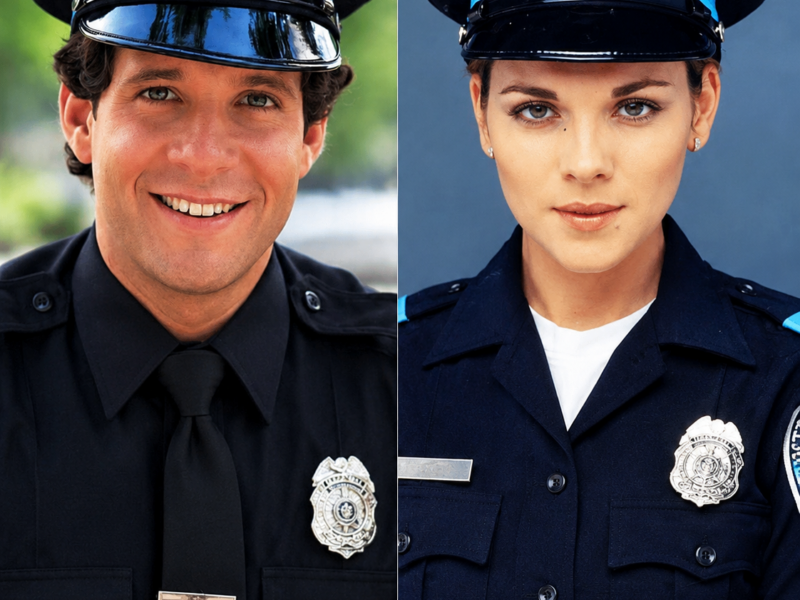
Police Academy Cast Then and Now in 2026: The Heartbreaking Truth About the Misfits Who Made America Laugh
They were told they didn’t belong.
Too strange, too timid, too loud, too much. And yet somehow, that hopeless group of recruits turned a silly premise into one of the most beloved comedy franchises of the 1980s.
More than 40 years later, the laughter is still easy to find. What has changed is how it feels when the credits roll.
Some of the faces you remember are gone now. Others are still working, still waving, still living proof that a wisecracking misfit can outlast just about anything.
So what really happened to the people who made Police Academy unforgettable?
Some built long and winding careers. Some slipped into quieter lives. And a few left behind performances so warm that the world still hasn’t stopped smiling at them.
Let’s walk back through the academy gates together.
Take a seat, because this story is funnier than you remember and far more emotional than you expect.
One Academy, One Hopeless Class, and a Comedy Phenomenon
It started with a simple idea.
Take a group of recruits nobody else wanted, put them under one roof, and let the chaos do the rest. Out of that idea came Mahoney, Hightower, Hooks, Jones, Tackleberry, and Commandant Lassard.
They were not heroes on paper. They were prank-pullers, mumblers, sound-effect machines, gun enthusiasts, and gentle giants.
But the movie believed in them, and that belief was contagious.
Audiences in 1984 found something rare in that rowdy R-rated comedy. It was a story about people who were written off too early, and who proved everyone wrong without ever pretending to be someone else.
That is the secret heartbeat of Police Academy.
Now, in 2026, it is time to find out where the whole class ended up.
Commandant Lassard: The Calm in the Middle of the Storm
George Gaines was 67 years old when he first stepped into Lassard’s uniform in 1984.
Born on May 16, 1917, he brought the kind of quiet, absent-minded dignity that no amount of screaming could ever match.
Lassard did not rule through fear. He did not humiliate anyone, and he rarely seemed to notice the disasters unfolding right in front of him.
That was exactly the joke.
While everyone else panicked, Lassard drifted through the chaos at his own gentle speed. The more serene he stayed, the more stressed everyone around him seemed to become.
But Gaines never played him as a fool.
Lassard felt almost innocent, as if he truly believed people deserved enough room to grow into better versions of themselves.
That small act of faith explains why an academy full of rejected recruits could become a place of transformation. Lassard did not understand every disaster, but he never rushed to throw anyone away.
Away from the academy, Gaines built a long career across theater, film, and television. Many viewers remember him from Tootsie, and many more remember him as the lovable Henry Warnimont on Punky Brewster.
George Gaines passed away on February 15, 2016, at the age of 98.
He lived nearly a century, and he spent a good part of it teaching audiences that gentle leadership can be unforgettable.
In a franchise packed with shouting, sirens, and pranks, his greatest gift was acting as though everything would somehow work out.
And surprisingly often, it did.
Sergeant Debbie Callahan: The Woman Who Needed No Punchline
Some people clear a room by shouting. Debbie Callahan did it by standing still.
Leslie Easterbrook, born on July 29, 1949, was 35 when Police Academy hit theaters. She understood something many comedy actors miss.
Callahan became funnier the moment she refused to perform the joke herself.
She stayed serious while everyone else reacted to her. Intimidation and comedy shared the same moment, and neither one weakened the other.
In a movie where nearly every recruit was exaggerated in some way, her exaggeration was absolute confidence.
She did not need Mahoney’s wisecracks. She did not need Jones’s sound effects. She did not need Tackleberry’s mania.
She could simply dominate the frame.
That mattered more than people realized at the time. The franchise now had a female authority figure who was never treated as weak, and whose power was never in doubt, even when the humor around her turned broad.
Easterbrook kept working long after the academy doors closed, moving through film, television, voice acting, and genre projects. Still, Callahan remains the role most closely tied to her public image.
In 2026, Leslie Easterbrook is 77 years old.
Callahan endures because Easterbrook made strength part of the punchline without ever making strength ridiculous.
In an academy where almost everyone eventually loses control, she looked like the one person who never needed to find it.
Leslie Barbara: The Coward Who Became a Cop
Every great ensemble needs someone the audience quietly roots for.
Leslie Barbara was that person.
Donovan Scott, born on September 29, 1947, was 37 when the original film arrived. He played Barbara as nervous, awkward, easily intimidated, and used to being treated as if he did not belong.
He did not look like a future police officer, and he knew it.
Here is what made him special. The audience laughed at the situations around Barbara, but the movie never wanted him to fail.
Every small act of courage landed because viewers understood how much it cost him.
He did not become Mahoney. He did not become Hightower.
He simply discovered that bravery can live inside a person who stays naturally timid.
That is one of Police Academy’s warmest ideas. Misfits do not have to erase what makes them different before they deserve a place.
Donovan Scott kept working across film, television, and stage. Fans often point to Savannah Smiles and Back to the Future Part III, along with countless guest roles.
In 2026, he is 79 years old.
Barbara endures because Scott made weakness human instead of humiliating.
His courage was believable because it never showed up fully formed. He began frightened, kept showing up anyway, and slowly learned that fear does not get to decide what you are capable of becoming.
Lieutenant Harris: The Man Who Hated Every Single Recruit
Every underdog story needs someone who insists the underdog will lose.
Lieutenant Thaddeus Harris took that job personally.
He looked at the academy’s collection of misfits as if each one had insulted him by walking through the gate. And G.W. Bailey, born on August 27, 1944, played that offense with extraordinary precision.
He was only 40 when Police Academy became a hit.
Harris was essential because the cadets needed a man who believed every difference was a defect. His obsession with discipline, status, and humiliation made him the perfect opposite of both Lassard and Mahoney.
Lassard left room for people to surprise him.
Harris decided who they were before training even began.
That arrogance gave the comedy its structure. Nearly every attempt to control the cadets created another chance for them to embarrass him.
The clipped commands, the offended expressions, and the escalating fury worked because Harris took himself completely seriously.
He was not a criminal mastermind. He was simply a man who could not stand the thought that the people he looked down on might succeed.
Bailey’s career stretched far beyond the academy. Viewers know him from MAS*H and Mannequin, and later from his gruff, layered work as Captain Provenza on The Closer and Major Crimes.
In 2026, G.W. Bailey is 82 years old.
Harris endures because Bailey turned irritation into an art form.
Audiences never needed him to become nicer. They needed him to stay exactly arrogant enough that watching the misfits prove him wrong never got old.
Larvell Jones: The Man Who Was His Own Sound Department
Some performers play a talent. Michael Winslow simply had one.
Born on September 6, 1958, he was 26 when Police Academy came out. And there was no gap between the character and the man, because the gift on screen was completely real.
Sirens. Machinery. Explosions. Animals. Radio static.
Sounds that should have needed a studio came pouring out of one man’s throat, apparently without effort.
That authenticity turned Jones into more than a character with a recurring gimmick. His ability became part of how he moved through the world, how he created confusion, and how the academy’s rigid environment kept getting dragged into surreal comedy.
But Winslow also understood timing.
The sounds were impressive, yet the laughs came from knowing exactly when to unleash them, when to stop, and how the people around him would react.
In a film packed with big personalities, Jones stayed completely unique.
Nobody else could have delivered that performance.
After the academy, Winslow carried his act through film, television, touring, live shows, and stand-up, becoming widely known as the man of 10,000 sound effects. He also turned up on television talent platforms and kept performing around the world.
In 2026, Michael Winslow is 68 years old.
Jones endures because Winslow made sound into identity.
Nothing about it came from editing or special effects. It belonged to the actor himself, and it became one of the most unmistakable signatures of 1980s comedy.
Moses Hightower: The Gentle Giant
On paper, Hightower could have been nothing more than a size joke.
He was powerful enough to scare almost anyone, and the film certainly used that scale for laughs. But Bubba Smith had other plans.
Born on February 28, 1945, Smith was 39 when Police Academy arrived. He gave the character warmth, patience, and a decency that quickly made strength only a small part of who Hightower was.
This was a man who rarely seemed interested in dominating weaker people.
Instead, his strength became protective.
That made him emotionally important to the whole ensemble. He represented the version of power that Police Academy admired most, ability used in service of others rather than to make them feel small.
His calm also set off Harris’s anger and Tackleberry’s intensity beautifully.
Smith did not need to do much to command attention. His presence handled that automatically, which left his performance free to focus on kindness.
Long before the movie, Bubba Smith was already a celebrated professional football player, including time with the Baltimore Colts. He later moved into film, television, commercials, and Police Academy sequels, becoming one of the most recognizable athletes to make the leap into entertainment.
Bubba Smith passed away on August 3, 2011, at the age of 66. Heart disease was noted as a factor.
Hightower endures because Smith made strength feel safe.
He could lift, bend, or overpower almost anything in front of him. Yet viewers remember him most warmly because the biggest cadet in the academy so often had the gentlest heart.
Laverne Hooks: The Whisper That Became a Roar
Nobody expected much from Hooks at first.
Her voice was soft, her manner hesitant, and her politeness almost painful. It seemed obvious that the noise of police work would swallow her whole.
Marion Ramsey, born on May 10, 1947, was 37 when the film premiered. She let that first impression settle in before delivering the character’s most memorable twist.
When Hooks finally decided to raise her voice, the effect was explosive.
What made it work was that she never became someone else. The confidence had been there all along. The audience simply had not heard it yet.
That gave Hooks an underdog quality similar to Barbara’s, but her transformation lived in her voice and presence rather than in physical courage.
Ramsey made her shy without making her empty, and gentle without making her incapable.
Beyond the academy, Ramsey worked in film, television, stage, and music, with a performing background that included singing.
Marion Ramsey passed away on January 7, 2021, at the age of 73. Hypertension was noted in the records.
Hooks endures because Ramsey made quietness dramatic.
Audiences knew the pattern and still enjoyed it every single time. The whispering patience, the mounting pressure, and then that sudden command powerful enough to stop everyone nearby.
She proved that the person speaking softly may still be the strongest voice in the room when it matters.
Tackleberry: Ready for War Before Lunch
Some people treat training as a routine. Tackleberry treated it as though civilization might collapse before noon.
David Graf, born on April 16, 1950, was 34 when Police Academy arrived. He committed to the character’s weapon obsession with no ironic distance at all.
Every drill felt vital. Every piece of equipment deserved respect. Every possible threat justified preparation wildly out of proportion to reality.
That seriousness sharpened the absurdity.
Yet Tackleberry never felt cruel or truly frightening, the way a genuinely aggressive character might have. Graf gave him an innocence underneath all that intensity.
This was a man who sincerely believed he had found the one place where his extreme enthusiasm finally made sense.
In a class full of people told they were too strange, Tackleberry belonged precisely because he was too much.
His fixation became another variation on the franchise’s central theme. The academy takes people who seem impossible and eventually finds a use for exactly what makes them unusual.
Graf kept working across film and television, with appearances in The West Wing and Star Trek: Voyager among the highlights.
David Graf passed away on April 7, 2001, at only 50 years old. A heart attack was noted in the records.
That early loss gives Tackleberry’s manic energy a bittersweet glow today.
He endures because Graf made obsession oddly lovable.
Tackleberry may look permanently prepared for battle, but under all that gear is a sincere man delighted to have finally found a group strange enough to accept him.
George Martin: The Smoothest Cadet in the Room
Not every misfit announces himself with panic or thunder.
George Martin did it with charm.
Andrew Rubin, born on June 22, 1946, was 38 when the movie opened. His character was not fearful like Barbara, explosive like Tackleberry, imposing like Hightower, or rebellious like Mahoney.
His defining quality was smoothness.
Rubin played him as someone who truly believed flirtation, style, and self-confidence could carry him through nearly any situation. That turned out to be funny, because a police academy is not exactly the place where charm solves everything.
Still, his ease helped the group’s chemistry.
Every misfit needs an identity people can recognize at a glance, and George became the cadet determined to stay socially relaxed even as everything collapsed into another disaster.
Rubin continued working across film and television, including The Love Boat and Mary Hartman, Mary Hartman, along with many guest roles.
Andrew Rubin passed away on October 5, 2015, at the age of 69. Lung cancer was noted in the records.
George Martin remains memorable because Rubin made confidence its own comic flavor.
While other recruits struggled to find their place, George behaved as though his had already been reserved. That self-assurance was not always justified, but it gave the ensemble one more personality audiences could spot the moment he walked in.
The Main Villain: When the Joke Got Real
For most of its running time, Police Academy treated authority, training, and failure as comedy.
Then the story needed something else. It needed danger.
Doug Lennox, born on January 21, 1938, was 46 when he played the film’s main bad guy. His role mattered because the story eventually had to prove that the misfits were capable of more than surviving pranks and humiliating Harris.
An outside threat forced them to use whatever they had learned.
Lennox supplied the physical toughness that transition required. He did not need the elaborate psychology of a dramatic crime-film villain, because his job was structural.
Suddenly, the cadets who had been treated as jokes had to behave like police officers.
That let Hightower, Mahoney, and the others reveal qualities that authority figures had failed to see in training. And Lennox’s harder presence helped the film raise the stakes briefly without abandoning its broad comic identity.
Outside the academy, Lennox built a varied career in television, film, and voice work. Animation fans may know him from X-Men, RoboCop, and The Incredible Hulk cartoons.
Doug Lennox passed away on November 28, 2015, at the age of 77. Heart failure was noted in the records.
His villain endures because he gave the cadets something credible to overcome.
Without real danger, their final courage would have stayed theoretical. He brought just enough grit into the comedy for the misfits’ leap from academy disasters to unlikely heroes to feel earned.
Captain Reed: The Steady Hand Beneath the Chaos
Comedy built on disorder needs something solid to push against.
Captain Reed was that something.
Ted Ross, born on June 30, 1934, was 50 when he appeared in the 1984 film. His role reminded viewers that a real police institution still existed underneath all the jokes.
He was firmer and more serious than Lassard, but without Harris’s obsessive need to humiliate. That balance let the academy stay ridiculous while still feeling connected to a wider professional world.
His natural authority came from real experience.
Ross had already built a substantial career in theater and screen work, and he had won a Tony Award for playing the Lion in The Wiz. That stage background gave even a supporting role weight, because his voice and presence suggested command without ever overplaying it.
Ted Ross continued working across stage, television, and film.
He passed away on September 3, 2002, at the age of 68. A stroke was noted in the records.
Captain Reed endures as proof that ensemble comedy depends on performers willing to steady a scene rather than steal it.
He may not have generated the loudest laughs. But without figures like him, the madness swirling around Mahoney and the others would have had nothing to bounce off.
Violet Facklin: Bright, Playful, and Gone Too Soon
Some actors only need a few minutes to leave a mark.
Debralee Scott, born on April 2, 1953, was 31 when the film was released. As the mayor’s daughter, she brought social status, flirtation, and unpredictability into a story that might otherwise have stayed locked inside academy drills and rivalries.
Her timing was lively and her warmth expressive, qualities that had already made her familiar to television viewers.
She had appeared in Mary Hartman, Mary Hartman and Welcome Back, Kotter, connecting her to a distinctive era of American comedy, one where character-driven performances often mattered as much as the headline stars.
That style suited Police Academy naturally.
She could enter briefly, create instant energy, and leave a scene feeling more colorful than before.
But her story carries real sorrow. Her later life included personal difficulty, and her death came much too soon.
Debralee Scott passed away on April 5, 2005, at the age of 52. Cirrhosis of the liver was noted in the records.
That fact casts a bittersweet light over the role when the film is revisited today.
Violet endures because the actress brought warmth to a small part. She is a reminder of how often beloved comedies are enriched by performers whose screen time is brief but whose personality is impossible to forget.
The Hooker: A Brief Scene With a Long Shadow
The scene was short, but it said a lot about the movie.
Police Academy was never designed to be polite. It thrived on embarrassment, provocation, physical gags, and moments built to shock audiences into laughing.
This appearance belonged firmly to that side of the film.
Georgina Spelvin, born on March 1, 1936, was 48 when she took the part. Her casting carried its own cultural weight, because she had crossed from adult cinema into mainstream Hollywood, along with experience in stage work and television that made her presence unusually distinctive.
The cast already mixed athletes, theater performers, sitcom veterans, comedians, character actors, and voice artists from very different corners of entertainment.
Spelvin represented one of the least conventional paths into that ensemble.
In 2026, Georgina Spelvin is 90 years old.
Her wider career remains tied to adult cinema, cult status, and reinvention, along with an unconventional relationship with mainstream entertainment.
The role endures because it captures how fearless Police Academy could be about mixing comic styles and performers from different worlds.
It may have been brief, but it became part of the film’s unruly identity. A reminder that this was an R-rated comedy willing to go almost anywhere for one more outrageous laugh.
Chad Copeland: The Cadet Who Thought He Deserved It More
Every team has someone who believes he is better than the team.
Chad Copeland made that belief his whole personality.
Scott Thompson Baker, born on October 29, 1957, was 27 when Police Academy became a hit. His character looked more conventional, confident, and acceptable to the existing authority structure than the rest of the class.
What he lacked was the empathy that slowly turned the misfits into a real team.
The class needed internal opposition as well as pressure from Harris, and Copeland supplied it.
Thompson played the smugness carefully. Copeland was irritating enough to work as an antagonist, but never so vicious that he disturbed the film’s comic tone.
His clashes with Mahoney sharpened the underdog structure.
Every time Copeland assumed he was superior, the movie handed the people he dismissed another chance to prove him wrong.
In that way, he became a useful mirror for the academy itself. Looking like the right candidate does not automatically mean having the qualities that make someone worth trusting.
Thompson continued working through film and television. Fans often mention Fast Times at Ridgemont High and Twilight Zone: The Movie, along with numerous guest appearances.
In 2026, he is 69 years old.
Copeland endures because Thompson made arrogance entertainingly defeatable.
He gave the misfits someone inside their own ranks to challenge, someone who believed belonging should be based on appearance and attitude. By the end, Police Academy had made exactly the opposite argument.
Carey Mahoney: The Rebel the Audience Trusted
He looked like the last person who would ever respect a uniform.
And somehow, he became the one audiences trusted most to wear it.
Steve Guttenberg, born on August 24, 1958, was just 25 when Police Academy arrived. His Mahoney disliked authority, loved embarrassing people who took themselves too seriously, and always seemed one joke away from being thrown out.
Yet the rebellion never completely hid the decency underneath.
When the academy’s outsiders needed someone willing to stand beside them, Mahoney stopped treating everything like a game.
Guttenberg played him with relaxed charm rather than aggressive defiance. That distinction mattered, because Mahoney’s popularity depended on audiences believing he broke rules for reasons very different from Harris’s.
Harris used authority to make people feel smaller.
Mahoney used humor to expose people who already thought they were bigger than everyone else.
Over time, his friendship with the cadets turned accidental participation into real loyalty.
Police Academy was only one chapter in Guttenberg’s remarkable 1980s run, which also included Cocoon and Three Men and a Baby. Later years brought film, television, stage work, and an ongoing connection to the nostalgia surrounding his best-known roles.
In 2026, Steve Guttenberg is 68 years old.
Mahoney endures because Guttenberg made rule-breaking strangely reassuring.
He began as the man least interested in belonging, and he slowly became the one protecting a group that finally gave him a reason to stay.
Karen Thomas: The Calm Before a Global Superstar
Next to Mahoney’s constant improvisation, Karen Thomas offered something rare. A quiet, polished intelligence.
Kim Cattrall, born on August 21, 1956, was 28 when the film appeared. And what made Karen work was that she was never swallowed by the romantic function of the role.
Her connection with Mahoney gave the movie warmth, but she also belonged to the academy as a recruit with her own composure and ability.
Cattrall gave her enough confidence to stand beside Mahoney without becoming just another audience for his jokes.
That created a useful dynamic.
He lived by disruption. She seemed perfectly comfortable watching the disruption without needing to join every piece of it.
And through her, the film reinforced its larger idea. People who would never normally be placed together can discover that they function as a group.
Looking back now, Karen carries one more fascination. She shows us Cattrall before the career that would make her internationally famous.
After the academy, she appeared in films like Big Trouble in Little China and Mannequin. Then came the role that changed everything, Samantha Jones in Sex and the City, a part that tied her to conversations about independence, confidence, sexuality, and female friendship.
In 2026, Kim Cattrall is 70 years old.
Karen endures because the role captures an actress before global fame, already showing the poise audiences would later recognize instantly.
She may stand inside Mahoney’s story, but she never disappears inside it.
The Training Grounds Are Quieter Now
The academy feels different today.
Several beloved faces from Police Academy are no longer with us.
George Gaines, Bubba Smith, Marion Ramsey, David Graf, Andrew Rubin, Doug Lennox, Ted Ross, and Debralee Scott all left behind performances that still bring laughter decades later.
Their names may belong to the past, but their work keeps finding new audiences.
And the story is not only about loss.
Steve Guttenberg, Leslie Easterbrook, Kim Cattrall, Donovan Scott, G.W. Bailey, Michael Winslow, Georgina Spelvin, Scott Thompson Baker, and other surviving cast members remain living links to the comedy that turned a hopeless class of recruits into one of the most recognizable ensembles of the 1980s.
That is the strange magic of a great cast.
They stay young on screen while the real years keep moving forward, and every rewatch becomes a small reunion.
Why Police Academy Still Matters
Look at the class one more time.
Mahoney brought rebellion. Lassard brought kindness. Harris brought frustration.
Jones brought impossible sounds. Hightower brought strength without cruelty. Hooks proved a quiet voice could become powerful.
And Tackleberry turned total obsession into strange innocence.
Together, they told a story that has never really gone out of style. The people the world dismisses first are often the ones who surprise it most.
More than 40 years later, that idea still lands.
Maybe that is why we keep coming back to the academy. Not just for the pranks and the sirens, but for the feeling that somewhere, there is a place where our strangest qualities might finally be useful.
So now we want to hear from you.
Which Police Academy character stayed with you the most? Mahoney, Jones, Hightower, Hooks, Tackleberry, Lassard, Callahan, or someone else entirely?
Tell us in the comments, and stay with us for more classic movie stars, heartbreaking losses, surprising transformations, and the films that can still make us laugh more than 40 years later.









