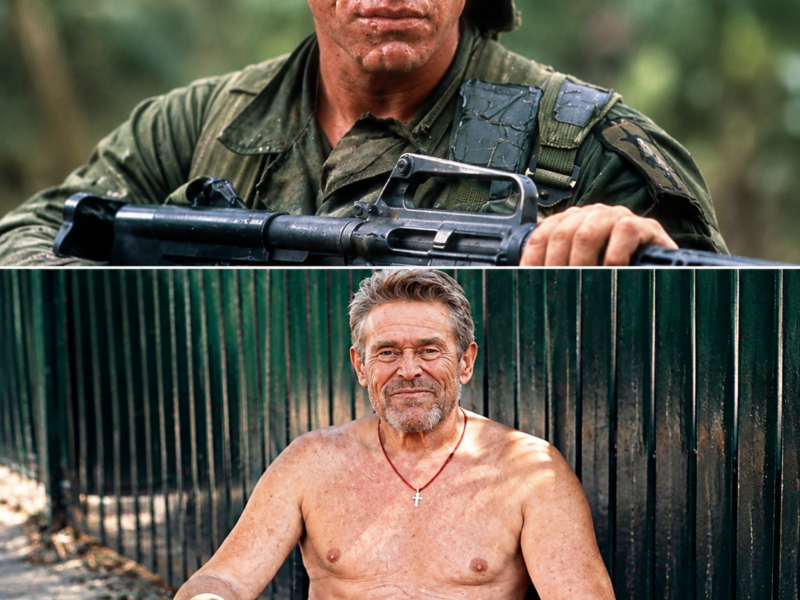
Platoon Cast Then and Now in 2026: Who Survived Hollywood, Who Was Lost Too Soon, and the Hidden Costs Behind Vietnam’s Most Haunting War Film
Some war movies make you cheer. Platoon made you want to look away.
When it hit theaters, audiences did not walk out talking about victory. They walked out quiet, shaken, and strangely afraid of what they had just recognized in themselves.
Chris Taylor entered Vietnam young enough to believe courage could protect him. Elias fought to hold on to his humanity, while Barnes showed what happens when survival becomes more important than conscience.
That was the heart of the film. Not the jungle, not the gunfire, but the question underneath it all. What does a war do to the men who come home, and to the ones who never do?
Nearly 40 years later, the faces are older. Some careers became legendary, some lives were swallowed by controversy, and some members of that platoon are no longer here at all.
So where are they now, in 2026? Step back into the jungle one more time, because the stories behind these actors are every bit as dramatic as the ones they played.
Charlie Sheen as Chris Taylor: The Young Soldier Who Lost Something He Could Never Get Back
Chris Taylor enters Vietnam believing that volunteering will help him discover what kind of man he really is.
Charlie Sheen was only 21 when he played the young soldier, and that youth gives the character much of his emotional power. Chris is not prepared for what waits in the jungle.
He arrives with ideas about courage and purpose, only to watch those beliefs collapse under exhaustion, fear, violence, and death.
More disturbing is the conflict inside his own platoon. Sergeant Elias still believes a man can survive without abandoning his conscience, while Sergeant Barnes sees morality as a weakness that war has already destroyed.
Chris is pulled between them, and that struggle becomes the real battlefield of his story.
Sheen plays him as someone frightened not only by what he witnesses, but by what he slowly becomes capable of doing himself. The war hardens him, yet it never lets him forget the person he was before it began.
In 2026, Charlie Sheen is 61.
After Platoon he became a major film and television star. His later public life, however, was also marked by addiction struggles, scandal, and a highly publicized health disclosure.
Those later chapters make Chris Taylor especially striking to revisit. Here, Sheen is still a young actor carrying vulnerability rather than celebrity baggage.
Chris endures because he is not a traditional war hero. He is a young man surviving long enough to understand that part of himself may never return home.
Willem Dafoe as Sergeant Elias: The Soldier Who Refused to Surrender His Conscience
Sergeant Elias is the rare soldier in Platoon who has seen enough horror to become cynical, yet somehow refuses to surrender the last human part of himself.
Willem Dafoe was 31 when he played the role, giving Elias a mixture of toughness, exhaustion, compassion, and quiet sadness.
He is no innocent. Elias understands violence and knows exactly what combat demands, but unlike Barnes, he still believes there are lines a man should not cross.
That difference turns their rivalry into something far larger than personality. Elias represents the possibility that experience does not have to harden into cruelty.
To Chris Taylor, he becomes a moral guide without ever needing to preach. His calm under pressure, his concern for others, and his refusal to accept brutality as normal show Chris another way to survive.
Dafoe gives the character a worn, almost haunted quality, as if Elias already understands that keeping his conscience may eventually cost him more than abandoning it.
In 2026, Willem Dafoe is 71.
After Platoon he built one of modern cinema’s most respected careers, moving between major studio films and challenging independent projects while repeatedly choosing unpredictable, physically demanding roles.
Elias remains one of his defining performances because so much is communicated without long speeches. A look or a pause can reveal what the war has taken from him.
He endures because he represents something fragile inside Platoon. The decision to remain human in a place where cruelty often looks easier, safer, and more useful.
Keith David as King: The Calm in the Middle of the Storm
King is the kind of soldier whose calm becomes valuable precisely because almost nobody around him can afford to relax.
Keith David was about 30 when he appeared in Platoon, and he gave King a grounded presence that immediately made the character feel experienced beyond his years.
King does not need speeches or dramatic displays to establish authority. He watches, listens, and seems to understand the emotional weather of the platoon before younger men like Chris Taylor do.
That quiet confidence gives Chris moments of stability in an environment where fear and aggression can change the mood within seconds.
King helps make the unit feel human because he represents the soldiers who survived through judgment rather than bravado. David’s deep voice and measured delivery suggest someone who knows violence is not exciting, only necessary when circumstances leave no alternative.
His presence gives the film brief spaces to breathe between its explosions of anger and combat.
In 2026, Keith David is 70.
After Platoon he built one of the most recognizable careers in modern entertainment, moving between dramatic screen roles and acclaimed voice work while staying active across decades.
King remains important because David proves that a supporting character can leave a lasting impression without demanding attention. In a film filled with men trying to appear tougher than they feel, his strength comes from never needing to prove anything.
His calm becomes its own kind of protection, making him one of the platoon’s quieter but most reassuring presences.
John C. McGinley as Sergeant O’Neill: The Voice of Military Certainty
Sergeant O’Neill represents the hard, mechanical voice of military discipline, the kind of man who acts as though certainty itself can keep chaos away.
John C. McGinley was about 27 when he played the role, and that relative youth adds something interesting to the character. O’Neill feels like someone who has learned that authority must sound absolute, even when the situation underneath it is anything but controlled.
He is forceful, sharp, and constantly conscious of hierarchy. In Platoon, figures like O’Neill help show that danger is not limited to the jungle.
Pressure also exists inside the unit, inside the chain of command, and inside the fear of appearing weak in front of other soldiers.
McGinley brings a rapid, aggressive rhythm to the role that fits naturally within the film’s tense environment. Even when he is not at the center of the story, O’Neill adds to the feeling that every man is being judged by how tough he appears.
In 2026, John C. McGinley is 67.
After Platoon he became one of film and television’s most dependable character actors, frequently playing intense professionals, authority figures, and men whose confidence hides more complicated emotions. Later roles also showed his ability to mix that intensity with comedy and warmth.
O’Neill endures as an early example of what McGinley would do so well for decades. Enter a scene with force, establish a personality almost immediately, and make even limited screen time feel charged with tension.
Forest Whitaker as Big Harold: Quiet Humanity Beneath the Armor
Big Harold helps make Platoon feel less like a collection of war movie archetypes and more like an actual group of exhausted young men trying to survive together.
Forest Whitaker was about 25 when he appeared in the film, and even without dominating the story, he brings a natural humanity to the role.
Big Harold has physical presence, but Whitaker does not rely on size alone. Small reactions, shifts in expression, and quiet moments suggest someone carrying fear and exhaustion beneath the toughness the environment demands.
That matters because Platoon repeatedly shows that survival is not only physical. These soldiers must carry boredom, anger, grief, and uncertainty while still functioning as though nothing inside them is breaking.
Big Harold becomes part of that emotional fabric. He feels like a person rather than a symbol, which is exactly what the film needs from its ensemble.
In 2026, Forest Whitaker is 65.
After Platoon he grew into an acclaimed leading actor known for deep character work and dramatic transformations, while also becoming involved in producing and humanitarian efforts.
Looking back, Big Harold feels like an early glimpse of the quiet observation that would become one of Whitaker’s greatest strengths. He does not force emotion toward the audience. He lets it exist beneath the surface.
The character endures because Whitaker shows how much truth can live in moments where a less careful actor might simply disappear into the background.
Kevin Dillon as Bunny: Where Fear Ends and Responsibility Begins
Bunny is one of the most disturbing young men in Platoon, because his cruelty often arrives wrapped in the energy of someone barely old enough to understand what he is becoming.
Kevin Dillon was about 21 when he played the role, and that youth makes Bunny’s behavior especially unsettling. He is reckless, aggressive, and quick to follow the violent current around him.
Yet the character can also be read as a frightened young soldier who has learned that acting brutal is safer than appearing vulnerable. Dillon keeps both possibilities alive.
Bunny laughs too easily at things that should disturb him and reacts too quickly when anger takes over. In a unit already split between Elias and Barnes, he shows how younger soldiers can be pulled toward whichever version of strength appears most powerful.
His behavior becomes part of the film’s warning about what fear, group pressure, and prolonged violence can do to immature men.
In 2026, Kevin Dillon is 61.
After Platoon he kept working steadily across film and television, and later became familiar to wider audiences through long-running television work that displayed a very different kind of charisma.
Bunny remains one of his harshest roles because Dillon never tries to make the character comfortable to watch. He captures a frightening possibility, that war can take youthful insecurity and reward it for becoming cruelty.
The character endures because he forces viewers to wonder where fear ends and personal responsibility begins.
Johnny Depp as Lerner: A Glimpse of a Career Before Superstardom
Lerner stands quietly inside Platoon as one of the younger soldiers still trying to understand the rules of survival.
Johnny Depp was about 23 when he appeared in the film, years before celebrity would make his face recognizable around the world.
Lerner is not a dominant personality, and that is exactly why the role fits. Platoon is filled with soldiers who never receive heroic introductions or carefully explained histories. They simply exist inside the machinery of war, vulnerable to the same randomness as everyone else.
Depp gives Lerner a watchful quality, as though the character is absorbing what happens around him without ever fully mastering the environment.
His limited screen time reinforces one of the film’s bleakest truths. Not every young man gets enough time to become experienced.
In 2026, Johnny Depp is 63.
After Platoon he became one of the most famous actors of his generation, celebrated for eccentric and transformative performances. He later went through years of public controversy, legal battles, and intense scrutiny surrounding his personal life.
Those later chapters make Lerner especially interesting to revisit, because the role comes from before any of that global attention. Here he is simply one young actor inside an ensemble, serving the story rather than carrying it.
Lerner endures as a small, restrained performance preserved from the period when Depp was still one of many young faces trying to survive inside the frame.
Francesco Quinn as Rah: The Loss That Changes How We Watch
Rah is one of the soldiers who shows how Platoon builds its realism from dozens of faces, not only its central characters.
Francesco Quinn was about 23 when he appeared in the film, and his presence adds another young life to the crowded emotional landscape of the unit.
Rah does not receive the narrative weight of Chris, Elias, or Barnes. But roles like his are essential, because war does not happen only to the people the story follows most closely.
Every soldier carries fear, fatigue, habits, memories, and a future that may disappear without warning. Quinn blends naturally into that collective world, helping the platoon feel like a real group rather than a line of background performers waiting for the leads to speak.
Francesco Quinn died in 2011 at the age of 48.
After Platoon he continued acting across film and television, building his own career while carrying the recognition that came from belonging to a famous acting family. His death at a relatively young age gives his appearance in the film a different emotional weight today.
Rah may not dominate any famous scene, but Quinn remains part of a classic whose power depends on every soldier feeling alive enough for the audience to fear losing him.
His contribution endures because realism is cumulative. Platoon feels truthful not only because of its stars, but because performers like Quinn made even the men at the edges of the story feel like they had lives beyond the camera.
Tony Todd as Warren: The Presence That Made Every Scene More Dangerous
Warren carries the naturally commanding presence that Tony Todd could bring to a scene even when the role itself was relatively small.
Todd was about 31 when he appeared in Platoon, and the character deepens the sense that every soldier inside the unit is constantly evaluating the danger around him.
Warren does not need to be defined by one dramatic trait. His importance comes from belonging convincingly to the platoon’s social world, where men watch one another, measure authority, and learn quickly who can be trusted.
Todd’s physical presence and distinctive voice make even brief moments feel substantial. He seems alert to the shifting hierarchy around him, which fits a film where the enemy is not the only threat.
The unit itself can become unpredictable when fear and resentment rise.
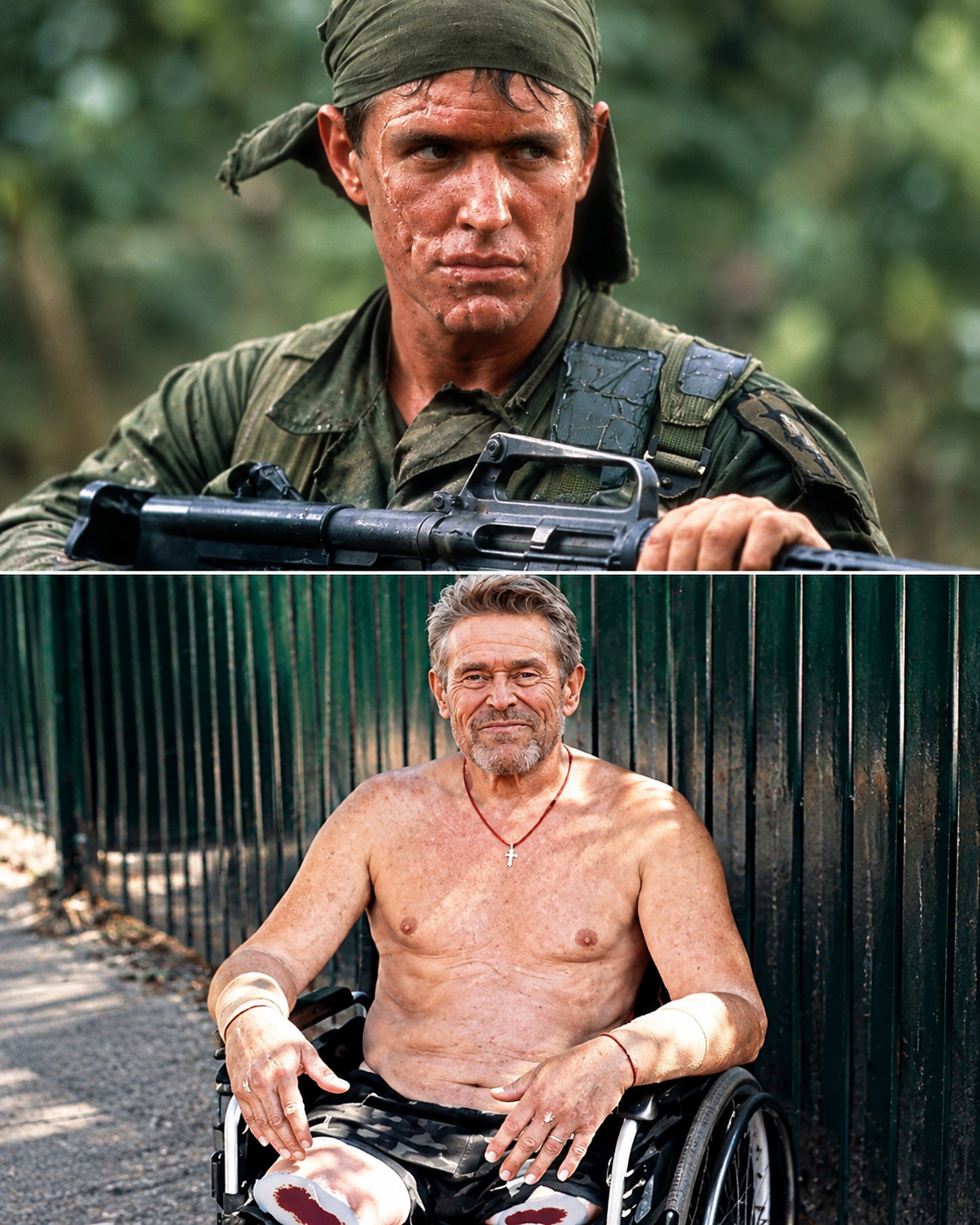
Tony Todd died on November 6, 2024, at the age of 69.
After Platoon he built a long career across film, television, genre work, and voice acting, becoming especially recognizable for a powerful voice and an imposing screen presence. His credits eventually passed 240 films and shows.
Warren remains one of the smaller pieces of that career, but it already contains the quality later audiences would associate with Todd. The ability to make a scene feel more dangerous simply by being in it.
His contribution to Platoon endures because ensemble films need performers who can create credibility instantly, and Todd could do that without needing the camera to explain why.
Corey Glover as Francis: A Voice That Went Far Beyond the Jungle
Francis reinforces one of Platoon’s central ideas. This war is being experienced by very young men who are expected to adapt to conditions no one could truly be prepared for.
Corey Glover was about 21 when he appeared in the role, bringing another youthful face into a unit already strained by fear, exhaustion, and internal conflict.
Francis is part of the everyday social fabric of the platoon, where men cope differently with boredom, anger, violence, and uncertainty. His value is less about carrying a major storyline and more about helping the unit feel diverse in personality and background.
Glover blends naturally into the ensemble, which lets the film’s tension feel collective rather than limited to a handful of stars.
Corey Glover is now in his early 60s.
Outside Platoon he became widely known as a musician and powerful vocalist while continuing to appear in acting projects. That dual career makes his place in the film especially interesting, because his fame did not develop through a traditional Hollywood path alone.
Francis remains an early screen moment from a performer whose creative identity would later stretch well beyond acting.
The character endures because he contributes to something Platoon depends on completely. The sense that every soldier belongs to a life outside the jungle, even when the script never describes it, and that belief makes the danger surrounding them matter more.
Mark Moses as Lieutenant Wolfe: The Face of a System Still Giving Orders
Lieutenant Wolfe represents the organized face of military command inside a film where almost everything beneath that structure is beginning to fracture.
Mark Moses was about 28 when he played the role, and his relatively young age reflects one of the unsettling realities of war. Enormous responsibility can fall onto men who are still learning how to carry it.
Wolfe exists within the hierarchy expected to give orders and project control even when the psychological reality on the ground is increasingly chaotic. Moses gives him a clean, measured quality that contrasts sharply with the emotional instability spreading through the platoon.
Uniforms, ranks, and procedure suggest order, but Platoon repeatedly shows how fragile that order becomes when fear and moral conflict take over.
In 2026, Mark Moses is 68.
After Platoon he built a substantial career across film and television, often playing polished professionals, authority figures, and men whose calm surfaces conceal more complicated truths.
Looking back, Wolfe feels like an early example of that screen presence. The character is valuable because he represents the system rather than either side of the film’s central moral conflict.
While Elias and Barnes fight over what kind of men the soldiers will become, Wolfe reminds viewers that the larger military framework keeps functioning around them. Platoon is not only about individuals breaking down. It is also about institutions continuing to issue orders while the people inside them struggle to hold themselves together.
Dale Dye as Captain Harris: The Authority That Came From the Real Thing
Captain Harris carries the kind of authority that feels lived in rather than performed, and much of that credibility comes directly from Dale Dye.
Dye was about 42 when he appeared in Platoon, portraying a command figure whose language and posture reflect the professional military system surrounding the soldiers’ daily nightmare.
Harris is not reduced to a simple hero or villain. He represents objectives, discipline, control, and the need to keep operations moving even when the human cost becomes increasingly difficult to ignore.
Dye understands how military authority sounds, which gives the character a realism that strengthens the entire film. Commands feel practical rather than theatrical, and that authenticity matters in a story determined to remove glamour from combat.
In 2026, Dale Dye is 82.
After Platoon he became especially influential as a military adviser and trainer for film and television productions, helping actors and filmmakers create more believable portrayals of combat behavior, discipline, and movement. His contribution extended far beyond his own screen roles.
Captain Harris endures not merely because of the character, but because Dye represents part of what made Platoon feel so different from more polished war films.
He understood that authenticity is built through details. How a man stands, how he speaks under pressure, and how authority stays controlled even when everything around it is burning.
Chris Pedersen as Crawford: One of the Details That Keeps the World Convincing
Crawford is one of the soldiers who makes Platoon feel crowded with actual lives rather than populated only by characters necessary to the plot.
Chris Pedersen was about 26 when he appeared in the film, and his role contributes to the everyday rhythm of the unit. Listening to orders, reacting to tension, moving through camp, and existing inside the constant pressure shared by everyone around him.
That kind of supporting performance is easy to overlook, but it is essential to the film’s realism. Platoon works because even the men at the edge of a scene behave as though their survival matters just as much as the lead characters’.
Pedersen blends naturally into that environment, never appearing as though he is waiting for his moment to perform.
Chris Pedersen is now in his mid-60s.
After Platoon he kept working in film and television, and he also became associated with behind-the-scenes and stunt-related work, a path well suited to someone familiar with physically demanding productions.
Crawford remains part of the film’s larger achievement because his presence helps create the illusion of a functioning military unit rather than a carefully arranged cast.
He endures as one of those faces viewers often notice more on later rewatches, when attention shifts away from the famous stars and toward the entire ensemble. In Platoon, realism lives in those details, and Crawford is one of the details that keeps the world convincing.
Richard Edson as Sal: Making Ordinary People Seem Specific
Sal adds another personality to the platoon’s unstable social mixture, reinforcing the idea that soldiers do not enter war as identical men.
Richard Edson was about 32 when he appeared in the film, and his naturalistic style fits Platoon’s rough, almost documentary-like atmosphere.
Sal belongs to the group rather than standing above it, helping create the conversations, reactions, and shifting moods that make the soldiers feel like people forced into constant proximity. Every man develops his own way of coping with fear and exhaustion, and characters like Sal make that variety visible without requiring long explanations.
Edson has the ability to make supporting roles feel lived in, as though the character existed before the scene began and will continue after the camera moves away.
Richard Edson is now in his early 70s.
After Platoon he built a varied career that moved between acting and music, appearing in independent films, cult favorites, and character roles that benefited from his offbeat screen presence.
Sal remains a smaller part of that career, but he reflects one of Edson’s most useful strengths. Making ordinary people seem specific.
Platoon depends heavily on that quality. The film’s world feels authentic because the supporting soldiers are not interchangeable, and Sal endures as one more distinct face in a unit that feels like a real group of men trapped together under extraordinary pressure.
Tony Haynes as Gardner: Atmosphere Instead of Fame
Gardner helps complete the sense that Platoon is observing a full military unit rather than following only a few carefully selected heroes.
Tony Haynes was about 29 during filming, and his performance contributes to the ordinary behavior that makes the extraordinary violence feel believable. Gardner listens, reacts, waits, and moves with the group, becoming part of the background tension that never completely disappears.
This matters because Platoon treats war as a communal experience. Fear does not belong only to Chris Taylor, and moral pressure does not exist only between Elias and Barnes.
Every soldier is living inside the same unstable environment, even when the camera does not follow his personal story. Haynes fits naturally into that rhythm, which is exactly what the role requires.
Tony Haynes is now in his late 60s.
He continued working within entertainment, including acting and related production work, following the kind of steady professional path often taken by ensemble performers whose careers are built on reliability rather than constant publicity.
Gardner remains part of Platoon’s emotional architecture because the film needs people who feel present even when they are not speaking.
His contribution endures through atmosphere rather than fame. When viewers believe that every face in the unit belongs to someone with his own fear, history, and possible future, the danger becomes more powerful, and Gardner helps create that belief simply by feeling like he belongs there.
Nick Nikitas as Tex: Another Piece of the Shared Identity
Tex is another soldier whose importance comes from helping the platoon feel like a real collective rather than a collection of isolated stars.
Nick Nikitas was about 27 when he appeared in the film, and his grounded presence fits easily into the exhausted, nervous atmosphere surrounding the unit.
Platoon rarely gives the audience time to know every soldier deeply, and that is part of its realism. In combat, people can become familiar faces long before they become complete stories.
Tex contributes to that sense of shared identity. Another young man operating on instinct, training, and the knowledge that any quiet moment may suddenly become violent.
Nikitas never pulls attention away from the central conflict, but he also avoids feeling anonymous.
Nick Nikitas is now in his mid-60s.
His later career extended beyond acting into production and technical work, reflecting the kind of broader industry experience many performers develop over time.
Tex remains one of those characters viewers may notice more clearly on repeated viewings, once the famous performances are already familiar.
His contribution endures because Platoon is built from accumulation. Every face adds another piece of tension, another reminder that the stakes belong to more than the central characters, and Tex helps make the unit feel crowded with lives that could disappear without warning.
Mark Ebenhock as Ace: The Youngest Reminder of What War Demands
Ace may be one of the younger soldiers in Platoon, but that youth is exactly what gives the character emotional weight.
Mark Ebenhock was about 20 when he appeared in the film, an age that makes the surrounding brutality feel even more disturbing.
Platoon is fundamentally a story about young men being forced to grow up inside circumstances that destroy innocence faster than maturity can replace it. Ace becomes part of that larger portrait.
He does not need a major individual storyline, because simply seeing someone so young inside the unit reinforces what the war is asking of these soldiers. They are expected to function under fear, obey orders, endure violence, and somehow understand moral choices that would overwhelm people twice their age.
Ebenhock is now around 60.
After Platoon he continued working in entertainment and related fields, while remaining permanently connected to a film that became one of the defining war dramas of its era.
Ace endures because his youth captures something the film never lets the audience forget. These soldiers may wear uniforms and carry weapons, but many of them are still barely beyond adolescence.
When viewers return to Platoon decades later, the faces often look younger than memory suggests. Ace is part of that shock, a reminder that war can demand adult consequences from people who have scarcely had time to become adults at all.
Tom Berenger as Sergeant Barnes: The Man Who Mistook Survival for a Moral Code
Sergeant Barnes is the soldier who has survived so long that survival itself has become his only moral code.
Tom Berenger was 37 when he played Barnes, and he gives the character a frightening stillness that makes him more dangerous than someone who constantly shouts.
Barnes believes war has stripped away the luxury of compassion. To him, control is everything, weakness is dangerous, and hesitation can get men killed.
That worldview places him directly against Sergeant Elias, whose experience has not destroyed his conscience. Their conflict divides the platoon into more than competing personalities. It becomes a battle over what kind of men war creates.
Barnes is terrifying because he does not see himself as evil. He sees himself as realistic.
Berenger lets that certainty sit behind every stare and every decision, making Barnes feel like a man who crossed moral boundaries so long ago that he no longer remembers where they were.
In 2026, Tom Berenger is 77.
After Platoon he built a long career across film and television, often playing men shaped by authority, danger, and moral ambiguity.
Yet Barnes remains one of his most unforgettable performances because the character embodies one of the film’s darkest ideas. War does not only kill people. It can reshape the survivors.
Barnes endures because Berenger made brutality feel disturbingly believable. Not as madness, but as a philosophy built slowly from fear, violence, and the conviction that staying alive excuses almost anything.
Who Is Gone, and What Remains
The roll call is smaller than it should be.
Francesco Quinn died in 2011, at only 48. Tony Todd, the commanding presence behind Warren, died in November 2024 at 69.
The rest of the platoon grew older the way real survivors do. Some chased fame, some found it and paid for it, and some quietly built careers in the background.
The jungle is silent now, but the faces remain exactly where the film left them. Young, exhausted, frightened, and forever caught between survival and conscience.
Some of these actors went on to extraordinary fame. Some followed quieter paths, and some never lived long enough to see how enduring Platoon would become.
So tell us in the comments. Which character stayed with you the longest, and which cast story surprised you the most?
Thank you for remembering them with us. Stay with us for more classic stars, hidden struggles, unforgettable losses, and movie memories that time could never completely erase.









