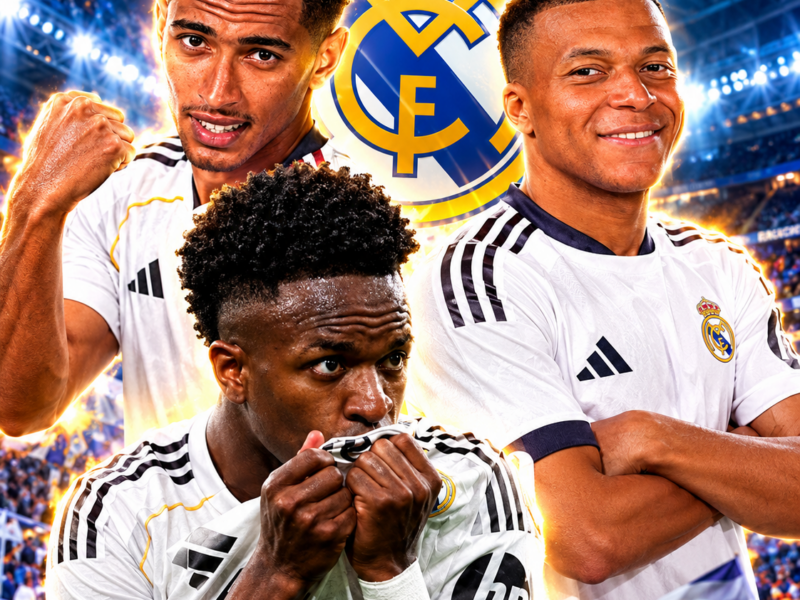
Mourinho’s Ruthless Real Madrid Gamble: Why Mbappé, Vinicius and Bellingham Are Now Untouchable No Matter the Scoreline
There is a version of José Mourinho that Real Madrid fans thought they knew before he ever set foot back in the Santiago Bernabéu dugout, the version who benches superstars just to prove a point, who rotates ruthlessly, who treats every squad like a chessboard where nobody is safe.
That version has not shown up.
Instead, five league matchdays and one Champions League fixture into his second spell in charge, Mourinho has revealed a completely different plan, one built not around unpredictability but around three names that never seem to leave the team sheet: Kylian Mbappé, Vinicius Junior and Jude Bellingham.
According to reporting from Abraham Romero of El Mundo, the Portuguese coach has made a decision that runs against almost everything people expected from him, and it is already reshaping the emotional temperature of the Bernabéu dressing room.
Barring injury, the trio simply does not rotate.
Not on the bench, not in the closing minutes of games that are already won, not even when a player looks visibly exhausted with the scoreline safely out of reach.
It is a strategy of total trust wrapped around a very calculated piece of man management, and the story behind it says as much about last season’s turmoil as it does about the season now unfolding.
Let’s start with what has actually happened on the pitch, because the pattern is unmistakable once you start counting the minutes.
In Real Madrid’s opening matches this season, Mbappé, Vinicius and Bellingham have been, by a distance, the club’s three most heavily used outfield players.
That alone might not sound remarkable for a club with attacking talent of this caliber, until you remember what happened just twelve months earlier.
Last season, all three players were anything but guaranteed starters at various points, and not by choice.
Bellingham missed long stretches after undergoing shoulder surgery and only re-entered the group later in the campaign, while Mbappé was sidelined by a late-season injury that kept him off the pitch when it mattered.
Vinicius, meanwhile, found himself further down the pecking order than anyone at the club would have predicted, reportedly behind Fede Valverde and at least one other teammate in the rotation queue set up by his previous coach.
That coach was Xabi Alonso, and the way his rotation policy unraveled with Vinicius specifically has become something of a cautionary tale inside the club, one that Mourinho appears determined never to repeat.
The details of what happened last year are worth remembering precisely because they explain why Mourinho’s current approach looks so deliberate.
Vinicius was left out of the starting lineup away at Oviedo.
He was benched again for the club’s Champions League debut against Marseille, an enormous statement against a talismanic winger many considered untouchable at the time.
And in the first six matches of that season, Vinicius was substituted before the 80th minute in every single one, a detail that, according to those inside Madrid’s orbit, quietly poisoned the atmosphere between player and coach long before results ever forced the issue into public view.
Compare that to what is happening now.
This season, when Mourinho does bring Vinicius off, it tends to happen in the 85th minute, the 87th, sometimes the 89th, deep into what football insiders often call garbage time, the closing stretch when the result is already decided and the only thing left to manage is the clock.
Mourinho applauds him from the touchline as he walks off, a small gesture that plays out in full view of a Bernabéu crowd that has, in these opening weeks of the season, shown visible division in its feelings toward the Brazilian winger.
It is a carefully choreographed moment, and according to Romero’s reporting, it is entirely intentional.
Bellingham’s trajectory tells a similar story.
The Englishman arrived back from vacation later than most of his teammates and went straight into the starting lineup for Madrid’s preseason clash in Cornellà.
In three matches after that, he was substituted in the 78th minute, then the 80th, give or take, before completing three consecutive full ninety-minute performances.
And then there is Mbappé, who has barely left the pitch at all.
The French forward has played every available minute this season with one single exception, a match against Inter Milan in which Mourinho withdrew him in the 93rd minute, bringing on Carlos Sepega for what amounted to two token minutes before the final whistle.
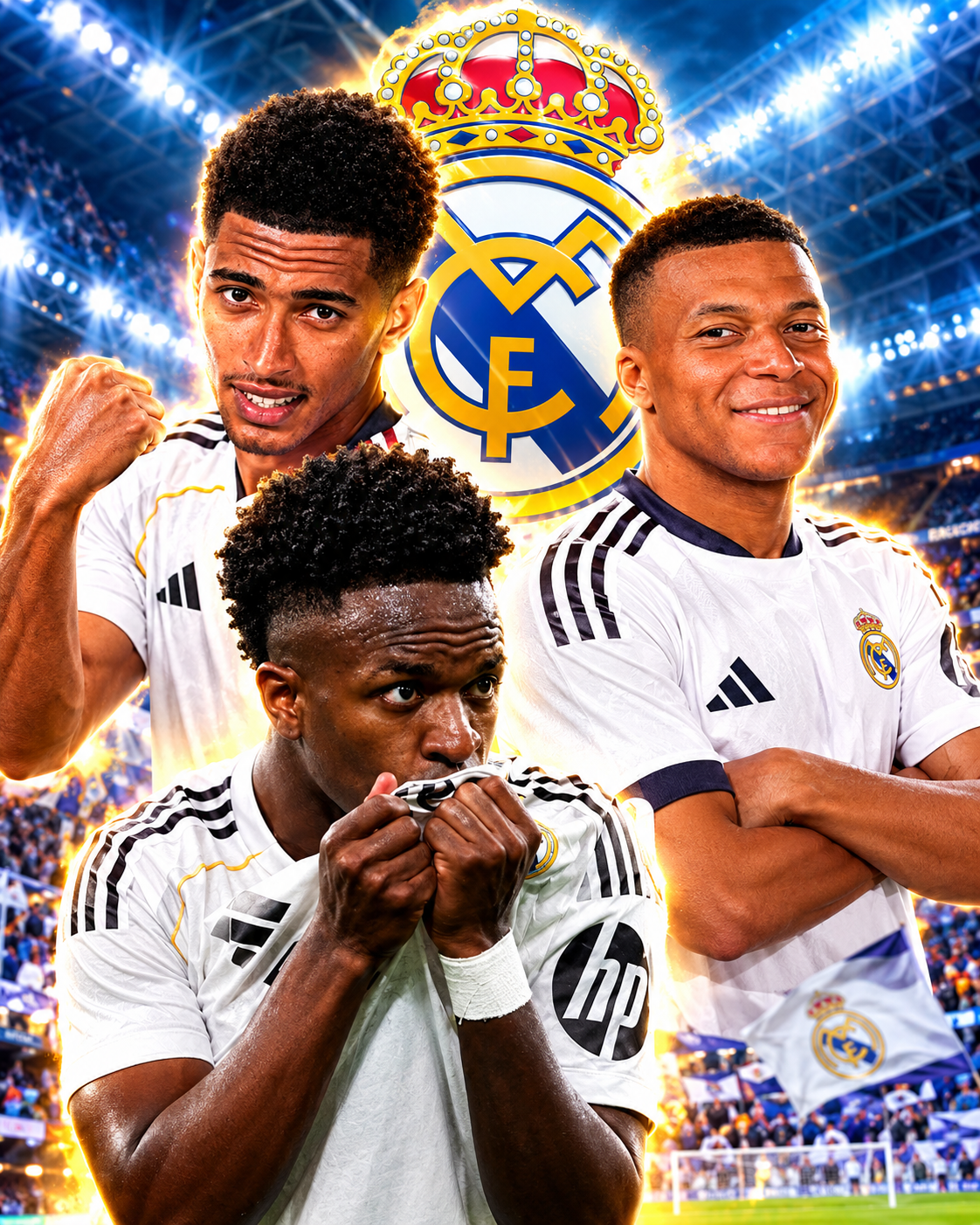
Put simply, even when games are functionally over, Mourinho’s message to his three biggest stars has been consistent: I want you on the pitch.
There is a fascinating wrinkle buried in all of this, one that Romero flagged directly in his conversation about the story.
Real Madrid has had several comfortable afternoons at home already this season, matches where a coach with any inclination toward caution would have an easy excuse to rest his most important players.
Against Rayo Vallecano, Madrid found itself 3-0 up at halftime, a scoreline that all but guaranteed the three points barring a total collapse.
Rayo did claw one back in the second half, making the final margin 3-1, but the game was never genuinely in doubt.
It was, in other words, exactly the kind of fixture where a coach protects his crown jewels for the next test.
Instead, Mourinho left Bellingham on the pitch for the full ninety minutes, even after telling reporters afterward that the midfielder had, in his own words, been running on empty since around the 75th minute.
The only change enforced during that Bernabéu stretch of games came when Valverde felt a slight muscular twinge, forcing an early substitution that had nothing to do with rotation philosophy and everything to do with physical precaution.
Everyone else stayed put.
So what is actually driving this?
Is Mourinho genuinely convinced these three players offer such an immediate performance edge that leaving them out is simply too risky, or is something more psychological going on, a coach determined not to upset three players whose collective mood can define an entire season?
Romero’s answer, at least based on the evidence from these opening weeks, leans toward the second explanation, though he is careful not to dismiss the first entirely.
His reasoning is straightforward.
If these were truly must-win, edge-of-your-seat contests every single time, then leaving your best players in until the final whistle would make obvious tactical sense.
But Madrid has, for the most part, controlled these opening matches comfortably, at home, in conditions that are theoretically ideal for a coach looking to manage minutes and protect legs for a long season.
And still, Mourinho has kept his stars out there almost until the final whistle, virtually every time.
That points toward something less about tactics and more about chemistry, about building understanding between three players who, by nature of their talent and their profile, are used to being the center of attention on any pitch they step onto.
Mourinho wants them to learn each other’s spacing, their tendencies, the moments when one should drift wide while another cuts inside.
But he also, quite clearly, wants them content.
And in modern football, especially at a club like Real Madrid, contentment for a superstar rarely comes from a 4-1 win in which he did not score or assist.
It comes from being trusted, being needed, being the player the coach refuses to take off even when logic might suggest otherwise.
This is where the psychology of last season becomes impossible to ignore.
What happened between Xabi Alonso and Vinicius did not just cost the club results, it cost the dressing room its center of gravity.
Vinicius and Bellingham, according to those close to the squad, are widely considered the most influential voices inside that locker room, the players other teammates gravitate toward, follow, and take cues from, even more so than Mbappé, whose importance is unquestioned on the pitch but whose standing inside the group dynamic is understood differently.
When that relationship with Alonso soured, the fracture reportedly spread well beyond just one player’s personal frustration.
It affected morale broadly, and Mourinho, by all accounts, is acutely aware of that history.
He has walked into a locker room he needed to win over quickly, and the fastest way to do that, evidently, was not through tactical innovation or fiery team talks but through a simple demonstration of trust: keeping the biggest names on the pitch, every match, for as long as humanly possible.
There is precedent for this inside the club’s own recent history, and it comes from an unlikely source: Carlo Ancelotti.
During his time in charge, Ancelotti reportedly operated on a similar philosophy specifically with Vinicius, the idea being that a happy, trusted, empowered Vinicius consistently produces Real Madrid’s best version of the player.
An unhappy Vinicius, by contrast, becomes a liability both on the pitch and in the broader emotional ecosystem of the squad.
Mourinho appears to be applying the same logic across all three of his headline attackers now, treating emotional investment as a performance lever just as real as any tactical instruction.
Sources close to the club reportedly acknowledge this dynamic openly.
There is a recognition internally that Real Madrid, as an institution, simply wants its biggest stars on the pitch as often as possible, results and fatigue management be damned, at least for now.
One line of internal thinking, according to Romero, has already flagged the obvious danger in this approach: somebody is eventually going to get hurt.
Not from being benched too often, but from the opposite problem, from playing every single available minute across a grueling campaign that includes league football, Champions League commitments, and whatever cup runs Madrid finds itself in as the season progresses.
Muscle injuries in modern football rarely announce themselves in advance, and a schedule with no rotation buffer for your most important players is, by definition, a gamble against the calendar.
For now, though, the club appears willing to take that risk, and the reasoning may extend beyond simple chemistry-building into something more calculated: individual awards season is approaching, and Real Madrid has clearly decided which of its stars it wants standing on that stage.
This brings us to the Ballon d’Or subplot running quietly underneath all of this squad management, and it is a genuinely revealing thread once you start pulling on it.
For two full years, Real Madrid effectively went silent on the Ballon d’Or.
The club stopped promoting the award on its official channels, stopped acknowledging nominations in any organized institutional way, and left individual players to post their own recognition on personal social media if they wanted to mark the occasion at all.
That silence traces directly back to the year Vinicius was widely expected to win and did not, with Manchester City’s Rodri claiming the trophy instead, a result that reportedly left deep frustration inside the Madrid hierarchy, compounded by an ongoing institutional feud with both French football authorities and UEFA around that period.
This year, something has visibly shifted.
The club has started actively engaging with Ballon d’Or coverage again, breaking that multi-year silence in a way that insiders describe as deliberate rather than incidental.
Mbappé has been doing rounds of individual interviews, including with the sports outlet L’Équipe, conversations that carry the unmistakable feel of awards-season positioning.
And in a press conference, Mourinho himself was unambiguous, stating flatly that Mbappé is the best player in the world, a level of directness that stands out given how carefully clubs usually navigate individual award talk involving multiple superstars on the same roster.
The comparison to Barcelona is instructive here, because it highlights just how differently the two rival institutions are handling their own award campaigns.
At Barcelona, club president Joan Laporta has been openly, explicitly vocal that the trophy belongs to Lamine Yamal this year, a statement direct enough that even Rodri, last year’s winner, has reportedly acknowledged it as a fair claim.
Real Madrid has not gone quite that far in public, no equivalent statement has come from club president Florentino Pérez naming Mbappé as the rightful winner.
But the institutional signals, taken together, point in exactly that direction: a club that has chosen its horse in this particular race, even if it is not shouting the choice from the rooftops the way its archrival has.
Does that mean Mourinho is deliberately engineering minutes for Mbappé at the expense of Vinicius or Bellingham purely to help an awards campaign?
Almost certainly not in any crude, direct sense, few believe Mourinho would sacrifice tactical sense or dressing room harmony purely to pad one player’s individual case for a trophy voted on by journalists.
But there is a more subtle version of the same dynamic at play, one where the club’s broader institutional preference for keeping its brightest stars visible, productive, and dominant on the biggest stages aligns naturally with a coach who already wants those same players on the pitch for entirely separate reasons.
The two motivations reinforce each other, whether or not either party consciously intends it that way, especially in an era where the journalists who vote on individual awards are known to weight recent form and visibility just as heavily as full-season statistical dominance.
Keeping your best players constantly in view, scoring, assisting, dominating headlines, is good business regardless of the Ballon d’Or conversation, but it certainly does not hurt the campaign either.
Now, shift focus away from the headline trio and toward the players orbiting around them, because that is where the real cost of this untouchable-three policy becomes visible.
Take the club’s big-money defensive signing, a player reportedly signed for a fee in the neighborhood of 130 million euros, who has found consistent playing time surprisingly difficult to come by in these opening weeks.
That is a striking situation for a player of that price tag, and it underlines just how firmly Mourinho’s rotation policy is concentrated around protecting the attacking trio rather than spreading opportunity evenly.
Arda Güler offers an even sharper case study.
The young Turkish midfielder opened the season as one of Madrid’s standout performers, showing exactly the kind of form that suggested a breakout campaign.
Then a suspension kept him out of the Inter Milan fixture, and since returning to eligibility, he has struggled to reclaim consistent minutes, coming off the bench in back-to-back matches rather than reclaiming a starting role.
It is not that either player has been discarded or forgotten, but their path to regular game time now runs through a much narrower channel than it would under a coach less committed to his headline three.
Interestingly, this pattern does not apply uniformly across the entire squad, and understanding where Mourinho does rotate is just as important as understanding where he refuses to.
Fullback positions have seen regular change, and Mourinho has been explicit about why in press conferences, stating plainly that no fullback should expect to play fifty matches across a full season given the depth Madrid possesses at that position, with multiple high-level options competing for those two slots.
Central defense has also seen careful management, largely to protect players like Antonio Rüdiger from burnout given the club’s comparatively thin depth at center back relative to other areas of the squad.
And in central midfield, rotation has been the most visible of all, a deliberate contrast to the fixed nature of the front three.
The logic seems consistent once you see the full picture: Mourinho is managing squad fatigue and injury risk everywhere except in the three positions he considers most valuable to results and to dressing room morale, a calculated trade-off rather than an accidental inconsistency.
Whether that trade-off holds up over the marathon of a full season, especially with Champions League knockout football and a demanding league title race still to come, remains one of the more compelling subplots to track as the campaign develops.
There is also a quieter, more personal layer to this story involving Vinicius specifically, one that goes beyond simple substitution timing and into genuine man management around crowd relations.
According to Romero, Mourinho has been working with Vinicius both publicly and privately on how the Brazilian handles hostile atmospheres in opposing stadiums.
Publicly, the gestures are warm: embraces on the touchline, applause as Vinicius walks off in those late-game substitutions, visible affection that plays well for a Bernabéu crowd still working through its own complicated feelings toward the winger.
Privately, inside the dressing room, the message is reportedly much more direct, urging Vinicius to be conscious of how he engages with opposing fans and to manage his reactions more carefully, particularly with a difficult away fixture against Atlético Madrid looming on the calendar.
This is not a new theme for Vinicius, and Mourinho was reportedly among the first to publicly address it, criticizing the player’s decision to confront the crowd during a Champions League match against Benfica.
That criticism appears to have planted the seed for the good-cop, bad-cop dynamic now playing out in real time: praise and protection on the pitch, direct correction and coaching behind closed doors.
It is, in its own way, a classic piece of Mourinho man management, the kind of dual-track relationship he has built with difficult, brilliant players throughout his coaching career, and it sets up nicely for what is coming next on the calendar.
That next test is the Madrid derby at the Metropolitano, a fixture that has, in recent seasons, developed an uncomfortable reputation for Real Madrid.
The first major derby of the campaign consistently lands around this point in the calendar, and more often than not in recent years, it has been staged at Atlético’s home ground.
The results have not been kind.
Real Madrid has repeatedly walked away from these early-season trips to the Metropolitano with draws or defeats, results that, regardless of the broader table position, tend to cast an outsized shadow over the weeks that follow.
Last year’s version of this fixture arrived just as Bellingham returned from shoulder surgery, with Alonso throwing him straight into the starting lineup for what amounted to his first truly high-pressure test of the season.
There is, according to those covering the club closely, an almost ritualistic tension that builds around this specific match every year, as though it functions as an early referendum on how the season is truly shaping up, regardless of what happened in the opening weeks against lesser opposition.
And this year’s edition carries even more weight than usual, because of what comes immediately afterward: a lengthy international break.
Lose against Atlético, and Real Madrid would be facing a second defeat in a genuinely significant match this early in the season, following the earlier setback in Sevilla.
That would send the club into an extended pause on a distinctly sour note, the kind of scenario that tends to fuel weeks of speculation, criticism, and pressure before a ball is even kicked again.
Mourinho appears well aware of the stakes, and according to Romero, there is a clear sense that he is already working to prepare his squad mentally for that specific challenge, both through his handling of Vinicius’s crowd interactions and through broader messaging inside the camp.
Whether that preparation surfaces explicitly in a pre-match press conference or simply continues building quietly behind the scenes remains to be seen, but the framing is already in motion.
Stepping back from the tactical and psychological threads for a moment, it is worth asking a simple question: how happy is Real Madrid, as an institution, with Mourinho’s start to the season?
Based on Romero’s assessment, the answer lands somewhere around a seven or eight out of ten, a genuinely strong grade tempered specifically by that Sevilla defeat.
Crucially, the way that loss unfolded matters as much as the result itself.
This was not the kind of flat, uninspired performance that characterized some of Madrid’s worst outings over the previous two seasons, matches where the team barely mustered a shot on target and simply looked disengaged.
In Sevilla, Real Madrid reportedly created numerous chances and, by most accounts, could easily have won the match had fortune bounced differently.
That distinction, bad luck rather than bad performance, appears to have softened the internal reaction considerably, even as the result itself stung.
There is one more dimension to this story worth exploring, and it involves the delicate theater of Mourinho’s relationship with referees and match officials, a subject he has approached with surprisingly measured tones so far this season, at least on the surface.
In a recent press conference, when journalists did not immediately raise the subject of penalty decisions, Mourinho volunteered the topic himself with a pointed remark, essentially inviting scrutiny of officiating decisions that had gone against his team.
Those following the club closely believe the comment referenced a specific incident, a handball decision involving Athletic Club during a match in San Sebastián, rather than a separate penalty controversy involving Barcelona from earlier in the campaign.
But the broader pattern is what stands out: Mourinho, known throughout his career for combustible, headline-grabbing conflicts with officials and rival coaches, has so far this season maintained an unusually calm public posture.
That calm, according to those covering him daily, feels less like genuine serenity and more like a controlled strategy, an intentional restraint that occasionally cracks just enough to remind everyone that the old Mourinho instincts have not disappeared, merely gone dormant for the moment.
There is a sense that this composure will not last indefinitely, that some spark, some contentious refereeing decision or heated rivalry moment, will eventually break through the current calm and reveal the more combative version of the coach that fans and media alike remember vividly from his first spell in Spanish football.
Some around the club have even speculated about an internal division of roles at play, with the institutional voice of the club, its media and communications apparatus, continuing to push hard on football-related grievances as it always has, while Mourinho himself, for now, plays a more measured public character, occasionally letting a pointed remark slip through as a reminder that he is watching closely too.
Whether that dynamic holds through the Atlético derby and beyond will be one of the more interesting subplots to track as the season intensifies.
Pulling all of these threads together, what emerges is a portrait of a coach making a very specific, very deliberate bet.
Mourinho has looked at what went wrong for his predecessor, identified the fracture point with painful clarity, and built an entirely different framework around his three most important attacking players.
Where Xabi Alonso tested boundaries with rotation and discovered how quickly that approach could corrode trust, Mourinho has chosen the opposite extreme: near-total minutes, near-constant presence, and a stream of small, visible gestures designed to signal loyalty and confidence.
It has, by most measures, worked so far.
Real Madrid sits in a strong position after these opening weeks, with only the Sevilla stumble denting an otherwise productive start, and the locker room dynamics, at least from the outside, appear considerably healthier than the fractured atmosphere that defined portions of last season.
But this approach carries real risk baked into its very design.
A fixture list that offers no rotation buffer for three players carrying this much individual and collective importance is, mathematically, a fixture list courting fatigue-related injury at some point across a season that stretches deep into the calendar with league, Champions League, and cup commitments layered on top of each other.
The question that lingers, the one even people inside the club are reportedly already asking quietly among themselves, is simple: what happens the day Mbappé, Vinicius, or Bellingham picks up a soft-tissue injury that a more measured rotation policy might have prevented?
At that point, the conversation shifts immediately, from admiration of Mourinho’s man management instincts to pointed questions about squad management and risk tolerance, with the coach almost certainly bearing the brunt of that criticism regardless of how well the policy served the team in these opening months.
For now, though, that reckoning remains hypothetical, a cloud on the horizon rather than a storm actively breaking.
What is not hypothetical is the derby at the Metropolitano, an immediate, concrete test that will tell us far more about where this Real Madrid team truly stands than any of the comfortable home wins that have defined the season so far.
A strong result there validates everything Mourinho has built in these opening weeks, the trust, the visible affection toward his stars, the careful management of Vinicius specifically ahead of a famously hostile atmosphere.
A poor result invites an entirely different set of questions, ones that will follow the club through a long, uncomfortable international break with nothing but speculation to fill the silence.
Either way, the plan itself is now unmistakably clear, confirmed not through vague hints or anonymous sourcing but through the hard evidence of minutes played, substitution timing, and a coach’s own words in press conferences week after week.
Mbappé, Vinicius, and Bellingham are the untouchables of this Real Madrid project, at least for now, and everyone else in the squad exists, in some fundamental sense, to rotate around them.
It is a bold departure from the reputation Mourinho built over two decades in the game, and it is, in its own way, a fascinating reversal: the coach once defined by his willingness to bench anyone, anywhere, regardless of reputation, has arrived at the Bernabéu and built his entire early-season identity around the opposite instinct.
Keep them happy.
Keep them on the pitch.
And figure out everything else later.
Whether that formula survives the grind of a full European season, or whether it eventually collides head-on with the physical realities that eventually catch up with every squad that refuses to rotate its biggest names, is the story that will define whether this opening chapter of Mourinho’s second act at Real Madrid becomes a triumph or a cautionary tale of its own.









