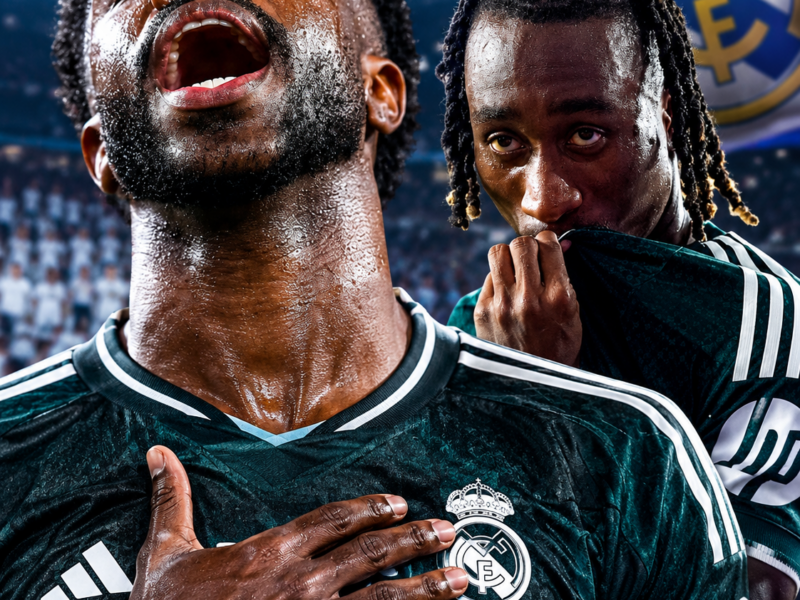
Mourinho’s Real Madrid Survive Elche Scare as Mbappé, Bellingham and Carlos Espí Deliver a Stoppage-Time Thriller: Inside the Making of Europe’s Most Dangerous (and Most Fragile) Attack
It is the 91st minute at Estadio Martínez Valero, and Real Madrid’s perfect night has turned into a nightmare.
Two goals up with barely twenty minutes left, Jose Mourinho’s side has somehow let Elche claw all the way back to 2-2, and the away end has gone quiet in that specific way that only happens when a team senses history repeating itself.
Then Jude Bellingham receives the ball near the halfway line, takes one long, almost lazy touch past a defender, and suddenly the whole picture changes.
He drives forward, slips a pass through the channel, and Kylian Mbappé is in behind the last line with only the goalkeeper to beat.
Mbappé could shoot. Everyone in the stadium expects him to shoot.
Instead he squares it, almost casually, to a substitute most casual fans outside Spain had never heard of two months earlier.
Carlos Espí taps it in from close range, and Real Madrid escape Elche with a 3-2 win they barely deserved and desperately needed.
That single sequence, roughly eight seconds from first touch to goal, tells you almost everything you need to know about this Real Madrid team right now.
There is frightening individual talent. There are new faces stepping up when it matters most. There are moments of quality that win matches out of nothing.
And there are, underneath all of it, real problems, big-name players who are not performing, and questions about this squad that still do not have clean answers.
So this is not a hype piece, and it is not a pile-on. This is simply what has actually happened on the pitch through six league games, who is delivering, who is struggling, and why this could still become the most dangerous front line in Europe, if Mourinho can solve the one puzzle that broke three of his predecessors.
A club coming off two years of nothing
To understand why the Elche game mattered so much, you have to understand where Real Madrid were before it kicked off.
This is a club that had gone two full seasons without winning a major trophy, an eternity by Bernabéu standards, and last season in particular was a mess from start to finish.
Xabi Alonso arrived with promise and left within a year. Alvaro Arbeloa was promoted from the academy to steady the ship, and while he had his moments, nobody at the club found a system that got Mbappé, Vinícius and Bellingham functioning together at the same time.
Real Madrid finished the 2025-26 season without the league title, watching Barcelona win it with a 2-0 victory in an El Clásico, a result that effectively ended any debate about whether a coaching change was coming.
Wikipedia
Florentino Pérez, freshly re-elected as club president after a tense race, went back to a manager who has never needed reminding how to win a league title in Spain.
Real Madrid confirmed Jose Mourinho as their new head coach on a three-year deal in June 2026, with the appointment becoming all but inevitable once Pérez secured re-election.
Al Jazeera
It marked Mourinho’s return to the Bernabéu thirteen years after he first left the club, and made him the only manager in the modern era to take charge of Real Madrid twice.
Wikipedia
He officially began work on July 13, the first day of preseason, on a contract running through June 2029, and the club later gave him a strangely low-key, almost closed-door unveiling ceremony rather than the usual galactico spectacle, a small sign of how differently this era is starting compared to those before it.
Wikipedia
Al Jazeera
Mourinho’s teams have always been built around the same core ideas. A compact defensive shape, discipline off the ball, and quick, direct transitions the moment possession is won.
The obvious question heading into the summer was whether a front line built around three of the most gifted, most individually minded attackers in world football would accept that kind of structure.
Mbappé answered that question himself before a ball had even been kicked, describing Mourinho publicly as a coach who simply knows how to win. Whatever else happens this season, the buy-in from the biggest name in the building was never really in doubt.
A five hundred million euro summer
Pérez backed his new manager with one of the most expensive rebuilds in the club’s history, reportedly worth somewhere in the region of half a billion euros once every deal is added together.
The first arrival was confirmed on 15 June, when Marc Cucurella joined from Chelsea on a six-year contract, followed a day later by a homegrown reinforcement as Antonio Rüdiger signed a one-year extension keeping him at the club through 2027.
Wikipedia
Wikipedia
From there the business only accelerated. Bernardo Silva, Ibrahima Konaté and Denzel Dumfries all joined as the club overhauled its squad after two consecutive trophyless seasons, adding elite ball retention, top-level defensive cover, and pace and physicality down the right flank.
Vanguard News
But two signings in particular defined the window, and defined the storylines of the opening weeks of the season.
The headline arrival was a 19-year-old Ivorian winger who nobody outside serious football circles had heard of twelve months earlier. Yan Diomande’s stock exploded after a breakout season at RB Leipzig, and his performances for Ivory Coast at the 2026 World Cup sent his valuation into the stratosphere.
Yahoo Sports
Paris Saint-Germain looked to have won the race for him at one stage, before Real Madrid swooped in and reportedly beat their offer on both transfer fee and salary. RB Leipzig’s board eventually approved a deal worth a base fee of around 125 million euros, plus a further 15 million in add-ons, making the teenager the most expensive signing in the club’s history in terms of fixed transfer fee.
Yahoo Sports
Yahoo Sports
Then, almost as an afterthought in the same week the club were closing the Diomande deal, came a much quieter arrival that would end up mattering just as much on the pitch.
Real Madrid signed 21-year-old striker Carlos Espí from Levante for a reported 25 million euro fee, with Gonzalo Garcia expected to leave for Fulham in the same window. Espí had scored 11 goals in 25 La Liga appearances for Levante the previous season, enough to make him one of the most talked about young forwards in Spain without ever being a marquee name outside it.
Vanguard News
Vanguard News
He is a classic penalty box number nine in an era when that profile has become almost extinct, and it turns out Real Madrid may have found the perfect weapon for exactly the moments Mourinho needed most.
The system: fixing Mbappé through the middle
Mourinho’s shape through the opening weeks has been a variation on a 4-2-3-1, with Mbappé occupying the central striker’s role, Vinícius stationed out on the left, and Bellingham and Arda Guler rotating through the pockets of space just behind him.
Behind that front four sits a double pivot, usually some combination of Federico Valverde, Eduardo Camavinga and Aurelien Tchouameni, whose job is essentially to win the ball back before Mourinho’s forwards even need it.
This has meant one significant tactical decision above all the others. Mbappé plays centrally now, not drifting to the left as he so often did under previous coaches, and Vinícius stays wide, in his natural zone, rather than the two of them competing for the same space.
It is a small structural change, but it appears to have solved a problem that three different managers, Carlo Ancelotti, Xabi Alonso and Arbeloa, all tried and failed to fully crack.
Mbappé is doing exactly what he was bought to do, and more
There has never really been any doubt about Kylian Mbappé’s ability to score goals for Real Madrid. The doubt has always been about whether the team around him could turn that scoring into trophies.
After the win at Elche, Mbappé sits on seven goals in six league games, one more than Lamine Yamal, Raphinha, and two other challengers on the list, putting him at the top of the La Liga scoring charts heading into the international break.
WSBTV
He had already scored a brace in Madrid’s 4-1 win over Rayo Vallecano the round before Elche, and at Elche itself he added another goal from close range, this time set up by Yan Diomande in the 33rd minute, before having a separate effort ruled out for offside just before halftime.
FOX Sports
WSBTV
Since his move to the Spanish capital, Mbappé’s underlying numbers have been almost absurd, with more than ninety goals across roughly a hundred and ten appearances in all competitions.
What is different this season, and what genuinely seems to please Mourinho more than the raw scoring rate, is the decision making in the biggest moments.
A striker chasing the individual scoring title in his own league usually shoots in that 91st-minute situation at Elche. Mbappé instead picked out the simplest, most unselfish pass available and let Espí finish the job.
That is precisely the mentality a manager like Mourinho wants from his most important player, someone willing to sacrifice a personal stat line for three points on the road.
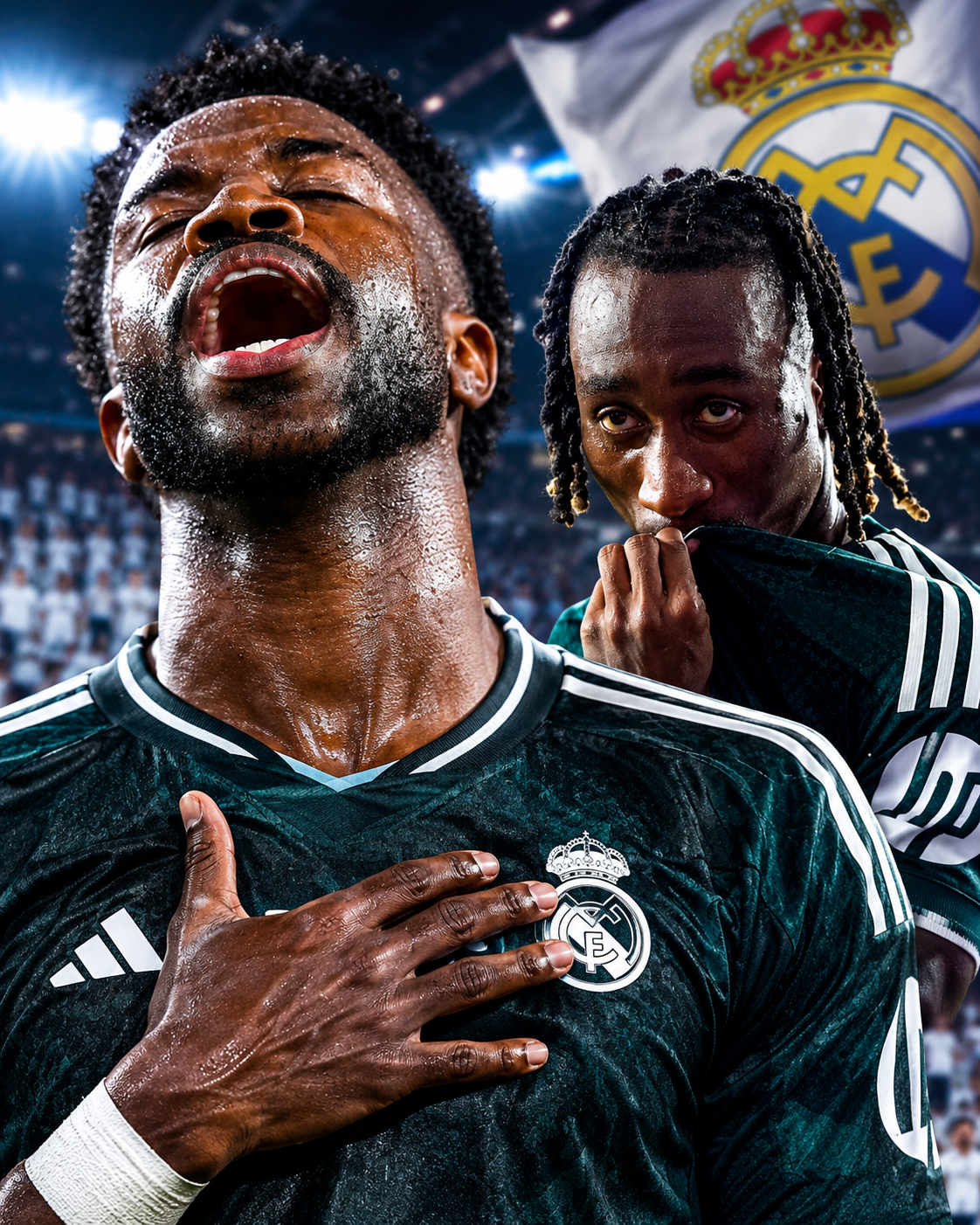
It has not all been flawless. Madrid’s only slip so far this season came away at Real Betis, a 1-0 defeat in which Mbappé missed a penalty, and at Elche he stayed down in visible discomfort after scoring before eventually being cleared to continue by the club’s medical staff.
101 Great Goals
Real Madrid need him fit and firing across the entire season, because without him this attack loses roughly half of its attacking threat overnight.
Bellingham’s World Cup carried straight into the new season
If there is one storyline that quietly might matter more than any transfer this summer, it is the transformation in Jude Bellingham since the middle of last year.
After bursting onto the scene with ten goals in his first twelve La Liga appearances following his move from Borussia Dortmund back in 2023, Bellingham’s output tailed off noticeably as he settled into a deeper, more team-oriented midfield role.
Then came the 2026 World Cup with England, where he was, by most measures, one of the standout performers of the tournament, driving attacks from midfield, carrying the ball through pressure, and scoring seven goals along the way while showing real leadership in difficult conditions.
That confidence has clearly carried straight over into his club form. He currently sits as Madrid’s second highest scorer in the league with three goals, and more importantly he looks like a player who trusts himself again in the biggest moments.
The preseason question about Bellingham was whether a player who thrives in an expansive, free-flowing system would adapt to Mourinho’s more rigid structure, and every indication so far leans toward yes.
At Elche he did not even start the match. He came on as a substitute for Guler in the 68th minute and still managed to produce the single moment of quality that decided the entire game.
The fact that Bellingham and Guler are now genuinely competing for the same pocket of space behind Mbappé is, if anything, good news for Mourinho. Healthy competition for places has been exactly what this squad has lacked in recent seasons.
Arda Guler has become the best story at the club
If one player emerged from last season with his reputation not just intact but genuinely enhanced, it is Arda Guler, and there is a slightly ironic footnote to how that happened.
Turkey’s disappointing exit from the 2026 World Cup, painful as it must have been for Guler personally, meant he was one of the very few first-team players available for the entire preseason, and he used every day of it.
He made an immediate impression with goals and assists in the summer friendlies, and that form earned him a starting spot from the very first weekend of the league season, a place he has not really surrendered since.
The numbers back up the eye test. Heading into the Elche game, Guler had created 24 chances for teammates, comfortably the most of any Madrid player, with Vinícius the next closest on 12, exactly half his tally.
At Elche his set piece delivery produced the opening goal, a well-struck free kick that deflected in off Elche goalkeeper Matías Dituro for an own goal, adding another layer to a growing reputation as a genuine weapon from dead balls.
What Guler gives this system, more than anything, is composure under pressure. When Madrid are being squeezed, he is the player who wants the ball between the lines, turns away from pressure, and finds the pass that breaks the opposition’s press.
That is precisely the kind of service Mbappé needs, someone capable of putting the ball into space just as he is already starting his run.
Mourinho, true to form, has made clear that nobody in this squad has a guaranteed starting shirt regardless of reputation, and he dropped Guler for the visit of Rayo Vallecano in favor of Diomande. Guler was straight back into the starting eleven for the very next match at Elche.
He is still only 21 years old, and if this level of performance holds up over a full season, he is on track to become one of the most important players in the entire squad.
Yan Diomande is still finding his feet, and that is entirely expected
Diomande’s arrival from RB Leipzig came with a level of hype that would be unreasonable for almost any teenager, especially one moving to a completely new league, country and language in the same summer he also played at a World Cup.
The reported price tag, roughly 125 million euros guaranteed plus another 15 million in potential bonuses, made him the most expensive signing in Real Madrid’s entire history in terms of fixed transfer fee, and expectations followed accordingly.
Managing Madrid
Given that price tag, plenty of people assumed he would walk straight into the starting lineup. Instead, heading into the Elche fixture, he had started only once all season and had not yet recorded a single goal or assist in the league.
That is simply the reality of competing for minutes in a squad this deep. Mourinho has publicly backed the young winger, pointing out that at a club with fewer elite attacking options, Diomande would already be playing the full ninety minutes every single week without question.
At Elche, he finally got off the mark in terms of end product, setting up Mbappé’s opening goal in the 33rd minute for his first competitive goal contribution at the club.
If Vinícius continues to struggle for consistency on the left, expect Diomande’s minutes on that flank to grow steadily over the coming months. The battle for that starting spot might end up being one of the more interesting subplots of the entire season.
Carlos Espí, the twenty five million euro super sub who keeps deciding matches
When Real Madrid announced the signing of Carlos Espí at the end of July, the reaction from a large chunk of the fan base was some version of, who is this.
A 21-year-old Spanish striker standing 1.94 meters tall, signed on a contract running through 2031, arriving to essentially replace Gonzalo Garcia, who departed for Fulham as part of the same summer’s business.
Wikipedia
He scored 11 league goals for Levante the previous season, and he came into a Real Madrid squad that already had more attacking talent than most Champions League contenders, let alone a 21-year-old with no prior top club experience.
Therealmediang
And yet, from the bench specifically, he has been arguably the single most decisive player at the club so far this season.
In Mourinho’s very first game back in charge, away at Espanyol, Espí came off the bench and scored the winning goal in a 2-1 victory, an almost impossibly dramatic way to introduce himself to the fan base.
101 Great Goals
Against Real Betis he found the net late in the match again, only to see it ruled out for offside, and then at Elche, with the score locked at 2-2 and the game slipping away, Mourinho threw caution to the wind and brought on both Espí and Endrick in search of a winner.
Goal.com
The gamble paid off in the 91st minute, when Bellingham broke forward, found Mbappé, and Mbappé squared unselfishly for Espí to turn home the winning goal.
Goal.com
Two late winners have effectively turned what could have been two draws into two full wins, four extra points in the table generated by a player who, by the club’s own numbers, had played barely twenty minutes across his first three league appearances before that Elche moment.
Every genuinely elite team in Europe needs a striker on the bench capable of changing a match when the door has been locked shut. It increasingly looks like Real Madrid have found exactly that in a 21-year-old nobody had heard of two months ago.
Depth behind the front line, and a schedule that rewards it
Beyond the headline names, Mourinho also has Bernardo Silva, Brahim Diaz, Endrick and Espí available to rotate through the attacking positions, and that is before factoring in Rodrygo’s eventual return from injury later in the campaign.
Bernardo Silva in particular brings elite ball control and tactical intelligence, exactly the kind of balance Mourinho tends to value, even though he missed the opening Champions League fixture through suspension.
That rotation matters enormously given the fixture list. Elche arrived just three days after the win over Rayo Vallecano, and the Madrid derby against Atletico follows just five days after Elche.
With a schedule that congested, Mourinho can rotate his squad without a meaningful drop in quality, and the competition for places keeps every single player sharp week to week.
The Mbappé and Vinícius puzzle, three managers deep
The question that has followed Real Madrid since the day Mbappé signed is whether he and Vinícius Junior can genuinely coexist and thrive in the same forward line.
The output says the raw talent is not the issue. Even during a season widely regarded as underwhelming for the team as a whole, the pair combined for a remarkable 64 goals in all competitions last season.
Managing Madrid
The real issue has always been fit rather than firepower. Both players are most comfortable operating from the left side of the pitch, and both prefer to receive the ball at their feet in order to be at their most dangerous.
Ancelotti tried to solve it. Xabi Alonso tried to solve it. Arbeloa tried to solve it. None of them found a lasting answer.
Mourinho’s solution has been structurally simple, fix Mbappé centrally as the focal point of the attack, and keep Vinícius wide on the left where he has always been most effective in isolation.
For Mbappé, it is clearly working. For Vinícius, the early returns tell a more complicated story.
Vinícius is not at his best level, and even his own manager is saying so publicly
This is the uncomfortable part of the story, and it is worth stating plainly, this is not simply outside criticism, it is coming directly from within the club.
Vinícius turned down interest from Arsenal over the summer to sign a new long-term contract at the Bernabéu, and fans now expect a player on that kind of deal to justify it on the pitch every week.
Heading into the Elche fixture, he had scored just one league goal in six appearances, that goal coming in the 4-1 win over Real Sociedad, despite generating chances worth an estimated 2.4 expected goals across the same stretch of matches.
He is not invisible, to be fair. He leads the squad in assists with three, so there is genuine creative output even when the finishing has dried up.
But Vinícius has never been judged by his assist column, and everybody inside the club knows it.
Before the Elche match, Mourinho was uncharacteristically blunt in public. He praised the winger’s defensive effort and overall work rate, but stated plainly that the very best version of Vinícius is the one who scores goals, and admitted that top level performance had been missing lately, even while insisting he remains satisfied with the player overall.
That is classic Mourinho man management, tough love and public pressure delivered in the same breath as genuine support.
The fan base has not exactly been the picture of patience either. Vinícius was audibly whistled by sections of the home crowd during the 2-1 Champions League win over Marseille, and after the defeat at Real Betis, footage circulated online showing him walking briskly past Mourinho as the manager attempted to speak with him, an echo of his well documented friction with Xabi Alonso the previous season.
In fairness to him, that Betis match might actually have been his best individual performance of the campaign so far. He would likely have picked up an assist had Espí’s late goal not been controversially ruled out for offside, and he was the player who won the penalty that Mbappé subsequently missed.
So the issue is not that Vinícius is playing badly in any obvious sense. It is that the one quality that makes him genuinely special, the individual moment that single-handedly decides a match, simply has not shown up consistently enough.
And this is not an entirely new pattern. Since being snubbed for the 2024 Ballon d’Or, Vinícius has struggled at times to sustain the kind of consistency that once made him look like the best player in the world on his day.
Last season he still managed 22 goals and 14 assists across all competitions, respectable numbers on paper, but there were plenty of matches in between where he simply disappeared from the game entirely.
In this current 4-2-3-1 shape, stationed out on the left, he has at times looked genuinely isolated from the rest of the attack, cut off from the service that used to find him so reliably.
Which raises the uncomfortable but obvious question hanging over the rest of this season. If Vinícius continues at this level while Diomande keeps improving week by week, what does Mourinho actually do.
This is a manager with no history of protecting reputations for their own sake, and that single dynamic may end up being the biggest storyline at the Bernabéu all season.
Rodrygo is missing, and it has nothing to do with form
One name conspicuously absent from all of this attacking rotation is Rodrygo, and his absence has nothing whatsoever to do with performance.
The Brazilian forward suffered a rupture of the anterior cruciate ligament and the lateral meniscus in his right knee during Madrid’s 1-0 defeat away at Getafe on 2 March 2026.
Yahoo Sports
He underwent successful surgery on the injury on 10 March, performed under the supervision of Real Madrid’s medical services, an operation that immediately ended his involvement in the remainder of last season.
ESPN
That timing was brutal in almost every possible way. The injury also ruled him out of the 2026 World Cup with Brazil, a tournament he would otherwise have been expected to play a major role in.
ESPN
Early medical estimates suggested the recovery from a combined ACL and meniscus injury of this severity would take around ten months, meaning Rodrygo is expected to miss the remainder of the current calendar year, with a possible return to full training not arriving until early 2027.
World Soccer Talk
That is a genuine loss for this squad, because Rodrygo is comfortable playing across the entire front line and offers a level of tactical flexibility that few other Madrid attackers can match.
But his prolonged absence is also, in a strange way, exactly why players like Espí and Diomande are getting the game time and the opportunities that are currently defining their early careers at the club.
Where the table actually stands after Elche
After the final whistle at the Martínez Valero, Real Madrid moved level on points with defending champions Barcelona, who had the chance to move back ahead of them by hosting newly promoted Racing Santander in midweek.
In the Champions League, Madrid opened their new league phase campaign with a win over Marseille, a solid if unspectacular start to the European campaign.
But it would be dishonest to pretend this team looks fully convincing right now, and Mourinho himself has not tried to pretend otherwise.
After the final whistle at Elche, Mourinho admitted plainly that his side had gone from having the game under control to losing that control entirely, a phrase that will likely follow this team around until the pattern actually stops repeating itself.
FOX Sports
Madrid dropped too deep as a collective unit in the second half, the changes from the bench came later than they probably should have, and without two late moments of individual quality from Espí, this would currently be described as a genuine crisis rather than a mildly concerning trend.
Mourinho is not selling any fantasies to his fan base either. Before the Elche match he said openly that he hopes this team will be a noticeably better version of itself in three months’ time, but that he has no magic solution to offer immediately, and that the longer any coaching staff works with a group of players, the stronger that group typically becomes.
That is, at the very least, a fair and honest assessment. This squad was heavily rebuilt across a single summer, several of its most important players only rejoined preseason late after deep runs at the World Cup, and true tactical cohesion rarely arrives in six matches.
Why this attack could still become the most dangerous in Europe
Step back from the individual dramas for a moment, and the raw attacking talent available to Mourinho right now is genuinely frightening.
There is the current top scorer in La Liga leading the line in Mbappé. There is Bellingham, playing with the confidence he carried home from an outstanding World Cup. There is Guler, already the squad’s leading chance creator at just 21 years old. There is a club record signing in Diomande who is only just beginning to find his footing. And there is a completely new bench hero in Espí, already worth four extra points on his own.
If Vinícius Junior, a player who has scored in two separate Champions League finals, in 2022 and again in 2024, finds his very best level again at any point this season, this genuinely could become the most dangerous front line anywhere in European football.
Mourinho’s actual challenge was never going to be a shortage of talent. It was always going to be getting all of these stars pulling in the same direction without any one of them feeling shortchanged, which is precisely the puzzle that broke Ancelotti, Alonso and Arbeloa before him.
What comes next
The first real test of whether any of this is sustainable arrives fast. The Madrid derby against Atletico at the Metropolitano is just five days after the final whistle at Elche, and it will tell everyone, players and fans alike, whether this attack is genuinely ready or whether Elche was a warning sign that got papered over by one moment of brilliance.
Does Vinícius rediscover the version of himself that decided two Champions League finals, or does Yan Diomande keep climbing the pecking order until the decision on that left flank is effectively made for Mourinho.
Either way, this is a Real Madrid team currently living on the edge of two very different stories at once, a genuinely thrilling one about young talent breaking through, and a far more familiar, uncomfortable one about a superstar attack that still has not learned how to close out games on the road.
Would you like me to also format this as a downloadable Word document for you?









