Mourinho’s Golden Chance: How Real Madrid Can Reinvent Themselves Without Mbappé (And Might Actually Get Better)
Every great coach waits for one moment in his career when fate forces his hand.
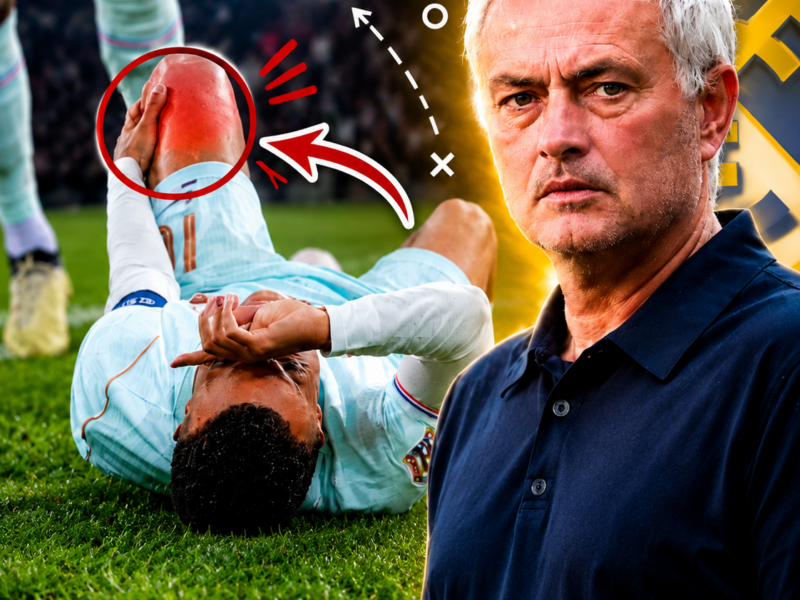
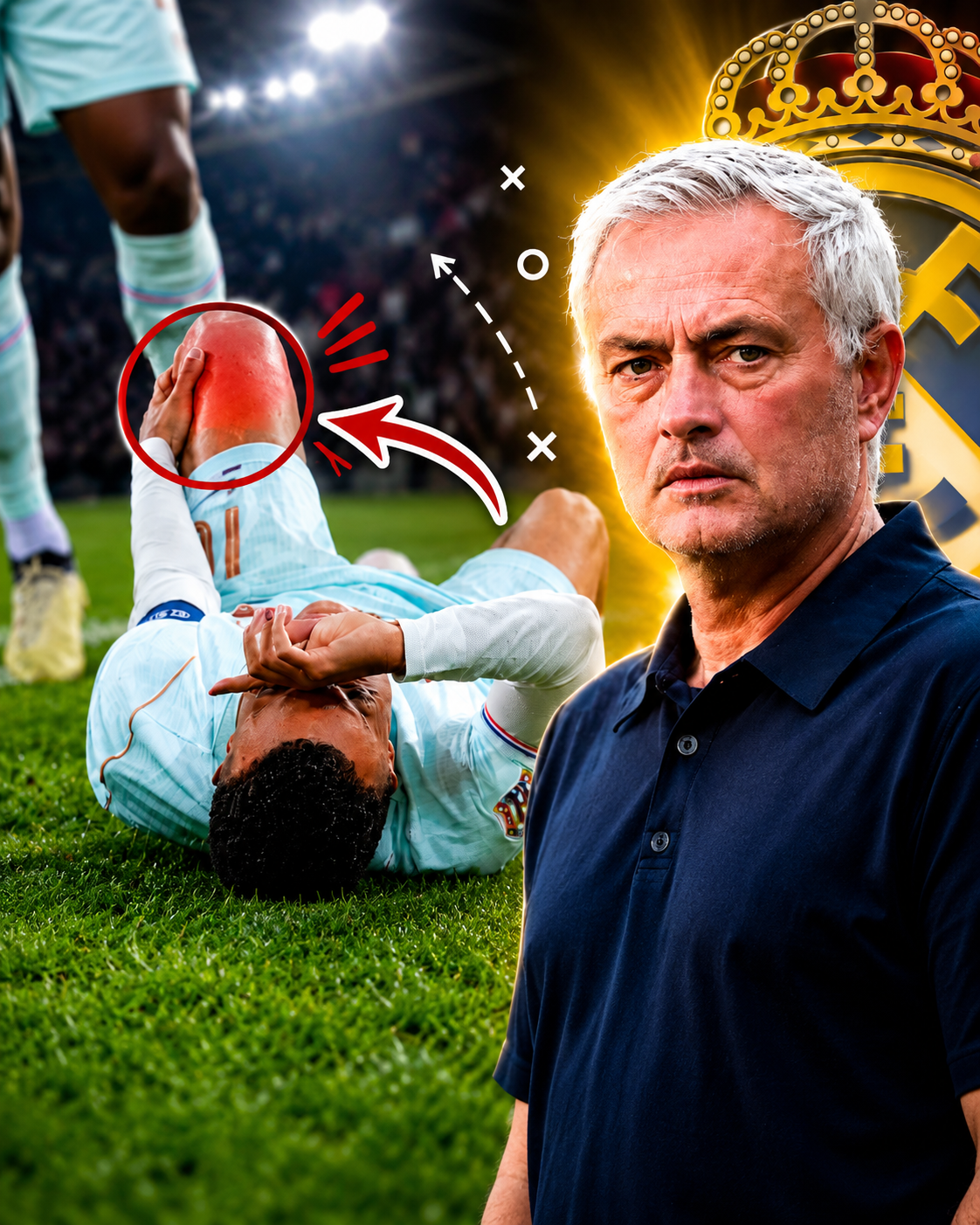
For José Mourinho at Real Madrid, that moment may have just arrived in the form of a left knee.
Kylian Mbappé is hurt, the club is staying quiet about when he will be back, and the whole football world is asking the same nervous question.
But here is the question almost nobody is asking: what if this injury is the best thing that could happen to Madrid’s tactical identity?
Stay with me, because the answer is more fascinating than you think.
What We Actually Know About Mbappé’s Injury
Let’s start with the facts, because in football the facts get buried under noise faster than a counterattack.
Real Madrid released an official medical report after tests on their star forward.
The diagnosis is a hyperextension of the posterior capsule of the left knee.
Then comes the line that matters most, the one that tells you everything and nothing at the same time.
The club says he is “pending evolution.”
Translation: Madrid does not want to give you a return date.
That kind of vague language is classic club strategy, and it leaves fans filling the silence with their own theories.
So I went looking for more.
Mundo Deportivo, the Spanish sports daily, had a very different tone from the official statement.
Citing specialists, the paper suggested that an injury of this type typically keeps a player out two weeks at the very most.
Remember where this all began.
Mbappé got hurt against Turkey in the Nations League, right after scoring.
Two weeks later, Madrid’s first league match arrives, and it is against Villarreal.
Do the math and that fixture becomes the earliest possible return date.
On paper, he could be back, and fully recovered, for opening day.
The Dilemma Every Madrid Fan Is Wrestling With
Here is where it gets tricky.
Just because Mbappé can play against Villarreal does not mean he should.
Do you rush your best player back to avoid losing his goals, and risk a setback?
Or do you play it safe, let him recover step by step, and make sure he is at 100 percent for the Clásico against Hansi Flick’s Barcelona?
There is no free lunch in this decision.
If you take the cautious road, you will play several matches without your biggest weapon.
Villarreal, Roma, Sevilla and other opponents are all on the horizon.
But that same cautious road opens a door that does not usually open for a coach at a giant club.
It gives Mourinho a controlled laboratory.
A handful of matches to test new ideas, new movements and new partnerships without the pressure of having to build everything around one superstar.
That is the opportunity, and it is bigger than it sounds.
What Madrid Loses Without Mbappé
Let’s be honest about the cost first.
Without Mbappé, Madrid loses space.
Specifically, they lose the threat of running in behind, the ability to attack the defensive line when an opponent sits in a mid-block.
Mbappé’s speed does not just score goals, it bends entire defenses backward and creates room for everyone around him.
You cannot replicate that with a simple substitution.
So the answer is not to find a replacement Mbappé.
The answer is to build a different kind of team.
And Mourinho has several ways to do it.
Option One: The Classic Number Nine, Carlos Espí
The first and most straightforward path is to put a true reference point up front.
Carlos Espí has been doing exceptionally well to open the season, and that form deserves a real look.
Here is what changes with him on the pitch.
Madrid would suddenly occupy all five attacking lanes in a balanced way.
That means the two wide lanes, the two inside channels, and the central lane, all covered evenly.
Think of it like a chessboard where every square has an owner.
Vinícius Júnior stretches the pitch on the left, providing width and isolating his defender.
On the right, the roles flip compared to the usual setup.
Instead of Arda Güler drifting inside to occupy the right inner channel, it becomes the right-back who pushes much higher and deeper.
Trent Alexander-Arnold is the obvious candidate for that job.
With the full-back providing the width, Güler is free to do what he does best, operating in those tight pockets between the lines.
Meanwhile, Espí has a very specific job.
His role is to pin the center-backs, forcing them to stay home and refusing to let them step out.
That pinning effect is the key.
When two center-backs have to worry about a physical striker, the inside channels open up like a hallway.
Those are the indefensible spaces that players like Güler thrive in.
Even Cucurella could take advantage by tucking inside as a left-back who moves into midfield.
The result is order.
Madrid’s positional attacks would feel structured, with every player knowing exactly where he should be and what he should do.
The Mbappé Traffic Jam Nobody Talks About
Here is a detail that rarely gets discussed.
Mbappé is a wonderfully mobile forward who likes to drift toward the left side.
That is exactly where Vinícius and Cucurella like to operate.
So on many occasions, three high-quality players end up crowding the same area.
It looks impressive on a lineup sheet but it can look cramped on the pitch.
With Espí at center-forward, that congestion disappears.
And there is another bonus.
Against a team that parks a low block in front of its own goal, Madrid would finally have a target for crosses.
A man in the box, ready to attack the ball.
That is something a team full of mobile attackers can sometimes lack.
Option Two: The Diamond Without a Striker
What if Mourinho wants to ditch the number nine altogether?
Madrid has options there too.
In a previous video on this channel, we explored how Madrid could be rescued by a diamond midfield system.
The structure looks like this.
A back four.
Tchouaméni as the single pivot at the base.
Federico Valverde as the right-sided interior.
Arda Güler as the left-sided interior.
Jude Bellingham at the tip of the diamond with total freedom.
And two forwards ahead of him.
In one version, Carlos Espí plays as the more traditional reference with Vinícius free to roam on the left.
But there is a far more exciting version.
Option Three: Diomandé and Endrick Join the Party
Instead of using a pure reference striker, imagine Diomandé stepping into the spotlight.
Or perhaps Endrick, bringing his own energy and unpredictability.
Now the picture changes completely.
Madrid becomes a fluid, mobile side across every sector of the pitch.
Diomandé likes to drift toward the right, Vinícius toward the left, and in the middle of it all sits Bellingham.
This is the Bellingham that stunned everyone during his first season at the club.
The 2024 version, the one who won the Champions League while playing as an attacking midfielder with total freedom.
Put him back in that role, surrounded by pure wingers, and you have a recipe for chaos for opposing defenses.
Why Pure Wingers Change Everything
There is a tactical beauty here that deserves a closer look.
Without a central striker, Madrid would attack with natural wide players.
That matters because of one very specific area of the pitch.
The gap between the center-back and the full-back.
It is one of the most vulnerable spaces in modern football, and it is exactly where Valverde does his best work.
Valverde is a master of the late, sharp run into that channel.
With pure wingers around him, those runs become deadly.
Let me paint the picture.
Diomandé receives the ball on the right wing.
Two defenders move toward him, the opposing left winger and the left-back.
Two against one.
At that exact moment, Valverde bursts into the space behind the defense.
The left-back has a decision to make, and both choices are bad.
If the full-back follows Valverde, Diomandé is left in a one-on-one against the winger, and Diomandé has the upper hand in that duel.
If the full-back stays with Diomandé, he can slip a pass to Valverde, who is suddenly free.
And then comes the cherry on top.
Bellingham arrives as the second runner, late into the box, with defenders already pulled out of position.
That is not luck.
That is a designed pattern, and it is one that could repeat itself again and again in La Liga and the Champions League.
A Hybrid Approach: Two Forwards, Two Different Jobs
Of course, Mourinho does not have to choose one philosophy.
He can mix them.
Some matches might call for Carlos Espí as a reference point alongside Vinícius.
In those games, there would always be someone waiting for the crosses.
Madrid could line up with two forwards doing two different jobs.
One more focused on the center, the other falling toward the wing, whether that is Diomandé or Vinícius.
That balance gives Madrid the best of both worlds.
A fixed point for the opponent’s defense to worry about, and a moving target they cannot easily track.
The Scenario Nobody Is Discussing
Now let’s flip the question around.
What happens if Mbappé does play against Villarreal?
Everyone assumes he would be at full strength.
But what if he is not?
Picture the lineup that fans have seen the most so far this season under Mourinho.
Bellingham, Valverde, Tchouaméni in the double pivot, Güler on the right and Vinícius on the left.
Add Mbappé to that group.
At 100 percent, he is not a player who presses with ferocious intensity.
He is also not someone who tracks back relentlessly.
So here is the uncomfortable question.
What happens when Mbappé is at 50 or 60 percent of his physical level?
Madrid would likely be even more exposed defensively.
The team would be giving up work rate in exchange for a goal threat that may not even be fully available.
That is a gamble.
And against a dangerous opponent, it is a gamble that could backfire.
The Choice That Defines Madrid’s Early Season
So where does this leave us?
On one side, you have the temptation to rush Mbappé back and protect your goal-scoring volume.
On the other side, you have the patient path.
Wait until he is truly ready, and have him fresh for the Clásico against Barcelona.
Some people would even go further.
There are fans who prefer not to use him in the Clásico at all if he is not fully fit.
And there is a third camp.
These supporters believe Mbappé should spend some time on the bench, simply so Madrid can discover its alternative routes.
That is exactly the kind of debate that makes this sport so addictive.
The Bottom Line
An injury to a superstar is always a crisis.
But in the hands of a smart manager, it can also be a catalyst.
Mourinho now has a rare chance to test a more balanced attack, a more fluid front line and a more structured positional game.
Whether it is Espí pinning center-backs, Diomandé and Vinícius stretching the field, or Bellingham roaming free behind the strikers, Madrid has options.
And if those options work, the team that welcomes Mbappé back could be stronger than the one that lost him.
So what would you do?
Would you take the risk and play Mbappé the moment he is available?
Would you protect him and aim for the Clásico?
Or would you keep him on the bench and use this window to find out what else Madrid can become?
Drop your opinion in the comments, because this debate is only getting started.









