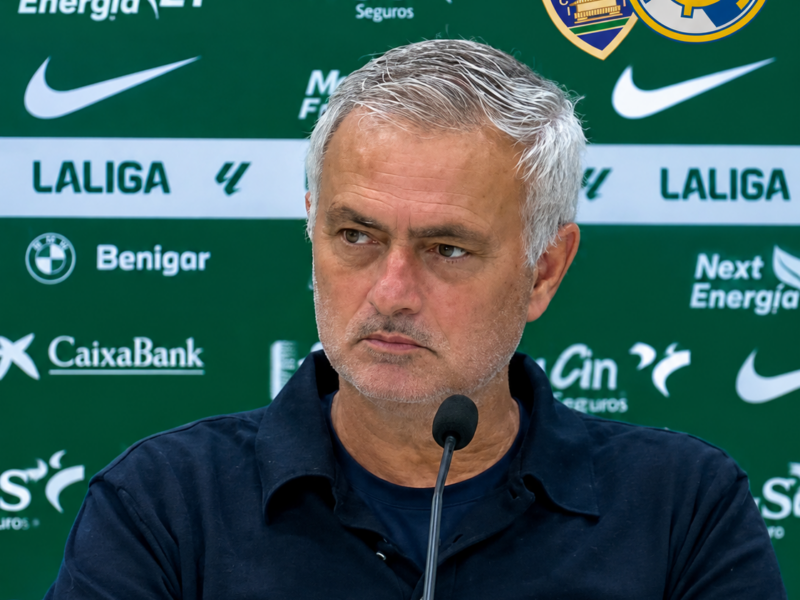
Mourinho’s Brutally Honest Warning After Real Madrid Survive Elche Scare: “It’s Not About the Goals, It’s About Losing Control”
There is a particular kind of silence that falls over a Real Madrid press room when José Mourinho decides he is not going to let a routine victory pass without a lecture attached to it.
It happened again on a warm Tuesday night in the south of Spain, inside a cramped media room at the Estadio Manuel Martínez Valero, only minutes after his team had beaten Elche and picked up another three points on their march through the opening weeks of the season.
Two goals to nothing. A clean sheet. A trip to one of La Liga’s toughest away atmospheres, survived without conceding.
By almost any measure, it was a job well done.
And yet Mourinho walked into that room looking less like a coach celebrating a win and more like a man trying to solve a riddle that keeps reappearing in his own dressing room, match after match, regardless of who Real Madrid are playing or by how much they are winning.
What he said next will sound familiar to anyone who has followed his career for more than a decade, because it is a version of a speech he has delivered in different languages, in different stadiums, about different teams, for the better part of twenty years.
But this time it was aimed squarely at the current crop of Galácticos, and it carried a warning that Real Madrid supporters would do well to pay attention to before the club’s fixture list gets significantly harder.
A Win That Didn’t Feel Like a Win
Real Madrid’s trip to Elche was supposed to be one of the easier nights of the campaign.
Elche arrived at the match without a single victory to their name in the young season, sitting near the bottom of the table, and had shown defensive frailty in the weeks before Mourinho’s side came to town.
For a stretch of the first half, the script played out exactly as expected. Arda Güler bent a free kick around the wall from twenty-five yards that ended up crossing the line via a helpless touch from the Elche goalkeeper, and within minutes Real Madrid had doubled their advantage through a sweeping counterattack finished off by Kylian Mbappé, the kind of move that made the game look like it was already over before the interval had even arrived.
Two-nil, in complete control, comfortably the better side in every phase of play.
Then, according to Mourinho himself, something familiar began to happen. The team eased off. The intensity that had been so visible in the opening exchanges began to drain out of the performance, replaced by a kind of collective assumption that the job was already finished.
It is a pattern he has now watched unfold in more than one match this season, and it clearly frustrates him far more than any scoreline suggests.
“Facilismo”: The Word Mourinho Keeps Coming Back To
Asked directly about why his team so often loses its grip on games after building what should be a comfortable lead, Mourinho reached for a concept that doesn’t translate perfectly into English but that Spanish football writers have started repeating back to him: facilismo, or something close to complacency born from an easy start.
His explanation was layered rather than simple.
He suggested that his players are not lazy and not lacking in effort. The problem, as he framed it, is closer to a misreading of the situation in real time. When chances keep arriving and space keeps opening up, some players start to interpret the game as already won, even though nothing has actually been secured. That mental shift, subtle as it is, changes body language, changes urgency, and changes the way a team presses and recovers the ball once possession is lost.
He pointed to matches away from home in Spain as the most dangerous environment for this to happen. Spanish stadiums, he noted, are almost always full, the atmosphere against Real Madrid in particular tends to be ferocious regardless of the scoreline, and home fans in this country rarely give up pushing their team until the final whistle. That combination, he argued, means that even a two-goal cushion can evaporate faster than his players expect if they allow their intensity to drop.
There was also, buried in his answer, something close to a compliment for the opposition his team keeps facing. He described matches against Real Madrid in Spain as must-see entertainment precisely because so many of them stay open until the very end, adding that when his side does eventually feel the pressure of a game slipping away, the response so far this season has generally been positive: goals, results, and points, even if the underlying performance leaves him uneasy.
That is the tension running through almost everything Mourinho said that night. He is winning matches. He is not entirely happy with how his team is winning them.
The Substitute Who Keeps Making an Impact
One of the more pointed exchanges of the evening came when a reporter asked Mourinho how he intends to fix the second-half dip that has now shown up in multiple matches, and whether a specific bench option might be part of the solution.
The player in question does not get regular minutes, but has made an outsized impression whenever he has been introduced, contributing directly to goals in more than one appearance already this season.
Mourinho did not dodge the subject. He acknowledged that the player in question, despite limited playing time, has been showing real value every time he has stepped onto the pitch, describing him as heavily motivated and genuinely contributing to the team’s results.
But he was equally candid about the tactical complication involved in using him more.
According to Mourinho, this is not simply a case of finding minutes for a talented squad player. The issue is structural. He explained that Real Madrid do not currently have wide players suited to a traditional 4-4-2 shape, and that fitting two similar attacking profiles onto the pitch at the same time tends to unbalance the team defensively, particularly once substitutions start reshaping the shape of the side in the closing stages of matches.
It was a rare moment of a manager admitting, almost matter-of-factly, that solving one problem risks creating another. Real Madrid have scoring depth on the bench. What they may not have, at least according to their own coach, is an easy way to use all of it at once without compromising defensive solidity.
Gambling Everything In The Second Half
Pressed further on his substitution decisions during the match itself, Mourinho offered one of the more revealing lines of the night, one that says a great deal about how he is currently approaching these fixtures.
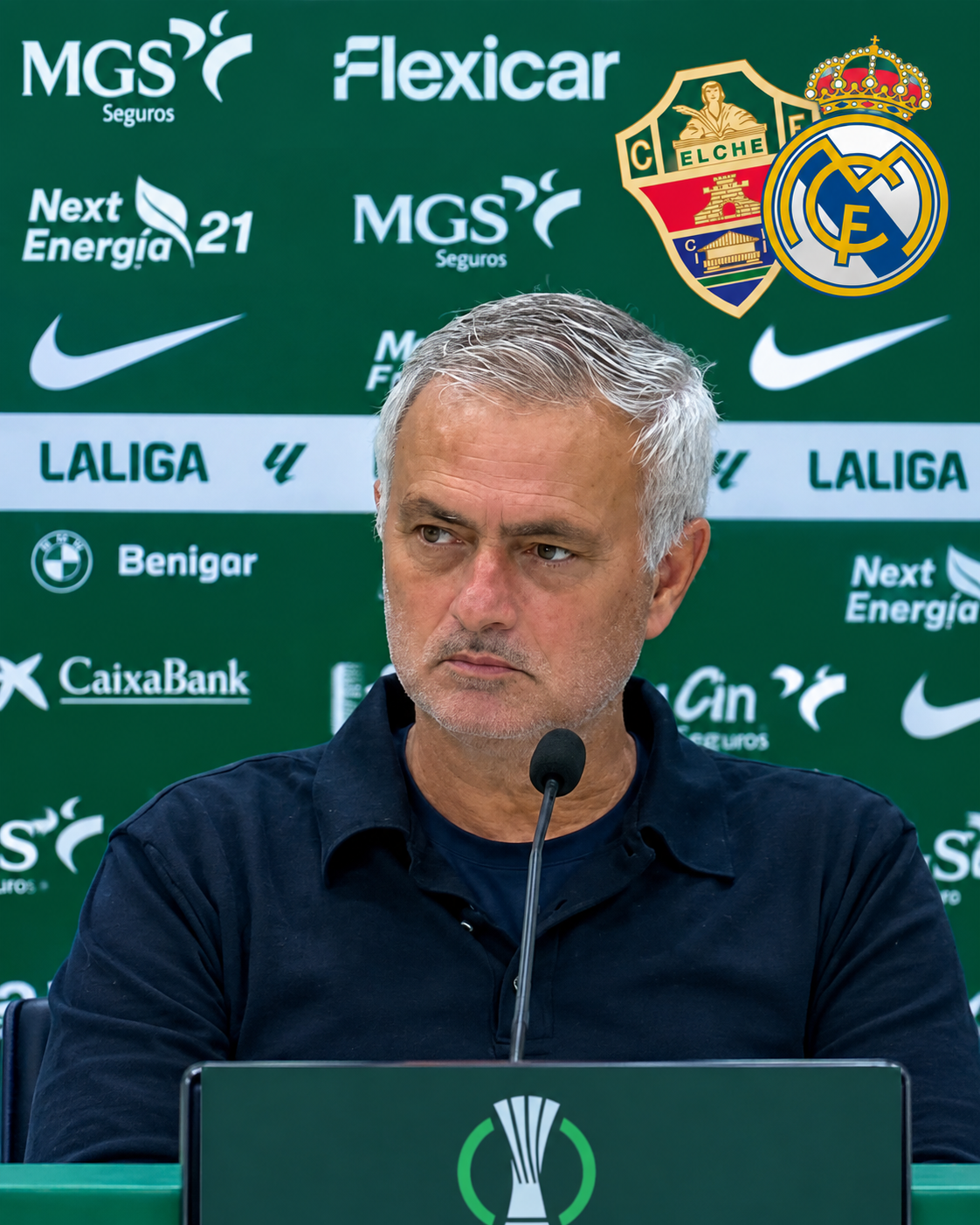
He explained that once he sensed the team was losing its grip on the contest, his response was to commit fully rather than shut the game down. He brought on fresh legs specifically because the team was starting to give away control, and he accepted the risk that came with it. In his own words, he chose to gamble everything rather than settle for a draw, framing it as a deliberate decision rather than a reaction forced upon him.
He was blunt about why a draw would not have been acceptable at that stage of the match: a share of the points, in his assessment, simply does not serve a team with Real Madrid’s ambitions this season. Better to risk a defeat while chasing victory than to protect a result that leaves nothing settled.
It is a mentality that will be familiar to anyone who has watched Mourinho manage high-stakes matches throughout his career. Whatever criticisms exist of his overall approach, an unwillingness to accept a draw when three points are within reach has rarely been one of them.
A Breakout Winger Growing Into His Role
Away from the tactical soul-searching, there was real warmth in how Mourinho discussed the individual performance of his in-form wide player, the same substitute-turned-difference-maker whose versatility has become one of the more encouraging subplots of Real Madrid’s start to the season.
Asked to assess a display that saw the player operate effectively on both the right and left sides of the attack, arguably making him the team’s most incisive attacking outlet on the night, Mourinho’s response focused less on the individual moments and more on the trajectory.
He described a player who is visibly growing physically, someone who now clearly has real matches in his legs rather than looking like a raw newcomer still adapting to the demands of elite football. He also pointed to an improving understanding with teammates as a key marker of progress, citing a pass from Federico Valverde that set up a goal as an example of combination play that, in his estimation, likely would not have existed a month earlier. According to Mourinho, that kind of understanding only comes with repetition and shared experience on the pitch, and it is now visibly building between his squad’s newer faces and its more established figures.
Mourinho also praised the player’s discipline under difficult circumstances, noting that he played the better part of ninety minutes while carrying a yellow card, a situation that demands restraint and game intelligence rather than raw talent alone. He credited him with excellent control of his own discipline in that scenario and called his overall performance a significant contribution to the team.
It is the kind of praise that suggests Mourinho sees a genuine long-term piece of his rebuild in this player, not just a squad option filling a gap created by injuries or rotation.
The Defensive Record Mourinho Refuses to Take for Granted
A separate line of questioning turned toward Real Madrid’s defensive numbers, with a reporter noting that the team had kept a clean sheet in this match and asking whether defensive solidity was becoming a point of real focus heading into the weekend.
Mourinho’s answer revealed something close to a coaching philosophy rather than a simple yes or no.
He made clear that defensive concentration is not something reserved for difficult opponents or big occasions. It matters, in his words, in every single match, not just the ones that carry extra weight on the calendar. He said he takes genuine pleasure in watching his team score goals, and was happy to admit he enjoys big winning margins, joking that the one exception recently had been a defeat to Real Betis. Scoring three or four goals in a match, he said, is something he genuinely enjoys.
But he was careful to draw a distinction between scoring goals and controlling matches, arguing that the two are not automatically the same thing. His concern, he explained, is not really about the number of goals his team scores or concedes in isolation. It is about who is dictating the terms of the contest at any given moment. He warned that a team can concede a goal that arrives almost out of nowhere, disconnected from the general run of play, but that in his experience, whenever Real Madrid have shipped goals recently, it has come specifically because his team surrendered control of the game beforehand rather than through simple misfortune.
That distinction, between conceding through bad luck and conceding through a loss of control, appears to sit at the very center of how Mourinho is currently diagnosing his team’s occasional lapses.
Giving Credit Where It Is Due
Mourinho used part of his answer on the defensive question to praise the opposition directly, a habit that has become something of a trademark throughout his managerial career regardless of the result.
He singled out Elche’s head coach for a tactical approach that, in his view, was intelligent and adaptable, noting that changes made during the match altered the visiting side’s defensive structure in ways that created real problems for Real Madrid, even if the final scoreline did not fully reflect how uncomfortable those adjustments made things.
He acknowledged that a heavier defeat had been avoided by Elche not through luck but through courage, saying the home side could easily have lost by four or five goals but instead showed bravery and made life difficult for his own team in the process.
He then pivoted to praise his own squad’s depth, pointing out that Real Madrid have a bench capable of producing solutions when games get complicated, and noted that within a compressed ten-minute window late in the match, his side generated several dangerous chances inside the penalty area before eventually finding the second goal that settled the contest.
His summary of the night, stripped of all the nuance around performance and control, was simple. They scored, they won three points, and that, ultimately, is what mattered most.
Is It Physical or Mental?
Perhaps the most probing question of the evening came from a veteran radio reporter who pushed Mourinho to clarify whether the recurring second-half dip his team keeps showing was a mental issue or something rooted in conditioning, referencing a similar collapse in control during a previous match against Rayo Vallecano.
Mourinho was unusually direct in ruling out a psychological explanation, insisting instead that the issue is physical in nature.
But when asked to elaborate on exactly what that physical explanation looks like, his answer circled back to the same theme he had returned to throughout the press conference: matches that seem easy invite players to ease off, and that shift, even if it begins in the mind, quickly becomes physical once it manifests as dropped intensity, slower recovery runs, and a general lowering of the team’s pressing triggers.
He described the danger zone vividly. A team can find itself with one clear opportunity, then another, then another still, and somewhere in that sequence of good fortune, players can start to misread the situation entirely, convincing themselves the game is already comfortable when in reality nothing has been secured. One moment of carelessness, one unexpected goal conceded, and Mourinho warned that the entire complexion of a match can change instantly.
It is a warning delivered from experience. Few coaches in the modern game have managed as many must-win occasions, in as many countries, as Mourinho has across two decades at the top level, and his insistence on treating comfort as a threat rather than a reward is entirely consistent with that history.
A Playmaker’s Importance, Without the Overstatement
One of the more delicately handled subjects of the night involved Arda Güler, whose free kick had opened the scoring and whose creative influence has become one of the most talked-about storylines in Madrid this season.
A reporter from a national newspaper noted that Real Madrid’s best spells in the match had come while the young playmaker was on the pitch, and asked directly whether Mourinho now considers him indispensable heading into a demanding run of fixtures, including the upcoming derby against Atlético Madrid.
Mourinho pushed back gently but firmly against the framing of any single player as irreplaceable, stating plainly that nothing in football is indispensable and that no individual, however talented, should be treated as essential above the collective.
He then offered a detailed explanation of his substitution logic from that specific match, revealing that his first two changes were made precisely because he sensed Real Madrid losing control of the contest, not because of fatigue concerns tied to any one player. He praised Vinícius Júnior’s defensive work rate off the ball during that period, describing his positioning as excellent throughout, while also acknowledging that the Brazilian winger, like others on the pitch, had visibly tired as the match wore on.
According to Mourinho, by the time he introduced two attacking substitutes with fresh legs, Real Madrid were leading by two goals but he could already sense the balance of the match tipping. He explained that Elche shifted their own shape in response, prompting Real Madrid to counter with what he described, somewhat colorfully, as their heavy artillery, before conceding that the closing stages became more complicated than he would have liked even as his team held on for the clean sheet.
It was a nuanced answer, one that managed to praise an individual player’s contribution while still refusing to hand him the kind of indispensable status that reporters were angling for.
The Midfield Partnership Taking Shape
Later in the press conference, attention turned to the understanding developing between two of Real Madrid’s midfielders, with a question focused specifically on how well they had complemented each other, particularly with the derby against Atlético on the horizon.
Mourinho’s answer was among the most tactically detailed of the night. He explained that when the team is functioning well, the partnership in question has been genuinely impressive, describing a strong balance between the two players.
He credited Real Madrid’s ability to play out from the back against Elche’s high press with relative ease, while also acknowledging that Elche themselves organized their own pressing structure effectively. He then offered an interesting self-critique, describing his team’s approach as having multiple distinct phases within a single match: spells of comfortable buildup, spells requiring survival instincts, and spells where the mentality shifts entirely toward an all-or-nothing approach in search of a decisive goal.
Despite that inconsistency in rhythm, he was clear that for as long as Real Madrid remained in control of the scoreline, the two midfielders in question had done excellent work shielding the defense and dictating tempo, giving his side the platform it needed to see out the win.
No Locker Room Speech Tonight
As the press conference wound toward its final question, the tone shifted from tactics to man-management, with a reporter recalling comments Mourinho had made after a previous match against Real Betis, when he suggested he would rather have played poorly and won than played well and lost, a reversal of what had actually happened that night.
The reporter wanted to know what emotional temperature Mourinho was carrying into the dressing room afterward, and whether he planned to address his players immediately or wait until they reconvened at the training ground.
Mourinho’s answer was almost anticlimactic in its simplicity, and perhaps intentionally so. He said the players needed rest, confirmed that the following day would be a free day for the squad, and stated plainly that he had no intention of saying much of anything in the locker room that night, with the real reflection and reset scheduled for training later in the week.
He did, however, offer a clear-eyed summary of where his concern genuinely sits. If his team had played poorly from start to finish, he said, that would represent a serious worry. But when a team shows extended stretches of genuinely high-level football, generates a huge number of scoring opportunities, and only then drifts into a passive, lower-intensity period, his honest assessment is that it is understandably a source of concern, even while the result itself, a win, deserves credit.
It was as close as Mourinho came all night to fully reconciling the two competing emotions running through the entire press conference: real satisfaction with three more points banked, and real unease about exactly how those points were nearly put at risk.
What This Means Heading Into the Derby
Real Madrid’s next assignment brings a considerably sterner test than a struggling Elche side, with a trip across the capital to face Atlético Madrid looming on the horizon before the first international break of the season.
If Mourinho’s comments after the Elche match reveal anything, it is that he does not view his team’s start to the campaign, four wins from five matches at the time of the Elche fixture, as proof that the underlying issues have been solved. Quite the opposite. His repeated return to the theme of control, intensity, and the dangers of assuming a match is already won suggests a manager who is using good results as cover to keep pushing his squad toward a higher defensive and mental standard.
For a club with Real Madrid’s ambitions this season, chasing a title race against a Barcelona side that has looked relentless in the opening rounds, the margin for the kind of second-half lapses Mourinho keeps describing will only shrink as the fixtures get harder. Elche, for all their fight, ultimately did not have the quality to punish Real Madrid’s dip in intensity. Atlético Madrid, and the string of high-stakes matches that will follow the international break, may prove considerably less forgiving.
Mourinho, by his own admission, already knows this. Whether his players fully absorb the same lesson before the calendar forces the issue is the story that will define the coming weeks of Real Madrid’s season.









