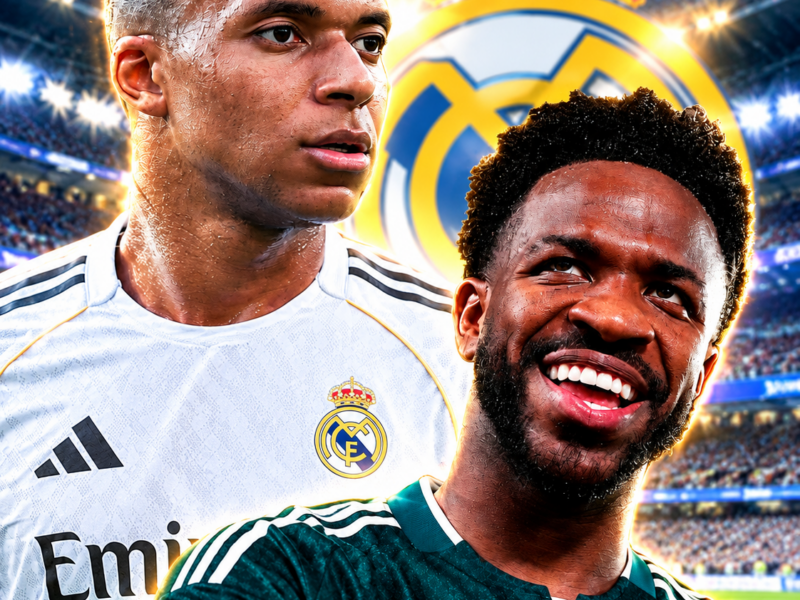
Mbappé vs Vinicius: Inside Real Madrid’s Secret Locker Room Rivalry, Mourinho’s Impossible Balancing Act, and the Ballon d’Or War Nobody Will Talk About
There is a version of this story that Real Madrid wants you to believe. Two global superstars, one dressing room, complete harmony, everyone smiling for the cameras after every win.
Then there is the other version. The one whispered by people who spend their days inside Valdebebas, who sit next to these players on flights, who hear what gets said in the tunnel when the microphones are off.
That version is messier. It involves two men who genuinely like each other on a human level, and yet cannot fully coexist as footballers. It involves a manager trying to defuse a bomb that was armed long before he walked through the door. It involves a transfer market failure nobody at the club wants to admit out loud, and a teenage prodigy already being fought over before he has even signed his first contract.
This is that story, pieced together from what people inside the club are actually saying right now about Kylian Mbappé, Vinicius Junior, and the Real Madrid machine that is straining to hold both of them at once.
A Rivalry Nobody Will Call a Rivalry
Ask anyone connected to Real Madrid whether Mbappé and Vinicius get along, and you will get the same answer every time. Yes, of course, their personal relationship is fine.
Push a little further, though, and the tone changes.
Because underneath the friendly exterior sits a much colder truth. Both players are chasing the same individual prize. Both want to be the club’s designated penalty taker. Both want to be the one scoring the goals that define a season. Both, in their own quiet way, want to be seen as the leader of this Real Madrid side. And both, at various points, have wanted to operate from the same side of the pitch.
Nobody inside the club is willing to spell it out with that much precision when a microphone is nearby. But when reporters who cover the team daily talk to players and staff away from the cameras, the picture that emerges is consistent. The understanding between the two forwards is not, in the words of one insider, “at its best.”
That is a careful way of saying something that would sound much harsher if stated plainly.
Why This Isn’t About Personality
The instinct is to frame this as some kind of personal feud, the sort of tabloid narrative that gets attached to any two superstars sharing a dressing room. That is almost certainly the wrong lens.
The tension here is not really about who Mbappé and Vinicius are as people. It is about proximity. Two elite attacking talents operating in overlapping spaces, competing for the same moments of individual glory, inevitably create friction, no matter how mature or professional they are.
Think about it from their perspective for a second. Every time one of them steps up to take a penalty instead of the other, something is being communicated, whether either player intends it or not. Every time the captaincy conversation comes up, every time a Ballon d’Or shortlist is published, every time the club talks publicly about who its “main man” is, the comparison sharpens.
Two elite stars in one dressing room will always create this kind of quiet competition. It comes with the territory of being the best. The issue is that Real Madrid currently has two players operating at a level where the “best” conversation applies to both of them simultaneously, and there is only room at the very top for one name at a time in the eyes of the outside world.
The Left Wing Myth That Refuses to Die
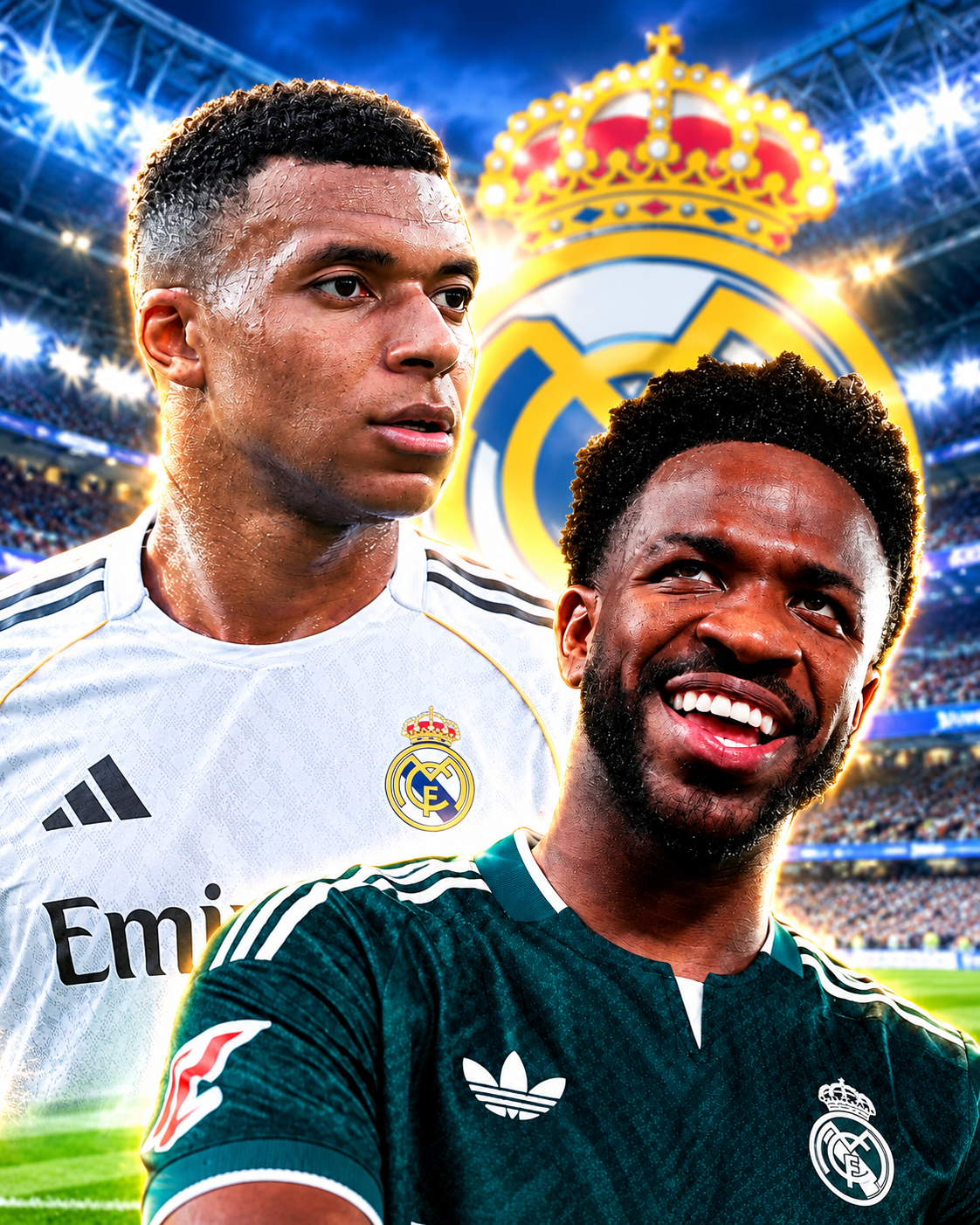
For years now, a specific narrative has circulated in the football conversation. The idea goes something like this: Kylian Mbappé, deep down, wants to play on the left flank, the position that has become Vinicius Brazilian’s calling card at the Santiago Bernabéu.
According to people with direct knowledge of the situation, that narrative is largely a fabrication, or at the very least a significant exaggeration. Mbappé has not, for a long stretch of time, wanted to play on the left wing.
Where did the idea come from, then, if it isn’t true? The suggestion is that it was manufactured, at least in part, by sections of the press that had an interest in undermining Vinicius. If you can convince the public that Mbappé covets Vinicius’s position, you create a narrative of conflict that writes itself, headline after headline, regardless of whether either player has actually said or wanted any of it.
It is a classic case of media framing taking on a life independent of reality. The idea sounds plausible on the surface. Mbappé built much of his career playing off the left for Paris Saint-Germain and France, cutting inside onto his favored right foot. So of course people assumed he’d want the same role at Real Madrid.
But those closest to his adaptation process at the club tell a different story entirely.
What Ancelotti Actually Saw
Rewind to Mbappé’s arrival in Madrid, through preseason training, through the tactical trials, through the entire process by which Carlo Ancelotti built his attacking structure. At no point during that period did Ancelotti seriously consider deploying Mbappé from the left flank.
The reasoning was straightforward from a coaching perspective. Mbappé is simply more comfortable operating through the middle. The club’s internal evaluation consistently placed him as more effective playing centrally, with the freedom to drop deep, receive the ball facing goal, and drive at defenders from distance rather than hugging the touchline and cutting inside.
This is worth sitting with for a moment, because it reframes an entire subplot of the Mbappé transfer saga that had been repeated so often it calcified into accepted fact. The left wing question was never really live at the coaching level. It was a media construction that took on the appearance of an internal power struggle.
That doesn’t mean the position battle disappears entirely, though. There are people inside the club now wondering whether a rotation, or even a more permanent reshuffle, could eventually see Mbappé shift wide again, not because he’s angling for it, but because the numbers up front simply might not add up otherwise as squad depth increases. Names like Franco Mastantuono get mentioned in speculative conversations about who might eventually be “better suited” to a left-sided role, even without having played there. It is speculation layered on speculation. But it tells you how unsettled the picture at the top of this Real Madrid team really is.
The Uncomfortable Truth About Mbappé’s Movement
Here is where the story gets genuinely interesting, and where some of the sharpest internal criticism of Mbappé actually lives.
A former professional footballer, someone who has played the game at a high level and watches Real Madrid with a trained eye, offered a pointed observation after Real Madrid’s derby against Atlético in recent weeks. The critique centered on something specific: Mbappé’s reluctance to occupy the spaces a traditional center forward is supposed to occupy.
The example given was almost forensic in its specificity. During the derby, Cristian Romero-style central defenders were left completely unmarked and unchallenged in zones where a number nine would typically be applying pressure, fighting for position, making a defender’s life difficult through sheer physical occupation of space. Mbappé, according to this observation, simply wasn’t there. He wasn’t within three kilometers of doing that kind of dirty work.
The suggested explanation, only half-joking but landing with real weight, was that Mbappé avoids these areas specifically to sidestep contact. He does not want to get hit.
Whether that is a fair characterization of a generational talent’s game or an oversimplification born of frustration, it captures something real about the tactical debate happening inside Spanish football right now. A traditional number nine plants himself between center backs, absorbs physical punishment, holds the ball up with his back to goal, and creates a “second ball” scenario for teammates to exploit.
Mbappé does almost none of this. Watch him across ninety minutes and a clear pattern emerges. He drifts back into deeper zones, often as far as the middle third of the pitch, receives possession facing the opposition’s goal rather than with his back to it, and then attacks defenders directly, one on one, using speed and close control to beat the first man, sometimes the second, before typically being stopped by a foul around the third challenge. He rarely loses the ball outright in these situations. He wins fouls instead. That is its own kind of value, dragging defenders out of shape and opening space for others. But it is a fundamentally different profile than the physical, penalty-box occupying striker Real Madrid has traditionally built its attack around.
The person offering this critique was careful to note that this isn’t necessarily a flaw so much as a stylistic reality. Not every number nine needs to be built like a battering ram. But at some stage in a career, particularly one being scrutinized at the level Mbappé’s is in Madrid, there is an expectation that a player expands his game to include the aspects he doesn’t naturally gravitate toward, if he wants to keep improving.
The Article That Sparked the Debate
This entire conversation has been amplified by outside analysis as well. A recent piece from a major football publication posed the question directly, asking whether Vinicius should actually be dropped from Real Madrid’s starting eleven, and whether Arda Güler deserves a more central role in the club’s best possible lineup.
That kind of question, appearing in a respected outlet rather than a tabloid rumor mill, tells you the debate has moved from fringe speculation into mainstream tactical analysis. Real Madrid’s best available eleven is genuinely being questioned, not just by pundits looking for clicks, but by serious football writers examining the data and the eye test side by side.
Will Vinicius Actually Be Benched Before the Clásico?
This is the question everyone in Madrid wants answered, and the honest response from people close to the situation is: not before the Clásico. Almost certainly not.
There was a specific rumor that circulated recently, reportedly originating from English-language football accounts, suggesting that Vinicius’s starting spot was genuinely in jeopardy and that Mourinho might be prepared to bench him. The claim carried a dramatic flourish, essentially framing it as the manager’s patience finally running out.
According to people who know Mourinho well and understand the daily rhythm at Valdebebas, that report simply isn’t accurate. Sources close to the coach have described it as false.
There was a moment that likely fed this speculation. During the recent derby against Atlético Madrid, Vinicius was substituted early, a decision that led some observers to conclude Mourinho had grown tired of him and that a benching was imminent. But those with direct insight into the coach’s thinking maintain that Mourinho isn’t at that point, not even close.
Why Vinicius Is Effectively Untouchable Right Now
There’s a structural reason for this that goes well beyond form on the pitch. Real Madrid recently committed to Vinicius long-term, extending his contract through 2032. That is not a decision a club makes lightly, and it is not a message that gets quietly reversed a few months later because of a difficult run of matches.
Whether or not Mourinho was personally involved in negotiating that extension, the reality he inherited is unavoidable. The people who actually run Real Madrid, from the ownership level down, doubled down on Vinicius after a season, or arguably two, that fell short of his peak standards. Signing that contract was itself a statement of institutional confidence.
For a manager, that changes the calculation entirely. If you are Mourinho, walking into a club that has just recommitted itself to a player at that level, you understand your job includes making that relationship work, not undermining it in your first months in the building. You do not have the luxury of treating that contract as irrelevant to your team selection.
That said, insiders do believe a reckoning is coming, just not yet, and not without cause first being clearly established.
Mourinho’s Delicate Political Game
Understanding why Mourinho hasn’t already benched either Mbappé or Vinicius requires understanding something about the position he occupies, not just as a coach, but as a political operator inside one of the most complicated institutions in world sport.
Real Madrid is not simply a football club in the way a mid-table Premier League side is a football club. Politics run through every level of the organization, from the boardroom down to the treatment room. Balancing power, managing hierarchies, reading the room among senior executives, all of that is baked into the job description whether a manager likes it or not.
It is easy for outside observers to sit back and say a manager should simply bench underperforming stars without hesitation. That is the same kind of armchair logic that ignores how workplace politics function in literally any profession. Anyone who has ever had a boss ask them to stay two extra unpaid hours knows the difference between how an outsider reacts to that request versus how the person actually living inside that job situation has to navigate it. It’s easy to tell someone else to quit their job. It’s much harder when it’s your own career, your own relationships, your own institutional survival on the line.
Mourinho is, right now, the head coach of a club that just spent significant political capital re-signing Vinicius to a seven-year deal. Whatever his private tactical assessment of the winger’s current form, publicly undermining that decision so early in his tenure would be, in the words of people who understand the dynamic, close to professional self-sabotage.
What Mourinho has done so far, according to those watching closely, has actually been shrewd. He has tried to win over his two biggest stars rather than immediately clash with them, understanding that ego, internal politics, and dressing room balance all factor into whether a club functions as a cohesive unit or fractures into competing camps. That approach is smart in the short term. It buys him time and goodwill. But there is a shelf life to that strategy, and most people close to the situation believe that shelf life has a natural expiration point.
The Real Test: What Happens If Results Don’t Improve
The general expectation among people who follow the club closely is that this delicate balancing act holds until the Clásico. That match, whenever it lands on the calendar, functions as a psychological deadline as much as a sporting one.
If Vinicius still isn’t performing at the level his contract and his history demand, the pressure on Mourinho to act will intensify sharply. And the demand from supporters and pundits alike is consistent: be brave. Have the courage to make the tough calls, and make them with every player, not selectively.
There’s a recent example that illustrates the tension perfectly. During a difficult match against Real Betis, with Real Madrid trailing, fans wanted to see changes made. Specifically, there was frustration that Mourinho substituted Arda Güler due to picking up a yellow card, a decision that would not have forced the same substitution for other players in the squad who had also been booked. At the same time, supporters wanted Vinicius withdrawn and, notably, also wanted Mbappé removed from the pitch.
That’s a significant detail. The frustration wasn’t isolated to Vinicius. In that specific match, observers felt Mbappé had also delivered a genuinely poor performance, one of his worst of the campaign. The question being asked publicly was why, with Real Madrid down a man and needing a different approach, options like Endrick weren’t introduced to help retain possession under pressure, or why a more physical presence wasn’t used to hold the ball up and buy the team time to regroup.
The underlying critique of Mourinho here is that he hasn’t yet found the courage to substitute either of his two biggest stars, precisely because doing so risks the ego and political fallout described earlier. That reluctance is understandable given everything at stake, but people around the club believe it cannot last indefinitely. Eventually, if performances don’t improve, that policy of protecting the stars will stop being sustainable.
The Cucurella Story That Raised Eyebrows
Buried within the broader conversation about internal club politics is a smaller story that several well-connected observers found telling. A report surfaced recently, credited to sources close to the club’s media ecosystem, suggesting that new signing Cucurella has been struggling specifically because of difficulties playing alongside Vinicius.
On its face, this reads as a fairly mundane tactical note. Full backs and wingers need chemistry, and sometimes that chemistry takes time to develop. But the framing of the report struck some as unusual, and worth examining more closely.
Here’s the comparison that raised suspicion. Last season, a different full back, Carreras, occupied a similar role and faced criticism for exactly the same kind of defensive shortcomings now being attributed to the Cucurella-Vinicius pairing. Yet last season, that criticism was aimed almost entirely at the full back’s own defensive shortcomings, not framed as a byproduct of playing next to Vinicius. Vinicius’s lack of defensive tracking back wasn’t highlighted in the same way at that time.
This inconsistency is exactly the kind of detail that media-savvy observers pick up on. Why would the exact same structural issue, a winger who doesn’t track back defensively, be framed one way with one full back and a different way with another? One interpretation floating around is that this represents a subtle, coordinated softening of criticism toward the newer signing, redirected instead into an oblique dig at Vinicius from within the club’s own orbit.
To be clear, nobody with direct knowledge of the situation is claiming this was some deliberate smear campaign orchestrated at a senior level. The more measured read is that it might simply reflect how different voices around the club, whether coaching staff, media contacts, or players’ inner circles, talk about different players differently depending on where their sympathies and loyalties lie. But the pattern itself, once pointed out, is difficult to unsee.
Everyone Knows Where They Stand, Even Without Being Told
One particularly sharp observation about how information flows through Real Madrid’s ecosystem: nobody needs to receive an explicit instruction about what can and cannot be said publicly regarding certain players. The lines are simply understood.
People who work in and around the club, whether broadcasters, podcast hosts, or written journalists, calibrate their commentary based on the platform they’re speaking through, the audience they’re addressing, and the unspoken institutional sensitivities tied to each subject. What gets said lightly on one show would never be said the same way on a different network’s flagship broadcast.
This is, in its own way, a form of soft power. It means that even without any direct order from Florentino Pérez or the club’s communications department, the media apparatus surrounding Real Madrid tends to self-regulate in ways that protect certain sacred cows, Vinicius, given his freshly signed long-term deal, chief among them right now.
Referees, Excuses, and the Deeper Disease
Whenever Real Madrid struggles, a familiar deflection appears almost immediately: blame the officials. And to be fair, there have been legitimate grievances this season, including a recent derby decision that many neutral observers considered significant and possibly incorrect.
But the more honest voices inside the club’s orbit are pushing back against that narrative as the primary explanation for the team’s struggles. One particularly striking phrase, relayed secondhand from someone very close to an important Real Madrid player, cuts through the noise: the problem with how the team is actually playing football matters more than the problem with the officials.
The logic behind that framing is compelling once you sit with it. Refereeing controversies are, by their nature, sporadic and largely uncontrollable. A poor decision might cost you points in one match, and then months could pass before another decision goes against you in a similarly costly way. Officiating variance evens out, more or less, across a long season.
Performance level, though, is something a team controls directly, and if that level isn’t good enough, you become far more exposed to those inevitable refereeing swings when they do arrive. When you’re not creating clear chances, not dominating games convincingly, not putting matches to bed early, you’re playing on a knife’s edge where a single contentious call becomes the difference between a positive result and a damaging one.
The counterpoint some fans raise, essentially arguing that Real Madrid never seems to benefit from similarly generous decisions in return, might have some validity as an isolated grievance. But it doesn’t change the more fundamental truth being expressed by insiders: fix the football, and the officiating controversies stop mattering nearly as much, because you’re no longer relying on 50-50 moments to secure results you should be winning comfortably.
The Midfielder Real Madrid Still Doesn’t Have
If there is one issue that keeps recurring in every conversation about what’s actually wrong with this Real Madrid squad, it’s the unresolved midfield problem. This isn’t a new complaint. It has been building since the previous manager’s tenure.
Multiple figures within the coaching setup, both the current regime and the one before it, have privately acknowledged the need for a genuine defensive midfield reinforcement. That need was recognized, in various forms, by essentially every coach who has passed through the building recently, even those who didn’t have the platform or the standing at the time to push the issue publicly.
The saga that crystallizes this failure is the pursuit of Rodri. During the period when that transfer target was being seriously discussed internally, the level of interest wasn’t confined to executives and coaches. Players themselves were reportedly asking around, eager for updates, treating the potential signing as the missing piece that could elevate the entire squad. That kind of organic enthusiasm from within a dressing room, players actively hoping a specific transfer gets done, tells you how badly that positional gap was felt at every level of the club.
The deal never materialized. And critically, once that pursuit failed, Real Madrid did not pivot to an alternative central midfield solution. The club essentially accepted the gap and moved forward without adequately addressing it, a decision that continues to haunt team performances months later.
According to people close to several current players, this specific issue, the missing holding midfielder, keeps surfacing in private conversations as the root cause of many of the team’s structural problems. It isn’t a coincidence that this criticism aligns almost exactly with public assessments made throughout the season by outside analysts. When insiders and outside pundits converge on the same diagnosis independently, it’s usually because that diagnosis is correct.
A January Reinforcement Remains Possible
There is still a pathway to fixing this, at least partially, if Real Madrid chooses to be active in the winter transfer window. Nothing is guaranteed, and the market in January is notoriously difficult to navigate for elite-level reinforcements. But the option remains on the table, and given how loudly this need has been expressed from inside the building, there’s reason to think the club’s hierarchy is at least considering it seriously.
The urgency is compounded by watching Barcelona’s form from across the city. Barcelona have started the season at a startlingly fast pace, opening up what could become a significant points cushion if Real Madrid doesn’t find a way to stabilize quickly. Comparisons are already being drawn to the previous campaign, when Barcelona endured a mid-season dip around the international break that briefly closed the gap, only for that gap to widen again as the season progressed. If Barcelona can avoid a similar stumble this time around, and their current form suggests they might, Real Madrid’s margin for error narrows considerably.
Endrick: A Situation Worth Watching Closely
Away from the two biggest names in the building, there’s a quieter storyline developing that could have real consequences come the January transfer window: the future of young Brazilian forward Endrick.
The background here matters. There has long been an understanding, dating back to conversations from within the club, that club president Florentino Pérez personally admires Endrick’s talent and potential. Mourinho, too, has reportedly expressed appreciation for the player, seeing him as a viable option on the right side of the attack behind Arda Güler, someone who could contribute minutes in that zone.
But admiration from the top doesn’t always translate into playing time, and that disconnect is where the tension is building. There’s also internal competition to consider. Güler occupies significant space on the right, and Brahim Díaz remains part of the picture as well. If the club has genuine long-term belief in Endrick as a future focal point of the attack, potentially even as the secondary striker option playing off Mbappé, the current usage pattern doesn’t reflect that belief in any meaningful way.
Instead, the indications are that the club currently leans toward a different profile at backup striker, closer to a more physical, direct option in the mold of players like Julián Álvarez, someone who offers a contrasting skill set to Mbappé rather than a similar one. That approach has its own logic. Having two players with overlapping strengths doesn’t necessarily maximize squad value the way having complementary profiles does. But it leaves Endrick in an awkward middle ground, talented enough to be coveted, but not currently valued enough by the coaching setup to receive consistent minutes.
The Message From Endrick’s Camp
This is where the story shifts from speculation into something more concrete. Since as far back as August, whispers from within Endrick’s representation have carried a clear message to the club: another season of limited playing time, especially if that pattern continues into January without meaningful change, will prompt his camp to seek an exit.
There’s nuance here worth acknowledging. Endrick has dealt with injury setbacks that limited the number of realistic opportunities available to him this season, which complicates any straightforward assessment of how he’s been used. It’s genuinely difficult to judge minutes allocation for a player who hasn’t been consistently fit and available to begin with.
But the situation is one worth monitoring closely precisely because of how these things tend to unfold. Nobody expects Endrick himself to create a public scene or force an issue during a high-profile fixture like a Madrid derby. That’s not how these situations typically play out from the player’s side. It’s the representation, the agents working on his behalf, who apply pressure behind the scenes, and the messaging from that camp has increasingly shifted toward one theme: if there isn’t a clearer pathway to playing time, it may be time to look elsewhere.
The context that tends to accelerate departures like this isn’t usually total playing time in isolation, but the specific circumstances around individual missed opportunities. If Real Madrid face a winnable home fixture, say against Villarreal, and find themselves needing a goal, whether protecting a slim lead or chasing an equalizer, and Endrick isn’t given the chance to make an impact in that moment, that’s the kind of specific, memorable snub that tends to solidify a player’s decision to push for an exit. It’s not the season total that breaks trust. It’s the individual moments when a manager visibly chooses not to trust you when the stakes are highest.
The Next Wonderkid Already Causing Headaches
If Endrick’s situation represents unresolved business from a previous transfer cycle, there’s an entirely fresh storyline developing around a much younger prospect: a Brazilian teenager sometimes nicknamed, somewhat prematurely and probably unfairly, as “the new Messi” in parts of the English-language press. Real Madrid insiders reportedly resist that comparison entirely, understandably wary of the kind of pressure that label creates before a player has even made his professional debut.
There isn’t much fresh news to report on the transfer mechanics themselves at this exact moment, though the expectation is that meaningful developments will likely coincide with the upcoming international break, given the player is set to turn 16 years old in early October, an age threshold that matters significantly for how international transfers of minors are regulated.
The complicating factor here is nationality and passport eligibility. Post-Brexit regulations mean that without European Union citizenship, a player of that age cannot complete a transfer to a club like Real Madrid until turning 18. That restriction has forced the club, and the player’s representatives, to explore alternative eligibility pathways.
Two possibilities are being examined. On his father’s side, there’s a connection to Ireland, with his father having represented the Irish national team on two occasions, potentially opening a pathway to an EU passport through that lineage, though this route isn’t confirmed with total certainty. On his mother’s side, there are also Cypriot family origins that could theoretically offer an alternative route to European eligibility.
If either pathway proves viable, the expectation is that the player would initially join Real Madrid Castilla, the club’s reserve team, with a longer-term view toward eventual first-team integration once he’s ready. Whether that integration happens quickly or over a longer development timeline remains to be seen, but the fact that this level of institutional effort is already being invested in a 15-year-old speaks to how highly Real Madrid rates his ceiling.
Doing the Math on the Title Race
Step back from all the individual subplots for a moment, and the bigger picture comes into focus: Real Madrid’s La Liga title defense is genuinely at risk, not because of any single issue, but because of the accumulated weight of everything discussed above.
The gap to Barcelona is already meaningful, and the schedule ahead offers a clear opportunity, on paper, for Real Madrid to close that distance before the two sides meet in the Clásico.
Here’s how that math plays out. Barcelona return to league action against Getafe at home, a fixture that doesn’t look especially threatening on paper. Real Madrid, meanwhile, also play at home, hosting Villarreal, a side that has actually started their season showing real signs of improvement under their current setup, even if their away form away from home has been shakier than their performances on their own turf.
Looking further ahead, Barcelona have a tricky-looking away fixture at Sevilla, a match where they’ve already shown vulnerability this season, having dropped points at Real Betis earlier in the campaign. Real Madrid, by contrast, get to host Sevilla at the Bernabéu, a fixture that, if results elsewhere cooperate, presents a genuine chance to chip into Barcelona’s lead before the two sides finally meet head to head.
The stakes attached to that eventual Clásico are difficult to overstate. If Real Madrid arrive at that fixture trailing by nine points, particularly if that deficit follows a painful defeat rather than a narrow loss, the mathematical reality becomes almost insurmountable against a Barcelona side playing with this much confidence and momentum.
The preference, if you’re sitting in Real Madrid’s position right now, would clearly be to arrive at that Clásico trailing by something closer to six points rather than nine. That’s a gap that still requires an outstanding response, but one that remains within the realm of a realistic comeback across the second half of the season. A nine-point deficit heading into the most emotionally charged fixture in world football, on the other hand, risks turning the Clásico from a title-defining moment into a formality, with the destination of the league title effectively decided before spring even arrives.
What This All Adds Up To
Pull every thread together, the quiet tension between two superstars who each want to be the face of the club, the myth of a left-wing power struggle that was never really about tactics at all, the tactical criticism of Mbappé’s reluctance to play the traditional number nine role, Vinicius’s contract-protected status colliding with his underwhelming recent form, Mourinho’s careful political tightrope walk, the uncomfortable optics around how certain players get criticized differently than others, the referee conversation masking a deeper performance problem, a midfield hole that’s been visible for over a year without a real solution, a promising young Brazilian forward whose patience is visibly running out, and a teenage prospect already being fought over on the basis of passport eligibility rules, and you start to understand why this Real Madrid season feels so precarious despite the presence of arguably two of the most talented attacking players on the planet.
None of these issues exist in isolation. They feed into each other. A missing holding midfielder makes it harder for either Mbappé or Vinicius to receive the ball in dangerous positions consistently, which increases individual frustration and sharpens the sense of competition between them. A manager reluctant to bench underperforming stars, for entirely rational political reasons, allows those individual frustrations to fester rather than forcing an early resolution. A club distracted by managing egos at the top of the squad has less bandwidth to properly address a promising academy talent’s legitimate grievances about playing time.
Real Madrid’s talent level remains undeniable. On their best day, this is still a team capable of beating anyone in world football. But the margin between their best day and their worst day has widened this season, and the reasons why are laid out, thread by thread, in exactly the conversations happening quietly among the people who watch this club most closely, every single day, away from the cameras and far from the carefully managed press conferences.









