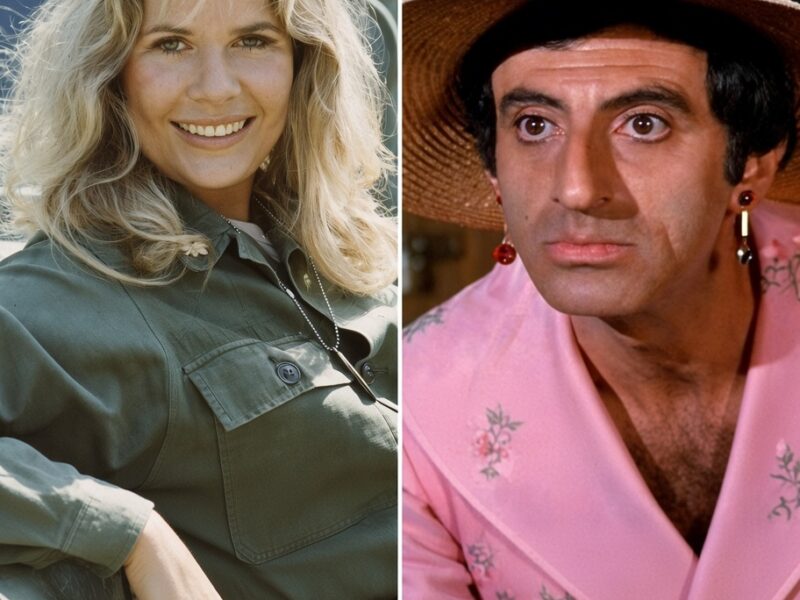
MAS*H Cast Then and Now in 2026: Where the Stars of the 4077th Are Today, Who We’ve Lost, and Why the Laughs Still Hurt
There was a signpost outside the 4077th.
Remember it? Wooden arrows pointing in every direction, each one carrying the name of a city thousands of miles away. Toledo. Boston. Home.
Those arrows were a joke, and they weren’t. Every doctor, nurse, and clerk in that camp was a long way from the place they wanted to be.
More than fifty years after MASH* first hit the air, a lot of those faces are gone, and one of the show’s most famous stars died only recently.
So what happened to Hawkeye, Klinger, Radar, Margaret, and the people who got through one impossible day after another? Stay with us until the end, because the final answer isn’t what you’d expect from a comedy.
The War That Made Us Laugh
MASH* premiered in 1972, in the middle of another war. The setting was Korea, but everyone watching understood the real subject.
It was a sitcom set in an operating room. It made you laugh at things you shouldn’t, then pulled the rug out from under you.
The comedy was never an escape from the tragedy. It was a response to it.
Let’s start with the man at the center of it all.
Hawkeye Pierce: The Man Who Joked to Survive
Alan Alda played Captain Benjamin Franklin “Hawkeye” Pierce. He was born on January 28, 1936, in New York City, and he was 36 when the show began.
Hawkeye was a contradiction. He mocked authority, drank, flirted, and turned almost every military ritual into a punch line.
But the moment the wounded arrived, the performance disappeared. Alda made that shift instant, and it became the show’s secret weapon.
In 2026, Alan Alda is 90. Beyond acting, he became one of television’s most respected writers, directors, and communicators, and he helped shape MASH* behind the camera as well.
Hawkeye endures because every joke was another way of saying the war hadn’t yet taken everything human from him.
Trapper John: The First Partner in Crime
Wayne Rogers played Trapper John McIntyre, Hawkeye’s first great partner. He was born in 1933 in Birmingham, Alabama, and he was 39 when the series began.
Trapper was smoother and more relaxed than Hawkeye, and the contrast made their friendship feel real.
Neither man could stop the war. What they could do was make sure the other didn’t face it alone.
Wayne Rogers died in 2015 at 82. After MASH*, he built a surprising second career as a successful investor and television financial commentator.
The jokes were broad and the friendship was easy, but the pain was already underneath.
B.J. Hunnicutt: The Man Who Wanted to Go Home
Mike Farrell played Captain B.J. Hunnicutt, who replaced Trapper. He was born in 1939 in St. Paul, Minnesota, and was 36 when he joined.
B.J.’s greatest wound was the family continuing without him. His wife, Peg, and daughter, Erin, lived behind almost everything he did.
A letter from home could brighten his day or ruin it.
In 2026, Mike Farrell is 87. After the show, he kept acting, directing, and producing, and he became deeply involved in humanitarian causes.
B.J. endures because Farrell made goodness difficult. He stayed decent while the war kept giving him reasons to turn bitter.
Radar O’Reilly: The Boy Who Heard Helicopters
Gary Burghoff played Corporal Walter “Radar” O’Reilly. He was born in 1943, and he was 29 when the show began.
Radar seemed emotionally younger than everyone around him, but that wasn’t because he lacked intelligence. He often knew what officers needed before they asked, and he quietly kept the camp from collapsing under paperwork.
Underneath that competence was a young man who still slept with a teddy bear and wrote home with the longing of someone who never expected adulthood to arrive this violently.
In 2026, Gary Burghoff is 83. He continued working in acting, music, and art, but Radar remained his defining role.
When he finally leaves the 4077th, the farewell feels bigger than one clerk going home. It feels like a small piece of childhood escaping before the war can claim it too.
Klinger: The Soldier in the Dress
Jamie Farr played Corporal Maxwell Q. Klinger. He was born on July 21, 1934, in Toledo, Ohio, and he was 38 when he joined.
Klinger began as an outrageous visual joke. He wore dresses, invented illnesses, and tried anything to convince the army he didn’t belong there.
But the reason was completely understandable. He wanted to go home. For him, Toledo was almost mythical.
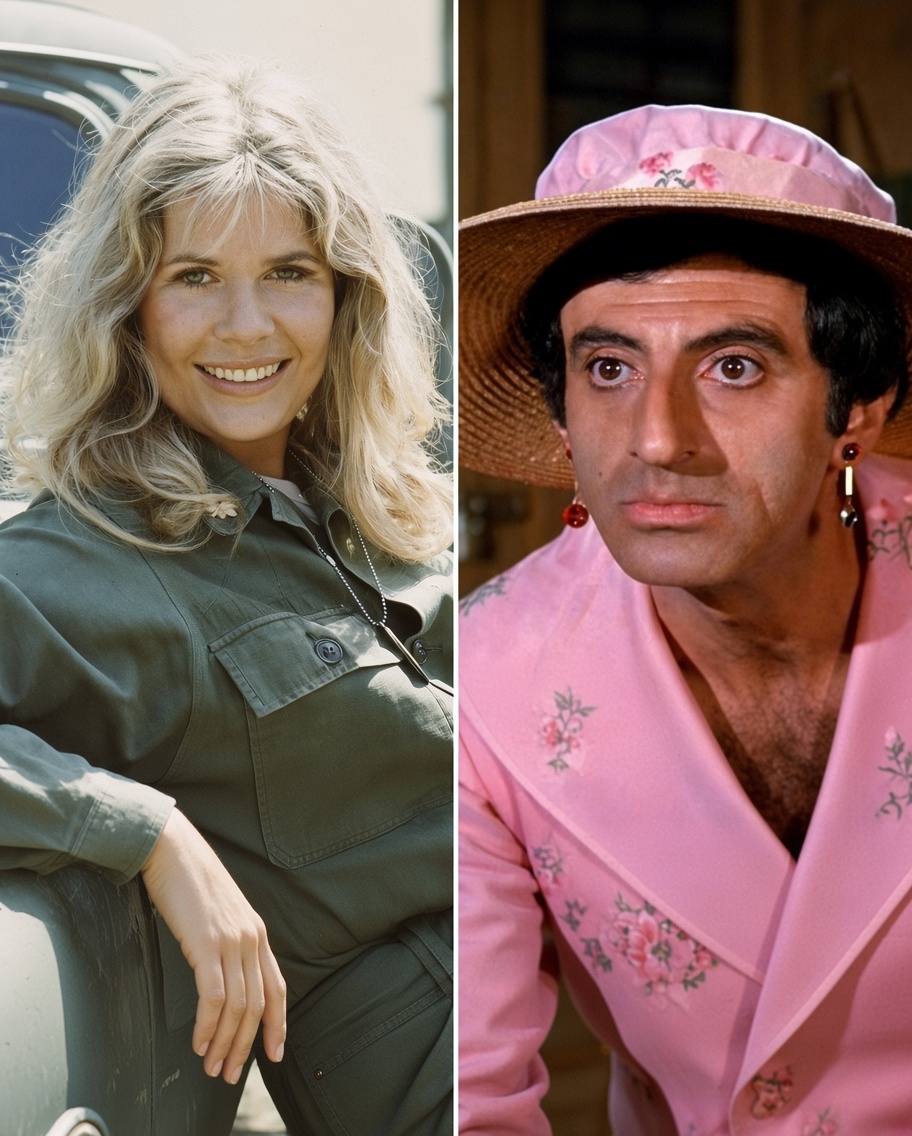
In time, Klinger became the company clerk, and the show let him grow into someone the camp genuinely depended on.
In 2026, Jamie Farr is 92. He remains closely associated with classic television and the affection of generations of fans.
Klinger endures because Farr turned a joke into a person without destroying what made the joke funny.
Margaret “Hot Lips” Houlihan: More Than a Nickname
Loretta Swit played Major Margaret Houlihan. She was 35 when the series began in 1972.
Early on, Margaret was rigid and intensely military, tangled up with Frank Burns, and often positioned as the enemy of Hawkeye and Trapper.
But Swit kept finding layers. Margaret was a gifted nurse, a committed officer, and a woman demanding respect in a world that kept reducing her to her looks.
Loretta Swit died in 2025 at 87. Beyond MASH*, she stayed active on stage, in public appearances, and as a passionate animal advocate.
The nickname stayed. The woman underneath it became larger, stronger, lonelier, funnier, and far more unforgettable.
Colonel Potter: The Commander Who Had a Conscience
Harry Morgan played Colonel Sherman T. Potter. He was born in 1915 in Detroit, Michigan, and was 59 when Potter joined the series.
Potter arrived after Henry Blake and proved that replacing a beloved character didn’t mean copying him. He knew the regulations, but he knew people better.
That difference let him challenge Hawkeye without becoming another Frank Burns.
Harry Morgan died in 2011 at 96. His career had already stretched through decades, including Dragnet, before Potter became one of his most beloved creations.
In a series suspicious of military power, Potter was the rare commander who showed that leadership could still have a conscience.
Henry Blake: The Commander Nobody Expected to Lose
McLean Stevenson played Lieutenant Colonel Henry Blake. He was born in 1927 in Normal, Illinois, and was 45 when the show began.
Henry was disorganized, easily distracted, and happier fishing than commanding. And that’s exactly why the camp loved him.
Then the series did something television audiences weren’t prepared for. It let him go home, and still refused to let him escape the war.
McLean Stevenson died in 1996 at 68. He kept working in television, but Henry Blake remained the role forever tied to his name.
His loss destroyed a comforting illusion, that surviving long enough meant you’d eventually make it home.
Father Mulcahy: The Man Who Stayed
William Christopher played Father Francis Mulcahy. He was born in 1932 in Evanston, Illinois, and was 40 when he first took the role.
Mulcahy couldn’t stop the bullets, but he found ways to help people survive what the bullets left behind. The doctors could repair bodies. Fear, guilt, grief, and loneliness needed another kind of care.
Christopher gave the chaplain gentleness without making him a saint. Mulcahy could be awkward, overlooked, and insecure, which made his faith more believable.
William Christopher died in 2016 at 84, deeply loved by viewers who saw Mulcahy as one of the show’s moral centers.
His courage was a quiet one. He accepted that some suffering had no answer and stayed anyway.
Winchester and Burns: The Rivals
David Ogden Stiers played Major Charles Emerson Winchester III. He was born in 1942 in Peoria, Illinois, and was 35 when he joined.
Winchester arrived convinced he was too cultured and too important to belong in Korea. Stiers let the arrogance stay funny while slowly revealing the lonely man underneath.
His love of classical music connected him to beauty in a place defined by destruction.
David Ogden Stiers died in 2018 at 75. He also built a celebrated career in theater and voice work, including Disney’s Beauty and the Beast, Pocahontas, and Lilo & Stitch.
Larry Linville played Major Frank Burns, the officer who demanded respect because somewhere inside he knew he hadn’t earned it. He was born in 1939 and was 33 when MASH* began.
Frank was hypocritical, jealous, and petty, yet Linville let a little insecurity leak through the caricature, which made him pathetic as well as infuriating.
Larry Linville died in 2000 at 60. Frank Burns remained his defining role.
The character endures because Linville understood that dangerous foolishness often comes from weakness pretending to be authority.
Sidney Freedman: The Doctor for Wounds No One Could See
Alan Arbus played Major Sidney Freedman, the psychiatrist who understood that the most dangerous wounds at the 4077th were the ones nobody could bandage.
He was born in 1918 in New York City, and he was 55 when he first appeared.
Sidney never arrived with easy answers. He recognized both the usefulness and the danger of the jokes, the work, and the drinking that people used to survive.
Alan Arbus died in 2013 at 95. He was also a notable photographer outside of acting.
MASH* gave television a language for trauma long before most shows did, and Sidney was the one who spoke it.
The Nurses Who Kept the Place Running
The surgeons got the speeches. The nurses did the work beside them.
Kellye Nakahara played Lieutenant Kellye Yamato. She was born in 1948 in Oahu, Hawaii, and was 25 when she first appeared.
Kellye gave warmth, humor, and quiet confidence to a nurse the series slowly brought to the foreground. She also confronted Hawkeye’s blind spots about the women around him, and the show was better for it.
Kellye Nakahara died in 2020 at 72. She was also an artist and remained warmly associated with the MASH* community.
Odessa Cleveland played Lieutenant Ginger Bayliss. She was 28 when she first appeared, and she is 82 in 2026.
Enid Kent played Lieutenant Bigelow. She is 81 in 2026.
Judy Farrell played Nurse Able, and she was also a television writer. She died in 2023 at 85.
Shari Saba played Lieutenant Shari in the later seasons, and she is 69 in 2026.
None of them needed the loudest lines. They were simply there, episode after episode, making the hospital feel like a place where real people worked.
The Camp Itself
The 4077th felt real because it was full of people who weren’t the stars.
Jeff Maxwell played Private Igor Straminsky, the cook whose food was questionable enough to make surviving the war seem easier. He is 79 in 2026, and he stays connected to the show’s legacy through fan appearances and the MASH Matters* podcast.
G.W. Bailey played Sergeant Luther Rizzo, the motor pool chief who did exactly enough work to avoid being given more. He was born in 1944 in Port Arthur, Texas, and is 82 in 2026. He later became famous in the Police Academy films and The Closer.
Johnny Haymer played Sergeant Zale, the practical, irritable soldier who kept the camp’s machinery moving. He died in 1989.
John Orchard played Captain “Ugly John” Black in the early seasons. He died in 1995.
Eileen Saki played Rosie, who ran the bar where people could sit down and pretend the war had moved a little farther away. She died in 2023 at 79.
Roy Goldman was one of the familiar background faces who made the camp feel occupied. He died in 2009.
Even the loudspeaker had a personality. Todd Susman and Sal Viscuso both lent their voices to the PA announcer, who could shift an episode from comedy to terror in a single sentence.
Susman is 79 in 2026, and Viscuso is 78.
MASH* was built as much from sound as from pictures. A helicopter meant the wounded were coming. A loudspeaker meant the camp had something to say.
Who We Lost, and Who Remains
Let’s say the names plainly.
Harry Morgan, William Christopher, David Ogden Stiers, Larry Linville, Wayne Rogers, McLean Stevenson, Kellye Nakahara, Alan Arbus, Eileen Saki, Judy Farrell, and many others are gone. So is Loretta Swit, who died only last year.
Alan Alda, Jamie Farr, Gary Burghoff, Mike Farrell, Jeff Maxwell, G.W. Bailey, Odessa Cleveland, Enid Kent, and others remain direct links to the 4077th.
Every year the circle gets smaller. But the show hasn’t stopped teaching.
Why It Still Hurts
The helicopters stopped coming. The tents came down. The 4077th became television history.
But MASH* still hurts because the comedy was never separate from the pain.
Hawkeye joked because he was angry. Klinger schemed because he wanted to go home. Radar held on to innocence. B.J. held on to his family. Margaret fought to be seen as more than a nickname.
And Sidney reminded everyone that surviving physically wasn’t always the same as surviving emotionally.
So think back to the signpost outside the camp, with its arrows pointing home.
Maybe that was the whole point. Laughter was how people survived, and the people who made us laugh deserve to be remembered.









