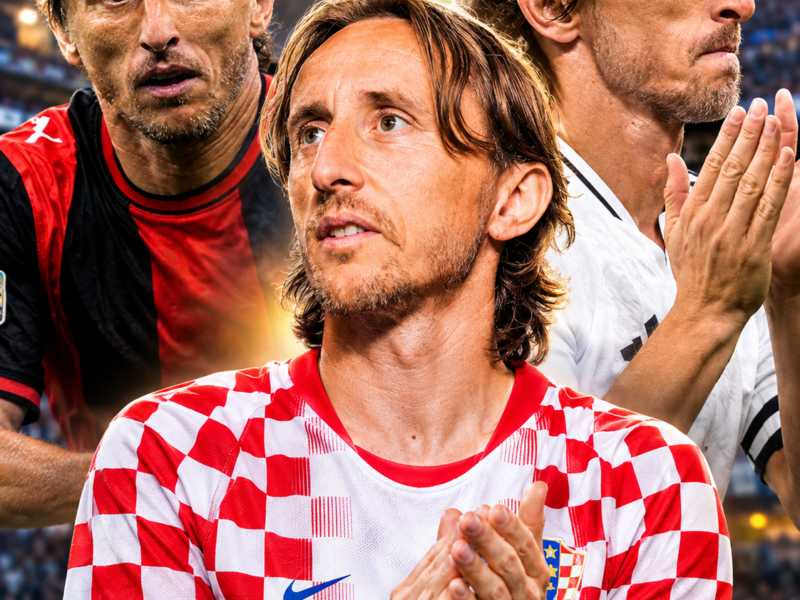
Luka Modrić at 41: The Real Reason He Refuses to Retire, the Dream Job Waiting for Him at Real Madrid, and the Tearful Truth Only His Closest Friend Knows
He turned 41 this September, and he is still scoring.
Most footballers his age are in a commentary booth, a coaching badge course, or a beach chair. Luka Modrić is starting matches for AC Milan and finding the net for his country.
So the question everyone keeps asking is the same one. How much longer can this go on, and could he one day come home to Real Madrid?
To answer it, the hosts of the podcast Minute 116 called someone who knows Modrić up close. Tomás Roncero, the veteran Spanish journalist, had spent time with the Croatian recently, and his answers were as revealing as they were emotional.
Roncero did not hide his admiration.
He described Modrić as one of the greatest role models of his life, and he splits that admiration between the Croatian and Cristiano Ronaldo. Some would call that a high ceiling, but he says he has simply been lucky.
His relationship with Modrić, like the one he has with Carlo Ancelotti, went beyond football and professional duty.
That is rare, and Roncero knows it. He says there are plenty of young stars at the top of the game today with whom he would not waste five minutes, because on a personal level they do not measure up.
Modrić does.
He is a legend in the truest sense, and in Roncero’s view, far above some of today’s biggest names, who may play good football but, he insists, cannot hold a pleasant conversation for even five minutes.
Then came the comparison that makes the story so remarkable.
Cristiano Ronaldo, if not the greatest player in history, is certainly among the top three. He is also 41 and still playing, though in Saudi Arabia. Modrić is doing it in Europe, at a historic club like Milan, and still representing his national team.
Roncero was careful not to diminish Cristiano’s achievements. But the question stands.
What does this man have that keeps his fuel tank from ever running empty?
Roncero has an answer, and it starts with a saying of his own.
Talent is not like yogurt.
Yogurt expires, but talent does not, because you either have it or you don’t. Modrić has it, and he has also kept everything else that surrounds it.
The second ingredient sounds like a cliché, but Roncero says it is the truth. Modrić loves football, and football is his life.
That matters more than people realize.
Roncero says it is understandable when gifted young players lose their way. Suddenly there is more money in their bank accounts than they ever dreamed of, and they ask themselves why they should wake up early, train in the morning, travel, and give up the pleasures of life when they are already set for life.
For Modrić, happiness looks different.
Roncero agrees here with José Ángel Sánchez’s view, where happiness is made of football and family. Football, in Modrić’s mind, is a family that makes up half of his life, and he takes care of both perfectly.
Which brings up the question of motivation.
Modrić could have left this summer.
He had finished with the Croatian national team, or so the thinking went, and he had completed a year at Milan in which he gave everything he had. He came close to qualifying the club for the Champions League.
He fell short, and the reason was painful.
A month before the end of the Italian season, he broke his jaw and missed three matches. That is when things began to get complicated for Milan.
If the club had not made it to the Champions League, Roncero says, Modrić might have told himself he had done all he could and walked away.
Instead, he stayed.
The challenge of another year at Milan in the Europa League is obviously not the biggest of his career. But he was moved by the affection Milan showed him, and he wants to fight to take them to the Champions League, the goal he could not reach this year.
That is the kind of attitude that separates the great from the merely good.
Roncero describes him waking up every morning and heading to Milanello with the excitement of a child. He loves the training, the teammates, and the preparation for the weekend match.
Very few players think about football that way.
And then there is Croatia.
Modrić is proud of his country, and Roncero says he has made a promise to himself. He will not retire without giving Croatia a title, and so he keeps trying.
That is the man behind the legend.
So when will it end?
Modrić has a contract with Milan until 2027, which means he still has plenty of road ahead. And he is still wearing the Croatian shirt.
Is he looking at a specific date, or taking it one match at a time?
Roncero says he does not think about retirement, because if he did, he would have left this summer.
When Roncero visited Milanello a month ago for an interview, he found Modrić in great form. He spoke fluently about everything, and it was a pleasure to hear a man of his wisdom try to pass on his love of football, especially to the young people watching him.
Modrić prefers to judge himself day by day.
Two years ago, Roncero says, he may have believed he would end his career in 2026 with Real Madrid, leaving both club and international football behind. Circumstances changed, and Roncero has never hidden his view of those circumstances.
He believes they were unfair.
In his opinion, Madrid clearly made a mistake by not renewing Modrić for one more year, and time has proven it. He says the club needed him badly last season, and that some people inside the club believe they are wiser than everyone else.
Had they listened to people like him, Modrić might have stayed another year and left as a source of pride for Madridistas.
But it did not work out that way.
Milan called. Modrić did not call anyone, Roncero stresses. They called him.
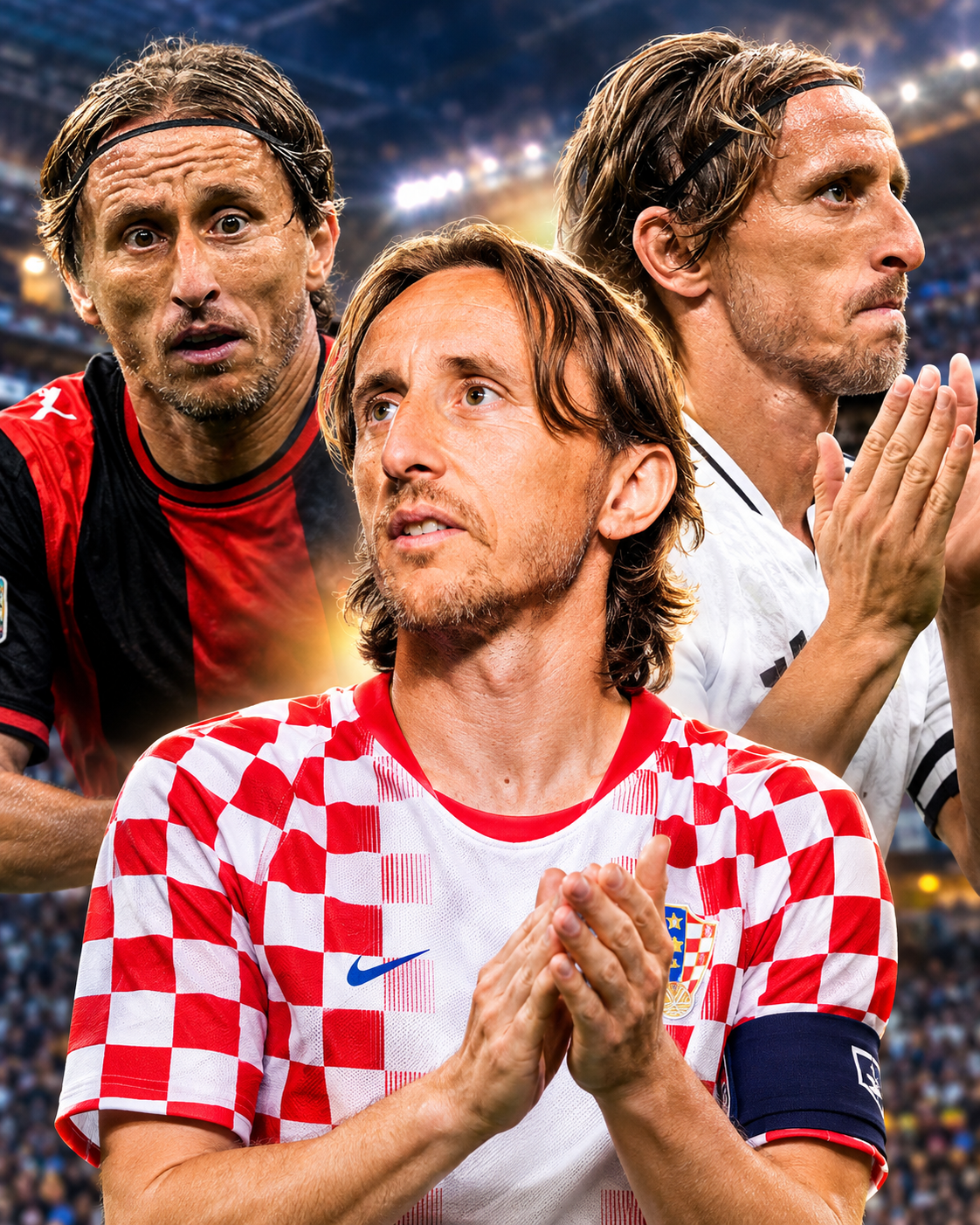
And the timing had a certain poetry. Milan was the team of his childhood, from the years of war, the Milan that won with Kaká and others. He admired that team, and he has now lived that dream.
Roncero likes to joke with him about it.
Milan is the second most successful club in the history of the European Cup. Madrid has 15 and Milan has 7, which means that between the two clubs, Modrić has been part of 22 titles. As Roncero put it, you have to be smart to manage that.
And Milan loves him for it.
They asked him to stay another year, and they asked him not to leave. They told him they needed him, his talent, his professional pride, his competitive spirit, and his wisdom in the dressing room.
He had already done exactly that the year before.
Roncero believes that without Modrić last season, things in the Real Madrid locker room would not have ended the way they did.
Roncero calls him Peter Pan.
Modrić, he says, should not have an expiration date, because he is an example for children, for people his own age, and for anyone who loves football.
Will this be his final year? Roncero refuses to say yes.
He might leave it in 2027. That could happen. But if he finishes the season well, taking extraordinary care of his body, and nobody looks after his body the way he does, then who knows.
He might say one more year, and play Euro 2028 with Croatia.
Maybe not. But maybe yes.
Modrić has not decided, Roncero says, and he prefers to wait, as he did this year. When the season ends, he will look in the mirror. He will check his legs, his mood, his emotional state, and his physical condition, and then he will decide.
He does not look at his ID card. He looks at everything.
Roncero laughed about his own ID card. He is 61, and he says he should be retired himself.
But the enthusiasm he feels every day when he comes to work, he says, would put a 25-year-old to shame. He loves what he does, and so does Modrić.
So who is to say that when this season ends, Modrić will want to stop?
And when he does stop, what comes next?
Rubén Martín asked the question that Madrid fans have been dreaming about. Could Modrić become a coach, a sporting director, or something else entirely?
Roncero has talked about it with him, informally.
Modrić does not like the conversation, because he only wants to think like a footballer. But based on everything Roncero knows about him, his instinct is clear.
The road leads toward sporting management.
He believes Modrić looks up to Predrag Mijatović, who was one of the architects of a golden era at Madrid. According to the conversation, Mijatović spent two years as sporting director, changed 14 players in the first summer, and the team went on to win back-to-back titles.
Modrić understands how hard that job is.
It requires decisions, and Roncero says Modrić has something extra that would help him become a great sporting director, which is his knowledge of the market.
He is obsessed with football.
He watches every major league. He follows La Liga, the Premier League, and the Bundesliga. He follows the Croatian league, because he is a Dinamo Zagreb fan, and he follows Serie A because he plays in it.
He also follows Ligue 1, with Paris Saint-Germain, Lens, Marseille, and Monaco all worth watching.
For Modrić, football is a passion that goes far beyond lacing up boots.
Roncero says he can see him as a sporting director at Real Madrid, and that would be a second dream come true. He describes Modrić as something like a coach in disguise, but not one who wants to stand in the mud at training every morning.
He sees him more in an office.
With his knowledge of international football and his personality, Roncero says he can picture him saying, this, this, and this will give us an unbeatable team.
But there is a condition, and it is a beautiful one.
Modrić told Roncero in that interview a month ago that he does not want to return to Madrid just because it is a dream. He does not want to come back only as Luka Modrić.
He wants to take part.
He does not want to be only an ambassador, which Roncero says is worthy of respect. Madrid has distinguished ambassadors, but the usual role is to attend matches, appear at foundation events, and serve as an image of who they once were.
Modrić wants more.
Roncero says he wants to contribute, and he wants to leave an important mark so that Madrid is in the best possible shape.
Madrid, for him, is his second love, after his family.
And how do you take care of love? By searching for the best situations, by eating at the best restaurants, and by finding the best holidays, so that love can love you back. That is how Roncero described it.
Modrić wants Real Madrid to be in the best possible condition.
He smells football. He smells talent, and he smells the players who could suit Madrid. Roncero is certain that if he ever becomes sporting director, or an important voice in deciding on squads and signings, he will do it the way he played, with cinematic flair.
Then the conversation turned personal.
What is Modrić’s bond with Madrid as a city? He spent a long time there, his children grew up there, and if Roncero is not mistaken, his daughter plays in the Real Madrid academy.
Roncero says she is very good.
She plays extremely well, he says, and he cannot remember exactly which youth category she plays in. But Madrid, in many ways, is Modrić’s city.
Yet like any true Croatian, his passion for his country is non-negotiable.
Roncero understands that, because he feels the same way about Spain.
Modrić is Croatian in every fiber, because of everything he lived through as a child, the painful civil war in the Balkans, Zagreb, and Zadar. He has everything in Zadar now.
He looks at his country with the love of a child.
But he also loves the city that embraced him as if he had been born there, in Puerta del Sol. The love Madrid gave him came not only from the Madridistas, though it came from them too, but from the city itself.
He will carry it in his heart forever.
His family loves Madrid. His wife loves Madrid. His children love Madrid, and his daughter is shining in the club’s youth ranks.
Roncero believes he is destined to live there, like Zidane, like Figo, like Ronaldo, like Roberto Carlos, and like many others.
He even compares him to Cristiano.
Cristiano has a beautiful house in his hometown of Cascais, but he still keeps his house in Madrid, because he will spend some seasons there when he retires. Roncero says Modrić is a man who knows how to be grateful, and who has learned to love the city that took him in.
Finally, Rubén asked one last question, and it may be the most touching of all.
Imagine that years from now, Roncero’s own grandchild asks him one day, who was Luka Modrić?
His answer was simple, and it was beautiful.
He would say Modrić is the embodiment of a role model. What does that mean? It means being amazing with the ball at your feet, and being just as amazing when you take off your boots and leave the field.
Some people succeed in one area and fail in the other.
A true role model is a complete footballer and a complete human being at the same time. Modrić is as great a person as he is a player, and Roncero says that combination is extraordinarily hard to find.
His message to that grandchild would be clear.
If you can get close in life, even by a small fraction, to what Luka Modrić was in every sense of the word, you will be a great person, and to me you will be a wonderful grandchild.
The conversation ended with one request.
Croatia was about to face Spain, and Rubén made an appeal to the Spanish fans. He asked them to give Modrić a warm ovation when his name is announced in the lineup, when he steps onto the pitch, and when he touches the ball for the first time.
There will be sporting rivalry, of course. Spain will try to win at any cost.
But he believes fans know how to tell the difference, and that Modrić will appreciate the gesture. It is what happened at stadium after stadium during his final year with Real Madrid, even in the most hostile grounds.
Everyone knew how to separate rivalry from respect.
It is impossible not to applaud Luka Modrić, he said, and he deserves it. He hopes the Spanish crowd will offer a lesson in class and in recognition of a footballer whose career went far beyond the game.
Roncero left the show with a gift.
He held up a jersey that Modrić had given him during his trip to Milan, signed with a message to his friend Tomás, with love from a legend. He said he would have to frame it and hang it in a place of honor on the wall, and he apologized to his wife in advance.
That shirt, he said, is non-negotiable.
And that is perhaps the best way to understand Luka Modrić at 41. He is not clinging to the past, and he is not chasing one more paycheck.
He is doing what he has always done, loving the game with a child’s heart, and letting the mirror, not the calendar, decide when the story ends.









