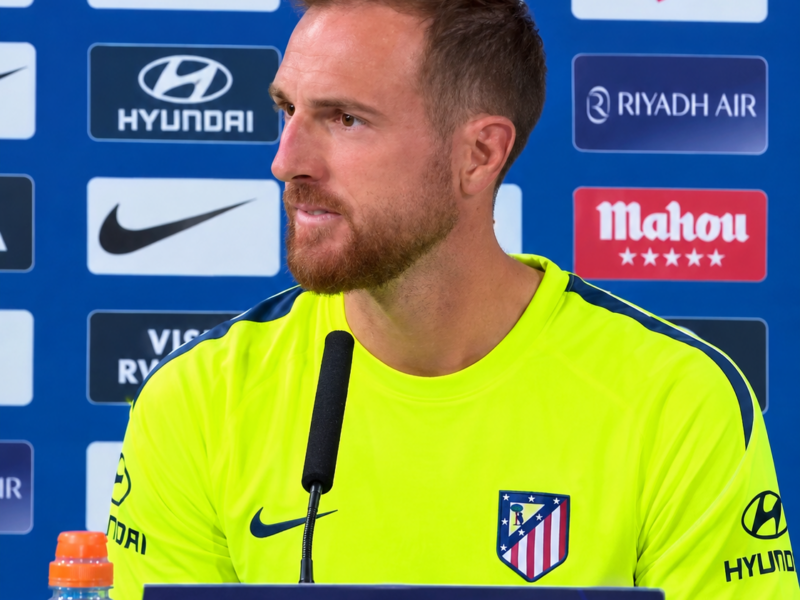
“Inside Atlético Madrid’s Derby Week: The Captain Speaks on Rivalry, Julián Álvarez, and a Title Chase That Refuses to Wait”
There is a particular kind of quiet that settles over a training ground in the days before a derby, and anyone who has spent time around Atlético Madrid this week would have felt it immediately.
It is not tension exactly. It is something closer to anticipation held on a leash, the sense of a group of players who know exactly what is coming and have decided, collectively, not to say too much about it out loud.
That restraint was on full display when Atlético’s captain sat down in front of a packed room of Spanish media to preview the derby against Real Madrid, a fixture that never seems to lose its edge no matter how many times these two clubs meet.
Reporters from Radio Marca, Cadena SER, Cadena COPE, Radio Nacional de España, and Televisión Española packed into the room, microphones passed hand to hand in the familiar choreography of a big-match press conference.
What followed was less a press conference than a guided tour through everything currently swirling around this Atlético side: a locker room adjusting to a complicated situation with one of its most talked-about players, a defense that has suddenly rediscovered its footing, and a captain who has played this fixture so many times that the number itself has become part of his identity at the club.
By the time the last question was answered, one thing was clear: this Atlético team is not interested in framing Sunday as a referendum on its season, even if half of Madrid already is.
A Derby Is a Derby, Whatever Else Is Swirling Around It
The first question set the tone for the entire session before the captain had even settled into his chair.
Ainhoa Sánchez of Radio Marca opened by asking whether the derby carried extra spice this time around, pointing to a wave of renewed attention surrounding the fixture in the buildup.
The response was measured almost to the point of being a non-answer, the kind of thing seasoned professionals say when they have learned, over many years, that speculation before a derby rarely helps anyone involved.
“The derby is always the derby,” the captain said. “It’s always a special match for everyone, and we always face it with real enthusiasm. I’m sure it’s going to be very interesting.”
It was a deflection, but not an evasive one. Anyone who has covered this fixture for more than a season understands that players rarely take the bait on outside noise in the 48 hours before kickoff, and this was no exception.
What the answer did confirm, even in its brevity, is that nobody inside the Atlético camp is pretending this is just another league fixture. It never is.
Two Clean Sheets, a Ceiling Still Unknown
Pascual Ruiz of Estos Adentro shifted the conversation toward form, and here the captain had more to work with.
Atlético arrives at the derby off the back of two strong performances, both of them ending in clean sheets, with goals flowing at the other end as well. Ruiz wanted to know whether Sunday represented a chance to measure exactly how high this team’s ceiling might be this season.
The captain’s answer was notably grounded, resisting the temptation to ride the momentum of two good results into overconfidence.
“I think the last two matches we did quite well, the last one very well, and honestly we’ve played well,” he said. “But it’s still the start of the season. Some players are missing, a lot of new players have arrived, so the team is definitely still under construction.”
He continued, framing the season in the long view that experienced captains tend to default to when reporters push for definitive statements in September or October.
“The season is going to be long. It’s an important match, it’s a derby, and it’s clear we want to win it. But I don’t think Sunday is going to change the direction of the season.”
It is a version of an answer that captains around European football give constantly, and yet it lands differently coming from someone who has spent the better part of a decade wearing this badge. There was no false modesty in it, and no false urgency either.
The subtext, whether intentional or not, was a quiet acknowledgment that this Atlético squad is mid-transformation. New arrivals need time. Systems need repetitions. A single result, win or lose, was never going to be treated as the full verdict on where this team stands.
Thirty-Six Derbies and Counting
If there was a single exchange in the press conference that captured the captain’s standing at the club, it came from Cadena COPE’s correspondent, who noted that Sunday would mark his 36th derby against Real Madrid.
Thirty-six is not a number that gets thrown around casually. It represents roughly a decade’s worth of the fiercest fixture in Spanish football, played across different eras of both clubs, different coaching staffs, different generations of teammates and opponents.
The question, naturally, was how his approach to these matches had changed over the years.
His answer suggested that, if anything, very little had shifted at all.
“Nothing has changed from the first derby to this one,” he said. “It’s always been the same. Every derby, you go in to win it. You leave everything on the pitch, with the desire to do your best and help the team. So this time won’t be any different than the first one I played.”
There is something almost stubbornly old-fashioned about that answer, in the best possible sense. In an era where player interviews are increasingly media-trained into blandness, this felt less like a rehearsed line and more like an honest description of a professional who has simply never needed to reinvent his relationship with the biggest matches on the calendar.
It also offered a useful signal to teammates watching or reading later. The captain’s derby routine, mentally and emotionally, is not going to bend just because this version of the fixture arrives with extra narrative weight attached.
Handling the Julián Situation Inside the Dressing Room
The most pointed question of the session came from Miguel Martín Talavera of Cadena SER, who raised a subject that has clearly been simmering around the club for weeks: the situation involving Julián.
Talavera acknowledged the difficult start to the season, with a squad returning late from international duty and still working to integrate new faces, before turning to the matter directly.
He asked the captain, given his standing as one of the club’s authoritative voices, how the situation had been managed inside the locker room, and whether he had personally spoken with Julián about it during the week.
The response was calm, deliberate, and notably protective of a teammate under scrutiny.
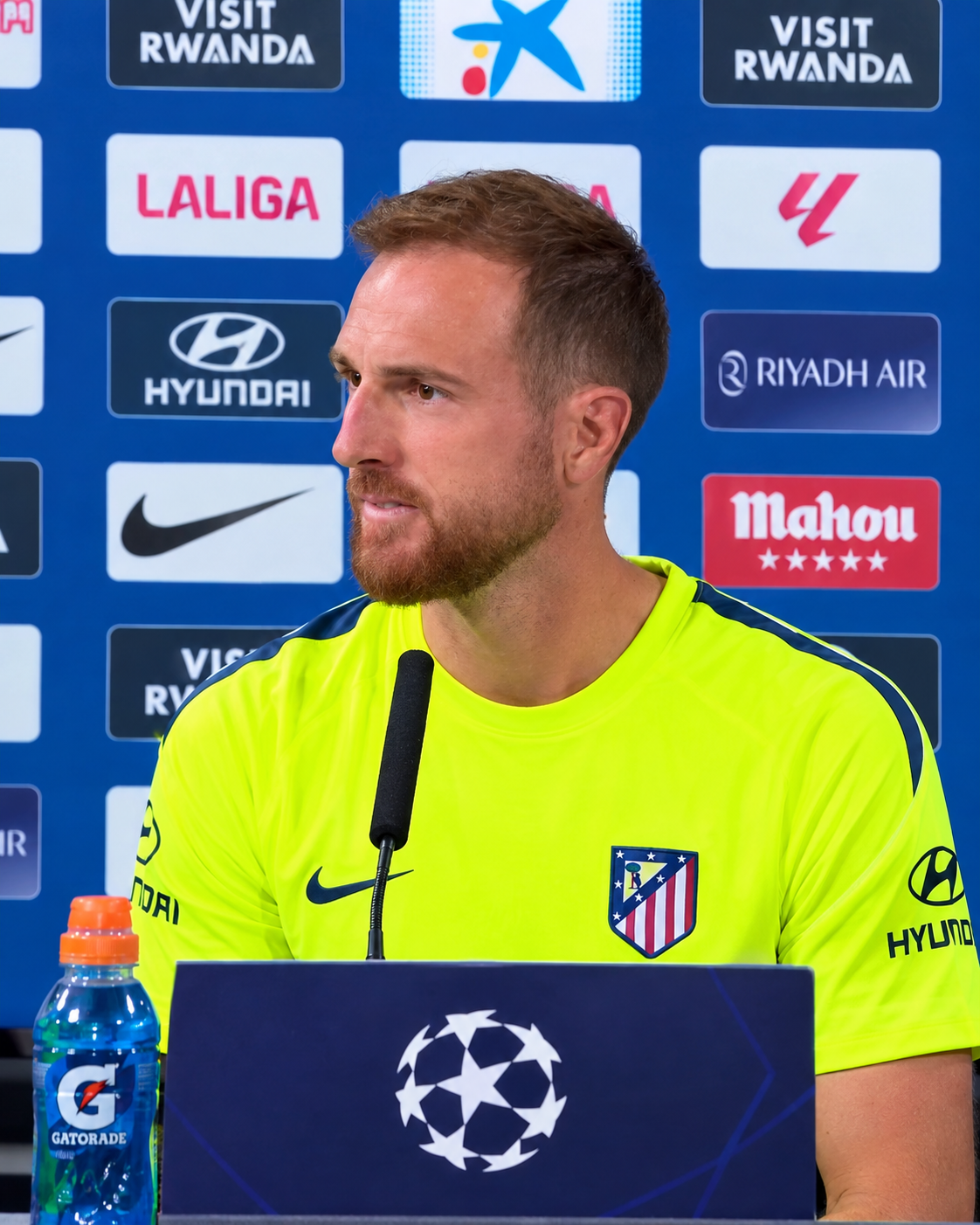
“Players and captains have handled it as a normal issue that happened,” he said. “Julián is with us. I’ve said it, we’ve said it, we’re supporting him. He’s giving his maximum, he’s already played some matches, and he’s given everything he could.”
He went further, extending that support into a broader statement about what the club expects going forward, regardless of how the situation ultimately resolves.
“I’m sure that for as long as Julián is here, he’s going to give one hundred percent of himself, and he’s going to do everything possible for this club, and to bring the best results possible.”
Notice what the captain did not do here. He did not minimize that a situation exists. He did not pretend the questions were unwarranted. What he did instead was draw a firm line around the dressing room’s posture: support first, speculation second, and a clear message that performance on the pitch remains the metric that matters most.
For a team heading into a derby, that kind of public solidarity matters more than it might seem from the outside. Distractions have a way of multiplying in high-pressure weeks, and a captain shutting the door on speculation, even briefly, tends to be more valuable than any tactical adjustment.
Why Everyone Is Conceding More Goals These Days
The tactical portion of the press conference arrived when a reporter identified only as “La Tifla” asked a broader question about the team’s defensive evolution under Diego Simeone, wondering whether Atlético is now taking on more risk than in previous eras, and whether that explains an uptick in goals conceded.
The captain’s answer widened the lens well beyond his own team, offering a genuinely interesting read on how the sport itself has shifted.
“I think football in general is changing, in terms of conceding goals or scoring goals,” he said. “Football is very different than it was a few years ago. Maybe a few years back, teams could defend better, or maybe other teams didn’t have such a strong attacking dynamic. The Champions League is always difficult, and we’re also playing differently than before.”
He added a point that felt almost like a small concession wrapped inside a larger observation about the modern game.
“It’s also very difficult to play like before. The game has changed so much, and in general there are a lot more goals than before. It’s a very normal thing.”
It is a diagnosis echoed by plenty of analysts across European football: attacking systems have become more sophisticated, pressing structures have opened up more space in behind, and even historically defense-oriented sides like Atlético have had to adapt their identity as a result.
Coming from a player who has spent years operating in one of the most defensively disciplined systems in Spanish football, that admission carried extra weight. It was less an excuse than an honest assessment of where the sport currently sits.
From Four Straight Concessions to Back-to-Back Clean Sheets
Miguel Francés of Televisión Española followed up with a more specific version of the same theme, noting that Atlético had gone four consecutive matches conceding a goal before turning things around with two clean sheets in a row. He wanted to know what exactly had changed on the training ground under Simeone to fix it.
The captain’s answer balanced optimism with caution, refusing to declare the problem solved.
“Hopefully we keep this run going,” he said. “But like I said, football has changed, teams are very good, they know how to attack well and find spaces that maybe used to be harder to find before. We’re working on that. We have to improve in every aspect.”
He then pivoted to what, in his mind, actually determines results at the end of the day, regardless of the underlying defensive numbers.
“In the last two matches we’ve done very well, and we have to continue in that direction, because it’s clear you have to do everything possible not to concede, and on the other hand, you also have to score. So what matters is winning matches, and in the end, if you score one more goal than you concede, you’re going to win, and that’s what matters.”
It is a pragmatic, almost mathematical way of framing defensive improvement, one that sidesteps the temptation to overstate two good results as a fixed solution.
He closed the point with a promise wrapped in a caveat that any Atlético fan would recognize instantly. “I’m sure that during the season we’re going to keep improving. There’s no time for that right now, but the last two matches we’ve done very well, and hopefully, like I said, we keep going in this direction.”
The Case for Koke as a Living Legend
Fernando Carrión of Radio Nacional de España turned the conversation toward one of the most enduring figures in the Atlético dressing room, asking how the captain explains a teammate continuing to set records and deliver elite performances even as the years pass.
Although the reporter did not name him outright in the transcript beyond a first mention, the subject was unmistakable: a veteran midfielder whose longevity has become one of the defining threads of this era of the club.
The response carried the unmistakable warmth of one long-serving player speaking about another.
“I think he’s a legend of this club, and he keeps proving it,” the captain said. “He’s playing on merit, not because of who he is or how many matches he’s played, but because of how he trains every single day. And that reflects in his performances too.”
He continued, framing his teammate’s role in almost institutional terms.
“He’s the captain of this team, he’s a reference point for this club, and every Atlético fan can be very proud of him, because honestly, he’s leaving everything he has for this club. He’s been here since forever.”
The comments closed with a wish that doubled as a tribute, the kind of statement that only gets made about players who have earned genuinely rare status within a fanbase.
“Like I’ve always said, I hope, well, I hope it lasts a lot longer, but that he finishes his career at this club.”
In a sport increasingly defined by transfers, release clauses, and short-term thinking, that kind of statement stands out. It is a reminder that certain players become less like squad members and more like institutions, and that their teammates understand exactly how rare that is.
The Only Acceptable Answer to “What’s the Goal This Season?”
The final question of the session came in the traditional form that opens every Spanish football season: what is Atlético Madrid’s objective this year?
The reporter framed it sharply, noting that a win on Sunday would send Atlético into the upcoming international break ahead of Real Madrid and within touching distance of Barcelona at the top of the table.
The captain’s response was direct, and refreshingly free of the hedging that sometimes accompanies these questions in the middle of a long campaign.
“Atlético Madrid is going to insist on trying to win the league every single year,” he said. “We’re competing against big clubs. There’s Madrid, there’s Barça. Villarreal is also strong, Bilbao, Betis. There are a lot of very good teams, but I’m sure that every year we play, we want to win.”
He rejected outright the idea that simply finishing among the league’s top few clubs would ever be treated as an acceptable ceiling.
“We’re not here just to play, to be there, to finish among the top three or four. No, it’s clear we want to win.”
What followed was perhaps the most candid moment of the entire press conference, an acknowledgment that ambition and realism can coexist even at a club with title aspirations.
“But like I said before, the league is going to be very long, it’s going to be very tough, there are going to be very good stretches, and I’m sure there are going to be stretches of the season where things don’t go the way you want them to. But you have to stay united, you have to believe, and you have to have the vision to go after it.”
What This Press Conference Actually Revealed
Strip away the individual questions and answers, and a clearer picture of this Atlético Madrid squad begins to emerge heading into derby weekend.
This is a team that refuses to treat one match, however historic the rivalry, as a defining moment for a season that is still being built. New signings are still adapting. Systems are still being fine-tuned. The captain’s language throughout the session repeatedly returned to phrases like “under construction” and “still improving,” a deliberate effort to manage expectations without dampening ambition.
It is also, unmistakably, a team standing behind one of its most scrutinized players. The handling of the Julián question was not defensive in tone so much as protective, a captain choosing his words carefully to shield a teammate from a swirl of outside speculation without ever pretending the situation does not exist.
And it is a team whose oldest habits remain intact, even as the sport around it changes. The captain’s own relationship with this fixture, unchanged across thirty-six appearances, and his praise for a teammate who has become synonymous with the club itself, both point toward an identity built on continuity even amid transformation.
Sunday will answer some questions on the pitch that no press conference ever could. But if this session revealed anything, it is that Atlético Madrid intends to walk into the derby with the same posture it always has: respect for the occasion, without letting it define everything that comes after it.
Whatever happens at the final whistle, the club’s longest-serving voices have already made clear that the season will be judged in April, not in September.









