I Told My Amish Husband I Was Still Sore, He Said That Wasn’t a Reason to Refuse
“That Is Not a Reason to Refuse”: An Amish Wife’s Story of Pain, Power, and Finding Her Voice
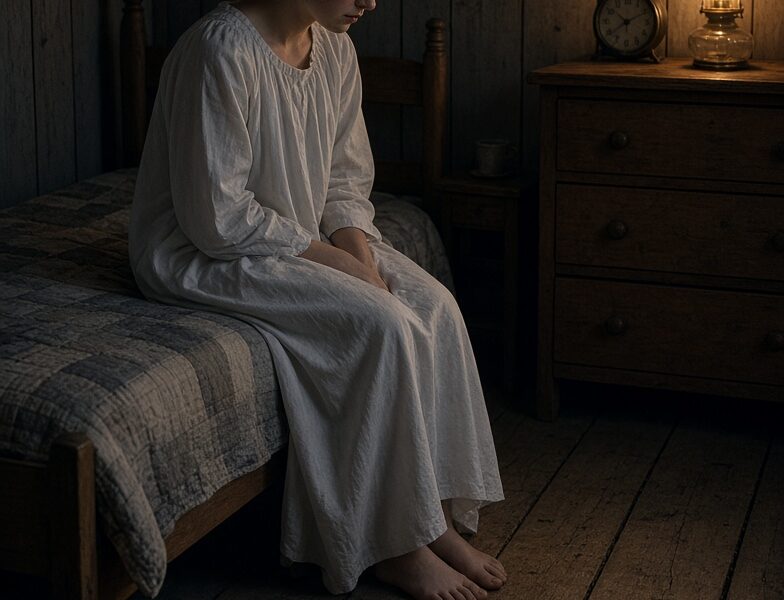
The room was cold enough that I could feel it through the thin cotton of my nightgown, but my face was burning.
I remember the ticking of the clock on the dresser and the way the floorboards creaked when my husband shifted his weight beside the bed. I had already told him once that I was still sore. I said it quietly because even then I was trying to make the words sound smaller than what I felt.
He looked at me for a long moment and said, “That is not a reason to refuse.”
I did not answer him right away. I remember staring at a knot in the pine floor and thinking that if I kept my eyes there, maybe I could make myself disappear into something ordinary.
My name is Katie. I grew up Old Order Amish, and I share these stories because there are parts of our lives that outsiders sometimes romanticize—parts that are beautiful and steady—and parts that can become very hard when obedience is valued more than a person’s voice.
If you have ever been told that your discomfort did not count because someone else thought you had a duty, you will probably understand why this night stayed with me.
Two Months a Wife
I had been married for less than two months.
I was 18—old enough to be a wife in the eyes of everyone around me, but still young enough that I did not know how to separate what I had been taught from what I actually believed.
In our community, marriage was spoken about as a covenant, something serious and permanent. And I had taken that seriously. I wanted to be a good wife. I wanted our home to feel peaceful. I wanted my husband to look at me and see someone he could trust.
What I did not understand yet was that trust cannot be built on fear.
The soreness had started the day before. I had spent most of that morning working beside my mother-in-law, washing jars and preparing vegetables for canning. The kitchen had been hot from the stove, even though the weather outside had already turned cool. By late afternoon, I felt tired all the way through my body. Not sick exactly—just worn thin.
When we went home, I told my husband I wanted to sleep early. He nodded. Then nothing about the moment seemed important.
The Ordinary Morning
The next day, I woke before 5. The sky outside the window was still black. I lit the lamp, dressed, and started breakfast. The ordinary rhythm of the morning helped me ignore how uncomfortable I still felt.
I mixed biscuit dough, fried eggs, and packed food for him to take to work. I remember measuring flour with a tin cup and thinking that if I could just move carefully, everything would be fine.
By noon, I knew it was not fine.
I was sore enough that sitting on the wooden kitchen chair felt uncomfortable. I kept shifting from one side to the other. When I bent to lift a basket of laundry, a sharp ache made me stop and grip the edge of the table.
There was no one there to see me. That was almost a relief.
I had grown up hearing women speak about discomfort in vague ways. They talked around certain subjects instead of naming them. A wife might say she was tired. She might say she was not feeling well. She might say she needed rest. But there were things we did not discuss plainly, especially unmarried girls.
So even though I was married, I still did not have the language for what I was feeling. I only knew I wanted one night to rest.
Supper and Silence
That evening, my husband came home a little after 6. His boots left damp marks on the floor because it had rained most of the afternoon. I had stew warming on the stove.
He washed his hands at the basin, sat down, and asked why I was moving so slowly. I told him I was sore. He looked at me and asked where.
I could barely make myself answer. When I finally did, I expected embarrassment from him—maybe even concern.
Instead, he kept eating. He said I was probably still adjusting to marriage.
I remember nodding because that answer sounded possible. It sounded like something I was supposed to accept.
After supper, I washed the bowls while he read at the table. I could hear pages turning behind me. The lamp flame made a soft hiss whenever the draft reached it. I took longer than usual because I was trying to decide whether I should say something before we went upstairs.
I wanted to ask for space without making it sound like rejection. That difference mattered enormously to me then. I did not want him to think I did not love him. I did not want him to feel unwanted. I simply wanted him to understand that I was hurting.
The Sentence That Changed Everything
When we went upstairs, I changed slowly. I could feel myself becoming nervous before anything had even happened. He noticed.
“What is wrong?” he asked.
I told him again. I said, “I am still sore tonight.”
He was quiet. Then I added, “I think I need to rest.”
That was when he said it.
“That is not a reason to refuse.”
His voice was not loud. That almost made it worse. There was no anger in it, no shouting, nothing dramatic enough for me to point to and say, “This is obviously wrong.” He said it like he was correcting a mistake in arithmetic.
I looked at him and realized we were not having the same conversation. I was telling him about pain. He was talking about obligation.
For years afterward, that was the part I remembered most clearly. Not the room, not the cold, not even the words themselves. It was the realization that my pain had entered the conversation and somehow still did not matter.
Two Different Conversations
I asked him what he meant. He said husbands and wives had responsibilities to each other. I told him I understood that.
“Then you know,” he said.
I did know what I had been taught. I had heard sermons about marriage. I had heard older women talk about keeping peace in the home. I had been told that marriage required sacrifice, patience, humility, and submission.
But nobody had ever sat me down and said, “Katie, there is a difference between sacrifice freely given and something taken from you because you are afraid to say no.”
That difference would take me years to understand.
I sat on the edge of the bed and tried to explain again. I said I was not refusing him forever. I was asking for one night. I told him I was hurting and that I thought another night would make it worse.
He sighed. It was a small sound, but I heard disappointment in it. And because I had spent my whole life learning to notice other people’s disappointment, I felt ashamed almost immediately.
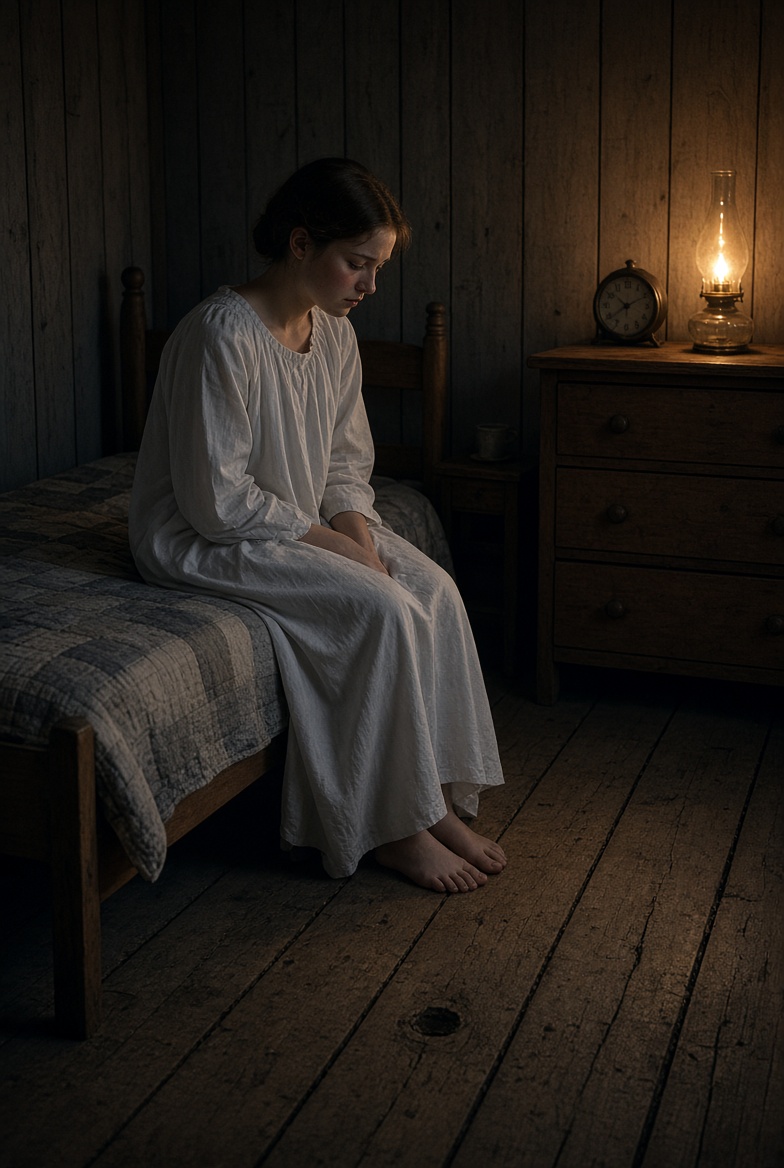
That is one of the strangest things about growing up in a strict environment. Sometimes your body tells you something clearly, but your training speaks louder.
My body said stop. My mind said do not make trouble.
Frozen, Not Agreeing
I wish I could tell you that I stood up and walked out of the room. I did not.
I wish I could tell you that I said one clear sentence and made him understand. I did not do that either.
I froze. I became very quiet.
There are people who think silence always means agreement. It does not. Sometimes silence means a person is trying to survive a moment without making it worse.
The next morning I woke before him. The room was pale gray. Rainwater clung to the outside of the window. I lay there staring at the ceiling and felt older than I had the day before. Not wiser—just older.
I got dressed and went downstairs. I remember putting water on to boil and realizing my hands were shaking. I held the kettle with both hands even though it was not heavy.
When my husband came downstairs, he acted normal. That confused me more than anything. He asked if there was coffee. I poured it. He asked if the road would be muddy near the Miller farm. I said, “Probably.”
He kissed my forehead before leaving.
I stood in the kitchen after the door closed and tried to understand how something could feel so serious to me and so ordinary to him.
The Day of Self-Blame
For most of that day, I blamed myself.
Maybe I had not explained it well. Maybe I had sounded cold. Maybe I was too sensitive. Maybe marriage really was supposed to feel like this at first.
Those thoughts kept circling because they were easier than the thought I was trying not to have.
What if my husband believed being married to me meant I could never say no?
That question frightened me—not because I wanted to leave him at that time. Leaving did not even feel like a real option. It frightened me because I suddenly could not see the boundaries of my own life.
I had always understood that there were rules. Rules about clothing, worship, work, family, technology, behavior. But I had never imagined that marriage might make my own body feel like another rule I was expected to obey.
A Mother’s Visit
Two days later, my mother came by. She brought a loaf of bread wrapped in a dish towel and sat with me at the kitchen table.
She must have noticed something because she kept looking at my face while I talked. Finally, she asked if I was sleeping. I said, “Some.”
She asked if I was happy. I said yes too quickly.
Mothers hear that kind of answer.
She did not push at first. She sliced the bread and spread apple butter on a piece for me. We sat there listening to the wind scrape branches against the side of the house.
Then she said one sentence I have never forgotten.
“Peace that requires you to disappear is not peace.”
I looked at her. She did not ask me what happened. She did not need to.
I started crying—not loudly. I just put my hands over my face and cried the way you do when you have been trying to hold something steady inside yourself and someone finally touches the exact place where it hurts.
“He Needed to Stop”
My mother moved her chair closer. I told her part of it—not every detail. I said I had told my husband I was sore and he said that was not a reason to refuse him.
Her face changed.
I had expected her to tell me marriage was difficult. I had expected her to tell me to be patient.
Instead she asked, “Did you want him to stop?”
I nodded.
She was quiet for several seconds. Then she said, “He needed to stop.”
Those four words changed something in me. They were simple. They did not solve my marriage. They did not suddenly give me courage. But they gave me a sentence I had not known I was allowed to believe.
He needed to stop.
Not because I had a perfect explanation. Not because I had reached some approved level of pain. Not because another person agreed with me.
Because I wanted him to stop.
The Fear of Leaving
That afternoon, my mother stayed until almost dark. Before she left, she told me I could come home with her if I wanted.
I said no.
I was afraid of what people would say. I was afraid of making something private into something public. I was afraid that if I left even for one night, everyone would treat it like I was threatening my marriage.
Mostly I was afraid that my husband would feel humiliated.
Even then, I was protecting him. That is difficult for me to admit now, but it is true.
The Conversation
When he came home, I had already decided I needed to speak. My stomach hurt from nerves. I had rehearsed the words while sweeping the floor.
I told him we needed to talk after supper. He looked surprised.
We sat at the table with the dishes still between us. I told him what he had said had frightened me. He frowned. I told him that when I said I was sore, I was not trying to punish him or reject him. I was telling him my body hurt.
He said he had not meant to frighten me.
I asked him whether he believed I had the right to say no.
He did not answer immediately. That silence told me how complicated the question was for him, too. He had grown up hearing many of the same teachings I had. Men were told they were heads of households. Women were told to submit. Marriage was described in ways that sometimes left very little room for two people to learn how to talk honestly about fear, tenderness, desire, pain, and consent.
Understanding where a belief comes from does not make the harm disappear. But it helped me understand that I was not arguing with only one man. I was arguing with years of assumptions.
Finally, he said, “I thought marriage meant we were not supposed to refuse each other.”
I said, “Even when one of us is hurting.”
He looked down. That was the first moment I saw uncertainty on his face.
Drawing the Line
I told him I could not live in a marriage where I was afraid of bedtime. Those words were harder to say than anything else because they were true.
He did not apologize right away. I wish he had. Instead, he became defensive. He said I was making him sound cruel. He said he had never wanted to hurt me. He said other couples did not talk about these things the way I was talking about them.
I remember feeling my courage slipping. Then I thought of my mother.
Peace that requires you to disappear is not peace.
So I stayed at the table. I said, “I am not telling you what kind of man you are. I am telling you what happened to me.”
That ended the argument for a while. Not because he suddenly agreed—because he finally listened.
The Uncomfortable Weeks
The next few weeks were uncomfortable. There was distance between us. I slept badly. He was quieter than usual. Some evenings we barely spoke.
But something important had changed. I had said it out loud. I had drawn a line. And once I knew where that line was, I could not pretend it was not there.
Eventually, he apologized. It happened on a Sunday afternoon. We had walked home after visiting family. The air smelled like wood smoke and wet leaves. He stopped near the shed before we went inside.
He said he had been thinking about what I told him. Then he said, “I was wrong to make you afraid.”
I waited.
He added, “If you say stop, I will stop.”
I cried again—not because everything was fixed. Trust does not rebuild itself in one sentence—but because it was the first time he had said clearly that my voice mattered.
How a Marriage Changed
Over time, our marriage changed. We learned to ask instead of assume. We learned that tenderness is not weakness. We learned that being husband and wife did not erase the fact that we were still two separate people with separate bodies, fears, needs, and limits.
I also learned something about faith. For a long time, I thought obedience was the highest form of goodness. I do not believe that anymore.
Obedience without conscience can become dangerous. Submission without choice can become fear. And marriage without the freedom to say no is not the kind of covenant I once imagined it was.
I know there are people who will hear this story and want to turn it into a statement about every Amish marriage. I cannot do that. I can only tell you what happened in mine.
There were loving marriages around me. There were husbands who were gentle and wives who spoke their minds. There were also beliefs and silences that made it difficult for young women like me to know when something crossed a line.
Both things can be true.
What I Was Never Taught
When I look back now, what hurts most is not that I was inexperienced. Everyone begins marriage not knowing everything.
What hurts is that I had been taught so little about my own right to speak when something felt wrong.
I knew how to bake bread for a household. I knew how to mend a torn dress. I knew how to work from before sunrise until after supper.
But I did not know that “I am hurting” was already a complete sentence.
I thought I needed permission to make it count.
I did not. And neither do you.
What Love Cannot Require
That is what I understand now.
A loving person may be disappointed by a boundary. They may be confused by it. They may need time to understand it. But love cannot require you to ignore pain so someone else can remain comfortable.
For me, learning that did not mean rejecting my marriage. It meant finally asking for a marriage where both of us were present. Not one person obeying and one person deciding. Two people, two voices, two human beings.
A Question for You
Before I go, I would like to ask you something.
When do you think a person first learns that they are allowed to set a boundary?
Was it in childhood, when someone respected your “no”? Was it in a relationship, when you finally said “that hurts” and were believed? Or are you still learning it right now, in real time, one small sentence at a time?
You can answer in the comments—in as much or as little detail as you want. You do not have to explain everything. Sometimes, just knowing somebody else understands is enough.
And if this story resonated with you—if you have ever frozen in a moment when your body said stop and your training said don’t make trouble—I want you to know that you are not alone. Your pain matters. Your voice matters. And “I am hurting” is already a complete sentence.
It always was.
About This Story
This is one of the stories from The Katie Journals, exploring the quiet, complicated, beautiful, and sometimes difficult parts of Amish life that people rarely see from the road. If you would like to read more, my new book, The Ninth Day, is available now. It is the first book in The Katie Journals, and you can find it through the link in the description.
If these quieter, harder stories from Amish life matter to you, I hope you will subscribe and stay with me.
End of Article









