I Left for 7 Days — Came Home to Nothing But a Mailbox Standing in the Dust
I was gone exactly seven days.
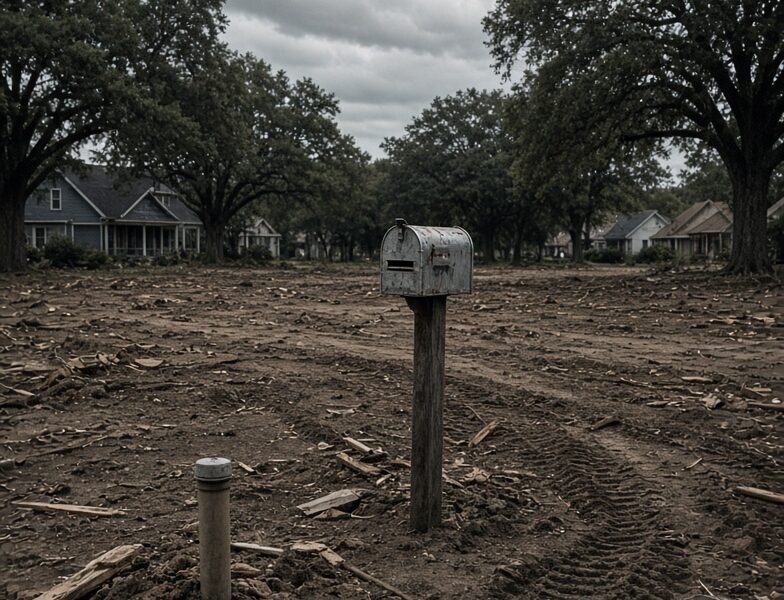
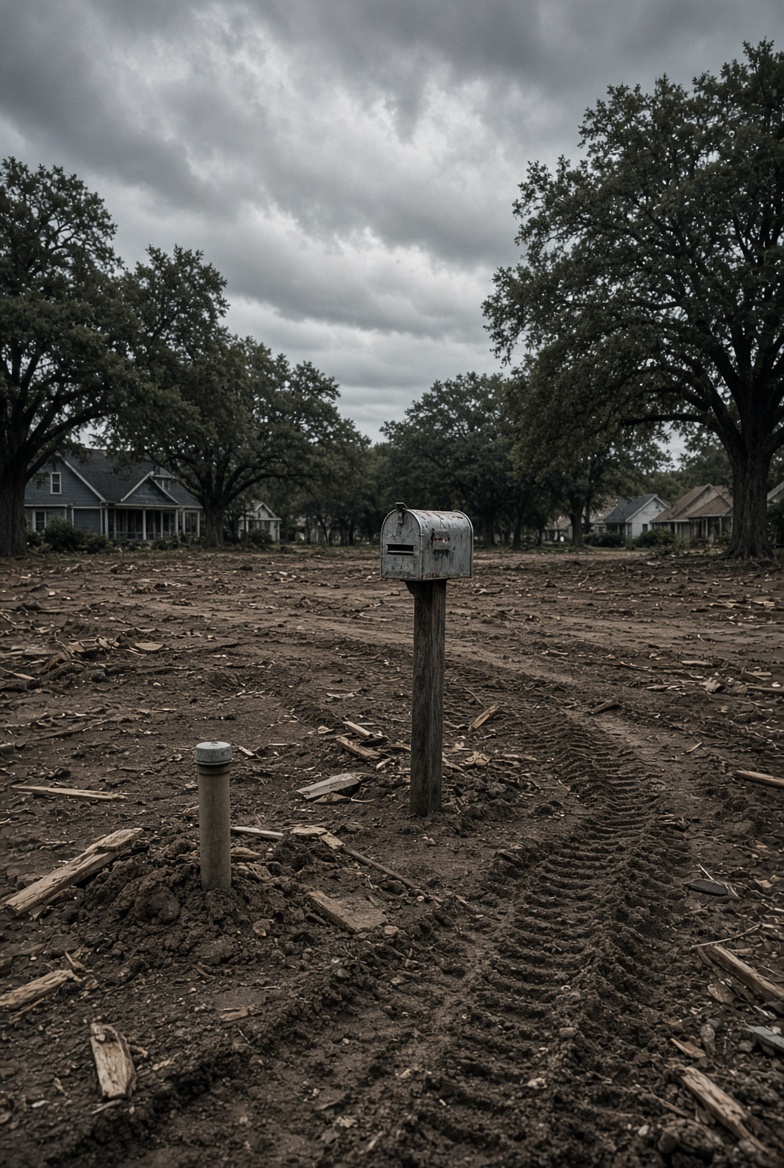
When I came back, my two-story wooden house had vanished, leaving nothing but a flat stretch of dust, deep tire scars from a bulldozer, and a mailbox standing alone like a headstone.
The president of my homeowners association, a woman named Celeste Whitmore, walked toward me in white shoes that had never touched a construction site and told me the crew had torn down the wrong house by mistake.
She smiled when she said it, the way people smile when they think they have already won.
She told me a man like me should be grateful the neighborhood had finally gotten rid of an eyesore.
She had no idea that the house she destroyed still held enough evidence to cost her organization $22 million in a courtroom.
My name is Dean Holloway, and for four years I had rebuilt that house with my own hands, board by board, from a forgotten 1912 structure that everyone else had written off as a teardown.
I worked as a structural damage investigator, the kind of specialist insurance companies and attorneys called in when a building collapsed and someone needed to know exactly why.
Because I wore work jeans and carried my own lumber up a ladder, Celeste assumed I was some struggling handyman playing pretend at home ownership.
She never once imagined that the man she dismissed as a carpenter spent his career picking apart fraud, tracing collapsed buildings back to the decisions that caused them, and reading contracts the way other people read grocery lists.
That mistake would follow her all the way into a courtroom.
I had bought the property years earlier at a foreclosure auction, back when the house was little more than a sagging frame with a caved roof and a foundation cracked by decades of neglect.
Most buyers who toured it before the sale walked away shaking their heads, convinced the only sensible option was to bulldoze it and start from nothing.
I saw something different in the bones of that place, the kind of craftsmanship builders no longer bothered with.
Hand-cut joints and old-growth timber that had survived a century of storms without ever giving way.
I spent my evenings after work and every free weekend stripping away rot, reinforcing the frame, and slowly bringing the house back to a version of itself that honored what it had originally been.
Neighbors used to slow their cars when they drove past, watching a man in a dusty truck haul salvaged lumber up a ladder alone, never once suspecting that same man spent his weekdays testifying in courtrooms about exactly how buildings failed and why.
I had driven back into Ashcroft Ridge after a week-long consulting job out of state, tired and looking forward to nothing more than my own porch and a quiet evening.
From the end of the street I noticed the familiar row of oak trees was still standing, but the roofline I had known for four years was simply gone.
At first I told myself I had turned down the wrong road, that somehow in my exhaustion I had confused one cul-de-sac for another.
I slowed the truck, checked the house number on the curb, and realized with a cold drop in my stomach that 17 Ashcroft Lane was exactly where I was standing.
There was nothing left to argue with.
The house, the garage, the back porch, and the garden I had spent two summers building were all gone, scraped down to raw earth.
I got out of the truck and walked the perimeter in silence, the way I would walk any site I had been called to investigate professionally, except this time the site was my own life.
All that remained was the mailbox, a capped water line jutting out of the dirt, and scattered splinters of wood that used to be my staircase.
I had rebuilt that staircase from black walnut salvaged from a barn two counties over, along with hand-leaded glass windows and a stone fireplace I had reconstructed to match the original 1912 blueprints I had tracked down in a county archive.
None of it mattered anymore.
I called the police from the empty lot, and the officer who arrived told me the association had produced a demolition permit, which meant there was no active crime for him to stop, only a civil dispute for the courts to sort out later.
While I stood there absorbing that answer, a white sport utility vehicle pulled up along the curb, and Celeste Whitmore stepped out as though she were inspecting an overgrown lawn rather than the wreckage of a home.
She walked toward me with the calm, unbothered posture of someone who had rehearsed this exact moment.
She told me not to make the situation dramatic, explaining that the demolition crew had simply torn down the wrong structure, and that accidents happen in construction all the time.
When I asked why no one had called me before or during the demolition, she looked me up and down, taking in my work boots and dust-covered jeans, and told me she assumed a man who built things could also rebuild them without much trouble.
I did not argue with her in that moment.
Instead, I quietly opened the recording application on my phone and asked her, as calmly as I could manage, exactly which structure the crew had been authorized to demolish.
She answered without hesitation that the target had been lot 81 Ashcroft Court, a property she described as a run-down storage structure long overdue for removal.
I looked past her toward the flattened remains of my own house and understood immediately that the address she had just given me bore no resemblance to my own.
Celeste called it an unfortunate coincidence of similar addresses, but as I walked the edges of my property afterward, I found survey stakes driven into the ground in precise positions around what used to be my foundation.
Stakes that had clearly been placed before I ever left town for my trip.
Two days later, Celeste called an urgent meeting at the association office, but pointedly did not invite my attorney or any independent expert to attend.
She wanted to speak with me alone, believing correctly that most homeowners in my position would be too shaken and too intimidated to push back.
In that meeting, she slid across the table a settlement offer of $180,000, a figure far below the true value of the house, let alone the land beneath it or the possessions lost inside.
She described my home as outdated and out of step with the association’s new vision for the neighborhood, framing its accidental demolition as something that had conveniently solved a long-standing aesthetic problem for the community.
She told me, without any apparent embarrassment, that men like me tended to attach sentimental value to things we built with our own hands, but that sentiment was not the same thing as market value.
I asked her plainly whether she had ever set foot inside my house before it was destroyed, and she admitted she had not.
Yet she still insisted it could not possibly have been worth what I claimed.
When I refused to sign her settlement, her tone shifted from dismissive to threatening.
She warned that if I pursued legal action, the resulting legal costs would eventually be passed on to every homeowner in the neighborhood through a special assessment.
She was trying to turn me into the villain of a story where she had already cast herself as the reasonable party protecting everyone else’s finances.
I told her plainly that the party responsible for demolishing a home without authorization should bear the cost, not the neighbors who had nothing to do with the decision.
Before I left that meeting, I requested copies of the demolition permit, the contract with the demolition company, the board’s meeting minutes authorizing the work, the survey map identifying the structure to be removed, and any notice that should have been sent to the homeowner in advance.
Celeste refused every request, telling me I lacked the professional background to understand the paperwork, even if I saw it.
She mocked me openly, saying I repaired structures while she managed an entire community, and that I should not confuse manual labor with actual authority.
I did not correct her assumption about my career that day.
I simply took her rejected settlement offer and drove it straight to my attorney, a sharp and unflappable woman named Laurel Quinn, who specialized in property fraud and corporate misconduct.
Laurel read through the settlement paperwork twice before pointing to one buried clause that immediately raised her suspicion, a requirement that I never publicly disclose anything relating to what the document vaguely called the Eastern Redevelopment Plan.
I told her I had never once heard of any redevelopment plan connected to our neighborhood.
Her expression told me she found that omission far more troubling than anything else in the document.
Laurel moved quickly, sending formal evidence preservation letters to the association, to the demolition company, and to a development firm called Langford Development, whose name had surfaced briefly in her initial research.
Every email, security camera recording, survey map, and internal record connected to my property now had to be preserved under threat of legal consequence.
I began treating the empty lot the way I would treat any professional job site, walking it slowly, photographing every detail, and looking for the kind of physical evidence that machines and careless people tend to leave behind without realizing it.
The tire tracks told their own story immediately, cutting a direct line from the main gate straight to my former foundation, never once veering anywhere near the property Celeste claimed had been the actual target.
Scattered around what used to be the four corners of my house, I found bright orange survey stakes, each one marked with the identifying code of a surveying company I later learned had previously done contract work for Langford Development.
That single detail proved my land had been formally measured and marked well before any bulldozer ever arrived on scene.
Laurel pulled the official county records for lot 81 Ashcroft Court and discovered it was nothing like my home at all, merely a small concrete pump station sitting almost two miles away, owned outright by the local water utility rather than by any private homeowner.
The association had no legal authority whatsoever to order the demolition of a structure they did not even own.
That discovery raised two questions neither Celeste nor her allies could easily answer.
First, why would the association issue a demolition order for a building they had no ownership claim over in the first place?
Second, how could any professional demolition crew possibly confuse a small concrete utility structure with a full two-story wooden house standing nearly two miles away?
I decided to speak with June Talbott, an elderly neighbor who lived directly across the street and had a clear, unobstructed view of my property from her front window.
June told me that before the demolition crew ever arrived, she had watched Celeste stand personally on my lot alongside a heavy-set contractor named Wade Sutter, pointing directly at my house.
June remembered Celeste’s exact instruction that afternoon, telling Wade that by nightfall, she did not want to see that structure standing there anymore.
Believing at the time that the association was simply overseeing some large renovation project, June had recorded a short video from her window purely out of curiosity about the unusual activity.
The footage was distant and slightly shaky, but it clearly placed Celeste at the scene well before the demolition began, directly contradicting her earlier claim that she knew nothing about the project until after the work was already finished.
I continued examining the ground around what remained of my foundation and noticed something the demolition crew likely never expected anyone to look for.
Beyond simply tearing down the house, someone had also pulled up the original boundary survey markers along the edge of my property and repositioned them nearly ten feet inward from where they had legally stood for decades.
This was no longer a case of an address being misread by a distracted crew member.
Someone with detailed knowledge of my property lines was actively working to alter the legal footprint of my land itself.
Laurel dug deeper into public development filings and uncovered a proposed access road for a project connected to Langford Development, a route drawn directly through the exact section of land where my house had once stood, as though the demolition had cleared the way for something much larger than a single misdirected work order.
That larger project was called Ashcroft Harbor Renewal, and the filings described a private club, an upscale restaurant, an event venue, and a dedicated access road leading down to the lake with an overall projected value exceeding $60 million.
The only route that satisfied the required fire access and service vehicle standards ran directly through my property and through no other viable parcel in the area.
Three years earlier, an unfamiliar shell company had offered to purchase my land for $420,000, and I had declined without much thought since I had no intention of selling a house I had spent years restoring.
The following year, the same anonymous buyer raised their offer to $610,000, and again I turned it down without giving the matter much further consideration.
Laurel eventually traced that shell company back to a law firm that also represented Langford Development directly, which meant the earlier purchase offers had never been a coincidence at all.
She discovered a private arrangement in which the association would receive a brand new clubhouse in exchange for helping secure clear access through the disputed parcel.
Celeste personally would receive a paid advisory position tied to the development along with a separate financial bonus.
The entire multi-million dollar plan had stalled for years for one simple reason, because I had never agreed to sell my land.
Celeste never imagined I had the resources, the knowledge, or the persistence to fight back against an organization with her level of institutional authority behind it.
In her mind, I was simply a solitary man living alone, patching his own roof, and driving an aging pickup truck around a neighborhood full of newer, more polished vehicles.
She had no idea that I had spent years investigating exactly the kind of fraudulent paperwork she was now relying on to justify what had happened to my home.
Not long after our confrontation, the association mailed me an official notice demanding that I clear what they called dangerous debris from my property within ten days, threatening a penalty of $5,000 for every day I failed to comply.
Celeste was now attempting to weaponize the very destruction she had personally orchestrated, hoping the mounting pressure would finally force me to abandon the land altogether.
At the next scheduled association meeting, Celeste stood in front of the assembled homeowners and publicly denounced me as the man obstructing the entire neighborhood’s progress.
She told residents I was demanding the association purchase me an entirely new mansion simply because my outdated old house had been accidentally demolished.
I stood up calmly and laid out four simple facts for the room.
The association had never possessed a valid demolition permit for my actual address.
Celeste herself had been physically present at the site before the demolition began.
The boundary markers along my property had been deliberately relocated, and a large private development project ran directly through the land where my home had stood.
Celeste cut me off mid-sentence, telling the room this was not my construction site, and that I had no right to speak over people with actual authority and responsibility.
I calmly placed my phone on the table and played the earlier recording in which her own voice admitted the demolition had conveniently solved what she called a long-standing aesthetic problem for the neighborhood.
The entire room fell silent as her words echoed through the association hall, and Celeste immediately adjourned the meeting before any further questions could be raised.
That same night, an anonymous email arrived in my inbox containing a screenshot of an internal message with a subject line that read simply, “Remove the structure before Holloway returns.”
The sender turned out to be a young woman named Marla Keen, who managed the association’s records, correspondence, and meeting schedules from behind the scenes.
Marla agreed to meet Laurel and me at a small diner well outside the neighborhood, explaining that she feared Celeste was actively monitoring staff computers and phones for anything that might expose the scheme.
She described a plan Celeste had been quietly developing for several months, built entirely around the belief that if my house simply disappeared, I would have no practical way to continue living on the land and would eventually accept whatever buyout was offered.
During one closed-door meeting, Grant Bellamy, the association’s vice president, had asked Celeste directly whether their plan was even legal, and she had reportedly answered that they would simply describe it afterward as an insured administrative error.
Celeste had instructed Marla to prepare the formal demolition paperwork for lot 81 exactly as originally planned, then quietly swap the cover page to list my address instead, while leaving the original permit number completely unchanged.
Marla had kept a private copy of that altered file because she feared she might eventually be blamed personally if the scheme ever came apart.
The internal messages Marla shared painted an unmistakable timeline of intent rather than accident.
Celeste had confirmed my exact travel dates before scheduling anything, instructed Wade to complete the demolition within the first two days I was away, and insisted the crew clear the foundation completely before I returned home.
Langford Development had wired $250,000 into an account labeled generically as a planning fund, and Celeste had specifically instructed everyone involved not to attempt any direct phone call to notify me beforehand.
The association’s board, according to Marla, had never actually held a formal vote authorizing any of it.
One particular email stood out above all the others, a message Celeste had sent directly to Preston Langford himself.
In that message, Celeste had written that once the house was gone, I would be left with nothing but an inaccessible parcel of land, adding that men tended to become far more practical once they no longer had anything left to protect.
Reading her own words made it painfully clear that her contempt for me was never just an attitude she carried into our conversations.
It had become the entire strategic foundation of a calculated financial scheme.
Marla agreed to provide a formal statement, but understandably wanted legal protection first, worried that Celeste might retaliate against her professionally the moment the truth came out.
Laurel immediately filed for a protective court order preventing the association from firing, threatening, or otherwise pressuring anyone who might testify in the case.
Celeste responded publicly by claiming the association’s email system had been hacked, suggesting the incriminating messages might have been fabricated or altered by someone with malicious intent.
However, the messages Marla had preserved still contained original file metadata from an attached survey report, including timestamps that matched perfectly with the survey stakes discovered on my property.
When Laurel formally requested access to the association’s original email server for independent forensic review, the association claimed a sudden and unexplained technical failure had wiped three full months of internal data.
That supposed failure had occurred less than two hours after they received Laurel’s formal evidence preservation letter.
A coincidence far too precise to be believable.
Judge Miriam Kessler, the presiding judge assigned to our case, ordered the association servers seized immediately for independent forensic examination.
She warned clearly on the record that any deliberate destruction of evidence could expose every individual board member to personal legal liability, regardless of their official position within the organization.
Once Celeste understood how badly the evidence was turning against her, she shifted her entire strategy toward attacking my reputation within the neighborhood instead.
The association sent a mass notice to every resident claiming I was personally demanding $22 million and warning that such a lawsuit could quadruple everyone’s monthly association fees.
In reality, we had never publicly stated that figure at all, since Laurel’s formal complaint at that stage simply demanded full and fair compensation along with complete access to the relevant records.
Celeste had deliberately invented an inflated number specifically designed to turn my own neighbors against me before the facts of the case were even fully understood.
Some residents began leaving angry notes in my mailbox while others crossed the street rather than speak to me directly.
Celeste organized a special meeting she publicly titled “Protecting Ashcroft Ridge from an Opportunistic Lawsuit,” framing the entire dispute as my personal attempt to profit unfairly from an honest mistake.
Throughout that period, I was living in a small rented apartment across town.
Yet I still returned to the empty lot almost every single day to photograph the site and secure whatever salvageable materials remained scattered across the property.
At Celeste’s specially organized meeting, the association brought in a hired property appraiser who confidently told the room my former home had been worth no more than $310,000.
I asked him directly whether he had personally inspected the interior of the house before forming that valuation, and he admitted somewhat uncomfortably that his report had been prepared entirely after the house was already gone.
I then asked whether he was even aware the home had been restored using reclaimed antique lumber, custom leaded glass windows, and architectural elements that were no longer manufactured anywhere.
He acknowledged he had no knowledge of any of those details, and Celeste quickly mocked me in front of the room, suggesting I was simply trying to turn a run-down old house into some kind of imaginary museum piece.
That was the moment I finally revealed my actual profession to the neighborhood for the first time.
I explained that I worked as a structural damage investigator with years of professional experience assisting insurance companies, attorneys, and government agencies in evaluating exactly this kind of property loss.
I told the room I had preserved detailed restoration invoices, a complete three-dimensional digital scan of the entire house, material sourcing records, room-by-room photographs, structural drawings, and an independent appraisal completed well before the demolition ever occurred.
I explained calmly that I could account for the value of nearly every board and fixture inside that house, down to the smallest detail.
Celeste’s composure finally cracked, and she snapped that owning a scanning device did not transform a carpenter into a genuine expert.
Laurel stood and handed the appraiser copies of three major legal cases in which I had previously served as a retained expert witness, one of which directly involved the very same insurance company currently covering the association’s own liability policy.
Shortly after that meeting, the association’s insurer publicly announced they were reviewing whether to deny coverage entirely, since evidence increasingly suggested the demolition had been a deliberate and intentional act rather than any kind of accident.
Celeste had apparently believed her insurance policy would ultimately absorb the cost of her scheme without any personal consequence to herself or the association.
Now the entire organization faced the very real possibility of covering the full financial damage completely on their own.
Sensing the shifting tide, Celeste privately offered me $1.5 million along with a different house within the neighborhood if I agreed to quietly drop the lawsuit altogether.
I refused that offer without any hesitation whatsoever.
I had no interest in some replacement house handed to me as a consolation prize.
What I wanted was a clear and public acknowledgement that she had deliberately destroyed my home on purpose.
Forensic technicians working to recover the association’s deleted server data eventually located a previously erased text message sent from Celeste’s phone reading simply that someone should make sure Holloway had nothing left to come home to.
Wade Sutter initially insisted under oath that he had only followed the official paperwork provided to him, and his attorney attempted to shift responsibility entirely onto the individual equipment operator instead.
However, the GPS tracking data recorded directly by his demolition machinery documented the crew’s complete route and precise timing throughout that entire day.
The equipment had idled directly in front of my house for nearly forty minutes before the demolition began, and phone records showed Celeste and Wade had called each other six separate times during that exact window.
A delivery truck’s dashboard camera happened to capture Celeste standing beside Wade at the scene, pointing directly toward the roofline of my house before any equipment was activated.
Laurel introduced all of this evidence during Wade’s formal deposition, and he continued denying any wrongdoing until she produced the signed contract for the planned new clubhouse construction.
That contract contained a specific clause stating it would only take effect once what the document literally called the Holloway access route had been fully cleared.
Wade’s own company was listed directly within that contract as the intended primary contractor for the future project.
If he had continued lying under those circumstances, he would have faced not only civil liability, but potential criminal charges for perjury and intentional property destruction.
Faced with that reality, Wade finally changed his account of events.
He admitted that Celeste had personally told him the house had already been legally seized by the association due to unspecified violations, and that she had assured him the original homeowner no longer retained any right to object.
When Wade asked why personal belongings were still visible inside the house at the time of demolition, Celeste had simply told him I had abandoned nothing but worthless junk behind.
She had also specifically instructed the demolition crew to move quickly, ensuring the entire job was finished well before I returned from my trip.
Wade eventually turned over an automatically recorded phone call generated by his company’s internal job management system without his direct knowledge.
In that recording, Wade could clearly be heard reading my exact address aloud and asking Celeste to confirm it one final time before authorizing the crew to proceed.
Celeste answered without any hesitation whatsoever, telling him yes, that was definitely Holloway’s house, and adding that he should not let a man carrying a hammer make him second-guess the person actually signing his paychecks.
That single recording became the most direct piece of evidence in the entire case.
Grant Bellamy, the vice president who had once stood loyally beside Celeste, also began cooperating fully with our attorneys once he understood the scale of what had actually occurred.
He admitted that Celeste had used other board members’ electronic signatures without their knowledge or consent to fabricate an official vote that had never genuinely taken place.
Grant provided a detailed spreadsheet showing the $250,000 from Langford Development had been quietly split into several smaller disguised payments to avoid drawing outside attention.
A portion of that money had ultimately been routed to a small consulting company that turned out to be owned by Celeste’s own sister.
She had never simply been trying to secure a new clubhouse for the community.
She had personally profited from the entire arrangement from the very beginning, layering personal enrichment on top of institutional misconduct.
Laurel formally amended our complaint to include intentional property destruction, fraud, trespass, conspiracy to seize private property, document forgery, evidence tampering, defamation, breach of fiduciary duty, and unjust personal enrichment.
Facing mounting evidence on every front, the association’s attorneys offered a settlement of $6 million in an attempt to end the case quietly before trial.
I still refused because the proposed settlement required every piece of evidence to be permanently sealed from public record, and it did not require Celeste to formally admit any wrongdoing whatsoever.
I told Laurel plainly that they had destroyed my house because they believed I would eventually choose money over the truth, and I had no intention of proving them right about that assumption.
Just before trial began, our investigators uncovered records showing Celeste had used strikingly similar tactics against a different property owner exactly six years earlier, successfully pressuring that homeowner into an early and undervalued sale under comparable circumstances.
That discovery confirmed this was not an isolated lapse in judgment, but a deliberate pattern she had refined and repeated over time.
When the trial finally began, the association’s attorneys opened by describing the entire situation as an unfortunate administrative error that I had allegedly exaggerated into an elaborate conspiracy theory.
They characterized me publicly as a construction professional deliberately leveraging specialized knowledge to inflate an ordinary property loss claim far beyond its actual value.
Laurel chose not to open with the private emails or the secret development contract at all.
Instead, she projected two simple photographs side by side for the jury to examine directly.
One showed the small concrete pump station located at lot 81, and the other showed my nearly 4,300-square-foot two-story wooden house.
She asked the jury plainly how any professional demolition crew could possibly confuse two structures that looked nothing alike and stood almost two miles apart from each other.
No one in the courtroom offered any credible explanation.
June Talbott testified clearly that she had personally seen Celeste standing at the scene before the demolition ever began.
Marla explained in careful detail exactly how the official address had been deliberately altered within the association’s own paperwork.
Wade admitted openly that he had received direct verbal instructions confirming my address before proceeding with the demolition.
Grant explained precisely how the official board meeting minutes had been fabricated using forged electronic signatures.
I took the witness stand myself and described, without raising my voice or losing my composure, the long process of restoring that house room by room over four patient years.
I did not need theatrical emotion to make my point.
I simply described the specific details, the materials, and the quiet feeling of standing in front of a locked door that no longer existed, holding a key that suddenly had nowhere left to go.
The association’s attorney eventually asked me directly whether $22 million was not an unreasonable figure to demand for the loss of a single house.
I answered that this case was never really about the value of one house alone.
It was about an organization that used institutional power, falsified paperwork, and heavy machinery to strip away someone’s property because they assumed that person lacked the resources or the resolve to fight back.
When Celeste finally took the witness stand herself, she continued insisting she had never personally directed the demolition of my home.
Laurel played a recorded phone call once more for the entire courtroom to hear clearly.
Celeste claimed her recorded words had been taken completely out of their original context.
Laurel then introduced the recovered text message instructing someone to make sure I had nothing left to come home to, and Celeste dismissed it merely as a poor choice of words rather than an actual instruction.
Laurel calmly presented the development site map, the signed clubhouse construction contract, and the documented payments routed to Celeste’s sister’s consulting company.
Finally, Laurel asked one direct question that seemed to hang in the courtroom air far longer than any answer that followed it, asking why, if this had truly been nothing more than an honest accident, Celeste had needed to know my exact departure date and precise return date in advance.
Celeste said nothing at first.
Judge Kessler instructed her directly to answer the question posed to her.
Celeste claimed she simply could not recall, but Laurel then displayed a printed page from Celeste’s own digital calendar projected clearly for the entire courtroom to see.
On the exact day I had left town, there was a single entry that read plainly, “Holloway gone, 7-day window.”
The courtroom fell completely silent for what felt like a very long moment.
Celeste finally seemed to understand that this case was no longer about whether an accident had occurred, but about how severe the consequences of her deliberate actions were about to become.
Laurel was not finished with her.
She asked Celeste to explain, in her own words, why an administrative mistake would require six phone calls to the demolition contractor in the span of forty minutes before the equipment ever moved.
Celeste tried to claim the calls concerned an unrelated landscaping matter elsewhere in the neighborhood, but Laurel produced Wade’s own phone records showing the calls originated from a tower less than a quarter mile from my property at the exact hour the crew idled outside my house.
She asked Celeste to explain why the association’s insurance carrier had never been notified of any accidental demolition until three full weeks after the fact, despite a policy requirement to report such incidents within seventy-two hours.
Celeste had no answer that satisfied the court.
By the time she stepped down from the witness stand, her voice had lost the composed, dismissive edge it once carried in every conversation we had shared before that day, and she would not meet my eyes as she walked back to her seat.
After days of testimony, the jury and the court determined that the association, Celeste, Wade, and their affiliated business partners had knowingly and intentionally conspired to destroy my property.
Judge Kessler emphasized three specific factors in reaching the final award amount.
The conduct had been carefully planned well in advance rather than resulting from any genuine oversight.
The association had actively worked to conceal its actions through falsified documents and coordinated false testimony.
Celeste had personally exploited her leadership position for direct financial gain rather than acting purely in the community’s stated interest.
The final judgment totaled $22 million.
$4.2 million was allocated to fully restore the house according to its original design, materials, and modern safety standards.
$2.1 million covered destroyed possessions, restoration records, and specialized professional equipment lost in the demolition.
$1.4 million addressed loss of use, work disruption, and related consequential damages I had suffered throughout the ordeal.
The remaining $14.3 million represented punitive damages, reflecting the deliberate, fraudulent, and evidence-destroying nature of what the association had done.
The insurance company formally declined to cover any portion of the damages tied directly to intentional misconduct, leaving the association financially exposed on its own.
The court appointed an independent financial receiver to oversee the association’s remaining assets, ensuring ordinary residents would not be forced to personally absorb the consequences of Celeste’s private scheme.
The association’s reserve funds, the undeveloped clubhouse parcel, escrowed payments from Langford Development, and various commercial holdings were all formally frozen pending distribution.
Celeste herself was held personally liable for a significant portion of the punitive damages awarded against her.
The proposed Ashcroft Harbor Renewal Development was permanently canceled in the aftermath of the verdict.
Preston Langford withdrew from the project entirely and began cooperating with investigators in an effort to reduce his own potential liability.
In her final ruling, Judge Kessler stated clearly that the authority to manage a community was never meant to serve as a license to seize private property from its rightful owner.
She added that the defendants had not accidentally destroyed the wrong house at all, but had deliberately targeted the correct one, gambling that its owner would prove too powerless to fight back against them.
Celeste looked directly at me as the verdict was read aloud, but I did not gloat or mock her in that moment.
I simply reached into my pocket and placed my old house key quietly on the table in front of me.
It was the very same key she had once assumed had become permanently useless.
As we left the courthouse that afternoon, Laurel asked me what I intended to do with the empty lot now that the case was finally over.
I told her simply that I planned to rebuild the exact house they had once tried to erase from the map entirely.
The rebuilding process took nearly eighteen months from start to finish.
Thanks to the detailed three-dimensional scans, architectural drawings, and material records I had preserved, my architect was able to recreate almost every original detail of the house with remarkable precision.
I did not choose to build something larger or more extravagant simply to flaunt the outcome of the trial.
I rebuilt the very same house that Celeste had once dismissed publicly as an eyesore unworthy of the neighborhood.
I did add several practical improvements along the way that the original structure had never included.
The new house featured stronger storm-resistant framing, a modern fire suppression system, a fireproof archive room for important documents, and security cameras positioned along the full perimeter of the property.
I also added a private office overlooking the exact stretch of land that had once been slated to become the access road for that canceled club development.
The Ashcroft Ridge Homeowners Association was formally dissolved after residents voted overwhelmingly to remove the entire existing board from power.
A new voluntary community group was later formed in its place, operating with far more limited authority and fully transparent public financial records.
Marla eventually became the administrative manager for that new community organization.
Grant was required to repay misappropriated funds and continued cooperating fully with the ongoing legal proceedings that followed the verdict.
Wade lost his contractor license for a period of time and ultimately sold his company entirely to help cover his portion of the court-ordered damages.
Celeste eventually sold her own home and quietly moved away from the neighborhood altogether.
The last time I saw her, she was standing across the street watching a crew install the new front door on my rebuilt house.
She looked at the finished house for a long moment before finally speaking to me.
She asked what more I could possibly want since I had already received my money.
I told her that what I truly wanted was for her to see with her own eyes exactly what she had once believed she had every right to erase completely.
On the day construction was finally finished, I fitted my original house key into the brand new lock a locksmith had specially crafted to match it exactly.
I walked slowly through the rebuilt rooms, placed a framed copy of the final judgment inside my new office, and stood quietly looking out through the window at the land beyond.
The property still belonged entirely to me.
The access road Langford Development had once planned through my land was never built, and Celeste, in the end, finally understood something she had never grasped at the very beginning of this entire ordeal.
I did not win that case simply because I had more money than an entire homeowners association.
I won because while they were busy using power and machinery to destroy evidence and silence a man they underestimated, I had spent every quiet day since carefully preserving exactly what I needed to rebuild the truth, one board, one record, and one recording at a time.









