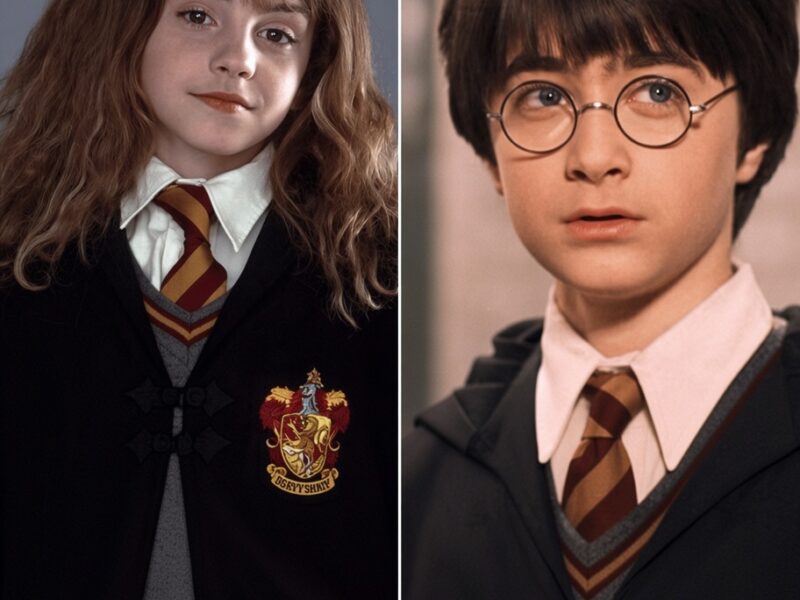
Harry Potter and the Sorcerer’s Stone Cast Then and Now in 2026: The Stars We Lost, the Shocking Transformations, and Where the Magic Led Them
The Great Hall glows with candlelight, the train still leaves Platform 9¾, and a lonely boy is about to discover that he belongs somewhere.
That first journey to Hogwarts still feels untouched by time.
But the people who stood behind the magic have been living very different lives.
Some built careers no one saw coming, and some chose quieter paths far from the spotlight.
Others left behind performances that now carry far more emotion than they did the first time we watched them.
So where did the faces of that very first Harry Potter film end up?
A First Journey That Never Faded
The first Harry Potter film introduced millions of viewers to a world that felt like home from the first moment.
Look closely at the cast, and you will find some of the finest actors Britain and Ireland ever produced, sitting alongside children who were just beginning their lives in front of a camera.
More than two decades later, the story of the people behind the wizards is just as gripping as the one on screen.
Here is where the cast of Harry Potter and the Sorcerer’s Stone stands in 2026, one character at a time.
Richard Harris as Albus Dumbledore: The Gentle Headmaster Who Left Too Soon
Albus Dumbledore is the calm, reassuring presence at the center of Hogwarts.
Richard Harris gave the headmaster a gentleness that immediately distinguished him from the more intimidating adults around Harry.
Harris was born on October 1, 1930, and by the time he entered the wizarding world in 2001, he was 71 years old and already carrying decades of screen experience with him.
His Dumbledore was soft-spoken, warm, and quietly authoritative, relying on stillness and expression instead of spectacle.
That grandfatherly quality helped make Hogwarts feel safe during Harry’s first year, even when danger was never far away.
But Dumbledore came very late in a career that had already made Harris one of Ireland’s most recognizable actors.
His earlier work included This Sporting Life, Camelot, A Man Called Horse, The Field, and Gladiator, along with Academy Award nominations and a reputation for performances that could combine force with vulnerability.
Tragically, his time in Harry Potter was brief.
Harris died on October 25, 2002, at the age of 72, after Hodgkin’s disease, leaving the role after only the first two films.
His death meant the franchise had to move forward without one of the actors who helped establish its earliest tone.
More than two decades later, his Dumbledore remains distinctive for its softness and quiet dignity.
Richard Harris made wisdom feel comforting instead of distant, and knowing how soon he was gone gives those early Hogwarts scenes an added sense of farewell.
Maggie Smith as Professor McGonagall: The Eyebrow That Commanded a Room
Few actresses could make a raised eyebrow feel as authoritative as Maggie Smith.
That precision was exactly what Professor McGonagall needed.
Born on December 28, 1934, Smith had already spent decades building one of Britain’s most respected acting careers before she stepped into Hogwarts at the age of 66.
McGonagall was stern, intelligent, dryly funny, and unmistakably protective, and Smith never had to exaggerate any of those qualities.
A clipped sentence or a controlled look was often enough.
By 2001, audiences were watching an actress who had long since proven herself far beyond fantasy.
She had won Academy Awards for The Prime of Miss Jean Brodie and California Suite and had established a major reputation across film, television, and theater.
Harry Potter introduced her to an enormous younger audience, while Downton Abbey later gave her yet another defining role, with her sharp comic timing becoming one of the series’ signatures.
That longevity is part of what makes her career so remarkable.
Several generations knew Maggie Smith for completely different performances, yet the same intelligence and control ran through all of them.
She died on September 27, 2024, at the age of 89, bringing an extraordinary career to a close.
Looking back in 2026, McGonagall feels even more precious.
Smith made strictness reassuring, humor effortless, and affection powerful precisely because the character rarely needed to express it openly.
Robbie Coltrane as Rubeus Hagrid: The First Person Who Made It Feel Like Home
Rubeus Hagrid was the first person to make the wizarding world feel like home.
Much of that warmth came from Robbie Coltrane instead of from spectacle.
Born on March 30, 1950, Coltrane was 51 when audiences first met him as Hagrid in 2001.
The character’s enormous size could have made him intimidating, but Coltrane immediately reversed that expectation.
Hagrid was emotional, loyal, awkward with secrets, and instinctively protective of Harry, offering kindness long before the boy understood anything about Hogwarts.
His importance in the first film is simple but powerful.
He is the adult who arrives not to control Harry but to rescue him from loneliness and tell him that he belongs somewhere.
By the time Coltrane joined Harry Potter, he already had a substantial career behind him.
He had built a reputation as a serious dramatic actor through his acclaimed work in Cracker, with appearances in GoldenEye and The World Is Not Enough and a wide range of British comedy and drama.
Harry Potter introduced that talent to an entirely new generation, and Hagrid became one of the roles most closely associated with him.
Robbie Coltrane died on October 14, 2022, at the age of 72.
For fans who had grown up with the films, his death made Hagrid’s presence especially emotional in retrospect.
The character still feels safe because Coltrane never played kindness as weakness.
He made Hagrid clumsy without making him foolish, vulnerable without making him fragile, and protective without needing grand speeches.
Hagrid endures because Robbie Coltrane made one of the largest characters in Hogwarts feel like one of its gentlest hearts.
Fiona Shaw as Petunia Dursley: Cold Rooms and Brittle Control
Aunt Petunia appears ordinary on the surface.
But Fiona Shaw gave her enough tension and resentment to make the Dursley home feel emotionally colder than many of Hogwarts’ darker places.
Shaw was born on July 10, 1958, and she was 43 when she first appeared as Petunia in 2001.
The character’s cruelty is rarely grand or dramatic.
It hides inside domestic routines, disapproval, and an obsessive need for normality.
That makes her useful in the first film, because she represents a different kind of threat from magic, the rejection of anything unfamiliar.
Shaw’s performance gives that rejection a brittle quality, suggesting that Petunia’s anger comes as much from fear and resentment as from simple dislike.
Away from Harry Potter, however, Shaw’s career demonstrates far greater range than the role might suggest.
She is one of the major stage actresses of her generation, particularly admired for Shakespeare and classical theater.
In later years, she reached new audiences through television and streaming projects, including Killing Eve, Fleabag, True Blood, and Andor.
Those roles let her move between drama, dark comedy, genre television, and more psychologically complicated characters, showing how little Petunia represented the limits of her abilities.
In 2026, Fiona Shaw is 68.
Her later career makes revisiting Privet Drive especially interesting, because the sharp control visible in Petunia is the same kind of technical precision that would serve her across far more complex roles.
Petunia Dursley endures because Shaw made a comparatively small supporting character feel emotionally specific, polished on the outside, uncomfortable underneath, and determined to make difference disappear by pretending it should never have existed.
Harry Melling as Dudley Dursley: The Most Dramatic Transformation of All
Dudley Dursley begins as one of the easiest characters in the film to dislike.
Yet Harry Melling’s later career created one of the most dramatic transformations among the young cast.
Born on March 13, 1989, Melling was 12 when he appeared in Harry Potter and the Sorcerer’s Stone.
Dudley is loud, spoiled, demanding, and cruel because those behaviors have been encouraged instead of corrected.
In the first film, his purpose is clear.
He makes Harry’s isolation at Privet Drive impossible to miss.
Melling plays the character broadly enough for comedy, but convincingly enough that Dudley still feels like a child shaped by adults instead of a miniature villain.
After Harry Potter, Melling took a very different path.
Rather than trying to preserve the image audiences already knew, he rebuilt himself as a character actor with a much darker and more varied range.
His appearances include The Queen’s Gambit, The Ballad of Buster Scruggs, The Old Guard, The Devil All the Time, and The Pale Blue Eye.
Many of those roles placed him far from Dudley’s childish excess, allowing him to play intense, strange, wounded, or morally complicated men.
In 2026, Harry Melling is 37.
His transformation is striking because the physical and stylistic changes were significant enough that many viewers did not immediately recognize him in later projects.
But the more important change was professional.
He moved from being remembered as a child performer in a massive franchise to being respected for unpredictable supporting roles in adult drama.
Dudley remains part of his public legacy, yet Melling’s later work proved the character was only the beginning.
He turned one of Hogwarts’ most unpleasant childhood figures into the starting point for a surprisingly serious acting career.
Richard Griffiths as Uncle Vernon: The Loudest Voice on Privet Drive
Uncle Vernon gave Privet Drive its loudest sense of hostility.
Richard Griffiths made that hostility simultaneously comic and uncomfortable.
Born on July 31, 1947, Griffiths was 54 when the first Harry Potter film appeared in 2001.
Vernon is obsessed with control, respectability, and keeping anything unusual outside his carefully managed world.
His shouting can be funny, but underneath it is the behavior of an adult using authority to intimidate a child.
Griffiths understood how to exaggerate Vernon without turning him into pure caricature, which is why the character could make audiences laugh while still making Harry’s home life feel oppressive.
The actor behind that performance had a far broader career.
Griffiths was widely admired in both theater and screen work, with memorable roles in Withnail and I, The History Boys, and Pie in the Sky.
His work in The History Boys also brought major stage recognition, including a Tony Award, confirming the depth of his career far beyond the Dursley household.
Richard Griffiths died on March 28, 2013, at the age of 65, after complications following heart surgery.
His death came while the Harry Potter films were still fresh in popular memory, making Vernon one of the earliest major cast members audiences had to revisit after losing the actor behind him.
Griffiths remains notable because he could take a deliberately unpleasant character and make him entertaining without softening what made him difficult.
Uncle Vernon endures because the performance found the absurdity inside narrow-mindedness while still preserving its cruelty.
Behind all the shouting was a highly accomplished actor capable of far more tenderness and complexity than Vernon would ever allow himself to show.
Derek Deadman as Tom the Bartender: A Warm Welcome at the Leaky Cauldron
Tom the bartender appears only briefly.
Yet his scene helps establish one of the most important changes in Harry’s life.
For the first time, strangers recognize him with warmth instead of contempt.
Derek Deadman, born on March 11, 1940, was 61 when he appeared in Harry Potter and the Sorcerer’s Stone.
As the bartender at the Leaky Cauldron, Tom is less a fully developed character than part of the texture of the wizarding world.
His greeting helps make the hidden magical community feel lived-in and familiar, a place where people know one another and where Harry suddenly realizes that his name means something very different from what it meant at Privet Drive.
Deadman gave that short appearance enough personality to make the Leaky Cauldron feel immediately welcoming.
His broader career followed the path of a classic British character actor instead of a leading star.
He appeared in Time Bandits and Robin Hood: Prince of Thieves, along with numerous supporting roles across film and television.
Performers like Deadman often become memorable because their faces carry familiarity from project to project, even when the characters themselves appear only briefly.
He died on November 22, 2014, at the age of 74, after complications from diabetes.
Looking back in 2026, Tom remains one of those small Potter roles whose importance is more atmospheric than narrative.
He is part of the moment when Harry crosses from isolation into belonging, and Deadman did not need much screen time to make that shift feel warm.
His legacy in the film is a reminder that fantasy worlds are made convincing not only by their stars, but by supporting actors who make every corner feel populated, familiar, and somehow already alive before the hero arrives.
Ian Hart as Professor Quirrell: The Nervous Man With a Darker Edge
Professor Quirrell is remembered for nervousness, secrecy, and one of the first film’s major revelations.
But Ian Hart’s career has been much steadier and broader than the character’s brief presence suggests.
Born on October 8, 1964, Hart was 37 when Harry Potter and the Sorcerer’s Stone reached cinemas.
Quirrell appears weak, anxious, and easily dismissed, which is exactly why the role works.
Hart plays him as someone whose awkward manner hides something darker, creating a character who can remain suspicious without ever appearing openly powerful.
Hart also voiced Voldemort in the first film, giving him an additional and unusual connection to the story’s central threat.
Before Harry Potter, he had already gained recognition for playing John Lennon in Backbeat, demonstrating a very different kind of intensity from Quirrell’s stammering fear.
Afterward, he continued working steadily across British and international film and television instead of becoming closely tied to the franchise.
His later credits include Finding Neverland, The Last Kingdom, and Boardwalk Empire.
In 2026, Ian Hart is 62.
His career is a useful reminder that some Potter actors became globally identified with one character, while others returned almost immediately to the rhythm of a working character actor’s life.
Quirrell remains memorable because Hart gave apparent weakness a disturbing edge.
Yet the actor himself proved far more adaptable than that image, moving between historical drama, crime, television, fantasy, and supporting film roles without relying on the Potter connection.
For viewers revisiting the first film now, his performance feels like an early example of how much experienced British acting talent was placed even in characters who appeared for only one chapter of the story.
Warwick Davis as the Goblin Bank Teller: A Fantasy Career Behind the Counter
The goblin bank teller is only a brief presence at Gringotts.
But Warwick Davis had already built a remarkable fantasy career long before appearing behind the bank’s counter.
Born on February 3, 1970, Davis was 31 when Harry Potter and the Sorcerer’s Stone premiered.
The role itself is functional and precise.
The teller helps make Gringotts feel formal, ancient, and slightly intimidating, reinforcing the idea that the magical world has its own institutions instead of existing only through castles and spells.
Davis gives the small character enough controlled authority to make the bank immediately believable.
His career, however, stretches across several of the most recognizable fantasy franchises in popular culture.
Willow and his role as Wicket the Ewok in Star Wars had both established him long before Harry Potter.
Within the Potter series, he later returned in other roles, most famously Professor Flitwick and later Griphook, creating an unusual connection between multiple characters in the same universe.
In 2026, Warwick Davis is 56.
His personal life also entered public attention after the death of his wife, Samantha, in 2024, a loss he has discussed with deep emotion.
That tragedy adds a more personal dimension to a performer audiences often associate with fantasy, humor, and family entertainment.
Davis’s longevity is remarkable because his career has crossed generations of viewers, from Star Wars to Willow to Harry Potter and beyond.
The goblin teller may be one of his smallest roles, but in retrospect it sits inside a much larger story of an actor who became almost inseparable from modern fantasy filmmaking.
Verne Troyer as Griphook: A Small Role, a Painful Story
Griphook is a small role in the first film.
But Verne Troyer brought enough presence to make the journey into Gringotts feel stranger and more distinctive.
Born on January 1, 1969, Troyer was 32 when Harry Potter and the Sorcerer’s Stone opened in 2001.
Physically portraying the goblin, he helped give the bank’s underground world a stern, secretive atmosphere as Harry and Hagrid move deeper toward the vaults.
The character has limited dialogue and screen time, so the performance depends heavily on physical detail and expression instead of extensive development.
For Troyer, however, Harry Potter was only one piece of a public career already transformed by another franchise.
He is most strongly identified with Mini-Me in the Austin Powers films, the role that made him an international pop culture figure.
That sudden fame brought enormous recognition, but it also placed him under a level of public scrutiny that became increasingly difficult.
His later life involved health struggles and personal battles, giving his story a more painful dimension than the comedy for which he was best known might suggest.
Verne Troyer died on April 21, 2018, at the age of 49.
His death came far earlier than many of the older performers from the Potter cast, and it made his brief appearance in the first film more poignant in retrospect.
Griphook would later be associated with a different performer, but Troyer remains physically connected to the character’s first appearance.
His legacy in Harry Potter is small compared with Austin Powers.
Yet it reflects what he did especially well, using physical performance, expression, and distinctive presence to make even highly stylized characters memorable almost immediately.
John Hurt as Mr. Ollivander: A Warning From Another Age
Mr. Ollivander enters the story for only a short time.
Yet John Hurt makes the wand shop feel older, stranger, and more mysterious than almost anywhere else Harry visits in the first film.
Hurt was born on January 22, 1940, and he was 61 when he appeared in 2001.
Ollivander’s importance comes from atmosphere instead of action.
He treats choosing a wand as something closer to destiny than shopping, and Hurt’s quiet delivery gives the scene an unsettling sense that he knows more about Harry’s past than Harry himself.
That performance is especially effective because Hurt already carried decades of screen authority into the role.
His extraordinary career included The Elephant Man, Alien, Midnight Express, 1984, and V for Vendetta.
Across those films, Hurt became known for a voice and face capable of expressing vulnerability, pain, intelligence, and menace, often with very little wasted movement.
Those qualities are exactly what make Ollivander so memorable despite limited screen time.
John Hurt died on January 25, 2017, at the age of 77, after pancreatic cancer.
By then, he had become one of Britain’s most respected and recognizable actors, with a career stretching far beyond any single genre.
Revisiting Ollivander now, the role feels almost perfectly suited to him, a strange craftsman surrounded by old objects, speaking quietly about forces larger than the customer standing in front of him.
Hurt made a few minutes in a wand shop feel like a warning from another age.
Mr. Ollivander endures because the performance turns exposition into atmosphere and mystery into something intimate enough to fit inside a narrow box on a dusty shelf.
Geraldine Somerville as Lily Potter: A Mother Built From Memory
Lily Potter barely appears physically in the first film.
Yet her absence shapes nearly everything Harry becomes.
Geraldine Somerville, born on May 19, 1967, was 34 when she appeared as Lily in Harry Potter and the Sorcerer’s Stone.
The role is built almost entirely from memory and emotional significance instead of extended dialogue.
Lily represents the mother Harry lost before he could know her, and the idea of her sacrifice becomes central to why he survived at all.
Somerville therefore had to make a strong impression with very little screen time.
Her calm presence gives Lily the softness of a remembered parent instead of a fully developed figure in the first film, which suits the way Harry experiences her through photographs, stories, and the grief of other people.
Outside the franchise, Somerville developed a respected career in British film and television.
Gosford Park and Cracker are among her best-known credits, along with later dramatic roles that made use of her controlled, understated style.
In 2026, Geraldine Somerville is 59.
Unlike some members of the cast who became globally identified with their Potter characters, she remained primarily a character actress working across a variety of projects.
That distance from celebrity makes Lily’s place in the franchise interesting.
The character is enormously important to the story, while the actress herself continued a comparatively quieter professional path.
Lily Potter endures because the role is defined by emotional memory instead of screen presence.
Somerville made that memory feel believable enough that Harry’s entire relationship to family, loss, and love could grow from only a handful of appearances.
Julie Walters as Molly Weasley: What a Loving Family Looks Like
Molly Weasley gives Harry one of his first glimpses of what a loving magical family actually looks like.
Julie Walters brings warmth to the role without making her overly sentimental.
Born on February 22, 1950, Walters was 51 when she first appeared as Molly in 2001.
Her earliest scenes are simple but important.
She is busy, practical, affectionate, and completely comfortable inside the chaos of a large family.
For Harry, that ordinary warmth is something almost unfamiliar.
Walters makes Molly feel maternal without needing to announce it, using fussing, organization, and gentle concern to create the sense of home the character will represent throughout the series.
Long before Hogwarts, Walters had already built one of Britain’s most admired acting careers.
Educating Rita and Billy Elliot are major examples of her dramatic work, while later audiences also knew her through Mamma Mia! and Calendar Girls.
Her career stretched across theater, television, comedy, and film, giving her a familiarity that made Molly feel instantly trustworthy.
She later spoke publicly about her battle with bowel cancer, which added another personal chapter to a life audiences had followed for decades.
In 2026, Julie Walters is 76.
Her work after and outside Harry Potter confirms how broad her range was, but Molly remains especially beloved because Walters made the character feel practical instead of idealized.
She was not a perfect, endlessly serene mother.
She worried, organized, corrected, protected, and loved with equal intensity.
That combination made the Weasley home feel alive and gave Harry something he had been missing long before he understood how much he needed it.
Bonnie Wright as Ginny Weasley: The Shy Girl Who Built a Life Beyond Hogwarts
Ginny Weasley barely has time to establish herself in the first film.
But Bonnie Wright’s later life makes that quiet beginning interesting to revisit.
Born on February 17, 1991, Wright was only 10 when she appeared in Harry Potter and the Sorcerer’s Stone.
Ginny enters as Ron’s shy younger sister, visibly overwhelmed by Harry’s presence and positioned more at the edge of the story than at its center.
The first film gives only a glimpse of the character she will eventually become, but that is part of the appeal when watching the series in retrospect.
Wright herself also grew up gradually in public instead of arriving fully formed as a star.
After Harry Potter, she moved away from constant acting and developed a broader creative identity.
She became a director, producer, writer, and environmental advocate with a particular interest in sustainability and climate issues.
That shift gave her a professional path very different from simply continuing as an actress in franchise-driven roles.
She later became a mother, another significant change for fans who first saw her as a child at King’s Cross.
In 2026, Bonnie Wright is 35.
Her post-Potter journey has been comparatively quiet but deliberately varied, combining creative work with advocacy and personal life outside traditional celebrity culture.
Ginny remains connected to her public identity, yet Wright did not allow the role to determine every decision that followed.
Revisiting the first film now, the shy little girl standing near the platform feels almost like a photograph from another lifetime, both for the character and for the actress who would eventually build a life far beyond Hogwarts.
Chris Rankin as Percy Weasley: The Ambition That Wanted to Matter
Percy Weasley is one of the earliest examples of ambition inside the Weasley family.
Chris Rankin played that ambition with exactly the right mixture of seriousness and awkwardness.
Born on November 8, 1983, Rankin was 18 when he appeared in Harry Potter and the Sorcerer’s Stone.
Percy is older than Ron, more formal than the twins, and deeply invested in rules, status, and being seen as responsible.
In the first film, those qualities are mostly comic, but they already hint at the insecurity beneath his need for approval.
Rankin gives the character a stiffness that makes him both amusing and believable, a young man trying very hard to seem more important than he feels.
After Harry Potter, Rankin did not pursue the same kind of high-profile acting career as some of the younger stars.
Instead, his later work has spanned acting, production, and behind-the-scenes roles, allowing him to remain connected to entertainment without staying permanently in front of the camera.
He also continued appearing at fan events, where the Potter franchise remained an important part of his public identity.
In 2026, Chris Rankin is 43.
His trajectory represents another version of what happens after childhood or young adult fame.
Not disappearance, but a move into different areas of the same industry.
Percy remains memorable because the character’s flaw is recognizable.
His ambition is not evil, because it grows from wanting to matter, wanting approval, and wanting to distinguish himself inside a large family.
Rankin made that need slightly ridiculous, slightly sad, and very human.
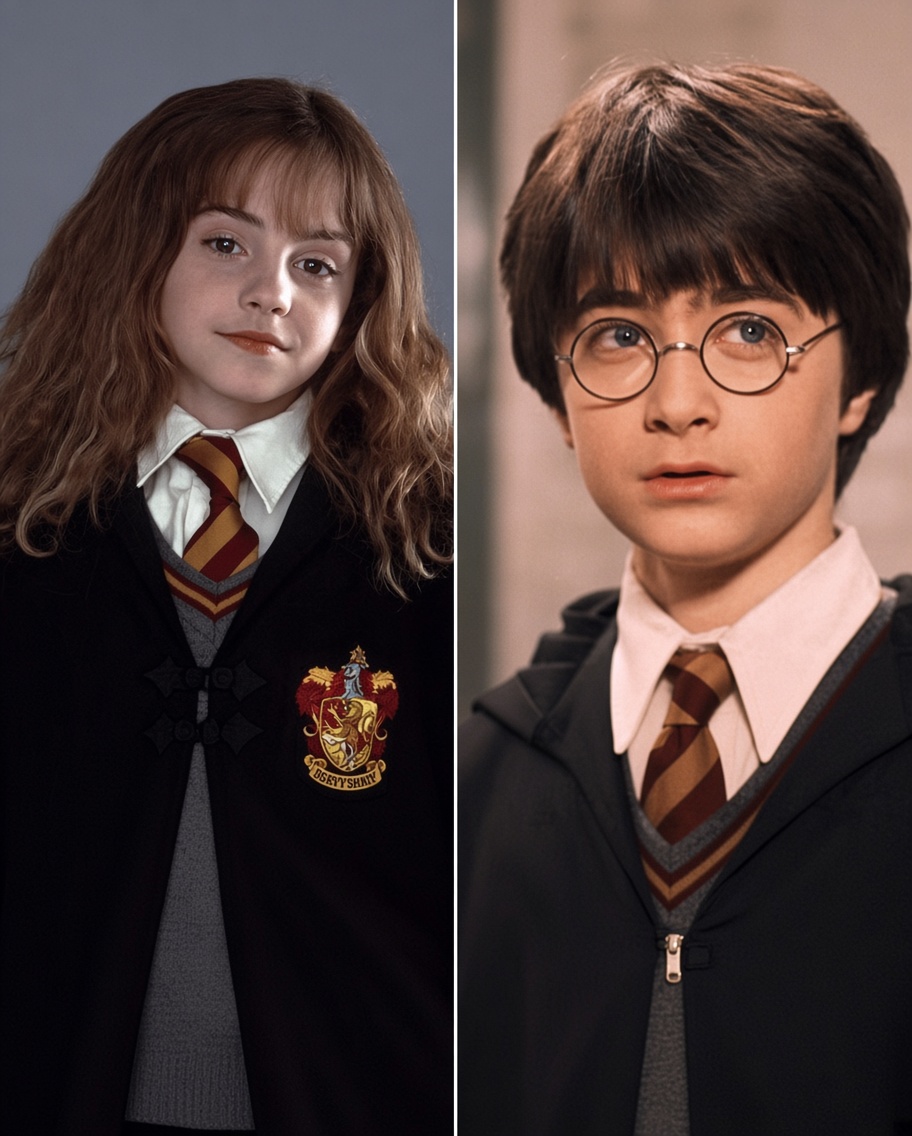
Emma Watson as Hermione Granger: From Hogwarts to Advocacy
Hermione Granger became one of the defining characters of the series.
Emma Watson’s life after Hogwarts developed in directions that extended well beyond acting.
Born on April 15, 1990, Watson was 11 when audiences first met Hermione in 2001.
Her early performance captures the character’s intelligence, nervousness, and determination to prove herself, with a confidence that can initially seem bossy but gradually reveals insecurity underneath.
The first film only begins that journey.
Yet Watson already made Hermione feel like someone whose knowledge was both a strength and a form of self-protection.
After Harry Potter, Watson continued acting while also becoming increasingly associated with public advocacy.
Major films include The Perks of Being a Wallflower, The Bling Ring, Beauty and the Beast, and Little Women, projects that allowed her to move between independent drama and large studio productions.
At the same time, she became closely associated with gender equality work, including her involvement with UN Women and the HeForShe campaign.
That combination of acting and advocacy gave her a public identity very different from simply remaining a former child star.
In 2026, Emma Watson is 36.
Her career has often appeared selective instead of constant, with long stretches where she focused on interests outside conventional film promotion.
That makes her transformation from Hermione especially notable.
The character who was defined by intelligence and determination became associated with a performer who also built a public life around education, advocacy, and personal independence.
Hermione endures because Watson gave intelligence emotional texture, and her later path made the connection between discipline, conscience, and public responsibility feel strangely fitting.
Daniel Radcliffe as Harry Potter: The Boy Who Refused to Be Only One Role
Harry Potter became a global symbol of childhood fantasy.
But Daniel Radcliffe’s life after the franchise is just as interesting, because he refused to let one role define the rest of his career.
Born on July 23, 1989, Radcliffe was only 12 when Harry Potter and the Sorcerer’s Stone reached audiences in 2001.
His first Harry is uncertain, lonely, and still learning how to exist inside the fame that surrounds him, which gave the character an emotional vulnerability beneath all the magic.
That restraint mattered, because the story needed a child who looked overwhelmed by destiny instead of comfortable with it.
Outside the films, Radcliffe spent his adolescence under extraordinary public attention, then deliberately moved toward projects that challenged the image audiences had of him.
His stage work in Equus and How to Succeed in Business Without Really Trying shows how seriously he pursued theater after Hogwarts.
On film, he made increasingly unusual choices, including Kill Your Darlings, Swiss Army Man, and Weird: The Al Yankovic Story.
Those projects allowed him to move away from the expectations attached to a former child star and develop a career built around experimentation instead of franchise repetition.
In 2026, Daniel Radcliffe is 37.
What makes his post-Potter journey notable is not simply that he continued acting, but that he seemed willing to risk being strange, uncomfortable, or unexpected in order to grow.
Harry remains the role that introduced him to the world, but it did not become the limit of his identity.
Radcliffe’s later choices gave his career a second life, and that makes revisiting the shy 12-year-old in the first film feel even more remarkable.
The Magic Is Still There, but the People Have Changed
The Great Hall still glows.
The train still leaves Platform 9¾.
And that first journey to Hogwarts still feels untouched by time.
But the people behind the magic changed.
Some built unexpected careers, some chose quieter lives, and others left behind performances that now carry even more emotion.
Which cast transformation surprised you most?
Share your thoughts in the comments below, and tell us which Hogwarts face you still think about most.









