
Dallas Cast Then and Now in 2026: The Ewing Empire’s Biggest Stars, the Ones Who Walked Away, and the Legends We Have Lost
A single gunshot echoes through a glass tower in Texas, and half the planet suddenly needs to know who pulled the trigger.
It was a fictional shooting, but it became one of the biggest cultural moments in the history of television.
The man at the center of it smiled like he owned the world, and for years, he nearly did.
Nearly five decades after the Ewing feud began, the faces behind that empire tell a very different story.
Some became lifelong television icons, some stepped away from Hollywood, and several beloved stars are no longer here.
So what became of the people who made South Fork unforgettable?
Oil, Wealth, Marriages, and Betrayals
Dallas gave television one of its most glamorous families.
Behind South Fork’s wealth, oil, marriages, and betrayals, the real lives of the cast changed just as dramatically as anything written for the screen.
Here is where the stars of Dallas stand in 2026, one character at a time.
Ken Kercheval as Cliff Barnes: The Man Who Could Never Escape the Ewings
Cliff Barnes was the man who could never quite escape the shadow of the Ewing empire.
That frustration became one of the longest-running emotional engines of Dallas.
Ken Kercheval was born on July 15, 1935, in Indiana, and he was 43 when Dallas began in 1978.
From the start, Cliff was more complicated than a conventional rival.
He could be bitter, ambitious, obsessive, stubborn, and painfully self-destructive.
Yet underneath all of that was a man who believed the Barnes family had been wronged, and that the Ewings had spent years treating his family as something beneath them.
That resentment gave every confrontation with J.R. Ewing more weight than a simple business dispute.
Cliff was not only trying to beat Ewing Oil, he was trying to prove that the Barnes name still mattered.
Kercheval understood the frustration inside the character and made it visible even when Cliff was behaving badly.
He could scheme, lose everything, regroup, and return with the same wounded determination, which made him both exasperating and strangely sympathetic.
Audiences might watch him make the wrong decision again and again, but they could still understand why he refused to give up.
His rivalry with J.R. became personal, generational, and almost impossible to separate from Cliff’s identity.
The more J.R. humiliated or outmaneuvered him, the more Cliff seemed determined to come back, even when that determination damaged his relationships and judgment.
Dallas was filled with powerful people who seemed born to win, but Cliff represented the person who could never stop chasing the victory that might finally heal an old wound.
Beyond Dallas, Kercheval worked across television, film, and stage, but Cliff Barnes remained the role most closely tied to his public identity.
He died in 2019 at the age of 83, after health struggles later in life.
Looking back in 2026, Cliff still feels essential to the Dallas story, because every great empire needs someone who refuses to accept its power as permanent.
Kercheval made failure dramatic, resentment understandable, and obsession impossible to ignore.
Cliff Barnes may not have won often, but he never stopped believing the next battle could change everything.
Larry Hagman as J.R. Ewing: The Smile More Dangerous Than a Threat
J.R. Ewing did not simply become the villain of Dallas.
He became one of the most recognizable television characters of his era, a man whose smile could be as dangerous as any threat.
Larry Hagman was born on September 21, 1931, in Fort Worth, Texas, and he was 47 when Dallas began in 1978.
What made the character extraordinary was not just cruelty or ambition.
It was charm.
Hagman understood that J.R. would be far more compelling if audiences enjoyed watching him even when they hated what he was doing.
He could manipulate relatives, destroy business rivals, interfere in marriages, use secrets as weapons, and turn nearly every relationship into an opportunity for control.
Yet he rarely behaved like a conventional villain announcing his intentions.
Instead, he joked, smiled, drank, negotiated, and acted as though ruthlessness was simply good business.
That combination made him magnetic.
As the driving force behind Ewing Oil, J.R. turned boardrooms, bedrooms, family dinners, and South Fork itself into battlefields.
His rivalry with Cliff Barnes became one of the show’s defining conflicts, because the two men brought very different kinds of desperation to the feud.
Cliff wanted to prove himself against the Ewings, while J.R. wanted to make sure no one could threaten the world he believed belonged to his family.
Hagman gave J.R. enough humor and emotional texture that even his arrogance became entertaining.
The character could be theatrical, calculating, insecure, wounded, and completely shameless within the same episode.
That unpredictability helped create one of television’s biggest cultural moments.
When the Who Shot J.R.? storyline turned a fictional shooting into a global mystery, millions of viewers were not simply asking whether J.R. would survive.
They were asking which of the many people he had hurt had finally decided they had enough.
Before Dallas, Hagman was already familiar to audiences through I Dream of Jeannie.
But J.R. transformed him into an international television icon, and the role became so closely associated with him that his presence remained central to the Dallas legacy long after the original run.
Larry Hagman died in 2012 at the age of 81, from complications of acute myeloid leukemia.
In 2026, J.R. Ewing still feels larger than the series that created him.
Hagman made greed entertaining, manipulation charismatic, and a villain unforgettable, proving that sometimes the character audiences love to hate becomes the one they can never stop watching.
Barbara Bel Geddes as Miss Ellie Ewing: The Soul of South Fork
Miss Ellie Ewing was the emotional foundation of South Fork.
She understood that the ranch was not simply land, wealth, or property, but the physical memory of a family that had spent decades fighting to hold itself together.
Barbara Bel Geddes was born on October 31, 1922, in New York City, and she was 55 when Dallas began in 1978.
Her strength came from the fact that she rarely needed to dominate a room to control its emotional direction.
She knew J.R.’s ambition, Bobby’s conscience, Jock’s pride, and the old wounds beneath the Barnes-Ewing feud better than almost anyone.
That made her more than the family matriarch.
She was the keeper of history.
Whenever the Ewings treated business as though it were the only thing that mattered, Miss Ellie reminded them that South Fork existed before their latest deal and would have to survive after it.
Bel Geddes gave the character warmth without making her passive.
Miss Ellie could comfort, forgive, argue, draw boundaries, and express disappointment with a quiet authority that often felt stronger than J.R.’s threats.
Her marriage to Jock gave Dallas one of its defining older relationships, built on history and shared ownership of a family world that was becoming increasingly unstable as their sons fought for control.
After Jock’s absence changed the emotional structure of the series, Miss Ellie had to face grief while continuing to hold the family together.
Her later relationship with Clayton Farlow allowed the character to experience love and companionship again without erasing what Jock had meant to her.
That gave the role a sense of maturity unusual for prime-time drama.
Before Dallas, Bel Geddes had already built an acclaimed career in film and theater, including a memorable performance in Alfred Hitchcock’s Vertigo.
Dallas introduced her to a vast television audience who came to associate her with the dignity and emotional authority of Miss Ellie.
She died in 2005 at the age of 82, from cancer.
In 2026, Miss Ellie still feels like the soul of South Fork, because she represented everything the family risked losing whenever ambition became more important than loyalty.
Barbara Bel Geddes made motherhood feel powerful without spectacle.
She gave Dallas a center of gravity, quiet, compassionate, firm, and strong enough to remind even the Ewings that wealth meant very little if the family beneath it collapsed.
Linda Gray as Sue Ellen Ewing: A Beautiful Prison, and the Way Out
Sue Ellen Ewing became one of Dallas’s most compelling transformations.
The woman introduced through wealth, beauty, and marriage gradually revealed how painful those privileges could become when they belonged to a life she no longer controlled.
Linda Gray was born on September 12, 1940, in Santa Monica, California, and she was 38 when the series began.
Sue Ellen initially appeared to have everything expected of the wife of J.R. Ewing.
Elegance, social standing, South Fork, and access to extraordinary wealth.
But Dallas quickly made clear that glamour could become its own kind of prison.
J.R.’s manipulation, emotional betrayal, and constant hunger for control left Sue Ellen fighting for dignity inside a marriage where power was rarely shared equally.
Her struggles with alcoholism became one of the show’s darkest personal storylines, because they revealed the cost of living under that pressure.
Motherhood, public image, and emotional survival were also central parts of her journey.
Gray gave Sue Ellen more than the sadness of a betrayed wife.
She gave her pride, anger, intelligence, self-destruction, and eventually a growing desire for independence.
That evolution is what made the character endure.
Viewers were not simply watching someone suffer under J.R.
They were watching a woman slowly understand that survival required building an identity outside him.
The contrast between Sue Ellen’s perfect appearance and her private instability made the role especially powerful during the show’s peak years.
She could enter a room looking composed while Gray allowed the audience to feel how close everything underneath was to breaking.
As the series progressed, Sue Ellen’s movement toward greater independence became one of Dallas’s more satisfying long-term developments.
Beyond the series, Gray continued working in television, film, and theater, and remained closely associated with reunions and retrospectives surrounding Dallas.
In 2026, Linda Gray is 86.
Sue Ellen endures because her story transformed the meaning of strength.
At first, survival meant enduring J.R. and the world around him, and later, it meant realizing she did not have to define herself through either.
Gray made that journey elegant without making it easy, and that is why Sue Ellen became far more than simply Mrs. J.R. Ewing.
Steve Kanaly as Ray Krebbs: The Man Who Understood the Land
Ray Krebbs gave Dallas a connection to the land beneath all the money, boardrooms, oil deals, and family warfare.
He offered a rougher, more grounded presence inside the glamorous world of South Fork.
Steve Kanaly was born on March 14, 1946, in Burbank, California, and he was 32 when Dallas began.
His importance came from the way he belonged to the ranch differently from the Ewings, who treated it as family inheritance and status.
Ray understood South Fork through work.
He was close to the animals, the land, and the rhythms of ranch life, giving him a practical identity that often felt more straightforward than the power struggles unfolding inside the main house.
That did not mean his life remained simple.
As his connection to the Ewing family became more complicated, questions of identity, loyalty, pride, and belonging began to reshape the character.
Kanaly played Ray with a quiet masculinity that fit the role.
He did not need the sharp theatrical energy of J.R. or the polished moral authority of Bobby.
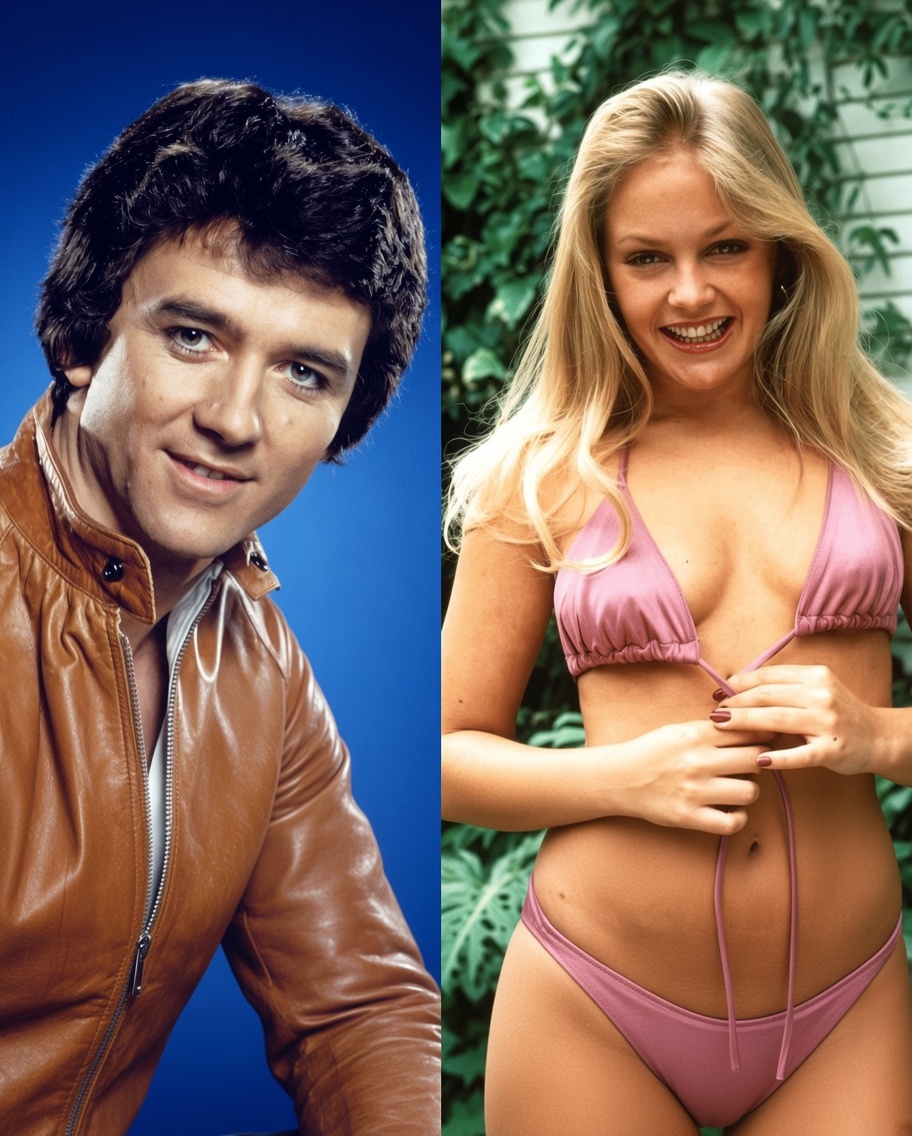
Ray’s strength came from the sense that he was more comfortable doing a job than talking about himself.
That grounded quality helped him stand out when Dallas became increasingly consumed by business schemes and romantic betrayals.
His relationship with Donna Culver gave him some of his most important emotional material, because it brought together two strong personalities with different backgrounds and ambitions.
Their marriage explored class, pride, public life, and the challenge of maintaining love when two people do not always imagine the same future.
Ray was a stabilizing figure even when his own story became turbulent, and that is an important part of his appeal.
Beyond Dallas, Kanaly continued appearing in television and film, but Ray remained the role most strongly associated with him.
In 2026, Steve Kanaly is 80.
Ray Krebbs endures because he represented a version of South Fork untouched by boardroom language.
He reminded viewers that before the Ewings became television symbols of wealth and ambition, the ranch itself required work, loyalty, and people willing to get their hands dirty.
In a series built on excess, his grounded presence gave Dallas a character who seemed to understand that land and family were supposed to mean more than whatever deal was being negotiated that week.
Howard Keel as Clayton Farlow: Old Hollywood Elegance at South Fork
Clayton Farlow arrived in Dallas after the series had already built a complex family mythology.
Yet he found a place within South Fork by offering Miss Ellie and the audience something different from the world Jock Ewing had represented.
Howard Keel was born on April 13, 1919, in Gillespie, Illinois, and he was 62 when he joined the series in 1981.
He worked because he entered with his own wealth, dignity, and identity instead of needing the Ewings to give him importance.
Clayton could operate in the same world of money and influence, but he carried himself with a steadier temperament that made him a valuable contrast to the endless ambition surrounding J.R. and Ewing Oil.
His relationship with Miss Ellie became central because it allowed Dallas to explore love after profound loss.
Clayton did not need to replace Jock in order to matter.
Instead, the relationship gave Miss Ellie a chance to move forward while preserving the importance of her past.
Keel brought old Hollywood elegance to the character, making Clayton feel romantic without appearing fragile, and authoritative without adopting J.R.’s cruelty.
His conflicts with J.R. also helped establish that he could not simply be absorbed into the Ewing family structure.
Clayton had his own principles, his own power, and enough confidence to challenge J.R. instead of becoming another person intimidated by him.
Before Dallas, Keel had already enjoyed a major career as one of Hollywood’s celebrated musical stars.
His commanding voice and screen presence were associated with classics such as Show Boat, Kiss Me Kate, and Seven Brides for Seven Brothers.
That history gave Clayton a natural sense of stature from the moment Keel appeared.
For viewers who already knew him from musicals, Dallas represented a later career transformation into prime-time drama.
Howard Keel died in 2004 at the age of 85, from cancer.
In 2026, Clayton Farlow remains important because he proved that a character could enter an established television dynasty later and still feel essential.
Keel gave him maturity, restraint, and an old-fashioned romantic confidence that balanced South Fork’s chaos.
Clayton did not need to outshout the Ewings to command respect, because his strength came from knowing who he was before he ever walked into their world.
Victoria Principal as Pamela Barnes Ewing: Caught Between Two Families
Pamela Barnes Ewing stood directly between the two families whose feud gave Dallas so much of its emotional power.
Her marriage to Bobby was not simply a romance, but a challenge to years of resentment, pride, and inherited hatred.
Victoria Principal was born on January 3, 1950, and she was 28 when the series began in 1978.
From the start, she carried a burden no ordinary newlywed would have faced.
She loved Bobby Ewing, but she was also Cliff Barnes’s sister, which meant that entering South Fork required living among people connected to the very family history that had shaped Cliff’s anger.
That tension made Pamela one of the show’s emotional crossroads.
Whenever Bobby and Cliff were pulled toward opposite sides, Pamela often stood between love and blood loyalty.
Principal played her with intelligence and vulnerability, giving the character enough strength to resist being swallowed by the Ewing world while still allowing the cost of that resistance to show.
Infertility, betrayal, identity, and emotional exhaustion were important parts of her story.
Those struggles made Pamela’s life at South Fork feel increasingly complicated, because the Barnes-Ewing feud was never the only pressure she faced.
Her desire for family, stability, and a life with Bobby had to survive both outside hostility and deeply personal pain.
That is why Pamela became so sympathetic.
She was not simply reacting to J.R.’s schemes or Cliff’s bitterness, because she was trying to build something genuine inside an environment that constantly rewarded conflict.
Principal’s performance helped make the family feud emotional instead of merely financial.
Without Pamela, the Barnes-Ewing rivalry could have remained a battle over money and history.
Through her marriage to Bobby, every new conflict threatened people the audience cared about intimately.
After leaving Dallas, Principal largely stepped away from acting and built a successful life in business and philanthropy, creating a public identity beyond the role that had made her famous.
In 2026, Victoria Principal is 76.
Pamela endures because she embodied the impossible hope at the center of Dallas, that love might be strong enough to overcome family history.
Principal made that hope believable even when the story repeatedly demonstrated how difficult it was.
Pamela’s pain came from trying to belong to two worlds that seemed determined to remain enemies, and that conflict made her one of South Fork’s most emotionally important figures.
Deborah Rennard as Sly Lovegren: The Desk Outside the Door
Sly existed close to the center of J.R. Ewing’s business world, where information could be as valuable as oil.
A secretary sitting quietly outside an office might hear more than the people making the deals realized.
Deborah Rennard was born on November 4, 1959, in Los Angeles, California, and she was 22 when she began portraying the character in 1981.
Her role worked because Dallas needed characters who showed how power functioned between the dramatic confrontations.
J.R. could dominate boardrooms and threaten rivals, but his empire also depended on telephone calls, schedules, messages, files, private meetings, and people trusted to keep sensitive information from reaching the wrong ears.
Sly stood inside that machinery.
Her proximity to J.R. meant she witnessed the quieter architecture of his schemes.
The call placed before a betrayal, the visitor who should not be announced, the piece of information that could change a negotiation.
Rennard gave Sly a composed, intelligent presence that helped prevent the role from feeling merely decorative.
She was a secretary and later a romantic interest, which added another layer to her loyalty.
Working closely with J.R. was already dangerous because his business relationships were built around manipulation and control.
Emotional involvement made that danger even more complicated.
Sly’s loyalty could never feel completely simple, because it existed at the intersection of professional ambition, attraction, trust, and the reality that J.R. rarely treated any relationship as separate from power.
Beyond Dallas, Rennard continued acting and later moved into producing and other behind-the-scenes entertainment work, giving her career a broader creative path after the series.
In 2026, Deborah Rennard is 67.
Sly remains memorable because she represented the people standing closest to J.R. without carrying the Ewing name.
She could observe how power operated from a position few outsiders ever reached, and Rennard made that proximity feel intelligent instead of passive.
In a world where everyone wanted something from J.R., Sly’s quiet presence reminded viewers that sometimes the most revealing place in Dallas was not South Fork or the boardroom itself, but the desk just outside the door, where every secret had to pass first.
Susan Howard as Donna Culver Krebbs: Integrity Without Naivete
Donna Culver Krebbs brought political intelligence and moral conviction into Dallas.
She never needed the Ewing name or the ruthless methods associated with Ewing Oil.
Susan Howard was born on December 28, 1943, in Texas, and she was 36 when she began portraying the character in 1979.
She worked because her strength came from a different source than many of the people around South Fork.
Donna did not need manipulation or inherited power to command attention.
She had confidence, social awareness, and a willingness to defend what she believed was right, even when doing so placed her against people with considerably more wealth and influence.
Howard gave the character grace without passivity.
Donna could be compassionate and warm, but she also had enough firmness to challenge the moral compromises that had become normal inside the Ewing orbit.
Her relationship with Ray Krebbs gave both characters some of their strongest emotional material, because their love brought together two people with different backgrounds, expectations, and ways of understanding success.
Ray’s identity was deeply connected to the land and physical work of South Fork, while Donna moved comfortably through politics and public issues.
That difference could complement them, but it could also create tension involving pride, class, ambition, and the future each imagined for themselves.
Their relationship was tested by personal disappointment and public life instead of only conventional romantic obstacles.
Donna’s storylines around advocacy and social causes also allowed Dallas to move beyond oil deals and family betrayal, suggesting that political and social questions existed outside the gates of South Fork, even while the Ewings were consumed with their internal wars.
Howard’s performance made those storylines feel grounded, because Donna’s conviction rarely seemed theatrical.
She simply appeared to know where she stood.
After Dallas, Howard stepped away from acting and moved into a quieter public life.
In 2026, Susan Howard is 82.
Donna endures because she represented integrity without naivete.
She understood the world was complicated but still believed choices mattered.
In a series where power frequently rewarded manipulation, Donna’s willingness to stand on principle offered a different definition of strength, quieter than J.R.’s, but no less determined.
Priscilla Presley as Jenna Wade: The Past That Never Stays Buried
Jenna Wade returned to Bobby Ewing’s life carrying the emotional weight of a past that had never completely disappeared.
She brought romance, memory, and uncertainty into a family world already crowded with unresolved relationships.
Priscilla Presley was born on May 24, 1945, in Brooklyn, New York, and she was 38 when she joined Dallas in 1983.
The character works because she is connected to Bobby from before the audience’s central image of him with Pamela.
That history gives Jenna immediate emotional importance.
She is not simply a new woman arriving to create a love triangle.
She represents another version of Bobby’s life, a road not taken that suddenly becomes possible again when his present grows unstable.
Presley brought a composed elegance to Jenna that fit the atmosphere of Dallas while distinguishing her from the more volatile personalities around South Fork.
Jenna carried attraction and unresolved feelings into Bobby’s life, especially during a period when Pamela’s place in the series was changing.
That could easily have made her feel like a replacement figure, but the character was given her own dignity, fears, and desire for stability.
Jenna had to navigate the fact that loving Bobby meant becoming entangled with the Ewings, where private emotion was rarely allowed to remain private for long.
J.R.’s schemes, family expectations, and the complicated history surrounding Bobby ensured that any relationship would have to survive more than ordinary romantic uncertainty.
Presley’s public identity also made the casting especially notable.
Long before Dallas, she was already internationally recognized through her connection to Elvis Presley.
But acting allowed her to establish another side of herself in the public imagination.
Beyond Dallas, she continued working in entertainment, business, charitable activities, and public projects connected to Elvis’s legacy.
In 2026, Priscilla Presley is 81.
Jenna Wade remains memorable because she embodied the emotional danger of returning to something unfinished.
Old love can feel comforting precisely because it comes with history, but history also carries all the reasons the relationship did not become permanent the first time.
Presley made Jenna graceful enough to belong in Dallas’s glamorous world while still giving her a sense of vulnerability.
Through Jenna, Bobby’s romantic life became another example of the show’s central lesson.
At South Fork, the past never stays buried for very long.
Omri Katz as John Ross Ewing: Inheriting a War He Did Not Start
John Ross Ewing represented the future of the Ewing dynasty long before he was old enough to understand what that inheritance might cost.
Omri Katz was born on May 30, 1976, in Los Angeles, California, and he was only seven when he began portraying John Ross in 1983.
As the son of J.R. and Sue Ellen, John Ross was born directly into the most unstable marriage at the center of South Fork.
That made his presence important even when he was still a child.
Around him were extraordinary wealth, business warfare, emotional manipulation, alcoholism, parental conflict, and the enormous expectations attached to the Ewing name.
The character worked because he allowed Dallas to show how family power passes from one generation to the next before the child receiving it has any ability to choose.
J.R. viewed legacy through control and Ewing Oil, while Sue Ellen’s struggles showed how destructive that same world could become.
John Ross therefore existed between two very different examples of what being a Ewing meant.
Katz brought a natural confidence and charm to the role, allowing the young character to feel present instead of simply decorative.
John Ross gradually became more important as the series considered the continuation of the Ewing family beyond J.R. and Bobby.
Even as a boy, the central question was already visible.
Would he inherit his father’s hunger for power, or would growing up amid the damage caused by that hunger teach him something different?
That possibility made him symbolic as well as personal.
After Dallas, Katz became known for Eerie, Indiana and later Hocus Pocus, giving him another strong connection to nostalgic television and film audiences.
He eventually stepped away from acting, choosing a life removed from the regular demands of Hollywood.
In 2026, Omri Katz is 50.
John Ross remained significant because he gave Dallas a living image of inheritance.
The Ewings could fight over oil, land, and control, but the greatest legacy was always the next generation watching them.
Katz’s young John Ross stood quietly inside a family war he had not created, already carrying a famous name and a future others seemed determined to define for him.
Deborah Tranelli as Phyllis Wapner: The Machinery Behind the Empire
Phyllis Wapner represented the everyday working structure behind the Ewing empire.
She showed that Ewing Oil was not built only through dramatic confrontations between powerful men, but through offices, paperwork, telephone calls, and employees who kept the machinery moving.
Deborah Tranelli was born on July 6, 1955, in Brooklyn, New York, and she was 26 when she began portraying the character in 1981.
Supporting roles like hers were essential to Dallas because they made the business world feel functional instead of purely theatrical.
J.R. might close a major deal or destroy a rival in one scene, but someone still had to arrange meetings, answer phones, manage correspondence, and recognize which visitor might bring trouble through the office door.
Phyllis occupied that space close to power without becoming part of the Ewing family itself.
She was a secretary connected to the workings of Ewing Oil, where moods, secrets, shifting alliances, and private conversations could all pass through the same workplace.
Tranelli gave the character warmth and professionalism, allowing Phyllis to stand out even when she was not driving the main plot.
That presence matters in a long-running series.
Familiar supporting characters make fictional environments feel permanent, because audiences begin recognizing not just the stars but the people who populate their daily world.
Phyllis helped establish Ewing Oil as a real workplace filled with routines instead of a set that existed only when J.R. needed to make a dramatic phone call.
Her touches of humor also helped balance the heavier business conflicts without undermining the atmosphere.
Beyond Dallas, Tranelli continued working across television, film, theater, and music, demonstrating a creative career that extended beyond her association with South Fork.
In 2026, Deborah Tranelli is 71.
Phyllis Wapner endures as one of those recognizable supporting figures who helped make Dallas believable.
She was never intended to compete with J.R., Sue Ellen, or Bobby for emotional dominance, but that was not her function.
In a television world famous for enormous wealth and spectacular betrayal, Phyllis represented the ordinary professionalism beneath the spectacle, the people who came to work, knew far more than they said, and kept the empire running while the Ewings tried to tear one another apart upstairs.
Sheree J. Wilson as April Stevens: Starting Over at South Fork
April Stevens arrived during the later years of Dallas, when audiences already carried years of emotional history with the Ewings.
Yet she managed to create a place of her own through ambition, sophistication, and a gradual shift toward genuine vulnerability.
Sheree J. Wilson was born on December 12, 1958, in Rochester, Minnesota, and she was 28 when she joined the series in 1986.
Her challenge was significant.
Entering a long-running drama means arriving among relationships viewers have already invested in for years, and April came into a world still shaped by Bobby, Pamela, J.R., and the complicated history of South Fork.
She worked because she was not introduced as a passive newcomer waiting to be defined by a man.
She was a successful businesswoman with a complicated past, intelligent, polished, and capable of navigating the same ambitious environment that had shaped the Ewings.
Wilson gave April glamour, but also allowed the character to soften as her story developed.
That evolution became particularly important through her relationship with Bobby Ewing.
After Pamela’s departure changed Bobby’s emotional life, April offered the series a chance to explore romance again without pretending the past had disappeared.
Their relationship became one of the later seasons’ significant emotional threads, because April had to earn a place beside a character whose earlier love story had helped define Dallas itself.
Wilson’s performance allowed April to move from ambitious outsider toward someone capable of real love, commitment, and vulnerability.
That transformation kept her from feeling like merely a replacement.
She had her own history and emotional risks.
Her story helped bring renewed romantic energy while remaining connected to business, family pressure, and danger, the elements Dallas always used to complicate happiness.
After the series, Wilson became widely known for Walker, Texas Ranger and continued working in television, film, and producing, giving her another major chapter beyond South Fork.
In 2026, Sheree J. Wilson is 68.
April Stevens endures because she proved Dallas could still create meaningful new relationships after years of established history.
Wilson made ambition feel polished without making it cold, and love feel hopeful without making it safe.
In a series built on the idea that happiness can disappear with the next secret or betrayal, April brought Bobby and the audience a sense that starting again was still possible.
Patrick Duffy as Bobby Ewing: The Moral Counterweight
Even at South Fork, where the past was never very far away, Bobby Ewing was the moral counterweight Dallas desperately needed.
He was the Ewing son who lived inside the same world of oil, wealth, rivalry, and family pressure as J.R., but kept trying to believe that power did not have to destroy decency.
Patrick Duffy was born on March 17, 1949, in Townsend, Montana, and he was 29 when Dallas began in 1978.
From the beginning, he worked because he offered viewers a completely different kind of hero.
J.R. treated business like warfare, while Bobby often tried to reason with people, protect relationships, and find a path that did not require humiliation or betrayal.
That did not make him weak.
It made him one of the few characters at South Fork who understood how much the family’s endless battles were costing everyone around them.
His marriage to Pamela Barnes gave the show one of its strongest emotional conflicts, because their love crossed the deepest fault line in the story.
Bobby was a Ewing, and Pamela was a Barnes.
Every attempt to build a peaceful marriage existed under the weight of a feud that had begun long before either of them had chosen sides.
Duffy played Bobby with warmth and sincerity, making him believable as both a romantic lead and a man capable of standing up to his own brother.
The character’s temporary death and famous return became one of Dallas’s most discussed story developments, showing how central Bobby had become to the emotional structure of the series.
Without him, South Fork lost part of its balance.
Beyond Dallas, Duffy continued a long television career, most notably through Step by Step, and he remained connected to the Ewing universe through later returns.
That longevity helped separate him from actors whose careers became permanently frozen in a single decade.
In 2026, Patrick Duffy is 77.
Bobby Ewing remains important because he made goodness dramatic in a series built around betrayal.
He was not perfect, and his decisions sometimes created pain, but he represented the possibility that someone could inherit privilege without surrendering completely to it.
In a family where victory often mattered more than peace, Bobby kept trying to hold on to both love and conscience, and that struggle made him every bit as memorable as the villains around him.
Charlene Tilton as Lucy Ewing Cooper: Everything Except Security
Lucy Ewing Cooper represented the younger, more restless side of the Ewing dynasty.
She showed that growing up surrounded by wealth did not necessarily mean growing up surrounded by emotional security.
Charlene Tilton was born on December 1, 1958, in San Diego, California, and she was only 20 when Dallas began in 1978.
As J.R. and Bobby’s niece, she occupied a strange position inside South Fork.
She belonged to one of television’s wealthiest families, yet much of her behavior reflected loneliness, rebellion, and a constant desire to be noticed as something more than the family’s troublesome young relative.
That contradiction made the character work.
Lucy could be spoiled and impulsive, but beneath those qualities was someone searching for affection and independence in a household where adult conflict constantly dominated the emotional atmosphere.
Tilton gave Lucy brightness, vulnerability, and a kind of rebellious energy that separated her from the older characters.
Her romantic storylines and eventual marriage to Mitch Cooper allowed Dallas to explore how difficult it was for Lucy to create a stable identity outside the Ewing name.
The wealth that protected her also complicated her relationships, because anyone entering her life was entering the gravity of South Fork as well.
Her mistakes, romances, and troubled marriage gave the show a younger emotional pulse.
That mattered because Dallas could otherwise have become entirely focused on middle-aged business rivalry and marital warfare.
Lucy allowed viewers to see how the next generation was already being shaped by the same family patterns.
Tilton’s physical presence also made her instantly recognizable during the show’s peak popularity.
Though small in stature, she had enough personality to hold attention beside performers playing some of television’s largest characters.
After Dallas, Tilton continued acting and remained closely associated with reunions and retrospectives around the series.
In 2026, Charlene Tilton is 68.
Lucy endures because her rebellion was never simply youthful misbehavior.
It represented what South Fork looked like from the perspective of someone born into its privileges but not its authority.
She had access to everything except the emotional stability she wanted most, and Tilton made that contradiction lively, sometimes frustrating, and deeply human.
In the Ewing family, even the youngest generation learned early that money could open almost every door while still failing to provide the one thing they were actually searching for.
South Fork Has Changed, but the Legend Remains
Dallas was built on ambition, family loyalty, broken marriages, and the endless fight for control.
But time eventually changed everyone at South Fork.
J.R., Bobby, Sue Ellen, Cliff, Miss Ellie, Pamela, Lucy, Ray, and the rest became part of television history.
Their real lives moved through success, reinvention, retirement, and loss.
Which cast transformation surprised you most?
Share your thoughts in the comments below, and tell us which member of the Ewing universe you could never stop watching.









