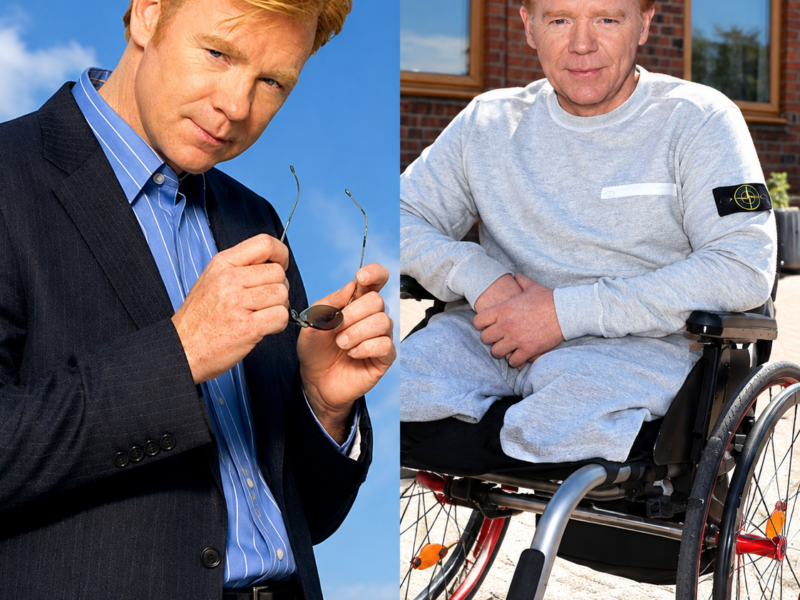
CSI Miami Cast Then and Now in 2026: What Really Happened to Horatio, Calleigh, Delko and the Team Behind Those Unforgettable Badges
Somewhere in a quiet corner of your memory, the sun is still setting over Miami.
The sirens are still wailing, a pair of sunglasses is still coming off in slow motion, and a calm voice is about to deliver a line that makes a guilty man go pale.
For ten seasons, CSI: Miami made justice feel certain.
It gave us glossy skylines, saturated color, and the comforting belief that the truth would always be found if someone was patient enough to look for it.
But television stayed frozen while real life kept moving.
Careers shifted. Some stars quietly stepped away from the spotlight, and the people behind those familiar badges followed paths audiences never saw coming.
So where did they all end up?
Here is the cast of CSI: Miami, then and now, in 2026.
Calleigh Duquesne brought a different kind of strength into the Miami crime lab.
It was not intimidation. It was absolute competence.
Emily Procter was 34 when the series began in 2002, and she made Calleigh the investigator audiences could trust because the character never needed to announce how capable she was.
Her specialty in ballistics gave her a precise place inside the team.
Trajectories, rifling marks, recoil patterns, and tiny physical details became the language she used to turn violence into evidence.
What makes Calleigh memorable is that she is never reduced to being the tough woman or the emotional one.
She is simply excellent at the work.
Procter gave her calm focus in the field, professionalism in the lab, and just enough compassion to remind viewers that every case begins with a real person who has been hurt.
Even when the job followed her home, Calleigh rarely lost control.
Yet the weight was always visible beneath the surface, and that balance made her feel strong without making her invulnerable.
In 2026, Emily Procter is 57.
After CSI: Miami, she stayed connected to acting and community-focused work while keeping a more measured public profile than during the show’s peak years.
Calleigh endures because Procter made intelligence feel heroic without spectacle.
She proved that authority can be quiet, that compassion can coexist with precision, and that sometimes the strongest person in the room is the one who never stops doing the work correctly.
Then there was Eric Delko, the teammate who went where the evidence was hardest to reach.
Underwater wrecks, submerged vehicles, dangerous recovery sites, and crime scenes where physical courage mattered as much as forensic skill all belonged to him.
Adam Rodriguez was 27 when CSI: Miami premiered in 2002.
He gave Delko a combination of toughness and loyalty that made him one of the team’s emotional anchors.
Delko was willing to put his body in danger whenever a case demanded it.
But what kept him memorable was the damage he carried afterward.
The series let him survive near-death moments, trauma, and a long recovery, and it left a haunting question hanging over him.
How many times can someone walk into danger before the job changes them permanently?
His bond with Calleigh grew through shared pressure rather than grand romantic declarations, and that gave their relationship real weight.
He trusted Horatio, he protected the team, and he often reacted from loyalty before caution.
In 2026, Adam Rodriguez is 51.
After CSI: Miami, he kept building a broader career across television and film, and he also moved behind the camera as a director on various projects.
Delko endures because Rodriguez made courage feel costly.
He was never simply the man willing to dive into danger.
He was the man who came back carrying scars, and still chose to return when the team needed him again.
Frank Tripp brought old-school detective grit into a world of lasers, microscopes, and forensic certainty.
Rex Linn was 47 when he joined the series in 2003.
He gave Tripp the grounded energy of a cop who has spent enough time on the street to distrust anything that sounds too elegant at first.
Tripp secured scenes, pushed suspects, followed leads, and met the lab’s dazzling conclusions with practical skepticism.
That tension is exactly what made him useful.
He did not automatically accept every theory, but once the evidence turned solid, he committed completely.
In a series known for dramatic color, slow-motion reveals, and Horatio’s controlled intensity, Tripp made the world feel connected to a real police department.
His dry humor and blunt delivery made him feel less like a television invention and more like the detective who has already seen too much to be impressed by anyone’s performance.
Beneath the gruffness was loyalty, especially when the team was under pressure.
In 2026, Rex Linn is 69.
After CSI: Miami, he kept working steadily across film and television, reaching new audiences through later roles that used both his authoritative presence and his comic timing.
Tripp endures because Linn made skepticism feel trustworthy.
He was the detective who kept one foot on the street while the science moved around him, grounding the show every time the style threatened to become bigger than the case.
Ryan Wolfe arrived with ambition written all over him.
He was capable and eager, and he carried the pressure of entering a team still marked by loss.
Jonathan Togo was 27 when he joined in 2004, and Ryan felt different immediately because the show never presented him as a flawless replacement.
He made mistakes.
He pushed too hard, and sometimes he let pride interfere with judgment.
That imperfection gave the character room to grow.
Over time, Ryan became more dependable, but the journey mattered because the audience watched him learn how quickly forensic work punishes arrogance.
One bad decision can compromise evidence, damage trust, or reshape an entire career.
His story lines repeatedly tested ethics, identity, and the pressure of proving himself among people who had already survived far more than he had.
Togo gave Ryan a nervous intensity that made even competence feel earned rather than automatic.
In 2026, Jonathan Togo is 48.
After CSI: Miami, he kept working across television and film while also leaning into more creative work behind the scenes.
Ryan endures because Togo made growth visible.
He was not the investigator who arrived already solid.
He became solid by being humbled, tested, and forced to understand that in this job, confidence means nothing unless the evidence can survive what you do with it.
Natalia Boa Vista began in the one place where precision can be controlled, the lab.
Then, step by step, she moved into a world where danger cannot be controlled at all.
Eva LaRue was 39 when Natalia joined the series in 2005, and she gave the character a quiet persistence that made her evolution believable.
Natalia’s greatest strength was focus.
She followed the details others might dismiss, she refused to accept easy explanations, and she carried the methodical discipline of DNA work into increasingly dangerous field situations.
That transition mattered because it did not happen overnight.
The show allowed her confidence to develop through experience and survival, and through the gradual realization that knowledge alone does not prepare anyone for everything this job can demand.
Her empathy for victims grew alongside her willingness to confront difficult situations head-on.
Relationships and trust developed through shared crises rather than instant connection, which gave her place on the team a sense of being earned.
In 2026, Eva LaRue is 59.
She was already familiar to television audiences before CSI: Miami, and she kept working after the series across both daytime and primetime television.
Natalia endures because LaRue made confidence look learned rather than effortless.
She represents the person who begins with expertise in one room, steps into another field with far greater risks, and discovers that strength can be built piece by piece without losing compassion along the way.
Alexx Woods brought humanity into the coldest room in the building.
Khandi Alexander was 45 when the series began in 2002, and she made the medical examiner far more than the person who explains cause of death.
Alexx spoke to victims with respect and handled bodies with care.
She constantly reminded the team that every piece of evidence once belonged to a living person.
That compassion became essential in a show where crime can so easily turn people into puzzles.
While others chased suspects, timelines, and microscopic details, Alexx kept the human cost in view.
She could deliver medical findings with sharp precision, and then, in the same scene, make the morgue feel unexpectedly tender.
Her presence also gave younger team members an emotional anchor.
She understood the work, but she also understood what repeated exposure to death can do to the living.
That is why her departure carried such weight.
Choosing family and sanity became its own form of courage.
In 2026, Khandi Alexander is 68.
Beyond CSI: Miami, she has continued a highly respected career across major television dramas, earning admiration for performances built on emotional control and depth.
Alexx endures because Alexander made empathy look professional rather than sentimental.
She reminded viewers that solving a crime matters, but remembering the person who died matters, too.
Maxine Valera gave the lab a sharper edge.
She was independent, outspoken, and talented enough to challenge anyone who underestimated her.
Boti Bliss was 28 when she joined the series in 2003, and she played Valera as someone whose confidence was real but not always perfectly controlled.
That distinction made the character interesting.
Valera understood the science, defended procedure, and brought strong opinions into a profession where one tiny mistake can become catastrophic.
The show never allowed her to remain flawless.
She made errors, faced consequences, and had to rebuild trust, which gave her story a realism that fit the high stakes of forensic work.
Bliss brought enough attitude to keep laboratory scenes from becoming purely technical.
Valera reacted, argued, and questioned, reminding the audience that the people handling evidence are still human, capable of brilliance and capable of mistakes.
Her intelligence mattered more because it survived being tested rather than being assumed.
In 2026, Boti Bliss is 50.
After CSI: Miami, she continued working across film and television while keeping a lower public profile than during the series’ peak years.
Valera endures because Bliss made the laboratory feel alive.
She showed that science on television does not have to be sterile when the person behind the results has pride, frustration, vulnerability, and the determination to recover when one wrong decision threatens everything she has built.
Walter Simmons arrived late in the run and brought something the series badly needed after years of violence and loss.
Warmth.
Omar Benson Miller was 31 when he joined in 2009, and Walter felt different at once from the team’s more guarded personalities.
He was curious, optimistic, and technically minded, and he was genuinely interested in the strange patterns that cases leave behind.
His enthusiasm for technology, psychology, and problem-solving gave the later seasons a lighter rhythm without making him seem naive.
Walter understood the darkness of the work.
He simply refused to let it erase his humanity, and that became its own kind of strength.
His presence balanced Horatio’s intensity and the accumulated trauma carried by the longtime members of the team.
It reminded viewers that resilience does not always look grim.
Sometimes it looks like staying open, interested, and capable of kindness after seeing things that could easily make someone cynical.
In 2026, Omar Benson Miller is 47.
After CSI: Miami, he continued working across television and film, taking on roles that let him use both dramatic weight and comedic timing.
Walter endures because Miller made optimism believable inside a crime lab.
He showed that kindness does not weaken serious work, and that in the right hands, it can be the thing that stops the darkness from taking over completely.
Yelina Salas brought police instincts into a series often dominated by forensic certainty.
Sofia Milos was 34 when she first appeared in 2003, and she gave Yelina a toughness rooted in street experience rather than laboratory procedure.
She understood suspects, interrogations, jurisdiction, and the messy reality of police work, where answers are rarely as clean as the evidence on a screen.
That difference made her a natural source of tension with Horatio and the CSI team.
Yelina pushed when urgency demanded it, and she questioned when loyalty became complicated.
She refused to pretend that relationships can be separated neatly from investigations.
Her connection to Horatio added emotional pressure because personal history and professional responsibility were so often pulling in opposite directions.
Milos gave the character enough strength to stand beside Horatio without disappearing into his shadow.
Yelina had her own instincts, her own priorities, and her own lines she was willing to cross or defend.
In 2026, Sofia Milos is 56.
After CSI: Miami, she continued working across crime, action, and dramatic television, often in roles that made use of her authoritative presence.
Yelina endures because Milos gave the series a friction that science alone could never create.
She reminded viewers that every investigation involves people, reputations, loyalties, and consequences that cannot always be measured in a laboratory.
Tom Loman brought an unusual rhythm into the autopsy room.
He was awkward in conversation and dryly funny, and then suddenly precise the moment a body began revealing its evidence.
Christian Clemenson was 51 when he joined the series in 2009.
He gave Tom the credibility of someone who feels like a real specialist rather than a dramatic television invention.
His personality was slightly eccentric, but the performance never turned that eccentricity into a gimmick.
When the work began, Tom became focused, methodical, and capable of translating injuries into the facts investigators needed.
That balance helped the character fit naturally into the later seasons.
He brought a new energy without trying to imitate Alexx or erase the memory of what came before.
Clemenson’s strength lies in restraint.
Tom could make professional competence interesting simply because the audience believed he knew exactly what he was doing.
In 2026, Christian Clemenson is 68.
Beyond CSI: Miami, he has long been respected as a character actor across film and television, often bringing intelligence and quiet specificity to supporting roles.
Tom endures because Clemenson made forensic work feel lived in.
He did not need dramatic speeches to give the morgue personality.
A dry observation, an awkward pause, and a carefully explained finding were enough to remind viewers that even the strangest specialist can become essential when the truth is hidden inside the body.
Tim Speedle felt different from many CSI: Miami investigators because he never seemed interested in looking heroic.
Rory Cochrane was 30 when the series premiered in 2002, and he gave Speed a sarcastic, grounded quality that made him feel like someone actually doing a difficult job rather than performing one.
He was capable and principled, but also tired and skeptical, and he was willing to say what others were thinking when pressure began to distort the work.
That realism made his loss especially painful.
Speed was never presented as invincible, which meant that when tragedy reached him, the audience felt just how fragile routine can be.
His departure changed the team’s chemistry and left grief inside the series, rather than simply removing a character and moving on.
The effect lingered because Speed had become part of the show’s emotional balance.
He was the person who could undercut intensity with honesty, without ever weakening the seriousness of the case.
In 2026, Rory Cochrane is 54.
After CSI: Miami, he continued building a strong career across film and television, often choosing roles that use his natural intensity and understated style.
Speed endures because Cochrane made competence feel human.
His exit remains one of the show’s most remembered emotional blows, a reminder that even work described as routine can become tragedy without warning.
Ryan’s arrival was not the only shake-up in the lab.
Cooper entered the team with confidence, charm, and the dangerous belief that rules can sometimes bend if the result seems worth it.
Brendan Fehr was about 27 when he joined in 2005, and he gave the character enough energy to disrupt the team without feeling like a copy of someone already there.
Cooper was capable, but his instincts were riskier than a forensic unit built on precision can comfortably tolerate.
That tension became the point of the character.
He could help move a case forward, but the same confidence that made him useful could also become a liability when impulse outran procedure.
His connection with Natalia added another layer of chemistry, giving him a more personal place inside the team’s evolving relationships.
Fehr played Cooper with enough charm that the audience understood why people trusted him, even as they could see exactly why that trust might become dangerous.
In 2026, Brendan Fehr is 48.
After his run on CSI: Miami, he kept working steadily across American and Canadian television, particularly in genre and dramatic roles suited to his grounded screen presence.
Cooper endures because Fehr made risk look attractive without pretending it was harmless.
He represents the investigator who can solve a problem quickly and create another one just as quickly if confidence moves faster than judgment.
Rick Stetler is frightening because he never needs to threaten Horatio with violence.
He has internal affairs, policy, paperwork, and the authority to ask questions nobody on the team wants answered.
David Lee Smith was 40 when he first appeared in 2003, and he played Stetler with a cold restraint that makes even ordinary conversation feel like an interrogation.
Stetler questioned shootings and investigated shortcuts.
Again and again, he challenged the team’s belief that good results can justify questionable methods.
That made him more complicated than a conventional villain.
He was often an antagonist, but his presence forced the audience to confront uncomfortable questions about Horatio’s approach to justice.
How far can someone bend the rules before protecting victims starts to look like personal revenge?
Smith kept Stetler controlled enough that the threat always felt institutional rather than emotional.
He represented the system looking back at the people who usually spend their time looking at everyone else.
In 2026, David Lee Smith is 63.
He has continued working across television and film, frequently bringing authority and emotional distance to complex supporting roles.
Stetler endures because Smith made bureaucracy feel dangerous.
He proved that in CSI: Miami, the person most capable of threatening the team did not always carry a weapon.
Sometimes he carried a file, asked one careful question, and waited for the consequences to begin.
Tyler Jensen was the kind of young investigator who reminds the audience that talent alone is never enough in forensic work.
Brian Poth was 28 when he appeared in 2003, and Tyler brought an eager confidence into a world where confidence becomes dangerous the moment it outruns procedure.
He was bright, capable, and willing to move quickly.
But CSI: Miami repeatedly emphasized that evidence does not forgive shortcuts.
Chain of custody, protocol, documentation, and restraint matter because a single mistake can damage an entire case.
Tyler’s shorter run made that lesson sharper.
He represents the investigator who has ability but has not yet fully learned where professional confidence ends and arrogance begins.
In a series famous for style, dramatic reveals, and investigators who often appear completely in control, Tyler offered a more realistic warning.
The truth can be lost to human error long before a suspect ever reaches court.
After CSI: Miami, Poth continued acting in television and film through guest and supporting roles.
Tyler endures as an almost story, a talented presence whose potential makes his shorter time on the series more noticeable.
He reminds viewers that forensic work is not impressed by promise.
Skill matters, but discipline is what keeps the truth usable when everything finally reaches the courtroom.
And then there is the man who held it all together.
Horatio Caine is the kind of man who barely moves, barely raises his voice, and still makes every room feel as if judgment has already arrived.
David Caruso was 46 when CSI: Miami launched in 2002, and he built Horatio around control rather than force.
The pauses, the measured lines, and the quiet stare before turning away all became part of the character’s authority.
Even the sunglasses became a ritual.
But what made Horatio last was never the pose.
It was the grief underneath it.
He seemed to carry every victim personally, especially when children, corruption, or abused power were involved.
Justice was not simply his job.
It felt like a code he had chosen to live by.
That is what made the glossy Miami setting work on an emotional level.
Beneath the sunlight, the color, and the dramatic crime scenes, Horatio gave the show a moral center, someone who believed the truth can still be reached if you are patient enough to stand still and look directly at it.
In 2026, David Caruso is 70.
After CSI: Miami ended, he stepped away from acting and has kept a remarkably low public profile, with his screen career widely listed as ending around 2012.
Horatio remains the role most closely tied to his legacy.
Caruso made silence feel dangerous, patience feel powerful, and justice look inevitable even when everything around it was chaos.
The lab lights may be off now.
But that feeling remains, the sense that somewhere, someone was still searching for the truth when everyone else had given up.
Thank you for remembering CSI: Miami with us.
Stay with Rewind 1960s for more familiar faces, hidden stories, unexpected turns, and television memories that never truly fade.









