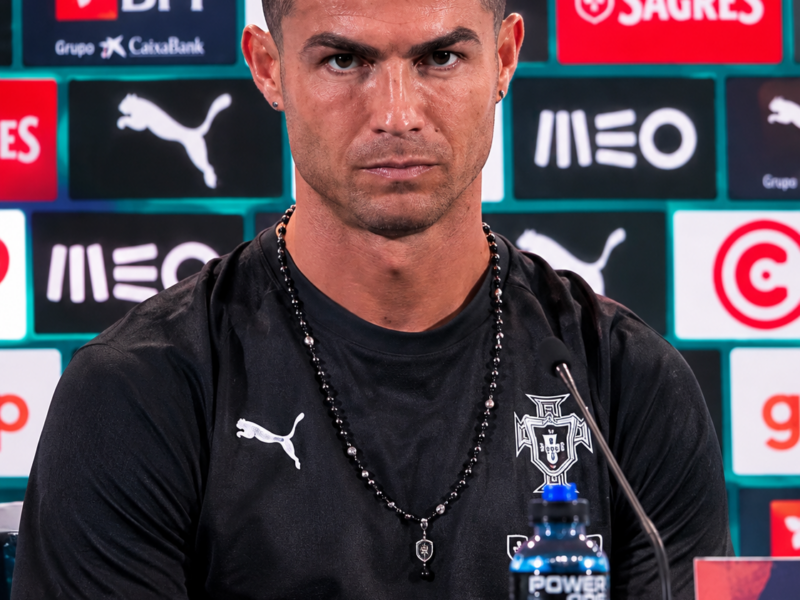
Cristiano Ronaldo Breaks His Silence on Retirement, the Chase for Goal Number 1000, and Portugal’s New Era Under Jorge Jesus
He walked into the room already knowing what everyone wanted to hear, and for almost forty minutes, he made them wait for it.
Cristiano Ronaldo has answered thousands of questions in his career, but rarely has a single press conference carried this much weight at once.
A new head coach. A World Cup that ended in criticism instead of celebration. A number, 1000, hanging over every sentence like a countdown nobody dares to say out loud.
And somewhere in the middle of all of it, the one question every journalist in that room was too afraid to ask directly: is this the beginning of the end.
What followed was not a routine media session. It was Ronaldo at his most candid, his most guarded, and occasionally his most playful, all within the same fifteen minutes, as Portugal prepared to open a new chapter of their Nations League campaign under a coach he already knows intimately.
By the time he left the podium, he had said more about his future than he probably intended to, without actually saying anything at all.
This is what happened inside that room, question by question, and why it matters far beyond a single tournament.
A New Era Begins With an Old Friend
The first question set the tone immediately, and Ronaldo did not dodge it.
Asked whether his priority right now is winning the Nations League or reaching 1000 career goals, and whether he wants that milestone to arrive while wearing the Portugal jersey, he did not choose one over the other.
He wants both, he said plainly, and he wants them badly.
But before diving into personal ambition, Ronaldo paused to acknowledge something bigger than himself: the coaching transition that had just reshaped the entire national team setup.
He described this moment as the start of a genuinely new era, one that arrives after what he called an excellent body of work from the previous coach, a foreign manager who Ronaldo pointed out had operated under constant, often unfair scrutiny simply because of his nationality.
It was a small moment of loyalty to a man no longer in the building, and it said something about how Ronaldo views leadership under pressure, since he has lived that exact experience himself for two decades.
Then came the name that would dominate the rest of the press conference in one way or another: Jorge Jesus.
Ronaldo made clear that everyone in Portuguese football already knows who Jorge Jesus is and what he represents, and that his hope is simple. He wants things to go well for the new coach, because if they go well for Jesus, Ronaldo argued, they go well for the entire squad, and ultimately for every Portuguese fan watching at home.
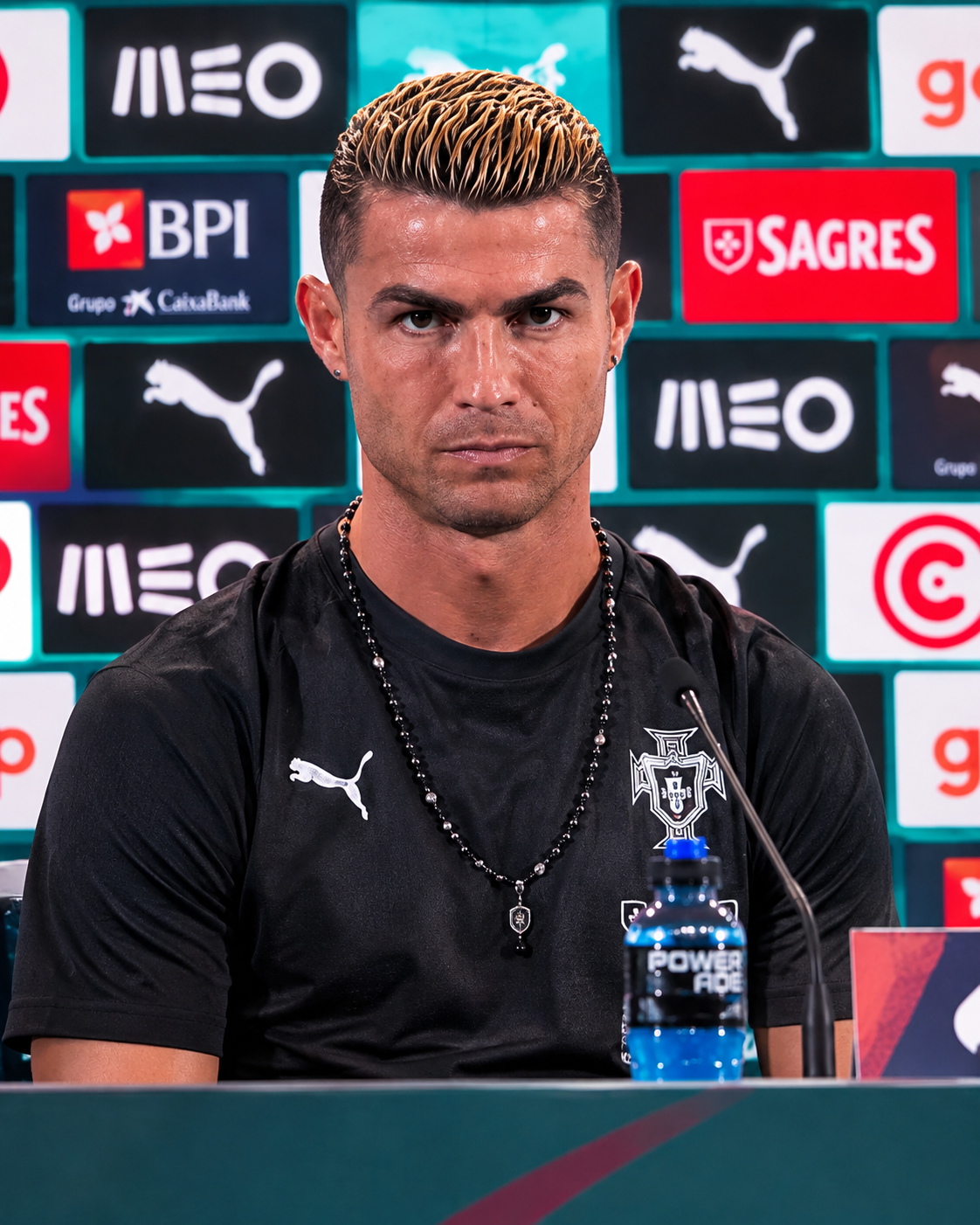
There was a competition mindset baked into his answer too. Four matches in fifteen days is a brutal stretch by international football standards, and Ronaldo acknowledged the difficulty of it directly. But he leaned on the depth of Portugal’s current squad as a source of confidence, describing the group as large, talented, and ready for exactly this kind of test.
It read less like a diplomatic answer and more like a captain quietly reassuring a locker room through the cameras.
The Al-Nassr Connection Nobody Can Ignore
If the first question opened the door to Jorge Jesus, the second one walked straight through it.
A reporter pointed out something impossible to overlook: Ronaldo had already worked under Jorge Jesus before, during his time in Saudi Arabia with Al-Nassr. The question was whether that shared history gives Jesus the edge needed to extract whatever football is still left in Ronaldo’s legs during these final years of his career.
Ronaldo’s answer carried more certainty than almost anything else he said that afternoon.
Yes, he said, without hesitation. He called it a perfect appointment given everything the football world already knows about Jorge Jesus as a coach and as a man.
But he was careful to draw a line between the past and the present. What happened before, he explained, belongs to the past. This is a new era, a different atmosphere, different tactical concepts, and notably, a different language environment for a coach and squad now speaking freshly to one another rather than repeating old routines from Saudi Arabia.
What he wants most, he repeated, is for everything to run as smoothly as possible for the new manager.
There was a practical layer to his optimism as well. Ronaldo noted that many of the players currently in the national team setup have already worked directly under Jorge Jesus in various capacities, which speeds up the process of installing new ideas, since a coach explaining his methods to familiar faces has an inherently easier job than one starting completely from zero.
The group’s confidence, he suggested, comes from exactly that overlap of trust and familiarity, heading into a campaign that starts almost immediately and promises to stretch on for years, since Ronaldo predicted Jesus would remain in charge for a long spell.
He closed that answer the way he opened the press conference, wishing the coach well and expressing certainty that hiring him had been the correct decision for Portuguese football at this exact moment.
The Question About Love, Criticism, and What Actually Stays With Him
Then the tone shifted from tactics to something far more personal.
A veteran journalist, one who said he had personally covered every European Championship and World Cup of Ronaldo’s career, framed a question built entirely around memory. If asked one day what he remembers most from the recent World Cup, the journalist said, his answer would be the outpouring of affection he witnessed toward Ronaldo, a level of warmth he claimed he had genuinely never seen before.
The follow-up question cut sharper: how does Ronaldo process a country that criticizes him relentlessly the moment something goes wrong, blaming him specifically whenever Portugal loses or stumbles.
Ronaldo’s response was unusually reflective, almost confessional in tone.
He admitted he cannot always be one hundred percent honest publicly, acknowledging that certain moments call for a degree of political correctness that reality does not always deserve.
Then he opened up anyway.
He told the room that what the journalist had just described was something he had discussed extensively at home, with people close to him. After all these years playing football, he said, he has generally been welcomed warmly almost everywhere he has gone, aside from the occasionally hostile away crowds that come naturally from representing giants like Real Madrid, Manchester United, or Juventus.
But speaking specifically about the national team, he said this recent tournament may have been the year he felt the most genuine warmth of his entire international career. He confirmed it plainly: it was true.
That did not mean he feels unloved inside Portugal itself, he clarified. He believes Portuguese fans hold real affection for him, a special kind of connection built over decades.
Still, he acknowledged something darker running underneath that affection. Certain media outlets, he said, have made a habit of attacking him and, in his words, trying to metaphorically finish him off for years now, and he understands that dynamic completely, even if he does not accept it as fair.
Then came one of the sharpest, most quotable lines of the entire press conference.
He said the only way anyone could actually stop him at this point would be with a shotgun, and joked that even then, he’d probably still manage to dodge the bullet.
It landed as dark humor rather than complaint, delivered with the ease of a man who has genuinely stopped losing sleep over criticism after more than twenty years living under a microscope.
He explained that after two decades in the public eye, he has simply grown used to it. What sticks with him instead, he insisted, are the people who love him, not the ones who don’t, because he focuses only on what he can control, and lets go entirely of what he cannot.
He extended that sentiment into a small piece of stadium symbolism too, noting that every ground he visits carries some form of goodwill toward him now, even Porto’s stadium, despite Ronaldo’s own roots at Sporting CP, a club with a fierce historical rivalry against both Porto and Benfica.
He mentioned, based on something he had read rather than witnessed personally, that the national team may not have played at Benfica’s stadium in some time, and said he hoped that would change again soon, since he described the atmosphere there as another venue where the national team has traditionally performed well.
He closed the topic firmly. A small handful of critics, he said, does not erase the broader warmth he feels from the Portuguese public. He insisted, more than once, that he feels that warmth deeply, regardless of the noise surrounding him.
Can Jorge Jesus Deliver a World Cup or a European Title
The next question tried to pin down something more concrete about the future: does Ronaldo actually believe Jorge Jesus is the coach capable of leading Portugal to a World Cup or another European Championship trophy.
There was also a more delicate, more personal layer buried inside that same question, one about whether Ronaldo would be willing to reveal when his final international appearance might come.
Ronaldo handled the moment almost playfully, first noting there were too many journalists trying to ask compound questions at once, and jokingly instructing the room to pick just one question each going forward, since some information would inevitably be left unanswered otherwise.
When pressed to choose which part of the question he’d tackle, the exchange briefly turned into a guessing game between reporter and player, with Ronaldo predicting correctly that the retirement question was the one he wouldn’t answer.
Asked directly whether he even knows the answer to that question, Ronaldo gave one of the more revealing lines of the entire session.
He simply doesn’t know, he said.
He explained the philosophy behind that uncertainty, one he says he adopted somewhere in his thirties: live in the moment, and stop obsessing over tomorrow. That mentality, he said, has shaped major decisions in his life ever since.
Asked whether it is possible, probable, or a certainty that retirement is coming, Ronaldo carefully split those three words apart. Possible, yes. Probable, very much so. But a certainty? He would not go that far.
When a reporter pushed further, asking whether he’d at least warn the Portuguese public before making any announcement, Ronaldo delivered a line that captured his global self-image perfectly.
He asked, rhetorically, why he would warn only the Portuguese people, before adding that he considers himself a figure who belongs to the entire world, not solely to Portugal.
He confirmed, almost as an afterthought, that yes, there would eventually be some kind of warning before any decision like that became public. But the scope of that warning, in his own words, would stretch far beyond national borders.
The exchange summed up something important about where Ronaldo currently sits in his own head: aware that the end is approaching in some form, unwilling to define exactly when, and fully conscious that whatever announcement eventually comes will be treated as a global sporting event rather than a domestic Portuguese news story.
Is Cristiano Ronaldo Actually Fit Enough for Ninety Minutes
If the retirement question probed his mindset, the next one probed his body directly, and it came loaded with recent criticism still fresh in the air.
A reporter referenced comments from Jorge Jesus during a prior squad announcement, in which the new coach reportedly said that whoever is in form plays, and whoever isn’t, doesn’t. With emerging young forwards like Gonçalo Ramos and now Fábio Silva pushing for minutes, the question aimed squarely at Ronaldo’s readiness to handle a full ninety minutes at international level, especially given the criticism he received during the World Cup for playing that long in certain matches.
Ronaldo’s response turned the question back on the journalist almost immediately, asking whether she had actually watched the matches he’d played leading up to that tournament, and what she personally thought of his performances in them.
When she offered a mixed but generally positive answer, admitting she thought he had played well, “more or less,” Ronaldo pressed playfully, pointing out that scoring goals in those matches should count for something even if the overall performance level was debated.
The back and forth continued with a mix of humor and mild defensiveness. When asked directly why he shouldn’t play the full ninety minutes occasionally, Ronaldo pointed out, somewhat rhetorically, that not every player features in every single match regardless of ability, a subtle reminder that squad rotation applies to everyone, star power included.
Eventually, he redirected the specific tactical decision to where it actually belonged: Jorge Jesus’s decision-making, not his own. He told the room that particular question needed to be asked directly to the coach himself, not to the player standing in front of them.
Still, Ronaldo offered his own prediction with total confidence.
He stated flatly that he is certain he will not play all ninety minutes across all four matches in this stretch, calling it an absolute certainty, essentially a guarantee, that some rotation and management would occur naturally across such a condensed run of fixtures.
It was a rare moment where Ronaldo openly conceded a physical reality of aging elite athletes, framed carefully enough to avoid sounding like weakness, and instead sounding like strategic common sense.
The Pope of Records Returns
One of the more nostalgic exchanges of the press conference came from a reporter with a long personal history covering Ronaldo, referencing a nickname he had once given him years earlier during Ronaldo’s 200th international cap milestone in Iceland: “Pope of Records.”
With the number 1000 now the dominant obsession of the sporting world, the question was simple but pointed: does Ronaldo wake up every day thinking about that number, or does he genuinely live day to day as he claims.
Ronaldo confirmed something significant right out of the gate. He has already admitted publicly that he wants to reach that number, and he stated flatly that he will reach it.
But he rejected the framing of “obsession” specifically. His explanation carried a hint of personal philosophy: he says he never approaches goals as fixed, singular outcomes, because forcing an outcome that way tends to backfire, preventing things from unfolding the way a person actually wants them to.
Asked to clarify what exactly the reporter meant by “Pope of Records,” a small comedic beat followed as Ronaldo appeared to briefly forget the specific nickname’s meaning before pivoting back into his answer.
His larger message was straightforward. Enjoy the day to day. Focus on the present tournament, this new era under a new head coach, and hope everything unfolds in the best possible way while still chasing that milestone with real intent.
He repeated it once more for emphasis, in case anyone doubted the sincerity behind it: he wants that record badly. Very badly.
Coming Home to Alvalade
Few moments in the press conference carried more emotional weight than the question about Ronaldo’s return to Estádio José Alvalade, the home of Sporting CP, the club where his professional journey first began before his transfer to Manchester United made him a global name.
A reporter noted that Ronaldo had just said, moments earlier, that he had never addressed such a large press gathering in his career, and asked him to reflect on what he has found within this current version of the national team, along with what emotions surround returning to a stadium that once served as his footballing home for so many years.
Ronaldo’s answer leaned fully into sentiment.
He described the feeling as special, explaining that his beautiful football story essentially began at that exact stadium. He expressed deep pride in representing the national team so many years after effectively debuting to the world from that very ground.
He repeated a phrase he says he continues to believe fully: representing the national team, wearing his country’s colors after all these years, still feels to him like the very first time, every single time he steps onto the field.
He described entering the pitch carrying the same joy, passion, and heightened emotion he says has never faded, regardless of how many caps or trophies have accumulated across his career.
What he wants most heading into the match, he said, is a strong start for the team, regardless of which specific stadium hosted it. But he acknowledged something extra sitting underneath this particular return: playing at Alvalade specifically carries a more personal, more emotional charge than a neutral venue ever could.
What Difference Can He Still Make
As the press conference moved toward its later stages, the questions began shifting from nostalgia and identity toward a more forward-looking theme: relevance. What does Cristiano Ronaldo, now well into the later stages of his career, still believe he brings to this national team.
Asked directly what kind of difference he still hopes to make for Portugal, Ronaldo built his answer around a simple logical thread. He continues showing up for the national team, he explained, precisely because he believes he continues making a genuine difference at his club level too, describing himself as a legitimate asset both there and within the national setup.
He reiterated something he said he had already discussed at length in that same room previously: whenever the national team needs him, for whatever role that requires, whether that means playing, sitting out, coming off the bench, or even not featuring at all in a given match, his willingness to contribute never wavers.
He framed his pride in representing Portugal as exceeding, in his own words, that of virtually any other international footballer, pointing to his own cap total as evidence that nobody else has represented the nation more times than he has.
He was careful, though, to reject any suggestion that ego or personal agenda drives his continued involvement. He insisted his motivation is pure pride and pure passion for wearing the national jersey, dismissing any implication of ulterior motive.
He tied his continued value directly to performance rather than reputation, stating explicitly that his usefulness comes from what he does on the field, not from his accumulated résumé or past achievements. He pointed to his daily habits at his club, his leadership as captain, his institutional knowledge built over many years, and his broader understanding of both the sport and the specific dynamics of the national team as tools he continues offering to the coaching staff and squad, ready to be deployed however they see fit.
He ended the thought with quiet resolve: that is simply what he intends to keep doing, for as long as the arrangement continues to make sense for everyone involved.
Passing the Torch, or Not Yet
Among the more pointed exchanges of the afternoon came a question built around young striker Fábio Silva, who reportedly described Ronaldo during a prior press conference almost as a mentor figure, a “master” of sorts within the squad environment.
The reporter framed his actual question around succession planning, essentially asking whether Ronaldo views this specific Nations League cycle as an opportunity to begin gradually handing over attacking responsibilities to Portugal’s younger generation of forwards.
Ronaldo opened with a joke, deflecting the word “master” toward cooking skills instead of football, drawing laughter before the tone shifted back to something more serious.
Once the actual question landed, framed loosely around “passing the torch” to the next generation, Ronaldo’s answer took an unexpectedly blunt turn, moving away from succession planning entirely and toward his own standing within the group.
He stated plainly that if the head coach does not want him in the squad, he would be willing to step away immediately, framing it as something he could do that very day without any hesitation or resentment. He extended the same logic to the federation’s president, saying that whenever those in charge decide they no longer want him involved with the national team, he would be the very first person to accept that decision and move on without protest.
He described a personal threshold for departure with striking specificity: the moment he feels he isn’t contributing anything meaningful on the field, isn’t scoring, is creating a negative atmosphere within the group, or senses genuinely that the people around him no longer want him there, he says he would be the first to react, packing up and leaving without needing to be asked twice.
He reframed his continued presence entirely around mutual desire rather than entitlement. As long as the coaching staff wants him and the Portuguese public wants him, he explained, that mutual want is the entire foundation of why he continues showing up. Remove that foundation on either side, he suggested, and there would be no argument from him whatsoever.
He circled back to his broader belief that he still has real footballing value left to offer his country, though he added a note of humility to that claim, saying he believes it to be true without being one hundred percent certain of it himself.
He pointed toward statistics as the ultimate evidence, essentially inviting skeptics to check the numbers themselves if they wanted proof that he remains an effective, difference-making player at this stage of his career.
He closed the topic the same way he opened it: framing his continued involvement as entirely conditional on mutual desire, promising that the day the national setup no longer wants him, there would be no drama, no conflict, simply a graceful exit followed by a permanent shift into a supportive role as what he called the federation’s number one supporter and spectator going forward.
The Long Road to Euro 2028
Attention then turned toward the calendar itself, since this specific edition of the Nations League stretches all the way through to next June.
The question carried two separate layers. First, could Ronaldo guarantee he would remain part of the national team setup through that entire window, all the way to next June. Second, assuming Portugal wins this Nations League cycle, does he see himself potentially extending his international career even further, possibly through the 2028 European Championship.
Ronaldo’s response leaned once again on his now-familiar day-to-day philosophy, delivered this time with a touch more bluntness than earlier in the press conference.
He said flatly that he doesn’t think about tomorrow anymore, describing himself as past the age where long-term future planning makes sense for him personally. The present, he emphasized, is what matters most to him now.
Then came a candid, slightly pointed acknowledgment of the media dynamic surrounding him. He said he understands that plenty of people, including some in that very room, are eager for him to stop playing internationally altogether, admitting he can sense that undertone in how certain questions get framed toward him.
He was careful to clarify that this sentiment doesn’t apply to everyone present, describing it instead as a small minority, something he says he has grown fully accustomed to over the years and no longer takes personally.
His stated counterbalance to that minority criticism was, once again, his focus on the people who genuinely support him: fans who want him to continue, supporters who attend matches specifically hoping to see both the national team and Ronaldo himself perform. That connection, he said, remains his primary motivation and greatest source of passion for continuing to represent Portugal.
Club Goal or Country Goal
As the press conference approached its closing stages, one question managed to distill the entire afternoon’s emotional throughline into a single, elegantly simple ask: would Ronaldo prefer to score his 1000th career goal for his club, or for the Portuguese national team.
Ronaldo didn’t hesitate.
He confirmed the reporter clearly already knew his answer, and then said it outright: the national team, without question.
He elaborated using an analogy referencing something the head coach had apparently said days earlier, describing scoring that milestone goal for Portugal as the cherry on top of the cake. Scoring goal number 1000 specifically while wearing the national jersey, he explained, would represent the culmination of yet another beautiful chapter within an already remarkable career story.
He was careful to qualify that statement slightly, noting it wouldn’t necessarily be the definitive final chapter of his story, but rather one more beautiful moment layered onto everything that came before it.
He ended the thought with a single word carrying enormous cultural and personal weight for him: Inshallah, invoking hope for divine timing on a milestone that has become one of the most closely watched countdowns in modern football.
Facing the World’s Press
With the Portuguese-language questions largely exhausted, the floor opened briefly to international journalists, giving the press conference one final shift in tone and language.
One reporter, addressing either the head coach or the team captain, asked whether Ronaldo had genuinely considered stepping away from international football following the World Cup, given how much speculation had surrounded his future decisions.
Ronaldo confirmed that yes, the thought had crossed his mind at that point. He acknowledged it as a real, present part of his decision-making process, tied closely to whatever role he currently sees for himself moving forward.
Pressed further on what specific factors ultimately led him to continue rather than step away, Ronaldo’s answer, delivered partly through interpretation, centered on his continued belief in his own usefulness. He explained that conversations with people close to him reinforced something he still genuinely believes: that he remains capable of helping the national team achieve its goals, and that he still has real support and value to offer the group, not merely symbolic presence.
A Question From Italy, and a Rare Glimpse of Peace
The final question of the press conference came from an Italian journalist, and it produced arguably the most reflective, most personally revealing answer of the entire session.
The reporter opened warmly, noting that despite occasional criticism throughout Ronaldo’s career, there remains deep affection for him across football, visible in press conferences just as much as on the field. He specifically referenced Ronaldo’s demeanor during this particular session compared to a notably tense World Cup press conference following Portugal’s match against Croatia, describing Ronaldo as visibly more relaxed and easygoing this time around than he had ever previously observed.
His actual question carried two parts. First, is Ronaldo genuinely enjoying this specific moment in his career and life more than he ever has before. Second, what advice would present-day Ronaldo give to his younger self if the two could somehow meet today.
Ronaldo’s answer unfolded slowly, thoughtfully, almost like a closing statement on everything discussed throughout the previous half hour.
He acknowledged that experience changes a person’s perspective over the years, though he insisted that criticism itself never fully disappears no matter how much success accumulates. He described it as simply an unavoidable part of football, adding pointedly that even doing everything correctly still invites criticism, so doing something wrong would only invite far more of it.
Then came the line that summarized his entire worldview at this stage of his career.
He said he knows exactly what it takes to be successful, and he knows himself well enough to state confidently that CR7, as a footballing identity, retires in roughly ten years.
It landed as pure hyperbole, delivered with a smile, a wink toward his own mortality as an athlete disguised as bravado, and the room reportedly reacted with amusement rather than confusion.
He continued in a genuinely serene tone. He said he is happy with himself, regardless of whether he plays the next match or rests instead. Whether he starts, whether he’s rotated out, whether the assignment changes week to week, none of it fundamentally shakes him anymore.
What matters most to him now, he explained, boils down to something almost disarmingly simple: feeling good personally, and being surrounded by good people who trust in his work and continue supporting him through whatever comes next.
He closed the entire press conference with a short, almost playful declaration about his own state of mind: Cristiano is a happy person.
The Room Erupts, and the Real Work Begins
With that final, lighthearted note, the head of Portugal’s football federation stepped back in to formally close the press conference, thanking journalists for attending and inviting them to observe the opening fifteen minutes of the team’s next training session.
He extended additional thanks to guests attending the broader football summit hosted alongside the press conference, wishing everyone a productive continuation of the event before offering one final, half-joking line of his own: hoping, simply, that Portugal wins tomorrow.
Ronaldo left the room the way he had approached most of the difficult questions thrown at him that day: warmly, unbothered, and entirely on his own terms.
What This Press Conference Actually Revealed
Strip away the jokes, the deflections, and the playful sparring with individual reporters, and what remains is a remarkably consistent portrait of where Cristiano Ronaldo currently stands, both as an athlete and as a person navigating the final, uncertain stretch of an era-defining career.
He is chasing 1000 career goals with total sincerity, and he wants that milestone to arrive in a Portugal shirt more than anywhere else.
He genuinely believes Jorge Jesus represents the right man to guide Portugal through this transitional period, built on real shared history from their time together at Al-Nassr, not blind institutional trust.
He remains publicly uncertain about exactly when his international career will end, yet privately seems to understand that the ending is drawing closer, framed through a worldview built entirely around living day to day rather than mapping out a fixed farewell tour.
He continues to feel the sting of criticism, even after two decades of global superstardom, but insists he has trained himself to filter it out entirely, choosing instead to draw energy from supporters rather than detractors.
And beneath all of it sits something almost unexpectedly peaceful for a player long associated with relentless ambition and public intensity: a man who says, without irony, that he is simply happy, regardless of whatever role football asks him to play next.
Portugal opens this new Nations League era knowing exactly what their captain believes he still has left to give.
Whether Jorge Jesus’s new-look Portugal can turn that self-belief into silverware, and whether goal number 1000 truly does arrive wearing the national jersey as Ronaldo hopes, is a story that will now play out match by match, in real time, in front of a global audience that, love him or criticize him, still cannot look away.









