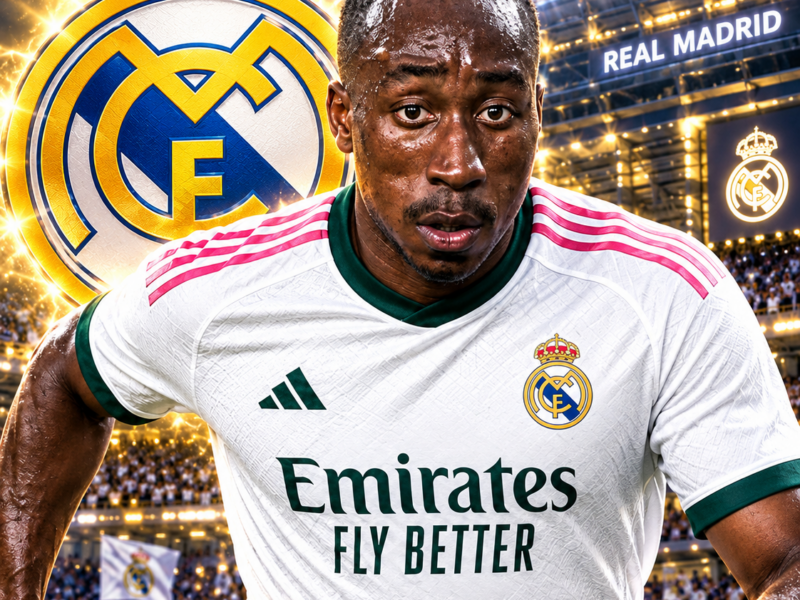
BENCH VINÍCIUS JR? WHY 19-YEAR-OLD JAN DIOMANDÉ JUST CHANGED EVERYTHING FOR REAL MADRID
Thirty-six minutes.
That is all it took for a nineteen-year-old substitute to turn one of the most untouchable places in the entire Real Madrid squad into a genuine argument.
What Jan Diomandé did after coming off the bench against Atlético Madrid has ignited a debate that, until recently, would have seemed almost unthinkable.
Important context before anything else
Before going any further, it needs to be said clearly.
Real Madrid have not confirmed any change to the starting lineup, and José Mourinho has given no indication that Vinícius Júnior is being dropped to the bench.
What follows is an opinion, built from what actually happened on the pitch during that derby, but it is an opinion nonetheless, not a confirmed decision from the club or its manager.
How This Debate Even Started
The spark for all of this came directly from the Madrid derby itself.
Real Madrid found themselves down to ten men following Dean Huijsen’s red card, already behind on the scoreboard, in about as difficult a context as a team can face.
Mourinho withdrew Vinícius in the 54th minute and brought on Diomandé in his place.
Over just more than half an hour on the pitch, the Ivorian winger completed four of six attempted dribbles, posted a passing accuracy near ninety percent, and won nine of twelve individual duels.
He did not come on to hide or protect a tidy personal stat line.
He demanded the ball, attacked relentlessly, tracked back defensively, and genuinely tried to change the course of a match that looked all but lost.
Numbers That Are Hard to Ignore
Put simply, in thirty-six minutes, and playing a man short, Diomandé matched the combined dribbling output that Vinícius and Kylian Mbappé produced across the entire ninety minutes.
When a substitute delivers that kind of impact in the worst possible circumstances, it becomes difficult for any manager to simply ignore it.
That single statistic alone is why this conversation has moved from social media chatter into something worth taking seriously.
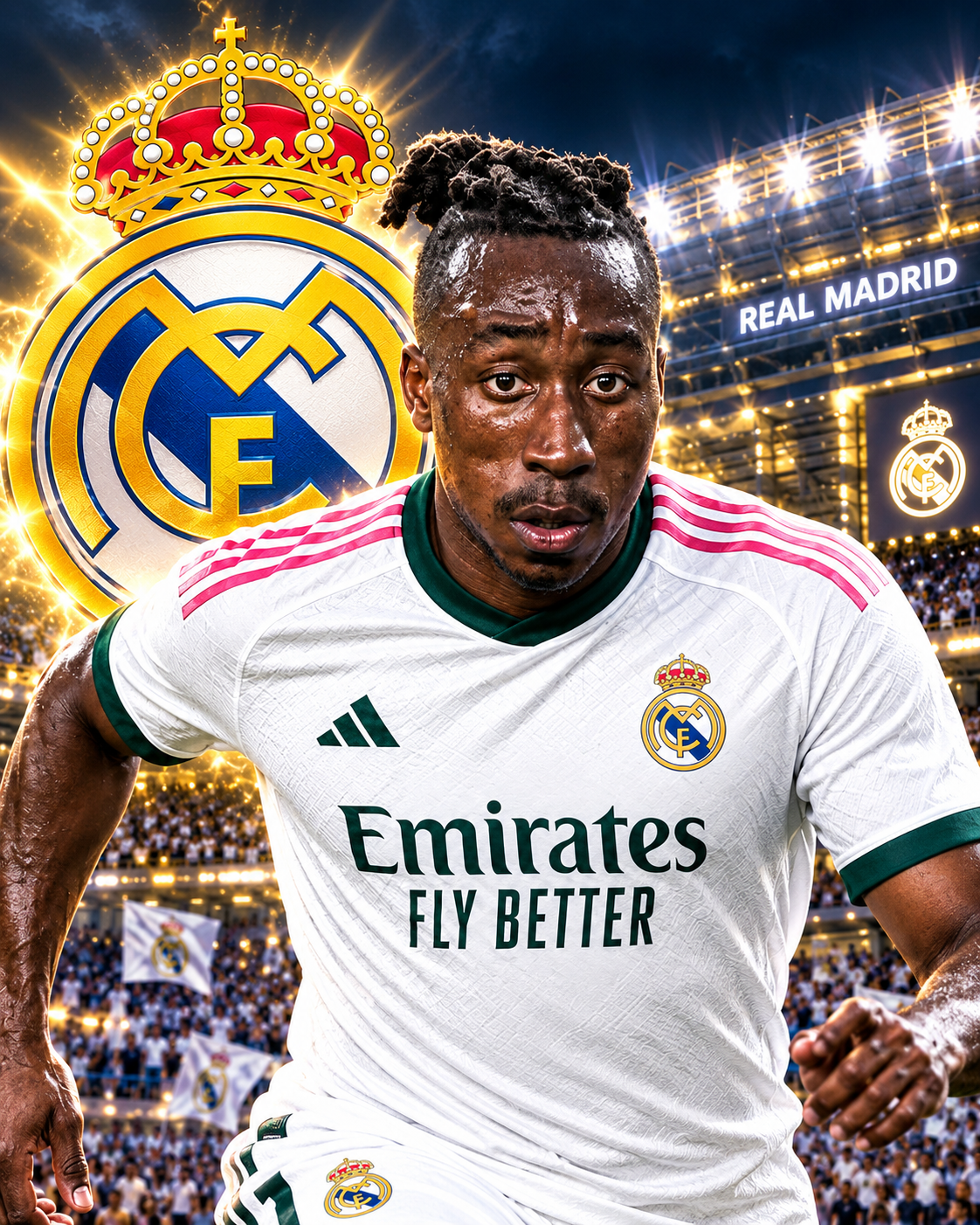
Reason One: Form Has to Matter More Than Reputation
Football cannot be organized purely around a name, a salary figure, or past achievements, no matter how impressive that past may be.
Vinícius remains a genuine Real Madrid icon, someone who has decided enormous knockout matches in the club’s favor and earned every bit of the respect that comes with that.
But respect for what someone has already done should never translate into a guaranteed lifetime starting spot.
If a teammate steps onto the pitch with more energy, more unpredictability, and a greater ability to win individual battles, that player deserves a genuine chance to start the next match.
Diomandé had already flashed signs of this against Elche before confirming it emphatically in the derby, and his hunger shows in the way he accelerates, keeps insisting after losing possession, and plays without a trace of fear.
A Mourinho team, by nature, needs players who treat every single opportunity as though it were their last chance to prove something.
Sending Vinícius to the bench would not mean giving up on him as a player.
It could instead become exactly the jolt he needs to rediscover his best form, because if a player knows he will start regardless of his performance, the message sent to the rest of the dressing room is genuinely damaging.
If Diomandé can realistically take his spot, every single training session suddenly carries a different level of intensity and stakes.
Reason Two: Real, Functional Unpredictability
Dribbling past an opponent is not just about producing a flashy, crowd-pleasing move.
An effective dribble needs to break a defensive line, eliminate a defender from the play entirely, or create a clear advantage for the very next pass.
Diomandé completed four of his six attempted dribbles against Atlético, and he did it while Real Madrid were down to ten players, in a match where the opposition could set up more compactly and knew full well that the young winger would keep looking for one-on-one situations.
Vinícius remains extraordinarily difficult to defend whenever he is truly inspired and locked in.
The issue is that many of his recent individual actions have been finishing far from the danger zone, with the overall move losing momentum as a result.
Diomandé, by contrast, was far more direct and vertical, playing with clear control, real acceleration, and decisive final actions.
Right now, he appears to be executing every single involvement with noticeably more clarity than his more experienced teammate.
Reason Three: The Work Nobody Sees on Highlight Reels
Winning nine out of twelve defensive duels is not a decorative statistic that only looks good on paper.
It reveals genuine physical strength, sharp concentration, and a real willingness to compete even in stretches when the team does not have the ball.
Playing a man down meant every single defensive contribution carried double the usual value.
Diomandé clearly understood that context and refused to behave like a winger who considers himself exempt from defensive responsibility.
He tracked back, competed for the ball, protected his defensive zone, and still found the energy afterward to attack when the moment called for it.
That level of commitment can matter enormously to a manager like Mourinho.
A winger who loses the ball and then mentally checks out forces his teammates to cover twice as much ground.
One who presses, closes passing lanes, and wins physical contacts allows the entire block to push forward with confidence.
Diomandé consistently threatened going forward without ever compromising the team’s defensive shape.
Reason Four: A Cleaner Fit Alongside Mbappé
Real Madrid still need to solve an attacking puzzle that frequently packs too many players into the exact same area of the pitch.
Vinícius is naturally most comfortable operating from the left side.
Mbappé also tends to drift toward that same flank to receive the ball, build speed, and angle himself toward goal.
When both players are drawn to the identical space, the entire attack risks becoming predictable and loses its width.
Diomandé offers a genuinely different interpretation of the wide role.
Even though he is comfortable on either flank, he has the discipline to hold his lane, pin back the opposing fullback, and attack with real pace without demanding that every single attacking sequence run directly through his own feet.
That kind of positional discipline could free up space for Mbappé, open interior pockets for Bellingham to exploit, and provide an immediate outlet the moment Real Madrid win the ball back.
This is not simply a matter of comparing two individual wingers against each other.
It is about determining which of the two actually makes the entire attacking unit function better as a whole.
If Diomandé maintains his width, consistently threatens the space in behind the fullback, and keeps pressing defensively, Mourinho gains the tools to build a more balanced starting eleven.
Vinícius is unquestionably superior in terms of both track record and experience, but a starting lineup should never simply be a list of the most famous available names.
It should be a genuine collection of compatible pieces.
Reason Five: The Message Meritocracy Sends
Diomandé is nineteen years old.
He arrived at the club with obvious potential, but potential is not meant to sit and wait indefinitely while others start purely by default.
If strong performances stop carrying real consequences, Real Madrid risk extinguishing the very qualities that make this particular player special in the first place: hunger, boldness, and a genuine desire to prove himself.
Handing him the starting spot would send an unmistakable message throughout the entire squad.
Anyone who performs well when given a chance can hold onto that opportunity, and anyone whose level drops can lose their place, no exceptions.
That rule needs to apply to established stars just as much as it applies to teenage substitutes.
Only then does competition for places stop being a talking point and actually become a lived reality inside the building.
The Necessary Counterpoint
None of this should be taken to mean thirty-six minutes is somehow enough evidence to declare that Diomandé is already a better player than Vinícius Júnior.
Nobody yet knows how he will respond once an opponent assigns a dedicated man-marker specifically to shut him down, or when he has to break down a well-organized defense from the opening whistle rather than exploiting broken ten-man chaos, or across a longer run of matches carrying the full weight of Real Madrid’s usual pressure.
The freedom of a substitute’s cameo and the responsibility that comes with being a nailed-on starter are simply not equivalent burdens.
Vinícius carries a history that Diomandé still has to build for himself.
He has decided finals, and he understands a level of expectation that the younger winger is only just beginning to discover.
Sitting him down needs to be framed as a competitive decision rooted in current form, never as a public humiliation.
The actual goal here should be raising the level of both players simultaneously.
One Reasonable Path Forward
A sensible suggestion for Mourinho might look something like this.
Let Diomandé start the next genuinely important match, in a context that allows him to be properly evaluated from the opening whistle rather than judged purely off a chaotic substitute cameo.
Let Vinícius watch from the bench, then enter in the second half with a clear chance to prove he remains indispensable to this team.
If he answers that challenge, Real Madrid get their star player back at his best.
If he does not, and Diomandé sustains this level of performance, the starting spot will have changed hands entirely on merit.
Real Madrid cannot afford to be afraid of making tough calls simply because the name involved carries enormous weight and history.
Generational cycles renew themselves precisely when a new challenger emerges capable of genuinely contesting an established hierarchy.
Diomandé currently offers better overall form, direct attacking unpredictability, real defensive sacrifice, a cleaner tactical fit alongside Mbappé, and a real opportunity to turn meritocracy from a talking point into an actual operating principle.
A Conclusion That Won’t Sit Comfortably With Everyone
Vinícius Júnior almost certainly remains a genuinely great footballer, but greatness on reputation alone is not currently showing up consistently on the pitch.
Nobody at a club like Real Madrid should be able to coast purely on name recognition or past accomplishments.
Every single place in that starting lineup has to be earned again, match after match, regardless of history.
A spell on the bench would not need to function as a punishment.
It could instead serve as exactly the kind of challenge that has always defined Real Madrid’s greatest players, the ones who responded to competition rather than being shielded from it.









