
A Different World Cast Then and Now in 2026: The Hillman Stars Who Became Legends, the Faces We Lost, and the Tiny Cameo You Never Noticed
A Different World Cast Then and Now in 2026: The Hillman Stars Who Became Legends, the Faces We Lost, and the Tiny Cameo You Never Noticed
Somewhere in the credits of a sitcom that ended more than thirty years ago, there is a college freshman who would one day win an Oscar, a quiet extra who would become the most talked-about rapper on Earth, and a recurring student who would end up solving crimes on prime time.
Most viewers never noticed any of them. They were too busy watching the glasses flip up.
Hillman College was supposed to be a simple spin-off, a place to send a familiar face off to school. Instead, it became a classroom for an entire generation, and a launching pad for talent that Hollywood is still celebrating today.
Nearly four decades later, the story behind the story is even bigger than the one that played out on screen. Some of the cast became household names, some chose quieter lives, and several unforgettable faces are no longer with us.
So let’s walk back through the gates of Hillman and see where everyone really ended up.
Jasmine Guy: The Southern Belle Who Became a Legend
Whitley Gilbert did not enter Hillman College as a character audiences were supposed to love. She entered as a girl you could easily underestimate.
Jasmine Guy, born on March 10, 1962 in Boston, Massachusetts, was just 25 when the series began. She slowly turned Whitley into one of the defining characters of the entire show.
Whitley arrived privileged, polished, dramatic, and deeply sure of the world she understood. Her sharp delivery and unmistakable southern cadence made her funny from the very first scene.
But Guy never let her stay a punchline. Season by season, she revealed the insecurity, the ambition, and the vulnerability hiding underneath all that perfect posture.
Her evolving relationship with Dwayne Wayne became one of the central love stories of the series. Yet Whitley’s importance stretched far beyond romance.
She became a portrait of someone discovering that education could challenge everything she had been taught about class, identity, and the expectations her family had handed her.
For Jasmine Guy, the role was a true career breakthrough. It also showcased talents that reached well beyond acting, into dance, music, and the stage.
Her later screen work included Harlem Nights, Dead Like Me, and The Vampire Diaries. Theater remained a vital part of her professional life throughout.
In 2026, Jasmine Guy is 64. Decades after Hillman, Whitley is still inseparable from her legacy.
The reason is simple. Guy allowed the character to change without ever losing what made her distinctive.
The voice, the elegance, and the comic timing all survived. But underneath them grew a much fuller person, flawed, funny, proud, wounded, and impossible to forget.
What could have been a broad social stereotype became something far more lasting.
Dawn Lewis: The Woman Who Already Knew Who She Was
Every campus needs someone who has already lived a little. At Hillman, that person was Jalisa Vincent-Taylor.
Dawn Lewis was 26 during the show’s early years, and she brought a different kind of maturity to the screen. Jalisa was not treating college as an extension of adolescence.
She was practical, ambitious, protective, and perfectly willing to run out of patience with nonsense. That gave the series an adult voice without ever removing her from the emotional world of the campus.
Through Jalisa, the show explored a powerful idea. Education could be part of reinvention, not just the expected next step after high school.
Lewis also brought strong comic timing to the role. That kept Jalisa warm instead of overly serious, which is a much harder trick than it sounds.
After the series, Lewis built an unusually varied career across television, stage, music, and voice acting. She became especially respected for her voice work, appearing across a wide range of animated projects while continuing to perform on screen and on stage.
That longevity carried her to audiences who may never have seen her first arrive at Hillman.
Jalisa remains important because she expanded the range of women represented on the show. She was not searching for a first identity so much as building a stronger second chapter.
Lewis made that process feel confident, funny, and believable. She gave Hillman one of its most grounded early presences.
Darryl M. Bell: The Friend Whose Plans You Always Questioned
Ron Johnson could talk his way into trouble almost as fast as Dwayne could think his way out of it.
Darryl M. Bell gave that friendship most of its warmth. He was just 24 during the early production of the series, and Ron quickly became far more than the roommate standing beside the lead.
He was social, ambitious, impulsive, and always convinced that the next big idea would finally be his breakthrough. Where Dwayne leaned on academics, Ron leaned on personality, instinct, and an entrepreneurial streak that did not always deliver what he expected.
That contrast gave the two men an easy rhythm. But Bell also made Ron capable of real seriousness whenever the story demanded it.
His mistakes never erased the loyalty underneath them. Audiences always believed in that loyalty.
Outside the series, Bell’s career stayed closely tied to television and to the cultural legacy of the show. His earlier work in his school days also connected him to a wider period of Black film and television that reshaped representation in the late 1980s and early 1990s.
In 2026, Darryl M. Bell is 63. Ron Johnson remains the role most strongly associated with him, and it is easy to see why.
The character captures a familiar kind of young adulthood. Confident before fully prepared, loyal even when immature, and permanently certain that a better opportunity is just one idea away.
Bell made Ron feel like the friend whose plans you question, whose jokes you remember, and whose presence becomes inseparable from the experience of growing up.
Marisa Tomei: The Small Role That Hid a Giant Future
Here is where the story takes a turn that still surprises viewers today.
Maggie Lauten belonged to the earliest version of Hillman, and Marisa Tomei was only 22 when she played her during the first season. Maggie was part of Denise Huxtable’s original college circle, and her presence helped establish the campus as a place where students from very different backgrounds could collide, learn, and misunderstand one another.
The role was brief compared with the characters who later came to define the series. But what happened next makes those early episodes fascinating to revisit.
Tomei left Hillman long before the show reached its later identity. Then she grew into one of the most acclaimed actresses of her generation.
Her breakthrough in My Cousin Vinny brought her an Academy Award. Later performances in films such as In the Bedroom and The Wrestler showed a dramatic depth that felt a world away from Maggie’s youthful energy.
She eventually entered another enormous pop culture universe as Aunt May in the Marvel films, introducing her work to an entirely new generation.
In 2026, Marisa Tomei is 61. Few viewers watching that early college sitcom could have predicted the range of the career waiting for her.
Maggie remains a small chapter in the history of the show. But it is an intriguing one, because it preserves a moment before the awards, the prestige dramas, and the blockbuster franchises.
Sometimes a supporting character disappears from a series while the performer behind her is only beginning to discover how large her own world will become.
Loretta Devine: Warmth You Could Feel Through the Screen
Some actors walk into a room and the temperature changes. Loretta Devine is one of them.
She was 38 when she joined the series as Stevie Rawls, bringing adult warmth into the Hillman environment. Surrounded by students still deciding who they wanted to become, Stevie offered the perspective of someone who had already learned that adulthood rarely follows a clean plan.
Devine’s natural warmth made that maturity inviting instead of distant. Her performance helped the campus feel populated by adults with real histories, not just authority figures there to enforce the rules.
Even in supporting material, she could make humor and compassion appear in the very same moment. That quality would become one of the signatures of her entire career.
Her professional life stretched across theater, film, and television, long before and long after Hillman. Audiences came to know her through projects such as Waiting to Exhale and Grey’s Anatomy, where her emotional directness found very different dramatic outlets.
Her career became a study in longevity, moving naturally between comedy and deeply emotional material without losing the warmth that people associated with her.
In 2026, Loretta Devine is 77. Stevie remains only one chapter in that extensive body of work.
But she reflects the quality that kept Devine working for decades, the ability to make people feel familiar almost immediately. Hillman was filled with characters searching for home, identity, and direction, and Devine brought the kind of presence that made the campus feel a little more lived in and a little more human.
Sinbad: The Coach Who Made You Laugh First
Coach Walter Oakes brought Sinbad’s unmistakable comic energy to Hillman. But the character worked because there was genuine warmth underneath the jokes.
Sinbad was 31 when he played Walter. His relaxed delivery made the coach feel less like a conventional authority figure and more like an adult who understood the students well enough to laugh with them while still expecting something in return.
Walter’s relationship with Jalisa gave the character a personal side too. It allowed Sinbad to move past punchlines and show a gentler, more romantic rhythm.
That balance suited his natural style perfectly. He could dominate a scene through sheer personality without making the character feel disconnected from the ensemble.
After the series, Sinbad became one of the most recognizable stand-up comedians of the 1990s. He built a career through comedy specials, television appearances, and films including House Guest and Jingle All the Way.
His comedy leaned on storytelling and observation instead of shock, giving him a family-friendly appeal that reached a very broad audience.
In 2026, Sinbad is 69. Walter Oakes remains an affectionate part of his television legacy because the role captured the generosity beneath his stage persona.
The coach could be funny without becoming foolish, and supportive without turning sentimental. In a series increasingly interested in mentorship and life beyond college, Walter represented guidance that arrived through humor.
Sinbad made him feel like the adult who could make students laugh first, then quietly leave them with something worth remembering.
Charnele Brown: Ambition Without the Ice
Every friend group needs someone who keeps one eye on the future. For the Hillman circle, that was Kimberly Reese.
Charnele Brown was 27 when she took the role. Kim’s seriousness about her future made her a useful contrast to friends whose romances and personal drama could easily swallow their academic goals.
She was practical, intelligent, and determined to keep moving forward even when the people around her got distracted. Brown gave her enough humor and warmth to keep that ambition from turning cold.
Her friendship with Whitley was especially important. It let two very different personalities challenge and support each other without either one simply existing as background for the other.
Through Kim, the show proved that college friendships can survive disagreement, competition, and sharp differences in outlook.
After the series, Brown kept working in entertainment while expanding into production and performance education. Her career stayed more low-key than some of her co-stars, but her connection to the show never faded.
Kim became part of the ensemble during the years many fans consider central to Hillman’s identity. In 2026, Brown is in her sixties.
Kim endures because she represented ambition without losing friendship. She treated education as a serious investment in the life she wanted, and Brown made that determination feel natural instead of preachy.
In a show celebrated for balancing comedy with big questions about Black college life, careers, relationships, and identity, Kim was the steady voice reminding everyone that dreaming about the future matters little if you refuse to work for it.
Cree Summer: The Idealist Who Wanted to Change the World
Winifred “Freddie” Brooks arrived at Hillman with idealism almost bursting out of her.
Cree Summer was only 19 when she began playing the character. Freddie was passionate, unconventional, outspoken, and often driven by causes far bigger than campus life.
Her enthusiasm could make her impulsive, but that was exactly the point. She was a young woman discovering that activism, love, friendship, and personal responsibility do not always fit together neatly.
Summer gave Freddie a restless energy that made her instantly distinctive, then allowed her to mature without erasing the idealism that defined her. As the series went on, Freddie’s choices grew more complicated.
She was learning that principles are far easier to declare than to live by consistently.
Outside Hillman, Summer built one of the most remarkable voice acting careers of her generation. Plenty of people who never watched the show still grew up hearing her, in animation, as Susie Carmichael in Rugrats and in countless roles across television, games, and animated films.
She also kept up her music and on-camera work, creating a career far broader than one sitcom.
In 2026, Cree Summer is 57. Freddie remains special because the character captured her youthful intensity before voice acting made her familiar in an entirely different way.
Summer brought authenticity to someone who wanted to change the world before fully understanding herself. That mix of conviction, contradiction, and growth feels exactly like college often does.
Believing passionately, failing occasionally, and continuing to become someone new.
Glynn Turman: Discipline With a Human Face
Colonel Bradford Taylor gave Hillman discipline without taking away its warmth.
Glynn Turman was 41 when he stepped into the role. Taylor carried real military authority, but Turman made sure he never became a mere collection of rules and commands.
He could be stern, humorous, protective, and emotionally grounded all at once, giving students another model of adulthood inside the series. As Hillman expanded beyond dorm life and romance, characters like Taylor showed how institutions are shaped by mentors who challenge students instead of simply supervising them.
His relationship with Jalisa also let the character exist beyond professional authority and become part of the show’s larger family structure.
Turman brought decades of acting experience to that balance. His career already included important film and stage work, and after the series he kept building one of the most respected bodies of work among the entire cast.
Later audiences saw him in The Wire, In Treatment, and Ma Rainey’s Black Bottom. Those performances showed how easily he could move between authority, vulnerability, and emotional complexity.
In 2026, Glynn Turman is 80. Colonel Taylor remains memorable because Turman gave discipline a human face.
He represented standards, tradition, and responsibility, but also the belief that younger people could grow into more than they currently imagined. Hillman needed adults who felt worthy of the respect the students were learning to give.
Turman made Taylor exactly that kind of presence, demanding when necessary, compassionate when it mattered, and steady enough to become part of the institution itself.
Lou Myers: The Man Behind the Counter at The Pit
Vernon Gaines became one of the most familiar adult faces at Hillman. And Lou Myers gave Mr. Gaines the perfect blend of humor, irritation, wisdom, and affection.
That mixture made The Pit feel like far more than a place where students grabbed something to eat. Myers was 53 when he played the role, bringing an older generation’s perspective to a series increasingly interested in the bond between students and the wider Black community.
Mr. Gaines could complain about the young people around him, challenge their assumptions, and still make it obvious that he cared about what happened to them. That contradiction is what made him feel real.
He was not a polished mentor standing at a podium. His wisdom came through work, conversation, frustration, and lived experience.
Myers brought that same grounded quality to a career that also included extensive stage work, including performances connected to the plays of August Wilson and the broader tradition of African American theater.
His contribution to the show became especially beloved because he made an ordinary campus gathering place feel like part of Hillman’s emotional geography.
Lou Myers died in 2013 at the age of 77. Mr. Gaines endures because Myers understood the power of familiarity.
Students came and went, romances changed, and graduation kept moving people forward. But The Pit felt permanent whenever he was there.
He represented the adults who watch generations of young people make the same mistakes, offer advice whether anyone asks for it or not, and quietly become part of the memories students carry long after they leave.
Mary Alice: The Power of Stillness
Some actresses command a scene by doing less than everyone else in it. Mary Alice was one of them.
She was 51 when she played Lettie Bostic, bringing experience and authority to Hillman at a time when many of the younger characters were still learning what independence actually required. Her calm screen presence gave Lettie a depth that did not depend on constant dramatic material.
Lettie belonged to the adult structure surrounding the students. But Mary Alice made her feel like someone with a life, a history, and a wisdom that extended far beyond whatever problem was unfolding in the dorm.
That quality reflected a much larger career. Mary Alice became one of the most respected actresses of her generation, with acclaimed work across theater, television, and film.
Her stage career included major performances in works such as Fences. Later film audiences recognized her as the Oracle in The Matrix Revolutions, a very different role that still relied on the same sense of calm intelligence.
Mary Alice died in 2022 at the age of 85. Looking back, Lettie Bostic feels like a natural fit for an actress whose strength often came from stillness instead of spectacle.
She could make guidance feel meaningful without turning every scene into a lesson. The character endures because Mary Alice gave Hillman another adult presence who understood that young people need more than rules.
They need examples of what dignity, patience, and experience look like after the excitement of youth settles into the harder work of becoming an adult.
Jada Pinkett Smith: The Tough Edge That Foreshadowed a Superstar
Lena James arrived at Hillman carrying a tougher edge than many of the students who had come before her.
Jada Pinkett Smith was only 20 when she took on the role. Lena’s confidence came from a different environment, and that gave the later seasons a brand-new energy as the series introduced younger students into an institution audiences already knew well.
She could be confrontational, funny, skeptical, and fiercely self-protective. But her growth at Hillman gradually revealed the vulnerability underneath that surface.
Pinkett Smith brought real intensity to the character without making Lena permanently defensive. The role let her show the charisma that was about to move into a much larger film career.
After the show, she appeared in projects including Set It Off, the Matrix films, and Girls Trip, eventually becoming one of the most recognizable actresses of her generation.
Her career later expanded beyond acting into producing and talk format media, keeping her public profile prominent across several decades.
In 2026, Jada Pinkett Smith is 55. Lena now feels like an early glimpse of the forcefulness that would define many of her later performances.
The character was young enough to still be forming herself, but strong enough to resist being absorbed into Hillman’s established social order. Pinkett Smith made that resistance entertaining and emotionally credible.
Lena endures because she represents the next generation arriving before the previous one has completely left, bringing new attitudes, new conflicts, and the reminder that every college becomes a different world again whenever new students walk through the doors.
Ajai Sanders: The Friend Who Carried the Heavy Stories
Gina Devereaux became part of Hillman’s younger generation, and Ajai Sanders was 24 when she played her.
Gina could be lively, social, and funny. But the character also gave the series room to move into more serious territory, reinforcing the show’s ability to shift from campus comedy into stories about difficult personal realities.
Sanders brought an approachable energy that made Gina feel like someone who naturally belonged in the student group. She was never a character introduced only to carry a message.
That mattered. Whenever the show tackled heavier subjects, the audience needed to care about the person first, and Sanders protected that balance beautifully.
She let Gina take part in the ensemble’s humor while also showing real vulnerability when the material demanded it.
After the series, Sanders continued working in entertainment, particularly in television and comedy, although her career stayed less publicly prominent than some of her Hillman co-stars.
In 2026, she is 59. Gina remains closely associated with the show because the role arrived during a period when it had become especially confident about mixing social issues with the everyday experience of college students.
Sanders helped that formula work by keeping the character human. Gina was not there merely to illustrate a lesson. She had friendships, a personality, and the same desire to find her place as everyone else.
Her presence reminds viewers why the series endured. Hillman could be funny one week and painful the next, and still feel like the same community, because the characters remained recognizable people instead of symbols.
Karen Malina White: Freshman Confidence at Full Volume
Every campus has that freshman who sounds like she has already figured out everything college is supposed to teach her. At Hillman, that was Charmaine Brown.
Karen Malina White was 27 when she played the character in the later Hillman years. Charmaine carried confidence, quick speech, and the youthful certainty that only a first-year student can pull off.
That attitude gave the later ensemble a fresh comic rhythm. It also allowed the show to keep exploring the journey from adolescence to independence through a new generation.
White’s energy made Charmaine feel intelligent without making her overly polished. Her enthusiasm created a useful contrast with older students who had already tasted the disappointments and compromises of campus life.
After Hillman, White built a durable career across television and voice acting. Audiences later knew her through series including Malcolm and Eddie, while younger viewers came to know her voice as Dijonay Jones in The Proud Family.
That combination of live-action comedy and animation let her career stretch across generations in a way few supporting sitcom actors ever manage.
In 2026, White is 61. Charmaine remains tied to the show’s later evolution, a time when the series had to prove Hillman could stay interesting even as familiar faces moved toward graduation.
She endures because she captures the endless cycle of college life. Every student who believes they have finally mastered the place is eventually replaced by someone younger walking in with the same confidence, the same uncertainty, and no idea how much growing still lies ahead.
Bumper Robinson: The Youngest Face in the Room
Dorian Heywood entered Hillman as one of the younger male students, and Bumper Robinson was only 18 when he took the role.
That youth gave Dorian a different energy from characters like Dwayne and Ron, who by then had spent several years in college. Dorian belonged to the next wave, still learning how friendship, responsibility, identity, and independence would fit together.
Robinson had been working since a young age, and that professional experience helped him look comfortable inside an established ensemble.
Despite being one of the youngest performers in the group, his career after the show became remarkable for its range. He kept appearing on screen, but voice acting grew into a major part of his professional life, with work across animation and video games.
That versatility let him build a long career even when audiences did not always see his face. It became one of his defining strengths.
In 2026, Bumper Robinson is 52. Dorian remains an early chapter in a career that expanded far beyond live-action sitcom work.
The character also reflects the way the show kept refreshing itself by introducing students who had not lived through the same Hillman experiences as the older cast.
Dorian represented another beginning at a time when other characters were heading toward conclusions. Robinson gave the role youthful confidence without seeming disconnected from the show’s tone, helping Hillman feel like a functioning college instead of a campus permanently inhabited by the same group of people.
Joe Morton: The Man Who Made Whitley’s Choice Real
Byron Douglas III stepped into Whitley Gilbert’s life carrying the kind of polish and stability that seemed worlds apart from her messy history with Dwayne Wayne.
Joe Morton was 44 when he played Byron, and his mature screen presence instantly made the character credible as a serious alternative, not a temporary romantic distraction.
Byron represented success, professionalism, and a future that looked perfectly organized on paper. That made the emotional conflict far more complicated.
The question was never simply whether one man was good and the other bad. It was about what kind of life Whitley actually wanted, and whether security could ever replace the deeper history she already carried.
Morton brought intelligence and authority to the role, qualities that would become even more recognizable throughout his later career. His work extended across film and television, including memorable appearances in Terminator 2: Judgment Day and later Scandal, where his performance as Rowan Pope earned him major television recognition.
In 2026, Joe Morton is 79. Byron remains a memorable supporting figure because Morton made him substantial enough to matter inside one of the show’s most famous romantic storylines.
He never felt like a disposable obstacle standing between Whitley and Dwayne. He felt like a genuinely possible future, and that is exactly what made the choice emotionally meaningful.
Morton gave Byron dignity even when the story ultimately belonged elsewhere. He reminded viewers that the hardest romantic decisions are rarely between right and wrong, but between two lives that each make sense for very different reasons.
Diahann Carroll: A Trailblazer in Whitley’s Living Room
If you ever wondered where Whitley’s elegance, expectations, and complicated relationship with status came from, the answer was Marion Gilbert.
Diahann Carroll was 54 when she played Whitley’s mother, bringing decades of star power to every appearance. Marion belonged to a world of social polish and high expectations, and her influence over Whitley revealed how deeply family can shape a young person’s ideas about success, marriage, and respectability.
Carroll was perfectly cast. She carried sophistication naturally while still letting tension and humor simmer underneath it.
Long before the show, she had already broken major barriers in American entertainment. Her career spanned Broadway, film, music, and television, with Julia becoming historically significant for placing a Black woman at the center of a network series in a role that resisted many of the stereotypes of its era.
She later earned an Academy Award nomination for Claudine and continued appearing in major television projects, including Dynasty.
Diahann Carroll died in 2019 at the age of 84. Her appearance as Marion now feels like a meeting between two generations of Black television history.
An actress who helped open doors, appearing in a series determined to push those doors wider for younger performers.
Marion Gilbert endures because Carroll made family expectation feel elegant, loving, and occasionally suffocating all at once. Whitley’s growth becomes easier to understand when you see the world that taught her what a successful woman was supposed to look like, and Carroll gave that world grace, authority, and undeniable presence.
Patti LaBelle: A Music Icon in a Mother’s Apron
Adele Wayne brought a completely different maternal energy to the series.
Patti LaBelle was 45 when she played Dwayne’s mother. Adele is warm, expressive, proud, and capable of making her opinions impossible to ignore, which made her appearances memorable even inside an ensemble already packed with large personalities.
Her relationship with Dwayne revealed another side of the young man audiences had watched grow up. No matter how brilliant or independent he became at Hillman, his mother could still remind him that adulthood does not erase where you came from.
LaBelle’s charisma made those scenes feel natural, because she was already one of the most commanding performers in American music.
Long before the show, she had built a legacy through decades of singing, first with groups and later as a solo artist, defined by a powerful voice, a theatrical presence, and songs that crossed generations. Lady Marmalade and her later solo successes made her a music icon well beyond television.
In 2026, Patti LaBelle is 82. Adele Wayne remains a comparatively small part of that enormous legacy, but the role works because the performer’s personality fits the character so naturally.
LaBelle brings humor, affection, and an unmistakable sense that Adele knows exactly who she is. The character endures because she gives Dwayne a family context beyond the campus.
She reminds viewers that even the brightest college student can become someone’s child again the moment a parent walks into the room.
Rosalind Cash: The Dean Who Held the Line
Dean Elizabeth Hughes represented Hillman’s institutional authority with a calmness that never made her feel distant from the students in her care.
Rosalind Cash was 51 when she played the role, bringing a seriousness and dignity shaped by years of film, television, and stage experience. Dean Hughes mattered because the show needed administrators who felt like more than obstacles to student freedom.
She represented the traditions and expectations of the institution itself. She was responsible not only for rules, but for protecting the standards Hillman was meant to uphold.
Cash had already built a respected acting career before joining the series, with work across drama and film that established her as a performer capable of carrying emotional authority without exaggeration. That background gave Dean Hughes immediate credibility.
She could address younger characters with firmness while still suggesting genuine concern about what kind of adults they were becoming.
Rosalind Cash died in 1995 at the age of 56, making her one of the cast members lost far too soon. Her death came relatively close to the end of the series, cutting short a career that had already shown remarkable range.
Dean Hughes endures because Cash made authority feel connected to responsibility instead of control.
In a college series built around students questioning the world, the dean represented the other side of that conversation. The people trying to preserve an institution while also preparing young adults to eventually outgrow it, and Cash gave that responsibility intelligence, patience, and quiet weight.
Gary Dourdan: The Activist Who Found a Crime Lab
Shazza Zulu brought a more openly ideological energy to Hillman.
Gary Dourdan was 25 when he played the character. Shazza approached campus life with conviction, cultural awareness, and the kind of certainty that naturally creates both admiration and conflict.
His presence let the series explore how political identity and personal relationships can become tangled together, especially when young adults are still learning the difference between believing strongly and understanding completely.
Dourdan gave Shazza charisma without smoothing away his sharper edges. That made him useful inside the ensemble, because he could challenge other students while also revealing contradictions of his own.
After the show, his career expanded significantly, most notably through CSI: Crime Scene Investigation. His portrayal of Warrick Brown introduced him to a massive international television audience.
That role became the most prominent screen chapter of his career and showed off a quieter, more controlled dramatic style than the youthful intensity he had brought to Hillman.
In 2026, Gary Dourdan is 59. Looking back, Shazza feels like an early showcase for the screen presence that later made Dourdan stand out in procedural drama.
The character endures because the show was willing to let its students hold strong ideas without pretending those ideas automatically made them correct. Shazza could be passionate, challenging, appealing, and frustrating, sometimes all at once.
Dourdan gave that mixture enough confidence to make the character memorable as part of Hillman’s ongoing argument about identity, responsibility, and what education should actually change in a person.
Halle Berry: The Future Oscar Winner Hiding in Plain Sight
Jaclyn Reid was a brief role in the larger Hillman world. But the actress playing her would soon become one of the most recognizable stars of her generation.
Halle Berry was 25 when she appeared on the show, years before awards and blockbuster films transformed her into an international name. Because Jaclyn’s place in the series was limited, the performance is most fascinating in retrospect.
It is an early glimpse of Berry before the milestones that would define her career.
After this period, she moved steadily into major film work, appearing in projects such as Boomerang before expanding into drama, action, and large franchises. Her performance in Monster’s Ball eventually brought her the Academy Award for Best Actress, making her the first Black woman to win in that category.
Berry also became widely known through the X-Men films and later action roles, proving she could move between prestige drama and mainstream spectacle.
In 2026, Halle Berry is 60. Her brief connection to Hillman now feels almost like a hidden piece of television history.
A future movie star appearing in a series already known for introducing and supporting Black talent.
Jaclyn may not carry the narrative importance of Whitley, Freddie, or Kim. But Berry’s later journey gives the role a special curiosity.
Watching those episodes today means seeing someone before Hollywood had fully recognized what she would become. Sometimes a “then and now” story is less about how a character changed and more about realizing just how far the performer behind that small role was still going to travel.
Tupac Shakur: The Cameo That Still Gives Fans Chills
Piccolo appears only briefly. Yet Tupac Shakur’s presence gives the role a historical weight far beyond the amount of screen time involved.
Tupac was only 20 when he played the character. He was still at the very beginning of a career that would quickly make him one of the most influential figures in hip hop.
Piccolo’s connection to Lena James brought a piece of her life before Hillman into the campus world. It reminded viewers that students do not arrive at college without histories, relationships, and identities already attached to them.
For Tupac, the appearance was one small piece of an artistic life developing simultaneously through music and acting. His film career would soon include Juice and Poetic Justice, while his recording career grew at extraordinary speed.
His music combined anger, vulnerability, social observation, contradiction, and personal storytelling in a way that ensured his influence would continue far beyond his own lifetime.
Tupac Shakur died in 1996 at the age of only 25. That makes his appearance on the show especially haunting in retrospect.
He looks impossibly young because he was, with nearly all of his fame, controversy, artistic development, and eventual tragedy still compressed into only a few years ahead of him.
Piccolo endures less because of the character’s place in the larger Hillman story than because of the person standing behind him.
The episode preserves Tupac at the beginning, before he became an icon, before his voice became inseparable from 1990s culture, and before a life of extraordinary influence ended far too soon.
Kadeem Hardison: The Glasses, the Grin, and the Heart of the Show
Dwayne Cleofis Wayne walked into Hillman with intelligence, nervous energy, and those unmistakable flip-up glasses.
Kadeem Hardison gradually turned him into one of the emotional anchors of the entire series. Hardison was 22 during the early years, close enough to Dwayne’s age that the character’s awkward confidence and rapid growth felt unusually natural.
Dwayne begins as a gifted young man who knows he is smart but has not yet learned how intelligence translates into maturity. His friendship with Ron Johnson gives him an easy comic rhythm, while his complicated connection with Whitley Gilbert eventually becomes one of the defining relationships of the series.
Hardison’s real strength was allowing Dwayne to grow without losing the eccentricity that made him memorable. The glasses, the fast delivery, the humor, and the restless energy all remained.
But over time the character became more responsible, more emotionally aware, and more capable of carrying serious material.
After Hillman, Hardison kept working steadily across film and television instead of disappearing beneath one famous role. Later generations met him in projects such as Black-ish and Casey Undercover, where he played a very different kind of father figure while keeping the comic timing audiences remembered.
In 2026, Kadeem Hardison is 61. Dwayne Wayne remains central to his legacy because Hardison made intelligence feel funny, vulnerable, romantic, and imperfect.
He was never simply the smartest student in the room. He was a young man learning that growing up requires far more than knowing the right answer.
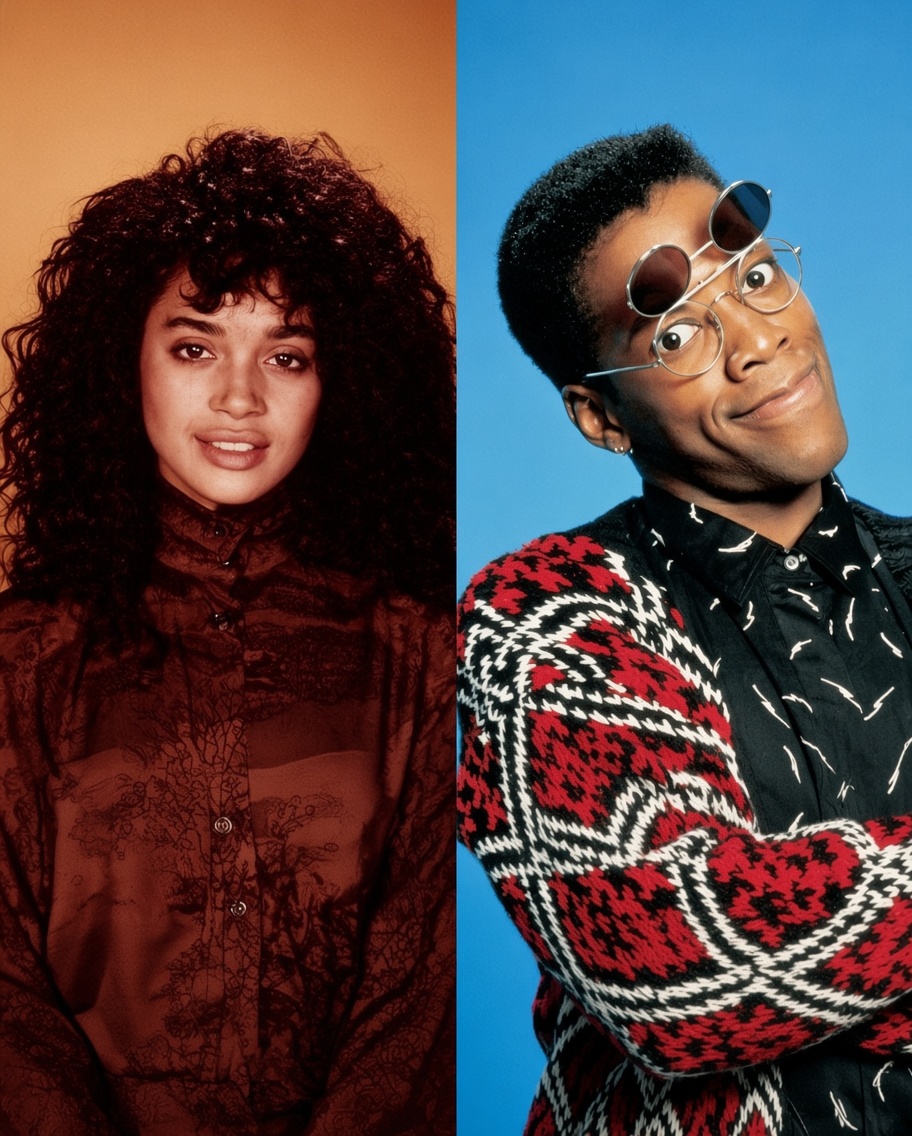
Lisa Bonet: The Face That Opened the Gates
Before there was Whitley, before there was Freddie, before there was a single flipped-up lens, there was Denise Huxtable.
Denise entered a brand-new world carrying a familiar face into an unfamiliar setting. And Lisa Bonet gave the early series its connection between home, independence, and the uncertainty of becoming an adult.
Born on November 16, 1967 in San Francisco, California, Bonet was only 19 during the show’s early production. That was close enough to Denise’s own stage of life that the character’s restlessness felt completely natural.
Denise was independent, stylish, curious, and never fully interested in following the path other people expected for her. At Hillman College, that personality gave the series its original point of entry.
But Bonet’s own career soon moved in a different direction. Already widely known through The Cosby Show, she had become one of the most recognizable young actresses on American television before stepping away from the series after its first season.
Her later work was more selective, including films such as Angel Heart, Enemy of the State, and High Fidelity. Her public life increasingly reflected a preference for privacy over constant Hollywood visibility.
In 2026, Lisa Bonet is 58. Her screen career may never have followed the conventional path expected of someone who became famous so young.
Yet that independence feels strangely appropriate when looking back at Denise. The character was never about fitting neatly into someone else’s plan.
Bonet brought that quality naturally, making Denise feel like a young woman still deciding who she wanted to become, and giving the show the first face through which audiences discovered Hillman.
The Gates of Hillman Still Stand
The halls of Hillman may be quiet now. But the show still carries the friendships, arguments, ambitions, and growing pains that made it feel so alive.
Some of its cast became major stars. Others chose quieter paths. And several are now remembered through the work they left behind.
Think about how much talent crossed that campus in only six seasons. An Oscar winner, a hip hop legend, a CSI investigator, a Matrix Oracle, and a Broadway trailblazer, all sharing the same set.
Which cast journey surprised you the most? Tell us in the comments below.









