7 Dark Disney Secrets That Will Ruin Your Childhood Forever — The Real Skeletons, the Cruel Hoax, and the Hidden Club Nobody Talks About
After reading this, you will not look at Mickey Mouse the same way again.
Confirmed facts.
Some theories.
And one supposed secret said to exist within Disney that has haunted the internet for years.
I am going to give you seven Disney secrets that will make you see your childhood in a different light.
But do not worry.
I will not break your illusion.
I will just shake it a little.
Here are seven Disney secrets they do not want you to know.
Let us start with one of the darkest stories in the history of documentary filmmaking.
For years, it was believed that lemmings, small Arctic rodents, committed mass suicide by throwing themselves off cliffs.
In 1958, Walt Disney Productions released the documentary White Wilderness as part of its acclaimed True Life Adventures series.
It was filmed to appear as serious natural science.
And it included a chilling scene.
Dozens of lemmings running toward a cliff and throwing themselves into the sea.
Literally a huge group of rodents launching themselves into the void to meet their maker.
But why did they supposedly do this?
The species suffered from overpopulation.
They entered a migratory frenzy.
And unable to find a way out, they did the logical thing for any species.
They threw themselves off a cliff.
Logical, right?
The narrator presented this as a natural fact, backed by shocking images.
However, it was not true.
Obviously.
But no one doubted this for a long time.
Decades later, a 1982 investigation by CBC’s Marketplace revealed the truth.
Lemmings do not commit suicide.
Who would have thought?
They do not have any kind of collective suicidal impulse or self-destructive behavior.
Did not see that coming.
What happened in the documentary was actually a staged scene by the filmmakers themselves.
The lemmings were not filmed in the Arctic, but in Alberta, Canada, far from their natural habitat.
There were no real migrations.
Producers bought the animals from local kids for twenty-five cents each.
Rotating platforms were used to make them run in circles, creating the illusion of a stampede.
And worst of all, they were deliberately pushed to the edge of a cliff where they eventually fell into the water and drowned.
All for the drama of a scene.
This event became so infamous that even in a scene from the animated film Penguins of Madagascar, there is a nod to it.
Where the penguins are on the edge of a cliff being filmed and the host tells the cameramen, a little push.
White Wilderness won the Oscar for Best Documentary in 1959, even though its most famous scene was a cruel hoax.
Unbelievable.
Now let us move from the frozen north to a secret hidden in plain sight inside the happiest place on Earth.
What is Club 33?
Relatively few know, but it is a private and ultra-exclusive club inside Disney theme parks, starting with Disneyland in Anaheim, California.
It is said to have opened in 1967, shortly after Walt Disney’s death, though the original idea was his.
But what makes it so special?
First of all, restricted access.
You can only enter through a direct invitation or a membership that costs between twenty-five thousand and fifty thousand dollars as an entry fee, plus several thousand more annually.
Second, a legendary wait list.
Some sources report wait lists of up to ten years.
Not just anyone can join, and the criteria are not entirely clear.
Third, secret location.
At Disneyland, its door has no sign, just the number thirty-three discreetly placed.
Inside, there is a luxurious fine dining restaurant, private lounges, and exclusive services.
And lastly, alcohol in the park.
Originally, Disneyland did not sell alcohol to the general public.
For decades, Club 33 was the only place in the park where liquor could be consumed.
Why is it called Club 33?
Several theories exist.
The most accepted is that it refers to the club’s original address in Disneyland, 33 Royal Street in the New Orleans Square section.
Another theory claims it is related to Disneyland’s thirty-three original corporate sponsors.
Mystery is definitely part of the club’s allure.
There are versions of Club 33 in other parks like Tokyo Disneyland, Shanghai Disneyland, and Walt Disney World.
The latter being more recent and modern.
Many celebrities, politicians, and millionaires are members of the club, though their identities are not always made public.
Now let us go somewhere much darker.
The famous Pirates of the Caribbean attraction at Disneyland, California, opened in 1967, quickly becoming a classic.
A secret that was uncovered over the years and few visitors know is that the skeletons decorating the treasure cavern were originally real.
Yes.
Actual human skeletons.
In the sixties, technology to create realistic fake skeletons was very limited.
Prop models did not look authentic enough for the level of detail Walt Disney demanded.
That is why, according to several testimonies from former Disney engineers and creative designers, real skeletons donated by UCLA were used.
As special effects improved over the years, most real skeletons were removed and replaced with high-quality replicas.
However, persistent rumors claim that at least one real skull still remains inside the attraction, placed above the headboard of a bed in the bedroom scene.
Now I really do see this ride differently.
Disney has never officially confirmed or denied this, which only fuels the legend.
These human remains were placed in various parts of the ride, especially in the treasure scene guarded by pirate skeletons.
The goal was to create an environment as immersive and realistic as possible.
Although, if you ask me, I would say they went a bit overboard.
Now here is a story that has captured the public imagination for more than half a century.
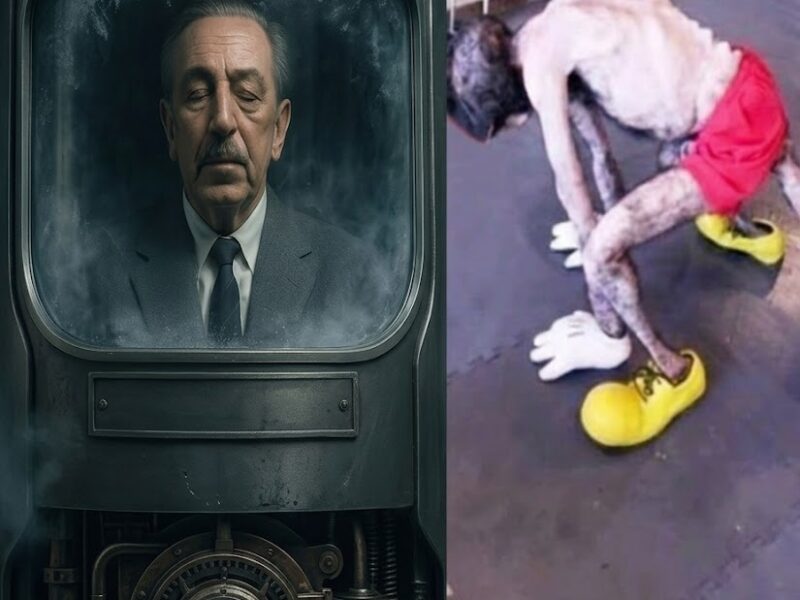
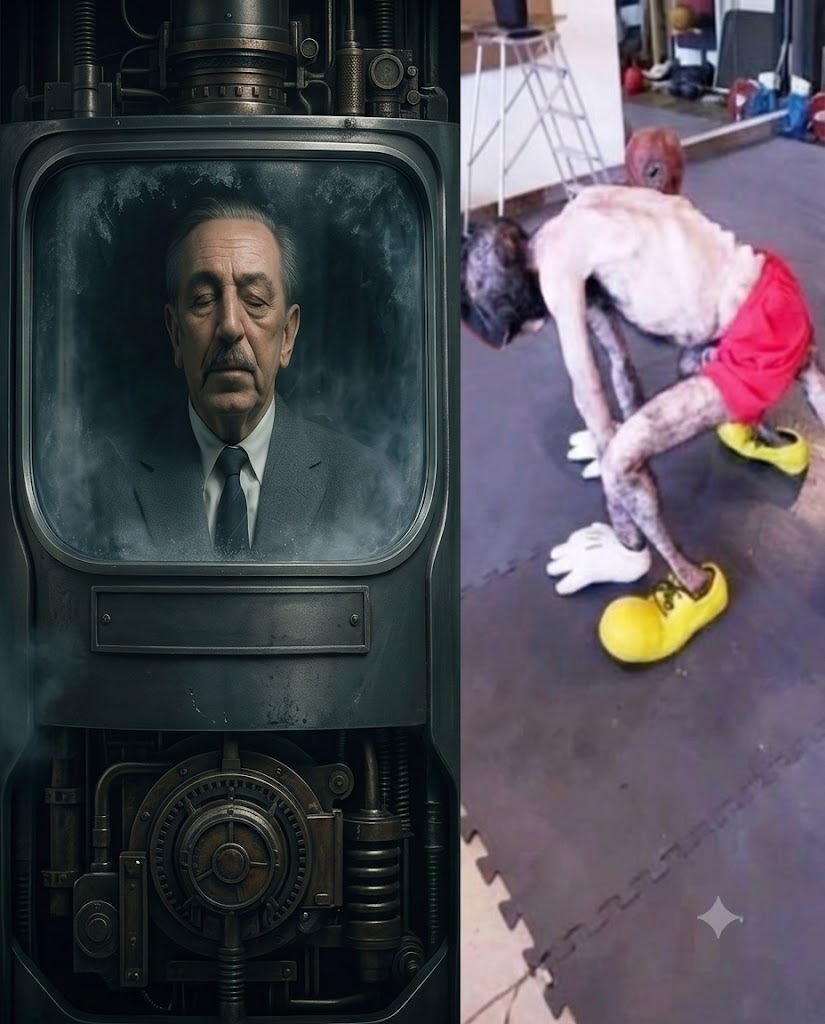
For decades, there has been a rumor that Walt Disney, the legendary creator of the Disney empire, was cryogenically frozen after his death in hopes of being revived in the future.
This story is one of the most well-known urban legends of the twentieth century.
Walt Disney died on December 15, 1966, at the age of sixty-five from lung cancer.
According to medical records and official statements, he was cremated two days later on December 17, and his ashes were buried at Forest Lawn Memorial Park in Glendale, California.
Or was he?
The myth began a few years after his death.
Some theories say Disney was fascinated by futuristic science and technology, sparking speculation about his interest in cryogenics.
An anonymous journalist claimed that insider sources told him Walt’s body was stored in a capsule beneath the Pirates of the Caribbean attraction at Disneyland.
The lack of transparency and the secrecy of his funeral only fueled public speculation.
Cryogenics is the process of preserving a body at extremely low temperatures, usually in liquid nitrogen, with the hope of reviving it when future medical technology allows.
Although theoretical beginnings were happening in the sixties, the first human cryogenic preservation occurred in 1967 after Disney’s death.
And there is no documented evidence Walt Disney ever requested such a procedure.
But realistically, if they wanted to hide it, there probably would not be.
The Disney family and close employees have repeatedly denied the story in interviews.
Biographers and scholars agree there is no serious evidence supporting Disney’s cryogenic preservation.
Most consider it an urban legend fueled by mystery, silence, and a fascination with futurism.
Could it be true?
Probably not.
But the fact that we are still asking says everything about the power of a good mystery.
Now let us talk about something that has caused real controversy and real lawsuits.
While Disney has created memorable characters, it has also faced plagiarism accusations from authors, studios, and even entire countries.
Here are some of the most well-known cases of Disney characters allegedly plagiarized or inspired by pre-existing works.
One well-known case is Simba from The Lion King versus Kimba from Kimba the White Lion.
Based on the dates, one might assume the original is Kimba the White Lion, created in 1965 as a Japanese anime by Osamu Tezuka.
Despite criticism, Disney denied any direct inspiration, but the visual comparisons are striking.
Even the names are suspiciously similar to be a coincidence.
Another example is Ariel from The Little Mermaid versus Marina from Hans Christian Andersen and Japanese anime.
The original would be the 1837 tale by Andersen and the Japanese version Andersen Douwa Ningyo Hime from 1975.
Disney’s Ariel came in 1989.
Similarities to the anime include both mermaids having curious personalities and a human prince love interest.
Although Disney openly draws from the fairy tale, many point out the unacknowledged influence of the anime.
Then there is Tiana from The Princess and the Frog versus Maddie, a character from a previously rejected script.
In 2006, Disney announced an African-American princess named Maddie, raised in New Orleans as a maid.
After criticism for reinforcing stereotypes, they renamed her Tiana, made her a businesswoman, and changed the script.
Some writers claim they pitched a black princess in New Orleans concept to Disney years before, used without credit.
No lawsuit followed, but it is considered creative appropriation.
A widely discussed case was Frozen versus The Snow Queen from other studios.
The original tale is by Hans Christian Andersen, and other studios like Russia’s Soyuzmultfilm and Golden Films made adaptations before Disney.
The character Elsa debuted in 2013.
Though Disney is allowed to adapt public domain stories, they have been accused of minimizing prior influences in presenting concepts as original.
Also, Zootopia versus Zootopia by Gary Goldman.
Gary L. Goldman, screenwriter of Total Recall, sued Disney in 2017, claiming he pitched a concept titled Zootopia in 2009.
It included anthropomorphic animals with social issues, animal police, and similar character names.
The case was dismissed for lack of sufficient evidence, but the similarities spark suspicion of uncredited appropriation.
And we could go on for hours, but you get the idea.
Now let us get a little creepy.
Ready?
According to certain internet forums and viral videos on TikTok and YouTube, there is a conspiracy theory claiming Disney financed a secret biotech experiment in China to create a human with Mickey Mouse features.
This experiment was supposedly part of a transhumanist or genetic manipulation project, aiming to merge human DNA with physical traits of the famous mouse.
Allegedly to create a living mascot, a revolutionary attraction, or even a corporate symbol that transcends fiction.
It allegedly took place in a secret lab in China where unethical experiments were conducted with indirect funding from Western corporations.
All disguised under the creation of a theme park called Wonderland.
But the iconic shapes of the buildings were highly noticeable.
A hybrid creature was supposedly created with oversized ears, abnormally large eyes, and a disproportionate head.
Some claim the creature was clinically alive for a few days before dying from malformations.
Others link this story to blurry images or alleged leaks from medical facilities showing deformed humanoid figures, but no verified evidence exists.
The theory began circulating on Reddit and 4chan in the early 2010s, blending cryogenics, genetic manipulation, and the dark side of mega corporations.
It ties into a broader narrative called Disney’s Dark Experiments, a series of urban legends about secret projects ranging from cryopreservation and cloning characters to sentient AI.
There is no official record, scientific evidence, or credible statement confirming this project.
The story fits more within the creepypasta genre than factual reality.
Still, its viral spread leaves us wondering.
Could there be some truth behind it?
And finally, let us look at something that has sparked endless debate online.
This theory mainly originates from internet forums, pop psychology blogs, and TikTok or YouTube content analyzing the behavior of Disney princesses from a mental health perspective.
The idea suggests that although they were created as models of virtue and ideal femininity, many princesses display traits of real psychological disorders when viewed clinically.
Most cited examples include Snow White with dependent personality disorder.
She displays emotional immaturity, excessive submissiveness, constant need for protection and care from the dwarfs, and inability to make decisions without others’ guidance.
Ariel with dissociative identity disorder or borderline personality disorder.
A desperate desire to change her body and world.
Impulsive decisions.
Giving up her voice.
Running away.
Emotional instability linked to rejection and external validation.
Elsa with severe anxiety and emotional repression.
She avoids human contact out of fear of harming others.
Let It Go is interpreted as an emotional breakdown after years of suppression.
She suffers anxiety attacks and chronic guilt.
Belle with Stockholm syndrome.
She falls in love with her captor after isolation and emotional manipulation.
Their relationship turns romantic, though some psychologists see it as glamorizing traumatic attachment.
Aurora with narcolepsy or dissociation.
Deep sleep interpreted as metaphor for disconnect from reality or repressed trauma.
Passive story role.
Events happen to her without control.
And Tiana with functional obsessive-compulsive disorder.
An obsession with work, structure, and goals.
Strong resistance to fun or rest until forced to change.
Why did this theory go viral?
It demystifies the idea of the perfect princess, showing that even idealized characters have internal conflicts.
It also provides a modern critical reading of characters created in very different cultural contexts, especially classic princesses.
Many young people identify with the portrayed symptoms, which has sparked community and debate on social media.
So there you have it.
Seven Disney secrets that will make you see your childhood in a different light.
Some are confirmed facts.
Some are theories.
And one is a legend that refuses to die.
The lemmings really were pushed off that cliff.
The skeletons in Pirates of the Caribbean really were human.
Club 33 really does exist behind an unmarked door.
Walt Disney probably was not frozen, but the mystery survives because we want it to.
Disney really has faced plagiarism accusations that never fully went away.
The Mickey Mouse experiment almost certainly never happened, but the internet will never let it go.
And the princess psychology theory says more about us than it does about them.
The truth is, Disney is not just a company.
It is a mirror.
And what we see in that mirror depends on what we are looking for.
If we are looking for magic, we find it.
If we are looking for darkness, we find that too.
Because behind every fairy tale is a real world full of complicated people making complicated choices.
And sometimes those choices leave behind secrets that outlast the stories themselves.
So the next time you walk down Main Street or watch a princess sing about her dreams, remember this.
You are not just watching a movie or visiting a park.
You are stepping into a story that has been carefully built, layer by layer, over nearly a century.
And like any story, it has its shadows.
Now that I have ruined your childhood, do me a favor.
Hit that like button.
Share this article with someone who loves Disney.
Subscribe for more deep dives into the secrets hiding behind the stories you thought you knew.
And tell me in the comments below which of these seven secrets shocked you the most.
Was it the lemmings?
The real skeletons?
The frozen Walt?
Or the princesses with psychological disorders?
I want to know.
And until next time, keep looking closer at the things you think you understand.
Because the truth is almost always stranger than the fairy tale.









