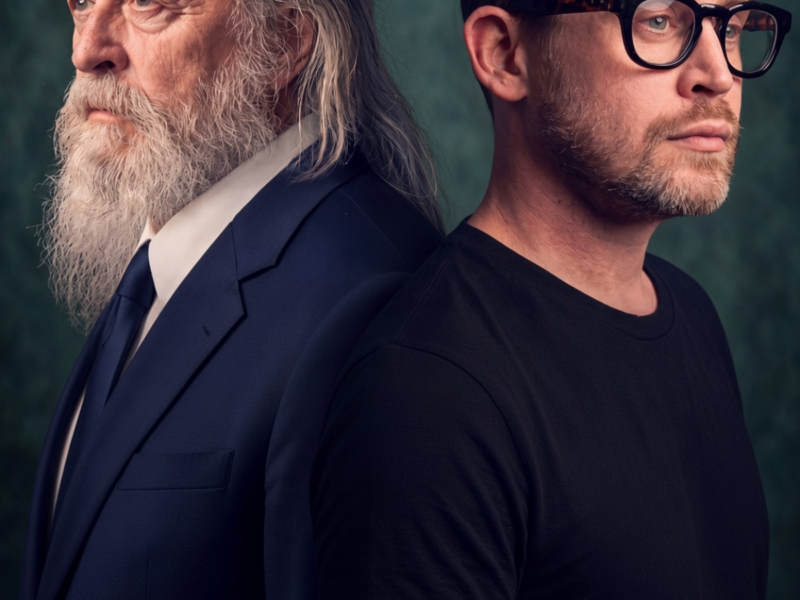
Why Macaulay Culkin Was NEVER What His Father Wanted?
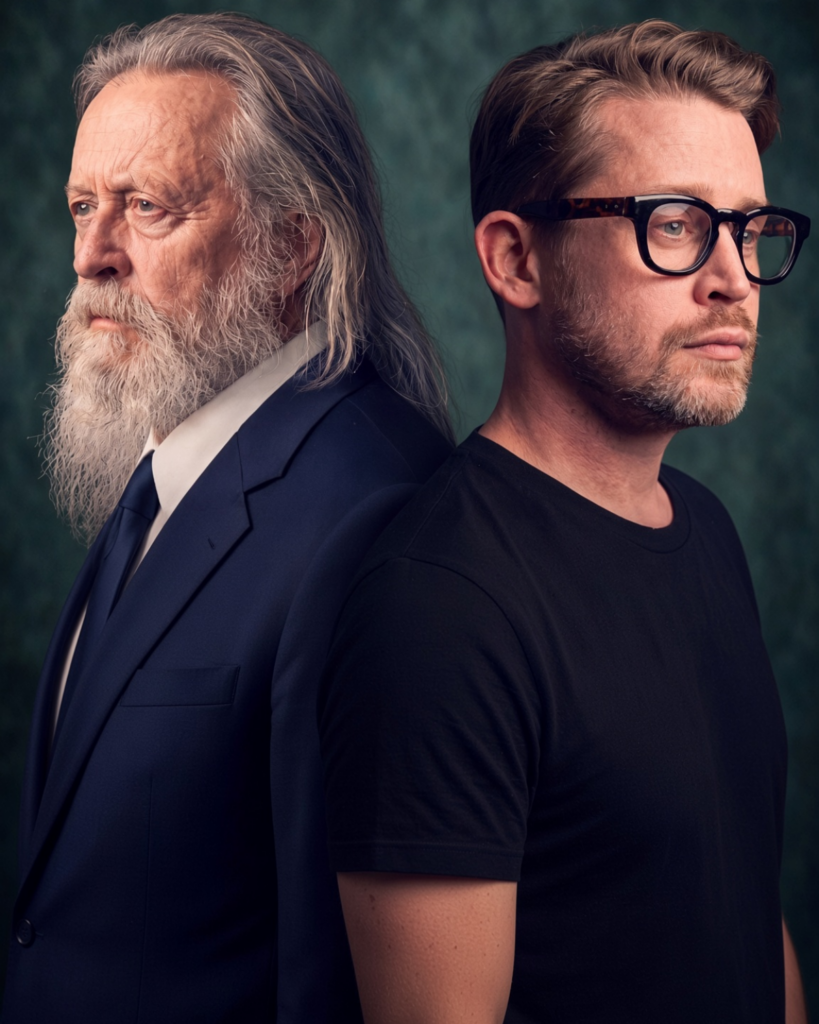
When Macaulay Culkin was a teenager, he did something almost no child in America has ever done.
He used the law to take his own father’s name off his money.
He was the most famous child on the planet, and he has not spoken to that father in more than thirty years.
The father is still alive. He has seven children.
According to Macaulay, not one of them wants anything to do with him.
Most of what you are about to hear comes from Macaulay himself, from court records, and from people who were there.
And there is one thing to keep in mind all the way through: Kit Culkin has denied the allegations.
Macaulay Culkin was born in Manhattan in 1980, one of seven children.
The family lived in a one-bedroom apartment on 94th Street and 2nd Avenue. The children slept in bunk beds.
His father, Kit, worked at St. Joseph’s, a Catholic church on the Upper East Side.
He was the church’s sacristan—the man who prepared the altar before Mass.
And Kit put his children into performing. Several of them.
By eight, Macaulay was working.
In 1989, he played the nephew in Uncle Buck, opposite John Candy.
That set is where the first outside witness appears.
In September 2025, a documentary about John Candy made by Colin Hanks premiered at the Toronto Film Festival.
Macaulay was interviewed for it, and he talked about that set in 1989.
He said that when you are eight years old, you don’t really get respect from adults. Candy was different.
“You felt invited in,” he said.
And then he said something about his father—that even then he was already a monster, that it was no secret, and that John Candy saw it.
According to Macaulay, Candy would come over and check on him. “Is everything all right over there? You doing good?”
“I remember John caring,” Macaulay said, “when not a lot of people did.”
He was eight.
John Candy died in March 1994.
That same year, Macaulay walked away from acting.
It would be more than thirty years before he said publicly what that small kindness on the set of Uncle Buck had meant to him.
A year after Uncle Buck came Home Alone.
Macaulay Culkin was paid $110,000 for it.
The film made close to half a billion dollars around the world.
For more than twenty years, it held the record as the highest-grossing live-action comedy ever made.
Overnight, a ten-year-old boy from a one-bedroom apartment in Yorkville was the most recognizable child on Earth.
His little brother, Kieran, was in it, too, as his cousin Fuller.
The story of that film is simple: a family so busy and so distracted that they fly to Paris and leave their eight-year-old son behind.
He has to fend for himself. He has to protect the house on his own.
And at the end, his mother makes it home to him.
America fell in love with that story.
The boy who played it was about to live a version of it for real.
Fame did something else, too—something Macaulay only talked about decades later.
On a podcast with Kate and Oliver Hudson in 2025, he described coming home between films.
He would be gone three or four months, he said.
And when he came back, his brothers and sisters had a whole new set of inside jokes.
They were seven and eight years old. They were not going to be sensitive to how that felt.
He did have one ally in the house. His older brother, Shane, he said, was always protective of him.
He was ten and already the family’s breadwinner.
He was also the one who no longer quite belonged at home.
And Kit Culkin quit his job at the church. He became his son’s manager.
Patricia Brentrup, Macaulay’s mother, worked alongside him, and the two of them split a 15 percent commission on the children’s earnings.
But it was Kit who did the negotiating.
And it was Kit who built a reputation very quickly: difficult. One of the most difficult people in the business.
In 1991, Macaulay became the first child in Hollywood history to be paid a million dollars for a film.
For Home Alone 2, it was millions more, plus a share of the box office.
Kit used every bit of that leverage.
The clearest example is a film called The Good Son.
The studio already had another boy cast in the lead. Kit wanted Macaulay to prove he could play a dark role, so he made it a condition: if the studio wanted Macaulay for Home Alone 2, Macaulay would also get The Good Son.
The other boy was out.
Kit then insisted that Macaulay’s little sister Quinn get a part as well, and he vetted the replacement director.
A sacristan from 94th Street was now telling 20th Century Fox what it would take to get his son.
It was not the only time. His demands reportedly also held up a film version of The Nutcracker.
Studios wanted the boy. They had to go through the father to get him.
None of that is unusual on its own. Hollywood is full of ambitious stage parents.
What makes this story different is what was happening at home while the money came in.
In 2001, Macaulay described one detail to New York magazine that says more than any contract.
“I was making God knows how much money,” he said. “And Kit was making me sleep on the couch just because he could.”
The child whose films were earning hundreds of millions of dollars did not always get a bed in the apartment his money was paying for—just because he could.
He also described what happened when he asked for a break.
The next thing he knew, he said, he was on the next set doing the next thing.
“And it just kind of clicked in my brain: Okay, there’s basically nothing I can do to make this stop.”
He was a child, and he had just understood that his own life was not his.
He summed his father up in that same interview in two sentences: “The one thing he taught me was how not to be. He was a bad guy.”
But the part Macaulay kept to himself the longest is the part that explains all the rest.
In January 2018, he sat down with the comedian Marc Maron.
Asked about his father, and for the first time, Macaulay said it plainly.
He said his father had been abusive—mentally and physically.
He described the rule he grew up under: “Do good or I’ll hit you.”
He called him a bad man.
And then he gave the reason—the one he had clearly spent years working out.
“He was jealous.”
Jealous. A grown man jealous of a child. Of his own child.
It sounds absurd until you learn who Kit Culkin was before his son was born.
Kit had not always been a church sacristan.
When his father’s business went bankrupt, the family ended up in a cold-water flat. His mother died while he was still a teenager.
He had very little. What he had was a talent. Performing was his way out.
He was acting in commercials at ten.
As a teenager, he was on Broadway in a play called Becket, playing the young son of a king on the same stage as Laurence Olivier.
In 1961, he danced in the film of West Side Story.
In 1964, he was in Richard Burton’s Hamlet—a boy with nothing, on stage beside Olivier.
It looked like the beginning of everything.
It was not.
His younger sister became the star. You know her as Bonnie Bedelia—Bruce Willis’s wife in Die Hard.
Kit did not.
By the early ’70s, he was a struggling actor in California. At one point, by his family’s account, he was living out of a tent.
The man who had once stood beside Olivier ended up laying out vestments in the sacristy at St. Joseph’s.
Quiet work. Invisible work. The opposite of a stage.
And then his son did the thing he never could.
Now hear the rest of what Macaulay told Marc Maron.
“Everything that he tried to do in his life, I excelled at before I was 10 years old.”
That is Macaulay’s explanation, in his own words. Jealous is his word.
Nobody can see inside Kit Culkin’s head. But of every possible reason, it is the one his son settled on after decades of thinking about it.
In 1994, Macaulay made Richie Rich—a film about the richest boy in the world whose parents are put in danger, and in the end, it is the boy who has to save them.
It was his last film as a child, and then he stopped.
He was fourteen. He had been working almost without a break since he was eight.
He simply walked away from acting. He later said he wanted a normal life.
The following spring, after twenty-one years together, Kit moved out.
In the summer of 1995, Patricia went to court.
She asked for custody of the six children who were still minors—from five-year-old Rory up to seventeen-year-old Dakota—and she asked for the right to manage their careers.
Her filings put her accusations in writing.
She alleged heavy drinking. She alleged physical abuse. She alleged he had been unfaithful.
She said he had physically and emotionally abandoned the family when he left the apartment three months earlier.
She also accused him of blocking a film role for twelve-year-old Kieran.
And for once, Kit Culkin answered through his lawyer, Donald Frank.
He denied every one of the allegations.
His statement was one sentence long: “I love and respect and have an interest in all of my children.”
His lawyer added that Kit had started Kieran’s career and had always done the best for the children.
For a moment, it looked like the court might side with him.
Briefly, the judge, David Sacks, had first given Patricia temporary custody.
Then he reversed himself and gave the parents joint custody—to restore, in his words, a level playing field.
Kieran got on a plane to Montana and started filming.
Patricia’s lawyer, Stanford Lyon, called that the main objective. “Kieran is in Montana,” he said, “and will begin shooting.”
Even in the middle of a custody war, what the adults fought over first was a child’s place on a film set.
The fight went on for another two years.
And somewhere in the middle of it, a teenage boy found out how much money he actually had.
His trust was worth somewhere between $15 and $20 million. He had not been told.
So he did something about it.
He legally took both of his parents’ names off his trust fund—his mother’s as well as his father’s—and he appointed an independent executor to watch over his money.
Years later, he explained it to Esquire, and he was careful about it.
The press had written that he “divorced” his parents. He said that was not what happened.
He said he took their names off his trust and found an executor—someone who would look over his finances just in case anyone wanted to “stick their pinky in the pie.”
He was about fifteen.
In the middle of his parents’ war, he used the law to put a wall between himself and the two people who were supposed to protect him.
By his own account, he did it for protection.
And then the story turned completely upside down.
By the summer of 1996, Macaulay was about to turn sixteen.
He was not working. He had around $17 million, and his parents were nearly broke.
They were facing possible bankruptcy.
Kit Culkin had watched his own father go bankrupt as a boy. Now it was his turn.
And the person in the family with the money was the son he had managed.
His entertainment lawyer, Kenneth Weinraub, told the court exactly how bad it was.
He said Macaulay had no interest in working in the foreseeable future.
And he said that Macaulay’s parents were quickly running out of money. They could not afford the rent on their apartment for more than the next few months.
So his lawyer and his accountant went back to the judge with a request.
They asked for permission to buy a house—a house in Manhattan, $1.9 million—so that his family would have somewhere to live.
And the person paying for it was the fifteen-year-old.
The father who had once made him sleep on the couch now depended on his son’s money for a roof.
In the end, Kit did not fight the custody case to a verdict. He did not contest it at trial.
Patricia was given custody and the authority to make decisions for the children.
The last time Macaulay remembers seeing his father, he was about sixteen. He has not spoken to him since.
It would be easy to stop there and call Kit Culkin a villain.
But there is another voice in this story, and it deserves to be heard.
For many years, Kit lived in Grants Pass, Oregon, with a longtime partner named Jeanette Krylowski.
She spoke up for him. She disputed the abuse allegations.
Her version was that Patricia had turned the children against their father.
That kind of claim appears in bitter custody fights all the time, in both directions.
It cannot be proven here any more than the accusations against Kit can be proven here.
But it was said, and it belongs in the story.
And it was never a story with one good parent and one bad one.
Patricia co-managed the children’s careers, too. She shared the same commission.
When Macaulay took his father’s name off his trust, he took hers off as well.
He was protecting himself from both of them.
One more thing deserves to be said fairly.
Everything Macaulay Culkin became, Kit Culkin helped make possible.
It was Kit who put him in front of casting directors.
It was Kit who negotiated the million-dollar deal that changed what child actors could be paid.
Whatever else he was, he was not a man who ignored his son’s talent.
Both things can be true at once.
A father can see his child’s gift more clearly than anyone else—and still be unable to bear it.
After the custody fight, the family was hit by tragedy after tragedy.
In 2000, Macaulay’s half-sister, Jennifer, died of a drug overdose.
In 2008, his sister Dakota was struck by a car in Los Angeles and died. She was twenty-nine.
Kit was not part of the family’s life by then.
His son Kieran, who went on to star in Succession and win an Academy Award in 2025 for A Real Pain, talked about him to The Hollywood Reporter in October 2021.
And Kieran was, if anything, colder than his brother.
“He wasn’t a good person,” Kieran said. “And yeah, probably not a good parent.”
He remembered small things. His father barely bathed. He said as a boy he assumed all dads must smell that way.
Then he went further and described how the younger children saw their father.
“I never looked at him as dad. He didn’t really belong here.”
And when he was finally gone for good, “it made the most sense.”
What he describes is relief. Something out of place had finally left.
Kieran also told one small story that rarely gets repeated.
In 2014, Kit had a major stroke.
Sometime afterward, he turned up at one of Kieran’s performances.
According to Kieran, his father was carrying printed cards to hand to people.
They said: “I’m not stupid. I understand you. I just had a stroke.”
A man who once stood on Broadway beside Laurence Olivier, handing strangers a card asking them to believe he could still understand.
Kieran says that was the last time he saw him.
Asked years later how he felt about it, he was blunt. He said he did not care.
His words were stronger than that.
In 2017, Jeanette Krylowski died, and Kit left his home in Oregon.
He is in his eighties now.
In March 2025, on the Hudsons’ podcast, Macaulay was asked where things stood.
He had not spoken to his father, he said, in about thirty years.
And then he said the sentence that closed the subject: “He deserves it, too. He’s a man who had seven kids and now he has four grandkids and none of them want anything to do with him.”
Macaulay became a father himself. He has two sons with the actress Brenda Song.
He named the first one Dakota, after the sister he lost.
He said on that same podcast that one of his earliest memories of his father was a thought: “When I grow up, this is how I’m not going to be with my kids.”
And that having children of his own “kicks up some dust. I kind of go, I can’t believe he was like that. He had all these lovely kids.”
In December 2023, he received his star on the Hollywood Walk of Fame.
His friend Natasha Lyonne was there. So was Brenda. So were his sons.
Catherine O’Hara, who played his mother in Home Alone, stood up and spoke for him.
She said, “The reason families all over the world cannot let a year go by without watching Home Alone together is Macaulay Culkin.”
She said he made acting look like the most natural thing in the world.
Families watching together every year. A film about a boy left behind.
She finished with four words: “I’m so proud of you.”
Then Macaulay spoke.
He turned to Brenda Song, holding back tears, and said, “You’ve given me all my purpose. You’ve given me family.”
He said one more thing to her that day: “You’re not only the best woman I’ve ever known, you’re the best person I’ve ever known.”
Put that next to another phrase.
Because when Macaulay Culkin has been asked about his father, he has used almost the same words, just the other way round: the worst person he has ever known.
He closed the speech the only way he could, with his most famous line from the film: “Merry Christmas, you filthy animals.”
His father was not at the ceremony.
Two years later, in December 2025, Macaulay was on a YouTube cooking show called Mythical Kitchen, talking about his own children.
And he said something that connects straight back to Catherine O’Hara’s four words.
“There’s a word that I use in my household,” he said, “because it’s something that I didn’t really hear enough of when I was a kid, and that’s proud.”
He had had the number-one movie in America. He had been the highest-paid child in the history of Hollywood.
And the word he remembers missing is proud. One word. That was what he missed.
He said that now, when one of his sons has a bad day at a theater recital, he tells him straight away: “I’m proud of you every time.”
He said he learned a lot of it from watching Brenda as a mother.
And he said that what he is proud of now is being able to provide for his family and to love them the right way.
For years, Father’s Day was hard for him.
In June 2024, he posted about it: “Father’s Day isn’t for me. It’s for the people that make me feel like a father.”
One plausible reading of everything you have just heard is this: Kit Culkin did not resent his son for failing. He resented him for succeeding.
At ten years old, Macaulay became the thing Kit had wanted to be since he was ten years old himself.
And a man who could not become it found the next best thing: he tried to control the boy who had.
In that reading, the couch was about control. So were the contracts and the money.
And the day Macaulay took his father’s name off his trust, the control ended.
So did the relationship.
Kit Culkin once stood on a Broadway stage playing the son of a king.
His own son grew up to be something close to royalty, and Kit could not bear to stand beside him.
Macaulay Culkin kept the money he earned. He kept a brother who stood by him, a son named after the sister they lost, and the woman who played his mother on screen standing next to him on Hollywood Boulevard.
Kit Culkin kept seven children and four grandchildren.
By his son’s account, none of them want anything to do with him.
Ask yourself which of those two men ended up home alone.









