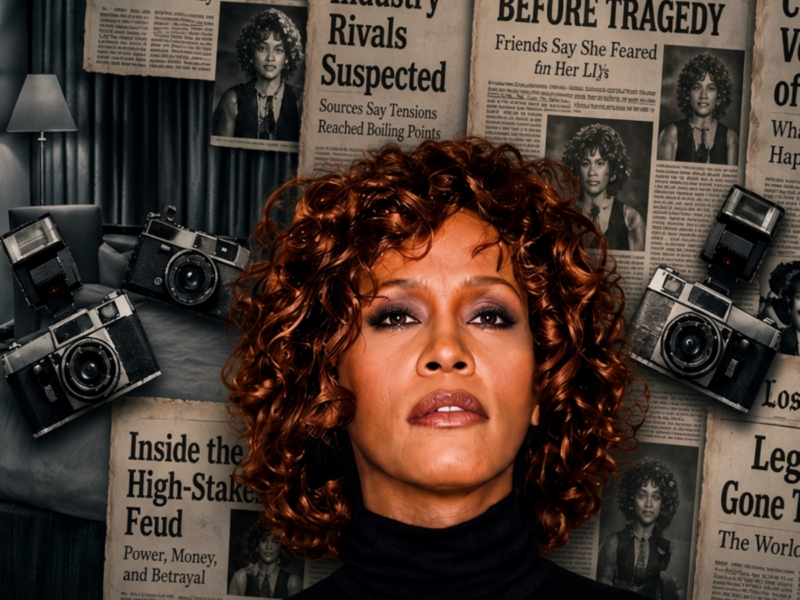
Whitney Houston’s Final Hours – What Really Happened.
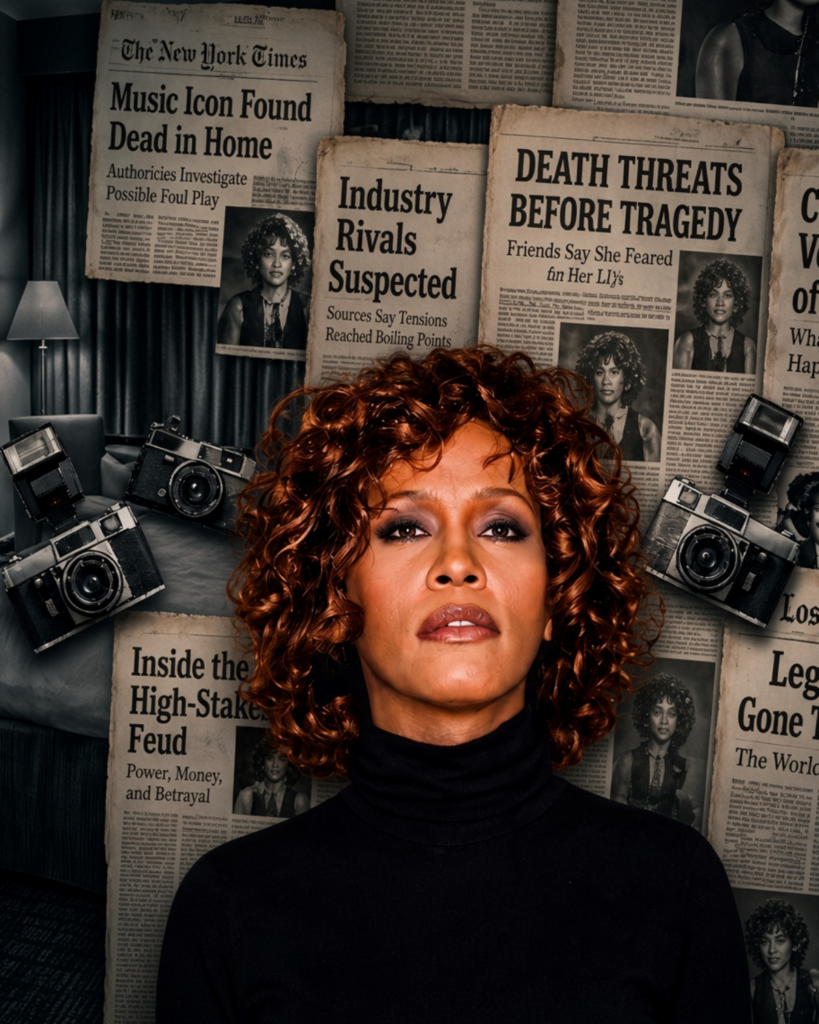
A battered face, broken nails, and bath water so hot it would have scalded her skin.
The official report says accidental drowning, but the crime scene tells a story of a violent struggle.
Whitney Houston handed over a secret note that could have changed everything, and it vanished into thin air.
What was written on that paper?
And who was she fighting?
In criminology, we look for a signature, a specific way of doing things.
When Whitney Houston was found dead in a bathtub, the world called it a tragedy.
When her daughter was found in the exact same position three years later, it became a pattern.
Today, we’re dissecting the life of a woman who was worth more to her circle dead than alive.
Here’s the thing about this particular story.
Only a few years ago, most of what I’m about to tell you would have sounded like an exaggeration.
The kind of thing people wave off with, “Come on, now you’re really reaching.”
But we’re looking at this from a different vantage point now.
After everything that surfaced from those long-buried Epstein files, it’s become a lot harder to dismiss things as impossible.
Because it turns out the world of enormous wealth and influence doesn’t run quite the way most of us would like to believe.
Seen through that lens, Whitney’s story starts to look different, too.
What you’re about to hear isn’t nearly as far-fetched as it might once have seemed.
If anything, some of it lines up almost too neatly.
Fair warning, this is a genuinely upsetting story on more than one level.
You might want to put the kettle on for this one.
While I was putting this episode together, there were moments I had to step away because, honestly, I was angry.
Angry is actually understating it.
But let’s just say I’m trying to keep this civil.
Now, before we dive in today, Whitney is the whole focus, and I’ll be walking through the unsettling details of her death that only came to light years later.
Bobbi Kristina will come into this story, too, because there’s a theory about her death that’s honestly even more shocking.
Let’s get into it.
Whitney was born on August 9th, 1963, in Newark, New Jersey.
Her mother was Cissy Houston, a woman who had music running through her veins from the very beginning.
If you closed your eyes while she sang, you could easily mistake her voice for her daughter’s—the same tone, the same power, the same raw emotion that gave you chills.
Cissy was no amateur.
She led a gospel choir at her church and sang backup for none other than Aretha Franklin, one of the greatest icons in music history.
She’d seen extraordinary careers up close but never built one of that scale herself.
And maybe that’s exactly why, years later, she poured every one of those ambitions into her daughter.
Cissy was tough, strong-willed, almost commanding, but she could also be warm and protective.
She adored her children and wanted nothing but the best for them.
And above all, she was determined that they’d never go without.
Whitney’s father, John, on the other hand, felt like he belonged to an entirely different story.
He wasn’t an artist, had no musical gift to speak of.
He was a hard-nosed, practical bureaucrat immersed in the world of money.
He worked in urban planning around the New York area, specifically issuing building permits and making zoning decisions.
And over time, he built connections that turned out to be extremely lucrative.
This was a man who loved money and wanted more of it, even if that meant playing things less than clean.
Where Cissy saw the world through faith and family, John saw it as a system to be worked.
His philosophy, more or less, was that any tactic was fair game.
And unfortunately, that philosophy would later be turned on his own daughter in a very ugly way.
Somewhere between these two very different people was Whitney, along with her two brothers.
She had a close, genuine bond with her brother Michael almost from day one—the kind of connection that felt natural, unforced.
There was also an older half-brother, Gary, from her mother’s earlier relationship.
Another piece of a family puzzle that looked ordinary from a distance but grew more complicated the closer you looked.
From the very start, Whitney was straddling two different worlds: music on one side and money and ambition on the other.
The kind of ambition that would eventually matter more than family ties.
I’ll be coming back to that thread throughout this story.
Financially, the family didn’t start out comfortable.
Before they found their footing in the middle class, they lived in a rough working-class neighborhood, mostly Black, and at times genuinely dangerous.
Whitney stood out there almost immediately—not because of her personality, but because of her looks.
She was noticeably lighter-skinned than most of the kids around her.
It sounds like a small thing, but in that environment, it was more than enough.
She quickly got labeled as different.
And with that label came all the usual baggage: teasing, exclusion, a quiet kind of pushing away that you feel even when nobody says it outright.
She never really had her own circle of friends, no group to blend into.
So she leaned on her brothers instead.
They became her safe harbor, the people who stood up for her and looked out for her when their parents weren’t around.
I’m mentioning this for a reason.
It matters more later than it might seem right now.
For now, just remember that Whitney’s brothers meant a great deal to her emotionally.
But there was one thing even her brothers couldn’t protect her from.
And this is where the story starts to turn dark.
Someone crossed a line.
Years later, one of her brothers spoke about it openly.
He was around eight or nine years old at the time, and he wasn’t alone.
He said it happened to both him and Whitney.
When their mother was off working, singing with her choir, or touring with her group, the children were left in the care of a relative, Dee Warwick—someone the family trusted.
And it was Dee, according to this account, who crossed that line and abused them.
Whitney never told her mother, not once.
And that silence says a lot on its own.
Cissy was a fierce, uncompromising woman who would have done anything for her children.
Whitney knew that, even as a child, and it terrified her.
She was afraid that if the truth ever came out, her mother might go too far, and she didn’t want to be the reason for that.
So she stayed quiet.
On top of that, there was shame and guilt, which is incredibly common among survivors of this kind of abuse.
A child who learns that someone can violate their boundaries without consent often grows into an adult who struggles to set limits, to say no.
It can distort your whole sense of identity, your relationships, your sexuality.
And with Whitney, you can see traces of that throughout her life—the uncertainty, the searching, the relationships that looked chaotic from the outside but followed their own internal logic.
The logic of someone who learned far too early that boundaries are negotiable, that someone else can simply move them and cause harm, while the person being hurt often can’t even recognize it happening.
When I look at Whitney’s adult life, at the decisions she made, at the relationships she chose, none of it feels random to me.
It reads like a direct consequence of what happened to her as a child.
As I mentioned, the family’s finances weren’t great early on.
They were just getting by, counting every dollar, looking for any way to get ahead, with no luxuries and not much on the horizon.
But that started to shift.
Cissy was increasingly rubbing shoulders with big names through her choir work and performances, while John, true to form, was chasing money on his end.
His position issuing building permits carried more weight than the job title suggested.
This wasn’t a spotless world.
There was talk of deals, of certain people needing to be known to get anything approved, of permits that came through faster for the right price.
And John became exactly that kind of person—someone who could speed things along for a fee.
He’d found himself a steady little pipeline of income that kept growing year after year.
And before long, the Houstons moved to a much better neighborhood, into what was essentially a small estate with a pool and a garden—a level of comfort that had been out of reach not long before.
The kids went to excellent schools, and Whitney eventually landed in an expensive private school.
Her parents were investing heavily in her future.
This matters because the story often gets told as if Whitney came from poverty.
And while that was true in the very beginning, it stopped being true fairly quickly.
This wasn’t a child who lacked for anything.
Quite the opposite.
She landed in a world that had money to spare.
And I mentioned that the parents invested heavily, specifically in Whitney.
Not Gary, not Michael, but her.
Because Cissy quickly recognized that her daughter had something truly exceptional—an extraordinary musical gift, a voice bigger than anything Cissy herself had ever had.
This stopped being ordinary childhood encouragement and became something else entirely.
Cissy taught her to sing from the heart with total honesty, no performance about it, and that gift was priceless.
But Cissy was also relentless.
Discipline came first, always.
Every spare moment went into vocal exercises, repetition, work with zero leniency.
At times, it resembled military training, as if Cissy carried one single thought in her head: I never got my shot, but my daughter is not going to waste hers.
Naturally, that created real tension.
And as Whitney grew older, she wanted to hang out with friends, enjoy being young, have some breathing room, while her mother kept pushing her back toward singing.
But here’s an important nuance.
This wasn’t simply a child being forced into something she hated.
Whitney genuinely loved singing.
She loved gospel.
She loved that feeling of walking out and having a room go completely silent because people felt exactly what she felt.
And despite the pressure, she loved her mother, too.
It was the kind of relationship you often see between two strong women—a mother and daughter, both cut from tough cloth.
But underneath it all, there was real, undeniable love.
Her mother often brought her to church, where she led that gospel choir.
And church gave this family real structure and meaning.
It’s where Whitney first started singing in front of larger crowds.
And it became obvious almost immediately that this wasn’t beginner’s luck.
She simply felt the music.
Gospel captivated her not just as a genre, but as an experience.
It’s not sterile or polished for easy listening.
Gospel is raw, unfiltered emotion—sometimes almost overwhelming, the kind of music that doesn’t let you stay indifferent.
Even though it’s not exactly my own favorite genre, I can still feel that pull, that surge of energy that genuinely stirs something inside you.
People say gospel lets you brush up against something bigger than yourself for a moment—God, a higher power, whatever meaning you hold on to, something just beyond what we can see.
Maybe there’s something to that.
So what happened next?
Whitney kept going to church, kept singing, kept learning.
She was every bit the good girl from a good home.
But underneath, she was quietly starting to rebel.
Her brother later told Oprah Winfrey that he was the one who gave her her first joint, that she also tried cocaine for the first time with him, and that he was the one who introduced her to that whole world.
And because Whitney trusted him completely, she went along with it without a second thought.
At this stage, though, we’re not talking about serious addiction yet—more like typical teenage experimentation, a small act of rebellion.
And that wasn’t her only act of rebellion.
Something else entered the picture that genuinely rattled this tightly wound, deeply religious family.
Whitney was around seventeen when she met Robyn.
Who was Robyn?
A high school athlete who played basketball—the confident, strong type, someone who wasn’t afraid of conflict, who’d stand up for people, who knew how to hold her ground.
They met at a summer camp where they were both working.
And this wasn’t a slow-burn friendship.
It was instant.
Something just clicked.
Whitney felt safe around her in a way she hadn’t felt before.
At first, they were friends, at least from the outside.
Two girls who confided in each other, who stuck together.
But over time, that friendship deepened into something much more.
And this became, by most accounts, Whitney’s first romantic relationship with a woman.
Here’s an important detail.
Robyn entered Whitney’s life before fame, money, pressure, and public expectation ever showed up.
Their bond was simple and honest, with no calculation, no agenda behind it.
And I’ll say now, everything suggests this was probably the most genuine, selfless relationship Whitney ever had—one built purely on real connection and care, not career or image.
That matters more than it might seem at first.
Naturally, in the deeply religious Houston household, this relationship was a problem from day one.
Cissy and the rest of the family saw the world in strict moral terms—right and wrong, clearly divided.
And it became obvious to them fairly quickly that whatever was going on between Whitney and Robyn didn’t fall on the right side of that line.
They saw how close the two girls were, and they didn’t like it.
It wasn’t only about personal belief, though that played a role.
It was also about image, about what people would say, about reputation.
In their eyes, this was a disgrace—something to be controlled, hidden, and ideally stopped before it went any further.
That’s where a quiet conflict began.
Not loud, not dramatic on the surface—just a slow-building tension that would eventually explode.
Interestingly, it was Whitney’s brothers who seemed most disgusted by the relationship.
Not mild disapproval, but open hostility.
Even decades later, after Whitney’s death, her brothers were still speaking harshly about Robyn without hesitation, calling her a nobody, a schemer, someone who supposedly wormed her way into Whitney’s life purely for personal gain.
In their version of events, everything that went wrong traced back to Robyn, as if they needed one clear villain to pin the chaos on.
But it wasn’t only deep-seated homophobia at play here.
There was something else, too: control, and the fear of losing influence.
Let me explain what I mean.
Robyn had a kind of sway over Whitney that no one else in the family had—not even her mother.
Later in Whitney’s career, as things around her got louder and more toxic, Robyn was one of the very few people actually trying to protect her.
She stayed close, talked to her, tried to pull her away from the substances and the people who were destroying her.
This wasn’t passive concern.
It was active intervention.
And for the people surrounding Whitney, especially her family, that was a serious problem.
Think about it.
Suddenly, there was someone in the picture who couldn’t be bought off, who wasn’t dependent on Whitney’s money or status, someone who could actually reach her, talk sense into her, shake her out of denial about what was really happening around her.
That’s exactly why her father and brothers wanted her gone as quickly as possible—to sever that connection completely.
According to accounts that surfaced years later, things escalated to the point where someone allegedly tried to intimidate Robyn into disappearing from Whitney’s life for good.
A man even came forward to the media claiming he’d been hired to beat her and break her bones to force her to back off.
But Robyn refused to be scared away.
Whitney mattered too much to her.
So, for the time being, she stayed.
Meanwhile, tension inside the Houston household kept building.
And it wasn’t only about Whitney anymore.
John was pathologically jealous of Cissy.
Not ordinary jealousy, but something far more extreme.
He hired private investigators to track her, monitored her every move, bugged her phones, went through her belongings.
He wanted total control over every part of her life.
The irony is that he himself was serially unfaithful.
For a long time, Cissy looked the other way and endured it.
But everyone has a breaking point, and eventually she stopped playing along and had an affair of her own with the pastor from her church.
When John found out, there was no coming back from it.
He demanded a divorce.
When Whitney learned about the divorce, something in her broke.
She packed her things and left without any explanation, going straight to the one person she genuinely felt safe with: Robyn.
That’s where she found the peace she could no longer find at home.
No surveillance, no wiretaps, no shouting matches, none of that constant tension hanging in the air.
Her romantic life, meanwhile, wasn’t limited to one path.
Whitney also dated men, including Jermaine Jackson and later Eddie Murphy, along with a few athletes.
She dated, she explored, all while still having genuine feelings for Robyn.
Simply put, she was bisexual, moving between these different parts of her life while trying to find some kind of balance.
Robyn saw this and, in her own way, accepted it.
Not that it was easy for her, but she probably didn’t feel she had much choice.
More than anything, she wanted Whitney to be happy and free.
Her mother, Cissy, understood what was happening and didn’t want to lose her connection to her daughter.
So instead of drawing hard lines and making demands, she took a gentler, more strategic approach: encouraging Whitney to come back to the choir and to church, to reconnect with what had always grounded her.
Whitney eventually agreed, and that became a turning point of sorts.
Returning to music brought her closer to her family again, even if things were still far from perfect.
Robyn, though, never disappeared from the picture.
She stayed present in Whitney’s life.
And it seems this was the moment Whitney finally drew a clear line for the first time: either you accept her in my life, or you don’t get me at all.
And reluctantly, the family had to accept it.
From that point on, everything seemed to speed up, like someone had released the brakes.
Whitney returned to singing, and it quickly became clear this wasn’t just a talented kid from the church choir anymore.
This was someone impossible to ignore.
She sang backup for other artists, performed live, often alongside her mother, but increasingly in her mother’s place, as Cissy quietly nudged her toward the spotlight, encouraging her to sharpen her talent by going solo.
Industry insiders started to take notice, and eventually she caught the eye of a man named Clive Davis, who spotted her at one of her solo performances.
At the time, he was a legendary and admittedly controversial record executive—a man who for decades had held the power to decide who became a star and who didn’t.
He’d started out as a lawyer before moving into music.
And the moment he saw Whitney perform, he knew he wasn’t looking at just a great voice.
He was looking at a product with worldwide potential.
He took her under his wing and began shaping her image deliberately and carefully, step by step.
With his backing, she recorded her first album.
And that’s when everything truly took off.
Interviews, magazine covers, bigger and bigger stages.
Wherever she appeared, she left people stunned.
There was no doubt in anyone’s mind this was something extraordinary.
But here’s the thing.
Right around this same time, another figure stepped back into the frame: her father, John.
Not as a source of support, but as someone who quickly recognized that serious money was starting to circle his daughter.
And as I’ve already said, few things in this world meant more to him than money.
Let’s just call it what it was.
John was an opportunist, someone who converted everything into potential profit.
He wanted control.
He wanted power.
He wanted to be the one calling the shots—and he got exactly that.
He became Whitney’s manager.
He loved the influence that came with it.
He took over the business, quite literally, bringing family members onto the payroll and building a closed, self-serving structure around her.
Her brothers were handed titles that sounded impressive on paper—tour manager, various organizational roles—but in practice often amounted to very little real work.
No responsibilities, no accountability, but the money kept flowing to them steadily.
They liked to describe themselves as her bodyguards, insisting they were there to protect her, to keep her safe, to make sure nothing bad happened around her.
But look closer and you have to wonder what exactly they were protecting.
Because their idea of protection often amounted to something else entirely—like scoring drugs for her, especially while on tour.
It even got to the point where her own brothers gave her drugs as a birthday present.
And Whitney apparently didn’t see anything wrong with it.
She kept repeating one line that sounded almost innocent at the time but hits very differently in hindsight: “If you love your family, you help them.”
It’s hard not to notice that for her brothers, “helping” clearly meant something very different.
The truth is, her siblings had turned their own sister into a personal ATM—a source of money that flowed with barely any questions asked.
And she was far more generous with it whenever she was using.
When she was sober, though, there were moments she genuinely wanted to quit for good.
That, of course, didn’t sit well with her brothers or with her father, who, it would later turn out, also helped himself to far more of her money than he had any right to.
Her father became laser-focused on maximizing the return on his daughter’s talent.
If Cissy Houston had once been the demanding one, pushing her daughter to work and polishing her voice, that role now passed to her father—except he did it in the worst possible way.
He ruled through fear.
Everyone around him was afraid of him.
People in her circle, colleagues, and especially Whitney herself.
He managed through pressure, control, and domination.
This was a man who wanted absolute power.
And everything suggests he became yet another predator in her life, right behind her brothers—someone who not only profited from her talent but slowly stripped away her ability to just be herself, and who would later deal her a blow I’ll get to shortly.
Around this time, two very distinct camps had clearly formed around Whitney.
On one side, her father, her brothers, and the machinery of the music industry—a world of money, influence, and pressure where results mattered more than the person.
On the other side, Whitney herself, her mother, and Robyn—laughter, closeness, women supporting and encouraging each other.
In some footage from that era, you can genuinely see Cissy beginning to accept the relationship.
Maybe not fully, but enough to preserve her bond with her daughter.
There was good energy there.
Real focus on the music, on the voice, on what actually mattered.
But that other camp—the male camp—was louder, more aggressive, more powerful.
And unfortunately, it was about to gain one more member.
A man who would bring a whole new level of emotional chaos into Whitney’s life.
Who was he?
His name was Bobby Brown.
They met in 1989 at an awards ceremony that, for Whitney, wasn’t a moment of triumph at all.
It was actually her first real public humiliation.
She was booed that night because part of the audience felt she wasn’t Black enough musically—that her sound was too pop, too polished for what was expected at the time.
And that’s where Bobby Brown entered the picture.
A fellow artist, though nowhere near as famous as she was.
Even so, she noticed him immediately.
He was different, and she sensed something rebellious in him.
She approached him, teasing him, nudging him—small but unmistakable signals of interest.
He, however, didn’t respond the way she expected.
Instead, he answered coolly, almost with mock offense, warning her to watch herself.
And by her own account, that’s exactly what hooked her even more.
Here was a man who wasn’t instantly dazzled by her, who didn’t fall at her feet the way everyone else did.
And that pull, unfortunately, worked on Whitney like a magnet.
Unfortunately, because Bobby may have been about the worst possible match for her—a clown of a man with an inflated sense of his own importance.
On top of that, he was your classic bad boy, a troublemaker, someone around whom Whitney, as she put it herself, could relax without the constant pressure of being perfect.
She didn’t have to pretend with him, didn’t have to be flawless, and that was part of the appeal.
But from the outside, this relationship looked wrong from the very beginning.
When people found out about them as a couple, the reaction was immediate: this isn’t a good direction.
And it wasn’t about Bobby coming from a different background or earning less money.
It was something else entirely.
He was unstable.
Behind the laid-back, joking exterior was a volatile, hot-tempered man.
He already had drug problems by that point, and he had a reputation as a womanizer.
Honestly, everything about this relationship pointed toward disaster from day one.
And here’s another layer to this story.
At the same time, rumors about Whitney’s relationship with a woman kept circulating.
Remember Robyn?
She was still very much present in Whitney’s life, now working as her wardrobe assistant.
Back when they first met, gossip about their relationship was mostly just a threat to the family’s reputation.
But now that Whitney was becoming a global star, that same gossip could actually damage her career.
And keep in mind, this was a different era.
Today, nobody particularly cares who’s dating whom or what someone’s preferences are.
But back then, the music industry was ruthless about this kind of story.
It could have ended her career outright.
So, even though everyone around her thought Bobby was a terrible match, her family didn’t exactly stand in the way of the relationship.
If anything, it suited them just fine for Whitney to marry him, since it would put an end to all the speculation about her sexuality once and for all.
And with the rumors silenced, their pockets would stay full, too.
Sure enough, the wedding happened remarkably fast—almost rushed, as if there was some deadline to beat.
Interestingly, on the day of the wedding, Eddie Murphy, whom Whitney had once dated, called her and begged her not to go through with it, telling her it would be a mistake.
Did she listen?
As we know, she didn’t.
And from this point on, something begins that can only be described as the beginning of the end.
Not all at once, not through one single event, but gradually—through decisions, behaviors, addictions, and mounting chaos.
Looking back at this story now, it’s easy to trace that downward spiral and see how tightly it’s woven together with the presence of one particular man.
Of course, you can’t put all the blame on him alone.
Everyone shapes their own path to some degree.
But it’s also true that choosing a partner is one of the most important decisions a person makes—maybe even the most important one.
You can end up with someone who lifts you up, who supports you, who builds something stable and calm alongside you, someone who makes life easier even when it’s hard because you’re carrying it together.
Or you can end up with someone who drags out the worst in you, who wakes up demons you didn’t even know you had, who instead of holding you up starts pulling you down, slowly and steadily, until one day you no longer have the strength to come back up for air.
And that’s exactly what it looked like with Whitney.
It wasn’t one decision, one mistake, one moment.
It was a process, a relationship that deepened the chaos instead of calming it.
Maybe apart from each other, both of them could have built calmer, healthier lives.
But together, they were like gasoline thrown on fire.
At that point, it wasn’t a question of whether something would go wrong—only when.
Then came her role in The Bodyguard.
You probably remember it.
Whitney wanted to prove herself as an actress, to step outside music, but the timing couldn’t have been worse.
During filming, she was pregnant and lost the baby—an enormous blow that hit her right in the middle of an already high-pressure project.
The set itself was already a challenge for her.
She later said she’d never worked in an environment with so many white people before, where everything felt unfamiliar compared to what she was used to.
She felt out of place, uneasy.
On top of that, she lacked confidence as an actress, especially standing next to someone as accomplished as Kevin Costner.
It wasn’t her comfort zone, but she pulled it off.
The film turned out genuinely well.
Personally, I really like it.
It has that distinctive feel of its era—impossible to replicate, a little nostalgic, a little rough around the edges, with a decent thriller plot running through it that keeps you hooked.
It became a massive box office hit, and Whitney rocketed to an entirely new level of global stardom.
Not everyone was thrilled about that—and certainly not her husband.
If there’s a single moment in this story where you can see Whitney’s decline suddenly accelerate, this is it: right as she rockets into true mega-stardom.
She was everywhere.
Everyone knew her.
Everyone wanted a piece of her.
He, meanwhile, had released some music, had his moments, but his career was clearly smaller than hers.
And worse for him, it was fading fast.
You could see it in the smallest details.
When photographers showed up, they wanted Whitney.
When there were invitations to events, they were addressed to her.
When people talked about success, they were talking about her.
Always her, only her.
And it ate at him.
This was exactly the kind of man who couldn’t celebrate his wife’s success or support her climb.
Because if she’s happy, shouldn’t that be enough for both of them?
Aren’t they supposed to be on the same team?
Not for him.
He couldn’t stand watching his own star fade.
And it’s likely he blamed his wife for it.
Twisted, but true.
People close to them noted that it wasn’t really that Whitney overshadowed him.
He simply stopped fighting for his own career.
He stopped performing, stopped putting in the effort.
Instead, he toured with her, lived off her money, bought drugs with it, and took advantage of the position it gave him.
It was comfortable for him, and at the same time, resentment was building—because despite that comfort, he couldn’t bear no longer being the center of attention, no longer mattering to the media, watching his moment pass.
And that frustration started spilling out.
Fights, tension, public scenes.
Reporters would address her as Mrs. Houston, and he’d fly into a rage because he wanted them to say Mrs. Brown.
There’s footage that shows this clearly: his jealousy, his simmering resentment, anger he couldn’t hide.
He acted like a sulking child who couldn’t stand living in someone else’s shadow, who couldn’t handle no longer being relevant to the media, no longer having a name that meant anything on its own.
And at some point, it seems he made a decision.
If he couldn’t rise to her level, he’d drag her down to his.
Whitney, for her part, desperately wanted this marriage to work.
And so she started shrinking herself—pulling back, trying to make her enormous success fit around his comfort.
That’s not just my read on it.
People close to them said exactly this.
In interviews, she’d highlight his importance, push him in front of the cameras, try to showcase him, insisting things like, “This is all thanks to him.”
Honestly, it’s painful just to think about.
She even started a production company, Houston Productions, and to avoid setting him off, she renamed it Brownhouse.
Accepting awards, she’d say from the stage, “Baby, this one should be yours.”
She called him the king of R&B.
She handed him her spotlight at every opportunity, trying to tow him along, giving him space he’d never managed to build for himself, as if she were trying, at any cost, to keep him from feeling inferior—to keep the peace between them.
Unfortunately, it didn’t work.
Then came an assault case.
More outbursts of aggression, and accusations began surfacing from other women in his orbit.
Infidelity—regular and not exactly discreet, almost flaunted, as if meant to wound her, to humiliate her publicly.
Bobby was playing a very specific game with Whitney: a classic manipulation tactic—hot and cold.
One day, he’d be affectionate, present, attentive, exactly what she needed.
The next, he’d vanish emotionally, shut her out, show up with other women, provoke her, turn cold.
It’s a classic psychological trap that binds a person even tighter, because you start chasing that next good moment, pushing past your own limits, doing things you’d never normally do just to get a scrap of affection again.
And Whitney, sadly, fell straight into that trap.
Remember, she already carried a deep-rooted difficulty with setting boundaries dating back to her childhood.
So when Bobby pulled away, she pulled him back.
When he hurt her, she tried to fix it.
People around her watched this and couldn’t understand it.
They told her outright, “He’s destroying you. He’s pulling your focus away from your work. This isn’t a healthy relationship.”
And they were right.
Because Bobby brought nothing into her life but chaos, instability, and constant tension.
And that raises a question that keeps echoing through this story: was any of it accidental?
Some people close to them later said no—that he deliberately pulled her deeper into addiction, knowing full well he’d never match her on stage or match her talent.
So the only option left to him was to slow her down, drag her under, make her less untouchable.
And tragically, that’s exactly what started happening.
Canceled shows, trouble concentrating, deepening addiction, less and less control.
And he’d show up and tell her some woman had fallen for him, or that someone was accusing him of something, adding brick after brick to her emotional instability.
People told her, “Whitney, people like this need to be cut off completely. They’re poison.”
But she wouldn’t listen.
She didn’t want to repeat her parents’ story.
She didn’t want to be the one who walks away the moment things get hard.
She wanted to fight for it, to fix it, to hold the marriage together no matter the cost.
But this was never about ordinary difficulties.
This was about a man systematically—and probably quite deliberately—destroying her.
That’s exactly the kind of person you’re supposed to cut out of your life immediately.
Bobby, over time, tightened his grip on her on multiple fronts at once—emotionally, physically, and through addiction—building a roller coaster that wore her down completely.
And at some point, his behavior stopped looking like reaction and started looking like a plan.
A plan aimed in exactly one direction: down.
It’s hard to believe now, but it was into exactly this atmosphere—full of tension, chaos, and constant collision—that their daughter, Bobbi Kristina, was born.
She arrived right in the middle of it all, at the very epicenter of a relationship that was already, to put it gently, unstable.
A relationship generating tension instead of security.
And it became clear very quickly that this child wasn’t being born into a world that was ready for her.
Whitney, at that point, was caught up in the whirlwind of her career—interviews, press, recording sessions, constant travel.
Physically, she was often simply absent.
And when she was present, there was increasingly another problem in the way: the addiction I’ve already mentioned.
So from the very start, much of the responsibility for raising Bobbi Kristina fell to an aunt.
She was the steady, constant presence—someone who was actually there.
And a child feels that.
This is another painful thread in this story, because we’re talking about a little girl who, from the very beginning, was trying to catch her mother’s attention—craving closeness, presence, conversation, touch, some sense that someone was truly there for her.
And instead, she got absence, chaos, and tension.
There’s footage and testimony from people close to the family that shows clearly just how much this affected her.
How, in the background of everything happening around her parents, there was this small child who didn’t understand what was going on but felt every bit of it.
This isn’t an exaggeration.
She was genuinely frightened by the noise, the disorder—watching her parents lose control right in front of her.
She saw it.
Unfortunately, she saw far too much of it, and she had absolutely no tools to cope with any of it.
There’s another figure who enters this story looking, at first glance, like a minor character—easy to overlook, at least for a while.
One day, a young boy named Nick Gordon ends up in their household.
He came from a difficult background, an unstable family situation with nowhere that could really be called safe, and he quickly began showing up more and more often at the house—first staying over, then essentially living there full-time, becoming close with their daughter.
This wasn’t a casual acquaintance.
It was a bond that kept tightening.
He became part of the household, part of the daily routine, part of that whole chaotic world.
At some point, Whitney made a decision that, on the surface, looked like pure kindness.
She decided to take him in—informally, almost like adopting him.
He became something like an unofficial son.
At the time, it looked like a good deed, like rescuing someone from a hard situation.
But in this story, very few things turn out to be exactly what they seem at first.
So remember that name—Nick Gordon—because he’ll be back later in a way absolutely no one would have expected at this point.
What happened next?
The addiction spread through nearly the entire family.
Whitney, Bobby, Robyn, her brothers, her father—everyone was using, essentially living off Whitney’s money the whole time.
Did anyone step in?
Apparently, some people tried, according to later accounts—trying to reach her, talk to her, convince her to get help.
At one point, they even reached out to her mother, Cissy, urging her to do something.
Cissy did talk to her daughter and reportedly came close to convincing her to go to rehab.
But then someone said no.
Who?
Her father, flatly.
No rehab.
There are contracts.
There’s money.
There are obligations.
No room for a pause.
Honestly, I think Whitney getting clean wasn’t something that actually served his interests.
And we’ll come back to why in a moment.
Now, you’re probably wondering how her mother reacted to that refusal.
By that point, there wasn’t much she could do.
She was essentially locked out, hitting closed doors.
John forbade her from contacting their daughter.
And when she showed up at Whitney’s house, she’d find herself standing outside a locked gate.
They cut her off completely.
And Robyn—the one person who’d been there from the start, who was willing to say stop when everyone else stayed quiet—was pushed out in exactly the same way.
This wasn’t a simple falling out.
It was sustained pressure, threats, fear, strange little incidents like slashed tires.
And here’s something worth sitting with: Whitney’s father had money, influence, and connections to people capable of doing a great deal of damage.
Robyn understood she couldn’t win against that kind of system.









