Whitney Houston Refused to Sit Next to Michael Jackson — What Michael Said Left Johnny Carson Frozen.
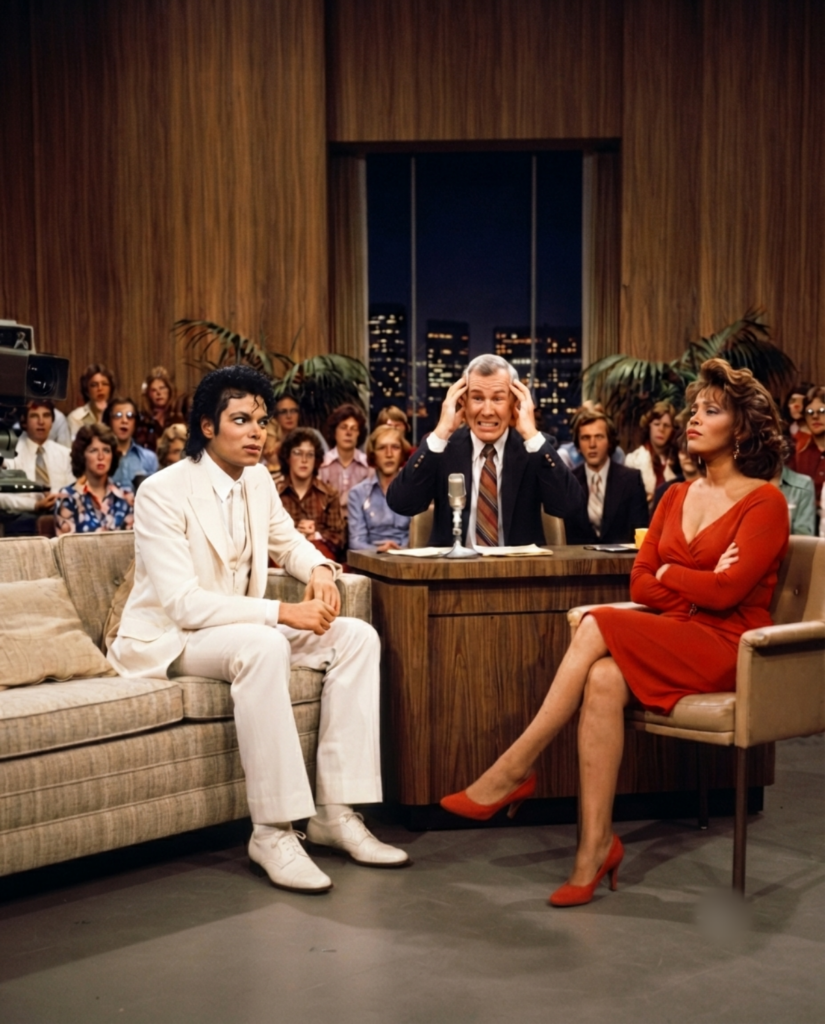
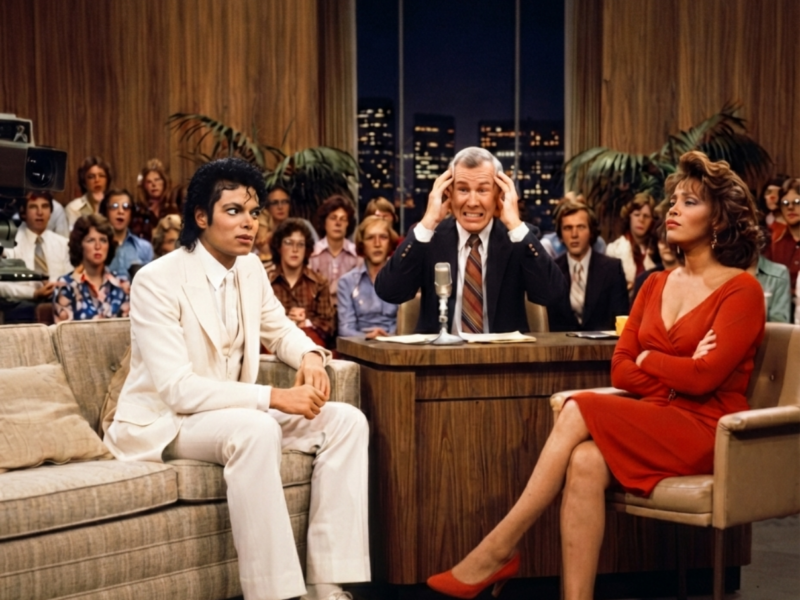
On a Thursday evening in March of 1986, the *Tonight Show* studio in Burbank was doing what it always did at a quarter to five—which was pretending nothing unusual was about to happen.
The band was running through a chart in the corner. A page was straightening the cards for the third time. Johnny Carson was in his office with the door half open, reading the guest notes with a pencil in his hand.
And the people who worked for him had learned over twenty-four years that this was the calmest the building would be all night.
Whitney Houston had arrived at four o’clock. She did not do a great deal of television, and when she did, she did it carefully.
She was twenty-two that year. Her debut record had gone to number one the previous summer. Three singles off it, climbing the charts one after another, with the kind of run that hadn’t happened for a female artist in a long time.
And the press had already started calling her the new voice of a generation—which was the sort of thing that sounded like a compliment and felt, most days, like a set of hands closing around your throat.
She had grown up around music the way some kids grow up around a family business. Her mother singing backup for everybody from Aretha to Elvis. Her cousin Dionne already a legend by the time Whitney was old enough to understand what a hit record was.
She had sung in church before she’d sung anywhere else. And there were nights, even now, driving home from a session, when she missed the sound of a congregation more than she missed anything else about being unknown.
If this story is already pulling you in, go ahead and hit that subscribe button right now.
By 1986, she had already won a Grammy. Already sold more records in a shorter stretch than almost anybody could point to. And she carried all of it the way she carried everything—with a straight back, a careful smile, and a watchfulness that people who did not know her mistook for coolness.
She was not cool. She was tired in a specific way that only comes from being handled.
Because that was the other thing that had started that year. Quiet at first, and then louder. A piece of criticism that had nothing to do with her voice and everything to do with what people thought her voice was supposed to be doing.
Black radio had been slow to embrace her the way pop radio had embraced her instantly. And there had been talk—ugly, and persistent—that she’d been packaged for white audiences. Sanded down. Made safe.
That the girl who’d learned to sing in a New York church had been dressed up and handed a sound built for a market that had never once asked her what she actually wanted to sing.
She had heard the word *crossover* so many times that spring it had stopped sounding like a compliment and started sounding like an accusation.
She had also quietly been fighting for something nobody in the press knew about yet. She wanted her next record to sound more like where she came from. More gospel in it. More of the church.
Her label had told her no—gently, but firmly. The way people tell you no when they’ve already decided and are just waiting for you to catch up.
“We don’t want to confuse the audience,” one executive had told her in a meeting that had left her staring at her own hands for a long time afterward.
“You’re not confused,” she’d said. “You’re just telling me what to be.”
Her publicist had gone over the shape of the evening with her that afternoon. Not the answers—she never rehearsed answers—but the terrain. The album. The tour. Maybe something light about being compared to her mother and her cousin.
Nothing about the label fight. Nothing about the word *crossover*.
“Keep it easy,” the publicist had said. “Johnny likes easy.”
Whitney had nodded and said nothing—which her publicist had learned over the past year was not the same thing as agreement.
What nobody had told her was that there would be a second guest.
So when she settled into the guest chair that night and Johnny asked about the record, she was warm, and she was funny, and she was entirely on guard.
“You’ve had what, three number ones off this album now?” Johnny said. “How does that feel at twenty-two years old?”
“It feels like I should probably sit down more,” Whitney said—and the audience laughed.
“I keep waiting for somebody to tell me it’s a mistake. Like there’s a phone call coming.”
“Has that call come yet?”
“Every Monday morning,” she said. “I just don’t answer it.”
The room warmed to her fast, the way rooms always did. She told a story about her mother sitting in the front row at a show, mouthing every harmony line along with her, unable to help herself even after decades in the business.
She talked about growing up in church, about the first time she’d sung a solo and forgotten every word until the piano found her again.
She was sharp and gracious and entirely composed. And if there was something underneath it—a readiness, a hand near the door—nobody in the audience would have seen it.
If you’re enjoying this story so far, hit that like button before we continue.
Johnny asked, near the end of the segment, what she wanted people to understand about her that they didn’t already.
“That I’ve got more in me than the singles,” Whitney said—before she’d fully decided to say it.
“More how?”
She smiled. The smile she used when she wasn’t going to say the rest.
“I’ll let you know when they let me record it, Johnny.”
The crew had seen something else ninety minutes earlier.
A second guest had come through the side entrance.
Michael Jackson was twenty-seven that spring. Three years past *Thriller*. Still the biggest name in music by a distance nobody had ever measured before. Working quietly on the follow-up while the whole industry waited to see if lightning would strike the same place twice.
He’d come in quiet, the way he always came in. A scarf half up over his face. Security a few steps behind him. And the producers who met him spoke in the low voices they used for surprise walk-ons.
He asked for tea and a chair, and was given both in a small room down the hall.
He did not ask who the other guest was.
He already knew.
Michael was doing something unusual that year, though nobody had quite put a name to it yet. He was reaching backward.
The album he was building in private was pulling harder on gospel than anything he’d put out since he was a boy. Choirs and old church changes running underneath songs that still had to sell to the whole world.
He hadn’t talked about it publicly. He simply kept working and let people notice or not.
Word traveled through the crew anyway, the way it always traveled.
Nobody knew what the two of them on one couch would look like. Nobody could have guessed.
At the top of the second segment, Johnny sat down his cards and gave the camera the small, private smile the crew had learned to recognize.
“Whitney, we’ve got a little surprise for you tonight. I think you’ll like it. I think this crowd will like it, too.”
Whitney’s eyebrows went up. “I don’t love surprises, Johnny.”
“Ladies and gentlemen—Michael Jackson.”
The room came up off its seats. It was the sound the studio made only for a handful of people. A roar with an edge of disbelief in it.
And Michael walked out into it the way he walked into everything. Careful. Half a step slower than the moment demanded. One hand raised in a small wave.
He shook Johnny’s hand. Said something that made Johnny smile. Then turned toward the couch where Whitney was sitting and moved to take the seat beside her.
Whitney stood up.
She did it smoothly, without drama—the way a woman might stand to greet someone. And for half a second, that was what it looked like.
Then she stepped past Michael, past the empty seat, and settled into the chair on the other side of Johnny’s desk—the one usually reserved for the third guest.
She crossed her legs, folded her hands, and looked at Johnny with a bright, expectant smile.
“You go ahead and sit there, Mr. Jackson,” she said. “I’m fine right here.”
This story is about to take a turn nobody expected.
The move took perhaps four seconds. Later, people who had been in that room would describe those four seconds as if they’d lasted much longer—the way people describe a car skidding.
The band leader said his hands actually lifted off the keys.
Michael stood beside the couch with one hand still resting on its back. He didn’t look surprised. He didn’t look anything.
After a moment, he sat down where she had been sitting—in the warm spot she’d left—and folded his hands in his lap.
In the fourth row, a columnist who’d come expecting to write four hundred words about a debut album put down her pen and picked it back up.
The audience made a sound. Not a laugh. Not quite. The uncertain rustle of several hundred people who’d just seen something and couldn’t decide what it was.
Johnny’s grin held, but people who knew him could see it lock in place for a beat before it loosened again.
“Well,” he said. “Musical chairs. I didn’t know we were doing that tonight.”
The room laughed gratefully.
Whitney laughed too. Michael smiled a little and said nothing.
In the control booth, the director had his hand on the switcher and did not move it. Later, he’d say he considered cutting to a wide shot—something to break the tension—and had decided against it, because whatever this was, it wasn’t finished, and he had no intention of being the man who cut away from it.
Johnny, who’d been reading rooms for a living since before either of his guests was born, did not pretend nothing had happened.
“Whitney, I’ve got to ask. Is there something about that side of the couch?”
“Oh no,” Whitney said. “The couch is lovely.”
“Something about the company, then?”
She smiled at him. And it was a real smile. And it did not give an inch.
“Johnny, I’ve spent this whole year being told I’m not quite what I’m supposed to be. Too polished for some folks. Not enough of something for others. Mr. Jackson here spent his whole career being the biggest thing music’s ever produced without anybody once asking him to sound less like himself. I just thought I’d give myself a little room to think about that.”
The laugh that followed was big and startled and had something uneasy under it.
Whitney let it wash over her. Michael let it wash over him, too. When it died down, he was still looking at her with an expression that wasn’t offended and wasn’t amused. Just attentive.
“That’s a fair shot,” Michael said evenly.
“It wasn’t a shot,” Whitney said. “It was an observation.”
“Observation.” He nodded. “Then let me ask you something, if that’s all right.”
Ask away.
“You said nobody’s ever asked me to sound less like myself. What makes you say that?”
She blinked. “What?”
“You grew up in church,” Michael said. “So did I. You said it a few minutes ago, sitting on that couch. Said you missed the sound of a congregation. I’ve been chasing that sound my whole career, too. So what makes you think nobody’s ever asked me to put it away?”
There was a pause. Short, but everyone in the room felt it.
Whitney was not a person who got caught, and she did not like the feeling.
“You’re the biggest star in the world,” she said. “Nobody tells you what to sound like.”
“Everybody tells me what to sound like,” Michael said—and his voice stayed exactly where it had been. Low. Even. “Every record, somebody in a room tells me what the single’s supposed to do. What the radio wants. What can’t be too much of one thing or the other. You think that started with you this year?”
Whitney’s chin came up. Anyone who’d ever been in a negotiation with her would have recognized the gesture.
“You’re telling me I’ve got you wrong.”
“I’m telling you I don’t know yet,” Michael said. “That’s why I asked.”
If you think you know where this is heading, trust me—you don’t.
Johnny tried to help. “In fairness, Michael’s next record, from what I understand, is going a whole lot deeper into gospel than the last one.”
“I haven’t heard it, Johnny.”
“Well, no, but nobody’s heard it—”
“That’s my whole point,” Whitney said. “He gets to go make that record quiet in private and let it come out finished, and everybody just says *genius* when it drops. I’ve been fighting this same fight in front of the whole industry. In interviews. In magazine pieces about whether I’m Black enough for Black radio. It’s not the same thing, Michael.”
The audience shifted, uncertain again.
Whitney sat back in the chair, and when she spoke again, there was something new in her voice—an edge that had been folded away under the jokes and had now come out.
“Let me tell you what I know,” she said. “I know that when I sing a ballad with strings on it, I’m *crossover*. I know that when somebody else sings a ballad with strings on it, they’re *expanding their sound*. I know I’ve been in this business since I was a teenager standing next to my mother, and I still have to prove every single week that I’m allowed to call myself what I am. And I know that when I walked into my own label with a song I wrote in a church basement and said I wanted it on the record, they looked at me like I was asking to drive somebody else’s car.”
Nobody laughed. It wasn’t that kind of moment anymore.
Several hundred people who’d come to see a pop star and a legend had just heard something that was neither.
Michael let it sit for a long beat. Then he nodded slowly.
“I think most of that’s true,” he said.
“Most?”
“The part about proving yourself every week. That’s true. I know that better than almost anybody alive. I’ve been proving myself since I was five years old, and I’m not sure it ever stops, no matter how big the records get.”
He paused.
“The part I’d push back on is the part where you decided what I was from one press cycle. Because that’s the same thing they’ve been doing to you.”
Whitney opened her mouth and then closed it again.
“They looked at you and saw a voice and decided that was the whole story. Decided your voice belonged to whoever could sell the most tickets with it. You looked at me and saw a career that never seemed to struggle and decided that was the whole story, too. I don’t think either one of us is the whole story. But I can’t prove that from over here if you’ve already made up your mind from over there.”
If this story is teaching you something already, don’t forget to hit that like button.
Johnny, sensing the room needed a moment, said quietly, “I don’t think anybody’s said anything like that on this couch in a while.”
“I don’t think anybody’s asked,” Michael said.
The silence that followed was a different quality than the one before it. Not tense. Thoughtful.
Whitney was looking at Michael the way she looked at a note she’d underestimated on the first hearing.
“That’s a good line,” she said finally.
“Wasn’t a line.”
“No,” she said. “I don’t think it was.”
She uncrossed her legs and leaned forward a little, her elbows on her knees—and the posture of the whole conversation changed with her.
“All right. Tell me what am I missing?”
“You’re asking me seriously?”
“I’m asking you seriously.”
Michael didn’t rush it.
“You know how many times I’ve had a producer tell me a song’s too gospel for the record. Too much church in it. I wrote a song a few years back that never made the album because everybody in the room agreed it sounded too much like where I actually came from instead of where they wanted me going. I fought for a year to get some of that sound back onto the record I’m making right now.”
“I haven’t heard about that.”
“Nobody has,” Michael said. “That’s not the kind of thing that makes the trades. What makes the trades is the number. The chart position. The record I broke. Nobody writes a story about the song I had to fight for that still didn’t make it.”
A small, surprised sound escaped her. Half laugh, half something else.
“I know,” Michael said. “I’ve read the pieces on you this year. Some of what they write might even be true. But I’d rather find out from you than from a magazine. Same as I’d rather you found out about me from the actual work than from whatever the trades decided I was.”
If this story is moving you, please subscribe before we continue.
Johnny, who’d been sitting very still through all of this with the fascination of a man watching a card game he hadn’t dealt, leaned in.
“Whitney, ten minutes ago you moved chairs. Do you still feel the same way about the chair?”
Whitney considered it. She wasn’t a woman who gave ground on television or anywhere without deciding to.
“I’ll tell you what I feel,” she said. “I feel like I walked in here tonight carrying a fight I’ve been having all year, and I picked the first man who walked through that curtain to have it with. And that’s not entirely fair to him. It’s not entirely unfair, either. But it’s not fair.”
“That’s an honest answer,” Johnny said.
“I try to give honest ones. That’s what gets me called difficult, too, come to think of it.”
The room laughed, and this time it was warm. Michael laughed with it—that soft, real laugh people rarely got to hear from him in public.
“You said something a minute ago,” Whitney went on, turning back to him. “About fighting for a song nobody wrote about. Did you mean that? Or is that a thing you say to a woman on a talk show to calm her down?”
“Meant it.”
“Then tell me another one.”
Michael thought about it seriously.
“I was five years old the first time somebody told me my voice was worth something to sell. Wasn’t asked. Wasn’t given a choice about whether I wanted the world to hear it yet. By the time I was old enough to understand what was happening to my own career, other people had already decided most of the shape of it. I’ve spent every year since trying to take a little more of that shape back for myself. Some years I win. Some years I don’t.”
Whitney was quiet for a moment.
“That’s more than most men would admit in a room this size.”
“It’s true in any size room,” Michael said. “Might as well say it in this one.”
If you’re finding this story genuinely moving, please subscribe before we continue.
“You know what the worst part is?” Whitney said, almost to herself. “I’ve spent this whole year being described. *Crossover*. *Pop princess*. *Not Black enough*. *Too Black for pop*. Pick whichever label fits the headline that week. And I’ve gotten so used to being described that I catch myself doing it to other people now. I walked in here tonight and had the whole thing about you figured out before I sat down.”
“And I was mostly wrong.”
“Mostly right,” Michael said. “Still wrong some of the time.”
“Yes,” she said. “Apparently.”
There was a shift in the studio then—the kind an audience feels before the people on stage do. Something brittle had softened. People who’d been sitting forward with their shoulders up were leaning back.
“Can I ask you something?” Whitney said.
“Go ahead.”
“When you were fighting to get the gospel back into this next record—were you scared?”
“Terrified.”
“Of what?”
“Of finding out they’d been right the whole time,” Michael said. “That the version of me they’d built was the only version anybody actually wanted.”
She looked at him for a long moment.
“That’s exactly what I’m afraid of,” she said. “Except in reverse. I’m afraid I’ll fight this whole battle and prove I’m exactly who I say I am, and it still won’t matter because the labels already decided what sells.”
“You’ll get the chance to find out.”
“You don’t know that.”
“No,” Michael said. “But I know what it looks like when somebody won’t quit. And you’ve got that look. They’ll say no until they get tired. Then they’ll say yes and act like it was their idea all along.”
Whitney laughed. A real one—the laugh the crew had heard in the hallway that afternoon and hadn’t heard since the curtain opened.
“That’s the most cynical encouragement I’ve ever received.”
“It’s not cynical,” Michael said. “It’s just how it goes.”
Johnny, sensing the shape of the moment, said gently, “Michael, do you think Whitney ought to put that song on her record? The gospel one, whatever it is.”
Michael didn’t hesitate.
“I think anybody who’s still fighting for something a year after they’ve already had every reason to give up ought to get to make it. That’s not about her being a woman, or being called crossover, or any of that. That’s about her being the only person in the room who actually wants it badly enough. And if the label says no, then the label’s wrong. And eventually the audience tells them so. They always do, sooner or later. Took the world a while to understand I wasn’t going to keep making the same record over and over. I’d bet on her patience before I’d bet on theirs.”
If this story is teaching you something real, hit that like button right now.
“Can I tell you what I was actually afraid of?” Whitney said. “When you walked out. Before I moved.”
“Go ahead.”
“I was afraid you’d be charming. That’s what they usually do. They’re charming, and the room loves them, and I’m the woman who wouldn’t play along. I moved before you could be charming.”
“I’m not that charming.”
“No,” she agreed. “You’re worse. You’re honest.”
The room laughed, and it was the warmest laugh of the night.
Then Whitney did the thing the whole room had been waiting for without knowing it.
She stood up.
The studio went still. For a moment, it looked as if she might be about to leave. And Johnny’s hand actually moved a fraction of an inch toward her—the way you reach for a glass you think is about to fall.
But she wasn’t leaving.
She walked around the end of the desk, past Johnny, and sat down on the couch in the seat beside Michael—the one she’d refused fifteen minutes earlier.
She smoothed her dress, folded her hands, and looked at him.
“There,” she said. “Now say something to me and let’s see if I get to finish a sentence.”
The room came apart. It wasn’t the applause of a joke. It was the sound an audience makes when it’s watched something real close a circle.
It went on long enough that Johnny had to wait for it. And while he waited, he looked into camera one and, for a moment, dropped the polish entirely.
“I have been doing this show a long time,” he said. “And I have never once seen anybody change seats twice.”
Michael turned to Whitney.
“You’ll get to finish your sentences,” he said. “I’m not much for interrupting.”
“I’ve noticed,” she said. “It’s unnerving.”
Michael, once the room had settled, looked at her sideways.
“For the record,” he said, “you’d have been fine on the other side of the desk. Johnny listens.”
“Johnny gets paid to listen.”
“So do I now,” Michael said. “Apparently.”
The segment went on for a while after that, and the whole temperature of it had changed. Whitney asked Michael—with real curiosity now—how he kept working through all the noise around him. All the comparisons. All the pressure to top what he’d already done.
“I don’t think about topping it,” Michael said. “I think about being honest with it. If it’s honest, people find their way to it eventually.”
“That’s easy to say when you’ve already had the biggest record ever made.”
“Wasn’t easy to make it,” Michael said.
And the room laughed, and she laughed with it, and pointed a finger at him without any heat in it at all.
If you’re loving this story so far, hit that subscribe button now.
“Do you ever wish you’d fought harder for something earlier?” she asked.
“Sometimes. Then I look back at the fights I did win, and I’m reminded some of them nearly cost me everything.”
“That’s not an answer.”
“It’s the one I’ve got,” Michael said.
And she shook her head, half exasperated, half delighted.
He asked her, in turn, how she knew when a take was right. Not technically perfect. Right.
“You stop hearing it as singing,” she said. “It just becomes true. Something you’d have said even if there wasn’t a microphone in the room.”
“That’s exactly what a good take is,” Michael said. “It stops being a performance and just becomes what actually happened.”
“So we’re doing the same thing. Different rooms.”
“Same thing,” Michael said.
As the segment wound toward its end, Johnny began the wrap, and Whitney put a hand on the arm of the couch and said, “Wait. Let me say one thing.”
“Go ahead.”
“I want to say it to him, actually.”
She turned to Michael.
“I walked in here tonight loaded. I’ve been loaded for a year, and I pointed it at you because you were standing there. You could have made me look ridiculous. You had the whole room. One joke, and I’d have been the difficult woman who moved chairs, and everybody would have gone home laughing at me.”
“Didn’t want the room,” Michael said. “Wanted to know why you moved.”
“That’s the thing,” Whitney said. “Nobody ever asks why. They just write it down.”
If this story left an impact on you, please hit that like button before we finish.
Johnny looked into the camera one last time before the band came in.
“I’ll say this. I’ve had a lot of people on that couch who didn’t agree with each other. I have never had two people disagree, switch chairs, disagree some more, and end up on the same side of the desk. I don’t have a name for what that was. I’m just glad we were rolling.”
Whitney reached over at the last moment and touched Michael’s sleeve. Briefly. The gesture of a person making sure something was real before the lights changed.
The show went to credits. The audience stayed seated longer than usual.
Backstage in the corridor behind the set, Whitney found Michael near the stage door before either of them had left. She still had the adrenaline of the hour in her.
“I meant what I said. You could have buried me.”
“Wasn’t interested.”
“Why not? Every other man in this business would have taken the shot.”
Michael thought about it.
“Because you weren’t wrong,” he said. “You were just aiming at the wrong fella. Didn’t seem worth winning an argument I’d already half won.”
She looked at him for a long moment.
“I owe you an apology. A real one. Not the one out there.”
“Don’t need one. You said something true in front of a lot of people. That’s rarer than an apology.”
“Still.”
“Still,” Michael agreed—and let her have it.
They stood in the hallway for a minute in the quiet.
“I’m going to put that song on the record,” Whitney said. “The church one. I don’t care what they say in the meeting next week.”
“I know.”
“When I do, I’m going to send you the tape. And if there’s anybody on it who sounds less like themselves than they should, you can call me and tell me.”
“I’ll hold you to that.”
If this story about honesty and genuine understanding is moving you, please subscribe before we continue.
Johnny came by the corridor on his way out, coat over his arm, and stopped when he saw them.
“I’m not going to ask what that was,” he said. “I’m just going to say thank you for doing it on my show and not somebody else’s.”
“You’re welcome, Johnny,” Whitney said.
“You know what the funny thing is?” he added, mostly to Michael. “I’ve had people move chairs before. Nobody ever moved back.”
The clip was in the columns by Monday. The first wave of coverage chased the surface the way it always does. *Houston snubs Jackson*. *Whitney’s musical chairs*. *Diva moves seats*.
The headlines wanted a feud, because a feud is a headline and a conversation is not. And most of the early reporting missed the fifteen minutes that had actually happened after the chair.
But the deeper story surfaced within a couple of weeks, because too many people had been in the room.
A columnist who’d been sitting in the fourth row wrote a long piece that didn’t use the word *snub* once. It was about what happens when two people who’d been described for their entire careers finally got to describe themselves.
One trade paper ran a short item quoting an unnamed label executive who said Houston had done herself no favors and that the chair business would follow her into every meeting from here on.
The executive was wrong, as it turned out. But it took a couple of years to prove it.
Her publicist, who’d watched the whole thing from the wings with a hand over his mouth, said afterward that he’d drafted three different statements in his head during the segment and thrown all three away by the time she sat back down.
“There was nothing to manage,” he said. “She’d managed it herself, better than I would have.”
Whitney, asked about it in a magazine interview that summer, did not soften any of it.
“I moved chairs. I did. I’d probably do it again, if I’m being honest, because I meant what I said about the pressure I’d been feeling all year. But he didn’t do what I expected. He didn’t get defensive, and he didn’t get charming. He asked me which songs of his I’d actually heard. The ones fighting to sound like where he came from. Nobody asks me that kind of question. They just decide what I am and print it. He wanted to know if I’d done my homework. And I hadn’t. And he made me admit it without ever once making me feel small. I don’t know a lot of people who can do that.”
The interviewer asked if she thought she’d been unfair.
“Unfair to him, a little. Unfair to the point, not at all. The point stands. This whole business still doesn’t know what to do with somebody like me. I just picked a bad night and a good man to say it to.”
Michael, asked about the same night in a rare interview for a music magazine, kept it short—the way he kept most things.
“She had a point,” he said. “This business does try to shape people into something easier to sell. She also hadn’t heard everything I’d already fought to keep. Both things were true. Seemed more useful to say both of them than to pick one and win.”
The columnist who’d been in the fourth row wrote, near the end of his piece, a line that got quoted for years afterward.
“She moved chairs to make a point about an industry that decides what people are supposed to sound like. He listened, and then he told her he understood the fight better than she’d given him credit for. That was the whole story. And it took fifteen minutes, and it was better television than anything either of them has ever been paid to do.”
In the years that followed, they stayed in touch. Not often. A note when a record came out. A phone call, once, that ran long.
When Whitney’s second album finally arrived, carrying the gospel-soaked track she’d fought for that whole year, a package arrived at her office before the release.
It contained no note. Only a single sheet of paper, on which someone had typed, in the plain font of a studio memo: “This one sounds like church. Well done.”
Years later, when a reporter asked to see it, she took it down off the wall of her office and held it for a moment before handing it over.
“People think this is about the record,” she said. “It’s not. It’s about somebody who remembered a thing I said on a talk show a couple of years earlier and thought it was worth a sheet of paper.”
She kept it in a frame.
If this story is inspiring you, please subscribe before we continue.
Michael never confirmed the typed sheet had come from him. Asked about it once, years later, he said only, “Sounds like something a fellow might do,” and changed the subject.
Whitney, for her part, never doubted it.
“Nobody else in this business would have bothered to count,” she said.
In 1993, looking back over her career in a long television interview, Whitney brought up that night on her own.
“People ask about the big nights. The awards. The number-one records. But that night with Michael Jackson on Johnny’s show sits in a different place for me. Because I walked in there ready to fight the whole industry. And I picked one man. And instead of fighting me back, he asked me a question I couldn’t answer. And I’ve thought about that for years. How often I decide what somebody is before I’ve actually looked. How often it’s been done to me. And how easily I did it right back to him.”
The interviewer asked whether she’d been embarrassed.
“Oh, terribly,” she said, laughing. “For about four minutes. Then I was grateful. Embarrassment’s cheap. Being told the truth kindly is expensive. He gave me the expensive thing.”
Michael, reflecting on the same evening years later during a retrospective conversation about his own career, offered his own version of why it had stayed with him.
“I’ve made a lot of records,” he said. “Some of them people loved. Some of them people didn’t understand right away. But I think about that night with Whitney more than I think about most of the big nights. Because she said something about the industry I’d been avoiding thinking about too closely. And she wasn’t wrong. I had to decide, in front of a few hundred people, whether I was going to get defensive or actually listen.”
“Why did you listen?”
“Because she was fighting a real fight. It just wasn’t with me. And I’ve never seen the point of standing in the way of somebody else’s real fight just to protect my own feelings.”
“Did it change anything for you?”
Michael took a while with that.
“I made a record a few years after that where I fought harder than I’d ever fought to keep the gospel sound in it. The church sound. All the way through, front to back, no matter what anybody in the room said about the singles. I’m not going to sit here and say that happened because of a talk show in 1986. But I’m also not going to say I never thought about a young woman who moved chairs on me and asked whether anybody was actually letting me sound like myself.”
If this story about respect, honesty, and genuine understanding moved you, please hit that like button right now.
Asked, in the same conversation, whether he’d ever heard the finished version of that gospel track Whitney had fought for, Michael nodded.
“She sent it to me before it came out. And I counted,” he said. “Every note of it sounded like her.”
The night became, over time, a quiet touchstone for people who studied the rare moments when live television produced something more valuable than entertainment.
A media historian, writing years later about the Carson era, gave it a full page.
“What made it matter was not the chair,” he wrote. “Talk shows manufacture friction constantly. What made it matter was that neither of them retreated into the version of themselves the audience had paid to see. She did not become the diva. He did not become the untouchable icon. They became two working artists, arguing honestly about an industry that had shaped them both more than either one wanted to admit. And by the end of it, the argument had turned into something closer to recognition.”
The clip found its way, eventually, into a handful of media and communications courses—shown not as an example of conflict, but as an example of what happens when someone refuses to accept the role the room has assigned them.
One instructor said she played it for every incoming class and then asked a single question: At what moment did the argument become a conversation?
The answers, she said, were always the same.
Which songs? Have you actually heard them?
Johnny Carson himself, asked about it in one of the last long interviews he gave, named it without hesitation.
“I’ve had guests disagree. I’ve had guests walk off. I have never had a guest walk off the couch, sit in the wrong chair, argue with a man for a quarter of an hour, and then walk back and sit down next to him on purpose. And I’ll tell you what made it work. He never once tried to win. She was ready for somebody who tried to win. She’d been fighting that fight her whole career already. He just asked her a question and waited. You can’t script that. You can only be lucky enough to be on the air when it happens.”
In 2005, a journalist assembling a retrospective on unscripted television moments asked both of them separately to say one last thing about it.
Whitney spoke with a warmth that surprised him.
“He asked me which songs,” she said. “That’s it. That’s the whole thing. All these years later, and I still think about it every time I’m about to decide what somebody is before I’ve actually looked. *Which songs, Whitney? Have you really listened?*”
Michael, interviewed for the same piece, said something that sounded, as it often did, like an answer to her.
“I try to remember it in the studio,” he said. “When somebody comes at me with something I don’t want to hear, I ask which songs. Find out if they’ve actually listened. And if they have—and they’re still right—then you’ve learned something. And that’s worth more than winning the argument.”









