
What Michael Jackson’s BAD REALLY Did to the Music Industry…
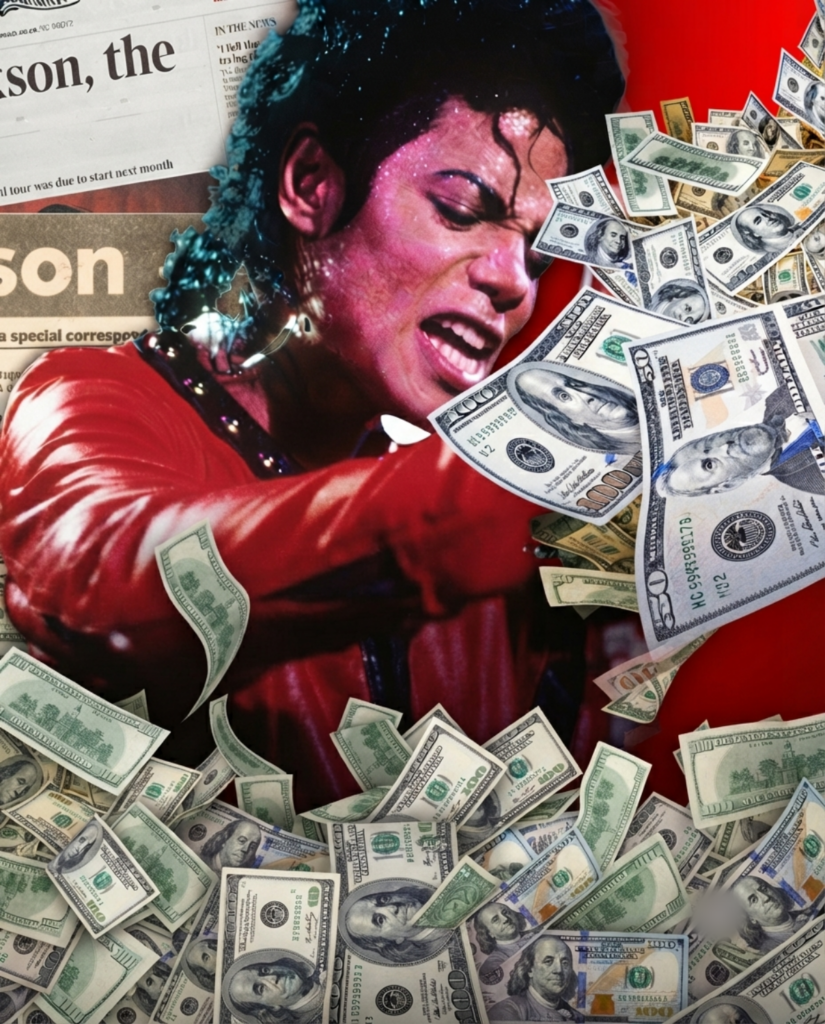
When you reach the very top of the world, the only enemy left to defeat is your own shadow.
That was the brutal reality Michael Jackson faced after the seismic success of Thriller.
Instead of quietly enjoying his triumph, he chose a far riskier path.
He abandoned every safe formula to create Bad, an era that was tougher, more dangerous, and at times dangerously close to disaster.
The move not only shattered a string of unprecedented records but also ignited a fierce behind-the-scenes rivalry with another music legend.
Ironically, one of the album’s most iconic hits was not even written by Michael himself.
Michael wanted to use Bad as a weapon to reclaim control.
But when a genius decides to declare war on his own masterpiece, what price does he ultimately have to pay?
The first price Michael Jackson paid was his own peace of mind.
In early 1986, when he walked into Westlake Studios in Los Angeles, he carried an enormous burden with him.
The 66 million copies sold by Thriller to the rest of the world.
It was an unprecedented achievement.
But to Michael, that number became a brutal standard against which everything he did next would be measured.
Critics and audiences assumed he would simply make another version of Thriller and continue turning success into profit.
Michael refused.
He had no intention of becoming a prisoner of his own past.
To escape the shadow of what he had already accomplished, he isolated himself and began a musical process so demanding that it pushed both his body and mind to the limit.
Production stretched across 18 exhausting months inside sealed recording rooms.
Michael often remained in the studio for as many as 12 hours a day.
Rather than simply accepting songs written for him, he created more than 60 different musical drafts.
Every melody and every lyric was tested and debated with legendary producer Quincy Jones.
After countless discussions and evaluations, Michael made a ruthless decision.
Nearly 50 songs were discarded.
That enormous collection was eventually reduced to just 11 core tracks.
He kept only the material he believed was sharpest, most innovative, and most completely removed from what he had done before.
Michael’s obsession with perfection went far beyond normal professional standards.
He wanted complete control over every layer of sound.
Studio engineers were pushed to meet demands they had rarely encountered before.
Michael would make them replay the same section dozens of times, simply to ensure that every breath, every whisper, and every rhythmic detail landed exactly where he wanted it.
If a cymbal lacked enough bite or a background texture did not carry the depth he imagined, the recording could be discarded and rebuilt from the beginning.
There was little room for compromise.
Even after flying all the way to New York to record an acoustic passage, Michael was prepared to abandon the entire result and return to Los Angeles because he felt the sound still lacked the raw edge he was looking for.
This extreme discipline came from Michael’s greatest ambition.
To reshape the DNA of mainstream pop music.
He made a deliberate break from the bright, dance-driven disco sound of the previous decade.
These were no longer songs designed simply to make people move.
The music Michael was creating was darker, heavier, and far more direct in its expression of his own identity.
Bad had to prove that he had reached a new level of artistic maturity.
But as the sound inside the studio became colder, sharper, and more dangerous, Michael realized something fundamental.
The gentle young man in a sparkling sequined jacket could no longer represent this music.
If the sound was going to change completely, the person presenting it would have to change with it.
That transformation began with Michael’s appearance.
He deliberately retired the image of the innocent, smiling young man associated with white socks and glittering sequined jackets.
When he emerged with Bad, he presented a completely different persona.
Sharper.
More dangerous.
And far less willing to compromise.
Audiences were immediately confronted with a tougher Michael Jackson dressed in black leather, metal studs, buckles, and chains.
But this transformation was not simply a fashion strategy.
Michael reportedly viewed the heavy black leather jacket covered in metal zippers almost like a suit of armor around this period.
The first visible signs of vitiligo had begun spreading across his body.
The harder exterior helped conceal some of his growing insecurity about his appearance while also creating a physical barrier between himself and the relentless scrutiny of the public.
To give this new image a genuine emotional foundation, Michael drew inspiration from a deeply tragic story.
It was the real-life case of Edmund Perry, a gifted Black student from Harlem who attended a prestigious private school but was shot and killed after returning to his old neighborhood.
His death came to symbolize a painful collision between personal success and alienation from the community that had shaped him.
That story resonated with Michael’s own sense of isolation at the height of fame.
Before filming the Bad short film, Michael reportedly shut himself away and repeatedly watched news footage about the young man’s death, forcing himself to absorb the anger and emotional conflict behind the story.
All of that tension was then released through film.
The Bad video rejected polished, glamorous stages and instead placed Michael inside a dark, grimy subway station.
There, audiences saw a side of him they had never witnessed before.
His choreography became tighter, faster, and far more aggressive.
He was no longer dancing simply to entertain.
His vocals were filled with growls, sharp commands, and clipped, forceful delivery.
Every movement, every look, and every beat carried the same message.
Michael Jackson was asserting his dominance.
But projecting power through image alone was not enough if he truly wanted to control this new era.
The next step was to seize authority at the very source of it all.
The creation of the music itself.
That absolute authority began behind the closed doors of the recording studio.
With Bad, Michael Jackson moved beyond the role of collaborator and placed himself at the center of the production process.
He became deeply involved in nearly every stage, writing lyrics, adjusting individual layers of sound, and reshaping the structure of songs.
Inevitably, that determination created friction.
At Westlake Studios, there were moments of intense disagreement between Michael and Quincy Jones, the legendary producer who had helped create Thriller.
Michael was becoming increasingly willing to reject advice, remove ideas he did not believe in, and protect his own creative vision with far greater force than before.
To bring that vision to life, he also needed new tools inside the studio.
Advanced digital systems, such as the Fairlight CMI, became part of the process.
Michael reportedly saw these emerging technologies as weapons that could help him push beyond the predictable pop music of the period.
By combining synthesizers, Synclavier technology, Linn drum machines, and live instrumentation, the sessions helped shape a sound sometimes described as machine funk, where the mechanical precision of electronics could still move with the energy of a human performer.
Traditional genre boundaries began to disappear.
Michael blended gospel harmonies, the ripping hard rock guitar of Dirty Diana, and the urgent street-driven rhythm of Smooth Criminal into a single musical identity.
One of the most distinctive breakthroughs came from the way he used his own voice.
Through staccato phrasing, breath accents, rhythmic vocal attacks, and layered harmonies, Michael turned his voice into a percussion instrument.
Gasps, sharp vocal sounds, tongue clicks, and even the rhythm of his hands striking his body became part of the music rather than imperfections to be removed.
These rough, physical sounds allowed the listener to feel the tension inside the performance itself.
And when that harder, more powerful musical identity was finally released, it immediately created a shockwave that pushed the industry into unfamiliar territory.
The shockwave called Bad officially hit the world in August 1987.
Despite early skepticism from some critics, the album quickly reshaped the order of the charts.
It achieved a remarkable milestone by producing five number one singles on the Billboard Hot 100.
Each new single became another demonstration of Michael’s ability to influence the direction of mainstream popular music.
The album remained at number one in the United States for six consecutive weeks.
Sales continued climbing until Bad surpassed 35 million copies worldwide, placing it among the most commercially successful albums of its era.
Those enormous numbers destroyed the idea that Michael Jackson had simply been a once-in-a-lifetime phenomenon during Thriller.
Instead, he proved that he still possessed an extraordinary ability to command a global audience.
And his reach extended far beyond record sales.
The Bad World Tour transformed Michael from a recording artist into something closer to a traveling cultural empire.
With approximately 4.4 million tickets sold across 15 countries, it became one of the defining concert tours of the 1980s.
Wherever Michael appeared, traffic came to a standstill, ticket records were broken, and crowds reached levels of excitement rarely seen around a single performer.
At this point, his influence appeared almost untouchable.
Few contemporary artists could rival the scale of his global reach.
Yet, even at the height of that dominance, another story was unfolding behind the scenes.
Michael still wanted a direct confrontation with another giant of the decade, and that ambition would lead to the collapse of what could have been one of the most historic collaborations in pop music.
That potentially historic project centered on the title track, Bad.
Michael’s original idea was to turn the song into an explosive duet between the two biggest musical icons of the 1980s.
Himself and Prince.
But the meeting of those two powerful personalities ended before a single note was recorded.
The breaking point reportedly came from one lyric.
After reading the words, Prince objected to the line, “Your butt is mine.”
His pride would not allow him to sing that line directly to Michael, and he was equally uncomfortable with the idea of Michael singing it directly at him.
The failed collaboration became part of a larger rivalry between the two men.
They were not only competing in sales but also in image, creative control, performance, and the desire to remain culturally dominant.
Over time, stories about their personal competition took on an almost mythological quality.
One of the strangest stories involved a mysterious birdcage allegedly sent to Michael’s studio.
According to accounts surrounding the rivalry, the cage contained objects associated with voodoo, creating the impression of a deliberately unsettling psychological message.
Another famous story centered on a supposedly casual game of table tennis between Michael and Prince.
What began as friendly competition reportedly became much more tense, according to the story.
Prince eventually struck the ball with enough force that it hit Michael in a particularly sensitive area, turning the game into another symbol of their strange and highly competitive relationship.
The rivalry never produced a clear winner.
But the failed duet left Michael to continue Bad alone.
And after so much tension surrounding dominance, image, and competition, the album needed something completely different to restore a sense of emotional balance.
That moment came through one of the simplest and most sincere songs on the record.
In an album filled with cutting-edge production and bold declarations of power, Man in the Mirror feels almost like a moment of stillness.
Its most important distinction is that Michael Jackson did not write the song himself.
Instead of cold electronic textures or technical showmanship, the track creates space for something much more direct.
Emotion.
Its musical structure unfolds almost cinematically.
It begins with a simple, isolated keyboard line, then gradually expands through each verse before reaching a powerful climax with a gospel choir.
Lyrically, the song confronts some of the most painful social issues of the period, including poverty, inequality, and people society had chosen to ignore.
But its central message turns inward.
If you want to change the world, the song argues, you first have to change yourself.
During the recording, Michael reportedly created an atmosphere completely different from the rest of the sessions.
The studio lights were turned off.
Standing in darkness with his eyes closed, Michael stripped away the harder image he had built around himself and focused entirely on the vocal performance.
As the gospel choir rose behind him, those in the room reportedly saw Michael become overwhelmed with emotion.
That sense of vulnerability became part of what made the recording so powerful.
The effect of Man in the Mirror was immediate.
It humanized Michael Jackson for a few minutes.
The unreachable global superstar became someone wrestling with questions that ordinary people could understand.
The song created an emotional connection that fame and spectacle alone never could.
But music could not protect Michael from another machine that was beginning to close in around him.
One that would prove far more ruthless than anything he encountered inside a recording studio.
That machine was the tabloid press.
At the same time the Bad era was reaching its artistic peak, Michael Jackson’s private life was becoming an increasingly aggressive public spectacle.
His changing appearance became a constant target.
Newspapers repeatedly published sensational speculation about cosmetic surgery, while the reality of his vitiligo was often ignored, questioned, or distorted.
The pressure gradually pushed Michael toward an increasingly anxious state of mind.
Sleepless nights became part of a larger psychological burden, according to accounts from people close to him.
There were moments when his fear of the industry became overwhelming.
He reportedly worried that powerful figures around the music business were trying to take control of the enormous music publishing catalog he had acquired.
Fame and fear were becoming inseparable.
But Michael refused to remain a passive victim.
In one image often associated with this period, he sits alone looking at a tabloid headline featuring the insulting nickname Wacko Jacko.
Instead of simply collapsing under the ridicule, Michael began thinking about how to fight back through his work.
The result was Leave Me Alone.
Using surreal and exaggerated imagery, the video transformed the absurd rumors surrounding Michael into satire.
Rather than issue a conventional public statement, he turned the accusations themselves into material and made the media machine part of the joke.
By using art as a weapon, Michael showed how willing he was to challenge cultural boundaries.
His music videos pushed the limits of the format, confronted stereotypes, and repeatedly crossed barriers involving race, image, and social expectation.
That determination to defend his identity would eventually become part of a legacy far larger than any chart position.
Beyond its sales records, the deeper legacy of Bad lies in the way it redefined the power of the modern artist.
Michael Jackson moved beyond the role of singer and became a complete global brand.
From music videos and marketing strategies to clothing, choreography, and visual identity.
He helped establish standards that the entertainment industry would spend decades trying to match.
One of the era’s most important contributions was the evolution of the modern arena spectacle.
The Bad World Tour moved far beyond the format of a traditional concert by combining stadium-scale touring, elaborate stage technology, carefully constructed visual sequences, and highly controlled artistic direction.
It became part of the blueprint that later generations of global superstars would continue to build upon.
Musically, the range of Bad also pointed toward the future by breaking down boundaries between pop, rock, R&B, gospel, funk, and electronic production.
Michael helped popularize a far more fluid approach to mainstream music.
That influence can still be heard in generations of performers who followed, from Beyoncé and The Weeknd to BTS.
The Bad era was more than an exceptionally successful commercial project.
It was a statement about artistic courage.
Michael Jackson had already discovered one of the most successful formulas in music history with Thriller.
He could have repeated it.
Instead, he chose to abandon safety, accept the possibility of failure, and move into something harder, darker, and more personal.
In doing so, he changed the rules of pop music once again.
And perhaps that is the real lesson of Bad.
Maintaining legendary status does not come from endlessly protecting the success of the past.
Sometimes, it requires destroying the formula that made you successful in the first place and building an entirely new one.









