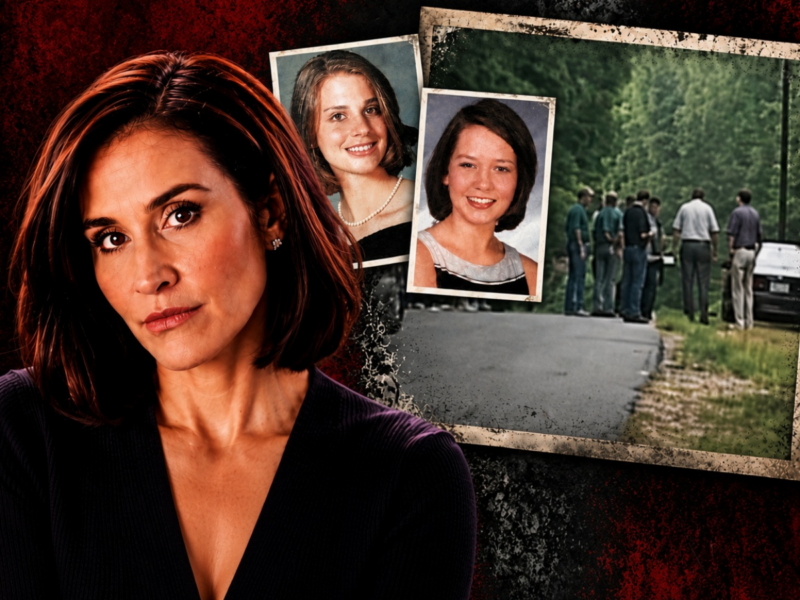
Two Teen Girls Vanished in Alabama. Police Found Their Car but Missed Something Horrifying.
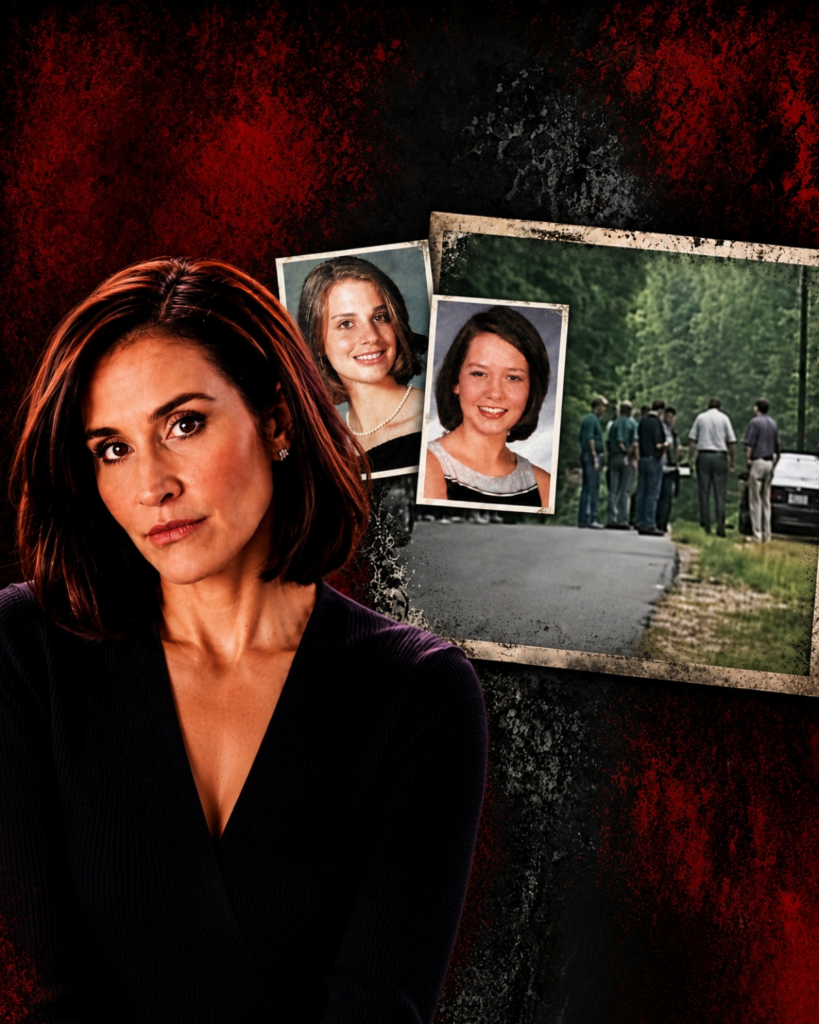
This is the story of two 17-year-old best friends who get lost on their way to a party.
A few hours later, their car is found less than a mile from the place where they stopped to ask for directions, but the girls are gone.
And for almost 20 years, nobody can explain what happened after they left that gas station until one piece of evidence finally gives police a name.
Now, if you’re new here, this is True Crime Recaps where we cover all the crime in half the time.
I’m Amy.
Let’s recap.
It’s Saturday night, July 31st, 1999 in Dothan, Alabama, and it’s JB Beasley’s 17th birthday.
JB and her best friend, Tracy Hallett, are about to start their senior year, and tonight they’re heading to a field party to celebrate her birthday.
And if you’ve never been to a field party, picture this.
Somebody finds an empty field outside of town.
A bunch of teenagers show up.
Usually, there’s a lot of pickup trucks.
You park in a big circle, turn on the headlights, somebody brings a keg, somebody else has music blasting.
That’s basically the party.
There’s no venue, there’s no reservations.
Probably, ideally, there’s not a single adult anywhere nearby.
The girls leave Dothan in JB’s black Mazda, and somewhere along the way they get lost.
Now, remember, this is 1999.
There’s no phone sitting in the cup holder giving you turn-by-turn directions.
If you don’t know where you’re going, you’re basically looking for a gas station, a payphone, or another human being who hopefully does.
And JB and Tracy end up going very much in the wrong direction.
And instead of finding the party, they eventually wind up in Ozark, more than 20 miles away.
At around 11:30 that night, they stop at a convenience store called The Big Little Store, and they ask someone for directions back to Dothan.
And Tracy gets on a payphone and she calls her mom.
She tells her they were lost, but everything’s fine.
They’ve gotten directions now.
They’re going to forget the party.
They’re coming home.
It’s a totally normal phone call.
There’s no panic.
Nobody’s chasing them.
As far as Tracy’s mom knows, her daughter just took a series of wrong turns, figured it out, and they should be back soon.
Except they never come home.
Early the next morning, police in Ozark spot JB’s car sitting on the shoulder of a quiet country road next to a wooded area.
It’s less than a mile from the Big Little Store.
The car is unlocked and the driver’s side window is rolled down.
Oddly enough, the girls’ stuff is still inside.
Their purses are there with cash untouched.
The only thing that seems to be missing are the car keys, and JB and Tracy are nowhere around.
But here’s something I didn’t realize about this case.
Police don’t immediately open the trunk.
And this is one of those details that’s kind of hard to believe in hindsight.
Later that morning, officers from Dothan arrive to help.
And when they start looking at JB’s car, they notice some things that don’t feel right.
The rearview mirror is broken off.
It’s on the floorboard.
There’s mud inside the front of the car.
The outside is dusty and dirty.
There’s what looks like a smudge of a hand on the back driver’s side door.
And there’s some kind of dark substance on the rear bumper.
So, one of the Dothan officers asks a pretty obvious question.
“Have you checked the trunk?”
No.
The Ozark officers don’t have the keys, so they haven’t been able to open it.
Except the Dothan officer realizes you don’t need the keys.
There’s a trunk release lever inside the car.
So, he pulls it.
The trunk pops open, and JB and Tracy are inside.
Both girls have been shot in the head.
They’re still fully clothed, but just looking at their clothes, you can tell they’d been somewhere else before they ended up in that trunk.
Tracy has wild briars stuck to her pants.
Her new shoes are absolutely caked in mud.
JB’s jeans are filthy around the bottoms, too.
There’s dirt staining both the inside and outside of the lower legs.
So, now investigators are looking at this and thinking, “Where have these girls been?”
Because this doesn’t look like they simply got in the car and were attacked there.
Their clothing suggests they’d been out somewhere muddy and overgrown before their bodies were put in the trunk.
Investigators recover bullets and shell casings, and testing later shows both girls were shot with the same gun.
But the most important evidence comes from JB.
Semen is found inside her body and on her bra and underwear.
And as awful as that discovery is, from an investigative standpoint, this could be the thing that solves the case.
Because now they have DNA.
They can build a profile of the man who was with JB.
There’s just one problem.
They don’t have a name to go with it.
They run the DNA, no match.
They compare it to men they’re looking at, no match.
Years go by.
Police talk to hundreds of people.
Tips come in.
Men are questioned.
There are even people who claim they know what happened that night.
And whenever investigators can get DNA to compare, nope, not our guy.
And just imagine how frustrating that has to be, because the answer is sitting right there.
Literally, somewhere in an evidence file is the genetic fingerprint of a man who was with JB around the time she was murdered.
And the years start piling up.
Five years, 10, 15.
So, by 2018, the case has been unsolved for almost two decades.
And then something happens all the way across the country.
Police catch the Golden State Killer.
And the way they found him changes cold case investigations almost overnight.
They used genetic genealogy to find him.
So basically, instead of asking, “Whose DNA is this?” you ask, “Who is this person related to?”
So the Ozark police chief sees what happened in California, and he realizes, “Well, hold on. We have DNA. Why can’t we try this?”
So they send the evidence to Parabon NanoLabs.
A genetic profile is developed and uploaded to GEDmatch.
So now you’re looking for relatives, and then you start working backward.
Which family lines connect?
And slowly you start shrinking this enormous pool of people until you’ve got your guy.
And in this case, the genealogy points investigators toward a family.
And then the police chief sees one of the surnames, McCraney.
And that name immediately means something to him because he knows a McCraney, Coley McCraney.
Now these aren’t two strangers who happen to live in the same town.
Now both this chief and Coley grew up in the area.
They’ve known each other for years.
They’re friendly.
And Coley is about the last person you’d expect to suddenly pop up in the middle of a double murder investigation.
He has no prior criminal record.
He’s 45 years old.
He works as a truck driver, and he’s a respected preacher and bishop in town.
This is not a guy police had quietly suspected all along.
His name wasn’t buried somewhere in an old case file.
He wasn’t questioned back in 1999.
He wasn’t even on their radar at all.
So the chief does something that must have felt incredibly strange.
He calls Coley himself.
Basically, he’s like, “Hey, we’re working on this old case. Would you be willing to come down and give us a DNA sample?”
And Coley says yes.
So they bring him in.
They swab the inside of his cheek, and that sample gets sent off to be compared to the DNA that’s been sitting in evidence since 1999.
And it’s a match.
Coley McCraney, the man nobody had been looking at, was apparently the man they’d been looking for all along.
And now investigators go back and look at who Coley McCraney was in 1999.
At the time, he was a young military veteran.
He’d recently finished serving in the US Navy, and he returned home to Ozark, where he was working as a truck driver.
But then they look at where he was living.
And this is where things start getting really interesting.
Now, remember the Big Little Store?
That’s where JB and Tracy stopped after getting lost, where they asked for directions, where Tracy called her mom.
The last place we know for sure both girls were alive.
Well, Coley lived about half a mile away.
And then there’s Herring Avenue, where both girls were found inside that trunk.
That was less than a mile from Coley’s house, too.
So, this isn’t some guy who happened to live somewhere around Ozark.
He lived right there.
And now police have his DNA on JB.
So, in March 2019, almost 20 years later, he’s arrested.
But this story still isn’t over, because now Coley has to explain something.
Why is his DNA on JB?
And at first he tells police he doesn’t know her or Tracy.
Okay, but then the case goes to trial in 2023.
And Coley gets on the witness stand in his own defense, and suddenly he does know the girls, or at least he knows JB.
In fact, now he has a whole story about her.
He says he first met her a few weeks to a month before the murders at the mall in Dothan.
He says he was walking out of RadioShack when the two of them got to talking.
And not just a quick “Hey, how are you? My name is.”
According to Coley, they stood there talking for about 15 minutes.
He says he didn’t have a home phone at the time, and he also had a girlfriend.
So, rather than give JB a number where his girlfriend might answer, he says he gave her his mother’s landline number so they could quietly arrange to meet again.
And Coley says that’s exactly what happened.
According to him, he and JB loosely planned to meet at the Big Little Store at 10:00 on the night of July 31st.
But 10:00 comes and JB doesn’t.
So, Coley says he leaves.
And then later that night, he’s having car trouble, and he ends up pulling back into the Big Little Store.
And who just happens to be there?
JB, with Tracy.
The two girls who got lost trying to find that field party, and somehow ended up at the exact convenience store where Coley says he had already planned to meet her earlier that night.
According to Coley, he offers to show them a shortcut back to the highway.
And at some point, they stop where his semi is parked.
Tracy stays behind while Coley and JB climb into the sleeper section of his truck.
And Coley says that’s where they have consensual sex.
Afterward, he says the girls drive him back to Ozark and drop him off at around 12:30 in the morning, and then they drive away, alive.
And according to Coley, that’s the last time he ever sees either one of them.
So, that’s his explanation for the DNA.
But obviously, there’s a pretty big problem with this story.
More than one.
Because when police first questioned Coley, this is not what he told them.
So, when his own defense attorney asked him on the stand, basically, “Why didn’t you tell police any of this four years ago?” Coley says he was terrified.
He’d just been arrested.
He panicked, so he lied.
But then Coley’s own wife takes the stand, and this is the same woman he was dating in 1999.
And she remembers something from that night.
She says she got home around 8:00, and Coley came home sometime after that.
And then around 10:00, he left again.
And he didn’t come back until around 12:45 in the morning.
So, when he finally came home, he told her his car had broken down.
And where did he say it was?
The Big Little Store.
She says she went back there with him so he could pick it up.
So, regardless of which version of everything else you believe, Coley’s own account and his wife’s testimony put his car at the exact convenience store where JB and Tracy were last seen.
And think about the timing here, because Tracy made that call to her mom right around 11:30, and they drove away.
Witnesses saw them leave.
And then Coley comes home at 12:45, and their car is found less than a mile from that convenience store.
So, sometime right after they pulled away is when they were attacked.
But the defense still has points to make.
Police never recovered the murder weapon, and there is no eyewitness that says, “I saw Coley McCraney shoot these girls.”
And the DNA doesn’t come with a stamp explaining exactly how that semen got there.
So, after almost 24 years, this whole case eventually comes down to 12 people sitting in a jury box.
Do they believe Coley’s explanation, or do they believe the DNA, the timeline, and the fact that his story changed?
In April 2023, they give their answer: guilty on all four counts of capital murder.
And he’s sentenced to life without parole.









