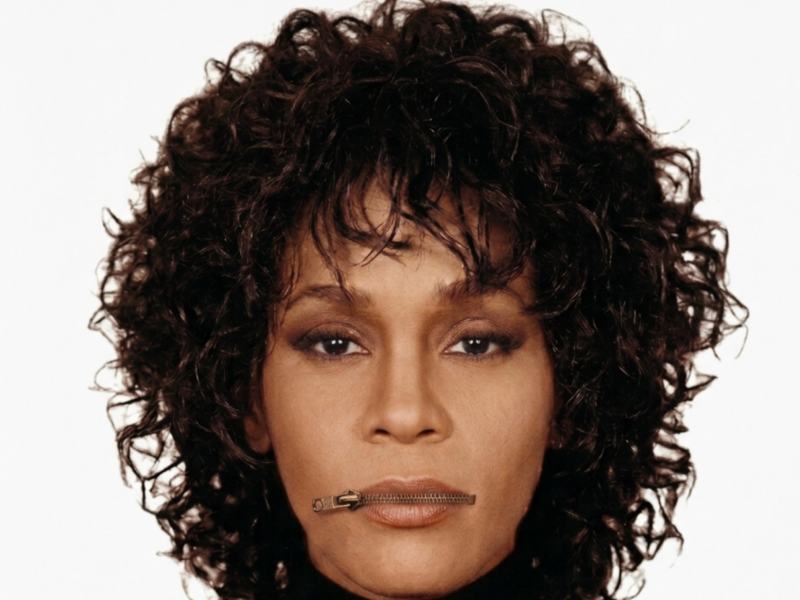
The Secrets of Whitney Houston You Never Knew.
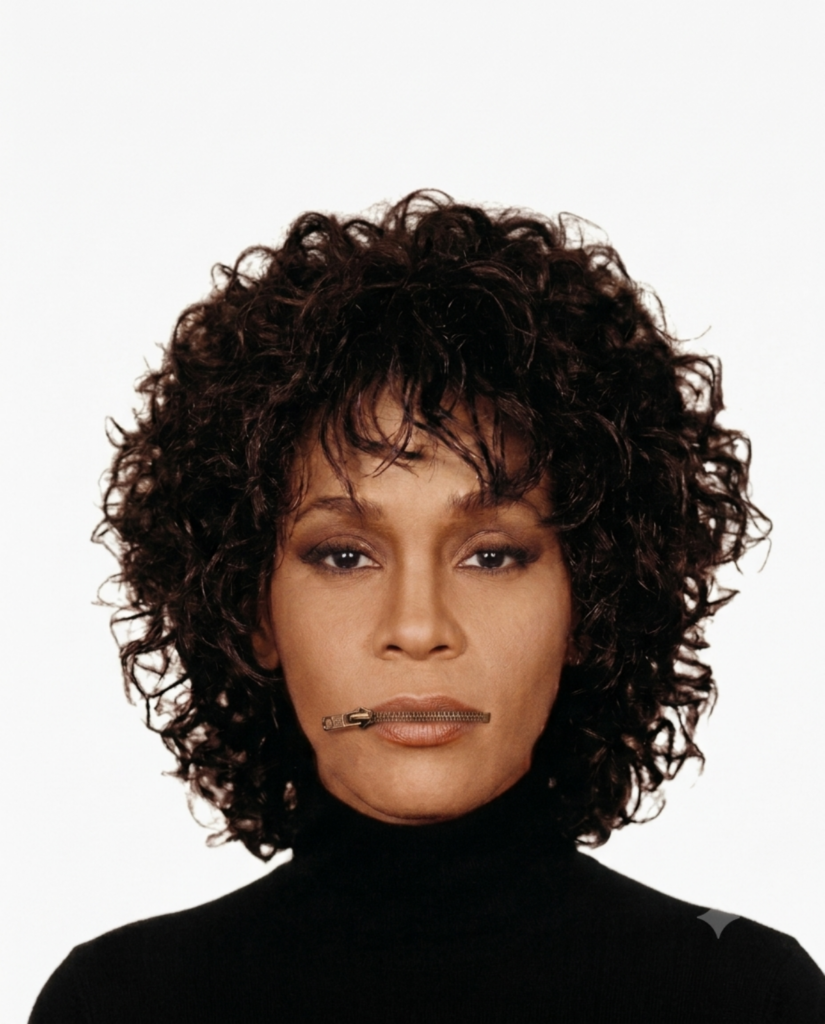
Three days before she died, Whitney Houston found her own daughter unconscious in a bathtub and pulled her out and saved her life, and almost nobody remembers that part of the story.
The world remembers the ending, the Beverly Hilton Hotel on February 11, 2012, the bathtub, the coroner’s report, the headlines that flashed across every screen in America, but it does not remember that Whitney Houston spent the last week of her life as the one doing the saving, not the one who needed saving.
That single fact rewrites almost everything you think you know about how her story ends, and it is only the beginning of what this story is going to show you.
There is a version of Whitney Houston that the whole world thinks it knows, a girl with a voice that could shatter a room into silence, the woman who sang the most powerful ballad of the twentieth century, the icon whose face sold more records than almost any female artist in history.
But behind the sequin gowns and the six-octave range was a woman living a double life that almost nobody around her fully understood, and there were rooms she was never allowed to enter, people she was forced to give up, and choices that were made for her long before she ever picked up a microphone.
By the time you finish this story, you will understand why the woman millions of people thought they knew was, in many ways, a stranger even to the people closest to her, and to understand any of what happened to her later, you have to start with the one secret she carried longer than any other.
In the early 1980s, before fame had touched her, a teenage Whitney Houston became inseparable from another young woman named Robyn Crawford, and they met at a summer job, two teenagers from New Jersey with nothing yet to their names, and within weeks they were spending almost every day together.
Robyn would go on to work alongside Whitney for over two decades, eventually becoming her personal assistant, her creative director, and a co-manager of Whitney’s own company, Nippy Incorporated, and on paper, that sounds like a business relationship.
It was not.
For years, tabloids speculated that the two women shared something deeper than friendship, and for years, both women flatly declined to confirm it, and it was not until 2019, seven years after Whitney’s death, that Robyn Crawford finally told the truth in a memoir called A Song for You.
She confirmed what fans had whispered about for three decades, that their relationship had, at certain points in their youth, been romantic, and Crawford described it as one of the deepest connections of her life, a bond that began the very first summer they met and felt, in her words, deep and unplanned rather than deliberate.
Here is the part almost nobody talks about.
According to Crawford, Whitney’s mother, Cissy, made it unmistakably clear that she would not accept her daughter being in a relationship with another woman, and Whitney had been raised inside a strict Baptist gospel-rooted household, the same household that had already begun shaping her into a crossover pop icon the entire country could embrace without controversy.
A relationship with a woman did not fit that image, and everyone around Whitney understood that, including Whitney herself, so a decision was made quietly, without ever spoken about publicly, that this part of her life would be folded away and never allowed to surface.
Robyn was standing right there as the maid of honor at Whitney’s wedding to Bobby Brown in 1992, a wedding we’re going to come back to later because it was far stranger than the public ever realized, and according to Crawford’s own later account, she watched that entire day unfold with a heavy heart, smiling in every photograph while carrying something the guests in that room had no idea was breaking inside her.
Crawford has said that as Whitney’s fame grew and the pressure around her image intensified, it was Whitney who made the decision to end the physical part of their relationship, and Whitney reportedly told Robyn that if anyone ever found out, it could be used against both of them.
And then on the day that conversation happened, Whitney gave Robyn a small blue Bible as a gift, and Crawford would carry that Bible and the memory of that conversation for the rest of her life.
The two women stayed friends and kept working together for years after that, but the closeness they had known as teenagers was never quite restored, and around the year 2000, Crawford made the difficult decision to step away entirely, unable to keep supporting a friend whose choices she felt she could no longer influence.
She has said that Whitney would still call her from time to time in the years that followed, and she has also said in interviews given after the memoir came out that she believes if she had remained a constant presence in Whitney’s life, things might have ended differently.
Bobby Brown, of all people, the man the public spent decades blaming for Whitney’s decline, later echoed almost the exact same sentiment publicly, saying he believed that if Robyn had remained accepted in Whitney’s world, Whitney might still be alive today.
Think about that for a second, because the ex-husband and the secret love of her life arrived independently at the same conclusion about what could have saved her, and that is the first secret, and it is not a scandal.
It is a quiet tragedy about a woman who was never given permission to be fully herself, even by the people who loved her the most, and to understand why that pressure existed at all, and why her family reacted the way it did, you have to go back further to the household that raised her in the first place.
Whitney Elizabeth Houston was born on August 9, 1963, in Newark, New Jersey, into a family where music was not a hobby, it was survival, ministry, and inheritance all at once.
Her mother, Cissy Houston, born Emily Drinkard, had been singing publicly since she was five years old, standing on a stool in front of church congregations so the crowd could see her over the pews, and Cissy performed with her siblings in a gospel group called The Drinkard Singers, one of the first gospel acts ever signed to a major label.
By the time Whitney was born, Cissy had already reinvented herself again as part of a group called The Sweet Inspirations, who spent the 1960s singing backup for some of the biggest names in American music, including Elvis Presley and Aretha Franklin, and while Cissy was pregnant with Whitney, she was on the road singing behind Aretha Franklin, the woman who would go on to become Whitney’s godmother.
Whitney’s father, John Russell Houston Jr., was a former Army serviceman who later became an entertainment executive and would eventually manage Whitney’s own production company, and through her mother’s side, Whitney was a first cousin to Dionne Warwick and Dee Dee Warwick, two of the most successful singers of their generation.
She was not simply around music growing up, she was raised inside the actual bloodline of American soul and gospel, sitting in recording studios as a small child watching some of the greatest voices in history rehearse a few feet away from her, and the family lived through the 1967 Newark riots before relocating to a middle-class neighborhood in East Orange.
Whitney was raised in a strict, deeply religious household singing in the choir at New Hope Baptist Church from the time she could barely see over a hymnal, and at eleven years old, she gave her first solo performance in front of the congregation singing “Guide Me, O Thou Great Jehovah” with the junior choir.
Nobody in that room that day could have imagined that within a decade that same girl would be one of the most famous singers on the planet, and by her mid-teens she was no longer just singing in church.
At fifteen she was already providing professional backing vocals alongside her mother on Chaka Khan’s 1978 hit “I’m Every Woman,” a song she would later cover herself as a grown woman with her own name in lights, and she sang backup for Lou Rawls and Jermaine Jackson while still a teenager juggling high school homework.
During this same stretch she briefly modeled, appearing on the cover of Seventeen magazine in 1981 as one of the first black women ever featured on that cover, and long before the world knew her as a singer, industry insiders in New York already knew her as the striking, disciplined teenager who could sing circles around adults twice her age.
She was the youngest of three children, and her older brother Michael pursued his own singing career while her older half-brother Gary Garland played professional basketball before later working inside his sister’s inner circle.
And there was Aretha Franklin, godmother in more than name only, someone Whitney would later recall meeting for the first time as an eight- or nine-year-old girl when Cissy brought her along to a recording session, and growing up with a living legend treating her like family gave young Whitney an understanding of the music industry that most talented children never absorb before they are even teenagers.
What almost nobody discusses is how deliberately controlled Whitney’s public image was from the very start, largely at her mother’s insistence, because Cissy had lived through decades in an industry that chewed up young black women and discarded them, and she was determined her daughter would not become another cautionary tale.
That protection shaped Whitney into a disciplined performer with pristine manners and an image the entire country could embrace, and it also meant that certain parts of her personal life had to stay locked away long before she ever became famous.
By 1983, that same discipline was about to walk straight into the office of the most powerful man in the music industry, and in 1983, a music executive named Clive Davis walked into a small New York club called Sweetwaters because an A&R man on his staff, Jerry Griffith, had insisted he needed to see a teenage singer performing backup vocals for her own mother that night.
Cissy Houston was the headline act, but partway through the set a nineteen-year-old Whitney stepped forward and sang two songs on her own, including a cover of George Benson’s “The Greatest Love of All,” and Clive Davis would later describe that performance as one of the most stunning things he had ever witnessed in his career.
He signed her to Arista Records almost immediately, on the spot, without hesitation, and what most people don’t realize is how unusual that was, because Davis had discovered and shaped the careers of some of the biggest names in music history, from Bruce Springsteen to Aretha Franklin, and he rarely made snap decisions.
With Whitney, there was no debate, and he would later say he believed she would become for a new generation what the legendary Lena Horne had been for hers, and Whitney signed her deal in April of 1983.
Then something happened that almost never happens in the music business, because instead of rushing her into the studio to capitalize on the moment, Davis and Whitney spent nearly two full years carefully building her debut album, hand-selecting songs and producers so the world’s first impression of her would be unforgettable.
That patience paid off, and when her self-titled debut dropped in 1985, it became the best-selling debut album by a solo artist in history at the time, and it remains the best-selling R&B studio album ever released by a woman.
Here is the secret pressure that almost never makes it into the highlight reels, because Whitney became one of the first black female artists to receive consistent heavy rotation on MTV, a channel that had largely ignored black artists in its early years.
Her presence there helped open doors for a generation of black musicians who came after her, but it also drew criticism from parts of the black community who felt her sound and image had been deliberately smoothed out to appeal to white audiences, and Whitney almost never addressed this publicly, but people close to her have said it weighed on her far more than her calm public demeanor ever let on.
She had grown up singing in a Baptist church choir with gospel running through her entire bloodline, and being told she wasn’t representing her own community authentically cut deep, even while the rest of the world was celebrating her as one of the greatest voices alive.
That tension between an audience that adored her and one that questioned her shaped far more of her career than most fans ever realized, and it followed her into the rest of the decade right alongside a very different kind of pressure she was placing on herself.
By the back half of the 1980s, Whitney was one of the most famous women on the planet, and this is where two lesser-known stories sit right next to each other, four years apart, that together say more about who she actually was than almost anything else in this story.
In 1989, at just twenty-six years old, Whitney quietly founded the Whitney Houston Foundation for Children, a charity dedicated to helping homeless and sick children, funding college scholarships, building parks and playgrounds in underserved neighborhoods, and supporting the prevention of child abuse.
She personally funded a medical examination room at a child advocacy center so investigators could handle abuse cases with proper forensic equipment, and every year for a decade, she personally hosted a Christmas party for underprivileged children from her hometown of Newark, often joined by her mother and her brother Gary.
In 1997, in recognition of this work, her own childhood elementary school in East Orange was renamed the Whitney E. Houston Academy for Performing and Creative Arts, and almost none of this ever made the tabloids because Whitney did most of it quietly, visiting hospitals and writing personal notes rather than issuing press releases about herself.
Two years after founding that foundation, on January 27, 1991, in the middle of the Persian Gulf War, Whitney stood in front of the entire country and did the opposite of quiet, singing the national anthem before Super Bowl XXV in Tampa and delivering what many consider the definitive rendition of “The Star-Spangled Banner” in American history.
In 1992, Whitney made her film acting debut in The Bodyguard, starring alongside Kevin Costner, and the film became a massive worldwide box office success, but it was the soundtrack that truly changed everything.
The lead single, a cover of Dolly Parton’s “I Will Always Love You,” became the best-selling single by a female artist in music history, spending fourteen consecutive weeks at number one on the Billboard Hot 100, a record that stood for decades, and the soundtrack itself became the best-selling soundtrack album of all time and remains the best-selling album by a woman ever released.
It won the Grammy for Album of the Year, while the single won Record of the Year and Best Female Pop Vocal Performance, and for one blinding moment, Whitney Houston was arguably the single biggest musical artist on the planet.
That same year, in July of 1992, in the middle of the biggest professional moment of her life, Whitney also got married, and we’ll get to that marriage in detail in a moment because what happened inside it tells a very different story than what The Bodyguard was telling the world.
But first, it’s worth understanding exactly what kind of voice the world had just fallen in love with, because almost nobody explains this part correctly, and what actually made that voice so singular wasn’t just range, although her range was extraordinary, spanning roughly three octaves with a belt that could sit comfortably in a register most singers treat as a ceiling.
Vocal coaches who have studied her recordings point to something more specific, a technique called the melisma run, where a single syllable is stretched across a rapid cascade of different notes, and Whitney did not invent the melisma.
Gospel singers, including the very church choir she grew up in, had used it for generations, and what Whitney did was bring that raw gospel technique into mainstream pop music with a level of control that it had never been heard on Top 40 radio before, and in doing so, she reshaped what an entire generation of singers believed was possible with their own voices.
That influence is not an exaggeration, because vocal coaches and music historians widely credit Whitney’s runs on songs like “I Will Always Love You” and “How Will I Know” with directly inspiring the melisma-heavy style that would come to define artists like Mariah Carey, Christina Aguilera, and an entire wave of American Idol contestants a decade later.
It became such a dominant sound in pop and R&B vocals throughout the 1990s and 2000s that music critics eventually gave it a semi-mocking nickname, riffing on the sheer number of notes packed into a single syllable, and Whitney rarely spoke about her technique in technical terms during interviews.
She had grown up singing gospel by feel, not by formal theory, and by most accounts, she never fully realized just how many singers were studying her phrasing note for note, trying to reverse engineer something that for her had simply come naturally since she was a small girl standing in a New Jersey church choir.
That was the voice the entire world could hear, and what almost nobody could hear in 1992 or for years afterward was what was actually happening inside her marriage to R&B singer Bobby Brown, a former member of the group New Edition who had built his own successful solo career.
They had been dating for a few years before the wedding, and their relationship quickly became one of the most scrutinized in entertainment, but what most people don’t know is that Whitney had actually been more interested in another famous man during this period, comedian Eddie Murphy, but that pursuit never developed into anything serious.
For years, the public narrative was simple, that Bobby Brown introduced the previously wholesome Whitney Houston to drugs and a troubled lifestyle, but the people closest to Whitney, including Crawford, later said this narrative was backward.
Crawford stated plainly that Whitney had already been using drugs recreationally before she ever met Bobby Brown, though it was not yet a daily habit, and Bobby Brown himself has said in interviews that he was actually surprised on his own wedding day because Whitney was the one who introduced cocaine into the situation, not him.
Whatever the true starting point was, what’s clear is that once the two of them were together, their substance use escalated together, feeding off each other in a cycle both of them later admitted they struggled for years to break, and it happened even in their own home at times while their young daughter was present.
In 1993, the couple welcomed their only child, a daughter named Bobbi Kristina, and for a while, the family appeared to have it all, the fame, the fortune, and a beautiful daughter who would grow up singing alongside her famous mother at public events.
Behind the scenes though, the marriage was becoming increasingly volatile, marked by public allegations of drug use and arguments that would make headlines for years, and one of the most talked-about moments of this entire era came in December of 2002, when Whitney sat down with journalist Diane Sawyer after appearing visibly thin and unwell at a televised tribute to Michael Jackson.
Asked directly whether she had been using crack cocaine, Whitney’s response, delivered with a mix of defiance and humor, became one of the most quoted and parodied moments in celebrity interview history.
“First of all, let’s get one thing straight,” she said, “crack is whack,” and she insisted she made far too much money to ever use a drug that cheap.
That interview marked the first time Whitney had ever publicly acknowledged drug use of any kind, even as she downplayed the severity of it, and around the year 2000, Crawford stepped away, unable to keep supporting a friend whose choices she felt she could no longer influence.
The two women drifted apart, though Crawford has said Whitney would still call from time to time, even though the closeness they had once shared as young women was never fully restored, and it is hard not to notice that the same years the marriage was collapsing were the exact years the one person Whitney had trusted longest was no longer in the room.
In 2005, the couple opened their lives to the public in a reality television series called Being Bobby Brown, which gave audiences an unfiltered look into their chaotic day-to-day relationship, and while the show generated attention, it also confirmed for many fans the extent to which the fairytale version of Whitney’s marriage no longer matched reality.
Whitney filed for divorce in 2006, and the marriage was officially dissolved in 2007, ending a fourteen-year relationship that had brought her both a daughter she adored and years of documented turmoil, and Bobby Brown has since spoken candidly about the depth of his own addiction during those years, admitting in interviews that he struggled with crack, heroin, cocaine, and alcohol throughout much of his adult life, including during the marriage.
He has said the biggest misconception the public held was believing he dragged Whitney down, when by his own account she was actually the more experienced user of the two when they first got together, and he described the last few years of the marriage as a brutal cycle, where whenever one of them attempted to get sober, the other one wasn’t ready to follow, creating a tension neither of them could resolve.
That imbalance, more than any single event, is what Brown has said ultimately led to the divorce, and it left Whitney at forty-three years old single, soberish, and trying to figure out whether she had anything left to give the industry that had once fallen so completely in love with her voice.
Despite everything happening behind the scenes, Whitney never stopped trying to reclaim her voice, both literally and professionally, and in the years following her divorce, she worked to get sober and attempted to rebuild her career, eventually releasing the album I Look to You in 2009, her first new studio album in seven years.
It debuted at number one on the Billboard 200, proving that even after everything the public had watched her go through, audiences still believed in her talent and wanted to see her succeed, and Whitney followed the release with a world tour, but reports from fans and critics who attended those shows described a voice that had visibly changed, strained, and inconsistent in a way that shocked people who remembered the effortless power of her younger years.
Some shows were canceled altogether, and clips of rough performances circulated widely online, feeding a public narrative that years of substance use and heavy touring had permanently damaged the instrument that had once been considered one of the greatest voices in music history.
For a woman whose entire identity had been built around vocal perfection, watching her own voice become a subject of public mockery was, by many accounts from people close to her, one of the most painful parts of her final years.
By February of 2012, Whitney was in Los Angeles preparing to attend Clive Davis’s annual pre-Grammy party, an event she had attended for decades, and the Grammy Awards ceremony itself the following night, and she was staying at the Beverly Hilton Hotel with her daughter, Bobbi Kristina, who was then eighteen years old.
The day before the pre-Grammy party, something happened that would only become public knowledge later, and it’s the detail this entire story opened with, because Whitney reportedly had a strong, unexplainable feeling that she needed to check on her daughter and found Bobbi Kristina unconscious in a bathtub in their hotel suite.
She was able to save her daughter’s life in that moment, and the very next day, on February 11, 2012, Whitney Houston was found dead in a bathtub in that same hotel just hours before she was scheduled to attend the party she had planned to go to.
The Los Angeles County Coroner ruled her death an accidental drowning with heart disease and cocaine use listed as contributing factors, and investigators found no signs of foul play, and in the hotel room, authorities found prescription medication bottles from multiple doctors along with drug paraphernalia.
She was forty-eight years old.
The days that followed revealed just how deeply Whitney had touched the people around her, and Clive Davis made the difficult decision to move forward with his annual pre-Grammy party that same night, transforming it into a tribute to the woman he had discovered nearly three decades earlier as a teenager singing backup for her mother, Aretha Franklin.
Whitney’s own godmother publicly mourned her goddaughter’s passing, and tributes poured in from performers across every genre of music, and at the following night’s Grammy Awards, the ceremony opened with a moment of silence and multiple tributes to a woman many considered the greatest vocalist of her generation.
In one of the most painful twists connected to this story, Whitney’s daughter, Bobbi Kristina, was found unconscious in a bathtub in her own home almost exactly three years later in January of 2015 in circumstances eerily similar to her mother’s death, and she was placed in a medically induced coma and passed away six months later in July of 2015 at the age of twenty-two.
Mother and daughter, who had once been inseparable on stage and in headlines, were laid to rest beside one another, and Bobbi Kristina had grown up almost entirely inside the spotlight her mother occupied, appearing alongside Whitney and Bobby Brown on their reality show as a young teenager, and she often accompanied her mother to award shows and public events, with the two frequently photographed together looking more like sisters than mother and daughter.
Friends of the family have said that after Whitney’s death, Bobbi Kristina struggled enormously with grief, and her own relationship with substances became a growing concern for those closest to her in the years that followed, and when she was found unresponsive in her Atlanta-area home in January of 2015, it was her boyfriend at the time who discovered her, eerily paralleling the way Whitney herself had once found an unresponsive Bobbi Kristina in a bathtub just three years earlier and managed to save her life.
This time, there was no second miracle, and the Fulton County Medical Examiner later found that alcohol, marijuana, and morphine had all played a role in her death, closing one of the most devastating chapters in the entire Houston family story.
Whitney’s death did not end the story, and in some ways, it opened up an entirely new chapter of speculation, blame, and controversy that continued for years afterward, because even though the Los Angeles County Coroner ruled her death an accidental drowning with no signs of foul play, that official conclusion did almost nothing to quiet the rumors swirling around her passing.
One of the loudest voices pushing back against the official story was a private investigator named Paul Huebl, who claimed to have uncovered evidence, including hotel surveillance footage, suggesting Whitney had been murdered by men sent to collect on a massive drug debt she supposedly owed, reportedly upward of $1.5 million.
Huebl alleged that photos of her body showed defensive wounds inconsistent with a simple drowning, and he claimed to have handed his findings over to federal investigators in hopes of reopening the case, but Beverly Hills police never acted on these claims, and no evidence of foul play was ever substantiated, though the theory spread widely across tabloids at the time and still circulates in true crime corners of the internet today.
Whitney’s own personal assistant, Mary Jones, added fuel to the speculation years later when she said publicly that she believed someone else had been in the hotel room before Whitney’s body was discovered, pointing to water she said had been found covering the bathroom floor in a way that did not match a routine bath.
Even Bobby Brown himself has spoken publicly about believing there was more to the story than the official report suggested, adding his own voice to a chorus of people close to Whitney who were never fully at peace with the accidental drowning conclusion.
There was also a deeply troubling controversy involving the Beverly Hills Police Department itself, because years after her death, a senior police sergeant came forward alleging that a detective at the scene had made a crude, disrespectful comment while looking at Whitney’s uncovered body, treating one of the most tragic moments in modern music history as an opportunity for a lewd remark.
The allegation became part of a labor dispute filing and reignited public anger over how Whitney had been treated, even in death, by the very people meant to investigate what happened to her, and then there was the public’s ongoing need to assign blame, most of it aimed squarely at Bobby Brown.
For years after Whitney’s passing, large parts of the public held onto the belief that Bobby Brown had effectively destroyed Whitney, pointing to their marriage as the beginning of her decline and treating him as the villain of her entire story, and sometimes with a bluntness bordering on cruelty during interviews and public appearances, Brown has spent years pushing back against this narrative, insisting in multiple interviews that Whitney’s struggles began before he ever entered her life and that the public version of events painting him as the sole architect of her downfall was a far simpler story than the truth ever was.
Whether people believed him or not, the controversy never fully died down, and even today any mention of Bobby Brown’s name online tends to reignite the same argument about how much responsibility he truly bears for what happened to the woman once known as the greatest voice of her generation.
More than a decade after her passing, Whitney Houston’s legacy remains almost impossible to overstate, and she sold more than 200 million records, singles, and videos combined over the course of her career, and she was inducted into the Rock and Roll Hall of Fame, an honor Clive Davis himself said was long overdue for the woman he called one of the greatest voices of all time alongside names like Aretha Franklin.
And the documentaries like Whitney and Can I Be Me, and a feature film biopic, Whitney Houston: I Wanna Dance with Somebody, released in 2022, which Clive Davis himself helped produce in an effort to give audiences a fuller picture of both her musical genius and the private struggles that shaped her.
Her estate has continued to generate enormous revenue even decades after her death, a testament to just how enduring her recordings remain, and hologram tours featuring a digitally recreated version of Whitney performing on stage have toured internationally, allowing new generations of fans who never saw her perform live to experience something resembling her stage presence, a strange and fitting tribute to a voice that record labels, fans, and now technology itself have refused to let fade away.
But beyond the statistics and the awards, what Whitney’s story reveals is something far more human than the polished image the world was given in the 1980s and 1990s, because she was a woman shaped by a strict, deeply musical, deeply religious upbringing.
She loved a friend she was never fully allowed to be open about, and she married a man under complicated circumstances and built a family that brought her real joy alongside real pain, and she battled addiction for the majority of her adult life while simultaneously producing some of the most iconic vocal performances in the history of recorded music.
And in the end, both she and the daughter she loved more than anything were taken far too soon in tragedies that echoed each other in a way that still unsettles people who follow her story today.
The world knew Whitney Houston as the voice, but the woman behind that voice carried private battles, private loves, and private grief that very few people around her ever fully understood while she was alive, and that, in the end, is the real secret of Whitney Houston.
Not one single hidden fact, but an entire private life running underneath the surface of the most public career imaginable, and when you actually lay her life out from beginning to end, the pattern becomes hard to ignore.
A gifted child raised inside a legendary musical bloodline, a love she had to hide from the very family that raised her, a marriage that the public was told was the villain of her story when the truth was far messier and far sadder than a single bad husband.
All of those truths at the same time, rather than flattening her story into either a saint or a scandal, and the small blue Bible that Robyn Crawford carried for the rest of her life, the one Whitney gave her on the day they agreed to fold that part of themselves away, remains the quietest artifact of all, a book of scripture holding a secret that the world spent three decades trying to guess and never once got right.
Three days before she died, Whitney Houston found her own daughter unconscious in a bathtub and pulled her out and saved her life, and that is the detail the world forgot, because the world remembers the ending and not the woman who spent the last week of her life doing the saving.









