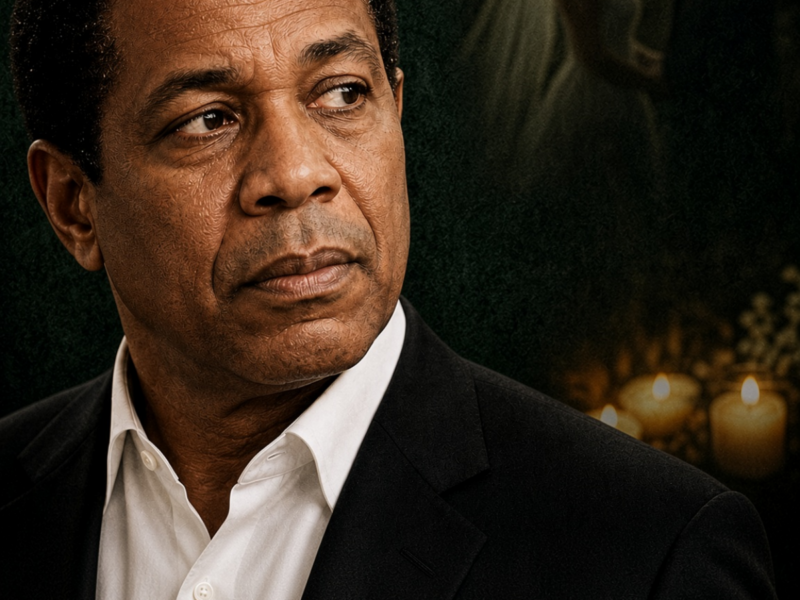
The Secret Life Of Trina Braxton’s Husband Von Scales Was Much Nastier Than You Thought.
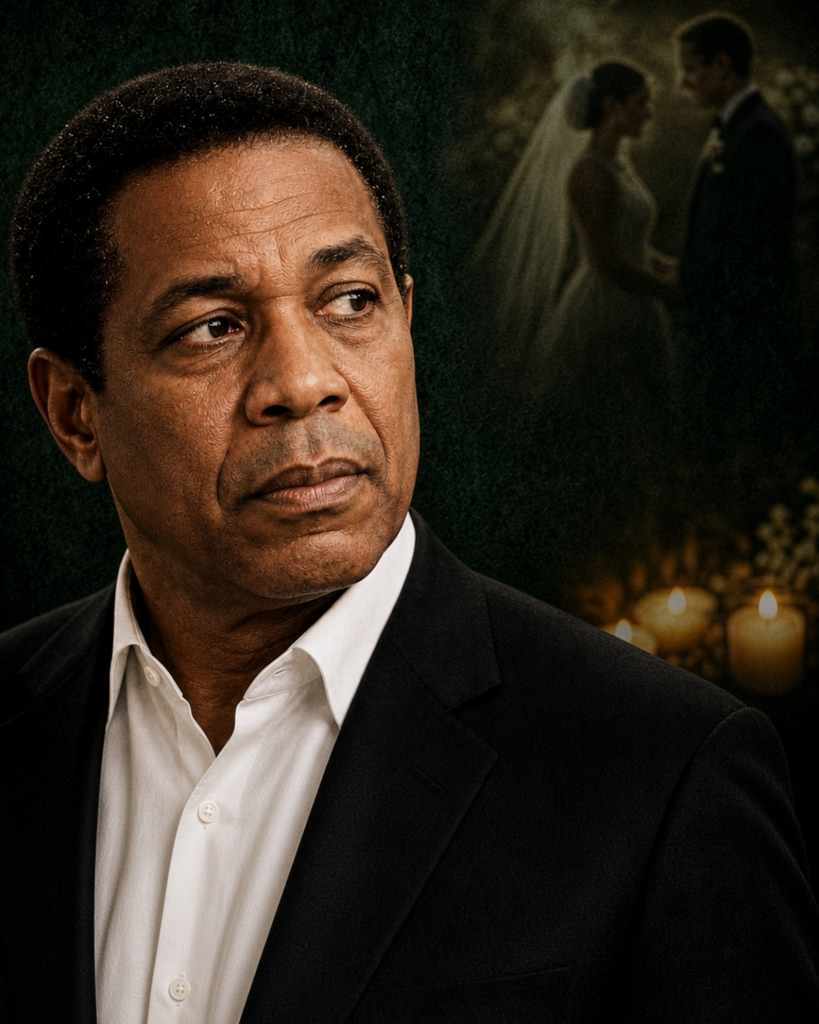
The wedding was beautiful. That part is not in dispute.
Trina Braxton in white, Von Scales smiling beside her, her sisters crying in the pews, her mother beaming.
A family that had spent years broadcasting its fractures, finally getting a happy ending on camera.
Then the cameras left, and within roughly three years, there was a divorce filing.
And then there was a funeral.
Von Scales was dead at fifty-eight.
Everyone remembers the wedding. Almost nobody remembers what happened between the vows and the filing.
And that gap is where the real story lives.
The first thing you need to understand about Von Scales is that he was never supposed to be the story.
He was supposed to be the correction.
Trina Braxton had already survived one very public marriage to Gabe Solis—a relationship that played out across seasons of Braxton Family Values in a way that was sometimes tender and often chaotic.
When that marriage ended in 2013, the audience had watched it happen in real time, edits and all.
So when Von arrived—soft-spoken, older, steady, with a job and a calm voice—he read on screen as the man who finally made sense.
The family seemed to like him. Trina seemed at peace.
The show got a redemption arc for free, and it sold it hard.
That is the setup. The payoff is messier.
Von Scales married Trina Braxton in a ceremony that the family treated as a genuine milestone, not just a season finale.
It was the kind of wedding reality television loves, because the stakes feel real: a woman in her forties, divorced, mother of two, getting a second shot at partnership after a very public failure.
The editing was generous. The music swelled. The confessionals were warm.
If you only watched the broadcast, you walked away believing Trina had landed somewhere safe.
Then the marriage started to show its seams.
And here is where the show becomes a strange kind of witness—because Braxton Family Values does not just document a life. It compresses it into episodes that need beginnings, middles, and fights.
What viewers saw was friction. Distance. A couple who seemed to be living in different registers.
What the edit could not fully explain was why.
The answer, as far as the public record goes, is layered.
Von Scales was not a television person. He came into a family that was.
Every private disagreement became footage. Every awkward silence could become a scene.
For a man who valued a quieter life, marrying into the Braxtons meant marrying into surveillance—and the show had been running long enough that nobody in that family underestimated what the cameras could do.
Trina, for her part, was managing two identities at once.
She was a daughter, a sister, a mother, and a cast member—all of which demanded versions of her.
She was also, by every account, trying to make a marriage work in front of an audience that had already decided what her romantic life should look like.
That is a hard room to be honest in.
The family’s skepticism is worth noting.
On the show, some of the Braxton women did not hide their doubts. They questioned the match. Questioned the timing. Questioned whether Trina was seeing what they were seeing.
Reality television always amplifies family opinion, but it rarely invents it.
If the sisters were skeptical on camera, something real had been happening off camera.
Then came the divorce filing.
It arrived quietly by reality television standards—which is to say it did not get a dramatic mid-season cliffhanger. It just showed up.
A legal document announcing that the marriage was over, and the show had to catch up.
Three years. That is how long the whole thing lasted.
A wedding that felt like a new chapter ended faster than most people’s phone contracts.
But here is the part that makes Von Scales more interesting than the show ever let on.
He was not simply a bland, patient husband who got divorced.
He had a life before Trina—and pieces of that life were not smooth.
Financial history. Past relationships. A whole private resume that never made it into the broadcast.
The title of this story calls him nastier than you thought.
And that word is doing specific work.
It does not mean he was a villain. It means the soft-focus groom edit was incomplete.
And the incomplete parts are the ones that matter.
The public image was a calm man. The documented reality included strain, uncertainty, and a marriage that both people seemed to be navigating without a script.
What the show gave us was a couple in a difficult stretch.
What the record suggests is two adults who may have wanted different things—and were trying to make it work under conditions that were never built for privacy.
And then in October of 2026, Von Scales died at fifty-eight.
Three years after the wedding. Roughly a year after the divorce filing.
That timeline is almost absurd in its compression.
Married. Separated. Buried. All inside the length of a typical car lease.
The death reframed everything.
Suddenly the divorce was not the ending. It was a chapter in something shorter and stranger than anyone planned.
Trina, who had already lost Gabe Solis to cancer in 2023 at just forty-three years old, was now mourning a second husband.
Two marriages. Two deaths. Three years apart.
If you want to understand why this story hits harder than a standard reality television recap, that is the reason.
But the death is not the whole story either. It is the door.
Behind it is the thing the title promised: the secret life, the nastier parts, the stuff that never made the edit.
And that is where we are headed.
Because the version of Von Scales that America saw on television was a construction—and the version that actually existed was a man with a history the cameras never bothered to explain.
What did the family know that viewers did not?
What did Trina discover after the vows that she could not say on air?
Why did a marriage that looked like a rescue mission collapse so quickly?
And why did Von Scales stay so quiet about it afterward?
Those are the questions worth sitting with.
And the answers are stranger than the wedding ever suggested.
He was born in St. Louis. That is where the wedding happened too—at a venue called Windows on Washington, on the 15th of December, 2019, with Toni and Tamar and Traci and Towanda in the room, and the whole thing filmed for the show.
So Von Scales married Trina Braxton in his hometown, in front of her famous family, on camera.
That is a lot of pressure for one afternoon—and it tells you something about the man the edit never bothered to explain.
Before the wedding, there was the grief.
This is the part that matters, because it is the piece of the timeline the tabloid version of this story usually skips.
Gabe Solis—Trina’s ex-husband and the father of her sons—died in December of 2018 at forty-three years old.
And Von Scales was in the picture during that.
According to what Trina has said publicly, he stood beside her while she grieved a man she had already divorced.
A strange and specific kind of emotional labor that most new partners never have to perform.
Think about the position he was in.
He was dating a woman whose former husband was dying, and then dead, and whose children had just lost their father.
He was not the first love. He was not even the second. He was the man who arrived during the wreckage.
That reframes him.
It is easy to write Von Scales off as a quiet guy who showed up, married a reality star, and faded into the background.
But he walked into a situation that would have sent plenty of men running.
A grieving partner. Two boys who had just lost their dad. A family that had been on television for nearly a decade and did not know how to have a private feeling.
And he stayed.
He got engaged in Napa Valley, of all places, just days before a season premiere—which is either romantic or strategically absurd, depending on how you look at it.
The family’s reaction on screen is worth revisiting now, because the divorce changes how you read it.
Some of the sisters were warm. Some were not. And the ones who were not have never fully explained why.
That is the nastier thread the title is pointing at.
Not some hidden crime, but the gap between the version of the marriage that aired and the version that actually ran.
On the podcast circuit, Von and Trina did the normal promotional rounds.
They talked about how they met through a mutual friend. About how he told her he had somebody for her to meet when she was ready.
They sounded like two adults who found each other late and were grateful for it.
And they probably were, at least at first.
Then the distance set in.
And here is where the record gets thin in a way that is genuinely frustrating—because the divorce filing happened, and then Von Scales died, and the window for a full accounting closed.
No cause of death has been officially released, though sources close to the family said he had been dealing with heart-related problems, and that he died in Atlanta around two in the morning.
Two in the morning is a strange detail to sit with.
Most people are asleep at two in the morning. Von Scales was not.
Fifty-eight years old. Heart issues. Three years of marriage. Roughly one year of separation.
He had been a college basketball player before he became a businessman—which means he was an athlete once, a body that used to perform.
Whatever his heart was doing in those final months, the public never got a real answer.
Trina’s statement was short and heavy.
“Beloved husband.” The family appreciates your thoughts and prayers.
That is the language of people who are genuinely wrecked and do not have the words yet.
And notice what she did not say.
She did not say ex-husband. She did not say former partner.
She said husband.
Even after the filing. Even after the separation. The word she reached for was husband.
That tells you the divorce was not a clean break. It tells you something was still open when he died.
Now zoom out, because the context is almost cruel in how it stacks.
Trina Braxton has been widowed twice by men she married, three years apart, and neither one made it to sixty.
Gabe Solis died at forty-three. Von Scales died at fifty-eight.
She also lost her sister Traci in 2022 at fifty, and a niece before that.
This is a woman whose adult life has been punctuated by funerals—and the cameras kept rolling through most of them.
That is the emotional engine underneath this whole story.
It is not just that Von Scales was messier than the edit suggested.
It is that Trina Braxton has now buried two husbands and a sister in under a decade, and the show never got to give any of it a proper ending.
But back to Von—because he is the title, and there is more to him than the soft-focused groom.
He was a St. Louis native who built a business life and kept a low profile in a family that could not.
He married into a machine.
And when the marriage started to strain, he did what private men do. He went quiet.
The show had to fill that silence with its own interpretation.
And interpretation on reality television is never neutral.
If a husband does not perform emotion on camera, the edit decides he is cold.
If he does not explain himself, the family fills in the blanks.
Von Scales became, in the narrative, “the problem”—because he was the one who would not narrate.
That is the nastier part.
Not cruelty. Not scandal. Just a man whose actual personality got overwritten by a broadcast that needed him to be either a hero or a villain.
And when the divorce came, the show had already made up its mind about which one he was.
Then he died, and the verdict got appealed.
What did Trina actually know about his health? What did the family know?
Was the divorce filing a real ending, or a pause?
And what was Von Scales doing in the year between the separation and his death, in a city he had moved to for a marriage that was already ending?
Those questions are where the story stops being a reality television footnote and becomes something sadder and more human.
And they lead straight into the thing the wedding footage never prepared anyone for.
The divorce filing and the death came close enough together that they almost blur.
And that blur is the point.
A marriage that took years to build and three years to end. And then a man gone at fifty-eight, before anyone had finished deciding what he meant.
That is not a tidy story. That is a story with the ending ripped off.
So let us be honest about what the record actually supports—because the title promised something nasty, and it would be cheap to pretend the nastiness was a scandal when it was really just a gap.
Von Scales was not hiding a secret family or a criminal past that got exposed after his death.
He was a private man who married into the most public family in Black reality television.
And the collision between those two things is what made the marriage fall apart.
The nastier truth is that nobody ever let him be boring.
In a family where every feeling becomes footage, a man who processes things quietly looks like a man who does not care.
The show decided that about him. The audience believed it.
And Trina—caught between them—was doing something almost impossible.
She was trying to be a wife on camera and a person off it, and the two versions kept fighting.
When the marriage ended, the filing said one thing and her later language said another.
Because she called him her husband after he died, not her ex.
That is not a detail to glide past.
It means whatever the legal status was, the emotional status had not fully closed.
Some separations are decisions. Some are just stalls.
This one looks like the second kind.
Now think about what he was doing in that last year after the separation.
Von Scales was in Atlanta.
Not St. Louis, where he came from. Not wherever the marriage had been headquartered.
Atlanta. In the same orbit as the family. Close enough to the story that he could not fully escape it.
He had been a college basketball player before he became a businessman—which is a useful thing to remember, because it tells you he understood competition and pressure and losing.
He understood how to take a hit and keep playing.
What he may not have understood was how to take a hit in front of an audience that would replay it.
The heart issues are the piece that changes the tone of everything.
Sources close to the family said he had been dealing with heart-related problems before he died in the early hours of the morning.
Fifty-eight is not old.
Fifty-eight is the age where men start getting serious about checkups—and start ignoring the ones they already had.
If his heart had been struggling, and if the marriage had been struggling, then those last months were two kinds of strain running at once.
The divorce was not the only thing wearing him down. It was just the only thing the cameras could see.
Trina’s own arc here is almost unbearably stacked.
She buried Gabe Solis in 2018, when he was forty-three—the father of her children, the man she had already divorced but never stopped loving in whatever complicated way divorced parents love each other.
Then she married Von Scales, and it looked like the sequel had a happier ending.
Then it did not. Then he died.
Then she had to mourn a second husband—and this time the mourning was stranger, because the marriage had technically ended before the death did.
You do not get clean grief when the relationship was already in pieces.
You get a grief that has to negotiate with itself.
And the family kept going.
Traci was already gone, taken at fifty in 2022, and the Braxtons had been filming through losses that most families get to process in private.
When Von died, there was no season finale built around it yet. Just a statement, short and raw, and then silence.
That silence is where the real ending lives—because the show will eventually get around to it, and the family will eventually say more, and the fuller picture will keep shifting.
What we have now is the first draft of an obituary.
And first drafts are always incomplete.
But here is what is complete—and what the title actually delivers.
Von Scales was not the bland, patient, quietly suffering husband that the edit made him out to be.
He was a man with a past, a career, a hometown, a body that had already been through things—who walked into a grieving family and tried to build something and could not hold it together.
He was “nastier than you thought” only in the sense that he was more real than you thought.
The version on television was a silhouette. The man who died at two in the morning in Atlanta was a person.
What becomes visible when you put it all together is not a scandal. It is a pattern.
Trina Braxton keeps marrying men and losing them.
And the cameras keep rolling, and the family keeps absorbing it, and the audience keeps watching—because somewhere in there is a lesson about how public life eats private life.
Von Scales is the clearest case of that lesson.
He never wanted the spotlight, and he got it anyway, and it did not save him.
Now go back to the wedding.
Windows on Washington. December 15th, 2019.
His hometown. Her family. A filmed ceremony that everyone treated as a beginning.
What the footage could not show was that he had already been through a divorce before. That he was stepping into a grieving house. That his heart was going to give out inside four years. And that the marriage would end before the death did.
The wedding was not the beginning.
It was the midpoint of something nobody had mapped yet.
The final image is the one that keeps returning.
Not the wedding. The quiet.
A man at fifty-eight, in a city he had moved to for a marriage that was already over, awake at two in the morning—his heart finally done arguing.
And somewhere else in that same city, a woman who had now lost two husbands and a sister in a single decade, getting a phone call—and then having to say the word “husband” one more time about a man she had already started to let go.









