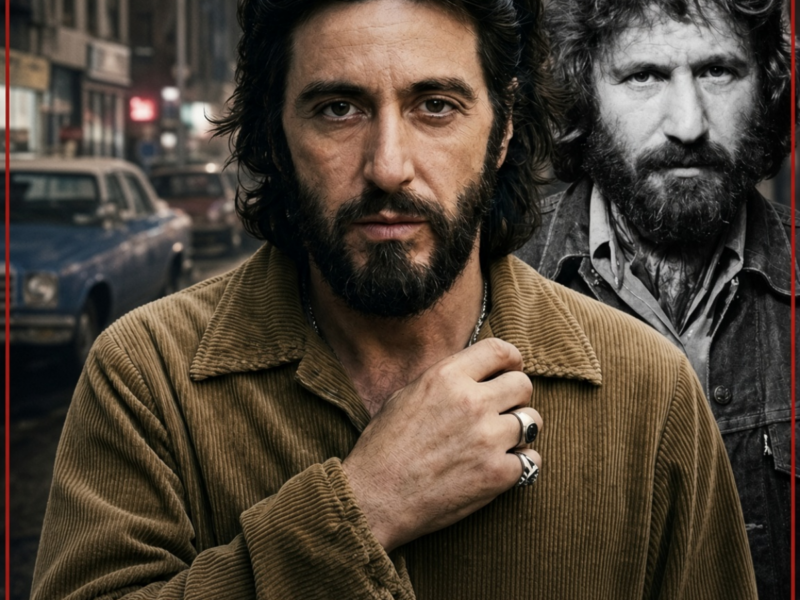
The Real Frank Serpico Was Way Braver Than Al Pacino in ‘Serpico’.
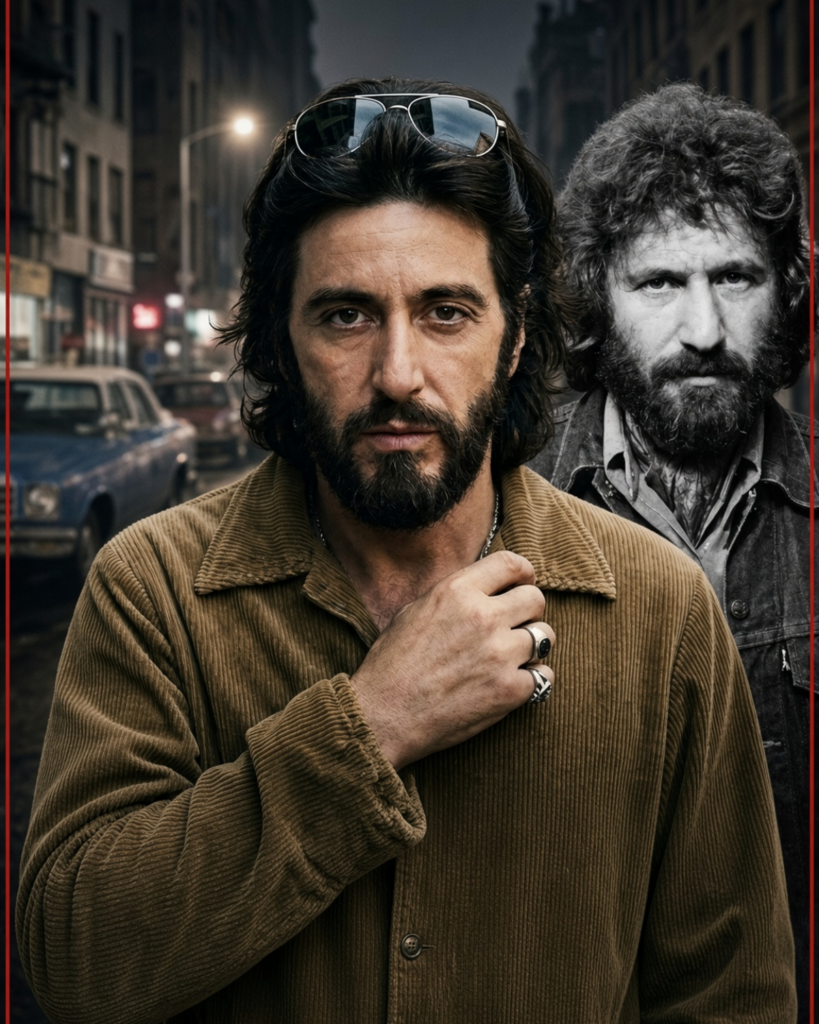
There’s a moment in Serpico where Al Pacino lies bleeding on a Brooklyn floor, shot through the face, while the men who were supposed to protect him stand frozen in the dark.
Audiences in 1973 thought the movie was exaggerating.
It was doing the opposite.
The film gave Frank Serpico two hours of courage.
The real man needed six years of it—years of carrying evidence nobody wanted, up a chain of command that kept warning him he’d end up in a river.
And when the bullet finally came, fired through a doorway while his own backup watched, the movie’s version got a fade to black.
The real one got a hospital bed full of hate mail from other cops—and then got up, walked into a hearing room, and did the thing no officer in his department had ever done.
This is the story of how the real Frank Serpico was braver than the man Al Pacino played in Serpico.
In 1960, a short, wiry patrolman from Brooklyn pinned on a silver shield and walked his first beats in Bedford-Stuyvesant, in the 81st Precinct, and he could not stop grinning about it.
Frank Serpico had wanted this since he was a kid shining shoes in his father’s cobbler shop—the father an immigrant shoemaker from outside Naples who taught his youngest that you never run when you’re right.
Serpico had done his two years in the Army, some of it in Korea, and come home to the only job he’d ever actually wanted.
Other rookies griped about the hours and the cold.
Serpico volunteered for extra tours.
He made arrests on his days off.
He studied Spanish because the neighborhoods he worked were turning Puerto Rican, and he wanted to talk to people, not just handcuff them.
What he noticed first wasn’t dramatic.
A free meal here, a sandwich a shop owner wouldn’t let him pay for there.
Cops called it the way things were.
It made him uneasy in a way he couldn’t fully explain.
So he paid for his coffee and let the older men roll their eyes.
He spent a stretch of those early years doing fingerprint work at the Bureau of Criminal Identification—dull clerical duty, filing cards in a basement—and used the time to finish college courses at night.
He was patient.
He had a plan.
The plan was the gold detective shield, the one his father could hold in his hand.
And the road to it ran through plainclothes.
Plainclothes was the assignment where you took off the uniform and worked gambling, vice, the numbers rackets—the so-called clean crimes, the ones with money moving through them every single day.
Serpico was built for it.
By the mid-1960s, he didn’t look like a cop at all—a beard, long hair, love beads, sandals, an apartment in Greenwich Village with an English sheepdog and opera records.
Bookies looked at him and saw a hippie.
Cops looked at him and saw a weirdo.
Both worked in his favor on the street.
He made cases other men couldn’t get near.
Then came the envelope.
About a year into his plainclothes tour in Brooklyn, another officer caught up with him and handed him a white envelope, casual as passing along someone’s lunch.
“It’s from Jewish Max,” the man said.
Max being a gambler whose operation everyone in the division knew and nobody touched.
Serpico took it before he understood what it was.
Inside was $300 in cash—his share.
That was more than a week’s pay, handed to him on the street in broad daylight with the easy confidence of a man completing a routine transaction, because that’s exactly what it was.
The envelope wasn’t a bribe in the movie sense, whispered and dangerous.
It was payroll.
It assumed him.
That was the part that made his skin crawl.
Nobody had asked whether Frank Serpico was for sale.
The system simply processed him as sold.
He didn’t spend it, and he didn’t hand it back.
Either move would have made him part of it or marked him instantly.
Instead, he did what the police academy, the oath, and every training lecture said an honest officer should do.
He reported it.
Through a contact he trusted, he got a meeting with a captain attached to the department’s own investigative side—a man whose job description was, on paper, exactly this.
Serpico sat across from him and laid it out: the envelope, the gambler, the $300, his willingness to go further.
The captain listened.
Then he gave Serpico his options, and they weren’t the options in the training lecture.
He could push this all the way, the captain said—get dragged in front of a grand jury, make his accusations official—and by the time it was over, he’d be found face down in the East River.
Or he could forget the whole thing ever happened.
Those were the choices, delivered flatly by the man whose salary existed to protect officers like him.
Serpico handed the money over.
He never learned where it went.
And he walked out of that office having learned the first real lesson of his career: the department’s machinery for reporting corruption was owned by the corruption.
He didn’t forget it.
He also didn’t quit, which in hindsight was the more remarkable decision.
He kept working, kept his head down, and waited to see if the envelope had been a Brooklyn problem—one rotten division, one bad captain.
The department answered that question for him with his next transfer, to a plainclothes division in the South Bronx.
If Brooklyn had been a leak, the Bronx was the ocean.
The 7th Division in the South Bronx didn’t dabble in payoffs.
It ran on them.
Within weeks of arriving, Serpico understood that what he’d been handed in Brooklyn was an amateur operation by comparison.
Up here, the plainclothes squads had organized the thing like a business, and the business had a name every cop in the city knew: the pad.
Every gambling operation in the division—every numbers bank, every bookmaker, every policy spot—paid a fixed monthly amount to the plainclothes officers whose job was to arrest them.
The money was collected on a schedule by designated pickup men, pooled and divided.
Each officer’s monthly cut in the 7th Division came to about $800—nearly double a patrolman’s take-home pay, delivered in cash, tax-free, every month, for doing nothing except leaving certain doors unkicked.
And it had rules, the way any payroll does.
A new man transferring in didn’t get his share right away.
The squad waited a couple of months first—checking him out, making sure he wasn’t an Internal Affairs plant.
A man transferring out got a parting bonus—severance, essentially.
There were ledgers in men’s heads, accounts kept, disputes settled.
The gamblers budgeted for it the way a shopkeeper budgets for rent.
Arrests still happened, because the division needed numbers to show headquarters, so the squads and the gamblers worked that out, too.
Stand-ins would take the collar—low-level workers offered up on a rotation.
Everyone back in business by the weekend.
It was not corruption eating at the edges of law enforcement.
In that division, it had replaced law enforcement quietly and completely.
And the men running it went home to their families in the suburbs feeling fine about themselves.
They weren’t shaking anyone down, the way they saw it.
They were just taking what the job had always paid.
Into this walked a bearded man from the Village who said no thank you.
Serpico refused his share of the pad—politely at first, the way you’d wave off a drink.
The squad didn’t panic.
They’d seen cautious men before.
His money would be held for him, he was told—set aside until he felt comfortable.
Months passed.
The pile of his untouched share grew, and so did the silence around him.
Because the other plainclothesmen slowly worked out that this wasn’t caution.
A man who takes no money is a man with nothing to lose if the pad is ever exposed—which makes him the most dangerous person in the division.
Partners stopped talking when he walked into the room.
Conversations about pickups and shares moved away from him.
He’d sit in squad rooms where everyone around him shared a secret and an income, and feel the temperature drop every time he entered.
He kept making real arrests, which only made it worse.
Every honest collar he made was a bomb that might go off in somebody’s ledger.
At night, he drove home to the Village—to the sheepdog and the opera records and a world of painters and students who had no idea what he did all day.
And he lay awake doing the arithmetic.
He now had names, amounts, dates, pickup locations.
He knew how the pad in an entire New York police division worked, from the inside, as a sworn officer—exactly the witness the system claimed it was waiting for.
And he knew from a captain’s own mouth what the system did to that witness.
He had carried this alone for the better part of two years, and alone it was going nowhere except eventually a river.
What he needed was something the department hadn’t managed to kill in him yet.
A reason to believe that somewhere above all this, somebody wanted to know.
It arrived in the form of the strangest cop he’d ever met.
David Durk believed in the system the way Serpico had believed in it in 1960—except Durk had connections to go with the faith.
He was a rarity the department didn’t know what to do with: an Amherst-educated officer who’d chosen police work over law school, talked about policing as a calling, and seemed to know somebody in every office in Manhattan.
The two of them had crossed paths on the job and recognized something in each other immediately.
Here, finally, was another cop who thought the free meals and the envelopes were a disease rather than a dental plan.
Where Serpico’s instinct was to keep his head down and survive, Durk’s was to climb—to find the honest man upstairs.
There had to be one, Durk insisted.
The city was run by a reform mayor, John Lindsay, a man whose entire political identity was built on cleaning up New York.
You just had to get the evidence into the right hands.
So they climbed.
Over months in 1966 and 1967, Serpico and Durk carried what Serpico knew—the pad, the amounts, the names, an entire division on the take—to the right hands, one set after another.
Durk’s connections got them into a private meeting with one of the mayor’s closest aides, a young man with real power and a direct line to Lindsay himself.
The aide listened to everything.
Serpico walked out believing, for the first time since the captain’s warning, that he’d finally put the evidence above the department’s reach.
Then nothing happened.
No investigation.
No follow-up.
No call.
As Serpico and Durk later told it, the calculation at City Hall was brutally simple.
It was the era of long hot summers.
The city feared riots, and the mayor’s office could not afford a war with its own police force.
The cops might be needed on the streets.
The corruption could wait.
It waited.
They went next to the city’s Department of Investigation—the agency whose entire purpose was rooting out exactly this.
Its commissioner heard Serpico out personally.
Serpico offered to go further than talk.
He’d wear a recording device, work with investigators, hand them the division from the inside.
The commissioner’s eventual response was to do essentially nothing—and he would later reportedly dismiss the bearded, intense plainclothesman as a psycho.
That was the pattern now, and Serpico could trace its shape.
Each office found its own reason, and the reasons were always sensible: wrong timing, wrong jurisdiction, wrong messenger.
Police brass they approached smothered it in procedure.
Nobody ever said the evidence was false.
Nobody ever acted as if it were true.
Understand what those months did to the odds Serpico was carrying.
Every meeting multiplied the number of people who knew there was a plainclothesman in the Bronx informing on the pad.
Any one of them—an aide, a clerk, an investigator with a friend in the department—could end him with a phone call.
He had bet his life, repeatedly, on the discretion of men who wouldn’t even return his messages.
He started sleeping with his gun within reach, checking the hallway through the peephole before he opened his own door.
The paranoia wasn’t a symptom.
It was an accurate reading of his situation.
By 1967, he and Durk had exhausted the executive branch of the city of New York from the mayor’s office on down.
What remained was the one institution that could compel what nobody would volunteer: a prosecutor with a grand jury.
And in the Bronx, there was a district attorney who was finally willing to use one.
The Bronx District Attorney took the case the city wouldn’t touch.
And in 1968, Serpico walked into a grand jury room and did the thing the captain had promised would put him in the river.
In secret session, under oath, he laid out the 7th Division pad—how the money was collected, who picked it up, how it was split, what it bought.
For a plainclothesman still working among the very men he was describing, every session was a walk across a frozen lake.
Grand juries are supposed to be sealed.
Police departments are supposed to be brotherhoods.
He had excellent reasons to doubt both.
The investigation ran for months.
And when the indictments finally came down, Serpico read them and felt the floor tilt.
A handful of plainclothesmen were charged—fewer than a dozen, every one of them a low-level cop from the division floor.
No lieutenant. No captain. No inspector.
Nobody from the chain of command that had collected its own share.
Nobody from the offices that had buried his reports for two years.
The system had finally moved, and what it produced was a handful of replaceable men offered up like the stand-in arrests the gamblers used to give the squads.
The pad itself—the machine, the hierarchy above it—rolled on untouched.
Serpico had risked everything to hand the state an entire division, and the state had plucked a few privates off the top and called it justice.
And he’d paid the full price anyway, because the secret didn’t hold.
It never does in a police department.
Word moved through the squad rooms the way word there always moved.
A prosecutor’s office leaks.
A defense lawyer gets discovery.
A clerk talks.
And by the time the trials were underway, every cop in the Bronx—and most of the cops in the city—knew the name of the plainclothesman who had testified.
There is one word in a police department for what Frank Serpico now was, and it followed him through every door: rat.
The department transferred him to plainclothes in Manhattan North, and the freeze that met him there was total.
Men turned their backs when he entered.
Partners developed sudden scheduling conflicts.
In plainclothes work, your life depends on the men who come through the door behind you, and Serpico now worked gambling raids knowing that no one in the division would willingly stand behind him.
One inspector—one, a deeply religious man the others mocked as a saint—thought what had been done to Serpico was a disgrace, and did something no officer of his rank needed to do.
He partnered with Serpico personally.
An inspector going through doors like a street cop, because nobody else would.
That was the entire roster of allies the department offered its corruption witness.
One volunteer.
Take stock of where six years of doing it the right way had left him.
He had reported the envelope to a captain and been threatened.
Reported the pad to the mayor’s office and been shelved.
Reported it to the city’s own investigators and been dismissed as a lunatic.
Testified to a grand jury, watched a few small fish fry, watched his cover burn, and now depended for his life on strangers’ restraint.
Every legitimate channel in the city of New York had been tried in order, and every one of them had protected the system from the evidence instead of the other way around.
Most men would have read that as the end of the road.
Serpico and Durk read it as a map—proof that no power inside the city would ever do this voluntarily, which left the one power that sat outside the chain of command entirely.
The one institution in New York that couldn’t be transferred, promoted, or warned about rivers.
It had a printing press on West 43rd Street.
The New York Times had an investigative reporter who’d been circling police corruption for months, and through Durk’s endless web of contacts, a meeting was arranged—not at the paper, but quietly in the reporter’s own apartment.
Serpico went knowing exactly what he was doing.
Everything until now, however dangerous, had stayed inside the family—captains, prosecutors, City Hall.
This was the line cops did not cross, the one even honest officers flinched at.
You did not take the department’s secrets to the press.
He crossed it anyway.
And he didn’t go alone.
Durk came, and so did a couple of other officers sick enough of the rot to talk, including the saintly inspector.
Over hours, they gave the reporter the whole anatomy: the pads, the amounts, the divisions—and the part that made it a story about power rather than crime, the years of reports buried by the department and the Lindsay administration itself.
The reporter checked it, sourced it, built it.
The city’s officials were asked for comment and scrambled.
On the morning of April 25th, 1970, New Yorkers picked up the Times and found, on the front page, a story reporting that policemen in their city were collecting graft running into the millions of dollars a year.
Gamblers, narcotic dealers, businessmen—all paying.
The payments systematic and widespread.
And City Hall having been told, and having sat on it.
For one morning, the two New Yorks looked at each other.
Every cop who read it knew it was true, and knew what it meant.
Somebody inside had finally gone all the way outside.
Serpico’s name wasn’t in the story.
His fingerprints, to anyone in the 7th Division, were all over it.
City Hall’s first instinct was the oldest one in politics.
Mayor Lindsay announced a committee to look into the allegations—a committee composed of city officials, including the police department’s own leadership.
Several of the very offices the story accused of burying the problem.
The press and the public laughed it off the stage in a matter of weeks.
Even its own members could see how it looked.
And so, in May 1970, boxed in by the headline he couldn’t wish away, Lindsay did the thing that four years of private pleading had never achieved.
He appointed an independent citizens commission with subpoena power to investigate corruption in the New York City Police Department.
A Wall Street lawyer named Whitman Knapp was put in charge, and the city would come to know the inquiry by his name: the Knapp Commission.
Sit with the arithmetic of that for a moment.
One plainclothes cop—no rank, no connections, no protection—had been told by his own captain to shut up or die.
Four years later, his evidence, carried up every staircase in the city and finally out the front door, had forced the mayor of New York to put the entire police department under independent investigation for the first time in a generation.
The front page had done in three weeks what the chain of command had refused to do in four years.
Serpico had won, in the only sense the word could carry.
The machine he couldn’t move alone was finally being pried open.
But he was still inside it.
He was still a working cop, due at a precinct every day, surrounded by 30,000 armed colleagues who now had a commission with subpoenas crawling toward their secrets—and a very good idea of who’d invited it.
The department still controlled one thing about Frank Serpico: where it sent him next.
It sent him to narcotics.
The transfer came dressed as an opportunity—narcotics work, real cases, the kind of assignment that led to the gold shield he’d been chasing since 1960.
The destination was Brooklyn North, and anyone who knew the job could read the fine print.
Narcotics was the most dangerous work in the department: buy-and-busts against armed heroin dealers, plainclothes raids through tenement doors, a world where everything depended on the men backing you up.
And the Knapp Commission’s existence had made Serpico the most famous rat in the history of the New York City Police Department.
The department took its best-known corruption witness and placed him where an officer’s survival hinged entirely on the goodwill of other officers.
Serpico understood the geometry perfectly.
He went anyway—partly because refusing meant the end of the gold shield, and partly because some stubborn cell in him still refused to concede that the job itself belonged to them.
Brooklyn North received him exactly as he expected.
His reputation arrived before his paperwork.
The men he’d be trusting with his life let him know, in the hundred small ways a squad room has, what they thought of cops who talked—the conversations that died when he walked in, the jokes delivered just loud enough, the remark, and he would remember this one, that a guy like him ought to be careful because things happen on raids.
He worked the streets of Bedford-Stuyvesant and Williamsburg, making drug buys in Spanish, doing the sharp-end work few others could do—for partners who despised what he was.
Every door he went through, he went through first, with men behind him whose hostility he could feel on the back of his neck.
He later said plainly that he worried less about the dealers than about the cops.
Through the autumn of 1970 and into the winter, that was his life: the most dangerous assignment in the department, performed nightly in front of an audience that was rooting against him, while downtown the commission he’d set in motion issued subpoenas and the entire force seethed about it.
Something had to give.
And on the night of February 3rd, 1971, on a street in Williamsburg called Driggs Avenue, it did.
The operation that night was routine by narcotics standards—a buy-and-bust on a heroin dealer working out of an apartment at 778 Driggs Avenue.
Serpico, as usual, was the man who could pass: the bearded Spanish speaker no dealer would make as a cop.
Two fellow officers were his backup.
The plan was simple.
Serpico would go to the apartment door as a buyer, get it open, and wedge it.
The others would come in behind him and make the arrest.
Simple plans assume the men behind you move.
Serpico knocked.
The door cracked open on its chain—a sliver of light, a face, a transaction beginning.
This was the moment, and he committed to it the way he’d committed to every door for eleven years.
He threw his weight into the gap and wedged himself in, half his body through the opening, and called for his backup.
Nobody came.
The seconds stretched.
He was jammed in a doorframe, alone, shouting for the two men whose entire function that night was this exact moment—and the doorway behind him stayed empty.
Then the gun came up on the other side of the chain, close enough to touch, and the dealer fired into his face.
The bullet was a .22.
It struck him just below the eye and tore through the side of his head, and he went down in the hallway with blood sheeting out of his face—conscious the whole time, conscious enough to know he was shot in the head, conscious enough to register that no help was coming through the door.
What happened next—and what didn’t happen—is the part of this story that the city of New York has never been able to explain away.
No officer-down call went out.
The emergency code that brings every cop within miles running to a wounded officer—the call his backup existed to make—was never transmitted that night.
The record of his rescue shows something else entirely.
An elderly man in a neighboring apartment heard the shot, found the bleeding stranger in the hallway, telephoned the police to say a man had been shot, and stayed with him—a civilian, a stranger, sitting with a dying cop while the cop’s own colleagues contributed nothing to saving him.
A radio car from the local precinct answered the old man’s call, found one of their own bleeding out on a tenement floor, hauled him into the backseat, and raced him to Greenpoint Hospital.
That improvised chain—a neighbor, a phone call, two uniformed strangers in a sedan—is what kept Frank Serpico alive.
The men sent to protect him that night were not part of it.
He spent the following days on the edge.
The bullet had shattered against the bone below his eye and sprayed fragments that lodged near his brain—too deep and too dangerous to remove, then or ever.
It severed the auditory nerve on the left side, leaving that ear permanently deaf.
For the rest of his life he would carry lead in his head, walk with pain, and hear the world from one side only.
But the surgeon’s bottom line, against every probability of a point-blank shot to the face, was that he would live.
The one honest cop in New York had taken a bullet through the head and kept his life—and, as the department was about to discover, his memory and his voice.
While he lay there, the NYPD conducted its inquiry into how one of its officers came to be shot in the face while his backup stood yards away.
And the inquiry concluded, in effect, that nothing had gone wrong.
No charges against anyone but the shooter.
No finding against the two men at the door.
The official version was a drug arrest gone bad, bravely handled.
Serpico, deaf in one ear, with fragments in his skull, knew what he’d heard in that doorway: his own voice, calling for backup that never moved.
And he would spend the next half century asking the question the department refused to open: Was he set up by his own?
But that fight was for later.
First came the mail.
The official New York put on its best face.
The mayor came to the hospital.
The police commissioner came.
Cameras gathered outside Greenpoint, because the shooting of the city’s famous whistleblower cop was front-page news, and everyone in public life needed to be seen at the bedside.
That spring, as he recovered, the department finally gave him the gold detective shield—the dream of 1960, the whole reason he’d gone to plainclothes in the first place—delivered at last while he lay with a hole in his face.
He took it with something close to contempt.
The eleven years of honest police work hadn’t earned it.
Getting shot had.
He understood the shield for what it was: a public-relations gesture from an institution hoping its most dangerous witness would take the prize and go quiet.
Then there was the unofficial New York, which also sent its regards.
Among the get-well cards that arrived at his hospital bed—and they came through department mail, from his brother officers—were some the nurses probably should have screened.
One expressed sincere sympathy that he hadn’t gotten his brains blown out.
Others were in the same key, some left unsigned, the handwriting of men who carried the same shield he did.
Frank Serpico lay in a hospital bed with a bullet’s debris in his head, half-deaf, and read notes from fellow policemen regretting that the shot hadn’t finished the job.
His own family had to absorb it, too—the whispers, the cold shoulders, a city’s police force openly wishing their son and brother dead.
That is the context the movie, two years later, could only gesture at.
Not one dramatic betrayal in a doorway, but an entire institution’s sustained, written, mailed-in hatred delivered to a wounded man’s bedside.
Here is where the measure of him gets taken.
Every force in his life now pointed toward the exit.
He had the gold shield.
He had a three-quarter disability pension waiting whenever he wanted it.
He had given the city its commission.
The investigators could carry it from here.
He had already been threatened, frozen out, abandoned at a door, and shot through the face.
No reasonable person on earth would have asked more of him, and plenty of powerful people were hoping he’d ask nothing more of himself.
The Knapp Commission’s public hearings were approaching, and there was exactly one thing left that no officer of the New York City Police Department had ever done: sit before the cameras, in public, under his own name, and tell the whole truth about the institution.
Every prior witness in the department’s long history of scandals had been granted the shadows—anonymity, closed sessions, resignation, and silence.
In December 1971, ten months after Driggs Avenue, Frank Serpico put on a suit, walked past the cameras into a hearing room in Manhattan, and asked for a microphone.
The room was packed, and the lights were television lights, because the Knapp Commission’s public hearings had become the city’s main event.
And the bearded detective with the bullet fragments in his skull was the witness everyone had waited for.
He looked nothing like what the department wanted America to picture when it heard “New York cop”—the full beard, the long hair, the quiet, almost gentle voice.
And then he began to testify, and what he delivered, calmly and without theatrics, was the most devastating indictment any American police department had ever absorbed from one of its own.
He was the first officer in the modern history of the NYPD to step forward publicly and testify about corruption as a system—not a bad apple, not a rogue squad, but the orchard.
He told them what you now know: the envelope, the pad, the $800 a month, the captain in the river, the years of reports that went up the chain and died there.
But his real target sat above all of it, and he said so in words that were quoted across the country.
Police corruption could not exist unless it was at least tolerated at the very highest levels of the department.
The problem wasn’t crooked cops, he told the commission.
Every institution has thieves.
The problem was an atmosphere in which the honest officer feared the dishonest officer, and not the other way around.
He said he hoped his appearance would mean that future officers who tried to report corruption would be spared the five years of frustration and anxiety his superiors had put him through.
It was not a speech of triumph.
It was a wounded man explaining, precisely and without self-pity, how the machine worked.
And every sentence carried the authority of a face that had taken a bullet for the privilege of saying it.
The commission’s investigators had spent a year confirming that he’d been telling the truth all along.
And when the Knapp Commission issued its findings, it used language no city official could soften.
Corruption in the New York City Police Department was widespread—not exceptional, not isolated, but a condition of the institution.
The report even gave the city a new vocabulary for it, dividing corrupt cops into the “grass eaters,” the great majority who passively took the pads and the small payoffs because the culture expected it, and the “meat eaters,” the aggressive minority who hunted scores, shaking down gamblers and drug dealers for thousands.
The grass eaters, the commission explained, were the real heart of the problem, because their quiet, universal participation made the whole pasture look normal.
Everything Serpico had reported to a captain in 1966 and been threatened with a river for—everything the mayor’s aide and the investigations commissioner and the brass had buried—was now the officially documented truth about the NYPD, printed under government seal.
Reforms followed.
Command accountability.
A rebuilt internal affairs apparatus.
The end of the open pads that had run the plainclothes divisions.
He had been right about all of it, publicly, completely, and on the record.
Institutions have ways of acknowledging such men.
The department reached for its highest one and managed, even in the act of honoring him, to tell him exactly what it thought.
In 1972, the New York City Police Department awarded Frank Serpico the Medal of Honor—the highest decoration it can bestow, almost always presented at a ceremony with white gloves, families, and a commissioner’s speech about valor.
Serpico’s arrived with none of that.
The way he told it ever after, the medal was handed over like a pack of cigarettes—passed across to him without ceremony and without the one thing that gives any medal its meaning: a citation.
No document saying what it was for.
The department’s highest honor, stripped of its words, because writing the words would have required the department to say, on paper, that it was decorating a man for exposing the department.
He kept the medal.
He never stopped telling people how it had been given.
Because the manner of the giving was the truest official statement the NYPD ever made about him: We are required to honor you, and we cannot bring ourselves to say why.
In June 1972, one month after the medal, Detective Frank Serpico filed his retirement papers and left the New York City Police Department, out on the disability the bullet had purchased.
Twelve years.
He had come in wanting nothing but the job, and the job’s parting gifts were a deaf ear, a skull full of lead fragments, a medal with no inscription, and a city full of armed men who hated him.
Staying in New York meant a lifetime of looking over his shoulder in a town where half the people licensed to carry guns considered him a traitor.
So he did what the threatened do when the threat wins the geography.
He left the country.
He went to Europe—Switzerland first, then years of wandering, to heal, to study, to be a bearded stranger in places where the word Serpico meant nothing at all.
That anonymity lasted about a year, because back home a writer had spent months interviewing him before he left.
And the book that came out of those conversations was about to turn his name into something no cop’s name had ever been.
While the real man disappeared into Europe, America was about to meet the other Frank Serpico—the one with Al Pacino’s face.
The book came first: Serpico, by the journalist Peter Maas, published in 1973, and it detonated.
Millions of copies.
Weeks on the bestseller lists.
The whole saga laid out for a country already raw about lying institutions.
Hollywood moved at a speed it almost never manages.
The film rights sold.
A production raced through the streets of New York that same year.
And in December 1973, eighteen months after the real man turned in his shield, Serpico opened in theaters with Al Pacino—fresh off The Godfather—in the title role.
Pacino did what the serious actors of that era did.
He went to the source.
He spent time with Serpico himself, out at a rented place on Montauk, studying the voice, the walk, the furious integrity.
And it was there that Pacino asked him the question the whole movie would hang on: “Why did you do it?”
Serpico’s answer, as Pacino has retold it for fifty years, was this: “Because if I didn’t, who would I be when I listen to a piece of music?”
Pacino built the performance around that sentence, and it shows.
He was nominated for the Academy Award for it, and the film became a classic.
For half a century now, it has been how the world meets Frank Serpico.
He watched his own life premiere from the far side of the Atlantic.
The film closed by telling audiences he was living somewhere in Switzerland—and that was true, and it was the movie’s way of admitting the story had no ending yet.
As a film, it’s honest in spirit.
The envelope, the pad, the buried reports, the doorway on Driggs Avenue—they’re all there.
But put the movie next to the record, and you can see everywhere the record is heavier.
The movie compressed six years of grinding, repetitive institutional betrayal into a brisk two hours—and repetition was the whole ordeal.
Not one brave meeting, but a dozen, each one a fresh chance to be killed for nothing, spread across years of waiting.
It folded David Durk and others into a single composite sidekick, which cost the story its loneliest truth: that in a force of 30,000, the honest men who’d stand with Serpico could be counted on one hand.
And at the shooting, the film permitted itself only a flicker of the question the real man has shouted for fifty years.
On screen, the backup’s failure plays as ambiguous, a horror glimpsed sideways.
The record is colder.
The backup never came through the door.
No officer-down call ever went out.
A neighbor’s phone call saved his life.
And no officer was ever charged or disciplined for any of it.
The movie also had to stop.
It ends with the testimony and a departing ship, as if the price had been paid in full.
The real story kept running after the credits, and the longest, loneliest stretch of it was still ahead.
Around 1980, with the fame at full flood and the wounds as healed as they’d ever get, the most famous ex-cop on Earth came home.
He came home the way a hunted man does: to a place with no address worth knowing.
He settled in the woods of upstate New York, near the Hudson, in a small cabin—a world away from Driggs Avenue.
A hermit setup, deliberately hard to find, where the most recognizable police name in America could live unrecognized.
And that is where Frank Serpico has spent the decades since.
Wood heat. Solitude. The disability pension the bullet bought him.
The beard gone gray.
The lead fragments still in his head—surgeons never dared remove them—and the left ear silent since 1971.
He has lived more than fifty years inside the physical souvenir of that doorway.
Visitors who do find him describe the same man the 7th Division couldn’t buy: funny, furious, incapable of letting a crooked thing pass without naming it.
He never remade himself into a celebrity.
Never cashed in the name.
The movie made Serpico immortal.
The man went back to being Frank.
But a recluse is not the same thing as a man who went quiet.
Whenever a new officer somewhere stood up, reported the rot, and got the treatment—the freeze-out, the rat jacket, the ruined career—Serpico surfaced to stand with them.
The living proof that the atmosphere he described to the Knapp Commission had outlived the commission.
In 2015, he put it in writing, in a blunt published essay arguing that police still close ranks the way they did in his day.
And he has never stopped pulling on the one thread the city still refuses to give him: his own shooting.
For decades he has demanded the full record of the night of February 3rd, 1971—a real accounting of why his backup never moved, and why no call went out.
And for decades he has been met with the institutional shrug.
Files thin or missing.
Questions referred.
The case treated as closed, because opening it honestly was never survivable for the department.
The men at the door that night were never charged with anything.
An old man in the woods, with lead in his skull, is still formally asking New York City to investigate the shooting of Officer Frank Serpico.
New York City still hasn’t.
What remains is a strange double image.
In the movie’s final frames, the story ends: the ship, the title card, the swelling score.
In a cabin above the Hudson, it never did.
Frank Serpico is still alive as these words are spoken—still deaf on one side, still carrying the bullet, still unanswered.
The film gave the world his courage in its most watchable form: one man, two hours, one shining refusal.
The record gives it in its true form, which is harder to watch and harder to live.
Six years of reports into a void.
A doorway where his own side let the shot come.
A hospital bed stacked with cops’ hate mail.
And then, after all of it, a microphone he didn’t have to take—and took anyway.
Al Pacino made that man famous.
He couldn’t make him up.
No screenwriter would dare hand a hero that much punishment and have him keep choosing the same answer.
But the real one did—every time—for the same reason he gave on a porch in Montauk: so he could still face himself when the music played.
The movie is the monument.
The man was braver.









