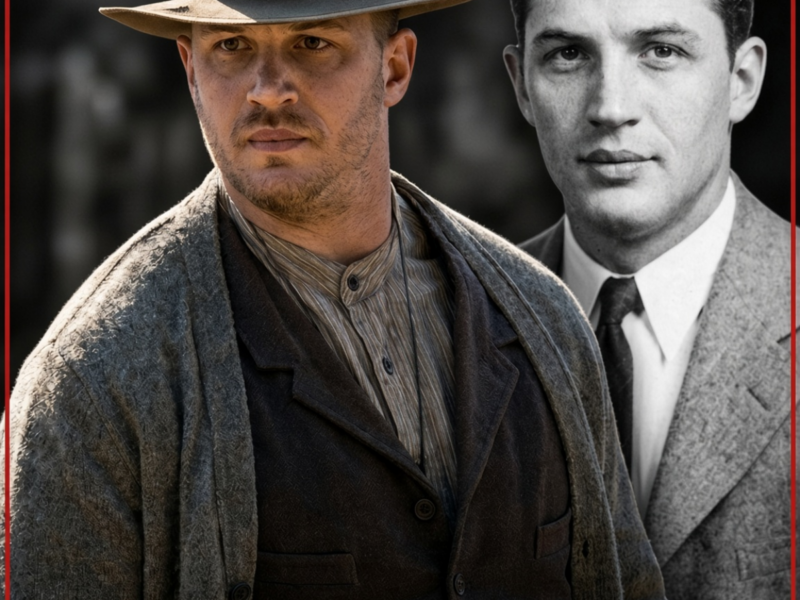
The Real ‘Forrest Bondurant’ Was The Most Dangerous Man Behind ‘Lawless’ Movie.
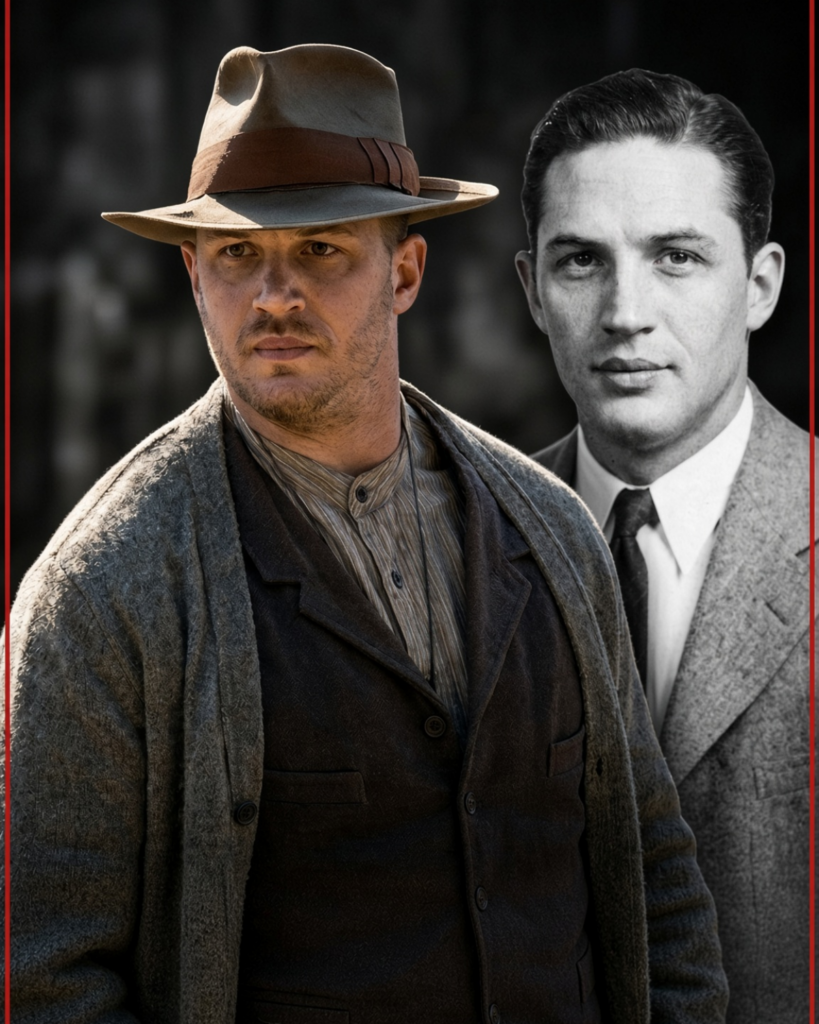
Two robbers cut his throat from ear to ear and he lived.
A deputy’s bullets put him down in the snow on a frozen bridge and he lived.
And five years after that, he did the most dangerous thing any man in Franklin County, Virginia could do.
He sat down in a federal courtroom, looked at the machine that had tried to kill him, and told the truth about it under oath.
Hollywood found him eighty years later and gave him to Tom Hardy—the grunting, cardigan-wearing mountain of a man at the center of Lawless.
The movie called him a legend.
The record calls him something better: Real.
This is the story of how the real Forrest Bondurant became the most dangerous man behind Lawless.
At midnight on January 16th, 1920, the United States of America shut off the liquor.
The 18th Amendment took effect.
The saloons went dark from Boston to San Francisco, and federal law declared that the manufacture and sale of intoxicating drink was finished in this country.
In the Blue Ridge foothills of Southwest Virginia, in a county of tobacco farms, corn fields, and deep wooded hollows called Franklin County, people heard the news and understood something the lawmakers in Washington apparently did not.
Nobody was going to stop drinking, which meant that somebody was going to get rich.
Franklin County had a head start on the rest of the nation because Virginia had gone dry back in 1916—four years before the federal ban.
And the county had a head start on the rest of Virginia because its people had been making whiskey in those hollows for generations.
Corn liquor run through copper stills tucked along creek banks—a craft handed down from grandfathers who regarded a tax collector the way they regarded a copperhead snake.
Prohibition did not teach Franklin County to make moonshine.
Prohibition simply took a skill the county already had and attached a fortune to it.
Overnight, a gallon of clear corn whiskey that had been worth pocket change became contraband that city buyers in Roanoke, in Richmond, in towns across three states would pay real money for.
In a county where most families scratched a living out of red dirt and tobacco allotments, that arithmetic was irresistible.
Among the people doing that arithmetic was a young man named Forrest Bondurant—one of several children of a Franklin County farming family, a man in his early twenties who had already survived something that killed millions.
In the fall of 1918, while the Great War was ending in Europe, the Spanish influenza swept through the Virginia hills the way it swept through the rest of the world—filling churchyards and closing schools, taking the young and strong as readily as the old.
It came into the Bondurant world like it came into everyone’s, and it nearly took Forrest.
He went down with it hard—the kind of sick where the neighbors stop asking if a man will recover and start asking when the funeral is.
And then he didn’t die.
He got up. He went back to work.
And the people around him took note of it.
The first entry in what would become a long ledger: Forrest Bondurant, marked for death, declined.
Family memory says the sickness changed him—or maybe confirmed him.
He came out of it a quiet man, close-mouthed, deliberate, with a stillness that other men found unsettling.
He was not a brawler by reputation and not a talker by any measure.
He simply gave the impression, standing behind a counter or leaning on a fence rail, that he had already been to the edge of things and was not impressed by it.
In a county about to fill up with armed men, fast cars, and sudden violence, that quality was worth more than muscle.
So when the 1920s opened, the pieces were on the table.
A federal law that turned corn into gold.
A county full of stills, hollows, and men who knew how to use both.
And a young man who had stared down death once already and come back with no particular fear left in him.
All Forrest Bondurant needed was a place to stand—a piece of ground where the farm roads met the highway, where the liquor coming down out of the hollows could meet the cars that would carry it away.
He was about to find it and put his name on it.
The place was a filling station out where the road ran toward the county line—gas pumps out front, a store and sandwich counter inside, a spot where a traveler could buy fuel, tobacco, a plate of food, and if he was known and vouched for, something stronger.
Forrest set himself up there in the latter years of Prohibition’s first decade, and the station became his post.
He worked the counter himself, serving farmers and truck drivers, watching the road, saying little.
To the casual eye, it was the most ordinary business in Virginia.
To the men in the whiskey trade, it was something else: a fixed point in a moving river.
The stills were scattered up in the hollows.
The buyers were out in the cities.
Forrest’s station sat in between—and in between is where the money lives.
He did not work alone.
The Bondurant operation was a brotherhood in the literal sense—three brothers, each with his own role in it.
Howard was the eldest, a big powerful man who handled the heavy end of the work—the lifting and hauling, and when it came to that, the trouble.
Jack was the youngest, and he was the hungry one—a kid who looked at the older bootleggers in their new cars and pressed-brim hats and wanted all of it, pushing to be given bigger loads and more responsibility than his age strictly recommended.
And in the middle was Forrest, who ran the business end from behind his counter and made the decisions that mattered.
The movie would later get that family geometry almost exactly right, because it is one of the things the record supports.
Three brothers, one operation, with the quiet one in charge.
The work itself ran on wheels.
This was the part of the trade that separated Franklin County from some backwoods cliché of a lone farmer with a jug.
The liquor came down from the stills in quantity—cases and cans loaded into cars and light trucks whose rear springs had been stiffened to carry the weight without squatting low enough to catch a policeman’s eye.
The brothers hauled by the carload, running loads out of the county at night, down roads they knew in the dark better than strangers knew them in daylight.
Speed mattered. Nerve mattered.
But mostly knowledge mattered.
Which roads were watched, which bridges were safe, which lawmen were paid, and which were merely slow.
A run was a small military operation.
A loaded car might ride behind a pilot car—a lighter, faster vehicle running ahead, empty, whose driver’s whole job was to spring the trap first, to draw out any deputy or federal agent lying in wait, and if necessary to block the road, sacrifice himself to a chase, while the load car behind cut off onto a farm track and vanished.
The drivers who did this work became minor royalty in the county, and the best of them were spoken of the way other towns spoke of ballplayers.
And the trade paid.
Through the ’20s, while the rest of rural America rode the usual seesaw of crop prices, the whiskey families of Franklin County had cash—folding money in an economy that mostly ran on credit at the feed store.
Forrest banked his.
He was not flashy.
That was Jack’s department, and Forrest reportedly rode him about it.
The quiet brother understood something the young one didn’t yet: In this business, the men who showed their money attracted exactly the kind of attention that ended careers.
By the end of the decade, the Bondurant brothers were an established name in the trade—not the biggest operators in the county, but known, respected, and left alone by the people whose business it was to know such things.
What the brothers were doing by the carload, however, their county was about to start doing on a scale that would eventually require freight trains to supply and a federal courtroom to describe.
Franklin County did not just participate in Prohibition-era moonshining.
By the end of the dry years, it had become one of the great illegal liquor engines of the United States—a single rural county, home to a few tens of thousands of farmers, producing untaxed whiskey on a scale that beggared belief.
When it all finally came out in court years later, a famous writer covering the proceedings would help fix the county’s nickname in the American imagination: the wettest county in the world.
The evidence behind that nickname was not folklore.
It was freight records.
Because here is the thing about moonshine at industrial scale: You cannot hide the ingredients.
Corn liquor in serious quantity demands sugar in serious quantity—sacks of it, tons of it, far beyond anything a county of farm kitchens could ever explain.
Through the early 1930s, sugar rolled into Franklin County by the boxcar, along with yeast, malt, and five-gallon cans by the tens of thousands—the standard container of the trade.
Country stores in crossroads hamlets were ordering sugar like they were supplying a city.
Nobody in the county pretended not to know what it was for.
The stills in the hollows had grown from family coppers into sprawling steamer outfits run by crews cooking around the clock, their output flowing down the farm roads every night toward Roanoke and points beyond.
Practically everyone touched the trade somewhere.
A farmer might never run a still and still sell his corn to a man who did.
A storekeeper sold the sugar.
A mechanic tuned the cars.
A teenager earned his first cash dollar hauling cans down a creek trail.
When the reckoning eventually came, testimony would make plain that moonshine wasn’t a criminal subculture inside Franklin County’s economy.
It practically was Franklin County’s economy—the cash crop that kept families fed while tobacco and timber paid in promises.
Through the middle of it all ran the roads, and on the roads, the convoys.
On a given night, strings of loaded cars moved out of the county together, pilot cars ranging ahead, engines built hot by men who understood that the difference between a profitable month and a federal charge was about fifteen miles an hour.
The runs had a rhythm and etiquette all their own.
Everyone knew the game.
The revenuers—federal prohibition agents—would catch who they caught, smash what stills they found, and the trade would absorb the loss the way a river absorbs a thrown stone.
Forrest’s station sat inside this world as one of its steady institutions.
Liquor moved through it. Money moved through it.
Information moved through it, which in some ways was the most valuable cargo of all.
A man behind a counter on a main road hears everything.
Who got caught. Who got paid.
Which agent was incorruptible, and which could be reasoned with.
Forrest listened, said little, and built the thing that would later make him dangerous in a courtroom: an exact, firsthand knowledge of how the county’s liquor business actually worked, name by name and dollar by dollar.
But an industry that size does not run on nerve and fast cars alone.
Thousands of gallons a week do not move past courthouses and sheriff’s cruisers for years because the law is blind.
An operation that big requires something quieter and more corrosive: an understanding.
And in Franklin County, the men offering that understanding carried badges—and they were about to put a price on it that the Bondurant brothers would refuse to pay.
The arrangement, when it hardened into a system, worked like this.
The liquor could move, the stills could cook, and the law would look elsewhere—for a fee.
Paid regularly. Paid per load, per car, per month, in cash, to the right hands.
The trade even gave the payments a homely little name that would eventually be spoken aloud in federal court: granny fees.
It was protection money, plain and simple—collected not by gangsters muscling in from some Northern city, but by the county’s own sworn officers, deputies working under the color of the sheriff’s department, operating with the confidence of men who answered to a courthouse crowd that was in on the take.
The county’s legal machinery and its illegal industry had quietly merged into a single business.
Understand what this meant on the ground.
A moonshiner who paid was, for practical purposes, licensed.
His loads rolled past parked patrol cars with a nod.
If appearances demanded a raid now and then, he might get a warning first—time enough to move the good equipment and leave something old for the axes.
A moonshiner who didn’t pay lived in a different county altogether.
His stills got found with uncanny regularity.
His cars got stopped. His drivers got charged.
The law, which had been a weather hazard, became a targeted instrument.
The deputies collecting the fees weren’t enforcing Prohibition.
They were enforcing the racket—using arrest powers as a billing department.
Most operators paid.
It was rational.
The fee was a cost of doing business, cheaper than lost loads and jail time.
And arguing with the men who controlled both the roads and the courts was bad arithmetic.
The money flowed up, and the protection flowed down.
By the early 1930s, the system was so settled that it had the feel of law itself—a parallel government with its own taxes, running out of the same building as the real one.
The Bondurants refused to pay it.
Why exactly is the kind of question the record answers mostly through what happened next.
Some of it was surely money.
A fee on every load is a partner you never wanted, forever.
But the family accounts point at something more elemental in Forrest.
He had built his business himself, at his own risk, on his own nerve.
The deputies demanding a cut had risked nothing and built nothing.
They were simply charging rent on their own corruption.
Forrest’s position, as his family later told it, was as short as the man himself: Nobody had a right to a share of Bondurant liquor except Bondurants.
He would take his chances with the actual law—the honest kind that caught you fair or didn’t.
What he would not do was kneel to the crooked kind.
In most places, at most times, that would just be a stubborn man’s bad business decision.
In Franklin County, it was something closer to heresy.
The racket’s entire authority rested on the premise that everyone paid.
The system only worked if it was universal, because every independent operator was living proof that you could say no.
The Bondurants—respected, established, moving serious loads right down the county’s main roads—weren’t just skipping a fee.
They were a hole in the dam.
And the men running the racket understood exactly what holes in dams do.
The brothers’ refusal couldn’t be ignored, couldn’t be negotiated away, and couldn’t be allowed to stand where other moonshiners could see it.
Somebody was going to be made an example of, and the example they chose was the quiet man behind the counter at the filling station.
The one the county was about to learn could not be killed.
It happened at the station at night, in the cold months at the turn of the decade.
Two men came to Forrest Bondurant’s place after the legitimate trade had gone home.
The record remembers them as robbers—there for the cash a liquor business keeps on hand.
Though in Franklin County in those years, the line between a simple robbery and a message delivered to an unprotected man was never easy to draw.
A man who paid his granny fees had a fence around him.
Everyone knew whose business he was.
A man who refused was advertised, in the way such things are advertised, as being outside the fence.
Whatever the two men came for, what they did is not in dispute.
They attacked Forrest in his own station, and one of them drew a blade across his throat and cut it from ear to ear.
That wound kills people. It is meant to.
It kills them quickly, and it killed plenty of men in that rough decade whose names no movie will ever carry.
The men who did it to Forrest left him for exactly that—a dead man on the floor of his own business, a lesson for every bootlegger in the county who might be thinking about keeping his whole dollar.
Forrest got up.
He got a hand to his throat, and he held himself together—literally held the wound closed—and he got out of that station into the winter night, because the nearest hospital was in Rocky Mount, the county seat, miles away down a dark road.
And here the record splits into two roads of its own, and it’s worth being honest about both.
The legend—the one that spread through the county within weeks, the one his grand-nephew would put in a novel and Hollywood would put on film—says Forrest walked miles in the cold, holding his own throat shut, and presented himself at the hospital on his own two feet.
The quieter version, the one serious tellings of the story also preserve, says neighbors got him into a car and drove him bleeding through everything, and that the walk grew in the telling the way such things grow.
The honest answer is that we know the wound, we know the night, we know the hospital, and we know he got there alive.
However he covered those miles, the fact underneath both versions is the same and is not legend at all: A man took a killing cut to the throat and refused to die of it.
The surgeons in Rocky Mount closed him up.
He lay in that hospital while the county held its breath.
And then he did what he had done in 1918 with the influenza.
He declined to die, got up, and went back to work.
He carried the scar across his throat for the rest of his life—a line he never bothered to hide and rarely bothered to explain.
Behind the counter of the station, making a sandwich, counting a dollar, it was simply there, visible to every customer.
A message sent—and beneath it, legible to everyone, the reply.
Because that was the thing.
The attack had failed in both directions.
It had failed to kill him, and it had failed utterly as an example.
The example now ran the other way.
The racket’s lesson was supposed to be: This is what happens to a man outside our protection.
The lesson the county actually received was: They cut Forrest Bondurant’s throat and he’s back at the register.
And a county that loved a story the way Franklin County loved a story was about to take that lesson and forge it into something bigger than the man himself—an armor of pure reputation.
The story moved the way stories moved in that country—across counters, along church rows, through the open windows of parked cars—and it grew the way the best ones grow.
Forrest Bondurant had his throat cut to the bone and walked miles through the winter to the hospital.
He never fell. He never hurried.
By the time the tale had made its third and fourth lap around the county, it had shed whatever uncertainty the facts contained and become something close to scripture.
And it joined the older story—the one about the influenza that killed healthy men by the million and couldn’t finish one Virginia farm boy.
Taken together, they produced a conclusion that people half joked and half believed: The man could not be killed. Not by sickness. Not by steel.
Forrest himself, in the way of him, neither confirmed nor denied any of it.
Silence, as ever, was his native language—and silence, it turns out, is the best possible soil for a legend.
That legend had cash value in the moonshine trade.
Reputation was a working asset as real as a fast car.
Men thought harder about robbing the Bondurants now.
Buyers trusted loads that moved under the family’s name.
Jack, young and brightening, wore the family’s growing fame like a new suit.
Howard’s size and the stories together made the brothers’ convoys something other crews waved through the night.
The racket had tried to shrink the Bondurants and had instead enlarged them.
And every moonshiner in the county who quietly resented his monthly granny fee looked at that filling station and saw the thing the deputies could not afford for anyone to see: defiance alive, pumping gas on a main road.
For the men running the county, this was now a problem of a different order.
The knife had been deniable. Robbers, after all, rob.
But its failure left the racket’s authority publicly dented, and authority was the entire product.
Every load the Bondurants ran unprotected and untouched was an advertisement that the fees were optional.
The next move couldn’t be ambiguous, and it couldn’t be subcontracted.
If the lesson was going to stick, the law itself would have to teach it—in uniform, on a public road, in the open.
So the deputies began working the problem the way lawmen do: patiently, with the roads.
The brothers’ great advantage had always been motion—loads that could leave by any of a dozen routes at any hour.
But every route out of a county crosses water somewhere, and water means bridges, and a bridge is the one place a running car cannot choose another path.
The men with badges knew the brothers’ habits, knew their roads, and knew the choke points as well as anyone alive.
In December 1930, with snow on the ground and the liquor trade running hard toward the holidays, they picked their spot.
A narrow bridge where the road crossed Maggodee Creek.
And on the other side of that cold morning, the legend of the man who couldn’t be killed was going to be tested the only way legends ever really are: at point-blank range.
They came down to the bridge with a load, as the deputies had known they would—the Bondurant brothers, moving liquor on a December morning in 1930, the fields white around them, the planks of the Maggodee Creek crossing frosted under a gray sky.
And the law was waiting.
Deputies blocked the crossing, armed with every intention of making this the morning the county’s most famous holdouts were brought to heel.
Among them was a deputy named Charlie Rakes.
Remember that name, because Hollywood certainly did.
Eighty years later, the movie would reinvent him as a perfumed special agent imported from Chicago—all pomade and sadism in a city suit.
The record’s version is smaller and in its way worse: a local man, one of the county’s own, collecting for the county’s own machine.
What happened on that bridge happened fast, and the two sides would tell it differently ever after.
The deputies claiming the stop turned dangerous.
The brothers and their partisans telling it as something much simpler and much colder.
But the outcome is not in dispute, because the outcome was written in the snow.
Rakes opened fire on men who, by the account a federal jury would one day find credible, posed no threat worth shooting over.
Jack went down, shot, his blood steaming on the frozen planks.
Then Forrest—the unkillable man himself—dropped at close range, crumpling onto the bridge his legend was supposed to carry him across.
Two of the three brothers lay bleeding in the snow at the feet of the law that had sworn to protect them.
And for a moment, the morning hung on a question: whether the racket intended to finish the whole family right there.
It nearly did.
By the accounts that survived into testimony and family record, the gun came around next toward Howard, the last Bondurant standing.
And a third shooting was a trigger pull away when another deputy on that bridge decided he had seen enough and stopped it.
Stepped in. Blocked it.
Refused to let the morning become a massacre.
It is one of the strangest small mercies in this whole story.
The same machine that had ordered the lesson contained one man unwilling to see it taught to completion.
Howard lived without a scratch, and his brothers lay in the snow, shot.
But as the county was about to relearn—not dead.
Because once again, Forrest Bondurant declined.
The wounded brothers were gotten off that bridge and into care, and the county settled in to see whether the legend had finally met its limit.
And the legend got up.
Forrest recovered. Jack recovered.
The throat hadn’t done it, and now the bullets hadn’t done it either.
And whatever portion of the unkillable man’s story had been exaggeration before Maggodee Creek, the bridge had gone a long way toward converting it into documentation.
And the shooting itself—officers of the law had gunned down two unarmed, by most accounts, civilians at a roadblock in daylight, with witnesses, in a functioning county.
That is a scandal with consequences.
In Franklin County, it went exactly where everyone knew it would go: nowhere.
The men who would have had to prosecute a deputy were the men the deputies collected for.
The courthouse looked at the bridge, and the bridge looked back, and nothing moved.
If you want to understand why this story ends in a federal courtroom instead of a local one, Maggodee Creek is the whole lesson in one morning.
In that county, the law could shoot you in the snow—and the law would then rule on whether the law had done anything wrong.
So the brothers did the only thing left that counted as defiance.
They healed up, and they went back to hauling.
No surrender. No fees. No sale of the business. No quiet retirement.
Loads on the road, same as before, with two more scars in the family and the same answer standing behind the same counter.
The county watched them do it and understood that this had become something beyond money now.
A cold war between a family that would not kneel and a machine that could not make them.
What nobody on either side could have guessed was that the next blow against that machine wouldn’t come from the Bondurants at all.
It would come from Washington—from the stroke of a pen that was about to knock the legal ground out from under the entire arrangement.
On December 5th, 1933, the United States gave up.
The 21st Amendment was ratified, Prohibition was repealed, and legal liquor came back to America after nearly fourteen dry years.
In the cities, distilleries fired their boilers, and the newspapers toasted the end of the whole failed experiment.
And if the story worked the way stories are supposed to work, this is where Franklin County’s chapter would close.
The contraband decriminalized. The bootleggers obsolete. The crooked deputies left with nothing to protect and nothing to collect.
Franklin County barely broke stride.
The stills kept cooking, and the loads kept rolling.
And the reason was simple.
Moonshine had never really been about Prohibition.
It was about taxes.
Legal whiskey came back wearing federal excise stamps, and those stamps made it expensive.
Untaxed corn liquor undercut it in every roadhouse and dry town across the region—and plenty of places stayed dry by local law after repeal.
The business model survived the 18th Amendment’s death just fine.
Franklin County had been making untaxed liquor before Prohibition, all through Prohibition, and it saw no compelling reason to stop after.
The sugar kept arriving by the boxcar.
The granny fees presumably kept getting collected.
The machine hummed along as if Washington had never spoken.
But repeal changed one thing, and it turned out to be the fatal thing.
It changed who was looking, and how hard.
With the dry crusade over, federal enforcement stopped being a losing war against every drinker in America and became a focused campaign against tax evasion—run by the Treasury’s revenue men, the kind of agents who had ended Al Capone not with raids but with ledgers.
And when those men surveyed the national map for untaxed liquor, Franklin County, Virginia, did not appear as one dot among thousands.
It appeared as a phenomenon.
The scale of it—the freight records, the sugar tonnage flowing into one rural county of farmers, the can shipments, the sheer arithmetic of it—was the kind of thing a revenue agent could see from Washington without leaving his desk.
So in 1934, the federal government came to Franklin County—not with axes this time, but with subpoenas.
Agents began pulling freight records and bank records, tracing sugar shipments to country stores, matching deposits to salaries, interviewing moonshiners who had spent years paying fees for protection that could not protect them from the Treasury.
And the investigation almost immediately stopped being about moonshine at all.
The stills were obvious. A child could find them.
What the records kept pointing to was the thing above the stills—the pattern of payments, the officers who never made cases against the right people, the courthouse that somehow presided over the wettest county in America without ever drying out an inch of it.
The federal men realized they weren’t looking at a bootlegging problem.
They were looking at a conspiracy: a county government functioning as the management layer of an illegal industry.
For the men in the courthouse crowd, this was a new kind of weather.
Every threat they had ever faced had been local, and locally they were the law.
They had proven it on a bridge in the snow.
But federal agents did not pay granny fees, did not stand for election in Franklin County, and could not be waved off by a sheriff.
For the first time since the arrangement began, the racket was being studied by people it could not touch.
And for the moonshiners who had spent years underneath that racket—paying it, fearing it, or bleeding for refusing it—a question started forming that would have been unthinkable in 1930.
If the federal government was finally putting the courthouse itself on trial, who in Franklin County would dare stand up in public and testify to what everyone privately knew?
The grand jury was about to find out.
Through 1934 and into 1935, the federal case took shape.
And when the grand jury finished its work, the indictment it returned was the kind that makes national news.
This was no roundup of still hands and drivers.
The charge was conspiracy—a single, years-long agreement to violate the internal revenue laws.
And the list of the accused ran through the power structure of Franklin County itself: the sheriff’s circle, deputies who had run the collection system, major liquor operators who had paid into it.
Dozens of men in all.
And at the top of the list stood the biggest name the county had: Carter Lee, the Commonwealth’s Attorney—the county’s own chief prosecutor, the man whose office was supposed to be the law’s last line, and a blood relative of Robert E. Lee, carrying the most venerated surname in Virginia.
The federal government was alleging, in plain terms, that the county’s law enforcement apparatus had been the protection racket.
That the fees, the selective raids, the immunity of the paying, and the persecution of the holdouts had all been one coordinated enterprise running out of the courthouse in Rocky Mount.
Everything the Bondurants had refused, bled over, and been shot over was now written down in a federal charging document.
The trial was set for the spring of 1935 in federal court in Harrisonburg—pointedly outside Franklin County, beyond the reach of its friendships and fears.
And the government’s case would stand on witnesses.
Moonshiners willing to admit their own trade in order to describe the fees.
And more dangerous still, men from inside the machine itself.
Among those insiders was a deputy named Richards—a man who had worked within the system and was expected to tell a federal jury how it actually ran from the collector’s side of the ledger.
There is no witness a conspiracy fears more.
Moonshiners could describe paying.
Richards could describe the machine.
He never got to the stand.
Before the trial could begin, Richards was shot dead—ambushed in the night, along with a moonshiner who was with him.
Both men killed outright.
The county’s most important insider witness, silenced with the trial on the horizon.
Men were eventually tried for the killing.
But the fuller question—who wanted Richards dead badly enough to order it, with his testimony pending—was never answered to history’s satisfaction in any courtroom.
It did not especially need to be.
Every man and woman in Franklin County could do the arithmetic, and so can you.
Understand what that murder was, functionally.
It was the knife at Forrest’s station and the guns on Maggodee Creek Bridge, scaled up and aimed at the trial itself.
The same message, delivered a third time, now addressed to every name on the government’s witness list: Testifying against this machine is fatal.
The federal government could draft its indictments in Washington and impanel its jury in Harrisonburg, but the witnesses had to come from Franklin County, had to go home to Franklin County, and had to live the rest of their lives on Franklin County roads—the same roads where Richards had just died for talking.
Prosecutors can protect a courtroom.
Nobody protects a county lane at midnight forever.
So as the spring of 1935 approached, the entire case balanced on a single human question.
With the price of testimony now demonstrated in blood, who would still walk into that courtroom, put a hand on the Bible, and say the words out loud?
The government needed witnesses who could not be bought—because they’d proven it—and could not be frightened—because that had been tried.
Men whose scars were already the state’s best exhibits.
Franklin County had exactly such a man, and he was running a filling station with a line across his throat.
Forrest Bondurant went to Harrisonburg.
So did Jack.
The government called the Bondurants as witnesses, and the brothers answered.
It is worth sitting for a moment with what that decision contained.
Richards was freshly in the ground for agreeing to do the same thing.
The men on trial were not strangers.
They were the courthouse the brothers would live under for the rest of their lives, win or lose.
Nothing compelled Forrest to go.
No plea deal he needed.
The government was not trying the Bondurant liquor. It was trying the machine above it.
He went because he had an account to give—and because, by the plainest reading of the man, this was the fight he had been in since the first granny fee was refused, finally moved to ground where the other side’s guns counted for nothing.
He had answered the racket with silence, with scar tissue, and with loads run in defiance.
Now he would answer it with testimony.
The trial that opened in that Harrisonburg courtroom in the spring of 1935 became one of the great legal spectacles of its era.
The Great Moonshine Conspiracy Trial, the papers called it.
It ran for weeks upon weeks.
The witness list ran into the hundreds.
Reporters came from far beyond Virginia—among them one of the most famous novelists in America, covering it for a national magazine, whose dispatches helped weld the county’s nickname, “the wettest county in the world,” into permanent legend.
The gallery got theater worth the trip.
A parade of mountain moonshiners in their church clothes, testifying matter-of-factly about an industry of staggering size.
Federal accountants stacking up the freight records—the boxcars of sugar, the oceans of untaxed liquor they implied.
And star turns like the celebrated woman driver of the pilot cars, diamonds set in her teeth, famous across three states for outrunning anything with a badge, describing the convoy trade to a rapt courtroom.
Day by day, witness by witness, the government assembled the picture: not scattered lawbreaking, but a system—with officers of the law at the toll gate.
And into that courtroom, in his turn, came the quiet man from the filling station.
A man who had survived the Spanish flu, a blade across the throat, and a deputy’s bullets, sworn in at last to tell a jury what he knew.
The scar did the opening argument.
Everything the trial was about was written on the witness before he said a word.
Here is what the arrangement in Franklin County did to a man who declined to join it.
Forrest testified to his piece of the conspiracy story: the demands for money, the refusal, and that December morning in 1930 when the enforcement arm of the racket stopped the brothers at Maggodee Creek Bridge and shot him and Jack down in the snow.
Jack’s testimony stood beside his—the bridge, the wounds, the brothers’ survival—told to a federal jury, under oath, in public, with the press of the nation writing it down.
The shooting that Franklin County’s courthouse had swallowed in silence for five years was finally on a record the courthouse could not reach.
He was not a performer on the stand.
Nothing in the man’s life suggests the stand changed him.
The power of it was never in the delivery.
It was in the simple, locked arithmetic of witness and scar: a human being the machine had tried twice to erase, still present, still upright, answering questions.
Every threat the racket had ever issued relied on a simple promise: Cross us, and you will not be around afterward.
Forrest Bondurant stood up in federal court as the living, breathing failure of that promise.
Then the lawyers finished.
The judge charged the jury, and the men and women who had absorbed those weeks of sugar ledgers and scar tissue filed out to decide whether the machine that ran Franklin County was, at long last, guilty.
The jury came back against the machine.
The verdicts delivered in Harrisonburg broke the Franklin County ring—conviction upon conviction across the roll of deputies and operators who had run and fed the conspiracy.
The granny fee system, placed on the permanent federal record as the crime it had always been.
The courthouse crowd that had ruled the wettest county in the world—untouchable at home, armored in badges and kin—was adjudicated, in a courtroom it could not buy, to be a criminal enterprise.
The men the Bondurants had refused to pay.
The system whose enforcers had left Forrest scarred at his own counter and bleeding on a frozen bridge.
Stood convicted in open court, with the brothers’ testimony stitched into the record that did it.
Whatever else history would do to this story—and Hollywood would do plenty—that much is in the books forever.
But the verdict carried an asterisk, and the asterisk had a famous name.
Carter Lee—the Commonwealth’s Attorney, the highest-placed man in the dock, and the one whose conviction would have decapitated the county’s old order.
Carter Lee was acquitted.
The jury that condemned the ring declined to condemn the man at the top of the indictment.
He went home to Franklin County with his office, his name, and his career intact—and he kept all three for years to come, prosecuting in the same courthouse the trial had just described.
For the government and for every witness who had risked the trip to Harrisonburg, it was the one verdict that let the old county walk out of the courtroom with its head up.
And then the asterisk grew its own asterisk, because the acquittal would not sit quietly.
Word moved, as word always moved in that country, that the jury had not been entirely left alone to its deliberations.
And when federal investigators pulled on that thread, it held.
A juror from the great conspiracy trial, it emerged, had been reached.
Money had moved to shape the verdict from inside the box.
The government hauled the matter back into court, and a second federal trial—for jury tampering and obstruction—produced a second wave of convictions.
Men punished not for running the old racket, but for corrupting the very trial that had broken it.
It was the machine’s signature move, performed one last time in miniature and in desperation: When the rules go against you, buy the referee.
Even that, in the end, went on the federal record as a crime with names attached.
Lee himself was never convicted of anything.
His acquittal stood, as acquittals do.
But the second trial told the country exactly how much weight to give it.
Step back and look at what five years had done.
In December 1930, deputies could shoot two Bondurant brothers at a roadblock in broad daylight, and the county’s only consequence was silence.
By the late 1930s, the ring was convicted. Its fixers were convicted.
Its whole method—the fees, the selective law, the bought justice—was national news and federal fact.
And the county it had ruled was learning to live without it.
The machine had been beaten not by a rival gang or a gunfight, but by freight ledgers and sworn testimony.
By, among others, a quiet man with a ruined throat who told the truth sitting down.
Forrest went home from all of it to the life he had never stopped living.
The station. The counter. The business. The brothers.
The war he had been drafted into by his own stubbornness was over, and he had, by any fair accounting, won it.
He had outlasted the flu, the knife, the bullets, and the racket behind all three.
What was left to come for him was the one adversary that had no body to scar and no verdict to fear, and it was already on its way.
He had most of a decade of ordinary life, and it is worth saying plainly that ordinary life was the prize.
The great trial receded.
The county changed around him.
The wild money of the glory years thinned as federal pressure and a changing economy ground the liquor trade down toward something smaller and quieter.
Forrest Bondurant ran his business, kept his counsel, and grew into the elder legend of a place that told his stories whether he liked it or not.
The flu. The throat. The bridge. The stand.
Recited by men at his own counter while he made their sandwiches, and declined, as ever, to perform.
He had never once auditioned for the myth.
That had always been the strange engine of it: The county built the unkillable man out of pure observed fact, over the sustained objection of its subject’s silence.
Then in 1941, Forrest Bondurant got sick.
Not shot. Not cut. Sick.
The same humble way it had almost ended in 1918.
As if his story had decided to finish its first sentence, it settled into his lungs as pneumonia—and this time there was no getting up.
The man who had survived the deadliest pandemic in modern history, a throat cut ear to ear, and a deputy’s gun at point-blank range on a frozen bridge was killed by an illness that came for him in a bed.
The county said it to itself in those exact terms, because the county had been keeping this ledger for twenty years and knew precisely how the entry read.
Pneumonia finally did what bullets couldn’t.
There is a rough poetry in it that no screenwriter would dare invent—which may be why, when the screenwriters finally came, they kept it.
Men like the Forrest of legend are supposed to die in ambushes, in blazes of something.
The record gave him instead the most defiant ending available.
He was never beaten by any of the people who tried.
Every enemy who came at him with intent—the robbers with their blade, Rakes with his pistol, the racket with its whole apparatus of fear—ended this story either defeated, convicted, or irrelevant.
While Forrest died undefeated by human hands, a businessman in his own county, in his own bed.
The unkillable man was mortal after all.
He just never once proved it to an enemy.
They buried him in the Franklin County ground that held the whole story—the hollows that hid the stills, the roads the convoys ran, the creek with its narrow bridge.
And with the man gone, the story passed fully into the hands of the tellers, where it lived for sixty years the way county stories live: at reunions, encounters, and funerals.
Growing a little. Fading a little.
Known to everyone within fifty miles and to absolutely no one beyond.
It could have ended there—a local legend quietly thinning out with the generations.
But stories like this one have a way of waiting.
This one was waiting for a member of the family—a writer two generations down the line—to go looking through the records for the grandfather and great-uncles he barely knew.
The writer was Jack’s grandson, and in 2008 he published a novel built from the family’s bones.
The research, the court records, the newspaper accounts, the stories told and half-told at family tables.
And he gave it the title the 1935 trial had minted: The Wettest County in the World.
It was fiction, openly so—a grandson imagining his way into the gaps the record leaves.
But its spine was the documented story you have just heard.
Three bootlegging brothers. A corrupt county machine.
A cut throat. A bridge. A trial.
And it did what sixty years of county storytelling never could: It carried the Bondurants across the county line.
Hollywood came calling almost immediately.
And in 2012, the novel became Lawless—an Australian director, a screenplay by a rock musician turned screenwriter, and Tom Hardy behind the counter as Forrest Bondurant.
Mumbling. Deadly. Draped in that cardigan, flanked by his brothers Howard and Jack.
The quiet man of Franklin County became, seventy-one years after his death, a movie star.
So the door you likely came in through—stand in it for a moment and look both ways.
Because what the movie kept, changed, and erased is its own map of the man.
What it kept is the astonishing part.
The things in Lawless that look most like screenwriting are the documented ones.
Three brothers running liquor from a county-line station. Real.
The throat cut ear to ear, survived. Real—though the film prints the legend’s version of the journey to the hospital, the walk that may well have been a neighbor’s car.
The shooting at Maggodee Creek Bridge. Real, snow and all.
Even the epilogue’s quiet cruelty—Forrest taken at last by pneumonia. Real.
And the filmmakers had the sense to know you don’t improve on that.
What it changed tells you what movies need.
Charlie Rakes—a Franklin County deputy, one of the county’s own—became an exotic villain shipped in from Chicago, scented and citified, so the audience could hate him without hating the county.
And the film gives him the ending audiences require: dead at the brothers’ hands in a cathartic final shootout.
The record gives him no such scene.
No Bondurant ever touched him.
The brothers’ actual revenge was slower, stranger, and far more dangerous.
They got him and his whole machine in a courtroom—which is the thing the movie erased.
And it is not a detail. It is the summit.
Lawless ends essentially in gunsmoke at the bridge.
The Great Moonshine Conspiracy Trial of 1935. The murdered witness. Forrest sworn in against the ring. The convictions. The bought juror. The second trial.
All of it compressed to nearly nothing.
The film kept every scar and cut the testimony.
It made Forrest dangerous the way movies understand dangerous: brass knuckles and a shotgun.
The record makes him dangerous in the way machines actually fear.
The man who cannot be intimidated, cannot be bought, survives everything you do to him—and then tells the truth about you under oath.
Hollywood softened him by arming him.
The real man’s heaviest weapon was raising his right hand.
Strip the myth all the way down, and what’s left standing is sturdier than the myth.
A farm boy the flu couldn’t kill.
A businessman who told a corrupt county no and kept the receipts in scar tissue—throat, body, bridge.
A witness who watched what happened to witnesses and testified anyway.
The racket sent robbers, and he survived them.
Deputies, and he survived them.
Fear itself, and he never visibly received it.
Then he outlived the whole apparatus and died undefeated of weather in his lungs, in his own bed, in his own county.
The movie made him unforgettable.
The record makes him believable—which is rarer.
Tom Hardy’s Forrest grunts and endures.
The real one did something harder: He answered.
In the end, the most dangerous man in Franklin County never needed the shootout Hollywood wrote for him.
He walked into a federal courtroom wearing the evidence, said what he knew, and let the truth do the killing.
The man behind Lawless was not a legend that grew out of a movie.
He was the reason the movie had something true to soften.









