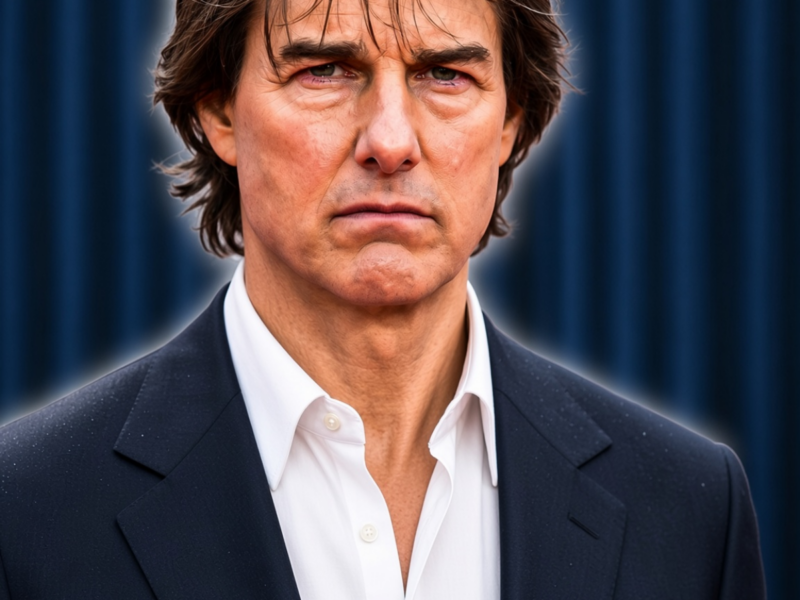
The Quiet Tragedy Behind Tom Cruise’s Hollywood Empire.
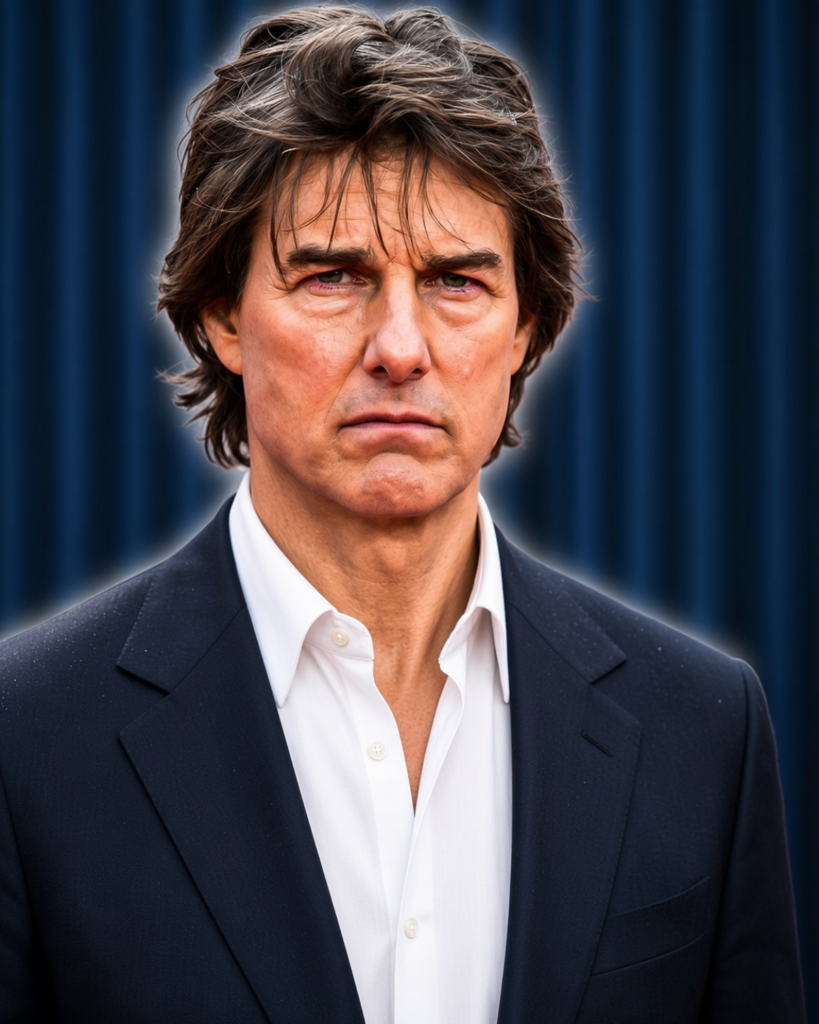
Beaten by his father, mocked for his dyslexia, stuck in poverty—that scared kid would grow up to be one of the biggest stars Hollywood ever produced.
For over forty years, Tom Cruise made the impossible look easy.
He played Maverick in Top Gun, climbed the outside of the Burj Khalifa, and hung off a plane as it left the runway.
His career seemed to laugh at age, failure, and fear.
To the public, he looked untouchable.
Away from the cameras, though, a very different story was playing out.
Then in 2026, a quiet legal change inside his own family pulled back the curtain on a part of his life he couldn’t control.
It wasn’t the start of his pain—just the latest crack the world got to see.
So what was hiding behind that famous grin?
And how did the boy who conquered Hollywood end up in fights that money and fame could never win?
Behind those wild stunts were homes that never lasted, loyalties that reshaped him, and wounds he never let anyone see.
The answer starts long before Top Gun, in the broken house where Tom first learned what it feels like to have no power at all.
In that house, all the power belonged to Thomas Cruise Mapother III.
Tom was born in Syracuse, New York, in 1962—the only boy among four kids.
His mother, Mary Lee, taught school and had once dreamed of acting. His father worked as an electrical engineer.
Money was tight, and the family kept moving before any town could feel like home.
His father’s moods shifted just as fast.
Cruise later called him a bully and a coward—a man who could make a child feel safe one moment and strike the next.
So Tom learned to read his father’s face and listen for trouble.
School gave him no relief.
Diagnosed with dyslexia around age seven, he could get through a page and remember almost none of it.
“My legs would actually hurt when I was studying,” he recalled. “My head ached.”
They placed him in remedial reading classes, and he prayed his classmates wouldn’t find out.
The moving never stopped. He bounced through more than a dozen schools.
Every new classroom meant a strange desk and another bully ready to test the small new kid.
Just when a friendship started to form, the cardboard came out again.
In 1974, his parents divorced, and Mary Lee took the kids to Kentucky first, then New Jersey.
Tom was only eleven.
His father faded out of daily life and left questions a boy couldn’t answer.
At fourteen, Tom entered a Franciscan seminary in Cincinnati and even thought about becoming a priest. He lasted one year.
Back in regular school, he turned to wrestling, where his strength showed in plain view. Then a knee injury pulled him off the mat.
A teacher nudged sixteen-year-old Tom toward an audition for Guys and Dolls.
He landed the lead: Nathan Detroit.
This was the kid who stumbled over words on a page—and now he stood under the stage lights and found out those same words, spoken out loud, could keep a whole room silent.
Being watched, for the first time, didn’t feel like being judged. It felt like being heard.
After graduation, Tom headed for New York and gave himself ten years to make it as an actor.
He had no family connections in the business and no guarantee of a second audition.
But the stage offered something else—a place where the frightened new kid could become someone nobody in the room could ignore.
And the questions about his father came along for the ride.
Roughly ten years after the separation, just as Hollywood started to notice his face, Tom got word that his father was dying of cancer.
The man would see him on one condition: no questions about the past.
In the hospital room, photographs of Tom covered the wall.
His father had never watched a single one of his movies, yet he told the nurses he had made mistakes with Tom and his sisters.
The admission had finally arrived—just not to his son’s face.
Looking at the man who had filled their home with fear, Tom thought, “What a lonely life.”
He walked out without the answers he’d come for.
Outside that room, the world was only beginning to learn his name.
And at first, that name flashed across the screen so quickly that hardly anyone caught it.
In 1981, Tom Cruise made his film debut in Endless Love.
Soon after, he showed up on the set of Taps, fully expecting to stay in the background.
But director Harold Becker spotted something in the nineteen-year-old’s intensity and built up the part of David Shawn—a cadet whose loyalty turns dangerous.
Tom hung around to watch the daily footage, studied which takes worked, and asked so many questions that he later admitted he drove people crazy.
Two years later, all of America saw him.
Risky Business had Joel Goodson dance in an empty house, and Cruise shaped most of what happened next.
Dressed in a shirt, underwear, and socks, he tested the floor again and again until he could slide into the middle of the frame and stop right on cue.
When the film hit theaters in 1983, that dance to “Old Time Rock and Roll” was impossible to forget.
Now Hollywood knew exactly what it wanted from him: the smile, the confidence, the young man who looked like no rule could hold him.
Top Gun turned that image into an American symbol.
Before Cruise signed on, producer Jerry Bruckheimer set up a flight with the Blue Angels.
The pilots threw the jet through brutal maneuvers until Cruise threw up.
Then he climbed out, called Bruckheimer, and said yes to Maverick.
Released in 1986, Top Gun pulled in more than $350 million worldwide.
At twenty-four, the undersized boy who’d once been shoved around at school now filled theater screens as America’s most fearless pilot.
The role handed him everything a young actor is supposed to want.
Maverick cast a long shadow, and every role Cruise took afterward had to live inside it.
In 1988, Cocktail put that shadow to the test.
Theaters packed in, and the film pulled in over $170 million.
Critics, though, shredded it.
Cruise stayed bankable, but people talked about the pretty face far more than the actor wearing it.
Next came Rain Man.
Alongside Dustin Hoffman, Cruise played Charlie Babbitt—a selfish young man who slowly learns to love a brother he never knew he had.
It became the biggest box-office hit of the year and took home Best Picture.
Hoffman walked away with the acting Oscar, while Cruise didn’t even get a nomination.
So the next year, Oliver Stone asked him to tear down the very image that made him famous.
That film was Born on the Fourth of July.
Cruise played Ron Kovic—a proud Marine who came home from Vietnam paralyzed and turned against the war.
Kovic himself wasn’t sure the star of Top Gun could carry his story.
The contrast was almost cruel: Maverick had flown above the clouds, and Kovic couldn’t stand up from a chair.
Cruise spent time in veterans hospitals, trained with a wheelchair, and rehearsed alongside Kovic.
That bright smile disappeared under sweat, rage, and humiliation.
One scene says it all: Kovic tries to walk on braces, collapses to the floor, and learns that sheer willpower can’t make a broken body obey.
When shooting wrapped, Kovic pressed his Bronze Star into Cruise’s hands.
The date was July 3rd, 1989—Cruise’s twenty-seventh birthday.
A veteran who once doubted the casting now trusted this actor with one of his most personal possessions.
The performance earned Cruise his first Academy Award nomination and his first Golden Globe win for dramatic acting.
At the Oscars, the envelope opened and Daniel Day-Lewis’s name rang out.
Cruise clapped from his seat.
The statuette went to someone else, but one question had gotten much harder to ask: Could he really act?
He kept pushing against the image Hollywood had built for him.
In A Few Good Men, he stood face-to-face with Jack Nicholson and held his ground.
Then The Firm gave him another major commercial hit.
In 1994, he took on the role of Lestat in Interview with the Vampire.
Author Anne Rice spoke out against the casting right away.
To her, Cruise was the clean-cut American hero—nothing like the seductive, merciless creature she’d written.
The backlash started before anyone had seen a single frame.
Then Rice watched the finished film.
She changed her mind and bought a two-page newspaper ad praising the adaptation.
Cruise had walked into another role under a cloud of doubt and walked out with his loudest critic speaking up for him.
The name once buried in the credits could now open a movie anywhere in the world.
Looking good wasn’t enough anymore.
Tom Cruise wanted control over everything behind the camera too—and in 1996, he got it.
That year, he produced Mission: Impossible through the company he’d formed with Paula Wagner.
Now he had a say in who directed, how the story played out, and how the final film portrayed the name on the poster.
The bet paid off, pulling in more than $457 million worldwide.
Four years later, Mission: Impossible 2 was the biggest hit of the year.
Ethan Hunt gave Cruise something stardom never had: danger he could rehearse again and again until every second was perfect.
But the more power he held behind the camera, the less room he had to fail in front of it.
Audiences expected him to outrun every explosion. Studios expected him to save every investment.
Then, in 2006, the failure went public.
Mission: Impossible III made nearly $400 million worldwide, yet it let down audiences at home.
Cruise’s behavior off screen had turned into a bigger story than the movie itself.
After fourteen years, Paramount cut ties with him.
Think about that: one of Hollywood’s most bankable stars pushed out in plain view of the town he’d helped make rich.
No quiet goodbye, no polite excuse about scheduling conflicts. The split was announced to everyone.
Tom Cruise himself had become the risk.
Lions for Lambs stumbled, and his United Artists venture couldn’t win back his standing.
For a while, the man who sold fearlessness wasn’t trusted to carry his own franchise.
So he buried that famous face under heavy makeup and played Les Grossman—the foul-mouthed studio boss in Tropic Thunder.
Hollywood laughed along with him again.
But to win Ethan Hunt back, he’d have to risk far more than his pride.
By 2011, Paramount welcomed him back for Ghost Protocol.
Jeremy Renner arrived amid reports that the series might go on without Cruise.
So there was Tom, filming what might be his own replacement.
Then he stepped out onto the Burj Khalifa—more than a hundred stories above Dubai.
Cruise ran across the glass exterior, held by carefully engineered wires.
The safety system was real. So was the height, with a desert stretching out beneath his shoes.
Ghost Protocol took in almost $695 million, and the planned handoff never happened.
He’d climbed the outside of the throne to hang on to it—but staying up there meant paying again.
In Edge of Tomorrow, he repeated combat scenes wearing an exo-suit that weighed well over eighty pounds.
In Rogue Nation, he strapped himself to an Airbus and went through eight real takeoffs.
For an underwater sequence, he trained to hold his breath for more than six minutes.
None of this was tacked on after the acting wrapped.
It demanded months of training and wiped out any clear line between the performer and the product.
A failed scene can be shot again. A failed body can’t.
When Cruise’s body gave out, the whole production stood still and waited—and every stunt he landed made the next one harder to top.
Audiences had already watched him hang off a skyscraper and cling to a plane. So the next danger had to sit even closer.
The franchise kept growing, and the bill kept landing on the same aging body.
Before Fallout, Cruise trained through more than a hundred high-altitude jumps—some starting near 25,000 feet—and he learned to fly a helicopter too.
Careful planning could lock down the camera angles and the route through the mountains.
It couldn’t control what happened when his ankle slammed into a rooftop wall and snapped.
Production shut down for weeks. The release date didn’t budge.
When Cruise came back, he still had months of running ahead of him.
Ethan Hunt never slowed down, and every stride carried the memory of bone hitting concrete.
Then the pandemic emptied the theaters.
Studios pushed big films straight to living rooms, but Cruise refused to hand Top Gun: Maverick over to streaming.
He sat through delay after delay while cinemas fought to stay alive.
That choice came with a real risk: each postponed month locked up more money, and nobody knew if older audiences would ever feel safe in a packed theater again.
Cruise held the film anyway.
When it finally opened in 2022, people showed up.
It pulled in nearly $1.5 billion.
Steven Spielberg embraced him and said, “You saved Hollywood’s ass, and you might have saved theatrical distribution.”
Maverick had come back after three decades, and it carried movie theaters back with it.
But the win didn’t ease the pressure. It cranked it up.
For Dead Reckoning, Cruise logged thousands of motocross jumps, all to ride a motorcycle off a mountain ramp.
The footage was stunning. The budget was massive.
Even with strong reviews, pandemic costs cut into the payoff.
Not even an impossible stunt could promise a win.
By the final reckoning, released in 2025, Cruise made sixteen jumps with a fuel-soaked parachute burning above him, then cut it away to open a second one.
The camera that filmed the fall weighed roughly fifty pounds, and it shifted his balance in midair.
Guinness World Records recognized the feat. He was in his sixties.
Across eight Mission: Impossible films, the franchise has earned more than $4.5 billion.
Those numbers describe an empire. They don’t show the bruises under the costume, or the knowledge that one mistimed move could leave three children without their father.
At Cannes, Cruise put it plainly: “We all have a dream, and this is my dream.”
For nearly three decades, he made himself impossible to replace.
Whenever Hollywood doubted his value, he answered with another film. Whenever age crept closer, he climbed higher and came back for one more take.
On a film set, that deal could be managed. The cables were tested. The countdown was done. If a stunt went wrong, the crew could just reshoot it.
But off camera, something else was steering his choices, his marriages, and the gap growing inside his family.
And this one had no second take.
It started out feeling like anything but danger.
In the late 1980s, his first wife, Mimi Rogers, introduced Tom Cruise to Scientology.
He’d had a rough start with words. As a kid, he’d stare at pages that made no sense, and reading left him anxious with sore legs and a pounding head.
Even after Hollywood knew his name, he hid that struggle like a secret.
Then came study technology—a method Scientology offered.
Cruise believed it helped him beat the dyslexia he’d lived with since age seven.
He wasn’t the boy hiding what he couldn’t read anymore. He thought he’d found his answer, and that gratitude slowly hardened into devotion.
And he gave Scientology far more than private belief.
He lent it one of the most recognizable faces on Earth. He backed its programs and grew close to its leader, David Miscavige.
In 2004, Miscavige called him “the most dedicated Scientologist I know” and handed him the first Freedom Medal of Valor.
Cruise walked up and snapped off a sharp military salute. Miscavige saluted right back.
Then the two men embraced while thousands cheered.
The star behind Maverick and Ethan Hunt wasn’t saluting for a camera now. This was his faith—the place where he believed he could change the world.
While War of the Worlds was shooting, a Scientology information tent even showed up near a Los Angeles filming location.
The line between movie star and missionary was blurring.
Then came the clash with actress Brooke Shields.
She’d written about postpartum depression and the medication that helped her get through it.
On the Today Show in 2005, Matt Lauer pushed back on Cruise.
Cruise leaned in. He called psychiatry a pseudoscience and said, “You don’t know the history of psychiatry. I do.”
Audiences had always counted on Cruise to sound sure of himself.
Now that certainty had crashed into another woman’s pain with millions watching.
The following year, he went to her home and apologized. She accepted—but he never backed off his opposition to psychiatric medication.
Then, in 2008, another image slipped out of his hands.
An internal Scientology video, recorded years earlier, spread across the internet.
Dressed in black, Cruise said, “When you drive past an accident, you know you have to do something about it because you know you’re the only one who can really help.”
The organization tried to scrub it from the web. The copies just kept multiplying.
What fellow believers had once cheered was now being judged by millions of strangers.
Scientology had handed Cruise certainty, purpose, and a language for rescuing others.
But as that faith spilled out of private rooms and onto movie sets and national television, something else was shifting behind closed doors.
The public backlash he could survive. The next price would be paid inside his own family.
To understand that cost, you have to start with the woman who opened the door.
Mimi Rogers was six years older than Tom Cruise.
She was sure of herself where he was restless, and she already knew Scientology.
The two married in a quiet ceremony in 1987.
Behind closed doors, she introduced him to teachings that seemed to speak to an old wound—and Cruise came to believe Scientology had helped him beat the dyslexia he’d hidden for years.
That shared belief became the center of his life, but the marriage didn’t last three years.
In January of 1990, they announced the split.
Mimi later gave one startling glimpse of what went on inside.
“Tom was seriously thinking of becoming a monk,” she said.
By her account, he once believed celibacy might keep him spiritually pure.
Think about that for a second. The woman who steered him toward Scientology walked away—and the faith stayed behind.
Before the divorce was even final, Cruise was shooting Days of Thunder.
Amid the roar of engines and the smell of burning rubber, he met Nicole Kidman—a red-haired Australian actress.
She was twenty-three. He was twenty-eight, and already a global star.
On Christmas Eve of 1990, they married in Colorado.
Nicole would later say she was young and madly in love.
To the public, they looked made for each other: two striking faces, two rising careers, one glittering life.
But those early years held a loss almost nobody saw.
Nicole had an ectopic pregnancy, and the child they’d hoped for couldn’t survive.
Still, they kept building a family.
They adopted Isabella in 1992, and Connor came along in 1995.
They starred together in Far and Away, raised their kids in Los Angeles, and showed up at premieres as a family of four.
The photos caught everyone smiling under the flashbulbs—from the outside, a finished picture.
Then Stanley Kubrick held up a mirror.
In Eyes Wide Shut, Cruise and Kidman played a couple rocked by jealousy and secrets.
The shoot dragged on for roughly four hundred days.
Kubrick pressed them hard, pulling on the closeness of a real husband and wife—and making them repeat painful scenes until he got what he wanted.
Nicole flatly rejected the idea that the film wrecked their marriage.
She remembered cooking spaghetti in their studio trailer and racing go-karts with Tom late at night.
“We were happily married through that,” she said.
And that memory made what came next harder to take, not easier.
The film opened in 1999.
Less than two years later, Cruise filed for divorce, and Nicole called it a major shock.
There was no final scene for the public to watch, and no explanation that softened the blow.
A marriage that had been followed for more than a decade ended in legal papers citing irreconcilable differences.
Around the same time, Nicole went through another pregnancy loss.
“I had a miscarriage at the end of my marriage,” she revealed. “It was incredibly traumatic.”
That was how it ended: beside a loss, just as it had begun beside one.
In between sat two children and family photographs from a household that no longer lived under one roof.
And over the split hung the long, disputed shadow of Scientology.
Former members say the church eyed Nicole with suspicion since her father was a psychologist.
The church denied ever interfering.
Cruise gave the public almost nothing by way of explanation.
Isabella and Connor stayed in Los Angeles, close to their father and his faith.
Years later, Nicole admitted the children didn’t call her “Mom.”
Still, she said, “They have made choices to be Scientologists. It is our job as a parent to always offer unconditional love.”
Then both of them went back to work.
Cruise returned to his films, and so did Nicole. The red carpets kept rolling, but now they walked them apart.
One woman had handed him the belief system that promised certainty. The other had helped build the family the world admired.
Both marriages were over—but Cruise wasn’t done chasing his picture of perfect love.
Next time, he wouldn’t keep it behind closed doors. He’d announce it to millions.
Before that moment, though, came a quieter romance.
Cruise met Penélope Cruz on the set of Vanilla Sky—a film about romance, memory, and illusion.
She’d already played the same woman in Open Your Eyes, the Spanish original.
When cameras started rolling, he was still married to Nicole Kidman.
Rumors claimed the affair began on set, and both of them denied it.
Penélope later put it plainly: “I’ve never fallen in love with someone I’m working with. It’s always been afterwards.”
Their first dates came in the summer of 2004—his divorce was final.
She was twenty-seven, Spanish, and fiercely independent. He was thirty-nine, freshly single, heading back to a house where Nicole and the kids no longer waited.
With Penélope, the love showed up in smaller moments.
Cruise said he’d cook her favorite meals before she got home and run her a bath.
“It’s always the little things I like in a relationship,” he said.
For a while, the little things carried them.
They stepped out together in Madrid and London, yet kept their private life closely guarded.
Penélope praised his generosity. Cruise called her romantic and real.
Even their last names got a laugh out of him. “Cruz and Cruz,” he joked.
But their careers pulled them in opposite directions. One would wrap a shoot just as the other boarded a plane.
Dinners went cold, and hotel rooms took the place of home.
Behind all that distance sat a question nobody answered, and it was about faith.
Penélope was raised Catholic and drew on Buddhism too.
Years afterward, an investigation claimed she took Scientology courses but refused to give up her own beliefs.
Scientology disputed that account, and her representative insisted religion had nothing to do with the breakup.
Here’s what’s actually known, and it’s a lot quieter: By late January of 2004, the relationship was finished.
The public didn’t hear a word until March.
No one was accused of betraying anyone, and no third person turned up in the headlines.
A representative put it simply: “They remain good friends and still talk often.”
Their schedules had carried them apart.
Three years earlier, an invitation to Cruise’s birthday party had started it all. The breakup came as a short statement from their representatives.
There was no wrecked home and no courtroom photographs.
Somewhere between Madrid and Los Angeles, the favorite meals quit being cooked and the baths quit being run.
Two marriages and one gentle romance later, Cruise still believed in the picture of perfect love. Keeping it private hadn’t saved it.
So next time, he’d do the exact opposite. He’d invite the whole world in.
And in the spring of 2005, that’s just what he did.
The woman at his side was Katie Holmes, the daughter of an Ohio attorney.
She’d once told Seventeen, “I used to think that I was going to marry Tom Cruise.”
Then, at twenty-six, she actually met him. And by that April, the two were seen together in Rome.
A month later, Cruise dropped to one knee on Oprah’s stage, grabbed Katie’s hands, and leapt onto the yellow couch.
“I’m in love,” he announced. He wanted the entire world to watch.
Seven weeks into the relationship, he proposed near the top of the Eiffel Tower.
Then, in April of 2006, Suri was born.
The couple wanted the delivery room hushed, following a Scientology practice meant to shield a newborn from frightening words.
The religion was there for their daughter’s very first breath.
That November, they married in a castle in Italy, with candles burning against the stone walls.
David Miscavige stood next to Cruise as best man.
Katie had walked right into the picture she’d imagined as a girl, and for several years, it held.
Katie called Tom amazing. Suri showed up in their arms under the flashbulbs.
Still, during one big magazine interview, a member of Katie’s Scientology circle sat close beside her the whole time.
The fairy tale had very little private room in it.
Then, in June of 2012, with no warning at all, the picture cracked.
Cruise was shooting Oblivion in Iceland when Katie filed for divorce in New York—five days before his fiftieth birthday.
He said he never saw it coming. He was thousands of miles from home, and the lawyers were already lined up.
What had started on live television now ended in sealed documents.
The case was settled in just eleven days, and the terms stayed private.
Katie and six-year-old Suri remained in New York. Cruise went back to work—to flights, film sets, and telephone calls.
Scientology sat at the center of the suspicion.
Cruise called it offensive to claim Katie left partly to shield Suri from his religion.
Yet the following year, under oath, he was asked if Katie had raised that exact concern.
His answer: “That was one of the assertions, yes.”
The couch jump ran a few seconds. The castle wedding ran a single night. The divorce itself wrapped up in eleven days—but what it cost him couldn’t be measured that neatly.
His daughter would now grow up mostly in someone else’s home.
The man who once declared his love in front of millions had no words to bring his family back together.
For a short while after the split, though, he fought to keep that door from closing for good.
In July of 2012, Cruise got to see six-year-old Suri again.
At Disney World, she wore a mermaid costume while he carried her through the crowd, held tight against his chest.
Those turned out to be among their last public photos together.
Look closely, and Suri leans into him without a second thought.
Nothing in her face hints that this man will soon be someone the cameras never catch beside her again.
A year later, Cruise sat under oath defending himself against a claim that he’d walked away from Suri.
He said they talked on the phone nearly every day.
“I’ve gotten very good at it,” he said. “I tell wonderful stories.”
Even so, he admitted a phone call is a weak stand-in for actually being in the room.
His voice could cross an ocean, but his arms couldn’t.
After that, the public record went quiet. No shared premieres, no birthday photos.
Silence doesn’t prove there was no private contact, but year after year, the visible gap stayed wide.
When Katie directed Alone Together, Suri sang “Blue Moon” over the opening credits.
She later appeared in Rare Objects. Katie called having her there deeply meaningful, then added, “Because she’s my heart.”
Mother and daughter kept making art together, while Cruise kept flying from one continent to the next for his films.
Then came June of 2024.
Suri graduated from high school in New York with Katie in the audience. Cruise wasn’t there.
The very next day, he turned up thousands of miles away at a Taylor Swift concert in London.
The graduation program held a surprise: the name “Suri Noelle.”
Noelle is Katie’s middle name.
At first, nobody knew if the change was official.
That summer, Katie hauled boxes into Suri’s dorm at Carnegie Mellon.
The little girl who’d once been carried through Disney World was now starting college right beside her mother.
Two years on, voter records showed the twenty-year-old student was legally registered as Suri Noelle.
Cruise’s last name had vanished from his daughter’s legal identity.
The name that lights up movie theaters around the globe no longer sat next to the name of his youngest child.
Neither Suri nor Katie ever called it punishment. Cruise gave no public reply.
The record confirmed the name, but not the story behind it.
One divide never got an answer, and that was Scientology.
On the stand, Cruise said Suri no longer followed his religion, and he admitted that keeping her away from it had been one of Katie’s claims.
The church says it doesn’t force families apart.
No public record explains the distance between them, but what we can see is painful enough.
In 2012, he carried her through a park. A year later, he was telling stories to her over a phone.
By 2024, he’d missed her graduation. And by 2026, his name was gone from hers.
Cruise has built a career on coming back for one more take, but childhood doesn’t wait for the camera to reset.
Whatever broke between father and daughter, those years can’t be shot again.
So, with those years out of reach, Cruise went back to the one place that never left him: the movies.
In November of 2025, he stood in front of Hollywood and held an Oscar for the very first time.
Four nominations across four decades, and the statue finally in his hands was an honorary award for a lifetime in cinema.
“Making films is not what I do,” he said. “It is who I am.”
He talked about sitting in a dark theater as a boy, watching light move across the screen and carry him into lives far bigger than his own.
His films have pulled in more than $13 billion worldwide.
His contracts often traded a bigger upfront salary for a cut of theatrical revenue.
That boy who showed up in New York with a battered suitcase had turned into an actor, a producer, and a powerful businessman.
Years ago, Cruise sold his Beverly Hills estate and his Colorado ranch.
The thing that suits him best now has wings.
It’s a restored P-51 Mustang, built back in the 1940s—the same plane you see at the end of Top Gun: Maverick, with Cruise flying it.
The engine rattles the old fighter. Then the wheels lift off the runway.
A softer tradition lives on.
Every Christmas, Cruise sends coconut cakes from Doan’s Bakery to old co-stars and friends.
Kirsten Dunst has gotten one for decades. Glen Powell even throws a “Cruise cake party” with his friends.
The boxes show up with ribbons and personal notes, bringing warmth into homes crews may never step inside.
The people who work with him describe two things: generosity and relentless focus.
A set runs on Cruise time—early mornings, repeated takes, and details checked again and again.
During the pandemic, he was recorded yelling at crew members who broke safety rules while hundreds of jobs depended on the production staying alive.
That same intensity pushed Top Gun: Maverick to nearly $1.5 billion and gave us eight Mission: Impossible films across three decades.
Even in his sixties, Cruise kept strapping himself to airplanes and dangling beneath a burning parachute.
But work can’t fill every silence.
He hasn’t remarried since Katie Holmes. Isabella and Connor stay connected to him and to Scientology.
His youngest daughter has built an adult life as Suri Noelle—and nobody knows what Cruise feels when the premieres end, the theater goes dark, and the plane rolls back into its hangar.
All we can truly see is who stands beside him and who doesn’t.
In 2026, Cruise returns in Digger, directed by Alejandro González Iñárritu.
He plays an oil tycoon trying to rescue humanity from a disaster he helped cause.
Buried under heavy makeup and a reshaped body, Cruise described the role as “a real leap into the unknown.”
Think about that for a second.
For years, he played men who never lose. Now he’s chosen a man staring at the wreckage he left behind.
No film can fully explain his private life, but Cruise keeps using the screen to step into places he rarely talks about out loud.
At sixty-four, he’s still nearly untouchable.
The box-office records, the stunts, and the Oscar are all real.
So are the three marriages that ended, the years without a public photo of him beside Suri, and the surname she chose to leave behind.
A boy who could barely read grew into a man whose name lit up marquees across the globe.
He conquered Hollywood and convinced millions that the impossible could happen—yet no camera could bring back the family that once stood next to him.
So what will history hold on to: the films, the nerve, or the price Tom Cruise paid for both?









