The Interview that Ended Michael Jackson.
You’ve maybe never heard of Neverland.
This was Michael Jackson’s home, where he built a childhood he never had.
There was an amusement park, a zoo, a train station, and a fifty-foot movie theater.
But none of this is what made Neverland famous.
The real mystery was inside Michael Jackson’s bedroom.
“Children from other families have come, and they’ve stayed in your house. They’ve stayed in your bedroom.”
“Done. Well, very few.”
“But you know, some have. And they say, ‘Is that really appropriate for a man, a grown man, to be doing that?'”
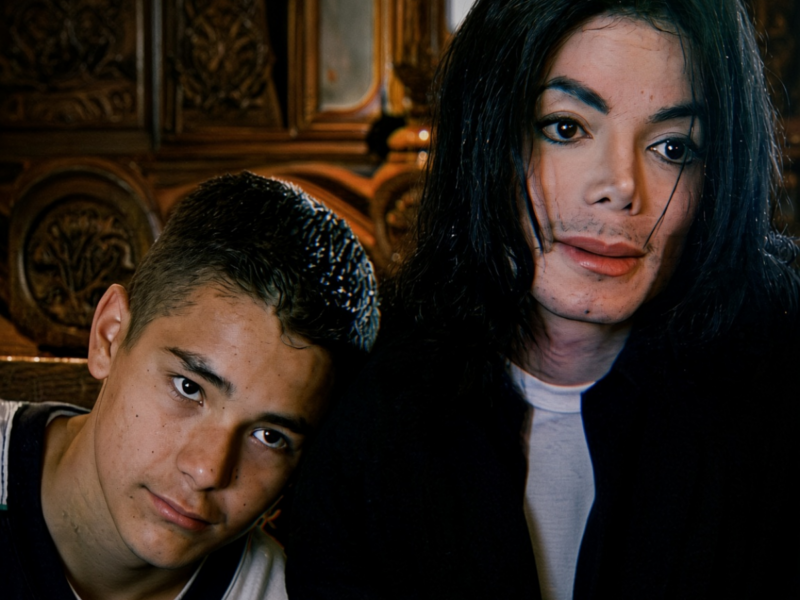
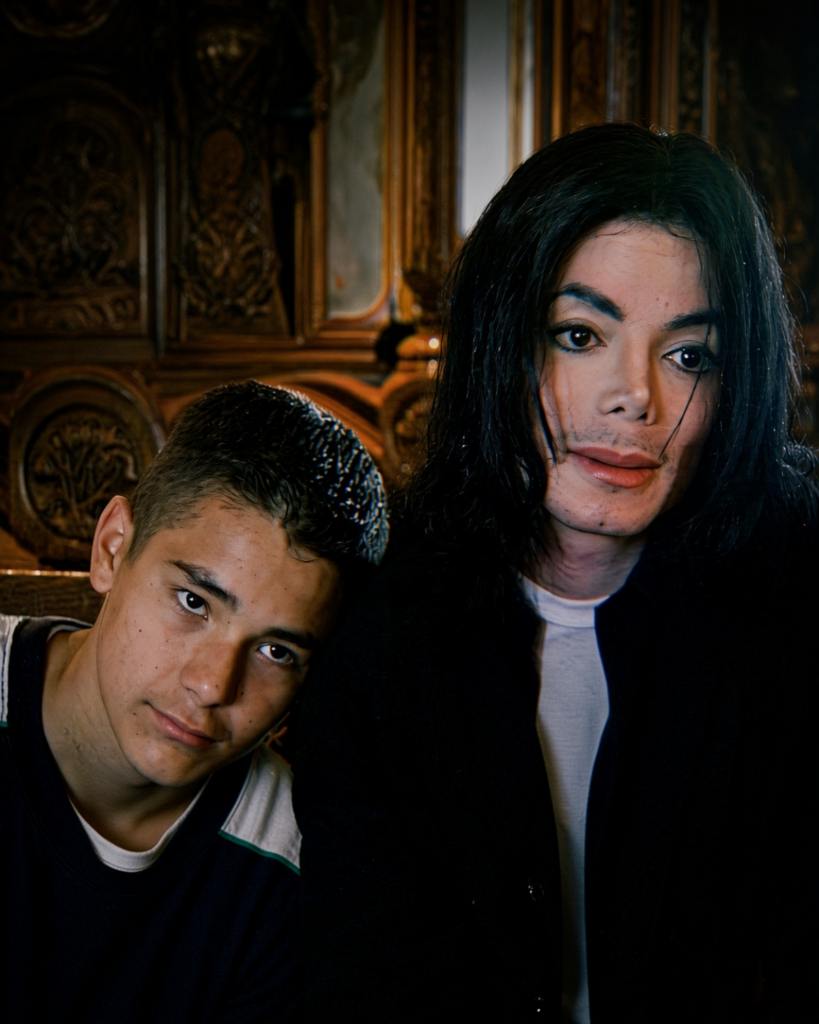
Here you have Michael Jackson sitting next to thirteen-year-old Gavin Arvizo, where the interviewer is asking whether it’s appropriate for them to be sleeping in the same room together.
“I feel sorry for them because that’s judging someone who wants to really help people. Why can’t you share your bed? The most loving thing to do is to share your bed with someone.”
“You really think that?”
“Yeah.”
But within months, this boy would become Michael Jackson’s biggest nightmare.
“An arrest warrant for Mr. Jackson has been issued on multiple counts of child molestation.”
“And you tell me, what thirty-five-year-old man is going to take a little boy and stay with him for thirty days?”
“What’s he like?”
“He’s a good guy.”
“He’s a good guy? Show me where he touched you.”
From the outside, the story seemed almost impossible to defend.
Neverland no longer appeared to be an innocent childhood fantasy.
It looked like the setting for something far more disturbing.
But outside its gates, millions of people saw an entirely different story.
The public doubted whether any of this could be true, and that’s mainly because of Gavin’s mother.
“The woman whose son accused Michael Jackson has been charged with welfare fraud in Los Angeles.”
Jackson’s supporters believed that Gavin’s family were targeting one of the wealthiest entertainers in the world.
But Gavin was not the only person to accuse Michael Jackson of inappropriate behavior.
Over the years, several boys would make allegations about what happened inside Michael Jackson’s private world.
So what was really going on in Michael Jackson’s bedroom?
Was he using his wealth and fame to hide something unthinkable?
Or was he an emotionally damaged and deeply misunderstood man being targeted by families who wanted his money?
“Please keep an open mind and let me have my day in court.”
Beyond the Ferris wheel and zoo of exotic animals, the main house at Neverland was much more private.
And inside that house was a master bedroom unlike any other.
The master bedroom suite was massive, featuring a two-story layout with a private loft, a sprawling walk-in closet, and even a giant jacuzzi.
The bedroom had an unusual security system, too.
The hallway leading to the bedroom was equipped with a motion sensor chime system.
Whenever any staff or visitors walked down this corridor, an alert would sound inside the suite, warning Jackson that somebody was coming.
Inside the suite and behind a closet was a concealed space.
Secured with a digital keypad and three deadbolt locks, Michael had his own fortified panic room that he strictly forbade anyone from entering.
Police raid footage and staff testimonials also showed that the master suite had arcade machines, vintage toys, dolls, and life-sized mannequins throughout the room.
And this is the exact room where the world’s biggest pop star would allow young boys to spend the night.
“But I have slept in a bed with many children. I sleep in the bed with all of them. When Macaulay Culkin was little, Kieran Culkin would sleep on this side, Macaulay Culkin’s on this side, his sister’s in there. We’re all just jamming the bed.”
In 1990, the release of Home Alone made Macaulay Culkin one of the most famous child actors on the planet.
As he struggled with the level of fame that few children could understand, he received an unexpected phone call from someone who experienced it himself.
“He kind of called me randomly, like out of the blue. He just kind of like, ‘Hi, it’s Michael.’ I was like, ‘Hey.’ Thing is, I didn’t react to him the way most people did. Most people like, ‘Michael Jackson.’ He was a god to people. And to me, he was—I knew he was a pop singer, but beyond that, I wasn’t one of the fans.”
When Culkin visited Neverland, his experience looked like the ultimate childhood fantasy that every kid dreamed of.
Culkin and Michael spent their days having water balloon fights, riding slides, jumping in the pool, and speeding in golf carts.
But as the visits became more frequent, Culkin and sometimes his younger brother Kieran would even begin sleeping in Michael Jackson’s master bedroom.
“You know, they’d go, ‘Oh, you slept in the same bedroom as him.’ It’s like, I don’t think you understand. Michael Jackson’s bedroom is two stories. It has like three bathrooms and this and that. So when I slept in his bedroom, yeah, but you have to understand the whole scenario.”
But Macaulay Culkin was just one kid, and the reality of Neverland was that it was constantly filled with children.
Michael Jackson often opened the gates to his 2,700-acre ranch to the public, focusing on underprivileged, sick, and terminally ill children.
He would host events for the Make-A-Wish Foundation and built custom seats in his movie theater for the sick and disabled.
For years, the media and public kept asking the same question.
Why was a grown man, the most famous entertainer on the planet, spending so much of his free time with children?
Michael became the lead singer of the Jackson 5 when he was just six years old.
While other kids were going to school and having sleepovers, Michael was doing vocal sessions and rehearsing choreography.
The Jackson 5 also toured the country, playing in clubs, theaters, and high school dances under the strict and often abusive control of their father, Joe Jackson.
“People wonder why I always have children around, because I find the thing that I never had through them. Disneyland, amusement parks, arcade games. I adore all that stuff because when I was little it was always work, work, work—from one concert to the next. If it wasn’t a concert, it was the recording studio. If it wasn’t that, it was TV shows or interviews or picture sessions. It was always something to do.”
The public largely accepted this explanation.
It made sense.
An overworked child star using his massive wealth to finally build the playground that he never had growing up.
It framed Michael not as a predator, but as a misunderstood man who dreamed of living a normal childhood.
But while millions praised his philanthropy, others found his behavior deeply unsettling.
“It’s creepy. I think it’s weird. It’s not something most people would find acceptable behavior.”
“There was a kind side to him, and yet there was a dark side.”
To critics, the media, and eventually law enforcement, Michael’s close friendship with young boys and the decision to have them sleep in his bedroom crossed a concerning boundary.
What many called innocent, others viewed as a glaring red flag.
And in the summer of 1993, those outside suspicions turned into a full-scale criminal investigation.
While Macaulay Culkin was defending his time at Neverland, the story of another boy from the early 1990s unfolded quite differently.
In the spring of 1992, Michael Jackson’s car broke down on a busy street in Los Angeles.
To avoid the crowds, he ducked into a nearby car rental agency.
The owner of the shop immediately called his wife and thirteen-year-old stepson, Jordan Chandler, to come meet the pop star.
Michael and the boy immediately hit it off, and just like Culkin, Jordan was quickly invited into Jackson’s inner circle.
Jordan, along with his mother and sister, were being invited on trips and spent extended periods of time at Neverland.
But as the friendship progressed, Jordan began spending his nights in the master bedroom.
And according to Jordan’s statements to law enforcement, he would even occasionally take showers with Michael.
Michael Jackson denies this detail as being true.
Jordan’s parents were divorced.
The thirteen-year-old lived with his mother, who fully supported her son’s close relationship with Michael.
But Jordan’s biological father, an LA dentist named Evan Chandler, saw the situation entirely differently.
In a secretly recorded phone call, Evan’s true motives were caught on tape.
“If Michael goes through with this, I win big time. I will get everything I want, and they will be destroyed forever. They will be destroyed. June is going to lose Jordie. She will have no right to ever see him again.”
“Yeah.”
“That’s a fact, Dave.”
“Does that help Jordan? His career will be over.”
“It’s irrelevant to me.”
To Michael Jackson’s defense team, the recorded phone call sounded like the blueprint for extortion.
Evan was talking about destroying Michael Jackson’s career, taking Jordan away from his mother, and winning something significant for himself.
But Evan still needed his thirteen-year-old son to be fully on board with the plan.
“At least it was courageous that his dad made these allegations against Michael Jackson, because this is sickening, it is disgusting, and it’s not like his dad drugged him into making this sort of an allegation. Oh—oh my gosh. Actually, he did.”
In August of 1993, Evan Chandler brought his thirteen-year-old son, Jordan, into the dental office to have a tooth pulled.
During the visit, Jordan was given a strong drug called sodium amytal to dull the pain.
Prior to this visit, Jordan had consistently denied that Michael had ever hurt him.
But sodium amytal is a heavy sedative that puts people into a deep hypnotic trance.
Medical studies show that the drug makes it easy to plant false memories into a person’s mind.
It was under this heavy influence of the drug that Jordan officially confessed to the abuse.
The way the confession happened was highly controversial.
According to Evan’s own story that he gave to the police, he aggressively interrogated his son while he was under this drug in order to get the truth out.
Evan then listed out specific explicit acts to his son and demanded that Jordan confirm the story.
To the police, they thought this was an important breakthrough.
From their perspective, Jordan finally felt relaxed enough to tell the truth while under the influence of this drug.
But to the Jackson defense team, they argued that the drugs were used to plant false memories into Jordan’s head.
Regardless of how the confession was obtained, law enforcement now had an official accusation on the record, and they took it seriously.
The investigation escalated quickly, leading to one of the most unprecedented search warrants in Hollywood history.
“They served a search warrant on me, which allowed them to view and photograph my body, including my buttocks, my lower torso, thighs, and any other area that they wanted.”
Police had obtained a search warrant to physically examine Michael Jackson’s body to see if it matched the highly specific description that Jordan Chandler provided them with.
After this search was conducted, the prosecution argued that Jordan’s description was highly accurate and argued that this was proof that Jordan had seen Michael intimately.
But Jackson’s defense team argued the exact opposite.
They argued that any general references to discoloration could have been guessed because Jackson’s battle with vitiligo was already public knowledge.
While both sides went back and forth on this, the public braced for the trial of the century.
But that trial never happened.
“The reason that’s been given for why you didn’t go to jail was because you reached a financial settlement with the family.”
“Yeah. Yeah. I don’t want to do a long, drawn-out thing on TV like O.J. and all that stupid stuff. And it wouldn’t look right. I just said, ‘Look, get this over with. I want to go on with my life. This is ridiculous. I’ve had enough.'”
In January 1994, the Chandler family suddenly dropped their lawsuit.
In a massive out-of-court resolution, Michael Jackson’s company paid the Chandler family a reported $20 million settlement.
To Jackson’s supporters, paying the $20 million was just the fastest way to stop the bad press.
But to Jackson’s critics, $20 million looked like the ultimate hush money.
And after an unprecedented police raid and a massive financial settlement, most of the public assumed that Michael Jackson would change his lifestyle.
They assumed he would distance himself from his young fans, close the gates of Neverland, and keep a much lower profile.
But Michael did the exact opposite.
He took Neverland on the road.
In the years following the 1994 settlement, Jackson began spending months at a time living in luxury hotels across the globe.
He would frequently rent out the entire top floor of Las Vegas casinos like the Mirage, bringing a rotating entourage of children and families with him.
One of those children was a young dance prodigy named Wade Robson.
Wade had met Michael by winning a dance competition and quickly became a significant part of Jackson’s inner circle.
“First up is the eight-year-old Brisbane dancer who has impressed everyone from Michael Jackson on down: Wade Robson.”
“Yeah, you know, there’s been different times where it’s just been me and Michael. Like what Brett said, it’s just a slumber party. We just have a lot of fun.”
When Jackson rented out the multimillion-dollar penthouses at the Mirage, he turned them into mobile playgrounds.
The suites were outfitted with arcade cabinets, walls of televisions, and endless room service.
For Wade and his family, traveling with Jackson meant living in absolute luxury.
“Just being there when these kids have been in Michael’s room—I’ve been there with them.”
“It’s just party time.”
“You know, I’ve slept in the same bed as Michael. It’s just—you watch cartoons, you fall asleep.”
“You know, it’s just a friendship, and I know he would never do anything to hurt my brother. He’s the nicest guy you’ve ever met.”
According to Wade Robson’s statements, even with a massive multi-bedroom penthouse, Jackson still shared his private sleeping quarters.
While Wade’s mother and older sister often slept in guest rooms down the hall, Wade would still sleep in the master bedroom with Michael.
“From your standpoint, does it seem unusual for a thirty-four-year-old man to have kids sleeping over?”
“Not when you know Michael’s background. Under normal circumstances, possibly yes. But Michael—everybody knows he didn’t have a childhood.”
To Jackson, he was simply sharing his wealth and living a life that he had dreamed of when he was a child.
But to many of Michael’s critics, the refusal to change his behavior was baffling.
The media was relentless, constantly speculating about what was really happening behind the closed doors of those luxury suites.
And by the early 2000s, Jackson was desperate to prove to the world that his relationship with these families was completely harmless.
So he made a decision to allow the public into his private life.
He agreed to let a British documentary film crew follow him around with a camera.
“How do you write a song?”
“How do I write a song?”
“Well—”
In 2002, a British journalist named Martin Bashir spent eight months following Michael Jackson.
Bashir was granted unprecedented access to Jackson’s recording studios, his hotel rooms across Europe, and the closely guarded grounds of the Neverland Ranch.
The goal was to finally show the world the real Michael Jackson.
And for the majority of the documentary, that’s exactly what happened.
“Can you do an English accent?”
“A bit.”
“Okay. Nice to meet you. A nice, beautiful interview.”
Much of the footage focused on Jackson’s musical genius, his massive charitable donations, and the overwhelming isolation of his fame.
But when the two-hour-long documentary finally aired, nobody was talking about the music or charity.
Instead, the public was hyper-focused on a few incredibly damaging moments.
“But haven’t you got a spare room or a spare house here where he could have stayed?”
“Yeah, but no. Yes, I have—we have guest units, but whenever kids come here, they always want to stay with me.”
“Were your parents happy that you were here with Michael?”
“Yeah, my mom was all very, very, very happy. And I know they’re happy because I was happy.”
“Did they come with you?”
“Yeah, most of the time, but I wasn’t really with my parents. I was mainly with Michael.”
This thirteen-year-old boy sitting next to Michael is Gavin Arvizo.
In the year 2000, Gavin was diagnosed with a severe and life-threatening form of cancer.
Michael Jackson, who is well known for his outreach to sick children, heard about Gavin’s condition and reached out.
“He took us under his wing when nobody else would, and he gave my brother the extra little spark he needed in his mind, because my brother was to the point where he couldn’t even move. He couldn’t even talk. And he gave my little brother so much.”
Michael Jackson invited Gavin, his siblings, and his mother Janet Arvizo to the Neverland Ranch as a sanctuary to recover.
Jackson covered the medical expenses, showered the family with expensive gifts, and gave them unlimited access to the estate’s theater, zoo, and amusement park.
For the Arvizo family, Michael Jackson was a savior, and to nobody believed that more than Gavin’s mother.
“To see my children interact with the ideal role of father role model. He plays with them, laughs with them. He lets them win.”
Janet Arvizo was incredibly vocal about her love for the pop star.
She claimed that Michael Jackson’s financial support and emotional care were the exact reasons why her son beat cancer.
She fully trusted Jackson, defending his character, and actively encouraging Gavin to spend time with the pop icon.
But the airing of the Martin Bashir documentary changed everything.
“Martin Bashir was able to get into his confidence, and then he turned on him.”
“I’m just stunned that he revealed so much.”
“You know, I’m driven by an idea to get to the truth. So what is the truth? So if I was interviewing you about things, I’d want to know a number of things about you. We’re not going to go there now, we’ll talk about it later, but the point is I would want to find out things about you. But the problem was when I did that, there were some people who obviously regarded Michael as a Messiah, as godlike, and they objected to that.”
When the broadcast became a global scandal in early 2003, Michael’s team went into absolute panic mode.
In a desperate attempt at damage control, Jackson’s team scrambled to manage the Arvizo family, trying to use them to publicly counter Bashir’s narrative.
“Hey, you know how Bashir zoomed in on him holding hands? Do that the same thing. Because that’s what a mother does with a son, or a father does with a son.”
But as the media scrutiny intensified and the PR crisis spiraled out of control, the Jackson team needed to make changes.
They abruptly ended their ties with the Arvizo family.
The lavish gifts stopped.
The financial support was cut off, and the Arvizos were no longer staying at the Neverland Ranch.
And almost immediately after the money and the access dried up, Janet Arvizo’s story completely changed.
She hired a lawyer and she went to the police.
Janet now claimed that Michael Jackson had not only acted intimately with her son, but also that the Jackson security team had essentially held them hostage at the ranch to force them to film damage-control videos.
“Pop star Michael Jackson surrendered today to authorities in California, where he faces charges of child—”
“He considers this to be a big lie. He understands the people who are outraged, because if these charges were true, I assure you Michael would be the first to be outraged.”
Michael Jackson was out of the state when the arrest warrant was issued, but he immediately flew in a private jet back to California to surrender to authorities.
When the plane landed, it taxied into an airplane hangar where Jackson stepped off and was placed into custody.
Police met him in the hangar, drove him to the jail, and he was released on a $3 million bail.
These allegations in 2003 made the 1993 case look tame by comparison.
This time, there would be no out-of-court civil settlement.
Jackson was now facing a full criminal trial.
“In 1993, it never got to court, and we know why. And so this time around, I’m anxious to find out the truth.”
Inside the courtroom and across mainstream media networks, the atmosphere was much darker.
Legal analysts and critics pointed out a deeply disturbing pattern.
They argued that even if you believe Jackson’s intentions were pure, the reality was that a grown billionaire was continually isolating himself in bedrooms with young children.
“It’s just very odd that any thirty-five-year-old man always had thirteen-year-old boys as his best friend. I mean, if my daughter was thirteen and she only brought home thirty-four-year-old female friends, I think I’d take them both out in the backyard and shoot them.”
The prosecution believed that they finally had the evidence and the witnesses to lock Michael Jackson away for the rest of his life.
Gavin accused Jackson of giving him alcohol, showing him explicit pictures, and having an intimate relationship.
His younger brother Star claimed he witnessed the abuse.
While their sister Davellin supported the family’s account that Jackson’s team had pressured them and controlled them after the Bashir documentary.
But the most vulnerable part of the prosecution’s case rested on one unpredictable witness: Gavin’s mother, Janet Arvizo.
“As the morning wore on, it seemed that this accuser’s mother’s meds wore off, because she returned to the form of yesterday when she was totally unpredictable and totally uncontrollable under the very careful and gentle questioning of Assistant D.A. Ron Zonen.”
“Now, the defense claims that the mother is not credible and that she simply made up all of these allegations against Michael Jackson because she is after his money.”
During cross-examination, Jackson’s lawyers launched a devastating attack on Janet Arvizo’s credibility.
They revealed to the jury that long before she had ever met Michael Jackson, Janet Arvizo had already had a long, documented history of making extreme allegations to secure a massive financial payout.
“In 2001, she got $150,000 from J.C. Penney’s in the settlement where she was supposedly manhandled and her kid was manhandled after what she said was a false arrest.”
“The arrest at J.C. Penney’s where the boys were grabbed stealing clothing from J.C. Penney’s. She made these allegations that she had been beaten up and roughed up by the police, and she sued Penney’s, and she said that her shirt was torn—and you can see in her booking photo it was buttoned all the way up, no damage whatsoever.”
And the financial revelations didn’t stop there.
Even worse for the prosecution, the defense revealed that while Janet was receiving massive amounts of cash, luxury gifts, and housing from Michael Jackson, she was simultaneously claiming state welfare.
She was later formally charged with felony welfare fraud for failing to disclose money that her family received from a civil settlement.
With Janet Arvizo’s credibility collapsing on the stand, the prosecution needed to change their strategy.
That’s when the prosecution used a controversial legal maneuver to introduce prior bad acts.
The prosecution subpoenaed previous accusers, hoping to prove that Gavin Arvizo was just the latest victim in a long pattern of abuse.
First, they brought in Jason Francia, the son of a former Neverland maid.
His family had quietly received a $2 million settlement back in 1993.
Jason testified that when he was a child, Jackson reportedly tickled him and touched him in the private area.
But the defense responded by calling Wade Robson to the stand, the young dancer who had shared Michael Jackson’s Las Vegas penthouses.
When Wade took the stand, he swore under oath that Michael Jackson never touched him inappropriately.
Finally, the prosecution tried to leverage the 1993 allegations, but they hit a massive wall.
Jordan Chandler legally fought the subpoena and refused to testify.
The defense was arguing that every single accuser brought forward by the district attorney either had a clear financial motive, or in Wade Robson’s case, denied the abuse entirely.
And after fourteen weeks of grueling testimony from over 130 witnesses, both sides had presented radically different versions of the same private world.
The fate of Michael Jackson was now up to a jury.
“We the jury in the above-entitled case find the defendant not guilty of conspiracy as charged in count one of the indictment.”
“Well, when the first verdict was read, they cheered, then immediately they quieted down to hear the next. Then it went through all ten. Clearly now, it’s pandemonium out here among the crowd members. Inside the courtroom, we understand from our producer Michael Jackson dabbed his eyes with Kleenex during the reading of the verdict. And now, well, you can see the SUVs are pulling up. Michael Jackson will be getting inside one of those vehicles and heading to wherever he wants. He is not guilty.”
As the black SUV pulled away from the Santa Maria courthouse and headed back to Neverland, Michael Jackson was officially a free man.
But as he stared out the window of that vehicle, he had to know the truth.
The victory was hollow.
Despite the legal victory, the trial had inflicted permanent damage.
For fourteen weeks, the world had been given an unfiltered look into the bizarre reality at the Neverland Ranch and into Michael Jackson’s personal life.
Even those who fully believed in Michael Jackson’s innocence couldn’t ignore the disturbing boundaries that had been crossed.
Following the verdict, Michael Jackson abandoned the Neverland Ranch entirely.
He packed his belongings, locked the gates behind him, and never lived there again.
The trial had taken a devastating toll, and he spent his final years living in severe isolation.
And then, just four years later, the story came to a sudden end.
In 2009, Michael Jackson tragically died at the age of fifty.
The exact truth of what happened behind those closed doors may have died with him, but what remains is the story of a man who tried to build the childhood he never had, only to watch that fantasy tear his world apart.
“But the truth is that he was never convicted of any crime. I never saw any wrongdoing myself. And whilst his lifestyle may have been a bit unorthodox, I don’t believe it was criminal.”









