The 17-Year-Old Mother Found Burning in the Woods.
The phone rang at 6:14 on a Saturday morning in December, and Dale Mercer was already awake because he had never slept well in the week before Christmas, and he picked it up and heard his ex-wife’s voice on the other end saying four words that rearranged his whole life: “D.J.’s here. She’s not.”
Their daughter Kelsey was seventeen years old and the mother of a five-month-old boy, and she had gone out the night before to see friends and had not come home, and Dale was pulling on his boots before Susan finished the sentence.
He drove to her house with his headlights cutting through a fine cold mist, and when he got there the baby was in his crib and the diaper bag was in the back seat of Kelsey’s car and the keys were still in the ignition and the purse was on the passenger seat with $140 in it, which was every dollar the girl had in the world.
Nobody brings a baby inside and leaves the keys and the money and the diaper bag and then just walks away.
That is not a thing that happens.
Dale stood in the driveway with his hands on his hips and looked at that car for a long time, and he understood before anybody said it out loud that his daughter had not gone anywhere on her own.
The object that holds this story together is a .22-caliber shell casing, and it appears three times.
The first time is in a plastic evidence bag on a table at the county sheriff’s office, where a deputy who had been on the scene for twenty minutes set it down and said, “We found this on the shoulder, about forty feet from where the fire was.”
The second time is on a lab report six weeks later, matched to a pistol recovered from the console of a gray pickup truck, and the third time is in a courtroom where a prosecutor holds it up between two fingers and says, “This is the thing that makes it murder and not a story.”
But we are getting ahead of ourselves.
The casings come later.
The story starts with a father driving all day.
Dale Mercer spent Saturday knocking on doors, and by late afternoon he had worked his way back through every friend Kelsey had seen the night before, and every one of them told him the same thing.
The last person she was supposed to meet was a twenty-year-old named Travis Wren, who got off work at the tire shop at nine and had told at least two people that he was going to see her.
Dale found the address of Wren’s mother’s house and drove out there at noon and knocked and got no answer, and he knocked again, and he sat in the car for a while, and he knocked a third time and then left and came back at four and the truck was gone, and then he found the truck at the shopping center on the highway and pulled up beside the driver’s door and got out.
“Are you Travis Wren?” he asked, and the young man said, “Yeah,” and Dale said, “I’m Kelsey’s father. Have you seen her today?”
And Wren said no, sir, not since he had left her the night before, and Dale asked where he had left her, and Wren named a house that Dale knew did not belong to anyone Kelsey knew, and then Wren said something that Dale Mercer would repeat on the witness stand for the rest of his life.
He said, “I hope she’s alive when you find her.”
Not I hope she’s fine.
Not I hope she turns up.
I hope she’s alive when you find her.
Dale stood very still and looked at the kid and said, “What did you say?” and Wren said, “I just mean I hope she’s okay,” and he was polite and he looked Dale in the eye and he did not look nervous, and that was the worst part.
Dale drove to the police department and walked up to the dispatch window and said, “My seventeen-year-old daughter has been missing since last night. I found the last person who saw her. He’s at the shopping center right now. I want to ask you one time: can you send somebody up there to talk to him?”
The dispatcher looked at him and said, “Sir, just stand over there.”
And about fifteen minutes later a radio crackled and a voice asked if her dad was still there, and a deputy came out and put Dale and Susan in a room, and Dale thought maybe they were finally going to take a report.
The door opened and a TBI agent came in with the kind of face a man wears when he has lost a good friend, and Dale knew before the man said a word.
“Mr. Mercer,” the agent said, “we found a body in the woods off Ridge Road about an hour ago. It’s a young female. We need to ask you some questions and we need a dentist’s name, because we can’t identify her any other way.”
Dale said, “Just take me to her. I can identify her.”
And the agent looked at him and said, very carefully, “Mr. Mercer, the body has been burned.”
Dale Mercer had to be physically held back in a hallway by two deputies, and forty feet away and two doors down Travis Wren was sitting in an interview room.
The fire had been discovered by a man driving home from a late shift who saw flames in the woods and thought it was a campfire and pulled over to look, and what he found was so far outside the ordinary that he called 911 at 11:52 p.m. and could barely form the words.
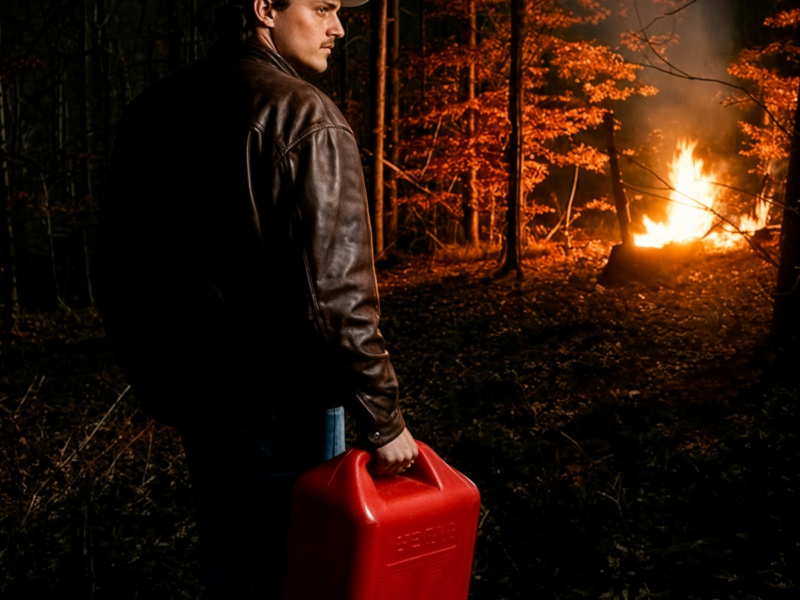
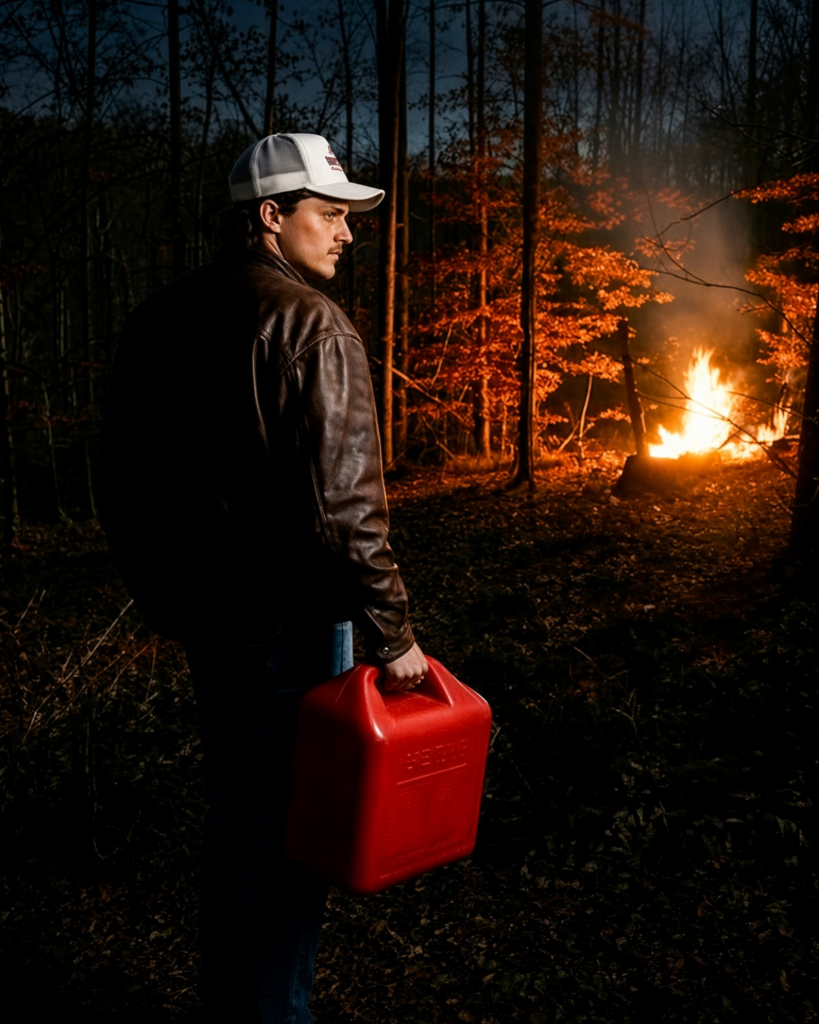
The first deputies on scene found a body that had been set alight with an accelerant, and a piece of melted plastic that later matched a container found in the bed of a gray pickup truck, and they put the fire out in a way that preserved as much of the scene as they could, and they did it right.
Kelsey Mercer had been shot four times in the head at close range on the shoulder of Ridge Road, and then dragged into the woods, and then shot a fifth time, and then undressed, and then burned.
The medical examiner would say later that the first shot likely killed her instantly, which mattered enormously at sentencing, though it mattered very little to her father.
There were five casings in all, four near the road and one near the body, and they were .22 caliber, and they matched a pistol that deputies found in the console of Travis Wren’s truck when they searched it that night.
The interview began around one in the morning and lasted four hours.
The TBI agent, a patient man named Stuart Goodman, went into the room with a colleague and sat down across from a twenty-year-old kid in a work shirt and asked him to tell the story of his evening, and Wren lied for about an hour.
He said he hadn’t seen Kelsey.
Then he said he’d seen her and she got mad at him and left.
Then he said they’d had sex in the back of his truck, in the open bed, in twenty-five-degree weather, which is a thing no human being has ever done and survived to brag about, and the agents let him sit in that lie for a while before they took it apart.
He said she was afraid she might be pregnant and that she was going to accuse him of something, and that she bent down to tie her shoe, and that he reached under the driver’s seat of his truck for the gun, and that she saw it and started crying and asked him why he had it, and then he shot her four times in the head, and then he dragged her into the woods and shot her one more time.
He said this in a flat voice without weeping, without stopping, without asking once about the child.
Then the agents asked him why he went back and set her on fire, and he said, “Because I knew they couldn’t connect me to her if there was no evidence.”
And the agent said, “What evidence?”
And Wren said, “You know.”
And the agent said, “Say it.”
And Wren said, “The sex.”
He was not sorry.
He was never sorry.
The agent who worked him for four hours said afterward that talking to him was like talking to a man about a deer he had hit with a truck, and that when Wren said the words I did it, it was not a confession but a schedule update.
The second man in the story is the one who could have stopped it, and his name was Lucky Reed.
Wren drove to Reed’s house at 2:30 in the morning and woke him up and asked him to come look at a deer he had shot, and Reed said it was too cold, and Wren said, “It’s not a deer, it’s a body, I hurt somebody,” and Reed got in the truck and rode out to Ridge Road and walked into the woods and looked at Kelsey Mercer’s body.
And then Reed went home and went back to bed and told nobody for the next three days, because he was more afraid of Travis Wren than he was of telling the truth, and because, as he said later, “It was none of my business.”
When deputies finally knocked on his door, Reed lied to them for six hours before he cracked.
He is serving seven years for obstruction, and he still sends letters to the family twice a year, and Dale Mercer throws them away.
The case went to trial nine months later, and the prosecutor sought the death penalty, and the defense argued that the aggravating factors did not apply, and the judge ruled that the state could not prove Kelsey suffered because the first bullet had taken her life instantly, and the sentence came down as life without parole, and Travis Wren is in a cell in Nashville today and will be for the rest of his natural life and has never expressed remorse.
Dale Mercer has been to the parole board twice, though parole is not technically available, because he wants to be sure, and he will go again.
D.J. is a grown man now, twenty-six years old, with his mother’s eyes, and he was raised by his grandparents and he has been told the whole truth about his mother and he has read the court transcripts and he keeps a photograph of Kelsey on his dresser, and Dale says the boy is the only good thing that came out of that night.
He is also the only thing that keeps Dale Mercer getting up in the morning.
Here is what I want you to carry with you.
There is a five-month-old baby alive today because his mother brought him inside and put him in his crib before she went out to meet a man she thought was a friend, and there is a seventeen-year-old girl in a courtroom photograph and a father who has spent every day since driving the roads of that county and a shell casing in a plastic bag that turned a story into a verdict.
Kelsey Mercer was a child.
She was seventeen years old, and she was a mother, and she was under the age of consent in the state of Tennessee, and the man who killed her was twenty and knew exactly what he was doing when he reached under the seat of his truck.
If you have a daughter, hold her a little tighter tonight.
If you have a son, teach him what a woman is worth.
And if you know something that might help a family find the answer to a question they have been asking for years, call it in, because somewhere out there is a father who has been knocking on a door since six in the morning, and he has not stopped knocking.









