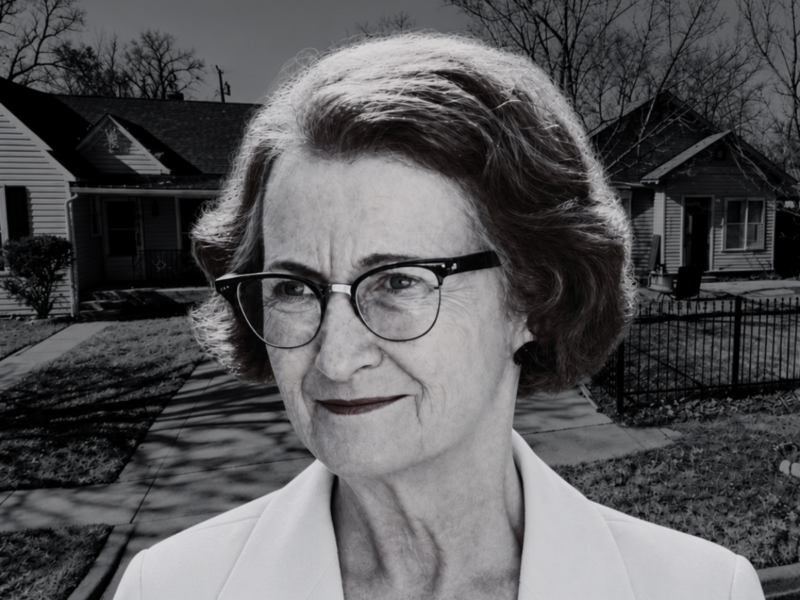
Texas 1989 Cold Case SOLVED — ‘She Couldn’t Pay Me, So We Had an Arrangement’.
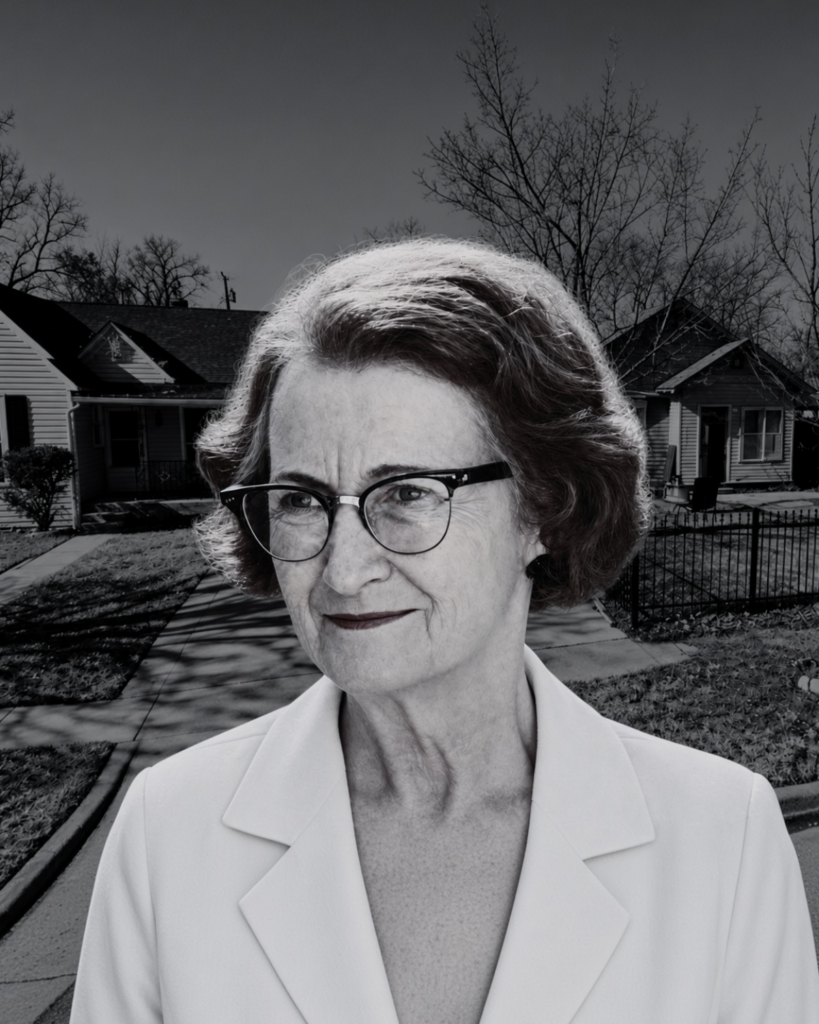
Police have made an arrest in a 33-year-old murder case in Dallas, and it is all thanks to DNA testing.
Back in January of 1989, police found the body of Mary Hague Kelly in a home on North Francis Street in Oak Cliff.
Police say there were no signs of forced entry, but her belongings and her car were missing.
No sign of forced entry.
That was one of the first things investigators noticed after 78-year-old Mary Hague Kelly was found dead inside her Dallas home in 1989.
And that single detail shaped the investigation for years.
If there was no break-in, investigators thought, then Mary must have opened the door for someone.
A stranger, a repairman, someone passing through.
But there was one person they didn’t seem to consider.
Someone who was much closer to Mary than investigators realized.
If you’re joining us on this channel for the first time, you’re in for an interesting ride, and every watch is worth your time.
Mary deserves to be known by more people than she is.
Drop a comment and tell me where you’re watching from.
Hit subscribe so you don’t miss what’s next.
Before she was a case file, Mary Hague Kelly was the woman people on her street called on when something needed fixing, hemming, or just listening to.
She was 78 years old, small in stature.
Family remembers her standing barely over four and a half feet tall and weighing around 78 pounds, but with a presence that filled a room.
She worked as a seamstress, sewing custom drapes for interior designers around Dallas.
The kind of skilled, exacting work that takes decades to build a name on.
Relatives describe her as full of energy, quick to laugh, a woman who, in their words, knew no enemies.
Within the family, she had her own nickname.
Some of them simply called her Sister.
Her husband had died years earlier of a sudden heart attack.
After that, Mary lived alone in the home they’d shared.
Her family didn’t love the idea of her being on her own, so they made sure she wasn’t.
Relatives rotated through the house, checking on her, sitting with her, making sure the widow down the block was never isolated for long.
To her grandchildren, she wasn’t just an aunt or a great-aunt somewhere on the family tree.
She was a second home, a place to land when you were sick and couldn’t go to school.
To the wider neighborhood, she’d become something close to everyone’s grandmother, the small, energetic matriarch of that block, someone whose door nearly every family on the street had knocked on at one point or another.
She knew her neighbors.
Her neighbors knew her.
In most stories, that’s the detail that makes a place feel safe.
In this one, it’s also the detail a certain kind of person would end up using against her.
January 19th, 1989.
Mary hadn’t answered her phone in days.
Her sister grew worried enough to send her husband, Mary’s brother-in-law, to check on her in person that evening at her home on North Francis Street in West Oak Cliff.
The first thing he noticed, before he’d even reached the door, was that her car wasn’t parked in its usual spot out front.
He let himself in with his own key.
There were no signs of forced entry.
Nothing in the house looked obviously out of place.
He called her name.
Nothing answered him back.
It was the family dogs that gave it away.
Agitated, pacing, drawn toward the back bedroom.
He followed them, and that is when he noticed the suitcase, normally tucked away out of sight under a guest bed, now pulled slightly out from underneath it.
He got down to look, and he found her.
Word reached the rest of the family quickly.
Relatives who rushed to the house that evening were kept outside while investigators worked the scene.
When police and a medical examiner’s investigator arrived, they determined that whoever had done this had gone to real effort to conceal her.
Investigators had to physically lift the bed frame to recover her body.
Blood pooling at the scene suggested she had likely been there for several hours at minimum.
She had abrasions and what were described as defensive wounds on her hands and other parts of her body, and she had ligature marks circling her neck.
The signs of strangulation were immediately apparent.
Investigators also recognized signs consistent with a sexual assault.
Notably, no cord was found around her neck when she was discovered, but there were several loose cords in that bedroom, including one lying right next to her body.
To investigators, that detail alone suggested this was not a random act.
Whoever did this had used something already inside the house.
The autopsy performed by Dr. Jeffrey Barnard, at the time one of several Dallas County medical examiners, though he would later rise to become the county’s chief medical examiner, confirmed what the scene had already suggested.
Mary had fractures to her thyroid cartilage, her voice box, and to the hyoid bone, a small structure in the neck.
She also had petechiae, tiny hemorrhage points in the eyes caused when sustained pressure on the neck’s blood vessels makes them rupture.
Medically, petechiae combined with these neck injuries are consistent with manual or ligature strangulation.
She also had abrasions in the buttocks area and bruising and injury to the vaginal region.
A full sexual assault kit was collected at the time.
Vaginal, anal, and oral swabs.
Between the neck trauma, the petechiae, and the injuries consistent with sexual assault, the medical conclusion was a rape homicide.
There was no obvious sign of forced entry.
Investigators did note smudge marks on a window sill in a back utility room, a laundry area, and treated it as a possible, though never confirmed, point of entry.
It’s the kind of detail that points somewhere without ever pointing all the way.
Some of Mary’s jewelry, her purse, and an antique phone were missing.
So was her car, a 1980 Chevrolet Monte Carlo, which turned up two days later abandoned in a church parking lot, windows smashed, the radio stripped out, and a box of beer cans left behind in the trunk.
Cans that, by every account from her family, had no business being there.
And in the corner of her bedroom, a closet door had been pushed out of position, exposing an old analog clock radio mounted behind it, the kind with a dial, not a digital display.
At some point during whatever happened in that room, it was pulled hard enough from the wall to stop it completely.
It had frozen at 3:23.
Investigators believed that if there had been a struggle severe enough to rip the radio from the wall, that time likely marked roughly when it happened.
It remains the closest thing anyone has to a timestamp on a crime that otherwise left no witnesses.
Here is the first gap this case fell into, and it wasn’t a broken lock or an unlatched window.
It was the year itself.
1989.
Forensic testing on the cord recovered near Mary’s body detected male DNA.
A preliminary test on her robe, a method that can identify a bodily substance like semen without yet producing a DNA profile, came back positive for the presence of sperm.
In isolation, either finding should have mattered enormously.
But in early 1989, DNA profiling as an investigative tool barely existed.
There was no national database to run a genetic sample against, and no way to convert unidentified biological material into a name.
All investigators could do was preserve the evidence and hope that technology would eventually catch up to what they had already collected.
In the meantime, Dallas police canvassed the neighborhood, a place where, by every account, people genuinely did know one another.
Some neighbors mentioned a car parked oddly in the alley behind the house.
Others said Mary’s back door had been left open.
As in any homicide investigation, detectives also looked closely at family, including the brother-in-law who had found her.
He was interviewed and cleared.
His identity confirmed in part through fingerprint records reportedly obtained from his military or federal service file.
At the time, some investigators in Dallas were also quietly comparing this case to a string of other unsolved killings of elderly women living alone across the city during the 1980s and into the ’90s.
Home invasions involving sexual assault with a similar pattern.
Whether Mary’s murder was connected to those cases was a working theory at the time, never confirmed.
Dr. Barnard, who had arrived in Dallas in 1987, was among those who suspected a connection.
Years later, once DNA testing became viable, he went back through the department’s old paper case files, which at the time had no organized digital system, and built his own manual spreadsheet of unsolved cases, hoping the new technology might eventually tie several of them to the same offender.
None of it produced a name.
Latent fingerprints lifted throughout the house didn’t match anyone on file.
Without a way to search the DNA evidence against a database, and without a witness who could name a suspect, the investigation, which had run active for roughly two to three months, went cold.
Mary’s family did what families in that position often do.
They waited, and they called.
For years, they’d periodically reach out to the detective assigned to the case.
The answer was always the same.
“Nothing yet, but you’ll be the first call when there is.”
In 2004, the Dallas Police Department formally reopened Mary’s case.
By then, DNA science had transformed.
Dr. Barnard, who by his own account never fully let this case go, remembered that a complete evidence kit had been preserved from 1989.
The vaginal swabs, the robe, all of it.
He pushed to have the biological evidence tested with the newer technology.
It worked, to a point.
A usable male DNA profile was finally developed from the evidence.
That profile was uploaded into CODIS.
This time, unlike 1989, a database actually existed to search against.
It simply didn’t have an answer waiting inside it.
No match came back.
Whoever had left that DNA had apparently never been arrested for an offense that required submitting a sample.
The profile was real.
It was solid.
And it pointed to no one because there was nothing in the database to match it against.
That is the second gap in this case.
Even strong evidence is only as useful as what you’re allowed to search it against.
Investigators now had what amounted to a genetic fingerprint and nowhere to press it.
The case went quiet again.
Years later, a newer field of forensic science began closing cases that a CODIS search alone never could.
Investigative genetic genealogy, often shortened to IGG.
Rather than matching DNA directly against a criminal database, IGG uploads a genetic profile into consumer-style ancestry databases and builds out a family tree from whoever appears as a distant genetic relative.
A second cousin, a great-aunt, someone with no criminal record and no idea they’re about to become the thread that unravels a decades-old murder.
For a lot of departments, the obstacle isn’t the science, it’s the cost.
This kind of testing wasn’t something Dallas County had budgeted for on an unsolved case from 1989.
So the cases investigators division chief Layton D’Antoni and senior investigator Jonathan Wakefield, both with the Dallas County District Attorney’s Cold Case Division, looked for outside help.
Through a relationship with the medical examiner’s office, they connected with a forensic genetic genealogy laboratory called Astrium.
Astrium applied for grant funding on the case’s behalf through Season of Justice, a nonprofit that specifically funds this kind of testing on cold cases.
The grant application, including the necessary DNA extracts, was submitted in 2021.
Early in 2022, the funding was approved.
The lab took a DNA extract that had originally been recovered from Mary’s robe back in 1989 and ran a full forensic-grade genome sequence.
It worked.
The result was a usable, high-quality profile that could be uploaded and searched against a genealogy database, and it returned something.
Here is where the science gets almost uncomfortably precise.
Think of a family tree here like a set of folders nested inside folders, almost all of it irrelevant until you know exactly which one to open.
The profile matched a woman at roughly the genetic distance of a second cousin to the unidentified suspect.
Her own background was mixed, one parent of European ancestry, the other of Latin American ancestry.
Because the unidentified man also carried Latin American ancestry, analysts concluded the genetic connection likely ran through her father’s side of the family.
Then came a detail most viewers have probably never had reason to think about.
Shared DNA on the X chromosome.
Without getting too deep into the biology, the X chromosome follows a distinct inheritance pattern, one that let analysts rule out roughly three-quarters of the possible family branches in a single step.
It pointed specifically toward the suspect’s paternal grandmother’s side of the tree, which would have simplified things considerably, except that grandmother had eleven siblings.
Eleven separate branches, each one a potential dead end requiring its own research.
This is usually the point where genetic genealogy work slows to a crawl for weeks at a time.
Instead, analysts cross-referenced the family tree against public records, and one branch stopped them cold.
Two brothers from that family had lived right next door to Mary at the time she was murdered.
That family’s surname was Rojas.
Once investigators looked more closely at the two brothers, one separated himself from the other almost immediately.
David Rojas had a criminal history that included a prior sexual assault allegation and reported allegations of child abuse.
By this point, David Rojas was living roughly 400 miles away in Del Rio, Texas.
Investigators, working with the FBI’s Dallas division and local police in Del Rio, didn’t move in immediately.
They needed a direct DNA sample, and they needed it without alerting him.
So they watched him for two to three days, waiting for a lawful opportunity that wouldn’t require tipping their hand.
It came in the form of his own trash.
Investigators recovered discarded beer containers, described in different accounts as a single bottle and elsewhere as an empty six-pack from garbage he had put out at the curb.
Legally abandoned property they were within their rights to collect and test.
That evidence went to the lab.
The DNA recovered from it was compared against the profile developed from the crime scene evidence back in 1989.
On June 28th, 2022, it came back a complete match.
On July 22nd, 2022, David Rojas was taken into custody.
He was 53 years old at the time, old enough, investigators noted, that had this case never been solved, he would have remained well within an age range capable of committing further violent crimes.
After his arrest, a search warrant secured a direct buccal swab, a cheek sample taken from David Rojas himself.
That sample was compared one-to-one against the original DNA extract from the robe.
It matched again, directly, with no ambiguity.
In 1989, David Rojas had been around 19 or 20 years old.
He had grown up next door to Mary and was, by more than one family account, frequently in and out of the house beside hers.
He had never once been named as a suspect.
Family members recalled that investigators at the time spoke with his brother and his father next door, but not, as far as they know, with David Rojas himself.
Not a broken window this time.
Just a familiar face.
Someone close enough, young enough, and ordinary enough that in a neighborhood built on everyone knowing everyone, no one thought to look twice at him.
It was the last of the three gaps David Rojas slipped through, and by far the most human one.
When David Rojas gave a statement to Dallas police, he offered an explanation for why his DNA would be present.
According to David Rojas, he and Mary had been involved in an ongoing sexual relationship for roughly two to three years, beginning when he was 17, 18, and 19 years old.
His account was that he used to cut her grass and work on her car, but she couldn’t afford to pay him for the labor, and that in his telling, she offered him sex in exchange.
That is David Rojas’s account.
It is not what the follow-up investigation found.
Investigators went back to interview neighbors and members of David Rojas’s own family to test the story.
None of the neighbors recalled him ever mowing Mary’s lawn.
A man who lived across the street said flatly that David Rojas never did, that other neighbors had handled that yard work themselves.
David Rojas’s own ex-wife told investigators something even more direct.
That he never mowed anyone’s lawn, including their own homes.
She was the one who cut their grass.
There was also this.
Mary’s husband, by every account the one great love of her life, had been gone for years by the time of the murder.
But according to her family, she had never entered another relationship afterward, let alone one with a teenager decades younger than her.
In the end, the consensual relationship claim was exactly what it appeared to be from the outside.
A defense built entirely on one man’s word with no supporting witness and no supporting evidence against a woman who could no longer speak for herself.
David Rojas’s trial did not begin until early November of 2024, more than two years after his arrest and 35 years after Mary’s murder.
It was reportedly the first murder trial in Dallas County history built on a case originally broken open by investigative genetic genealogy.
By then, David Rojas was 55 years old.
Because Dallas County prosecutors chose not to seek the death penalty, a capital murder conviction would carry an automatic sentence of life in prison without the possibility of parole.
That added real pressure to a case already carrying decades of weight.
The trial brought in roughly 12 to 15 witnesses, many of them Mary’s own family members, testifying to who she was and what she meant to the people around her.
Investigators testified to the physical evidence, centrally the direct STR DNA comparison that had identified David Rojas in the first place.
The investigative genetic genealogy work that generated the original lead was not presented as trial evidence.
It had done its job by pointing investigators toward a name, and the courtroom case rested on the traditional DNA match.
The defense leaned into the claim that the relationship had been consensual.
Texas law made that argument genuinely difficult to fully dismantle in the courtroom for one unavoidable reason.
The only person who could say with certainty that it wasn’t consensual was no longer alive to testify.
The jury did not take long.
After closing arguments were delivered around 1:00, they returned a verdict within a matter of hours.
David Rojas was convicted of capital murder.
On November 7th, 2024, David Rojas was sentenced to life in prison without the possibility of parole, the automatic sentence for a capital murder conviction in a case where prosecutors did not pursue the death penalty.
For a man in his mid-50s at the time of sentencing, that means he will, in all likelihood, spend the remainder of his life behind bars.
Alongside the capital murder charge, David Rojas was also formally charged with two counts of indecency with a child involving two female family members who were reportedly around 9 and 12 years old at the time of the alleged offenses.
At his sentencing, family members addressed those allegations directly as well, saying they only felt able to speak once he was already behind bars.
For Mary’s family, the resolution didn’t erase over three decades of not knowing, but it finally answered a question some of them had carried for most of their lives.
One family member has said that the hardest thing they ever did was forgive him, not for his sake, but for their own, in search of some peace.
This case also carries a specific significance beyond Mary’s family.
According to the Dallas County District Attorney’s Cold Case Division, it was the first investigative genetic genealogy case to result in a capital murder conviction in the county’s history.
A case now cited in the broader push for more public funding to apply this kind of testing to the thousands of cold cases still sitting in evidence rooms across the country.
Investigators and advocates connected to this case have pointed specifically to federal legislation known as the Carla Walker Act, championed in part by Texas Senator John Cornyn, as the kind of sustained government funding this technology still needs, rather than relying on nonprofit grants and public fundraising case by case.
The Walker case itself, a 17-year-old abducted from a school dance in Fort Worth in 1974 and eventually solved through that same kind of genetic genealogy, is already covered on this channel.
You’ll find it tagged in the top right corner of your screen.
For now, what matters is that Mary’s case became part of the evidence that convinced lawmakers this technology is worth funding properly.
In the end, Mary was laid to rest in a yellow dress in a crypt beside the husband she had outlived by only a few years.
Reunited, her family says, at last.
It took 35 years for the justice system to catch up to that image.
Her family didn’t have to wait that long to hold on to it.
Mary Hague Kelly was murdered by someone who lived close enough to hear her dogs bark.
Someone whose family had lived beside hers for years.
Someone who, by every account, blended so completely into that tight-knit neighborhood that not one person ever pointed a detective in his direction.
Investigators can’t say for certain how that night began.
One theory, offered as speculation never confirmed, is that David Rojas came in through a rear window that had old informal repairs, a board covering a break in the glass that appeared to predate the murder.
Under that theory, his original intent may have been nothing more than to steal from a house he already knew well.
If so, what turned a burglary into a murder was opportunity itself.
A widow alone at night and a young man from next door who decided, in the moment, to take far more than property.
He exploited proximity.
He exploited trust.
And for more than three decades, he was protected less by his own carefulness than by a set of technological and financial gaps in the justice system.
Gaps that had nothing to do with how well he covered his tracks and everything to do with what science and funding simply couldn’t do yet.
Those gaps have been closing case by case for the last several years.
Mary’s case stands as proof of how far that technology has come and as a reminder of how many other names are still sitting in evidence lockers waiting for the next gap to close.









