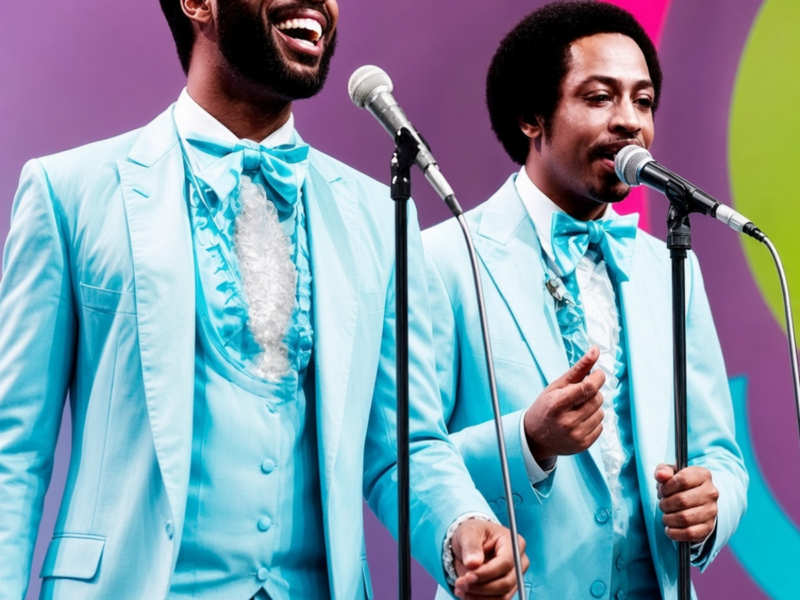
Teddy Pendergrass Couldn’t Stand This Singer, He Made It Obvious.
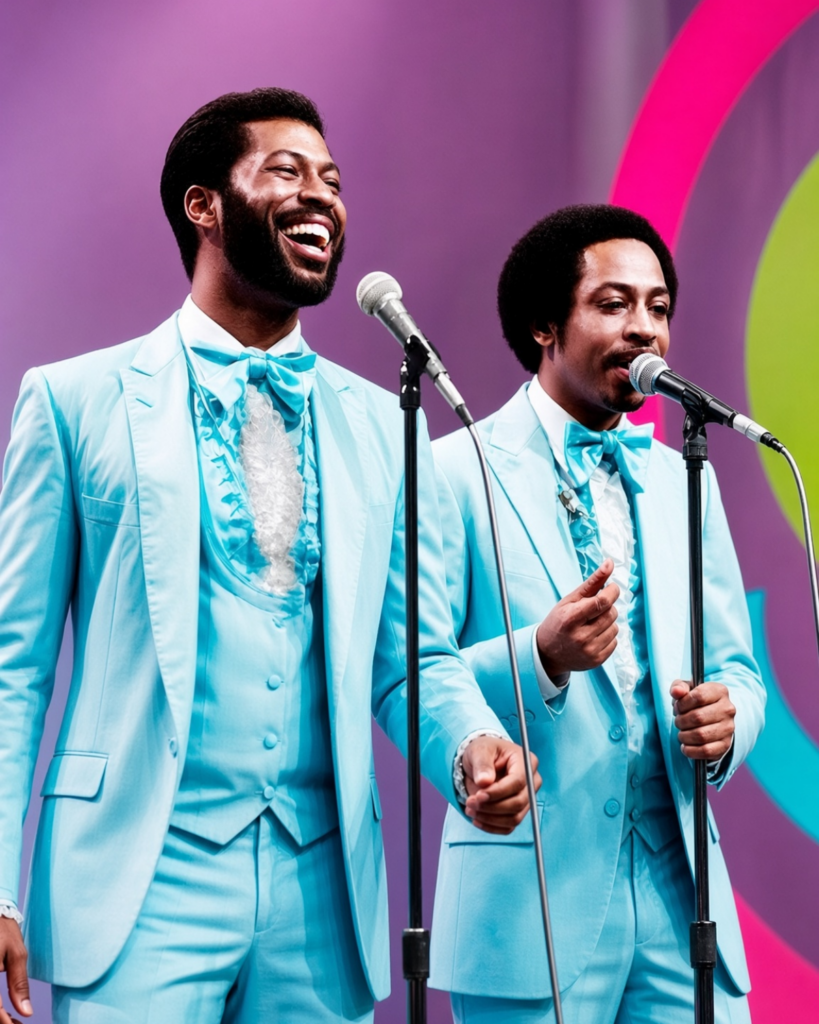
“I have never in my life experienced anything that could ever prepare me.”
Teddy Pendergrass simply couldn’t endure a fellow star.
And this wasn’t merely a closely guarded secret.
He made the entire world acutely aware.
You see, while the spotlight illuminated legendary figures, behind the scenes lay unspoken conflicts that not everyone dared to acknowledge.
Join us as we delve into the compelling saga between Teddy Pendergrass and a contemporary, a silent yet intensely fierce battle where immense talent and formidable egos found no common ground.
Could envy, intense rivalry, and personal pride truly devastate the relationships among these icons?
This narrative transcends mere music.
It’s a profound exploration of how great individuals contended with one another to fiercely safeguard their reputations and their profound passions.
Those on the outside sometimes only perceive what glimmers on stage, the soulful ballads, the dazzling spotlights.
Yet behind that radiant glow lie conflicts and struggles that remain largely unknown.
This is the story of Teddy Pendergrass, one of the most magnificent voices in soul music, who unhesitatingly expressed his profound dissatisfaction with another luminary in the industry: Marvin Gaye.
This was no simple competition.
It was a powerful collision of two formidable personalities.
Two individuals burdened by their own distinct pains and fervent aspirations.
Teddy emerged from the shadows of Harold Melvin and the Blue Notes, a renowned group in the ’70s.
His initial strides created an undeniable ripple effect within the music industry.
People have yet to fully grasp his immense potential.
But what Teddy possessed was an extraordinarily powerful voice, an enchanting stage presence, and an irresistible charisma that radiated from his gaze to every lyrical phrase.
He was the force that transformed that group into a formidable name.
Yet it was Teddy’s very prominence that ignited a deep-seated envy.
Harold Melvin, the group’s founder, found himself increasingly uneasy as the spotlight gradually shifted to illuminate only Teddy rather than remaining solely on himself as the undisputed leader.
Their relationship grew increasingly strained as Teddy began to shine with his deeply resonant, uniquely captivating voice.
Whispers circulated that during rehearsals, Teddy often sensed Melvin’s intense discomfort.
Some within the group even remarked that Melvin felt increasingly insecure, his sense of authority perceptibly wavering.
Teddy, with his burgeoning career, could not tolerate living in anyone else’s shadow, even if it was the person who had guided him into music.
Ultimately, this conflict proved irreconcilable, and Teddy’s decision to leave the group to pursue a solo path became an inevitable conclusion.
In the world of Black artists, where individuals had to strain every fiber to overcome prejudices and hardships to assert themselves, not everyone could easily endure the brilliance of another star.
Marvin Gaye, with his extraordinary talent and tumultuous personal life, seemed utterly unable to accept another person sharing the intense attention he perpetually sought.
Rumors within music circles recounted that Marvin and Teddy were never genuinely close.
Although both were iconic figures in soul music, Marvin Gaye’s formidable ego consistently made him feel overshadowed whenever he stood alongside Teddy.
Marvin was an individual of complex character, not only due to his private life, fraught with numerous difficulties, but also because of issues related to his reputation and public image.
And when a voice as powerful as Teddy’s emerged, Marvin couldn’t help but feel marginalized.
Teddy, with his captivating performance style, consistently commanded attention.
But perhaps what Marvin found utterly unbearable was that Teddy brought not just music, but the complete radiance of a perfect star.
Meanwhile, Marvin Gaye, burdened by all his sorrows and a life filled with internal battles, couldn’t help but feel a strange reflection when confronted by his younger, vibrant, and seemingly all-possessing contemporary.
This very suppression created a silent yet potent confrontation between these two men.
Few words were exchanged, yet everyone knew that behind the songs and the spotlights lay a fierce rivalry.
Some recounted that Marvin even expressed irritation when reporters spent more time interviewing Teddy than himself.
Envy was not uncommon in the music industry, but the manner in which it infiltrated their relationship remained deeply mysterious and tense.
Although Marvin and Teddy were both immensely talented, what ultimately prevented their relationship from ever truly reconciling were fundamental differences in their ways of life.
Marvin, with his erratic and often rebellious nature, could not tolerate Teddy’s calm demeanor and polished image.
Conversely, Teddy grew weary of the burdens of Marvin’s perpetually unstable life.
It was said that Teddy perceived a certain instability in Marvin’s lifestyle, and that was far from comfortable.
Like many other artists, Teddy had endured periods of profound instability in his own life.
But he always managed to maintain a polished image, never allowing personal troubles to impede his career.
Marvin, however, consistently lived in a state of torment, and the unbridled freedom in his music could make one feel swept into an unending vortex.
In all those confrontations, one undeniable truth remained.
Teddy Pendergrass possessed not only a voice but also an unparalleled ability to captivate every gaze.
His brilliance evoked envy in those around him, not merely for his talent, but also for the way he meticulously crafted his image.
The music world always craves a star, but sometimes the emergence of other stars can be utterly unacceptable to some.
Both Teddy and Marvin, despite being exceptional artists, had to contend with each other’s formidable presence.
And that presence, though unspoken, was always palpable in every musical contest.
These unspoken confrontations, these subtle underlying tensions, were something only those within the industry could truly perceive.
Marvin Gaye was a titan in the realm of soul music, having accrued every accolade, every measure of respect, and every profound contribution imaginable.
Yet that did not mean he was immune to feeling threatened.
Marvin understood his own immense worth intimately.
But for a considerable period, the name Teddy Pendergrass surged like a fresh wave, drawing all eyes toward him, and Marvin seemingly could not escape the sensation of being eclipsed.
Both were artists of unparalleled talent, but the rivalry between them transcended mere professional competition.
It encompassed deeply personal, unspoken matters behind the dazzling stage lights.
Marvin Gaye had once reigned as the undisputed king of the soul music world.
He possessed not only a legendary voice, but also an intensely emotional, captivating performance style.
He was the visionary who elevated soul music to unprecedented heights, seamlessly blending musicality, raw emotion, and powerful social commentary.
But with the advent of Teddy Pendergrass, everything appeared to shift.
Teddy, with his potent voice, masterful technique, and alluring stage presence, swiftly commanded the stage, capturing the attention not only of audiences, but also of fellow industry peers.
It became abundantly clear that the distinctions between Marvin and Teddy lay not just in their musical genius, but also in their lifestyles and their approaches to their careers.
Marvin Gaye lived a life fraught with turmoil, an individual burdened by profound personal issues, ranging from romantic difficulties to profound mental challenges.
These struggles manifested not only in his music but also in his very life offstage.
Marvin fought tirelessly to find inner peace and reconciliation with himself.
And then, just as he had achieved substantial career success, Teddy Pendergrass emerged as a new star.
His brilliance so radiant that it seemed to compel everything else to yield.
Teddy stood out not only for his powerful voice, but also for his confident demeanor and handsome appearance.
All elements that coalesced to create a perfect image that audiences adored.
For Teddy, music was not merely a profession.
It was an intrinsic part of his very being, a profound expression of who he was.
People cherished Teddy, not only because he sang beautifully, but also because he was a man capable of captivating every gaze and every emotion.
And this, for Marvin Gaye, may well have become a factor that made him feel profoundly threatened.
Whispers of jealousy between Marvin and Teddy began to surface when they started sharing stages or when Teddy’s name was frequently mentioned in interviews or articles.
Those within the industry recounted that despite the absence of direct conflict, the palpable tension between them could be discerned in every glance and every gesture.
Marvin, with his complex emotions and life’s inherent instability, could not reconcile himself with the rapid ascent of a contemporary whom he felt shared some uncanny similarities.
He felt as though he had toiled immensely to forge his reputation, while Teddy, with seemingly effortless strides, had reached the pinnacle that Marvin had painstakingly constructed over many years.
Marvin Gaye, with his rebellious lifestyle and musical ethos, always yearned to be at the forefront of everything.
But upon witnessing Teddy Pendergrass’s undeniable prominence, not only in music, but also in his unique charisma and extraordinary talent, Marvin felt himself relegated to a lower tier.
Though unexpressed outwardly, the shadow of jealousy perpetually loomed over every encounter or shared performance.
Rumors of their silent rivalry began to proliferate within music circles, though no one could definitively state whether Marvin was genuinely envious or simply felt insecure about sharing the stage with such a captivating presence.
“The Voice” was what Teddy Pendergrass was dubbed, and that was an undeniable truth.
His voice was not merely captivating, but also possessed an enchanting power.
Every phrase sung by Teddy was like a profound declaration of love, passion, and life itself.
And that was precisely what Marvin Gaye perceived in this man, something he could not inherently possess himself.
However, Marvin also possessed a deeply emotional voice, one capable of transporting listeners from the profoundest sorrows to the brightest hopes.
But that voice could not emanate with the same natural ease as Teddy’s.
And for a long time, all Marvin could do was silently observe while Teddy continued to advance, capturing the hearts of the public.
They never directly confronted each other.
Yet the tension between them was inescapable.
This created a silent, unspoken battle, yet one that was deeply etched in the minds of those within the industry.
What Marvin found utterly unacceptable was the way Teddy, a person from a far from easy background, could ascend so rapidly, overcoming every barrier.
This reflected a deep-seated insecurity within Marvin himself, who had faced countless difficulties and heartaches in his life to attain what he possessed.
Teddy, with his unwavering confidence and ability to command every gaze, emerged as a new icon in soul music, not merely a rival, but also a testament to what Marvin had yet to fully achieve.
Perhaps deep down, Marvin understood that the relationship between him and Teddy could not simply be a matter of professional rivalry.
It was a narrative of divergent lives, of two individuals bearing their own unique wounds and anxieties.
And in this competition, perhaps Marvin pondered whether he himself was perpetually seeking acceptance, something he had strived for his entire life, but had never fully attained.
Rick James was an undeniable star, not just for his music, but for his lifestyle, the image he crafted, and all that came with it.
Meanwhile, Teddy Pendergrass, with his powerful voice and composed demeanor, radiated brilliance in an entirely different manner.
Both were icons in the soul music genre.
But the distinctions between them, extending beyond music to their very ways of life, represented opposing worlds they had forged for themselves.
And within that space, a subtle struggle took shape.
A battle between two individuals with utterly contrasting personalities.
Rick James embodied pure rebellion.
His entire life was inextricably linked to the image of a man living without compromise, ready to shatter every rule, to dismantle every societal norm.
He was renowned for his late-night escapades, his unending parties, and a lifestyle that left others utterly agape.
Rick’s peculiarity lay not just in his songs, but also in the way he brought that rebellious aura to the stage.
He never hesitated to express his defiance.
Free as the wind, utterly unconcerned with what others might think.
Teddy Pendergrass, conversely, presented a completely different archetype.
Though also a prominent artist, Teddy pursued a path of elegance, sophistication, and discretion.
He consistently exuded composure and grace, an emblem of allure that required no excessive flaunting.
Teddy’s voice was celebrated for its power.
Yet the way he conveyed emotion always possessed a profound control, compelling audiences to pause and immerse themselves in every melody.
And it was precisely this stark contrast between them, one representing boundless rebellion, the other refined controlled elegance, that generated unavoidable conflicts.
Both possessed immense talent, yet they sought to dominate the stage in fundamentally different ways.
Rick James could not tolerate a Teddy Pendergrass who consistently maintained a flawless, socially favored image.
Meanwhile, Teddy struggled to comprehend why someone like Rick, who perpetually lived outside conventional boundaries, could captivate public attention with such wild, audacious actions.
Tension began to mount when both had opportunities to appear together.
Their encounters, shared performances, or simply instances where both appeared at the same event were precisely when the fissures began to surface.
They didn’t need to argue or vocalize anything.
Yet everyone perceived the mutual discomfort in their glances, in their every word.
Rick James, with his uninhibited nature and powerful ego, never remained silent when he saw another person commanding the attention he believed rightfully belonged to him.
For James, prominence lay not only in musical talent, but also in the way he lived, the way he asserted himself, not just through melodies, but through his very life offstage.
James’s bad boy persona only intensified the scrutiny from those around him, be it audiences or other artists.
But Teddy, with his self-restraint and polished exterior, captivated the public’s heart without needing to exaggerate anything.
Teddy didn’t need to rebel, didn’t need to break every boundary, because his talent and grace were sufficient to mesmerize everyone.
Rick James could not bear Teddy’s excessive perfection.
He felt as though Teddy was making everything too safe, too controlled, devoid of the freedom, the groundbreaking spirit that Rick perpetually sought.
While Rick could take the stage and do whatever he pleased, Teddy consistently maintained a meticulously polished, flawless demeanor down to every detail.
To James, that wasn’t respect.
It was a failure in self-expression.
He felt as though Teddy was expressing himself too easily, while Rick had to wrestle with himself to maintain his prominence.
And then the explosion came when they began to use the media to subtly undermine each other, all while maintaining a public silence about their conflict.
Each time they appeared together, each time they faced reporters’ questions, both seemed to strive to dominate the media space in their own distinct ways.
For Rick, it was an opportunity to highlight himself, to prove that he was unconstrained, a person who lived outside conventional boundaries.
As for Teddy, he simply wished to maintain the image of a refined artist, one who consistently shone naturally without needing to seek attention.
And in this game, it was not difficult to discern who shone brighter, who ignited more curiosity.
Both knew that in this world, to be remembered, one sometimes needed to create a distinct difference.
And in this silent competition, Teddy and Rick both understood that their prominence stemmed not only from their music, but also from the way they lived, the way they presented themselves to society.
This created a confrontation that no one could definitively win.
Yet neither was willing to concede defeat.
Both Rick James and Teddy Pendergrass may never have sat down to discuss their differences, but they always understood that this confrontation was inevitable.
One pursued a path of freedom and rebellion.
The other chose perfection and control.
And in that stark opposition, the music and the spotlights were never devoid of tension, perpetually challenging each other.
In the music world, conflicts aren’t always brought into the harsh light of day, especially when two artists share a grand stage.
But sometimes silence speaks far more eloquently than any loud argument.
Such is the compelling story of Lou Rawls and Teddy Pendergrass.
Two titans of soul music, both immensely talented yet locked in an unspoken, subtle rivalry.
Their relationship never erupted into an open battle.
But the underlying tensions in their careers and their individual egos perpetually simmered beneath the surface.
Lou Rawls, with his deep, resonant, captivating voice and a remarkably composed performance style, had forged an unshakable musical empire.
He wasn’t just a success with tender ballads but stood as an enduring icon of soul music for decades.
To audiences, Lou Rawls was more than just a superb singer.
He was an artist steeped in life’s experiences, delivering songs filled with profound emotion and immense depth.
Teddy Pendergrass, in turn, with his powerfully commanding voice and serene demeanor, swiftly captured the hearts of his audience.
He wasn’t merely a music sensation.
He was the embodiment of allure, an epitome of perfection in every stride and every lyrical phrase.
Even as a solo artist, Teddy’s charisma was so potent that he could command global attention with seemingly minimal effort.
With his powerhouse vocals, he carved out a formidable and lasting presence in the R&B and soul landscape.
Despite both enjoying brilliant careers, there was an underlying dynamic that audiences didn’t easily discern.
The quiet rivalry between Lou Rawls and Teddy Pendergrass.
Both were exceptionally gifted, yet each one’s distinct prominence made harmonious coexistence challenging within the often confined space of the music industry.
Lou Rawls was a seasoned veteran boasting timeless hits of exceptional musical quality, while Teddy Pendergrass was an emerging sensation brimming with raw energy and an irresistible allure.
Their relationship never escalated into public conflict.
But that hardly meant they were oblivious to the subtle competition simmering between them.
A clear example arose in 1979 at the American Music Awards.
Both Lou Rawls and Teddy Pendergrass clinched awards in the very same category.
It was a moment that undeniably reflected the unspoken rivalry between them, even though both meticulously endeavored to prevent it from becoming a conspicuous issue.
For many, it was a moment to celebrate the era’s colossal musical talents.
But for Lou and Teddy, it was far from just another award ceremony.
It was a subtle contention, a silent testament to an unvoiced competition where both secretly coveted victory.
Lou Rawls, despite his illustrious career, couldn’t deny that Teddy Pendergrass was ascending like a radiant star.
And this made the competition feel more intense than ever.
Though unspoken, Lou Rawls understood that Teddy was not just a musical adversary, but a genuine challenger to his reign within the soul genre.
Teddy Pendergrass, though composed and rarely outwardly emotional, couldn’t help but acknowledge Lou Rawls as a formidable opponent.
In an industry where fame could arrive swiftly yet vanish instantly, Teddy knew that sustaining his presence on stage was no simple feat.
While he deeply respected Lou Rawls’s talent, standing on the same award platform, no one could deny a palpable tension, a silent contest that both painstakingly tried to conceal.
For Teddy, his prominence stemmed not just from his voice, but also from his sophisticated style and the way he poured emotion into his music.
He was an artist with an immaculate public image, always refined, never allowing his career to be swayed by extraneous factors.
Lou Rawls, on the other hand, with his profound, melancholic, and deeply experienced songs, consistently offered listeners genuine emotions, but the extensive shadow of his success enveloped his entire career.
Though both left their distinct marks, comparisons between them were simply unavoidable.
Remarkably, despite these underlying tensions, both Lou Rawls and Teddy Pendergrass maintained a profound mutual respect.
They never publicly discussed their rivalry and in fact both sought to downplay any differences between them.
Lou Rawls was not easily swayed by the shifting tides of the music world, consistently maintaining his stability and steadfastness in style.
Teddy Pendergrass, despite his soaring career, also understood that Lou’s respect was crucial for fostering healthy relationships within this demanding industry.
And that is precisely why, despite a subtle competition, both Lou and Teddy never allowed this tension to publicly erupt.
They were both immensely talented artists.
And despite their differing expressions, they always grasped that mutual respect and an unwavering love for music were the only things they truly needed to preserve.
One could say that the relationship between Lou Rawls and Teddy Pendergrass serves as a prime example of healthy competition.
While a hint of envy and unspoken disagreements always lingered, ultimately their profound mutual respect allowed them to transcend everything.
Not every confrontation needs to be tumultuous.
Sometimes silence itself can powerfully convey a deep and meaningful struggle.
Teddy Pendergrass, with his striking good looks and captivating performance style, swiftly became an icon not only in music but across the broader entertainment landscape.
He embodied the quintessential attractive man, the dream guy for countless admirers.
But perhaps it was this very intense focus on his image that inadvertently overshadowed the true artistic essence within him.
In the music industry, where every artist must cultivate a public persona to survive and thrive, Teddy became a prime illustration of the inherent conflict between public image and genuine talent.
Teddy Pendergrass was more than just a singer.
He was a man of magnetic charm whose deeply soulful melodies and powerful voice melted countless hearts.
But instead of being remembered solely for his profoundly emotional vocals and insightful songs, he was often labeled a heartthrob, a romantic crooner with an image perfectly aligned with every standard of romance.
This heartthrob label, though not something he sought, became an indelible part of Teddy’s brand.
He simply could not escape the shadow of the very image the public had crafted for him, an image so dazzling that it often obscured the deeper nuances of his music.
Teddy Pendergrass possessed an extraordinary vocal power, a voice capable of conveying every conceivable emotion, from poignant laments to ardent, burning love songs.
But what Teddy perceived as unfair was that his career wasn’t always recognized for its true merit.
Instead of being lauded for his exceptional musical prowess, he was frequently reduced to a romantic symbol, a figure of romance that the media adored.
The media, rather than focusing on Teddy’s musical brilliance, largely dedicated its attention to his striking appearance and seductive image.
Teddy became the epitome of romance, a soulful lover everyone longed for.
Yet few truly understood that behind that facade lay a deeply passionate artist, one who always poured his entire being into his music and tirelessly sought to touch the very souls of his listeners.
The romantic crooner label that the public affixed to Teddy created a fragile veneer, causing many to see only the surface, overlooking the intricate details within his music.
Teddy not only possessed a magnificent voice, but also the profound ability to create deeply emotional ballads, delivering authentic and poignant love stories.
But instead of being praised for his songwriting talent and his career’s many ups and downs, he became a perfect archetype that the public readily imagined.
Teddy’s songs, which were truly magnificent works of art, were often superficially viewed through the lens of fans who merely sought romance in his music.
And this, though likely not what he wished, was the price Teddy had to pay for his immense fame.
For someone like Teddy Pendergrass, fame was never in short supply.
He possessed everything a star could hope for: an incredible voice, a massive fan base, and an impeccable public image.
However, that fame didn’t always bring wholly positive outcomes.
His image as a romantic icon sometimes caused people to forget that behind those captivating smiles was a profoundly emotional artist, a man who not only sang but lived and breathed music.
When Teddy realized that his career was overly dominated by his image, he began to feel a profound weariness.
The media relentlessly focused on portraying him as a romantic crooner, rarely delving into the profound journey and challenges of his career.
Teddy was not merely a performer who indulged in romance or merely exuded charm on stage.
He was also an artist with deep thoughts, with stories about life, about love, about things that only music could truly articulate.
That image became so deeply ingrained in the public consciousness that whenever Teddy Pendergrass was mentioned, people didn’t think of an artist capable of creating profoundly emotional music.
They thought only of a romantic idol standing on stage.
This image not only impacted how the public perceived him, but also created a serious misunderstanding regarding Teddy’s true artistic worth in music.
This undoubtedly left Teddy feeling exhausted.
He yearned not to be trapped within such a simplistic image.
Teddy desired to be remembered as a genuine artist, one who delivered songs of profound depth and artistic merit.
But it seemed the world saw him only as a symbol of romance.
And that was the acute internal struggle he had to endure, a battle between his authentic talent and what the public wished to see.
Fame, while bestowing upon Teddy everything he desired in terms of material wealth and attention, paradoxically left him feeling estranged from his true self.
He dedicated his entire life to building his musical career, to conveying emotion through every lyric.
Yet he couldn’t escape the shadow of an image the media had imposed upon him.
That heartthrob label, though not inherently negative, caused people to overlook more crucial aspects: the profoundly emotional voice and the artistry to which Teddy devoted himself entirely.
This was truly an artist’s profound anguish.
Fame, when overly focused on a specific image, can cause genuine artistic value to be forgotten.
Teddy Pendergrass, with all that he contributed, wished for only one thing: to be remembered not just for his handsome appearance or soulful lover persona, but for the magnificent voice and the timeless music he poured his entire life into creating.
But in a world awash with spotlights and the dazzling superficiality of external images, rediscovering oneself and one’s true artistic value proved an immensely challenging endeavor.
Teddy Pendergrass’s life and career were irrevocably altered in a way no one could have ever foreseen.
On March 18th, 1982, while driving home after a performance, Teddy was involved in a devastating car accident which left him paralyzed from the waist down.
In a single shattering moment, the future he had painstakingly built—a future brimming with dazzling lights, immense fame, and soul-stirring music—was utterly upended.
Teddy faced a monumental challenge, not only physically, but in defining himself anew as an artist.
He could no longer perform in the dynamic way he once did, a capability that had been the very core of his career.
Prior to the accident, Teddy was renowned for his powerful, emotionally charged performances.
He was an undeniable force on stage, capable of connecting with audiences with profound depth and intensity.
But now he was confined to a wheelchair.
This was a tremendous shock not only for Teddy but also for his devoted fans who had cherished him for his captivating stage presence.
An artist of Teddy’s caliber, who had transformed love songs into the most emotionally potent works, now had to find a way to adapt to a new life and redefine his role within the world of music.
Through the lens of the media, the accident garnered intense attention.
But instead of solely dwelling on the pain and loss, the media also highlighted Teddy’s incredible strength and unwavering resolve.
After the accident, though no longer capable of the powerful stage performances of before, Teddy resolutely continued his career.
He became an inspiring embodiment of resilience, a symbol of unyielding spiritual strength and indomitable perseverance.
Teddy wasn’t just an artist enduring suffering.
He was a conqueror of his own adversity, a living testament to never surrendering in the face of immense challenges.
Though the accident was a profound tragedy, it also led Teddy to discover a new, deeper dimension in his artistry.
He no longer sang merely for charisma or his handsome appearance, but sang with absolute sincerity, profound emotion, and the profound experiences gleaned from his life.
It was the very pain and formidable trials Teddy faced that empowered him to express a more potent, more profound artistic facet.
His music now transcended mere song.
It became a shared experience, a powerful message of survival and an unshakable belief in life itself.
The accident, while tragically robbing him of his dynamic performance abilities, paradoxically opened a new path for Teddy’s career.
He was no longer just a popular singing sensation, but a remarkably resilient artist, an enduring source of inspiration for everyone grappling with life’s difficulties.
And despite all the changes, Teddy’s music remained steadfast, touching the hearts of countless individuals, evolving into works of immense value and profound depth.
Teddy Pendergrass was not just a musical legend, but an enduring symbol of strength and unwavering resilience.
Despite facing immense challenges throughout his life and career, from a devastating accident to industry conflicts, he steadfastly kept the flame of his passion burning.
Dedicating himself entirely to music, Teddy Pendergrass’s profound legacy continues to live on in his deeply emotional and inspiring hit songs, resonating with millions.









