
RJ Mitte Was Left in Debt for Over a Decade – Here’s Why.
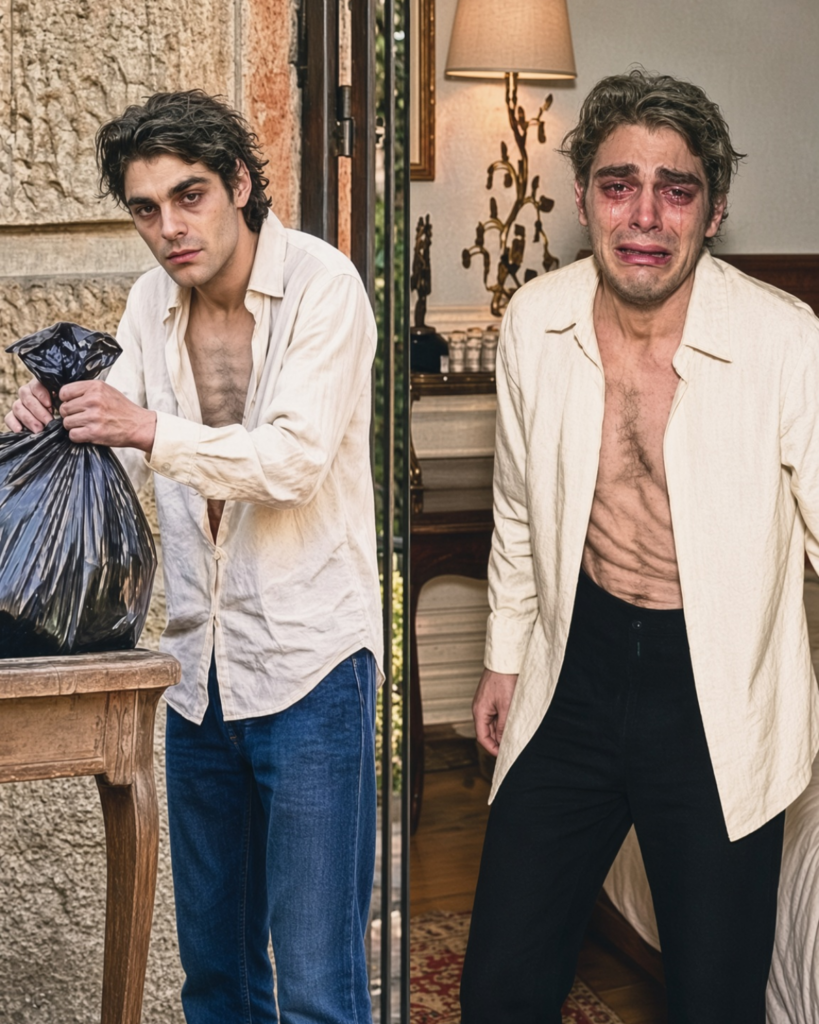
“I’ve paid more in taxes than I got from Breaking Bad.”
RJ Mitte said that sentence in a podcast interview recorded in November 2025, after the hosts asked whether the show had made him a millionaire.
His answer surprised people who knew him as Walter White Jr., the son of one of television’s most notorious fictional criminals.
A successful television show can make an actor famous overnight, but fame does not automatically mean financial security.
For most viewers, Breaking Bad is a symbol of success, with five seasons, major awards, and an audience around the world.
That is exactly why the sentence lands the way it does.
Mitte explained that a business manager he trusted had failed to pay money he believed was being sent to the IRS.
He described a financial problem that began when he was still a teenager and took him around 10 years to resolve.
He said money intended for tax payments had been diverted and that documents were supplied to make it appear the payments had been handled.
The interview resurfaced after his death on October 12, 2026, at age 34, prompting fans to look again at a story many had never heard.
But there is an important distinction.
Mitte said he eventually paid off the debt.
The interview does not establish that he was still carrying that same tax debt when he died, and it does not prove that the financial episode caused his death.
That line has to stay bright and clear for the rest of this story.
This is a story about trust, money, and the risks faced by young performers who suddenly find themselves responsible for complicated finances.
It is also the story of an actor who spoke openly about a painful experience and acknowledged the mistakes he believed he had made.
The allegations he described are serious, but they remain his account of what happened.
To understand the scale of the problem, it helps to go back to the beginning.
Before he became part of one of the most celebrated dramas in television history, Roy Frank Mitte III was born on August 21, 1992, in Jackson, Mississippi.
He was adopted as an infant by Roy Frank Mitte Jr. and Dyna Mitte, and he grew up with his younger sister, Lacey Ann, known as Lacey.
When he was three, he was diagnosed with cerebral palsy, a condition that can affect movement, muscle tone, and posture in different ways.
As a child, he wore leg braces, used crutches, and attended therapy while learning to navigate a world that did not always understand disability.
Mitte later said he believed a medical mistake during his birth contributed to his cerebral palsy.
That was his account of his own medical history, rather than a conclusion independently established in the reporting about his financial experience.
What is clear is that he faced physical challenges from an early age and learned to work through them with support from his family.
He also encountered bullying and assumptions about what he could do, experiences that later shaped the way he spoke about representation and inclusion.
His family lived in parts of Texas and Louisiana before moving to Los Angeles.
Mitte grew more mobile as he got older and no longer needed some of the walking aids he had used in childhood.
His cerebral palsy was milder than that of Walter White Jr., the character who would later make him famous, but it gave him personal experience of a condition that was rarely represented authentically on television.
His career would become closely connected to that representation, although he was never only a spokesperson for disability.
He was also a performer trying to build a lasting career.
In 2006, Mitte attended a talent showcase in Los Angeles to support a friend.
He was not an established actor with years of formal training, and he had not expected that visit to change the direction of his life.
The team behind Breaking Bad was looking for someone to play Walter White’s teenage son, Walter Jr., a character who had cerebral palsy.
Mitte was cast in 2007 when he was around 14, and production began the following year.
The role required him to portray a more pronounced form of cerebral palsy than the one he experienced in everyday life.
He worked on using crutches and shaping the character’s speech and movement, drawing on childhood memories to make Walter Jr. credible.
The aim was not to suggest that everyone with cerebral palsy moves or speaks the same way.
Instead, Mitte helped bring a disabled teenager to the screen as a fully developed character with loyalties, frustrations, humor, and emotional needs beyond his diagnosis.
That was a rare thing to see on a hit drama at the time, and it is part of why the role mattered beyond the ratings.
A young viewer with a disability could watch a teenager on screen who was allowed to be funny, angry, hopeful, and flawed, all in the same episode.
Walter Jr. begins the series as a son who trusts his father and wants his family to be safe.
As Walter White’s double life grows more dangerous, that trust is shaken, and the character has to confront the collapse of the family he thought he knew.
Mitte appeared across all five seasons and 56 episodes, including some of the show’s most emotional family scenes.
It is a quiet irony that an actor who played a boy betrayed by someone he trusted would later describe his own experience of misplaced trust, though the two stories are very different and one is fiction.
Breaking Bad ran from 2008 to 2013 and became one of the defining television dramas of its era, winning numerous awards and building an audience around the world.
The success brought Mitte recognition, industry contacts, and new work.
It did not mean that his financial future was automatically secure.
Actors’ earnings can vary from project to project, and a role on a hit series does not erase the costs of representation, travel, taxes, legal advice, and the long periods between jobs that are common in entertainment.
A paycheck that looks large on paper has to stretch across months when nothing is booked.
For young actors, a sudden increase in income can arrive before they have the experience needed to supervise the professionals managing it.
A teenager can be excellent at the craft of acting and still have no training in reading a tax filing or questioning a bank statement.
Nobody expects a 17-year-old to be an auditor, which is exactly why the adults around him matter so much.
Mitte continued acting after Breaking Bad.
He appeared in Switched at Birth, Now Apocalypse, and The Guardians of Justice, along with films such as Standing Up for Sunny, Triumph, and The Oak Room.
He also worked on projects behind the camera and continued to pursue stories that interested him.
His role as Walter Jr. remained his most recognizable credit, but he did not stop building a career when the series ended.
He also devoted time to disability advocacy.
Mitte served as an ambassador for United Cerebral Palsy and Shriners Children’s and supported efforts to broaden opportunities for disabled performers.
He spoke about the misconceptions that often surround cerebral palsy, including the false assumption that a speech difference means someone has lower intelligence.
He wanted casting directors and audiences to see disabled people as complex individuals capable of playing many kinds of roles rather than being confined to stories about their diagnosis.
That mission asked a lot of him.
It meant being a working actor, a public advocate, and a businessman running his own career, often at the same time.
The question of who was watching his money was never separate from any of it.
In November 2025, Mitte appeared on the Iced Coffee Hour, a long-form podcast hosted by Graham Stephan and Jack Selby.
The episode, published on November 2, covered his acting career, the realities of childhood fame, money, investment, and the darker side of entertainment.
Around 40 minutes into the conversation, the hosts asked whether Breaking Bad had made him rich.
Mitte laughed, then gave an answer that did not match what many viewers might expect from a successful series regular.
“I’ve paid more in taxes than I got from Breaking Bad,” he said, and he added, “I did have a bad business manager.”
He also said that much of what he earned went back into his career.
He described having a big team at one point and traveling the world, and he said most of his money went toward keeping that career moving forward.
Mitte explained that he had hired professional help when he was about 17 or 18.
People around him had advised him to use a proper accountant or manager to protect the money he was earning.
He wanted to do the responsible thing, but he said the arrangement ended in a serious financial problem.
According to Mitte, the manager was supposed to handle the money needed for his taxes.
He said he would provide money intended for tax payments, but the payments were not made.
Instead, he alleged, the manager supplied tax documents that made it appear as though the obligations had been taken care of, and in his words, “she would send me a fake filing of taxes.”
He said the money was diverted rather than merely misplaced, and that he discovered the issue after the IRS contacted him about unpaid taxes.
The distinction between what Mitte alleged and what has been independently established is important.
No public court finding or official investigation has been presented in the reporting cited here to confirm every allegation he made about the manager.
Mitte did not name the person, and he said he did not want to identify her publicly.
The fairest way to describe the story is as his account of alleged financial misconduct and the consequences he said he experienced.
The discovery was frightening because the problem did not end with the original unpaid amount.
Mitte explained that once tax obligations went unpaid, interest and penalties accumulated.
He referred to the compounding costs and described how a bill that might have been manageable earlier became much larger over time.
By the time he understood the scale of the problem, he said, the financial consequences were severe.
Then came the number that defines the story.
It took him 10 years to pay it off, he said, using a sarcastic tone to underline how long the process had been.
The line is easy to miss if the interview is treated only as a shocking headline, but it is one of the most important details.
His account was not that he remained trapped in the same debt until his death.
He said he eventually paid it off after spending roughly a decade dealing with the consequences.
Mitte also acknowledged that tax authorities generally hold the taxpayer responsible for making sure taxes are paid, even if another person has been hired to manage the process.
“The IRS doesn’t really care about you,” he said.
He explained that the experience taught him that handing over a task does not remove all responsibility for checking that it has been completed.
His comments reflected both frustration and a hard lesson about oversight.
That is one of the most difficult lessons in the story.
A teenager who begins earning professional income may be good at acting without having the experience to recognize fraudulent accounting.
He may be told that experts know what they are doing, especially when the paperwork looks official and the person has industry credibility.
Mitte said he trusted the person he had hired and believed that his taxes were being handled.
In his telling, he did not realize how serious the problem was until the IRS contacted him.
Mitte said he later learned that other actors had allegedly experienced similar problems with the same business manager.
He claimed there were 14 others, including older performers and people with disabilities.
He also alleged that the total amount involved across the cases reached tens of millions of dollars and that money had been moved through offshore accounts or shell companies.
Those numbers and connections come from Mitte’s account in the podcast, and they should not be presented as figures confirmed by a court or a regulator without further evidence.
The hosts wondered why he had not pursued her criminally, and he explained why the legal system felt difficult.
In his view, a criminal complaint, forensic accounting, litigation, and appeals could cost years of time and potentially millions of dollars.
He also said he believed recovering money that had been transferred abroad would be extremely difficult.
His comments conveyed the frustration of someone who felt he had been harmed but was unsure whether the process of seeking accountability would leave him any better off.
He did not present the issue as an easy case with a simple remedy.
Rather, he described a financial dispute that had become difficult to resolve even after he believed he understood what had happened.
Without independent documentation, it is not possible to verify every aspect of the alleged scheme, the identity of other alleged victims, or whether any authorities reached formal conclusions.
His account remains the central public record of the experience.
Mitte also took responsibility for what he believed he should have checked.
That does not erase the seriousness of his allegation that a manager diverted money entrusted for taxes.
Both points can be true.
The person accused of misconduct should be held accountable if the facts establish wrongdoing.
And individuals who earn money early in life need reliable ways to independently verify that their finances are being handled correctly.
The goal is not to blame a teenager for trusting an adult, but to make sure the system around young performers is harder to exploit.
The tax story stayed with Mitte for years, but he eventually paid off the debt he described.
That is why the title of this story matters.
The financial problem took around a decade to resolve, according to his own words, and it is inaccurate to say that he was definitely still carrying that same tax debt at the time of his death.
The experience still had a lasting place in his personal history, and it was serious enough that he chose to discuss it publicly.
It also became a warning he could pass on to other performers who might find themselves in similar circumstances.
After the interview resurfaced following his death, some headlines attempted to connect the financial hardship directly to his final days.
That connection has not been established.
Mitte’s public comments show that he had endured a difficult financial experience and felt betrayed by someone he trusted, but there is no verified evidence that the tax debt caused or contributed to his death.
His representative confirmed that he died by suicide, while Brownsville police said the cause and manner of death were still pending an investigation and an autopsy.
It is not responsible to turn an earlier financial crisis into a definitive explanation for a later tragedy.
The same care is needed when discussing reports about his personal life.
Mitte became engaged in October 2025, and some tabloids later reported that he had concerns about the cost of wedding plans.
Unless those reports are supported by a direct statement or independently verified evidence, they should not be treated as established fact.
His own podcast interview did not establish that the past tax debt was still affecting his ability to pay for a wedding in 2026.
It is possible to discuss the public financial story without inventing a direct line between it and every aspect of his private life.
The interview also challenged a familiar assumption about television success.
Breaking Bad became a global hit, winning major awards and earning a reputation as one of the most influential dramas of its era.
But the scale of the show’s cultural success cannot tell us precisely how much each performer earned, how much they spent, or how their financial responsibilities were managed.
Mitte’s remark about taxes was not a complete financial statement, and it should not be used to calculate his net worth.
It was his way of describing the devastating effect he said the tax problem had on the money he earned.
His account was also a reminder that fame can make people more vulnerable in some ways.
A young actor may be surrounded by professionals who appear experienced and connected, while lacking the knowledge to evaluate every contract or financial arrangement.
The success of a series can create pressure to maintain a team, travel, attend events, and keep a career moving even when work becomes less predictable.
Mitte said that he was investing in the business of being an actor, and that those costs consumed a large share of what he earned.
He presented the issue as a combination of the business pressures of entertainment and an alleged betrayal by someone responsible for helping him navigate them.
His career was about more than the money.
He used his platform to support disability inclusion, served as an ambassador for organizations focused on cerebral palsy and children’s health care, and spoke publicly about the misconceptions disabled people face.
He argued that disability should not limit a performer to a narrow range of roles.
His work in Breaking Bad gave him visibility, but his advocacy was an intentional attempt to help other performers gain opportunities of their own.
That work remains part of his legacy, regardless of the final details of the financial dispute he described.
He also continued to pursue acting.
In the days before his death, he had been promoting Talking to Strangers, a film in which he played a man with cerebral palsy who develops an unexpected connection with a woman.
He appeared publicly and discussed possible future work.
Those appearances showed that he remained professionally active, but they do not tell us everything about his private experience.
Neither a busy schedule nor a public smile can prove that a person is free from difficulties, just as a past financial crisis cannot establish what someone was feeling in the moments before death.
Mitte’s death on October 12 prompted tributes from his Breaking Bad colleagues.
Bryan Cranston, who played Walter White, called him “my sweet son on Breaking Bad” and said the news left him in deep despair.
He remembered meeting Mitte as a teenager and watching him grow into a fine actor.
Cranston also revealed that they had been texting a few weeks earlier to arrange lunch.
He said he could not know whether that lunch would have changed what happened, but he knew he loved Mitte and would miss him.
Aaron Paul also expressed heartbreak, saying that he loved his friend and that he would be missed.
Dean Norris recalled looking out for Mitte when he was young on set and described him as a kind person.
Their tributes focused on his character, his talent, and the relationships he had built over years of working together.
They did not claim to know the cause of his private struggles, and their grief should not be transformed into evidence for theories about his death.
So what can be said about the financial story with confidence?
Mitte said that as a teenager, he hired a business manager to help protect his earnings.
He alleged that money intended for tax payments was diverted and that documents were provided to make him believe his taxes had been paid.
He said he later learned that the obligations were outstanding, that interest and penalties accumulated, and that he spent around 10 years paying the debt.
He also claimed that other actors were affected by the same person, but those wider allegations have not been established here as formal legal findings.
What cannot responsibly be said is that the debt remained unpaid until his death or that it caused his suicide.
His interview gives a valuable account of a serious financial setback and the lessons he drew from it.
It does not provide a complete picture of his finances in 2026, and it does not show what he was experiencing privately on October 12.
The tragic fact of his death should be treated with care, and the story of financial misconduct should not be used as a shortcut to explain it.
For young actors and other people who begin earning money early, his experience offers practical lessons.
Do not rely on one person to send funds, prepare the paperwork, and confirm that the job is complete without any independent verification.
Keep copies of tax filings and payment confirmations.
Check official tax accounts directly, and ask a second professional to review unusual transfers or unexplained balances.
A good advisor should welcome reasonable questions and provide clear documentation, not make the client feel foolish for asking.
His story deserves to be remembered in its full complexity.
He was a performer who helped bring a disabled character to a major television drama, an advocate who pushed for greater inclusion, and a person who was willing to talk openly about a painful financial experience.
His words may help other young actors ask better questions and protect themselves before a problem grows.
The most meaningful response is to learn from what he shared, distinguish allegations from proven findings, and avoid turning a difficult part of his life into an unsupported explanation for the way it ended.
“I’ve paid more in taxes than I got from Breaking Bad.”
He said it with a laugh, but the sentence carried a decade of hard lessons, and it is still a warning worth hearing.









