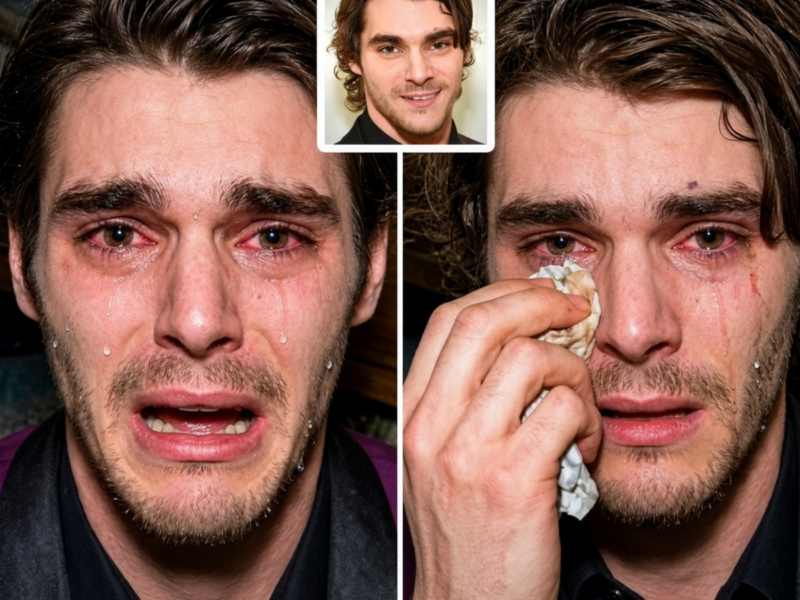
RJ Mitte planned lunch with Bryan Cranston—days later, at 34, he was gone.
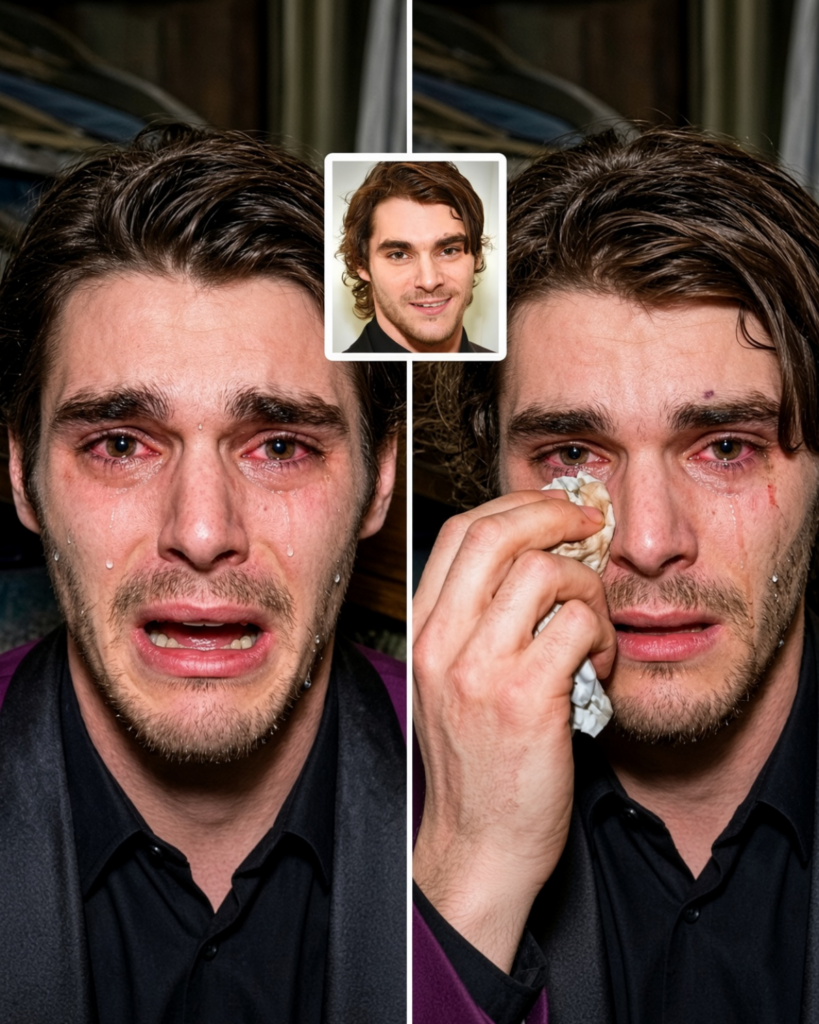
They were trying to find a time for lunch.
That is the detail that stays with so many people.
Just a few weeks before RJ Mitte died, Bryan Cranston says, the two of them were texting back and forth, working out when they could finally sit down together.
Two people who had spent years playing father and son on one of the greatest television shows ever made, trying to fit a meal into busy calendars.
The lunch never happened.
On Monday, October 12th, 2026, RJ Mitte died at the age of 34.
His representatives confirmed that he died by suicide, and a world that had known him for nearly two decades as Walter White Jr., the breakfast-loving teenager with crutches, was left asking a question that has no easy answer.
Why?
This is not a story about a mystery.
It is not a story about secrets, because the facts we have are few, and the people closest to him have asked for care.
It is a story about a young man who gave a great deal to others, about the days before his death that people are now looking back on, and about the importance of talking about what we do not understand.
We will tell it carefully, and we will tell it with respect.
Start at the beginning.
Roy Frank Mitte the third was born on August 21st, 1992, in Jackson, Mississippi.
He suffered brain damage at birth and was adopted a few weeks later by Roy Frank Mitte Jr. and Dyna Mitte.
When he was three years old, he was diagnosed with cerebral palsy, a condition that affects movement and muscle control.
In his case, it was mild.
In 1994, when he was just a toddler, his family founded a Texas-based nonprofit called the Mitte Foundation.
It was a family project built around giving back.
In later years, RJ would become its president.
Think about that for a moment.
Before he ever stepped onto a film set, the foundation that would carry his name for the rest of his life was already part of his childhood.
Helping others was not something he discovered late.
It was baked into the way he grew up.
He also grew up with a physical challenge that the world was not always kind about.
Anyone who has lived with a disability knows the small things.
The stairs, the assumptions, the people who talk slower or louder or over your head.
RJ lived with that, and he lived with it from a very young age.
Then, as a young teenager, he walked into an audition.
Breaking Bad was a new series on AMC created by Vince Gilligan about a high school chemistry teacher who turns to making methamphetamine after a cancer diagnosis.
The show needed an actor to play Walter White’s son, a teenager with cerebral palsy.
RJ Mitte had that condition himself.
He later said it was one of the longest auditions of his life.
In an interview just days before his death, he told the Joe Volpe podcast that he was one of the very last main cast members to join.
He got the part.
He was around thirteen or fourteen years old.
Bryan Cranston remembers meeting him at fourteen when the pilot was shot in February 2007.
Cranston recalled that RJ was still pretty raw at the time and that the cast watched him grow little by little into a really fine actor.
That growth is something you can see on screen.
Walter White Jr., who also went by Flynn, could easily have been a background character.
The sensitive son, the kid who loves breakfast.
Instead, RJ gave him warmth, humor, and weight.
The role required him to work hard.
In a 2008 interview, he talked about deliberately blurring his speech and learning to walk with crutches in a realistic way, because the character’s cerebral palsy was more pronounced than his own.
Cranston said in his tribute that RJ never let his condition be an excuse for anything.
He said that RJ met the demanding shooting schedule head-on with great determination.
That detail matters because it speaks to the discipline of a teenager who was working alongside some of the best actors in television five seasons running between 2008 and 2013 and who never seemed to complain.
It is worth pausing on what that role meant.
For most of television history, characters with disabilities were rare, and the ones who did appear were often played by actors without disabilities.
When a young man with cerebral palsy was cast as a teenager with cerebral palsy in a show watched by millions, it was a quiet but meaningful shift.
Viewers saw a character who was funny, stubborn, loving, and ordinary.
He was not defined by his condition.
He was a kid who wanted his father’s attention and a good plate of eggs.
For many people with disabilities and for their families, that mattered more than any award.
The show became a phenomenon.
It won sixteen Primetime Emmy Awards, and RJ Mitte, a kid from Texas, became one of the most recognizable young faces in the country.
But the real work began after the cameras stopped.
When Breaking Bad ended in 2013, RJ was only twenty-one years old.
He had spent his teenage years inside a single character, and he made a decision that many young stars do not make.
He decided to use his platform.
He became an outspoken advocate for people with disabilities, and in particular for disabled performers.
In Hollywood, disabled characters are often played by actors without disabilities.
RJ argued that this needed to change.
He talked about it in interviews, on panels, at events.
The last time TMZ’s photographers caught up with him back in 2019, he was talking about exactly that: the need for more representation.
Representation is not an abstract word to the people who live it.
It is a young person watching television and, for the first time, seeing someone who moves the way they move.
It is a parent realizing their child might be allowed to take up space in the world.
RJ understood that, and he did not treat it as a trophy.
He treated it as a responsibility.
That is why the reaction to his death has reached so far beyond fans of one television show.
In 2013, he received the SAG-AFTRA Harold Russell Award for his portrayal of Walter White Jr.
Later, he presented an award in his own name, the RJ Mitte Diversity Award, to a deaf actor named Ryan Lane.
He served as an ambassador for United Cerebral Palsy and for Shriners Hospitals for Children.
He kept working with the Mitte Foundation, which supports community initiatives and challenges stereotypes about people with disabilities.
His representatives described him in their statement as a beloved actor, philanthropist, and passionate disability rights advocate.
Those three words, in that order, give you a sense of how he saw himself.
Actor first, perhaps, but giving and fighting just as much.
He also kept on acting.
He took roles in film and television after Breaking Bad.
He walked runways at fashion weeks, and models and designers who crossed his path remembered him fondly and warmly.
When news of his death broke, one person who knew him from New York Fashion Week wrote that he was always such a kind soul.
And in his personal life, according to Variety, he was engaged to his long-time partner, Kennedy Suarez, whom he had been with since 2018.
Now, think about the picture that creates.
A man in his thirties, an actor with one of the most famous roles in television history, a philanthropist with his own foundation, a partner of eight years, a film coming out.
From the outside, it can look like a life that is going well, and that is exactly why this story is so hard.
Let us talk about what we know about the weeks before.
In early October, RJ Mitte was busy.
He was promoting a new movie called Talking to Strangers.
He appeared on podcasts.
On the Joe Volpe podcast, he looked back on the Breaking Bad audition and spoke with humor about how long and hard it had been.
He also attended the Albuquerque International Balloon Fiesta in the city where Breaking Bad was filmed.
According to the Albuquerque Journal, he took a balloon ride with his co-star Luis Moncada, who played one of the Salamanca twins on the show.
Page Six reported that this was among his final public appearances in the days before his death.
Think about that image.
A man in a balloon over the New Mexico sky, returning to the place where the show that changed his life was made, riding alongside a friend from the cast.
According to People, in a social media post shared five days before he died, he said he would like to revive his Breaking Bad character.
It is a small detail, and it is the kind of thing that shows a person still looking ahead, still thinking about stories he wanted to tell.
We should not read too much into it, but it is part of the picture, and it is worth including.
TMZ’s reporting also described him as so positive in the weeks before his death.
Another outlet described what it called his final interview, in which he reflected on some of his hardest days.
We do not have the full context of every conversation, and we should be careful not to turn a handful of comments into a theory about what he was feeling.
Because the truth is that no one outside a person’s own mind can fully know what they are carrying.
This is one of the most important things to understand about suicide.
It is rarely the result of one thing.
It is not usually visible from the outside.
People who are struggling can seem positive, funny, busy, and engaged.
They can plan for the future.
They can make lunch plans, and still be in pain that others cannot see.
That is not a failure of the people around them.
It is the nature of the thing, which brings us to Monday.
On October 12th, 2026, according to reports, RJ Mitte died in Brownsville, Texas.
The Associated Press reported that a Cameron County Justice of the Peace pronounced him dead at about 1:30 in the afternoon, and that an autopsy would be performed.
His representatives released a statement.
“It is with profound sadness that we share the tragic passing of beloved actor, philanthropist, and passionate disability rights advocate RJ Mitte.”
They later confirmed to People that he had died by suicide.
Law enforcement told TMZ that the death investigation was ongoing.
We are going to stop there.
We will not speculate about the circumstances.
We will not describe details that do not need to be described.
There is a reason responsible reporting on suicide avoids that, and it is not squeamishness.
It is care.
Details can hurt grieving families, and in some cases, they can harm people who are vulnerable.
What matters is this: A young man is gone.
A family is grieving.
A partner has lost the person she planned a life with, and a community of people with disabilities, many of whom saw him as a role model, are in shock.
Then came the tributes.
Bryan Cranston was among the first to speak.
He wrote on Instagram that he was in deep despair.
He called RJ his sweet son on Breaking Bad.
He called him a vocal advocate for performers with disabilities, and he said that all of that promise and potential was now such a loss.
He also said something that many people have repeated since.
He wrote that it was especially devastating to hear that RJ had taken his own life.
And then he asked, simply, “Why?”
That question is painful, and it is honest.
It is the question that nearly everyone asks after a suicide.
And Cranston did not pretend to know the answer.
He admitted that he did not know whether the lunch they had been planning would have changed anything, but he said he loved him.
Then he did something that matters.
He ended his tribute by urging anyone who is thinking about suicide to call for support through the 988 Suicide and Crisis Lifeline.
He added that there is hope.
Consider too how the cast responded.
Breaking Bad was a famously intense show about darkness, but the people who made it have often described the set as warm and lighthearted.
Cranston described watching a shy teenager grow into a working actor.
That sort of bond does not end when a series does.
It is the reason a message about lunch could matter so much, and it is the reason his co-stars’ grief feels so personal.
They did not lose a colleague.
They lost someone they watched grow up.
Aaron Paul, who played Jesse Pinkman, and Dean Norris, who played Hank Schrader, also posted messages of grief.
Other actors and friends wrote about his kindness.
One said they did not know him well, but that he had been lovely.
Another said he was gone far too soon.
One tribute collected in the Hollywood Reporter’s roundup called him a sweetheart of a young man.
That phrase says a great deal.
Sweetheart of a young man.
Not a star, not a celebrity, a sweetheart.
It is the kind of description that people give to someone who made them feel welcome.
There is something quietly heartbreaking about that.
Because it means a man who made so many other people feel seen may have felt unseen in some way that none of us understood.
Again, that is not a conclusion.
It is a question.
And it is a question we should hold gently.
There is the matter of privacy.
Behind every public tribute is a private household.
Parents, a partner, close friends, and relatives are learning how to get through each day.
They did not choose to have their grief examined by millions of strangers.
The kindest thing the rest of us can do is give them room.
Let them share what they want, when they want.
Leave the speculation alone.
And remember that the person at the center of this story was not a headline.
He was someone’s son, someone’s fiancé, and someone’s friend.
Let us talk about what this moment asks of the rest of us.
First, it asks us to resist the urge to explain.
When a famous person dies by suicide, the internet rushes to find a cause.
A career setback, a relationship, a diagnosis, a moment in an interview that now seems like a sign.
But suicide is complex, and it almost never comes down to a single reason.
Every neat explanation we offer risks being wrong, and it risks hurting the people who loved him.
Second, it asks us to take care of how we talk about this.
Experts who study suicide say that the way it is discussed matters.
Avoiding graphic details, avoiding the idea that it was an inevitable or heroic act, and pointing to hope and help can make a real difference.
That is why Bryan Cranston’s closing message was so important.
It turned a moment of grief into a moment of connection.
Third, it asks us to check on the people around us.
Not just the ones who seem to be struggling.
All of them.
Even the ones who seem fine.
Especially the ones who are always helping others.
People who give a lot sometimes find it hardest to ask.
That is not about blame.
It is about presence, a text, a call, a lunch that actually gets scheduled.
It sounds small, and it is, but it is also one of the few things any of us can actually do.
If someone you know is struggling, there are a few simple things that mental health experts consistently recommend.
Ask directly.
Asking someone whether they are thinking about suicide does not plant the idea in their head.
It often brings relief, because it shows that someone is willing to hear the truth.
Listen without rushing to fix.
You do not need the perfect words.
Being present matters more than being clever.
Help them connect with support, whether that is a crisis line, a doctor, a therapist, or a trusted friend.
And stay in touch afterward, because one conversation is not the end of the story.
None of us can promise to prevent every loss, but small acts of attention can matter in ways we never see.
If you are reading this and you are struggling yourself, you are not a burden, and you are not alone.
If you are in the United States, you can call or text 988 at any time to reach the Suicide and Crisis Lifeline.
If you are elsewhere, you can contact your local emergency number or find a crisis line for your country through the International Association for Suicide Prevention.
Talking to someone, anyone, is a brave and ordinary step.
Now, what happens next?
The investigation is ongoing.
An autopsy is expected.
His family and his representatives have asked for compassion.
Funeral and memorial arrangements, as of the reports we reviewed, had not been widely announced.
We do not yet know how the Mitte Foundation or his friends will honor him.
What we do know is that his legacy is already being discussed.
Disability advocates are pointing to the way he changed expectations.
Fans are re-watching episodes of Breaking Bad and finding new meaning in the character he played.
Walter White Jr., who was often overlooked in a show full of anti-heroes, was in many ways the moral center of the family.
He was the one who told the truth.
He was the one who wanted to do the right thing even when the adults around him did not.
It is worth remembering how fans felt about that character.
Walt Jr. was never the loudest person on screen.
In a story full of schemes and violence, he was the one who just wanted his family to be okay.
Viewers watched him learn painfully that the father he idolized was not who he seemed.
That storyline hit hard partly because RJ played it with such sincerity.
You could see the boy’s heart breaking in his face.
Many fans say they grew up alongside that character.
Now, they are mourning the actor who gave him life.
RJ played that character with a quiet honesty that made him real.
And off-screen, he used that honesty to speak up for people who were rarely heard.
That is how he should be remembered.
Not by the way he died, but by the way he lived.
A boy who was adopted and who grew up in a family that built a foundation.
A teenager who earned a role that mattered.
A young man who used his fame to open doors for other people.
A friend who texted about lunch.
And a human being, like all of us, whose inner life was larger than anything the public could see.
So, what can fans do now?
They can honor his work by sharing what he stood for.
Not only the character he played.
They can support organizations that serve people with cerebral palsy and other disabilities.
They can learn about the Mitte Foundation and the causes he cared about.
And they can make a point of speaking kindly about him and about mental health in the places where they have a voice.
Small gestures like these keep a person’s values alive long after the headlines move on.
RJ Mitte was thirty-four years old.
He was kind.
He was funny.
He was brave in a way that made other people braver, and he is deeply missed.









