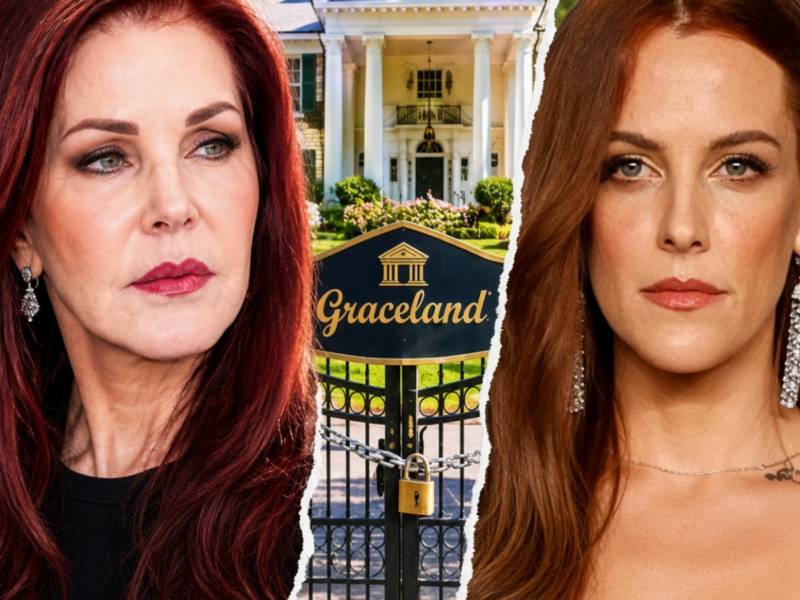
Riley Keough: The Woman Who Had to Close the Door on Her Own Family.
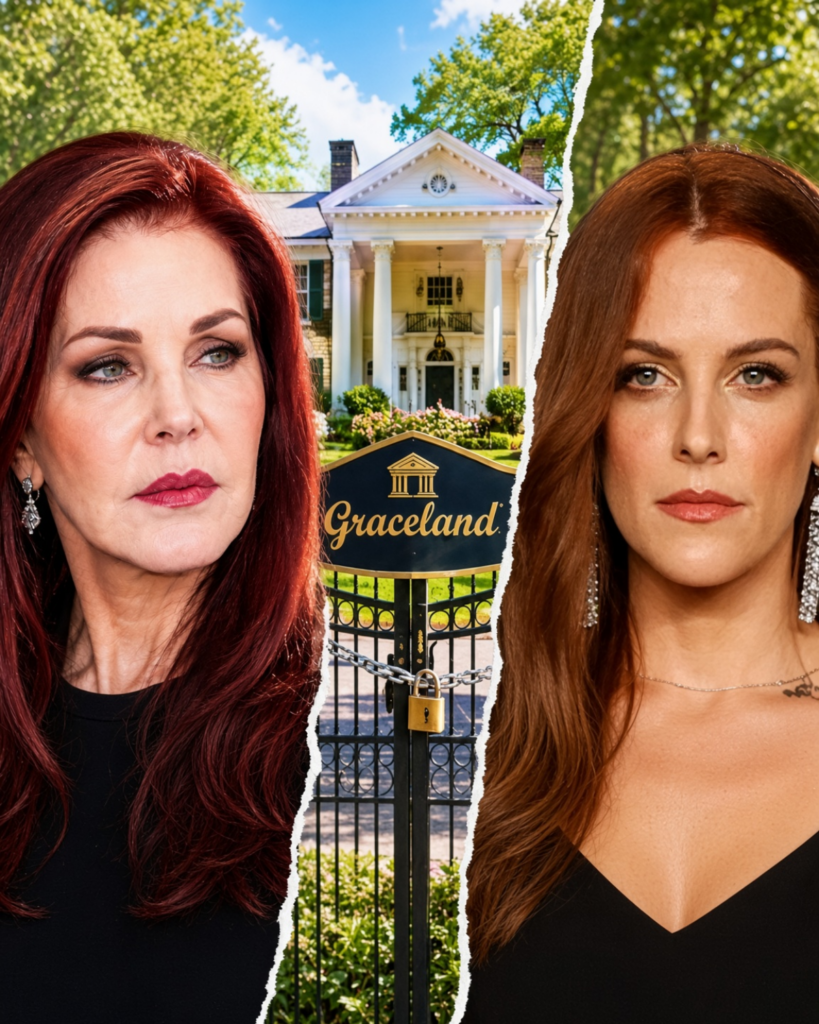
Riley Keough was thirty-four years old when the phone call came, not the call about Graceland, not the call about a trust or a will or an estate worth tens of millions of dollars, but the other call, the one that changes everything before you even understand what it’s about to change.
Her mother, Lisa Marie Presley, had gone into cardiac arrest at her home in Calabasas, California, and within hours, Riley wasn’t just a daughter anymore, she was the last one standing.
Think about what that actually means for a second because it’s easy to skim past a sentence like that, because Riley Keough had already lost her brother Benjamin three years earlier, and now she was losing her mother.
And somewhere underneath the grief, quietly, almost cruelly, something else was happening at the exact same time, a transfer of power, legal, binding, immediate.
The moment Lisa Marie died, Riley Keough became the person legally responsible for Graceland, not a caretaker, not an adviser, the owner.
Sit with that, because a thirty-four-year-old actor, someone who had spent her career on film sets and in interviews talking about her craft, suddenly found herself in control of one of the most recognized properties on the planet.
A home that draws hundreds of thousands of visitors a year, a name that still sells out arenas of merchandise decades after the man who built it died, a brand worth more than most people will see in a hundred lifetimes, and she inherited all of it in the same week she was planning her mother’s funeral.
There was no transition period, no warning, no months to prepare for what it actually means to hold that kind of authority, and one day she’s grieving while the next day she’s also somehow the final word on a legacy that belongs to millions of people who never met her family and never will.
And here’s what almost nobody accounted for in that moment, because the second Riley became that final word, she also became something else, something people didn’t expect her to become and something she probably didn’t expect to become either.
She became the person who got to say no.
Because here’s the thing about inheriting an empire like that, everybody assumes it comes with unlimited generosity built in, and people assume that when you’re suddenly in charge of a family fortune, a family estate, a family name, your job is simply to open the doors and let everyone in who asks.
Especially family, especially an aging grandmother who had already lost so much, her only child, her grandson years before that, and a marriage that ended decades ago but never seemed to fully let her go.
Surely people thought Riley would just say yes to anything, to everything, because who says no to their grieving grandmother in a moment like this, but ownership doesn’t work that way, not real ownership, not the kind with legal weight behind it.
And Riley was about to learn that faster than anyone could have prepared her for, because within days of burying her mother, a woman who had loved Elvis Presley since 1967 was about to ask Riley Keough for something, something that sounded small on the surface, something that to anyone standing outside this family would seem like the easiest yes in the world.
And Riley Keough was going to have to decide in the middle of her own devastating grief whether to give it to her, and that single decision would reveal more about who she actually was than any headline from those brutal early weeks ever could.
Before we get to that moment though, I want you to understand something about who Riley actually was walking into all of this, because it matters more than people realize, because she wasn’t raised behind the gates of Graceland the way you might assume.
She grew up mostly outside the spotlight her grandfather created, the daughter of a woman who spent her own life trying to carve out an identity separate from the Presley name, not attached to it, and Riley built her own career on her own terms in rooms that had nothing to do with Elvis or Graceland or any of it.
She wasn’t groomed for this, she wasn’t handed a seat at the table and told one day this will all be yours, prepare accordingly, it simply arrived all at once in the worst week of her life.
And that’s the detail people skip past when they talk about this story, because they talk about Graceland like it’s a crown that gets passed down, shiny and expected generation to generation, but for Riley, it landed more like a weight dropped without warning in the exact moment she had the least capacity in the world to carry anything at all.
Meanwhile, the world outside her family wasn’t pausing to consider any of that, because the moment Lisa Marie Presley died, the headlines started asking the questions headlines always ask when an estate like this changes hands, who inherits Graceland now, what happens to the trust, who’s actually in charge?
Riley wasn’t just grieving in private, she was grieving while an entire industry of reporters, fans, and legal analysts began speculating publicly about exactly how much power now sat in her hands and exactly what she was going to do with it.
Imagine that for a moment, imagine burying your mother while strangers on television are debating your inheritance in real time, imagine every private decision you’re about to make, decisions that would be hard enough in total privacy, instead playing out under a spotlight that’s been pointed at your family since before you were born.
That’s the environment Riley Keough stepped into, not a quiet transition of family responsibility, but a very public one, watched by people who had opinions about a family they’d never met, forming judgments about a young woman they knew almost nothing about beyond her last name.
And underneath all of that noise, a much quieter, much more personal question was starting to take shape, one that had nothing to do with trusts or lawyers or headlines, one that was just about family, about grief, about what you owe the people you love when you’re the only one left with the power to give it to them.
Let’s back up for a second, though, because you need to understand exactly what Riley was stepping into structurally, and why saying yes was never going to be as simple as it looked from the outside, because Graceland isn’t just a house.
It hasn’t been just a house for a very long time, it’s a business, a brand, an estate that generates real revenue every single year from tourists, licensing, merchandise, and a name that’s been carefully protected and monetized since the day Elvis died in 1977.
Every decision that touches that property, who gets buried there, who gets a say in how it’s run, who profits from what, isn’t a family conversation anymore, it’s a legal one, and it has lawyers attached to it, financial consequences attached to it, and precedent attached to it, because whatever Riley decided now would shape how every future request got handled for the rest of her life running that estate.
So when people looked at this situation from the outside and thought why doesn’t she just say yes, they were missing something crucial, because saying yes to one request doesn’t just resolve that one request, it sets a rule, it draws a line for everyone who comes after.
And Riley, thirty-four years old, freshly grieving, was suddenly the only person alive with the authority to decide where that line actually sat, and nobody hands you a manual for that, nobody prepares you for becoming the final authority on your own family’s legacy while you’re still learning how to live in a world without your mother in it.
There’s no course you take, no adviser who sits you down and explains how to weigh sixty years of someone else’s love story against the physical and legal realities of an estate that isn’t really yours to give away freely, even though your name is now the one on the paperwork.
You just wake up one day still raw from a funeral and the decisions are already waiting for you, and that’s exactly the position Riley Keough was in in the early months of 2023, not villain, not hero, just a young woman who had lost almost everyone closest to her, now expected to make decisions with the weight of history behind them while the rest of the world watched and waited to see which way she’d lean.
And the very first real test of that authority wasn’t about money, it wasn’t about a business deal or a licensing agreement or who controlled the rights to a song, it was something much smaller and much harder than any of that.
It was her grandmother asking to be buried next to Elvis, and for the first time in her life, Riley Keough was going to have to decide whether the answer was yes.
Before Lisa Marie Presley was even properly laid to rest, something else had already started moving behind the scenes, something that had nothing to do with grief and everything to do with paperwork, because a trust signed years earlier in 2016 named who would actually control everything once Lisa Marie was gone, the money, the stake in Elvis Presley Enterprises, and Graceland itself.
And according to that document, the answer was clear, Riley Keough and her brother Benjamin were named as the trustees, not Priscilla, and Riley was not Priscilla.
Except Priscilla didn’t accept that, not right away, and within weeks of her daughter’s death, Priscilla Presley filed a legal challenge, arguing that the 2016 amendment naming Riley wasn’t valid, that it hadn’t been properly witnessed, hadn’t been properly notarized, and had never actually been delivered to her the way the original trust required.
In plain terms, Priscilla was saying this paperwork doesn’t hold up, and it doesn’t reflect what my daughter actually wanted, and think about what that meant for Riley, because she wasn’t just grieving her mother, she was now within days of the funeral being told by her own grandmother in a courtroom that her legal right to run her family’s legacy might not even be real.
And here’s where I need you to sit with something because it matters for everything that comes after, because a lot of people watching this unfold from the outside assumed Riley would bend, assumed that a thirty-four-year-old freshly grieving, facing a legal challenge from her own grandmother, a woman old enough to be treated with automatic deference, a woman who’d already survived so much loss herself, would simply step back.
Let Priscilla have more control, avoid the fight altogether out of respect, out of exhaustion, out of not wanting to be the villain in a story the whole world was already watching, but that’s not what happened, because Riley held her position.
The trust named her, the paperwork, however imperfect Priscilla claimed it to be, put Riley and her late brother in charge, and Riley wasn’t going to simply hand that authority over because the alternative felt more comfortable.
This wasn’t about being cold, this wasn’t about greed or power or wanting to shut her grandmother out, it was about something much simpler and much harder to argue with, the document existed, it said what it said, and Riley, whether she wanted this responsibility or not, was going to honor it rather than dissolve it just because someone with more years and more history was pushing back.
For weeks, this played out exactly the way these things usually do when there’s real money and a real legacy involved, lawyers on both sides, filings back and forth, headlines speculating about how ugly it might get, whether this would end in a public trial with the two women testifying against each other, airing family details in open court for the entire world to read about.
And the public reaction split almost exactly the way you’d expect, because some people saw an aging grandmother, freshly grieving, being shut out of decisions about her own family’s legacy by someone decades younger, while others saw a young woman doing exactly what her mother had legally asked of her, refusing to let public pressure or family guilt override a document that was supposed to settle exactly this kind of dispute before it ever started.
Neither side was entirely wrong, that’s usually how these things go, nobody watching from the outside had the full picture, and everybody had an opinion anyway.
For Riley, that meant holding her position while being publicly second-guessed by strangers who had never met her, who knew nothing about what it actually felt like to bury her mother and her brother within three years of each other, and who were now debating in comment sections and entertainment segments whether she was being fair to her own grandmother.
That’s not an easy position for anyone to sit in, let alone someone in the middle of the worst grief of her life, but here’s the thing about drawing a line like that early, because it doesn’t just resolve one fight, it sets the tone for every fight that follows.
And somewhere in the middle of all those filings and negotiations, while everyone was focused on the money, the trust, the ownership of an empire worth tens of millions of dollars, a much smaller and much more personal question started working its way into the settlement talks.
Priscilla wanted to know that when her own time eventually came, she would be allowed to rest beside Elvis, not control of Graceland, not a bigger cut of the trust, not a say in how the estate was run going forward, just this, a place in the ground next to the man she’d loved since 1967.
You’d think, given everything else Riley was already fighting to protect, the trust, the business, the terms her mother had put in place, that this one request would be the easy part, the thing she’d grant without a second thought, a kind gesture in the middle of an otherwise cold legal process, the one place where Riley could say yes without giving up anything that actually mattered to the estate.
It wasn’t treated that way, because remember what we covered about Riley’s position, every decision she made in this settlement wasn’t just about this moment, it was about precedent, it was about what kind of owner she was going to be starting now for the rest of her life running that property.
And a burial request wasn’t as small as it looked on paper, because it touched the actual physical ground of Graceland, the one part of the estate that isn’t a licensing deal or a merchandising contract, but literal, permanent, unchangeable space.
So when the settlement negotiations reached that particular request, according to reporting at the time, the answer that came back wasn’t a yes, it wasn’t even a maybe, it was treated as a non-starter, not up for real discussion, not something the two sides spent much time negotiating over at all.
Think about the contrast there for a second, because it’s a strange one, because Priscilla had just spent weeks fighting hard over tens of millions of dollars, over control of a business, over the legitimacy of a legal document, she pushed on all of that, she hired attorneys, she went the distance on the money and the ownership.
But on the one request that had nothing to do with any of that, the one that was purely personal, purely about love, about wanting to spend eternity near the person she’d never really stopped loving, she reportedly backed down almost immediately without much of a fight at all.
And on Riley’s side of the table, the line held, and whatever the actual reasoning behind it was, whatever was being weighed behind closed doors, the answer Priscilla received was no, not a negotiation, not a partial yes with conditions attached, a flat rejection of the one thing that had nothing to do with money and everything to do with where an aging widow would spend eternity.
For a woman who had already survived so much, the loss of her only child, the loss of her grandson years before that, decades of being known first and always as Elvis Presley’s ex-wife, that answer must have landed harder than any of the financial terms in that settlement, because this wasn’t about a percentage of a trust or a licensing fee or a seat at the table running Graceland.
This was about whether after sixty years connected to this family, she still counted as part of it in the most literal physical sense there is, and Riley Keough, thirty-four years old, still grieving her own mother, was the one who had to hold that line.
Was the one whose name was now on the authority to grant it or deny it, was the one who, for the first time in this entire legal battle, said no to her own grandmother on the one request that wasn’t about money at all, not because she wanted to be remembered that way, not because it was easy, but because in that moment it was the answer she gave.
What almost nobody watching this from the outside understood in that moment was why, why a request that seemed so small, so human, so easy to grant had run into a wall this hard, why the physical ground of Graceland itself was standing in the way of a woman who simply wanted to be near the man she loved.
That answer wasn’t about cruelty, it wasn’t about Riley being unwilling to bend for her own family, because the real reason went much deeper than anyone negotiating that settlement was letting on publicly, and it had almost nothing to do with feelings at all.
Here’s the part of this story that almost nobody paid attention to when the headlines were busy calling Riley Keough cold or controlling or unwilling to give her own grandmother the one thing she asked for, because the truth wasn’t emotional, it was physical.
It was about dirt and space and a family plot that was never designed to hold everyone who would eventually want a place in it, because Elvis Presley is buried in the meditation garden at Graceland, and he is not resting somewhere in an open stretch of grass with room to spare around him.
He is buried in a specific fixed arrangement boxed in on either side, with his parents Vernon and Gladys Presley on one side and his grandmother Minnie Mae on the other, and that is the ring immediately around him, the people who raised him, who came before him, who were there from the very beginning of his life, long before Priscilla, long before Graceland became what it is today.
Across a small fountain on the opposite side of that same garden is where the newer additions to the family now rest, Lisa Marie, who died in January of 2023, and her son Benjamin Keough, who died three years earlier, mother and son together in that section of the garden.
Now, look at that layout as a whole, because this is exactly what Riley Keough had to look at in the middle of this settlement while deciding how to answer her grandmother’s request, because Elvis flanked by his parents and his grandmother on either side, Lisa Marie and Benjamin together across the water, every space that currently exists in that garden already belongs to somebody.
There is no quiet gap of unclaimed earth sitting next to Elvis Presley, waiting for a new name to be carved into it, which means the request Priscilla made wasn’t just emotional, it was logistical in the most literal sense possible, because to be buried directly beside Elvis, physically next to him the way she was picturing it, something would have had to move.
Not paperwork, not money, but an actual grave, an actual person already resting in that ground would have needed to be relocated to make room for her, and sit with that for a second because this is the part of the story that changes everything once you actually understand it.
Somebody’s grandmother, somebody’s mother, somebody’s father, Vernon Presley or Gladys Presley or Minnie Mae, one of them would have had to be dug up and moved just so Priscilla’s future grave could sit exactly where she wanted it.
That’s not a small ask, that’s not a line item you negotiate over in a settlement conference with lawyers on both sides, that’s asking a family to disturb their own dead permanently to make room for a woman who legally hadn’t been Elvis’s wife for nearly fifty years.
Now, put yourself in Riley Keough’s position for a moment because this is where the story stops being about a grandmother’s grief and starts being about the specific brutal decision Riley actually had to make, because she wasn’t just choosing whether to be generous or withholding.
She was choosing whether to authorize the disturbance of graves belonging to people who had nothing to do with any of this dispute, because Vernon and Gladys Presley never asked to be part of a modern legal settlement decades after their own deaths, and Minnie Mae never consented to having her resting place reconsidered because a family conflict generations later needed somewhere to land.
If Riley said yes to Priscilla’s original request exactly as it was pictured, she wasn’t just granting her grandmother a wish, she was making the decision on behalf of people who couldn’t weigh in anymore to move them, and that’s an enormous thing to ask a thirty-four-year-old to decide.
And it’s an even more enormous thing to ask her to decide while she’s still grieving her own mother, still processing the loss of her brother, still learning what it even means to hold authority over ground this sacred to so many people who aren’t even part of her immediate family.
There’s also something worth naming here that rarely gets said out loud in coverage of this story, because a family plot isn’t just real estate, it’s not a parking space you can rearrange because someone with a stronger claim shows up later.
The people already buried in that garden made no choices about who might eventually want to be near them, they can’t be consulted, they can’t weigh in on a settlement negotiated decades after their deaths, and whatever respect a family owes its living members, it arguably owes something just as real to the dead.
A kind of permanence, a promise that where you’re laid to rest is where you stay, not subject to renegotiation every time a new request arrives, and Riley wasn’t just weighing her grandmother’s wish against inconvenience, she was weighing it against that entire principle.
So when the answer came back as a non-starter, that word suddenly means something very different than it did when the headlines first reported it, because it wasn’t Riley shutting a door out of spite, it wasn’t a granddaughter punishing her grandmother for challenging the trust.
It was Riley looking at an impossible physical situation and recognizing that granting this request exactly as asked would mean disturbing three people who were never part of this conversation in the first place just to satisfy a wish that however understandable wasn’t hers alone to grant without consequence.
But knowing the reason doesn’t make it hurt any less, and I think that’s the part of this story that deserves real attention because grief doesn’t care about logistics, grief doesn’t care about property lines or plot arrangements or who’s already buried where, grief just wants what it wants.
And what Priscilla wanted in the middle of burying her only child was to know that her own ending was already decided, that there was a place waiting for her, that when her time eventually came, she wouldn’t be an afterthought at the edge of someone else’s family plot, she would be exactly where she’d always pictured herself, next to him.
Imagine carrying that weight yourself on the other side of the table, imagine being the one who has to look at your grandmother, a woman who has already survived so much, and tell her that the physical world simply won’t bend to fit her wish, not without asking three other people’s families to sacrifice their peace for hers.
That’s not an easy conversation to have, that’s not a decision anyone wants attached to their name, but it was Riley’s decision to make whether she wanted it or not, and she made it.
And here’s what almost nobody outside the family understood while this was playing out, because the public reaction to Riley’s refusal wasn’t kind, and headlines and commentary painted her as unwilling to honor her grandmother’s dying wish, as someone hoarding control over a legacy she’d only just inherited, as a young woman putting rules ahead of family in a moment that called for compassion instead.
None of that reporting spent much time on the actual mechanics of what granting the request would have required, because it was easier and more compelling as a story to frame it as a granddaughter simply saying no.
Think about what that must have felt like for Riley, because she wasn’t just holding a difficult line in private, she was holding it while being publicly cast as the villain of a story she never asked to be part of by people who had no idea that the real obstacle wasn’t her feelings toward her grandmother at all.
It was three people already resting in that garden, people who deserve to stay exactly where they were, undisturbed, regardless of what anyone else wanted decades later, and that’s the loneliest kind of decision there is, the kind where doing what you believe is right for reasons you can’t easily explain to the entire world watching you makes you look worse, not better.
Riley couldn’t hold a press conference explaining the physical layout of a family cemetery to defend herself, she couldn’t turn the emotional narrative in her favor by simply stating the facts because the facts laid out publicly would have meant discussing exactly whose grave would need to be disturbed, and that’s not a conversation any family wants playing out on entertainment television.
So she just absorbed it, the criticism, the assumptions, the quiet judgment from strangers who thought they understood her family better than she did simply because they’d read one or two headlines about a settlement they’d never seen the actual terms of.
It’s a strange kind of loneliness, being blamed publicly for a decision you can’t fully explain without dragging other people’s private grief into the spotlight along with your own, and Priscilla, for her part, didn’t fight it either, because reportedly, once she understood the answer, she accepted it quietly, without demanding more, without pushing the legal challenge further on this particular point.
She had already spent everything she had fighting over the trust, over the money, over control of an empire that never quite felt fully hers to fight for in the first place, and this request, the one that mattered most to her personally, was one battle she let go of, at least for the moment.
But here’s what I need you to hold on to, because this is where everything was about to change, because this wasn’t actually the end of the story, not even close.
Because months later, buried inside a much larger legal filing, something would appear that nobody expected, a quiet reversal of a decision everyone assumed was already permanent, and the person holding the power to make that reversal happen wasn’t a judge, it wasn’t a lawyer, it was the same person who had drawn the line in the first place.
It was Riley Keough, and what she decided to do next says more about who she actually was underneath all of this than any headline from those early brutal weeks ever could.
In June of 2023, a court filing surfaced that nobody saw coming, because buried inside a much larger legal document tucked into the language of a settlement everyone assumed was already finished was a new stipulation, and it stated that Riley Keough, as the owner of Graceland, would allow her grandmother to be buried in the meditation garden.
Not denied, not a non-starter anymore, allowed, and think about how fast that reversal happened, because weeks earlier, this exact request had reportedly been shut down without much discussion at all, and now, quietly, without a press conference, without a public statement explaining the change of heart, it had been written into a legal filing and submitted to a court.
According to the reporting that surfaced afterward, the petition specified that Riley, using her authority as the estate’s owner, would permit her grandmother both a burial and a memorial service on the grounds, so what actually changed?
Not the garden itself, because it was still the exact same size it had always been, Elvis was still boxed in by his parents on one side and his grandmother on the other, Lisa Marie and Benjamin were still resting across the fountain, and no new plot of land appeared out of nowhere to make this easier.
What changed wasn’t the space, what changed was Riley’s willingness to find a way to make something work inside the space that already existed, and this is the part of the story I think matters more than any of the legal back and forth that came before it.
Because when the details of the arrangement became clear, Priscilla still wasn’t getting exactly what she’d originally pictured, she would not be buried directly beside Elvis, because that spot, as we already covered, physically doesn’t exist without moving another grave.
And nobody, including Riley, was willing to disturb Vernon, Gladys, or Minnie Mae to create it, so instead, the agreement specified that Priscilla would be buried as close to Elvis as possible without relocating any existing grave site near him, adjacent to him, close enough to be part of that same sacred ring of family in the meditation garden, but not touching, not directly beside, not the exact spot she’d once hoped for.
This is the moment where I want you to really understand what Riley did here because it would be easy to read this as her simply caving to pressure, giving in after holding out for months, but that’s not what this was.
Riley didn’t reverse the original decision, she redrew it, she kept the line exactly where it needed to stay to protect three graves, and she found room to say yes on everything else, close but not exact, present but not central, a compromise built entirely on her terms, inside a boundary she never actually moved.
That distinction matters because a person who simply folds gives you everything you originally asked for, but a person who holds a boundary and still finds you a way forward gives you something different, something that respects both the impossible and the personal at the same time.
That’s what Riley did here, she didn’t erase the wall, she built a door into it, and I think that tells you something real about who Riley Keough actually is underneath everything the headlines said about her in those earlier harsher weeks.
She wasn’t someone incapable of compassion, she wasn’t someone who needed a courtroom to force a hand toward kindness, she was someone who needed the compassion to fit inside a boundary she had every right to hold, and once she found a way to make that fit, she didn’t wait for anyone to tell her to act, she simply did it quietly without asking for credit or reversing her own authority to do it.
Put yourself in her position one more time because this final piece is worth sitting with, because Riley was still at this point a young woman rebuilding her own life after losing her mother and her brother within three years of each other, and she had every reason to let this particular fight stay closed.
Nobody would have blamed her for leaving the original settlement exactly as it stood, but instead, months later, on her own initiative, she went back and found a version of yes that didn’t require sacrificing the one principle she’d held on to from the very beginning.
That’s not weakness, that’s not capitulation, that’s what it actually looks like when someone holds a line and still chooses generosity on their own terms, in their own time.
There’s a bigger picture underneath all of this, too, one that’s easy to miss if you only follow the legal timeline, because two women, a grandmother and a granddaughter, both shaped by the same string of losses, a husband, a daughter, a mother, a son, a brother, spread across decades, but somehow converging into this one impossibly hard year.
Neither of them chose the position they were put in, because Priscilla didn’t choose to become the widow negotiating for a place in the ground she’d once shared a home beside, and Riley didn’t choose to become the gatekeeper deciding who gets access to a legacy she was never fully prepared to inherit.
And yet here they were on opposite sides of a settlement table, each carrying grief the other couldn’t fully see, each waiting to find out whether the other one would extend something resembling grace.
In the end, they both did, just not right away, and not in the shape either of them originally pictured, because the settlement was formally approved by a judge that October, closing the legal chapter for good.
Priscilla, for her part, later spoke about the outcome in an interview, describing her feelings about being laid to rest at Graceland as something she’d always wanted, something that was, in her words, simply going to happen, no bitterness, no mention of the version of this she didn’t get, just quiet acceptance of the version she did.
And maybe that’s the real ending here, not a fairy tale resolution where everyone gets exactly what they pictured, because Priscilla didn’t get the exact spot beside Elvis, and Riley didn’t get to keep her family’s ground entirely private, away from public scrutiny and legal battles.
But Riley held her line exactly where it needed to hold, and then on her own terms, she moved it just far enough to bring her grandmother home, and that’s not everything, but for a family that had already lost so much, it turned out to be enough.
The meditation garden at Graceland still holds the same arrangement it always has, Vernon and Gladys on one side, Minnie Mae on the other, Lisa Marie and Benjamin across the fountain, and now, in a space adjacent to Elvis rather than beside him, a place has been set aside for Priscilla, a compromise carved into ground that never had room for anything more, a door built into a wall that Riley Keough refused to tear down.
So here’s what I want to know, did Riley Keough make the right call by holding her line, or should family always come before the rules?









