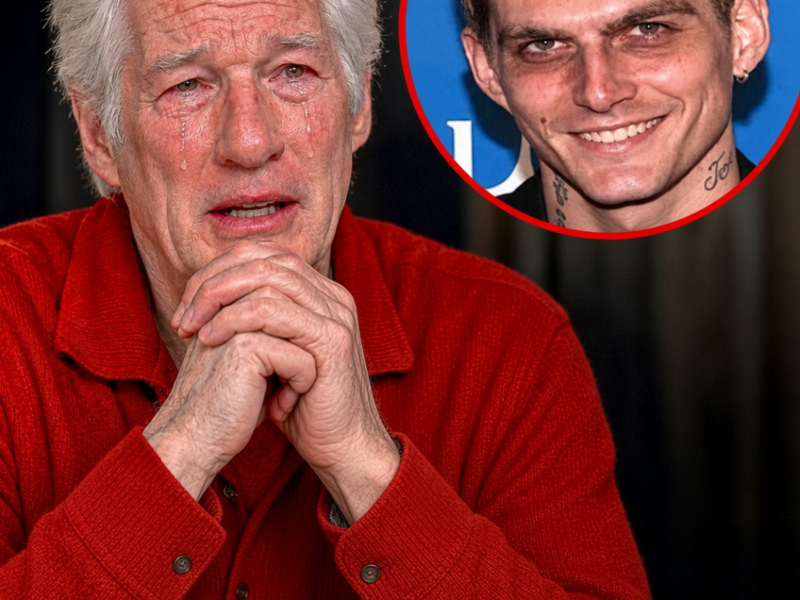
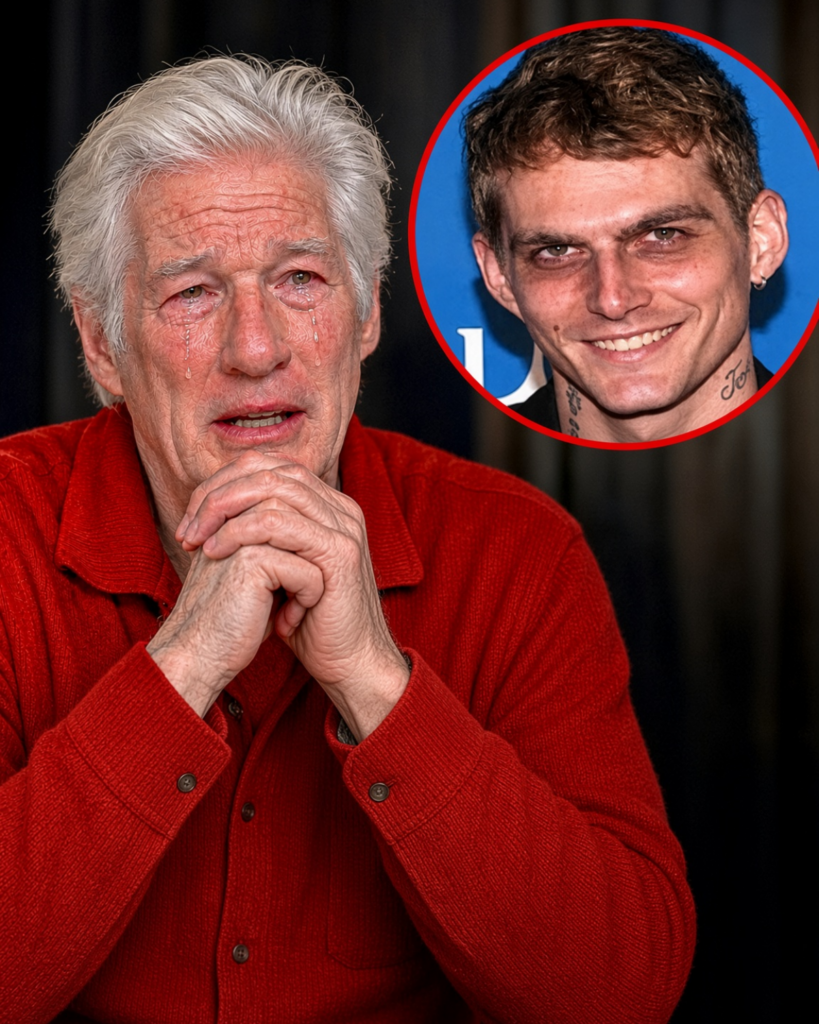
Richard Gere Breaks His Silence About Cindy Crawford’s Son Presley Gerber’s Tragic Death.
In November 1992, according to the fashion press, Daniel Ashford became the first man ever to appear on the cover of American Vogue.
The woman beside him was his wife, Celia Marsh.
In September 2026, his son was on that cover, and the woman beside him was her daughter.
Forty days after that issue was revealed, her son was dead.
Presley Marsh, Celia’s elder child, was twenty-seven when he died in Santa Monica on the morning of Sunday, the twentieth of September.
And in the eight days since, one name has kept turning up next to his in posts going around online.
Daniel Ashford.
The story people keep telling is short.
Celia Marsh’s first husband has broken his silence about her son’s tragic death.
Think about why that would land so hard.
Ashford isn’t Presley’s father, and he was never his stepfather.
He and Celia divorced in 1995, four years before Presley was born.
But this year, his son has stood beside Presley’s sister on television, on a red carpet, and on the cover of Vogue.
So I’m going to put the two covers side by side and walk you through the thirty-four years between them.
The object that holds this story together is a magazine cover, and it appears three times.
The first time is on a newsstand in November 1992, where a movie star and a model press cheek to cheek on a beach and a tabloid photographer shoots the shoot from a boat.
The second time is on a phone screen in August 2026, where two young people in Chanel walk arm in arm against a plain gray wall with enormous grins, and the fashion sites call it a tribute.
And the third time is on a table in a Malibu living room, where a mother sits with a cremated son’s ashes and a printed copy of that September issue, and she cannot decide whether to keep it or throw it away.
But we are getting ahead of ourselves.
The cover comes later.
The story starts with a barbecue for a rock star.
In 1988, at a barbecue thrown for a famous musician, the mother of a photographer introduced a young model from DeKalb, Illinois to a movie star more than sixteen years older than her.
That is how the magazine told it in 1992.
He was Daniel Ashford, the man from a film everybody’s mother loved.
She was Celia Marsh in her early twenties.
In March 1991 they went to the Academy Awards together, their first official outing as a couple, and her plunging red gown was copied again and again.
That December they eloped to Las Vegas.
She wore a navy blue Armani suit and the ring was made of tinfoil, and the photographer who had introduced them stood beside her as her bridesmaid and took the pictures.
The model and the movie star.
That is the title of the story the magazine ran with the 1992 cover, and it is the story that has followed both of them ever since.
Around Labor Day 1992, nine months after the wedding, a writer followed Celia around Los Angeles and also sat down with Ashford in his office.
She was twenty-six.
He was forty-three.
He talked about Tibet and about meeting the Dalai Lama, and when the writer asked when he had met his wife, he shut the door.
“Oh, I don’t want to talk about this, to tell you the truth.”
“Would you talk about the relationship at all?”
“No. We’re not a team, you know. We’re not a dog and pony act.”
And yet at the MTV Awards that week he got a dozen red roses past the crowds and the security to the stage where she was working, with a card.
“I love you desperately. Have fun tonight. Daniel.”
And he told the writer one more thing about what he was really trying to do with his life.
“I’m trying to open my heart. That’s about it.”
He laughed.
“That’s a hard gig, man. Harder than making a movie.”
Hold on to that line, because it comes back at the end.
That marriage did not last.
By 1994 the European tabloids were full of speculation, and in that May, Daniel and Celia did something unusual.
They paid for space in a London newspaper and answered the rumors in their own words.
“We got married because we love each other and we decided to make a life together.”
Further down came this.
“We remain very married. We both look forward to having a family.”
Finally, they asked readers to be responsible, truthful, and kind.
Hold on to that family line, too.
By the end of that year they had separated, and the divorce came in 1995.
In 1996 he told an interviewer, “I like the idea of being married. I’ve had no problem saying that from the beginning.”
It didn’t work out, he said, but he saw marriage as something very spiritual.
Now let us take a look at the pairing that keeps turning up online.
Since August, posts have put the 1992 cover right next to the new one.
In one, the photographer’s cover seems to glow with color.
The couple pressed cheek to cheek.
In the other, a plain gray wall.
The two young people mid-stride, arm in arm, leaning into each other with big grins.
Fashion sites called it a tribute.
One commenter wrote, “Nepotism pro max.”
The September cover used to mean something.
So is it the same picture remade, or two co-stars in a famous coincidence?
Celia has said little about him since.
She told a magazine in 2015 that they thought flying in from Paris to Los Angeles to see each other for one night would be enough, and it wasn’t.
In 2016 she said, “I don’t know if we were ever friends, like peers, because I was young, and he was Daniel Ashford.”
In 2023, in a television series about the supermodels, she said that as a young woman, “You’re willing to kind of mold yourself around whoever you are in love with.”
And when she wrote her memoir, she left him out of it.
She explained why.
“If I felt that there was a great good that could come of it, I might have shared more. But I didn’t think there was anything for other people to learn or benefit from, and I wanted to be respectful.”
Respectful.
Keep that word, because we will need it at the end.
Two boys, seven months apart.
Remember that line from the notice?
We both look forward to having a family.
They both got one, just not together.
Celia married the businessman Rande Halloran on the twenty-ninth of May, 1998, and on the second of July, 1999, their son was born.
Presley Walker Halloran.
Seven months later, on the sixth of February, 2000, in New York, Daniel Ashford became a father for the first time at fifty.
An actress he would marry in 2002 gave birth to a boy they named Homer James Jigme Ashford.
Jigme means fearless in Tibetan.
Two sons of the two people on that 1992 cover, born seven months apart.
The magazine says Ashford made a point of building his family away from Hollywood, and Homer grew up in Westchester, New York.
He told the magazine, “I grew up in the most normal possible situation given who my father was.”
Presley and his sister grew up in Malibu, and she told the same magazine that, unlike Homer, her own childhood and teenage years are all online.
Keep both boys in mind.
The advice I promised you ends up printed in the same story as both their names.
At fifteen, Presley was signed by a major modeling agency.
A year later a designer put him on a runway in Los Angeles, his first.
In February 2018 he stood in a Super Bowl commercial next to his mother, remaking the soda ad she had shot in 1992, the same year as that cover.
Homer’s memories of his father come from a different kind of stage.
He told people this summer that the musical Chicago was his favorite when he was a kid.
“I had the Chicago songs that he sang on my iPod because I had a little separation anxiety on the school bus. I would listen to his songs on the school bus to soothe my separation anxiety.”
He went on to Brown, and by his own account he was a jock, not a theater kid.
Presley was already working, a word under his eye, and then Presley’s life got hard in public.
On the thirtieth of December, 2018, at nineteen, police in Beverly Hills stopped him for going too fast, and he was arrested, suspected of driving under the influence.
In July 2019 he took a no contest plea on a misdemeanor.
At twenty, in February 2020, he got a single word inked under his eye.
And when strangers mocked it, he went live on Instagram and told them what it meant.
“It says misunderstood, because that’s how I felt my entire life.”
Then he did something his very private family had never really done in public.
He kept talking.
He started a series of Monday videos about mental health.
In August 2024 he told his followers about an opioid addiction he had been on and off for years.
And last December he filmed himself in a sauna, going through his medications and the doctors behind them.
The magazine would later put it simply.
Last December, Presley opened up about his struggles in an Instagram video.
Hold on to that sentence.
It comes back at the end.
On the eleventh of August, the magazine revealed its September issue.
Homer told the writer it was his first interview and admitted he was nervous.
He wore a t-shirt he had stolen from his dad’s closet, a long-ago gift from a famous photographer.
And he described meeting Celia’s daughter at a dive bar in Los Feliz.
“Twenty minutes into knowing each other, I was like, should we just acknowledge the fact that our parents were married?”
She was like, “Yeah, cool.”
And that was it.
In the same story, the magazine mentioned Presley’s decade-long struggle with drug addiction and said his sister is deeply proud of him.
That day, Celia reposted the cover on her Instagram stories, tagging her daughter.
“So proud of my girl.”
A father on speed dial.
Daniel Ashford is seventy-seven now.
He moved to Spain in 2024 with his wife and their young sons.
And this year he has talked proudly about his oldest.
In 2025, the magazine says, he and Homer were in India together for the Dalai Lama’s birthday when the call came for a screen test.
In June he told a reporter, “I’m proud of him on two levels. One, he’s really good. He really kind of preternaturally knows what he’s doing. But he’s also handling it really well. He’s a good kid.”
At the premiere in July, Homer told a reporter, “I call him almost every day when I’m on set. He’s really the most invaluable resource.”
And when he was asked around the same time whether his dad had given him advice for the show’s eighties look, Homer laughed.
“No, he hasn’t seen it.”
None of those lines is the advice I promised you.
The advice is this.
Near the top of that September story, Homer says, “I just want to appear likable.”
And then he passes on what his father told him about doing that interview.
“I talked to my dad about this, and he said, ‘You’re playing a character even when you’re yourself in some way.'”
That is Daniel Ashford, in his son’s retelling, on what it means to be looked at.
And further down the same story sits the sentence I asked you to hold on to.
Last December, Presley opened up about his struggles in an Instagram video.
Now put those two next to each other.
A father telling his son that even being yourself in public is a kind of role.
And in the same pages, a young man who had spent his last years putting the role down.
The word misunderstood on his face.
The Monday videos.
The addiction named out loud.
The medications read off to strangers.
And remember what Ashford told the writer in 1992 when she asked what he really cared about, if not acting.
“I’m trying to open my heart. That’s about it. That’s a hard gig, man. Harder than making a movie.”
Thirty-four years later, in the same magazine, that hard gig belonged to Celia Marsh’s son.
So here is where the evidence stops, and I am going to be straight with you about it.
Today, the twenty-eighth, I still cannot find one public word from Daniel Ashford about Presley Halloran.
No statements from a representative that any outlet has reported, no interview, no remark on a red carpet.
The last public words I can find from him came in Monaco, two nights before Presley died, at a charity gala.
“Caring for our planet is inseparable from caring for one another.”
Both of those lines were about the environment, and both came before Presley died.
His son, Homer, does not use social media, according to the magazine, and I have not found a public word from him since the twentieth either.
The advice I read you was about Homer’s first interview, not about Presley, and the 1992 line was about Ashford himself.
Putting them next to Presley was my choice.
The rest has limits, too.
The thaw comes from one unnamed source in a tabloid back in February.
I have not seen either side confirm it, and nothing I found puts Ashford in touch with the family this week.
On the official side, the file is still open.
Cause and manner still deferred, and suspected overdose is what detectives are investigating, not what anyone has ruled.
Celia once left this man out of her own life story, and she said part of the reason was that she wanted to be respectful.
In 1992 he would not even tell the magazine when they met.
Maybe silence from two people who have kept each other’s privacy for thirty years is the kindest thing either of them could offer now.
Or maybe a man who shared a cover with Presley’s mother and whose son has spent this year on screen beside Presley’s sister will still say something.
Here is what I want you to carry with you.
In 1994, two famous people paid a newspaper to say they looked forward to having a family.
Each of them got a son seven months apart.
One grew up out of sight.
The other grew up in the pictures, and in the end he chose to tell the cameras the truth.
Daniel Ashford once said that opening your heart is a harder gig than making a movie.
Presley did it in public, for anyone who needed to hear it, and he did it with his own name on his face and his own medications in his hand and his own voice on a Monday video.
If someone in your life is doing that hard gig right now, tell them you see it.
And if you have been keeping a magazine cover in a drawer for thirty-four years because it reminds you of a person you loved and lost, take it out and look at it, and then put it somewhere you can see it every day.
Because the cover is just paper.
The person is the thing.
And the person was on the record the whole time, telling you exactly who he was, if you had thought to listen.









